
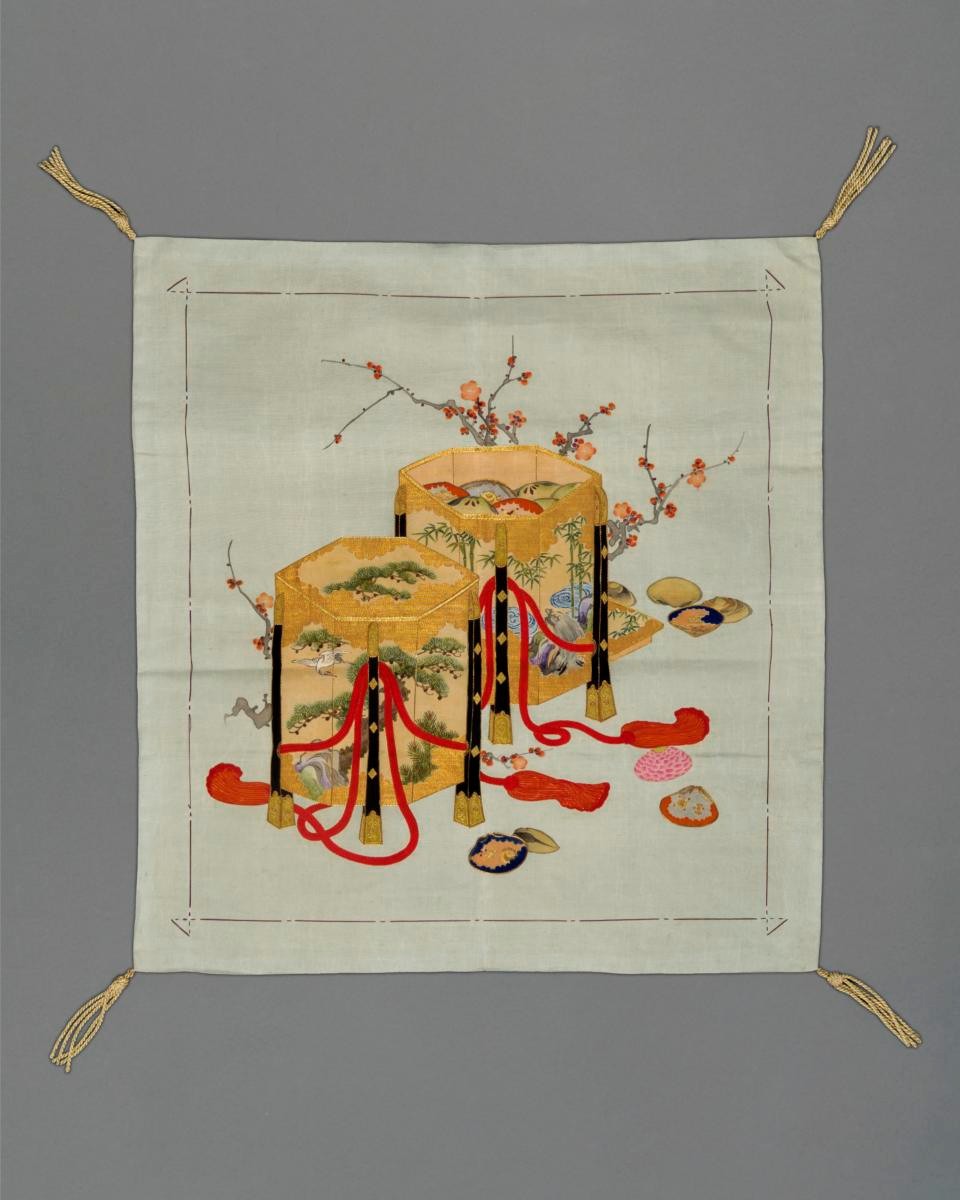
Object size: 96.2 x 67.5 cm (with tassels)
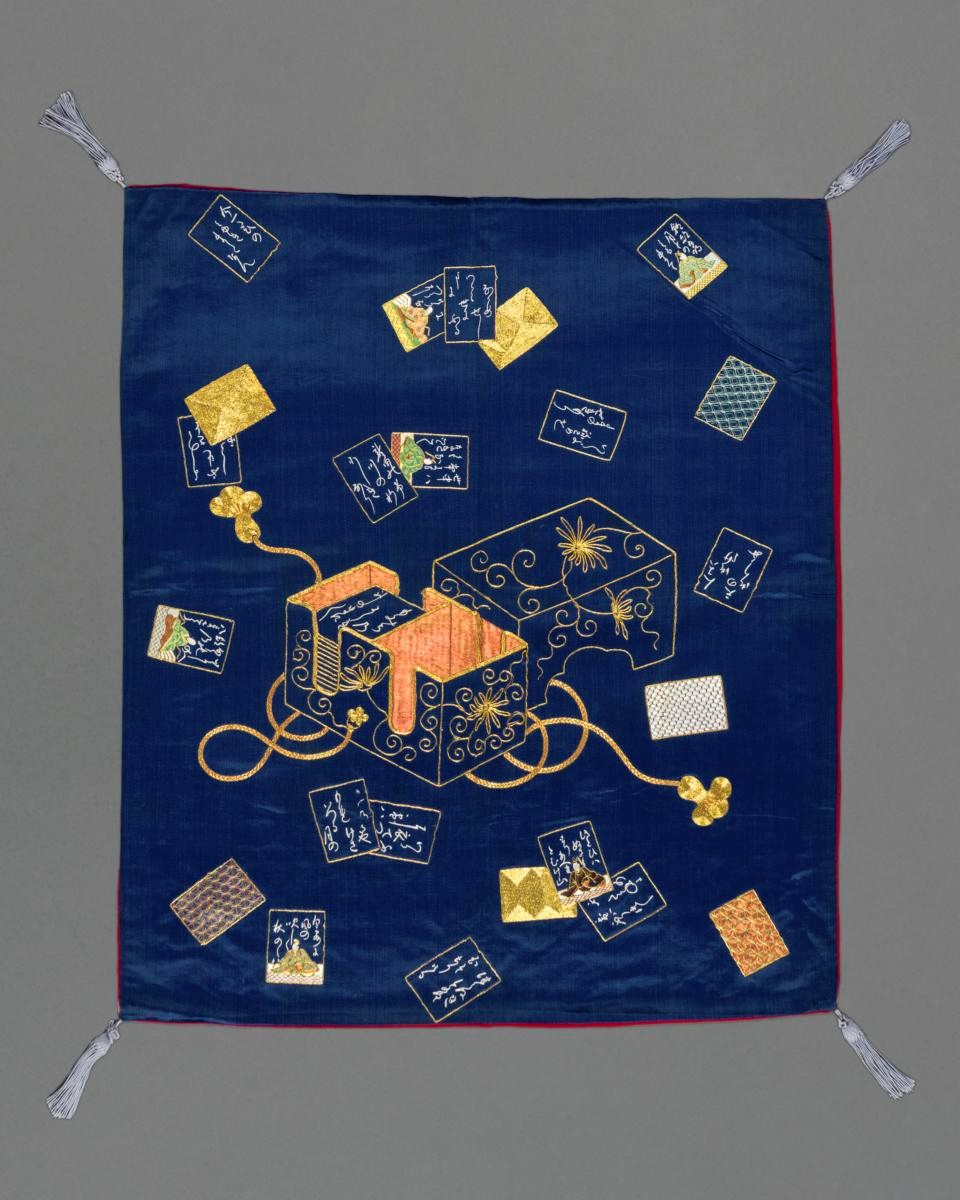
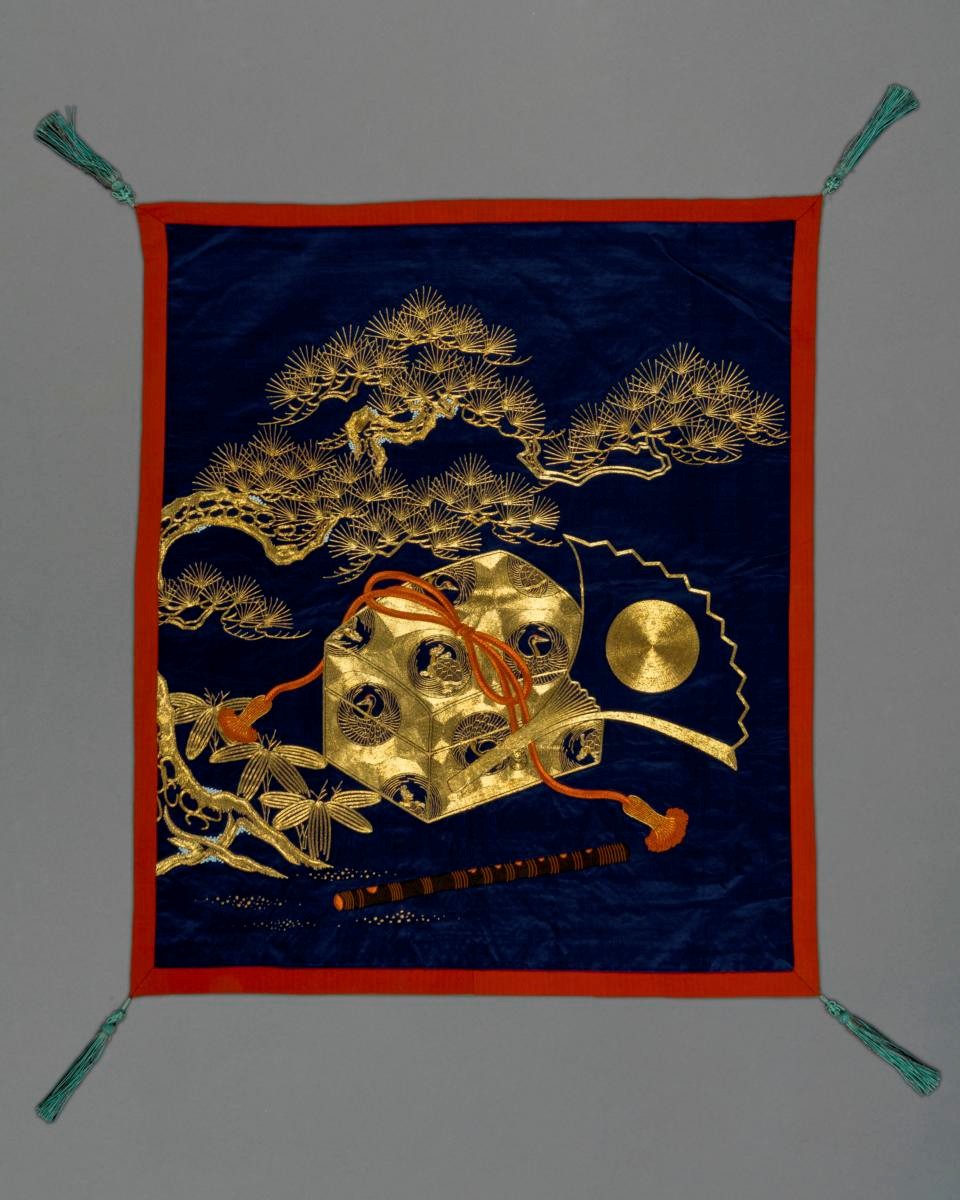
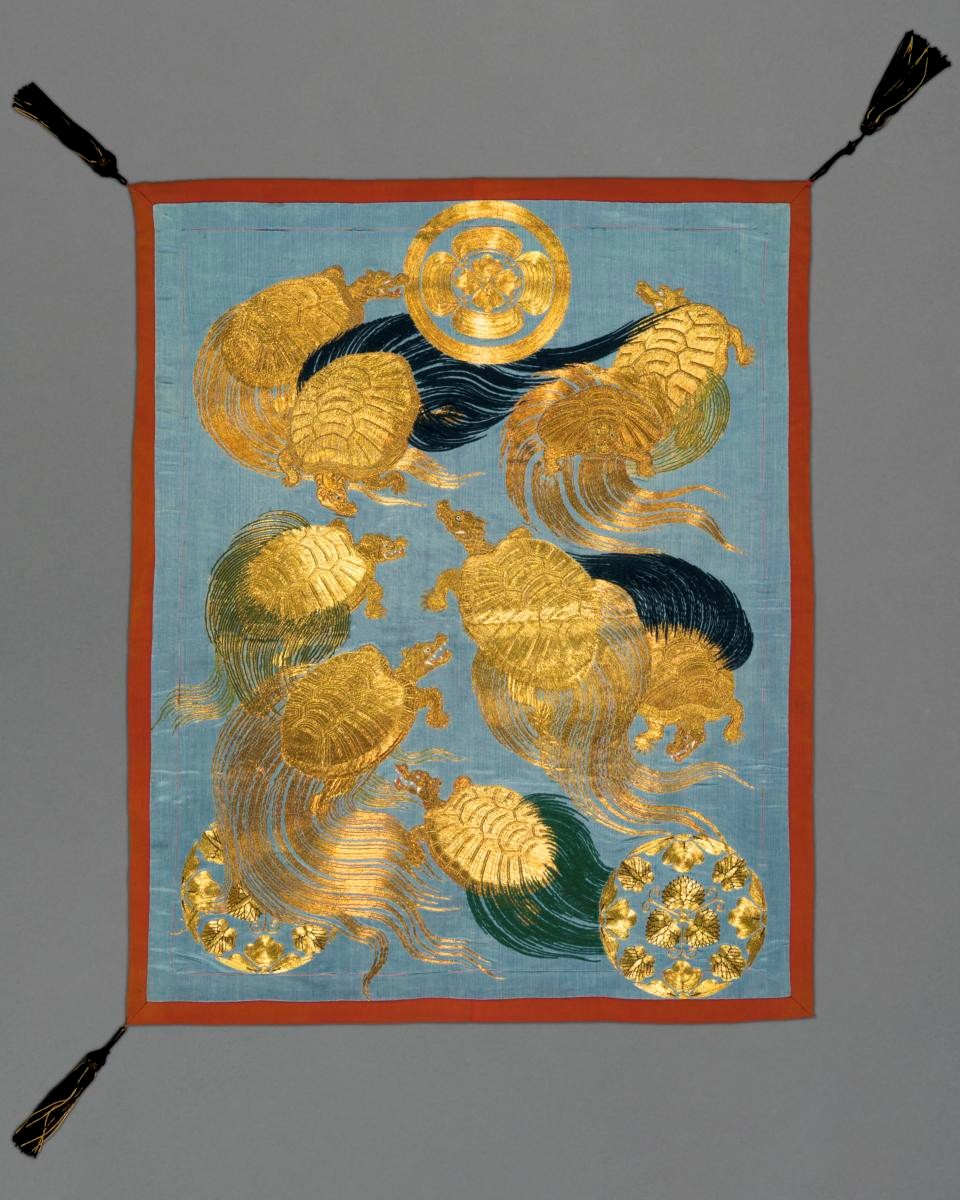
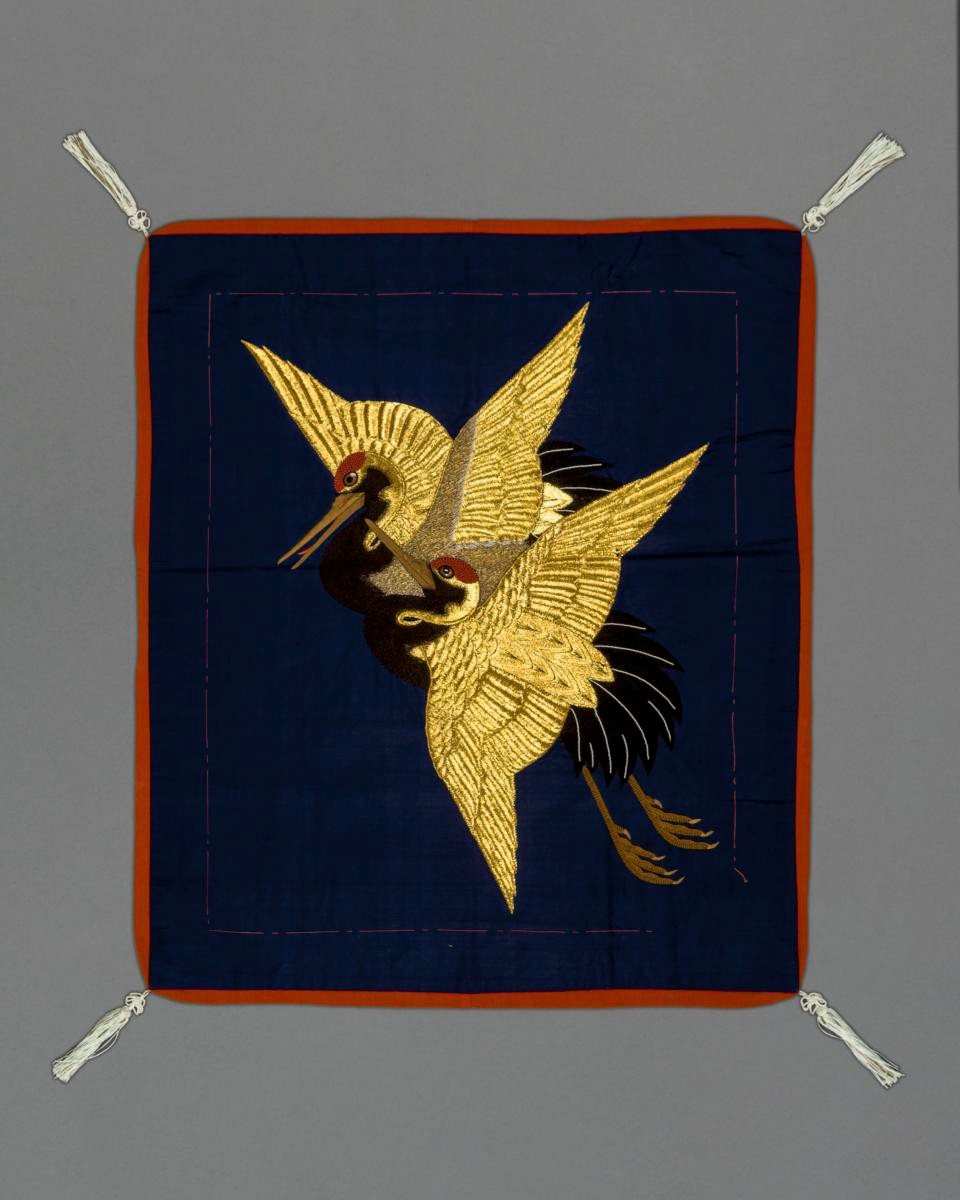
In Japan, the practice of formally presenting gifts with silk covers called fukusa began in the Edo period (1603–1868), around the late 17th or early 18th century. These covers were draped or folded over gifts for a variety of occasions, from seasonal festivities to important personal events. Each fukusa was carefully chosen to evoke the circumstance of the gift and to convey a message to the recipient through its design. Fukusa designs often feature symbolic objects or allusions to Japanese and Chinese stories. The choice of fukusa also reflected the giver’s wealth, taste, erudition, and cultural sensitivity. The use of fukusa continued into the early 20th century. Today, they are used in parts of Japan for weddings and corporate events. In the shell-matching game (kai-awase), the upper and lower halves of clam shells are painted with scenes and poems from classical literature. The aim is to pair each shell with its corresponding mate. The matching shape, speckling, and painted scene symbolise faithfulness and a well-matched couple. The shells are kept in two wooden boxes, often decorated with gold-sprinkled lacquer (maki-e) and secured with red cords. The maker of this fukusa has ingeniously represented these materials with shimmering gold thread and red braiding. In the Edo period, the warrior elite and wealthy commoners frequently included this game in the bride’s trousseau. Women used fukusa with this motif for weddings. The material used is shioze, a plain weave silk with distinct weft valleys and a subtle sheen. Produced since the early Edo period, mostly for obi and sometimes other types of clothing, it was only used for fukusa and large silk hangings beginning in 1877 – including some by the Kyoto textile merchant Nishimura Sōzaemon XII (1855–1935) who headed the renowned silk house Chisō. Shioze fukusa were exhibited at the Paris International Exhibition the following year.