
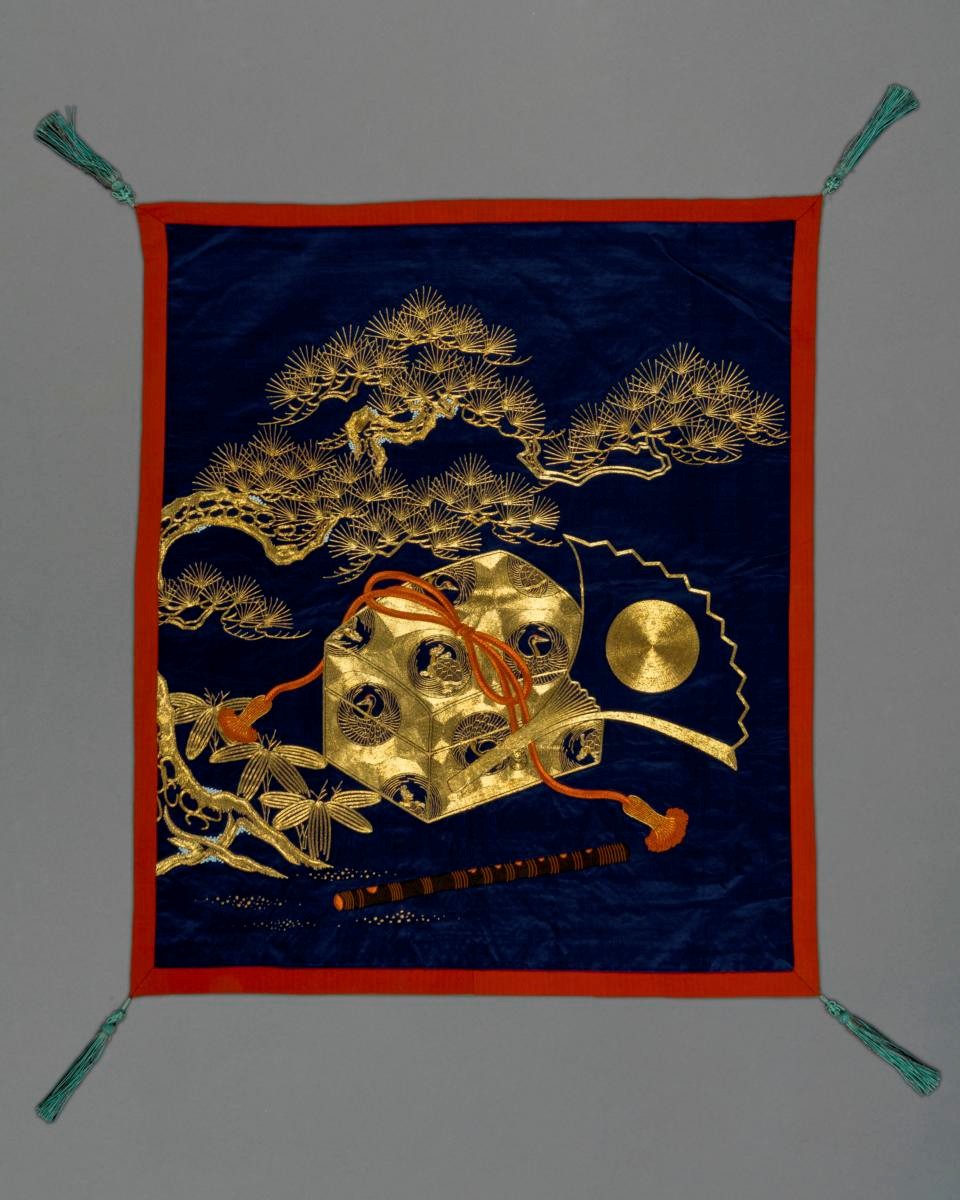
Object size: 102.0 x 92.0 cm (with tassels)
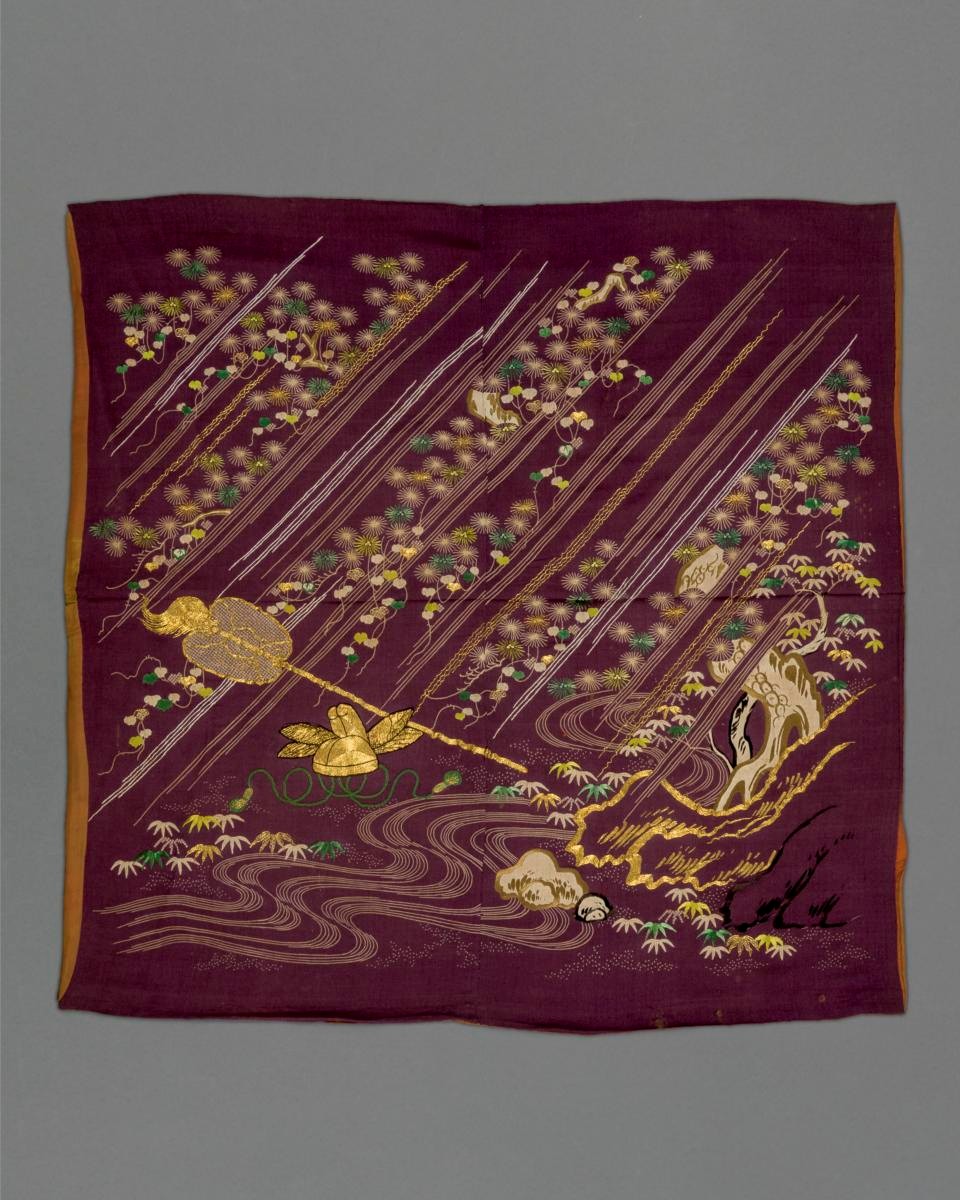
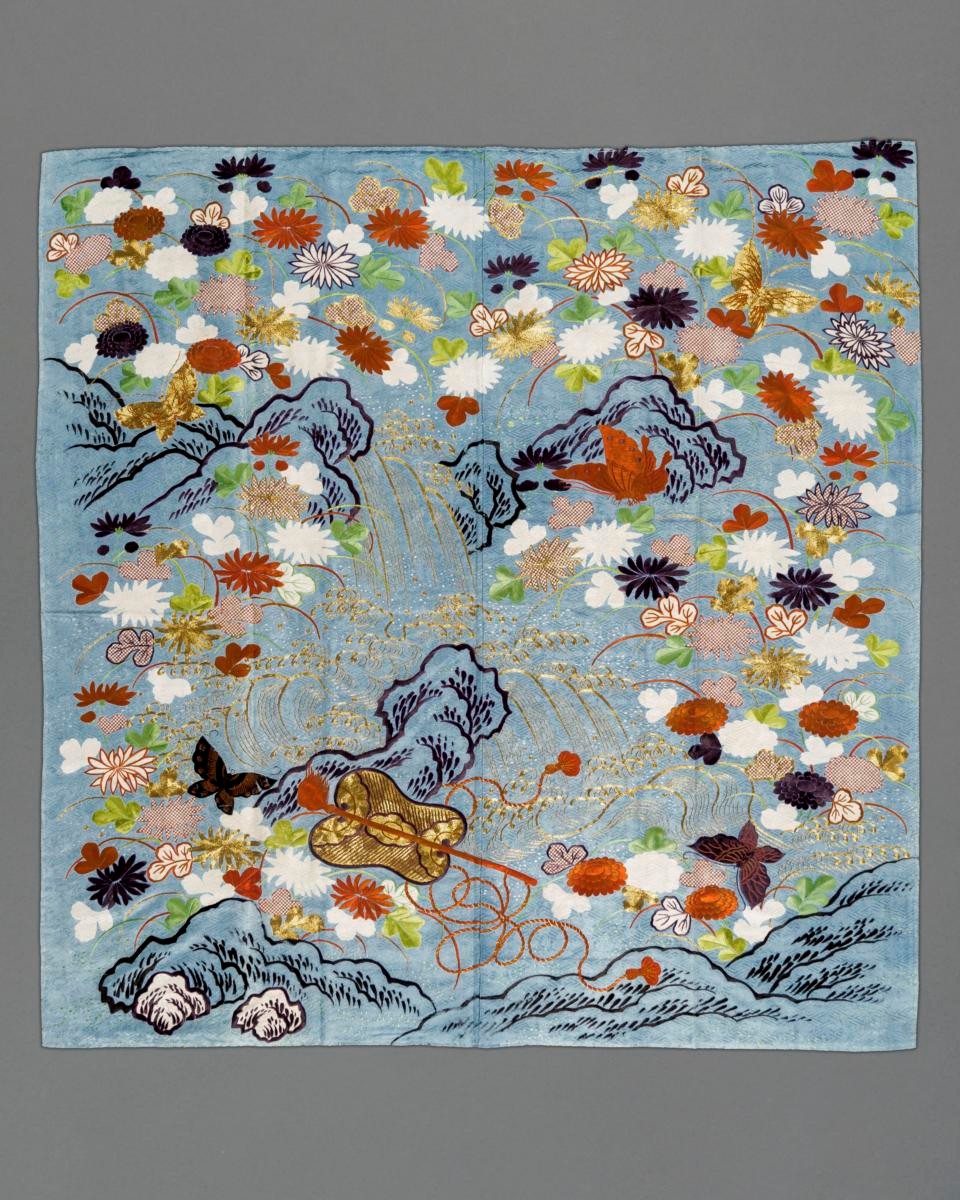
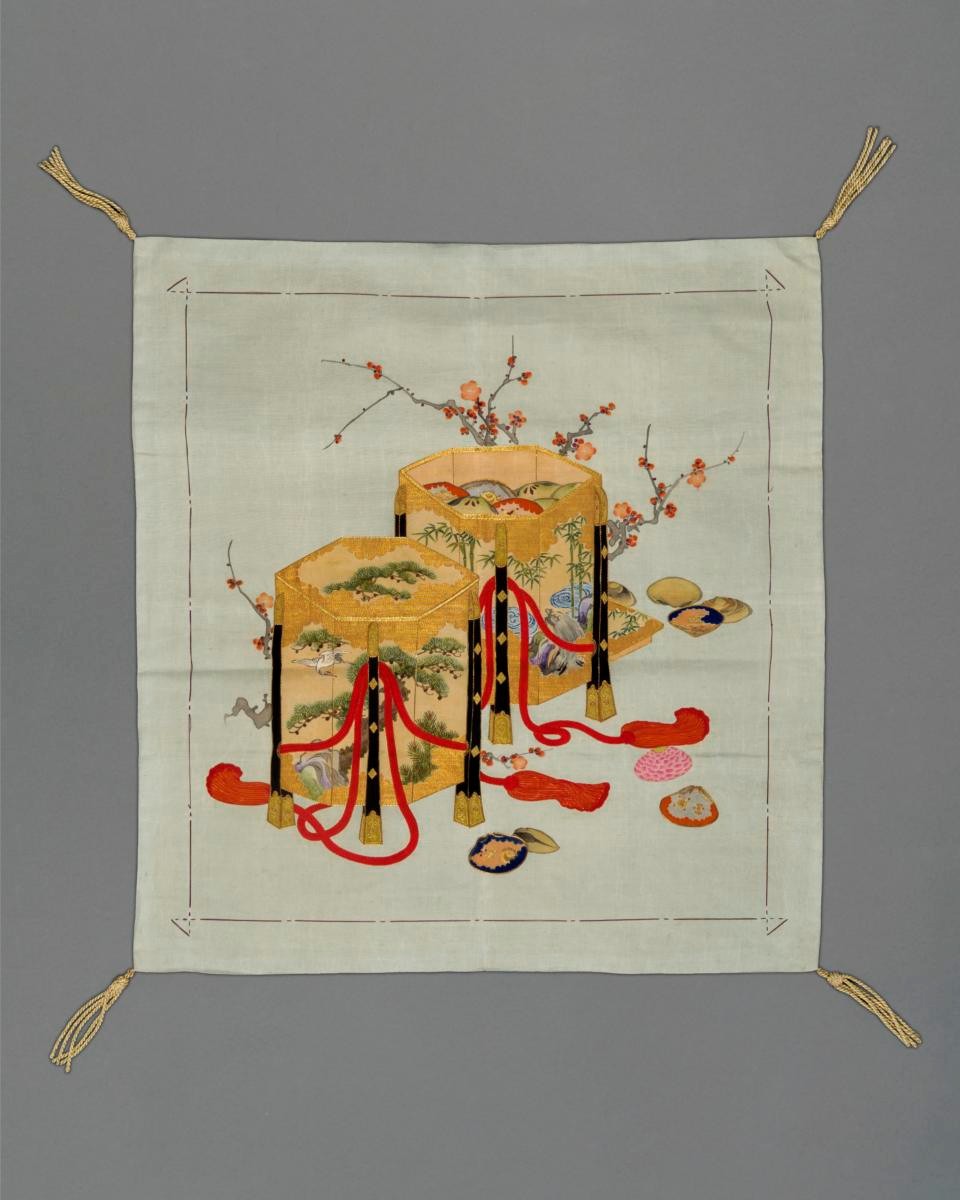
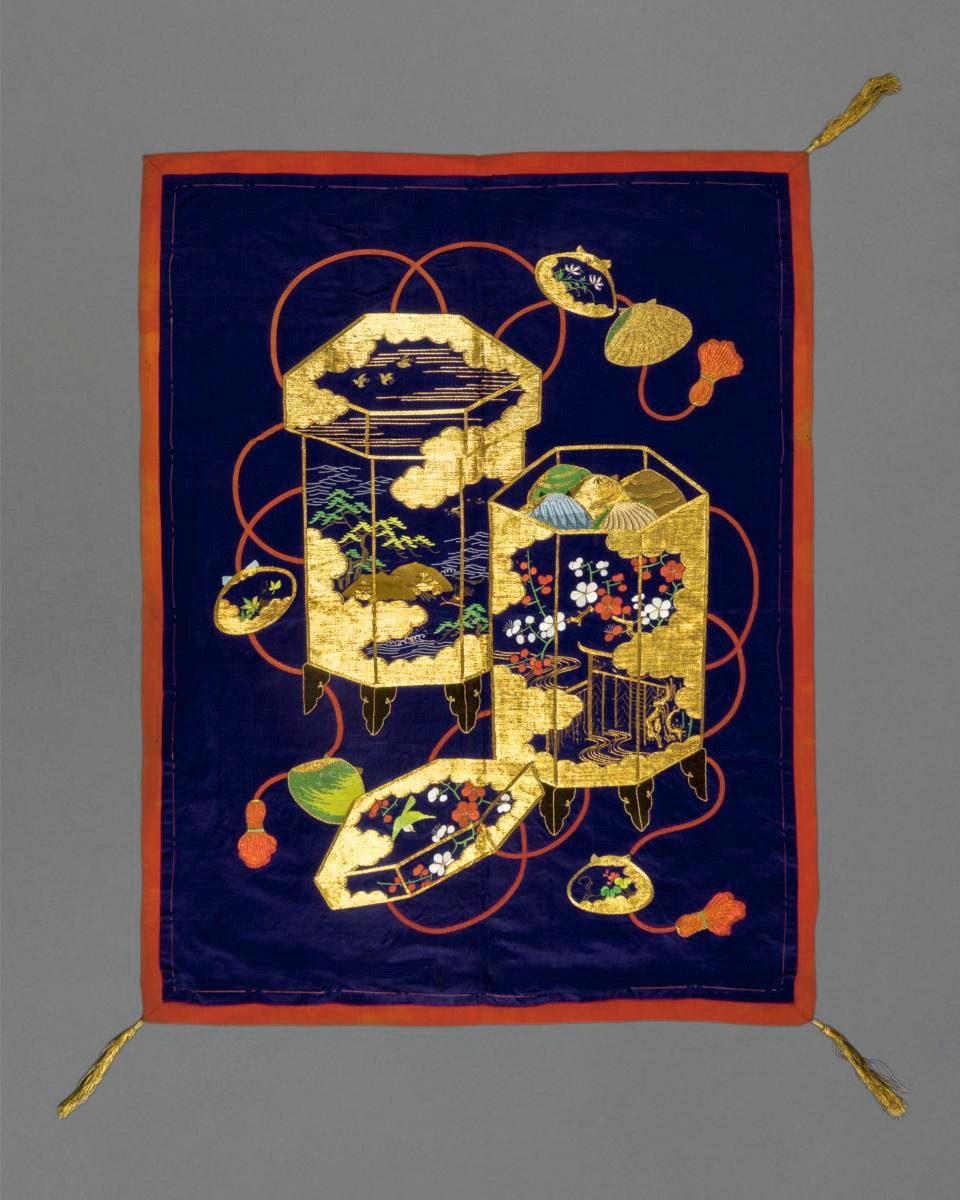
In Japan, the practice of formally presenting gifts with silk covers called fukusa began in the Edo period (1603–1868), around the late 17th or early 18th century. These covers were draped or folded over gifts for a variety of occasions, from seasonal festivities to important personal events. Each fukusa was carefully chosen to evoke the circumstance of the gift and to convey a message to the recipient through its design. Fukusa designs often feature symbolic objects or allusions to Japanese and Chinese stories. The choice of fukusa also reflected the giver’s wealth, taste, erudition, and cultural sensitivity. The use of fukusa continued into the early 20th century. Today, they are used in parts of Japan for weddings and corporate events. The fan, mask box, and flute are associated with the Noh play Okina – the only play in which the mask is taken out of its box onstage and worn by the actor. On this fukusa, the gold threads are masterfully laid onto the satin ground to create the tortoiseshell pattern of the box, which shimmers as light catches the surface. Okina is a sacred play, an invocation for peace and prosperity throughout the land. It is the first performance opening a formal programme of plays, and the first performed in the New Year.