
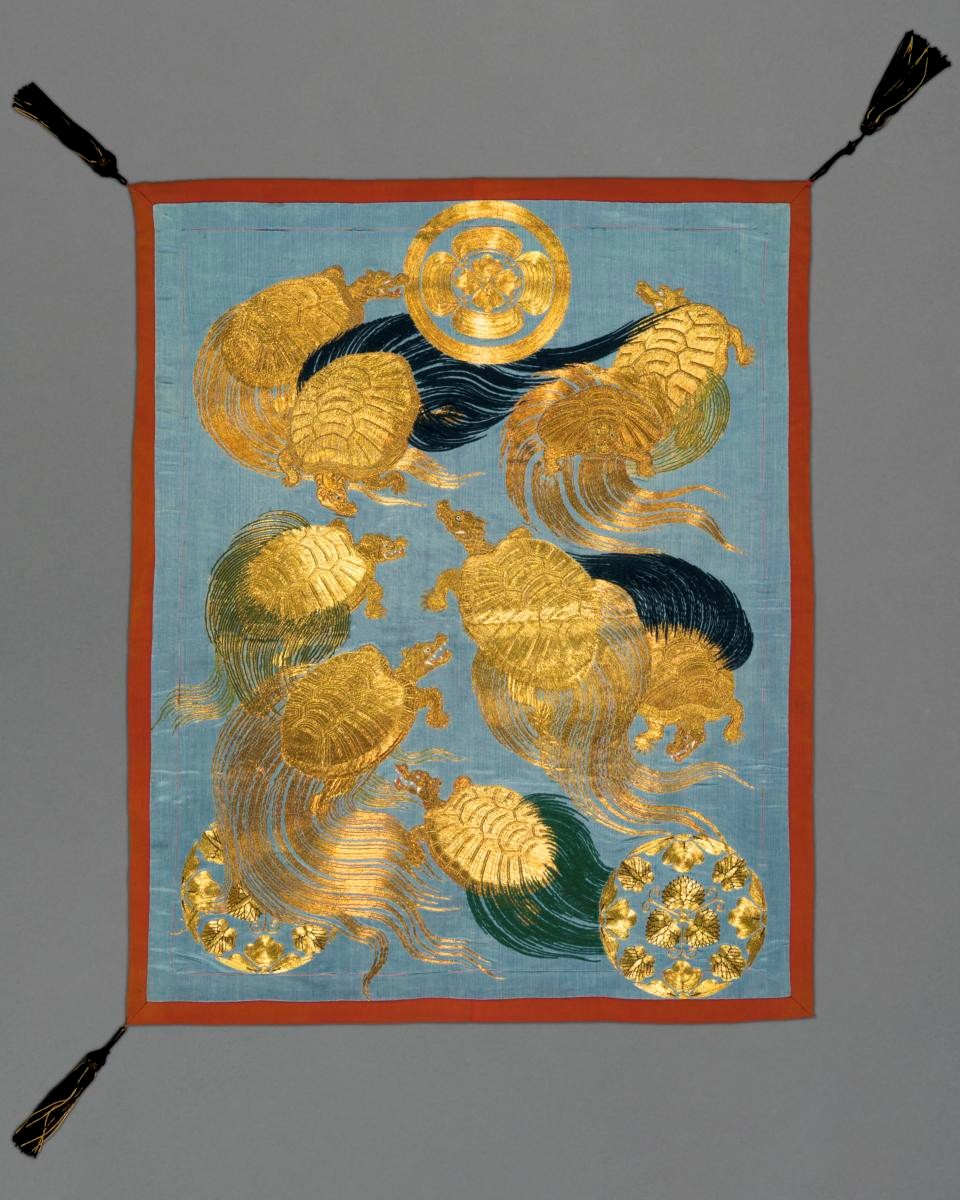
Object size: 109.0 x 90.0 cm (with tassels)
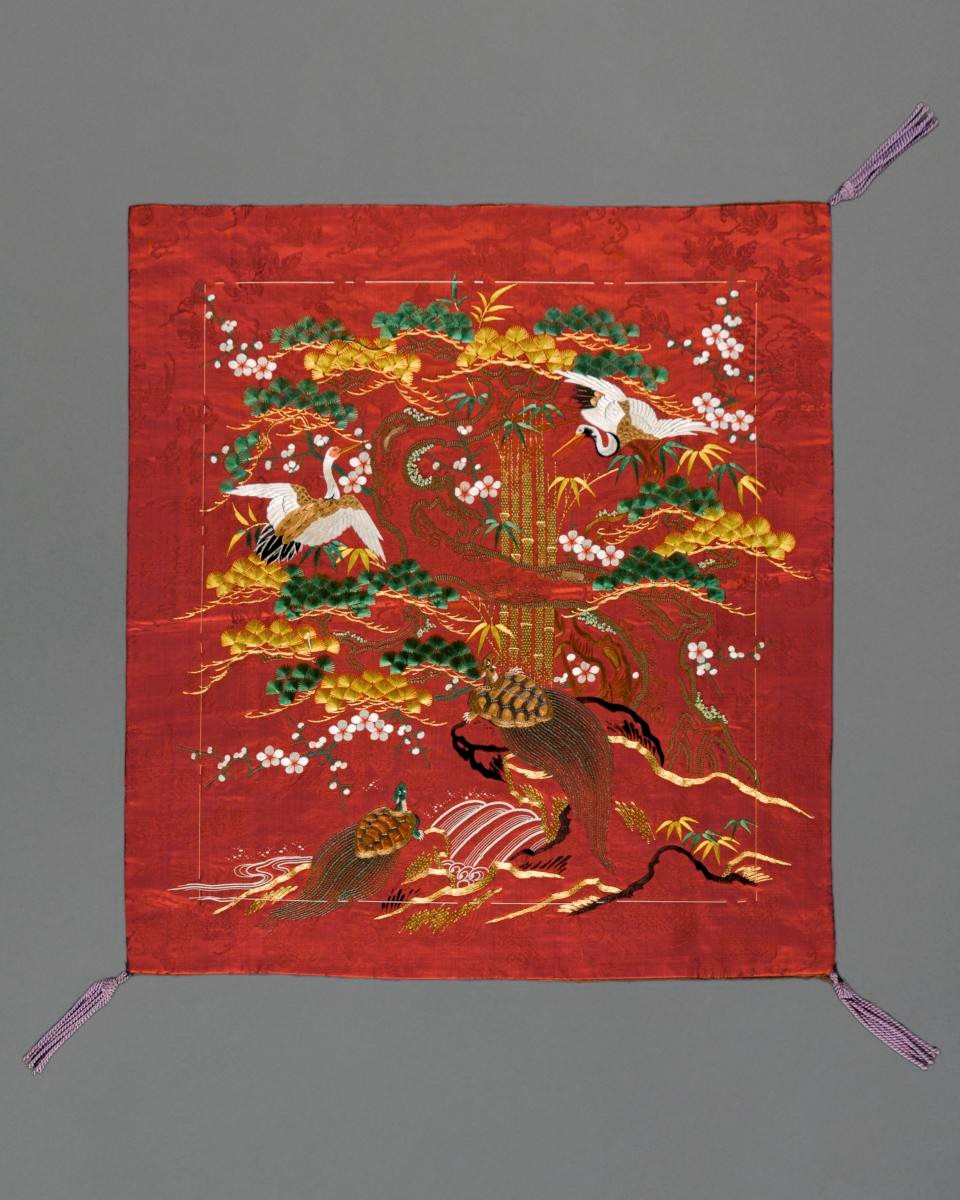
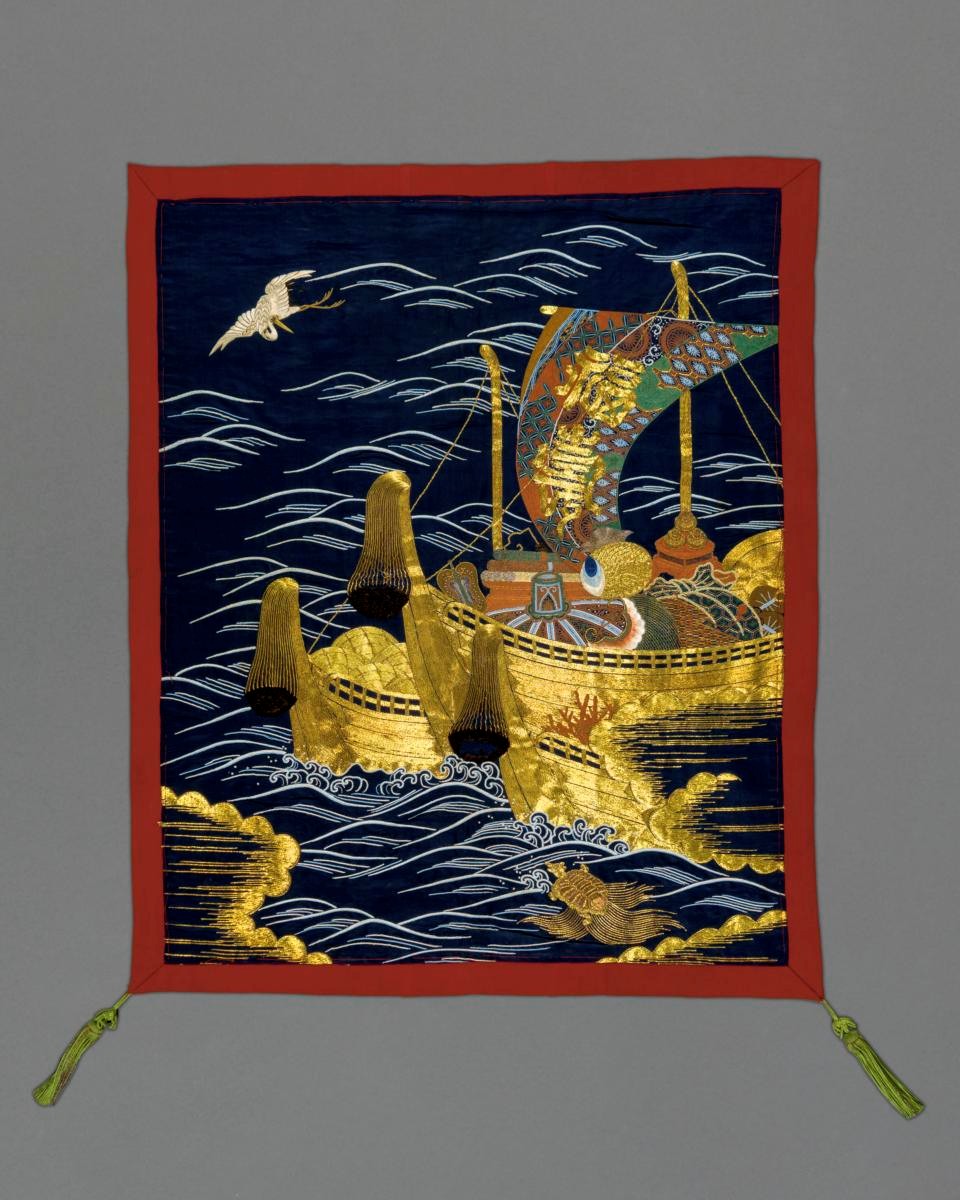
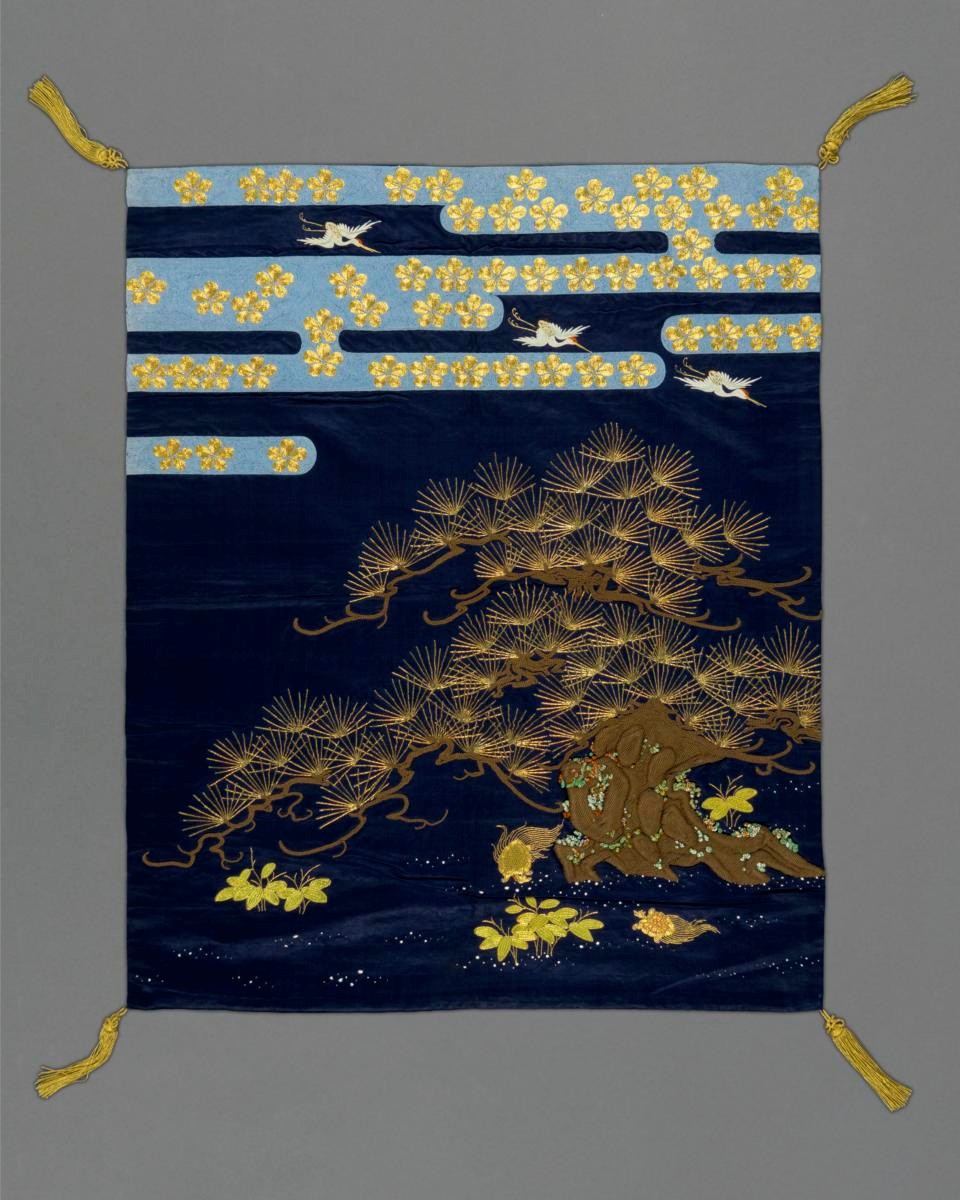
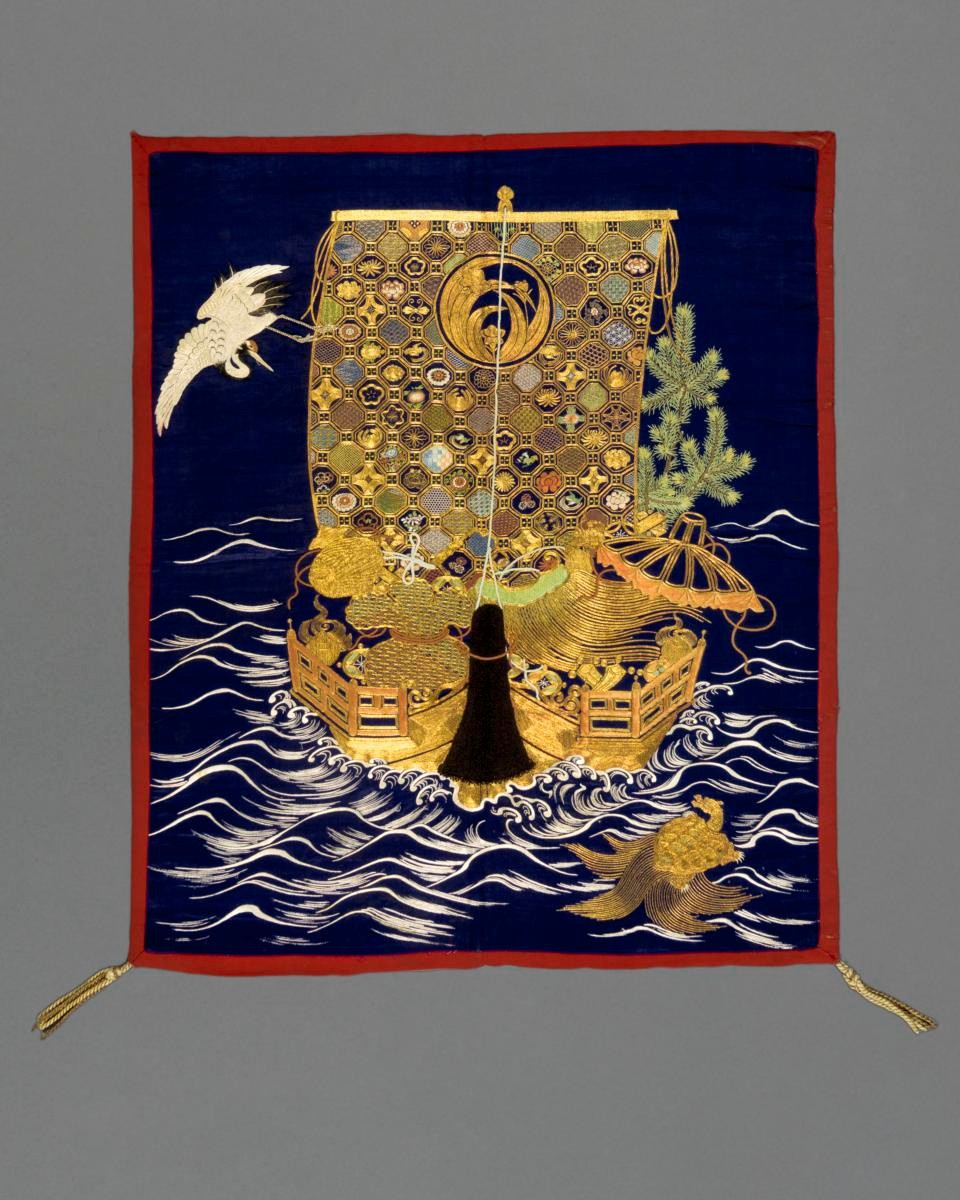
In Japan, the practice of formally presenting gifts with silk covers called fukusa began in the Edo period (1603–1868), around the late 17th or early 18th century. These covers were draped or folded over gifts for a variety of occasions, from seasonal festivities to important personal events. Each fukusa was carefully chosen to evoke the circumstance of the gift and to convey a message to the recipient through its design. Fukusa designs often feature symbolic objects or allusions to Japanese and Chinese stories. The choice of fukusa also reflected the giver’s wealth, taste, erudition, and cultural sensitivity. The use of fukusa continued into the early 20th century. Today, they are used in parts of Japan for weddings and corporate events. The nine minogame on this fukusa are lavishly embroidered in gold thread. Symbolising longevity and wisdom, the minogame is a turtle believed to live up to 10,000 years. Its name derives from the algae and seaweed that trail down its back to form a long tail, which resembles a farmer’s straw raincoat (mino). Here, the turtles’ mossy tails are represented by long strands of blue and green silk that appear to undulate as they swim. The patterns on their shells are raised with cords placed beneath the gold thread, while the eyes are small pieces of inlaid glass. This fukusa was suitable for conveying auspicious wishes. The presence of two different crests (mon) may suggest the coming together of two families.