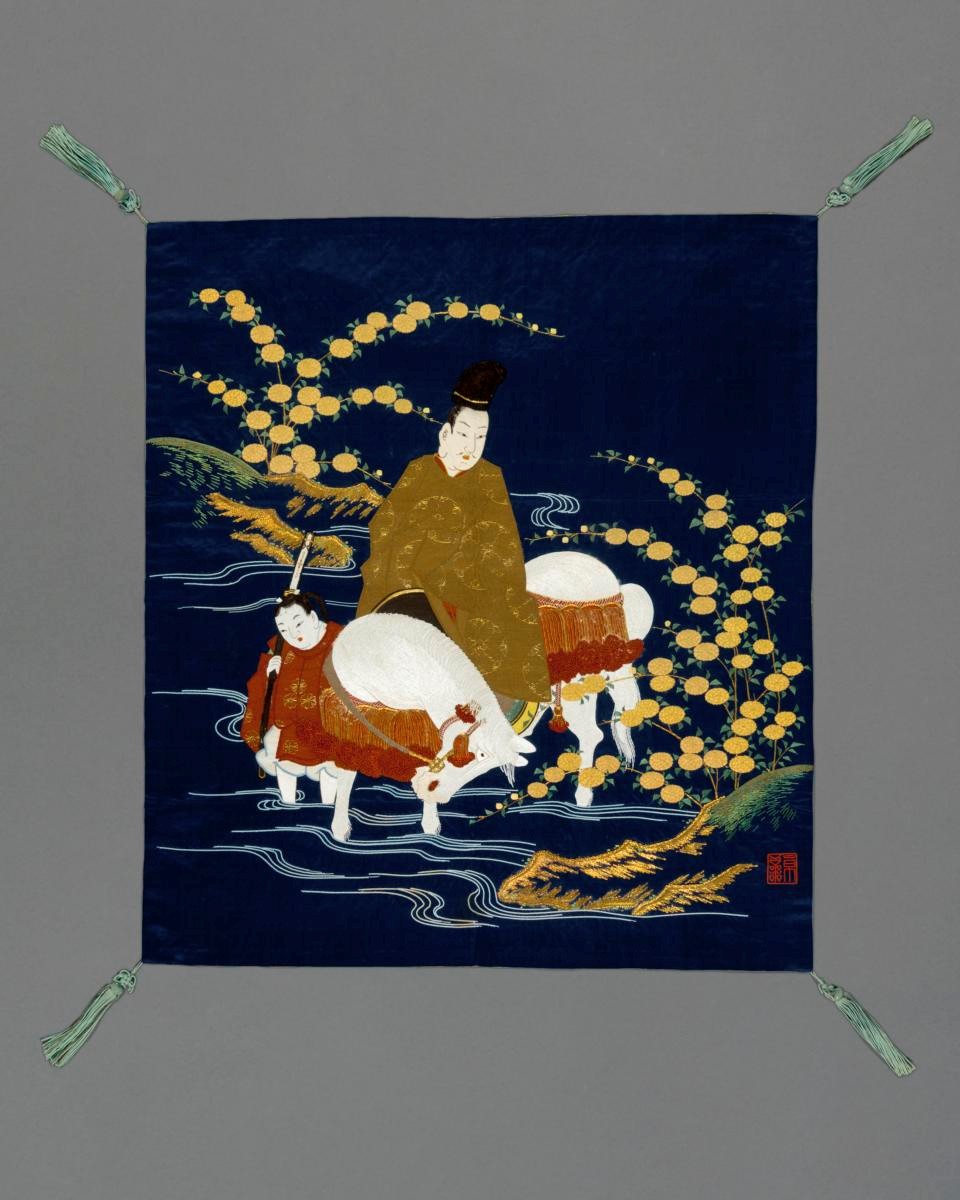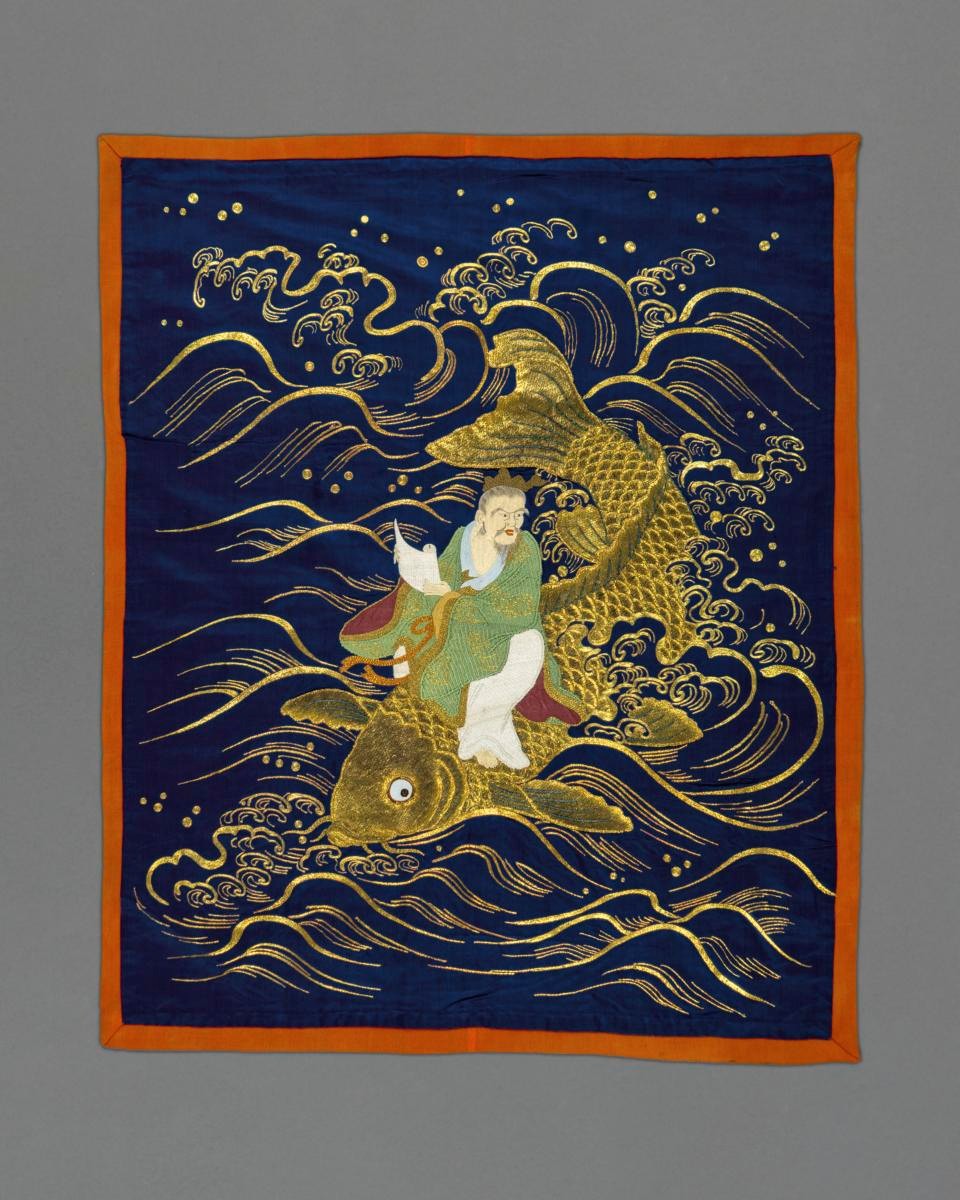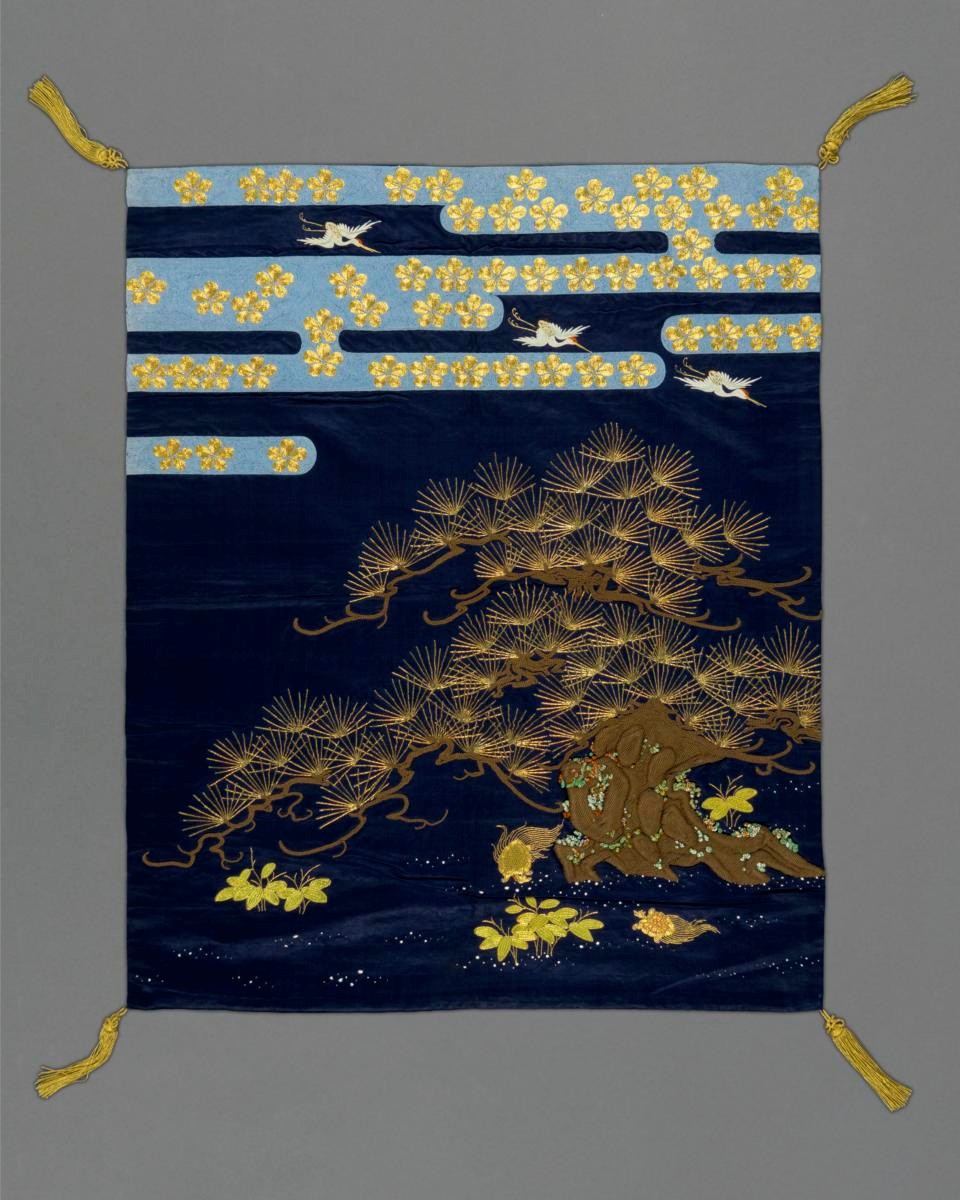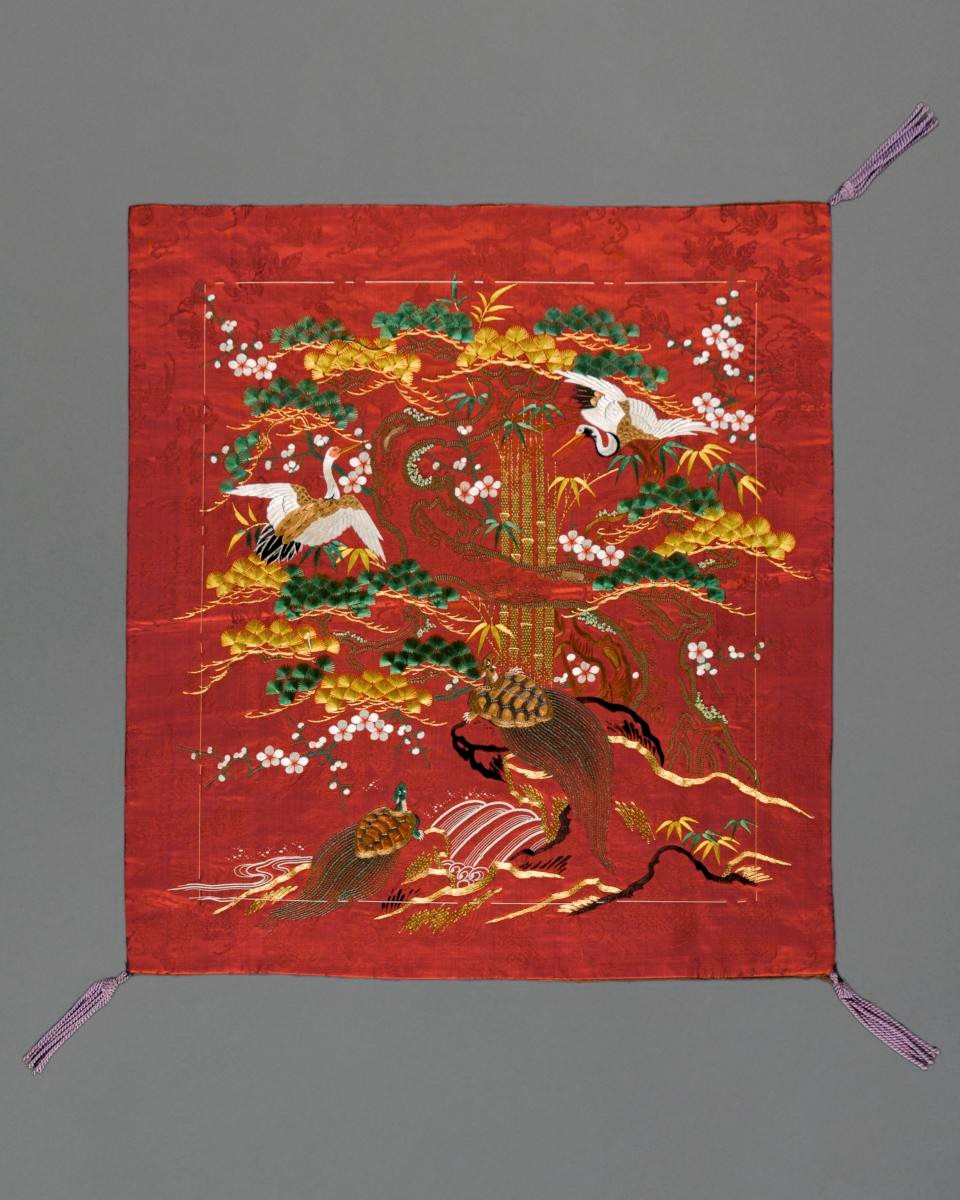

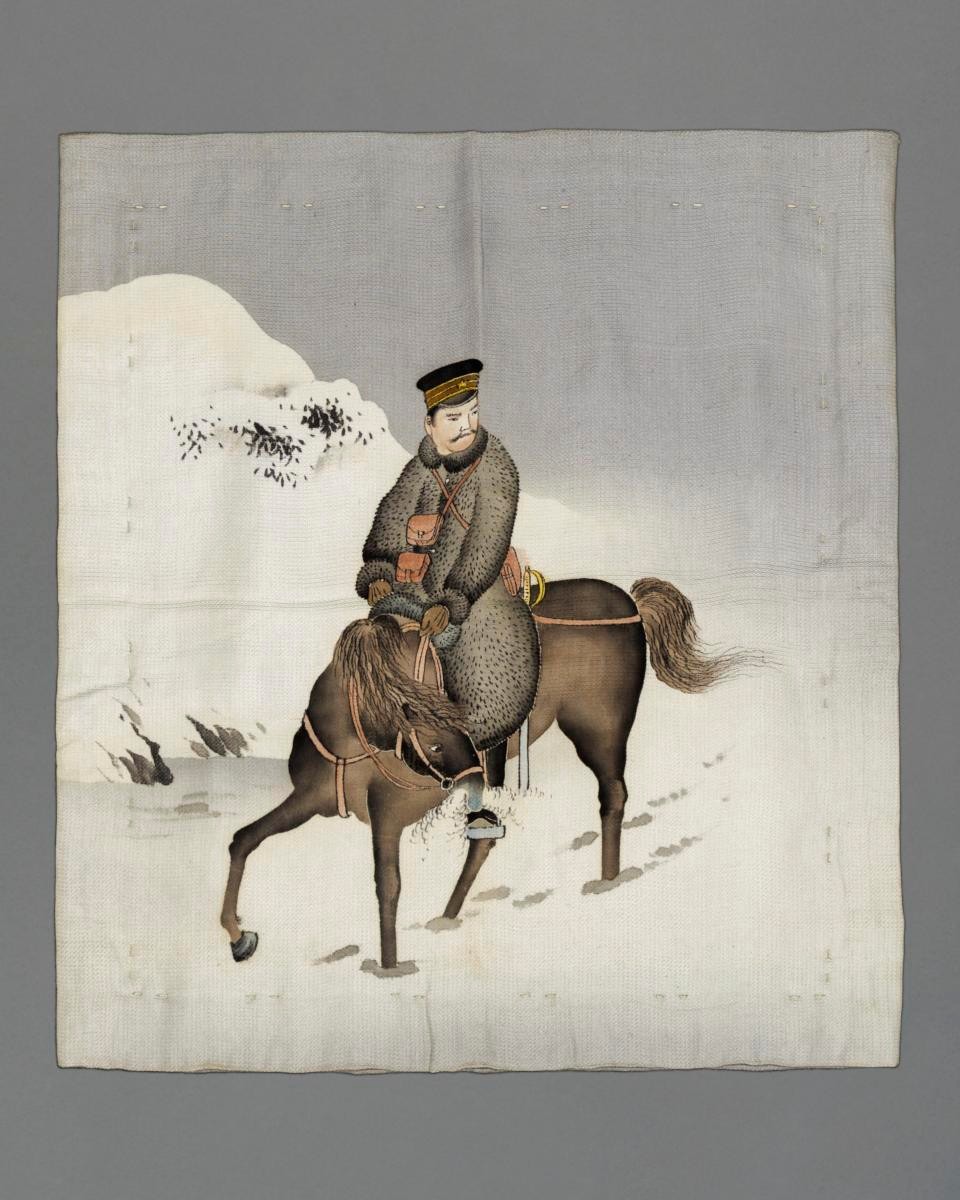
In Japan, the practice of formally presenting gifts with silk covers called fukusa began in the Edo period (1603–1868), around the late 17th or early 18th century. These covers were draped or folded over gifts for a variety of occasions, from seasonal festivities to important personal events. Each fukusa was carefully chosen to evoke the circumstance of the gift and to convey a message to the recipient through its design. Fukusa designs often feature symbolic objects or allusions to Japanese and Chinese stories. The choice of fukusa also reflected the giver’s wealth, taste, erudition, and cultural sensitivity. The use of fukusa continued into the early 20th century. Today, they are used in parts of Japan for weddings and corporate events. During the First Sino-Japanese (1894-1895) and Russo-Japanese (1904-1905) wars, memorial services were held for fallen soldiers. This was the first time fukusa were made for condolences. The lightweight gauze of this fukusa indicates that it was used for a memorial service in the summertime, such as the Bon festival, which commemorates the spirits of ancestors. This image of a soldier on horseback in a snowy landscape is drawn from contemporaneous woodblock prints. These prints served as journalistic reports from the battlefront, often celebrating Japanese soldiers while demonising the enemy.