
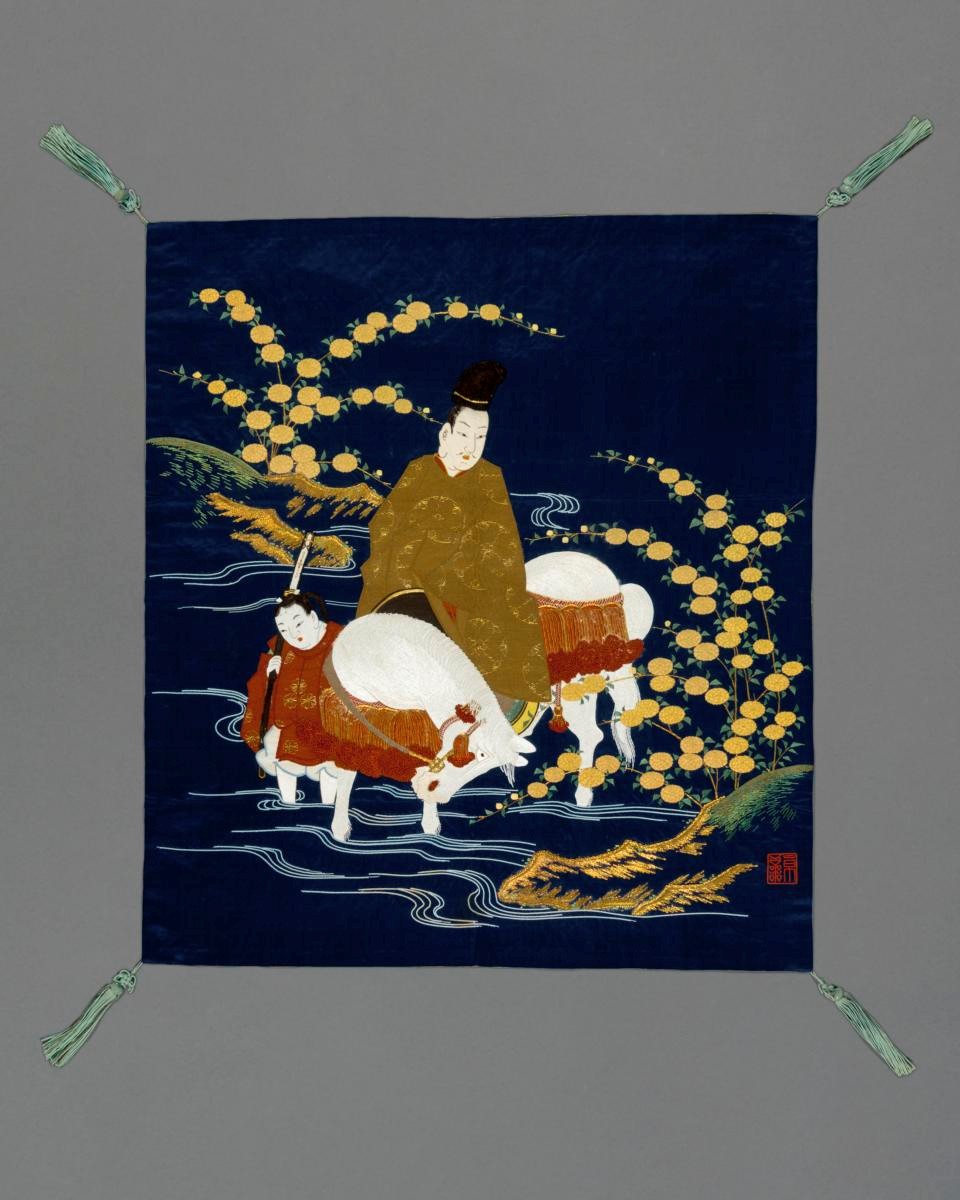
Object size: 94.0 x 86.0 cm (with tassels)
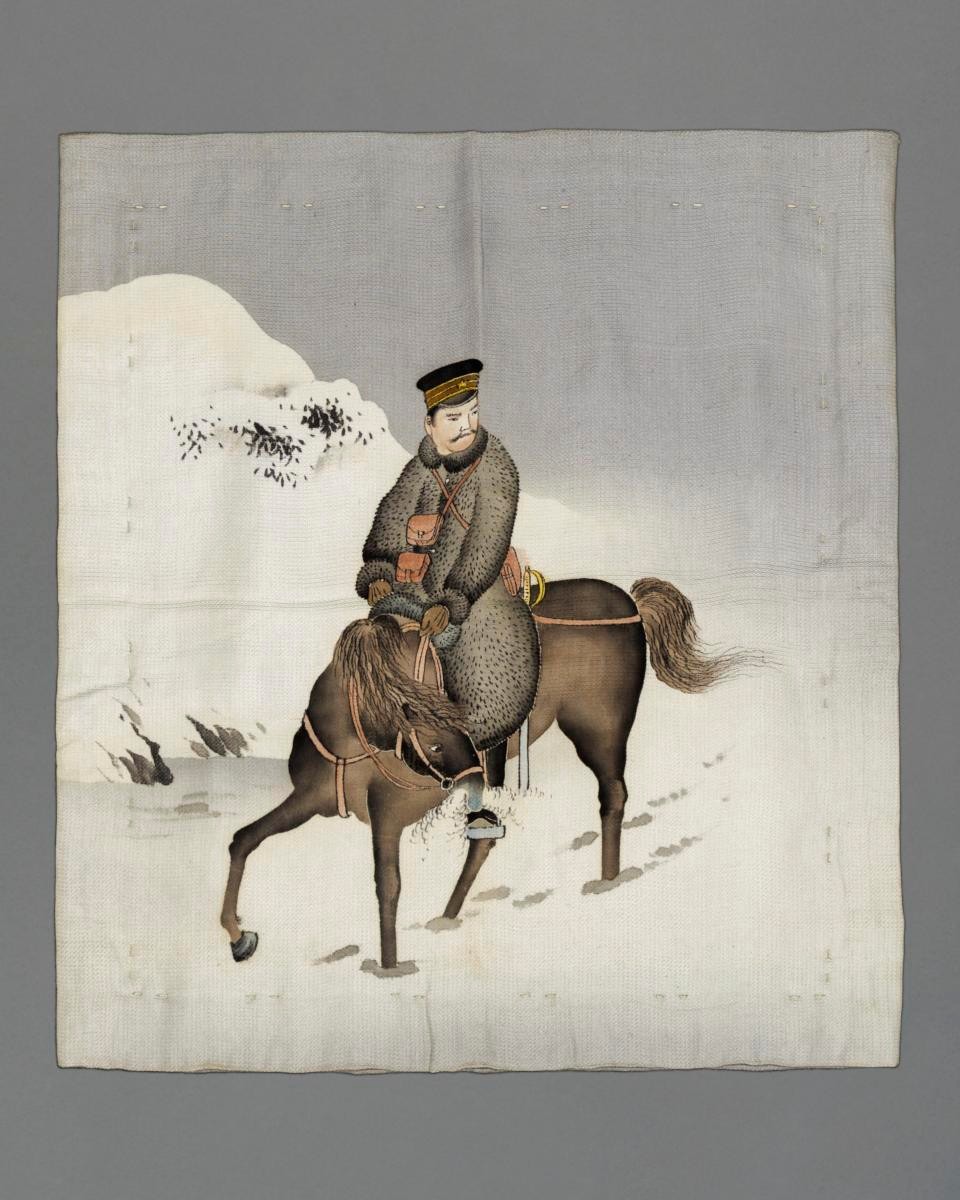
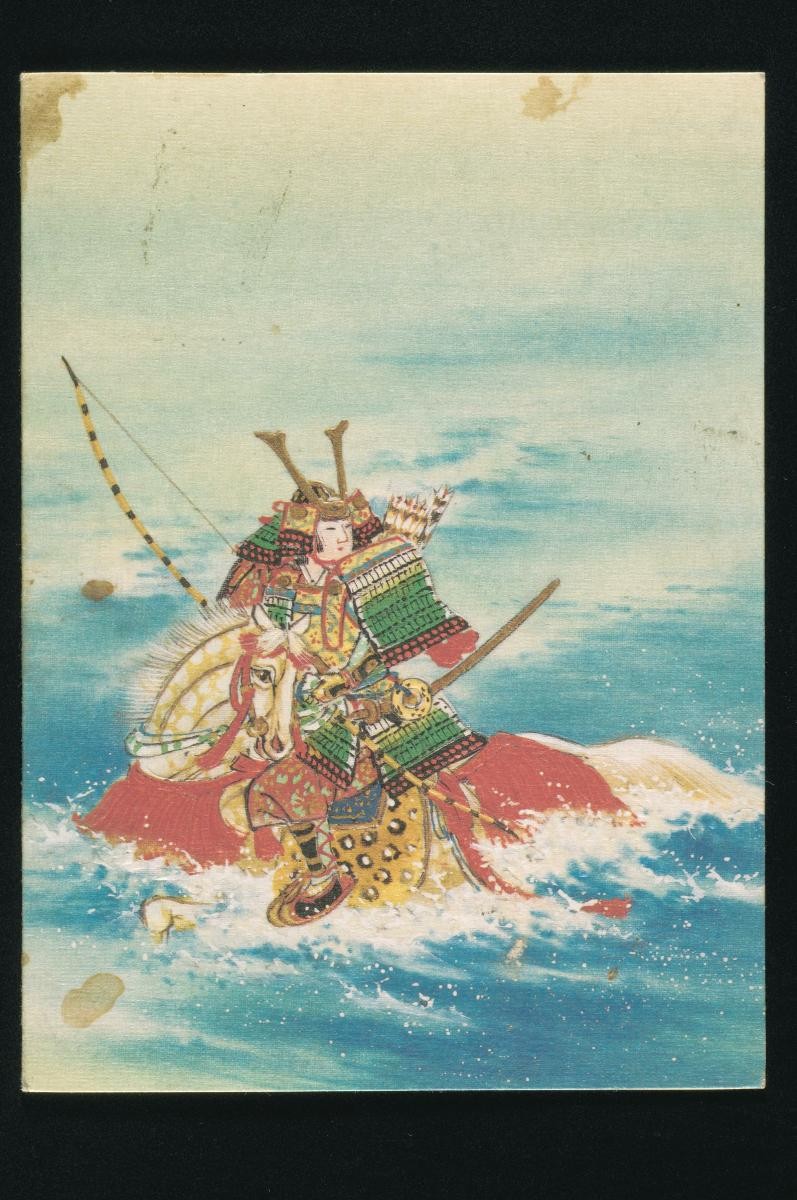
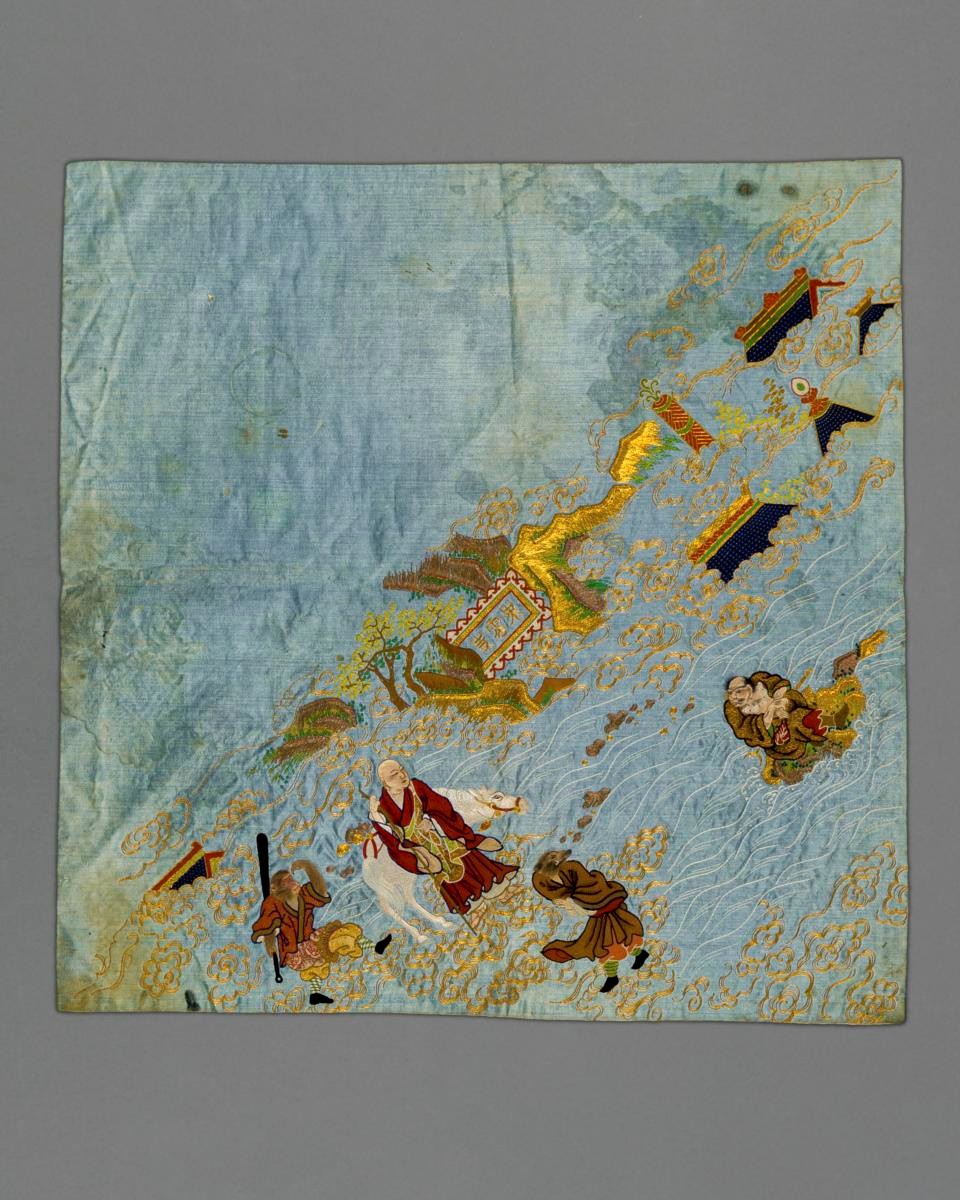
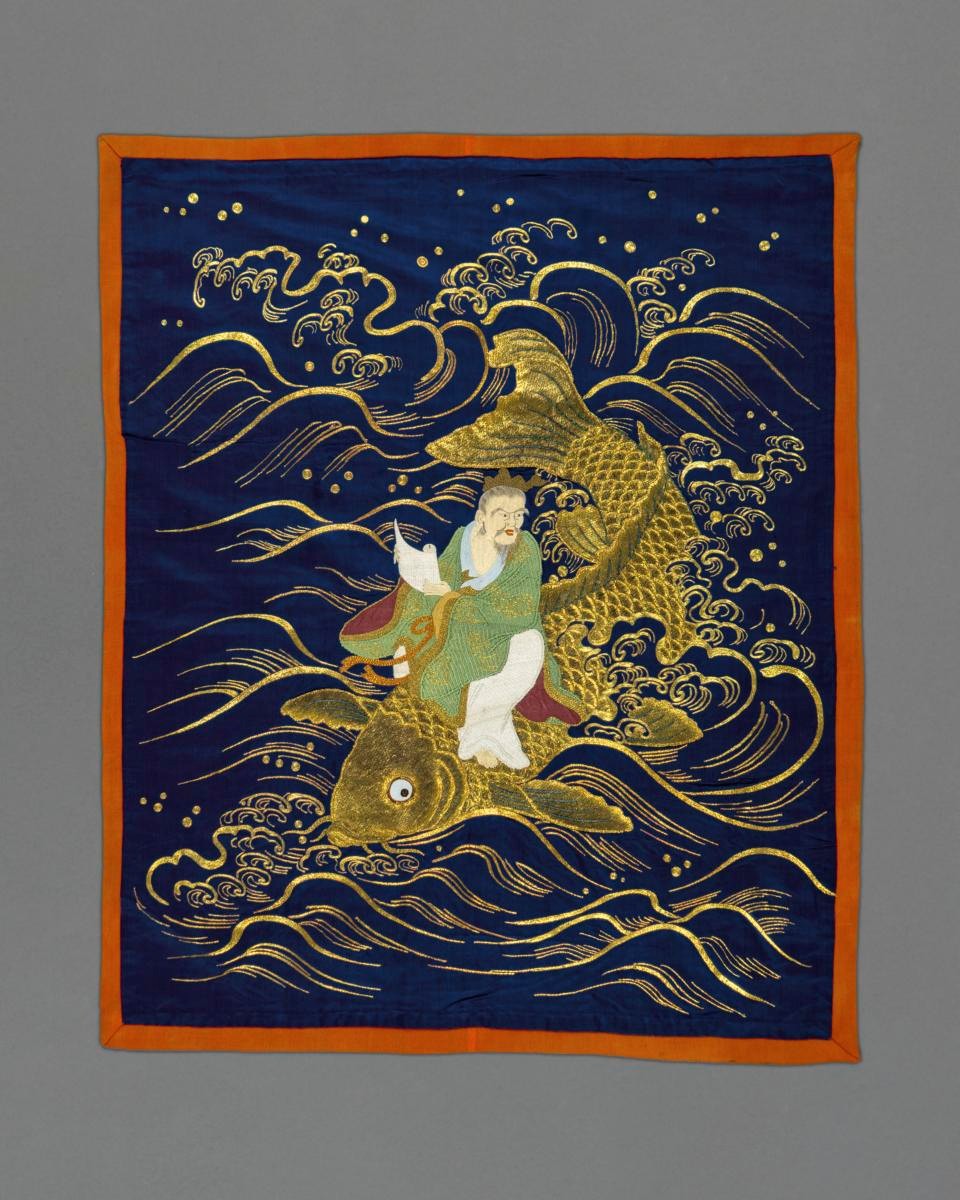
In Japan, the practice of formally presenting gifts with silk covers called fukusa began in the Edo period (1603–1868), around the late 17th or early 18th century. These covers were draped or folded over gifts for a variety of occasions, from seasonal festivities to important personal events. Each fukusa was carefully chosen to evoke the circumstance of the gift and to convey a message to the recipient through its design. Fukusa designs often feature symbolic objects or allusions to Japanese and Chinese stories. The choice of fukusa also reflected the giver’s wealth, taste, erudition, and cultural sensitivity. The use of fukusa continued into the early 20th century. Today, they are used in parts of Japan for weddings and corporate events.The figure’s courtly attire and luxuriously caparisoned horse suggests his aristocratic identity. His horse bends down to drink from the flowing water, surrounded by lush yellow flowers. The scene is a depiction of a poem by Heian court poet Fujiwara no Shunzei (1114–1204): Koma tometenao mizu kawanyamabuki nohana no tsuyu souIde no Tamagawa.I shall hold backMy steed, and let him drink his fillHere at Ide, whereYellow roses thick with dewSwell the Tama River's flow. Ide no Tamagawa in Kyoto Prefecture is known for the golden yellow yamabuki (Japanese rose) that grow on its banks. The seal in the lower right corner suggests that the composition was based on a painting. The embroiderer masterfully conveys a variety of textures and surfaces with thread and needle. Twisted long and short stitches (sashi-nui) built up in layers suggest the textured coat of the horse, clusters of round knots (sagara-nui) evoke fluffy tassels, and finely couched threads delineate the flower petals.