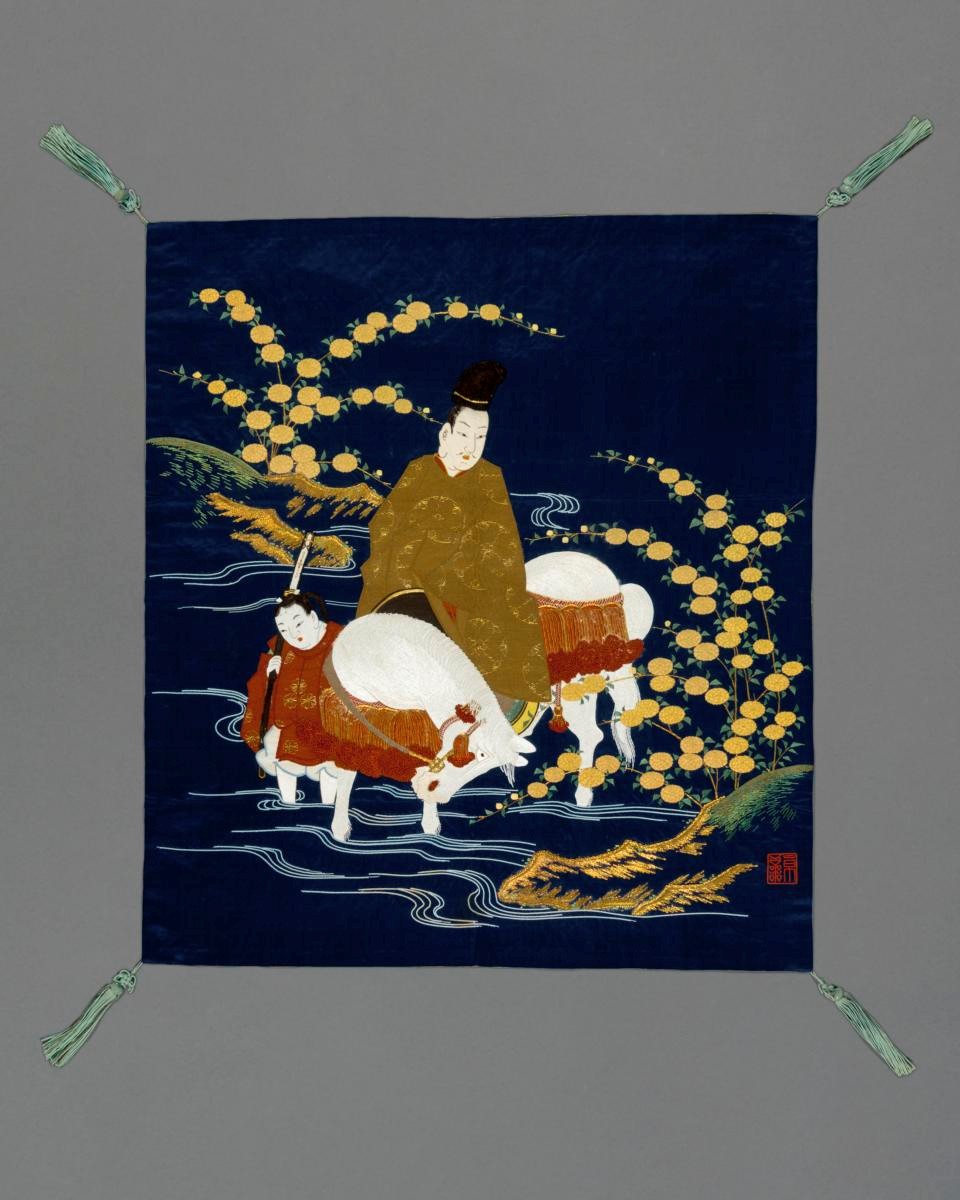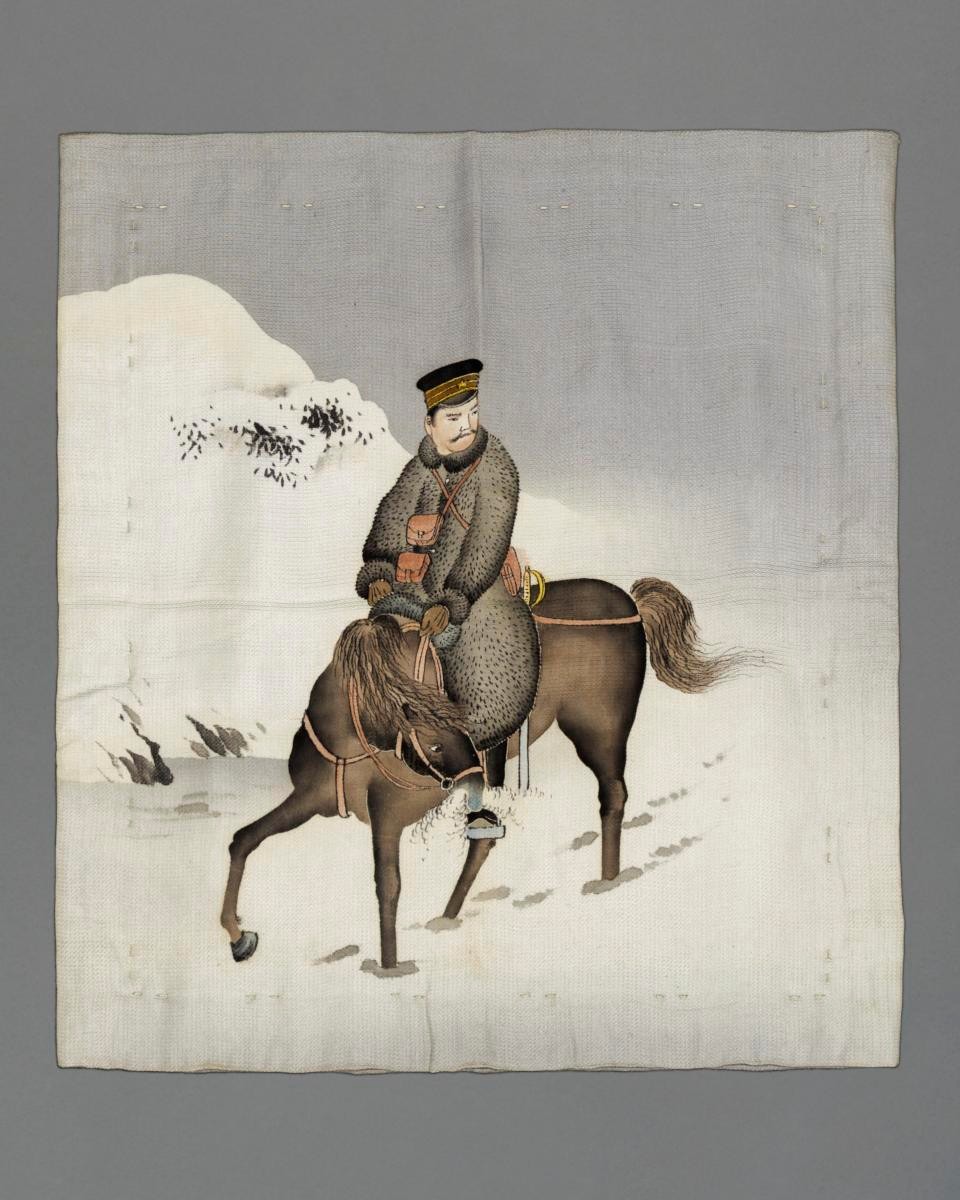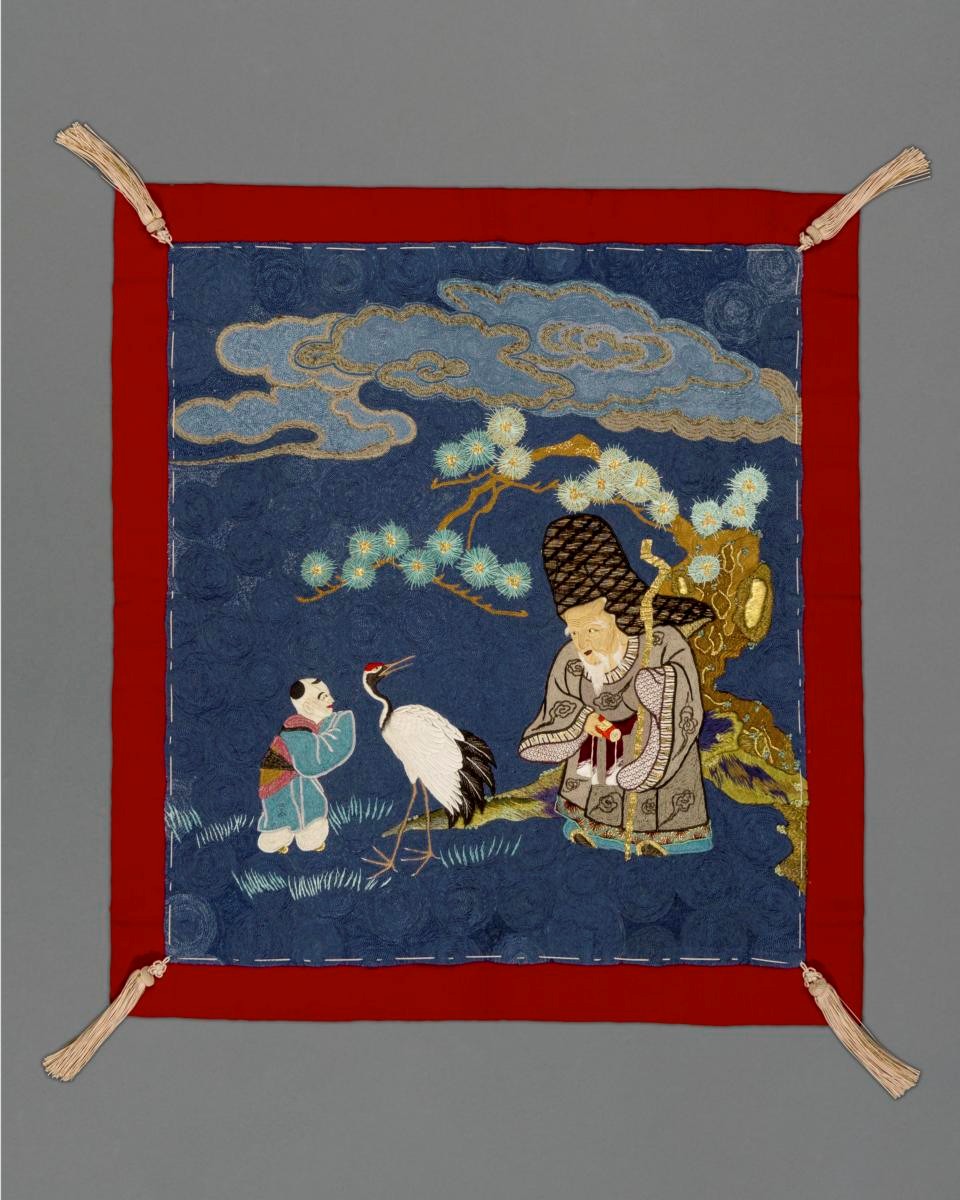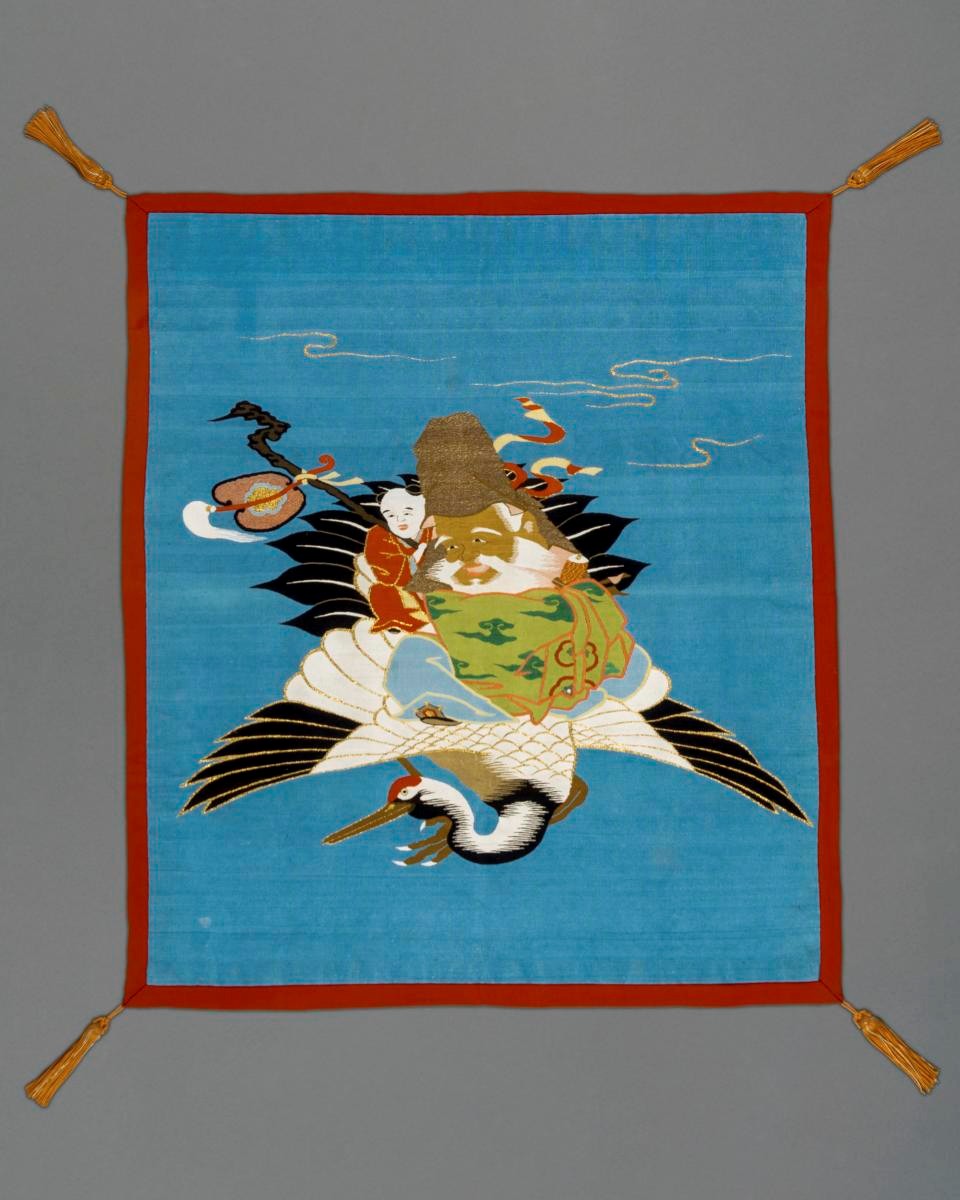

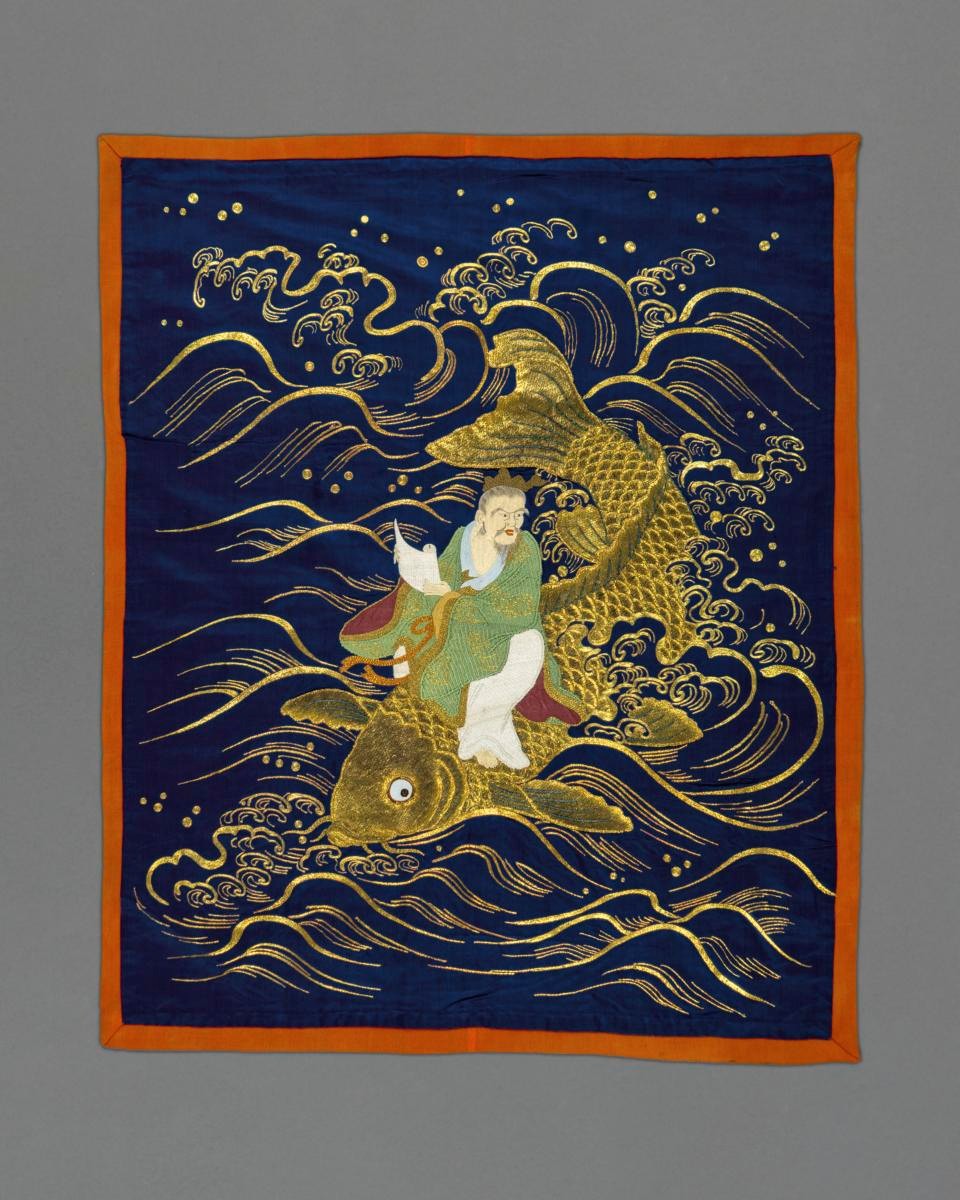
In Japan, the practice of formally presenting gifts with silk covers called fukusa began in the Edo period (1603–1868), around the late 17th or early 18th century. These covers were draped or folded over gifts for a variety of occasions, from seasonal festivities to important personal events. Each fukusa was carefully chosen to evoke the circumstance of the gift and to convey a message to the recipient through its design. Fukusa designs often feature symbolic objects or allusions to Japanese and Chinese stories. The choice of fukusa also reflected the giver’s wealth, taste, erudition, and cultural sensitivity. The use of fukusa continued into the early 20th century. Today, they are used in parts of Japan for weddings and corporate events. The Daoist immortal Kinkō (Qin Gao) was fond of fish. According to one legend, on his 200th birthday, a giant carp took him on a tour of the waterways, and he returned carrying a scroll urging humans not to kill fish. The subject of Kinkō riding a carp was thought to bring good luck, and was popular with artists in the Edo and Meiji periods. The scales of the fish are emphasised in relief through the placement of cording under the gold threads.