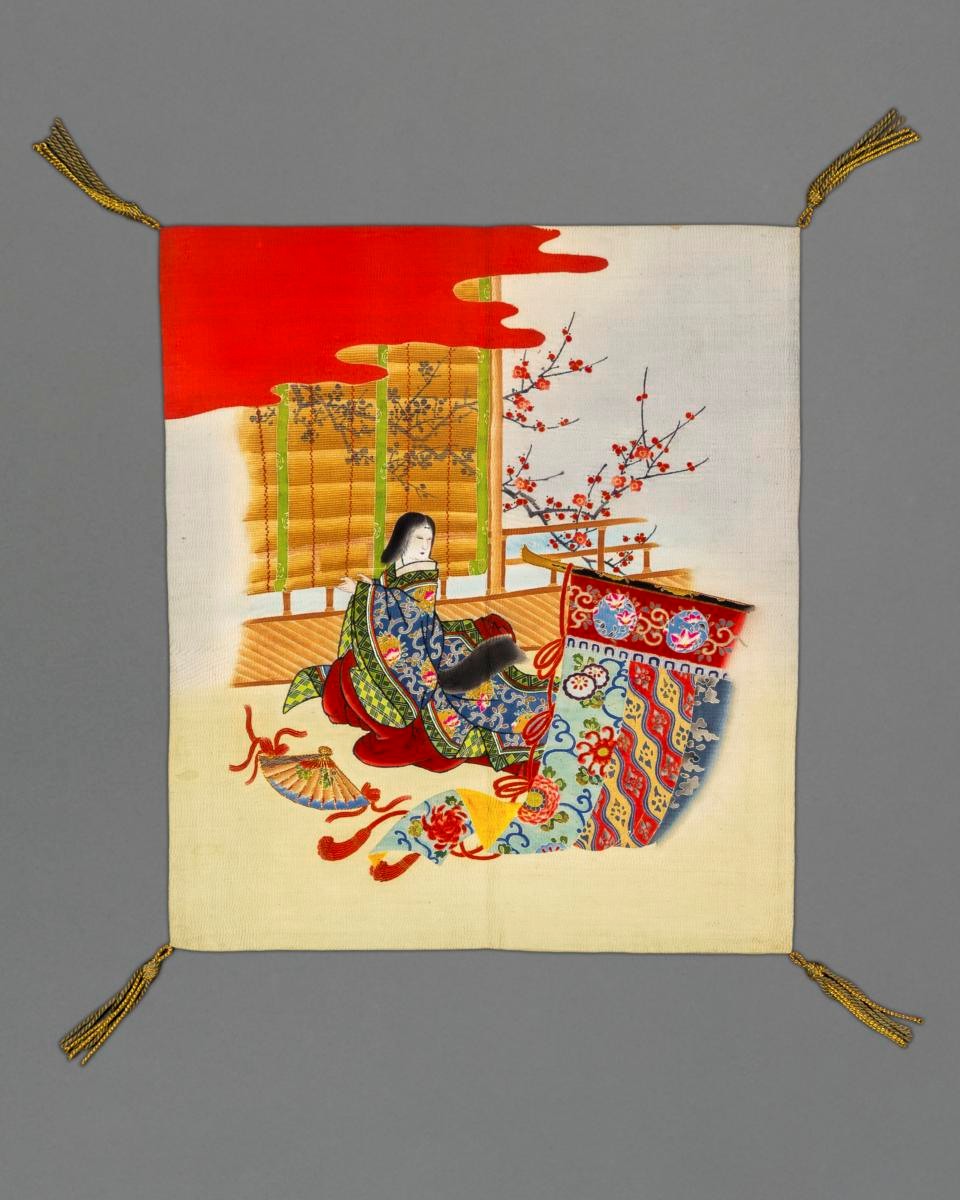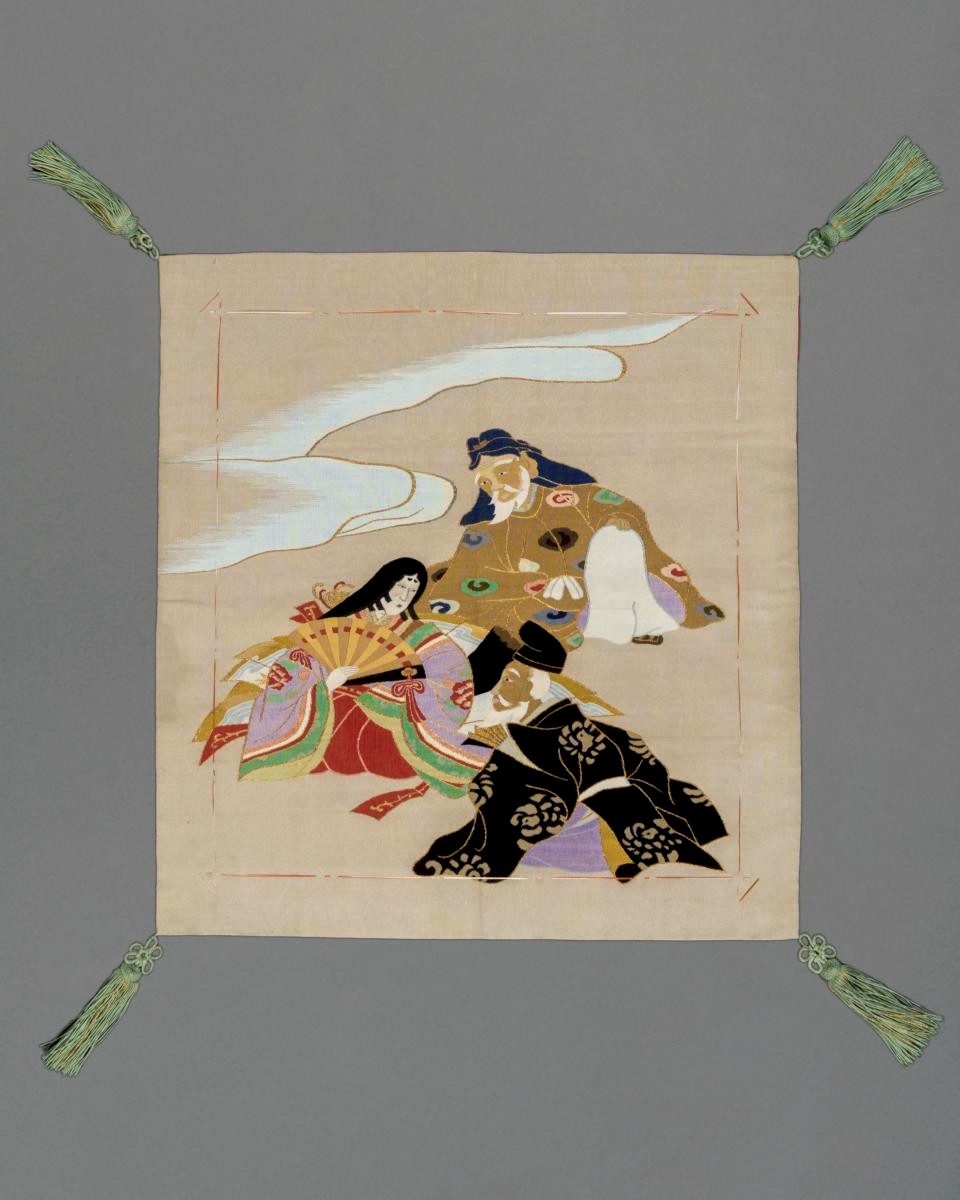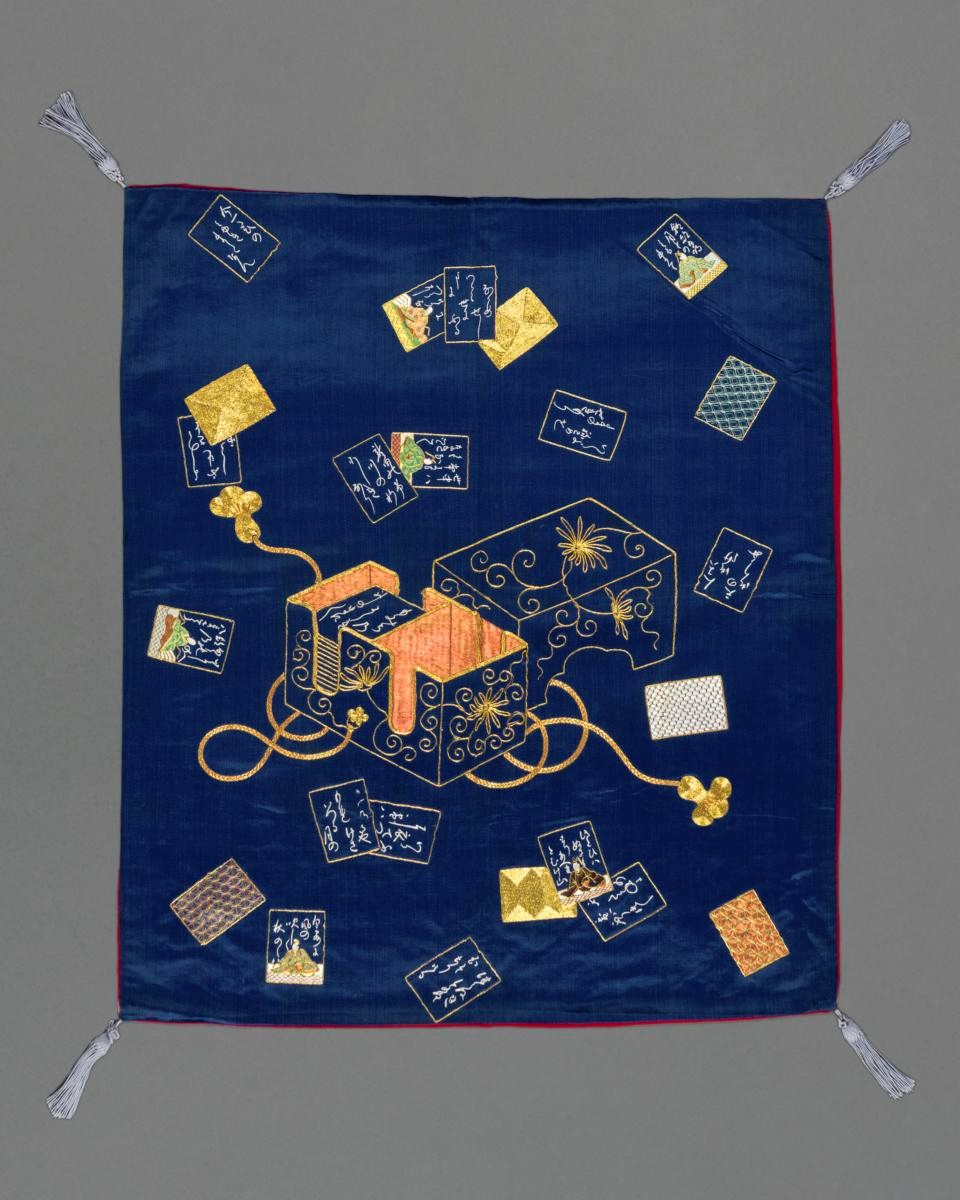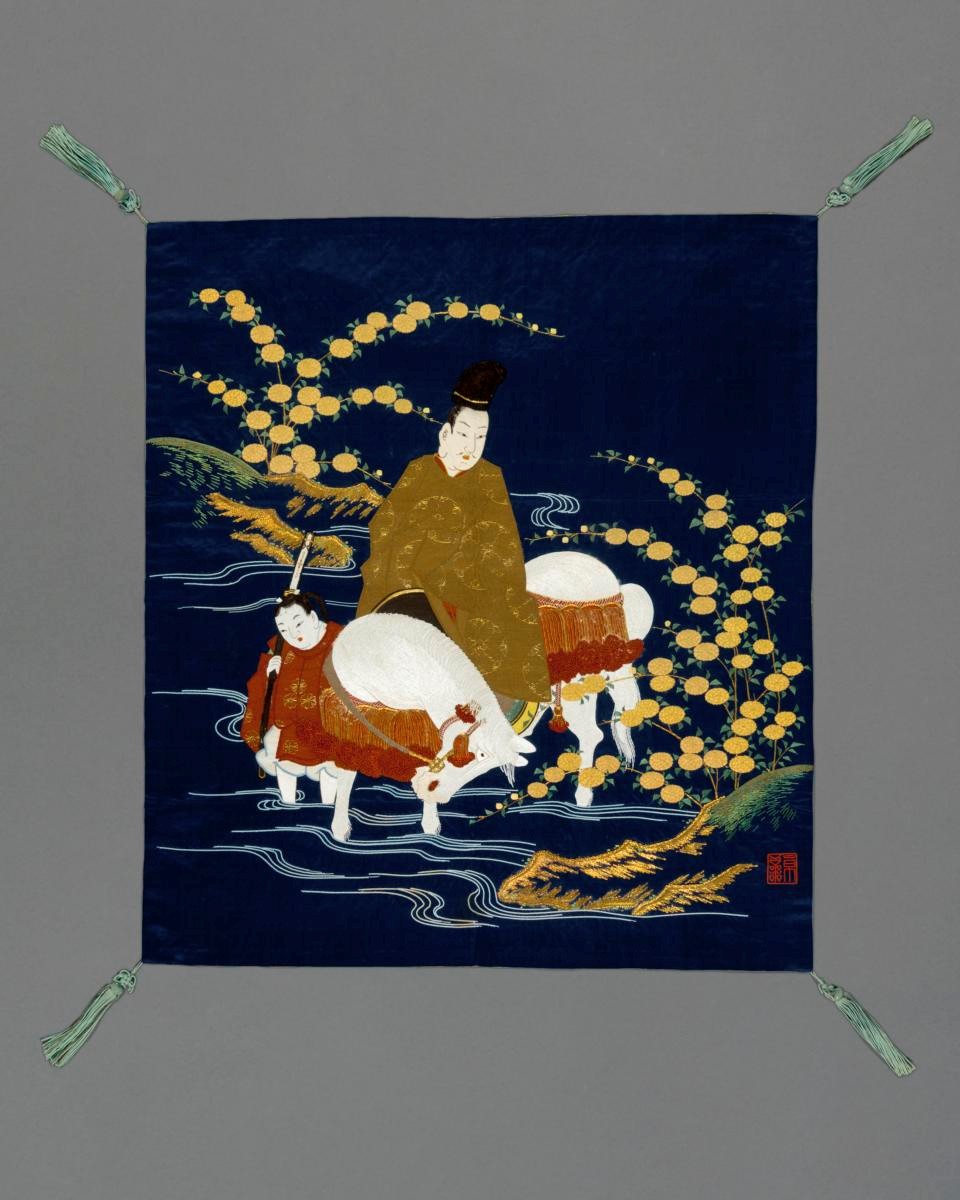

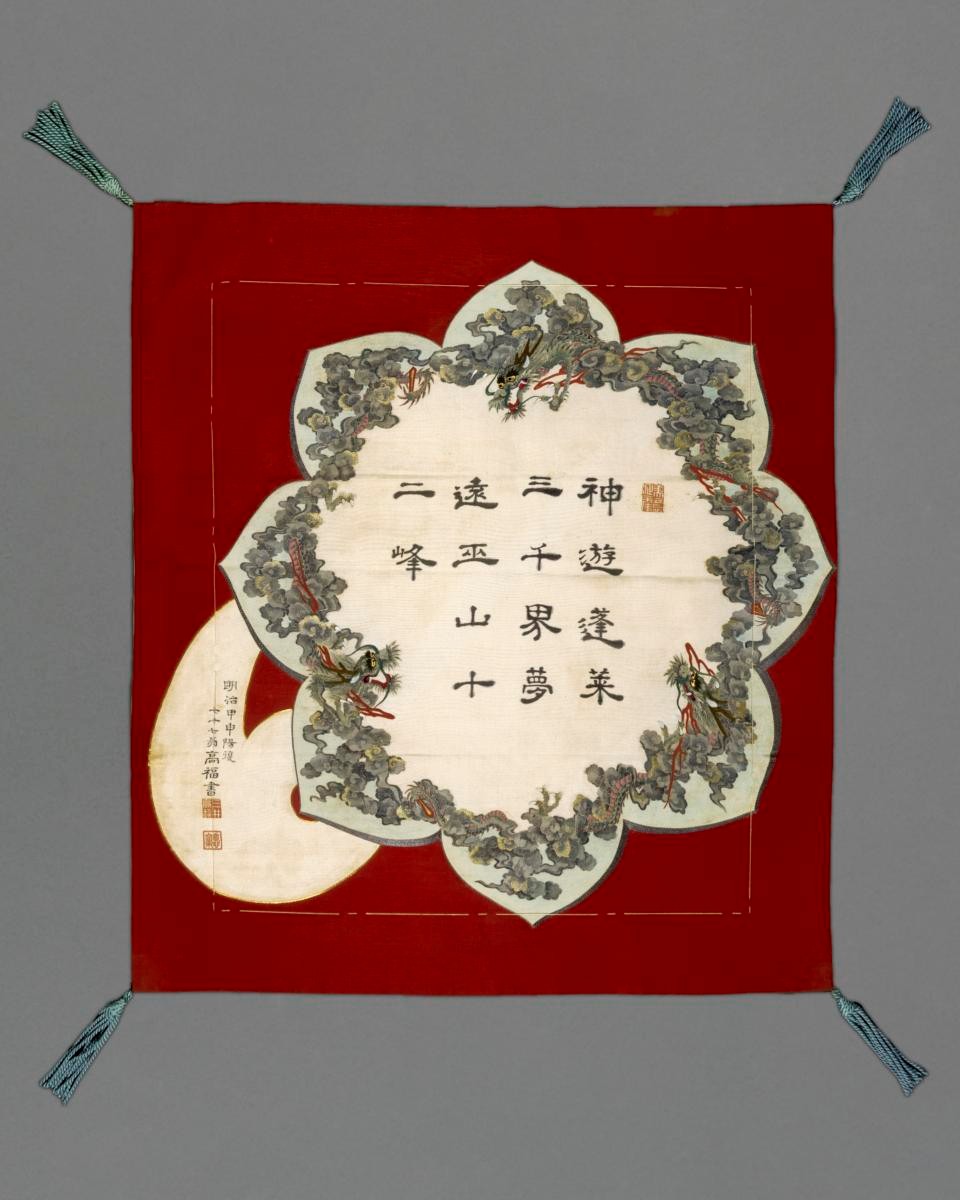
In Japan, the practice of formally presenting gifts with silk covers called fukusa began in the Edo period (1603–1868), around the late 17th or early 18th century. These covers were draped or folded over gifts for a variety of occasions, from seasonal festivities to important personal events. Each fukusa was carefully chosen to evoke the circumstance of the gift and to convey a message to the recipient through its design. Fukusa designs often feature symbolic objects or allusions to Japanese and Chinese stories. The choice of fukusa also reflected the giver’s wealth, taste, erudition, and cultural sensitivity. The use of fukusa continued into the early 20th century. Today, they are used in parts of Japan for weddings and corporate events. This fukusa was likely created during a birthday celebration. The signature and inscription in the lower left note that the calligraphy was written by Mitsui Takayoshi (1808–1885) at the age of 77, a milestone birthday known as kiju. The calligraphy quotes a line from a poem by the Southern Song dynasty bureaucrat, historian, and poet Wang Cheng (1195–1200). It alludes to the island of the immortals, Penglai (Hōrai) and the famed twelve peaks of the Wushan Mountains in China. Mitsui Takayoshi was the eighth-generation head of the prosperous Mitsui family, and an artist and calligrapher. In 1673, the Mitsui family started selling textiles and dry goods and soon ventured into many other industries. They became one of the most powerful merchant families in the Edo and Meiji periods and remain influential today.