
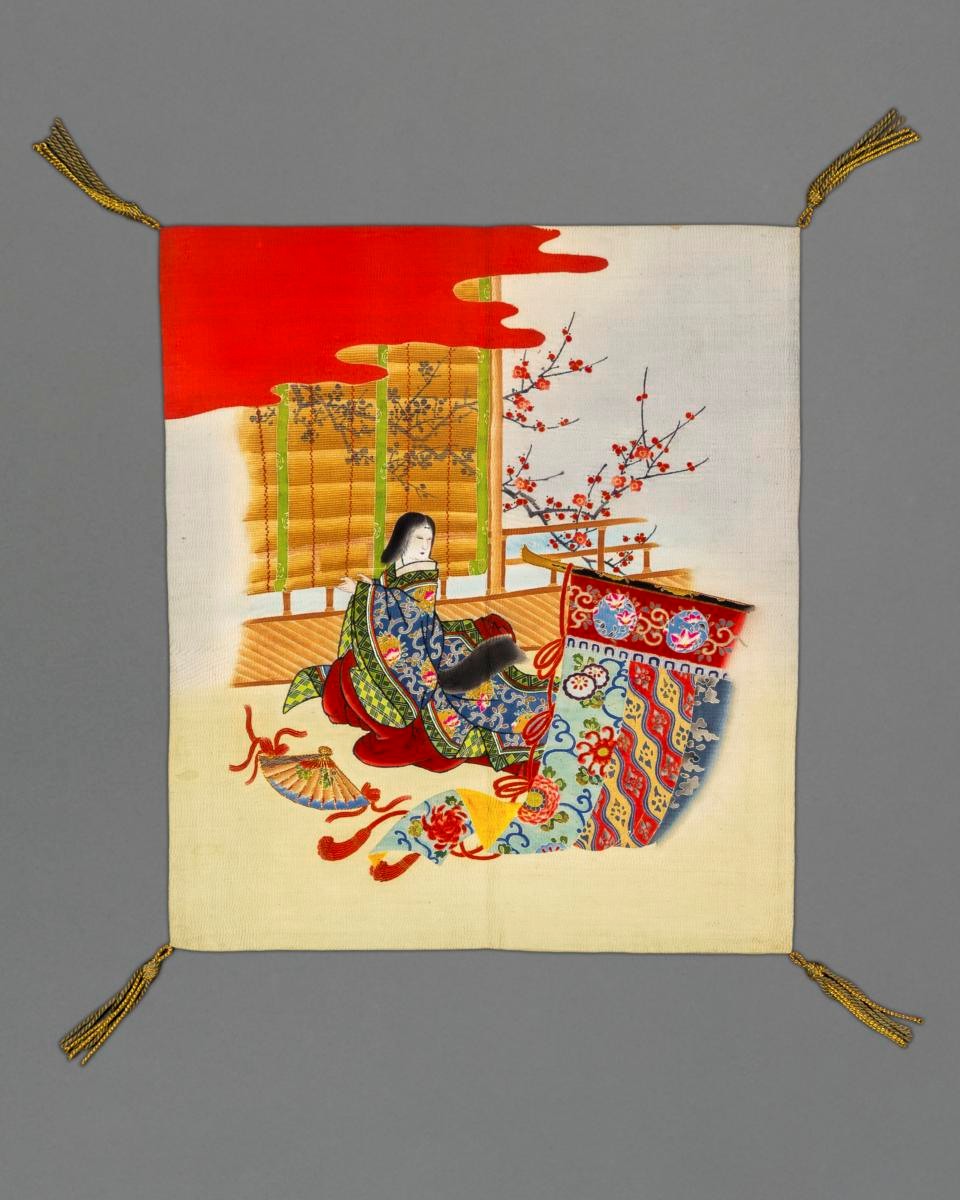
Object size: 72.0 x 64.3 cm (with tassels)
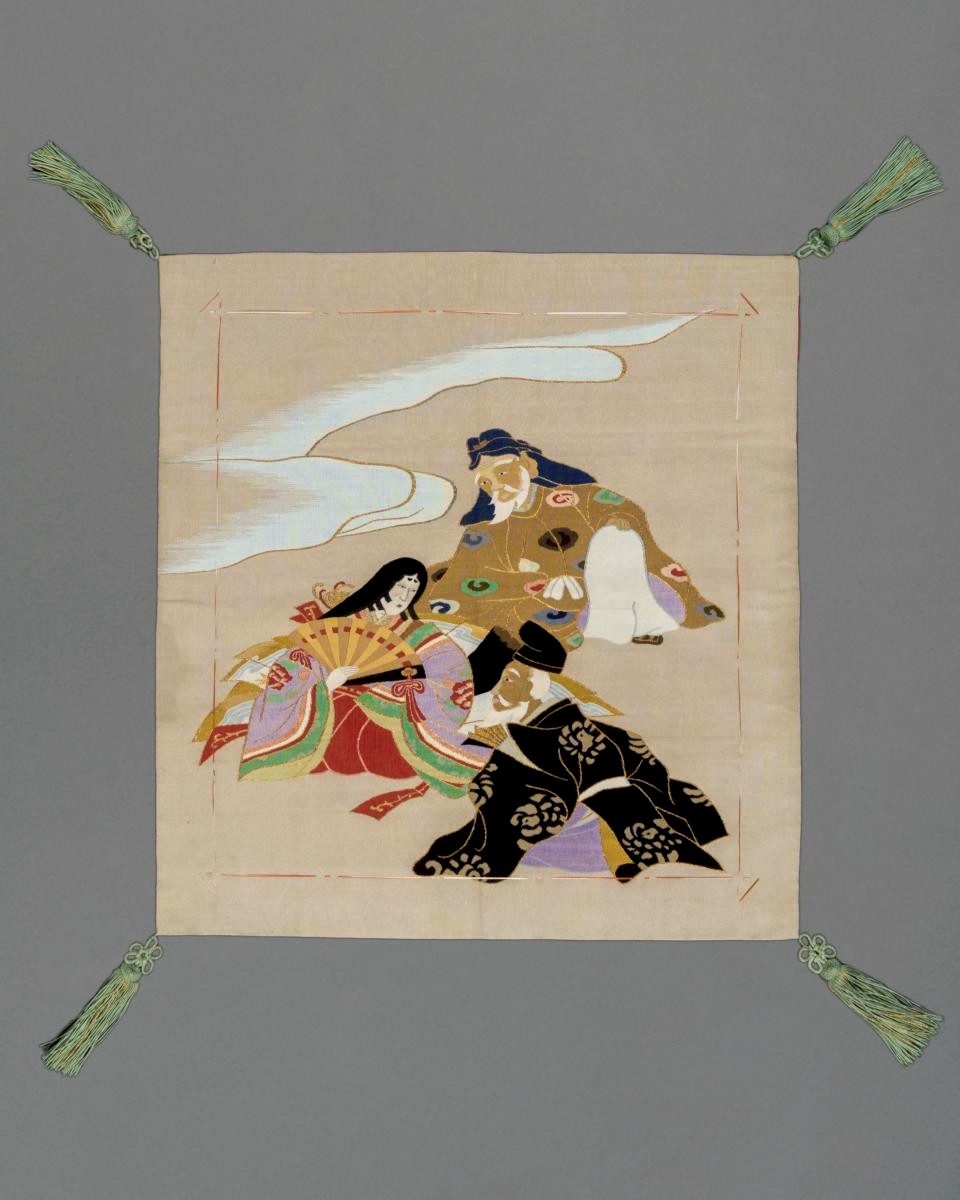
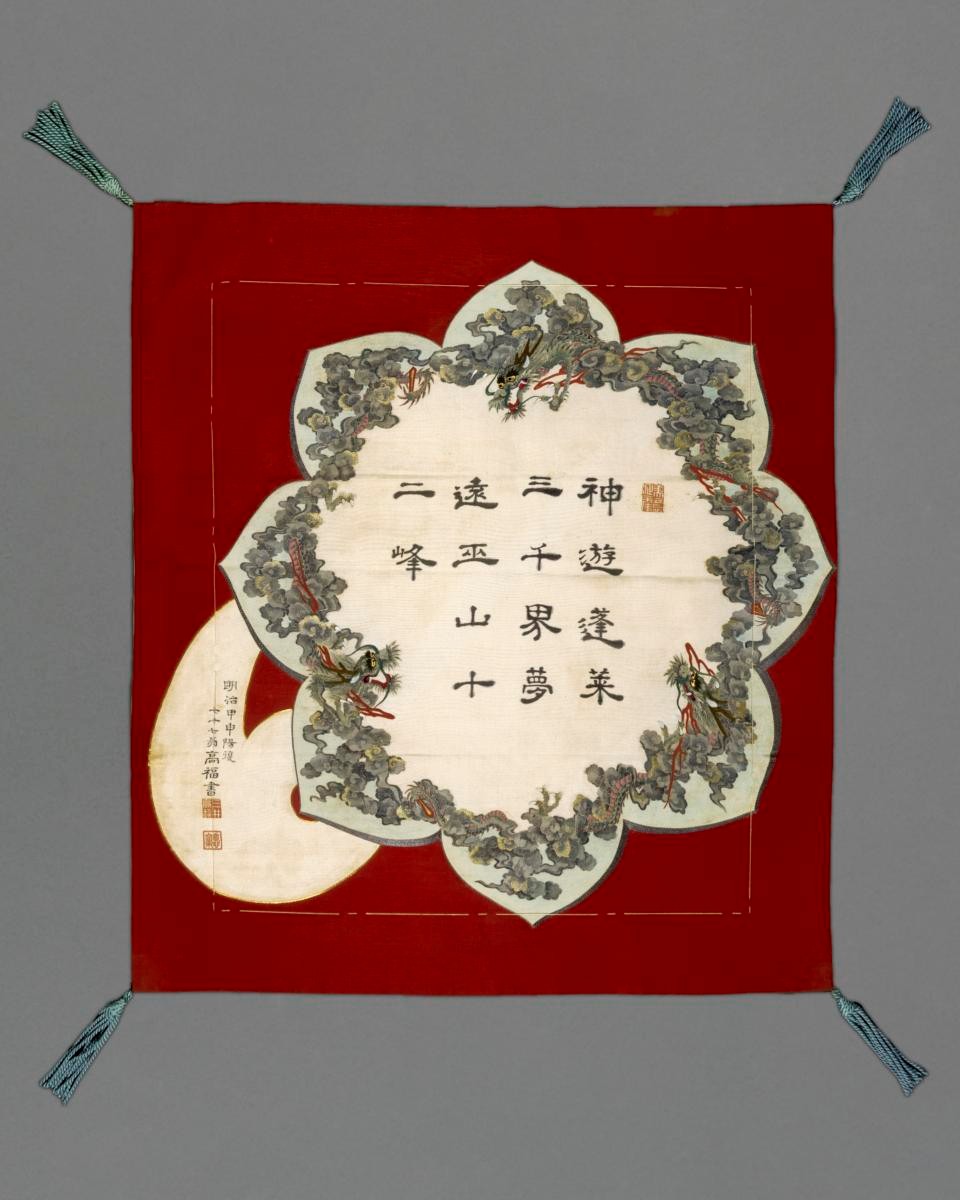
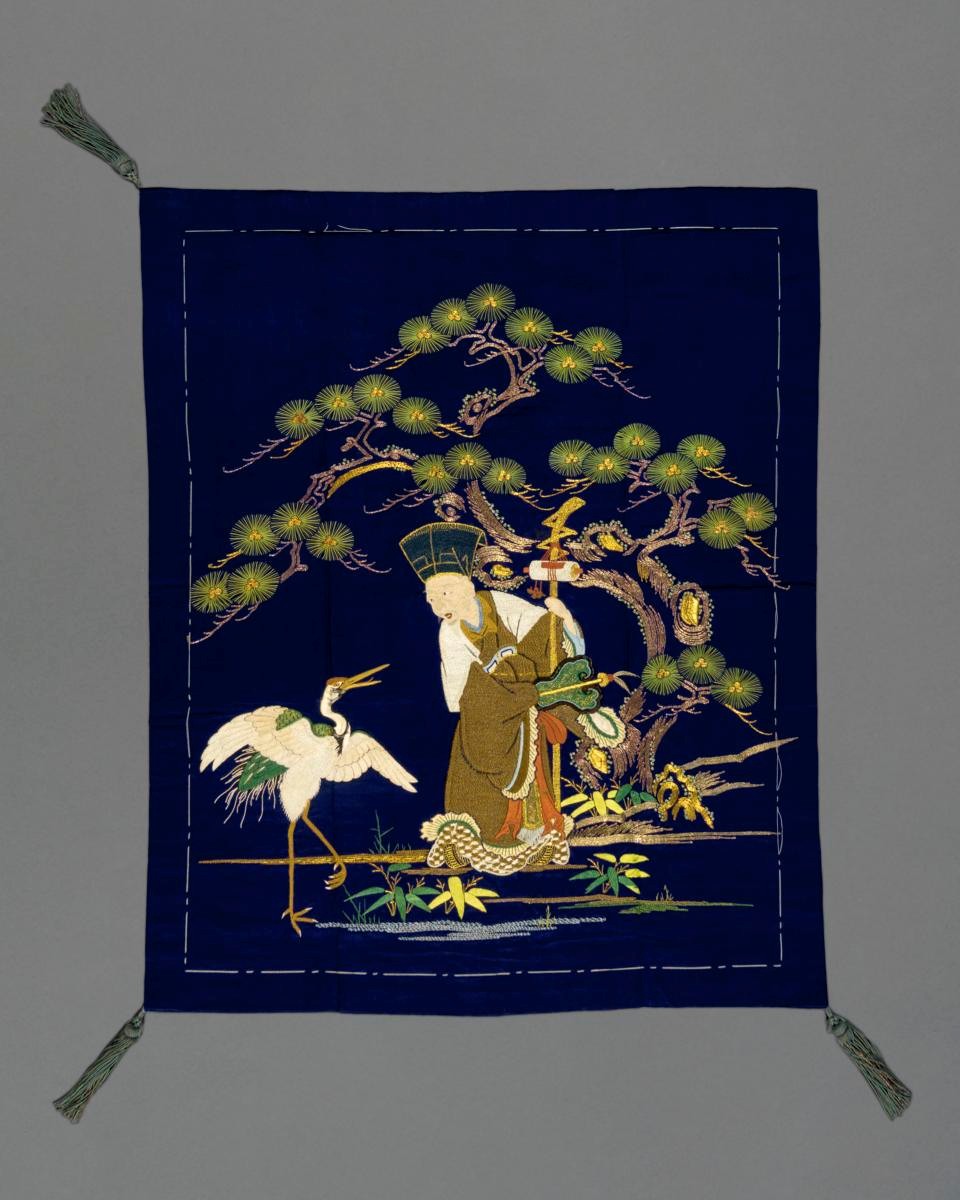
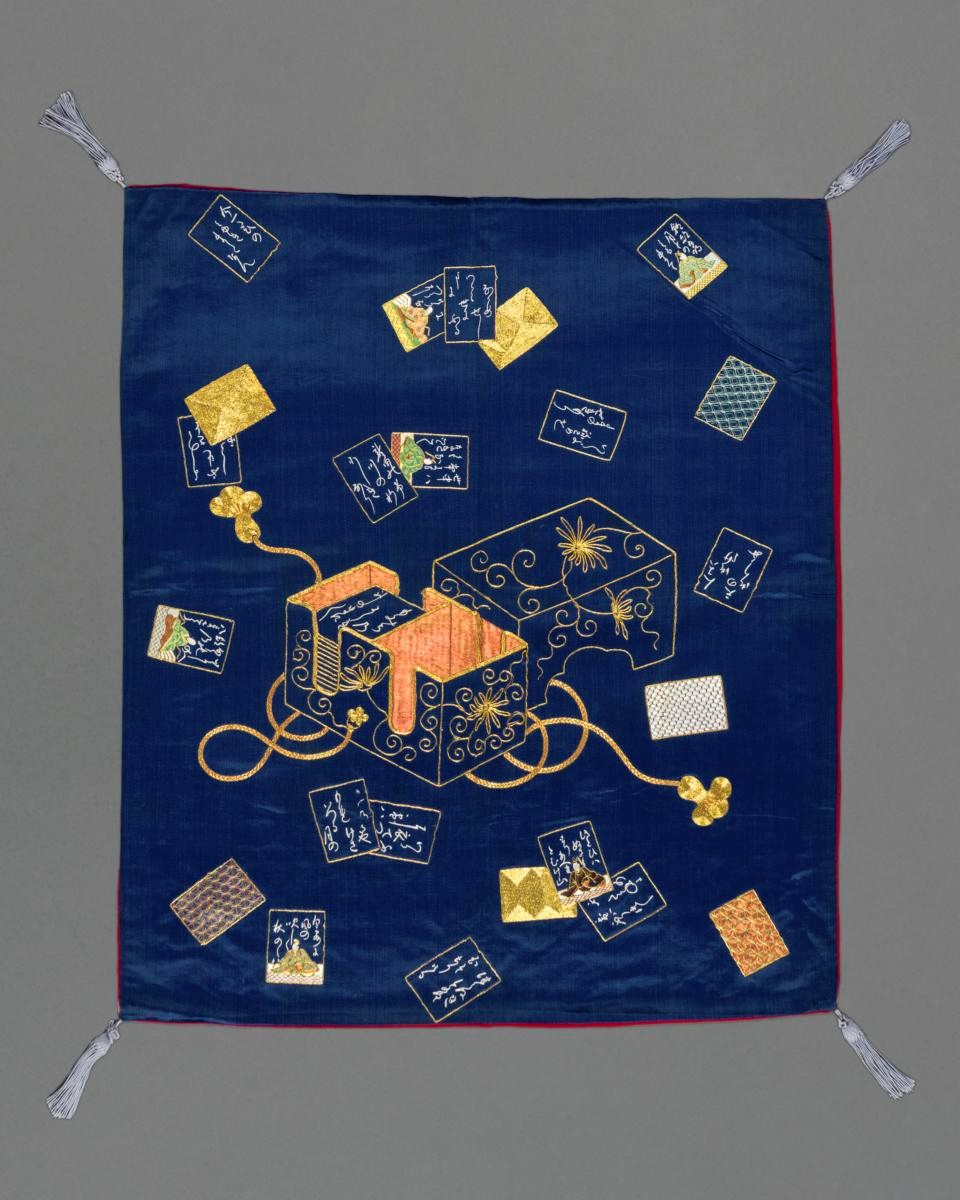
In Japan, the practice of formally presenting gifts with silk covers called fukusa began in the Edo period (1603–1868), around the late 17th or early 18th century. These covers were draped or folded over gifts for a variety of occasions, from seasonal festivities to important personal events. Each fukusa was carefully chosen to evoke the circumstance of the gift and to convey a message to the recipient through its design. Fukusa designs often feature symbolic objects or allusions to Japanese and Chinese stories. The choice of fukusa also reflected the giver’s wealth, taste, erudition, and cultural sensitivity. The use of fukusa continued into the early 20th century. Today, they are used in parts of Japan for weddings and corporate events. Both the front and lining of this gift cover are made of the same piece of fabric, conceived as one continuous composition and folded over. The red clouds at the top left continue on the lining. The fukusa is sewn in the hikikaeshi manner, with the fold at the top. This fukusa likely depicts a poet immortal. Glints of gilt thread embroidered on the fan, patterned brocades, and curtain rod enhance the opulent interior. The yūzen-dyed blinds behind the lady are cleverly embroidered with running stitches to mimic ladder strings. Beyond the blinds, silhouettes of flowering prunus are rendered in black ink, contrasting with the vibrant red blossoms that extend past the window.