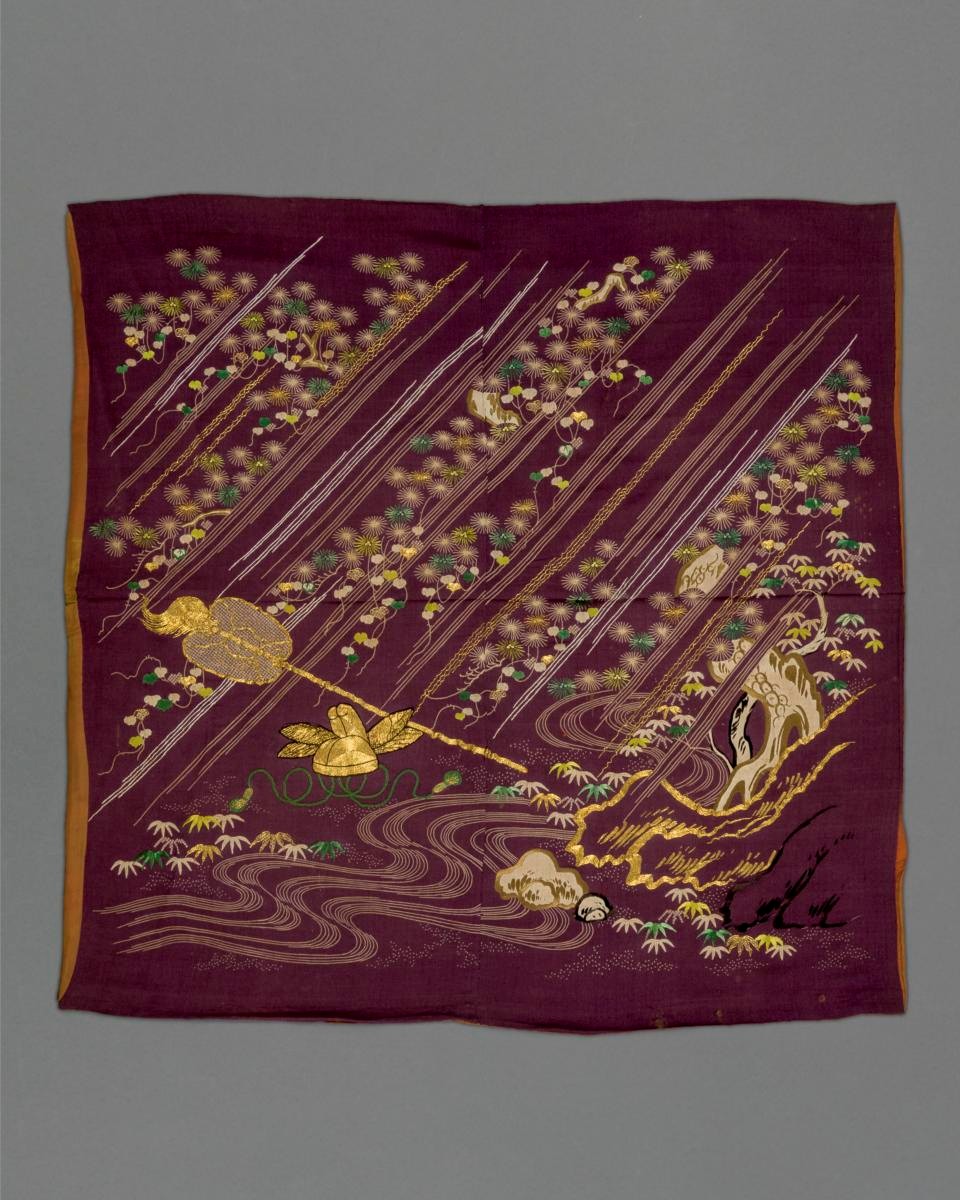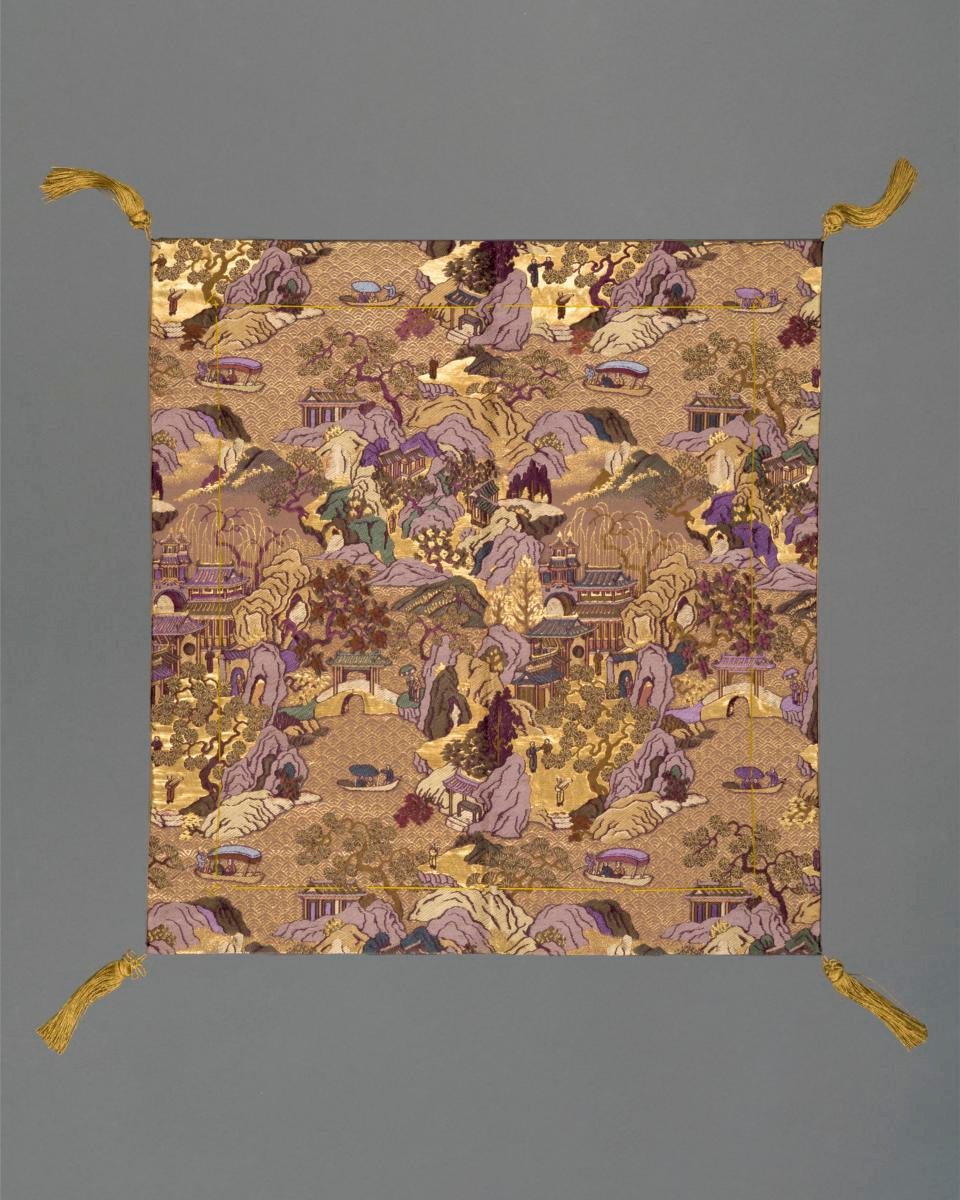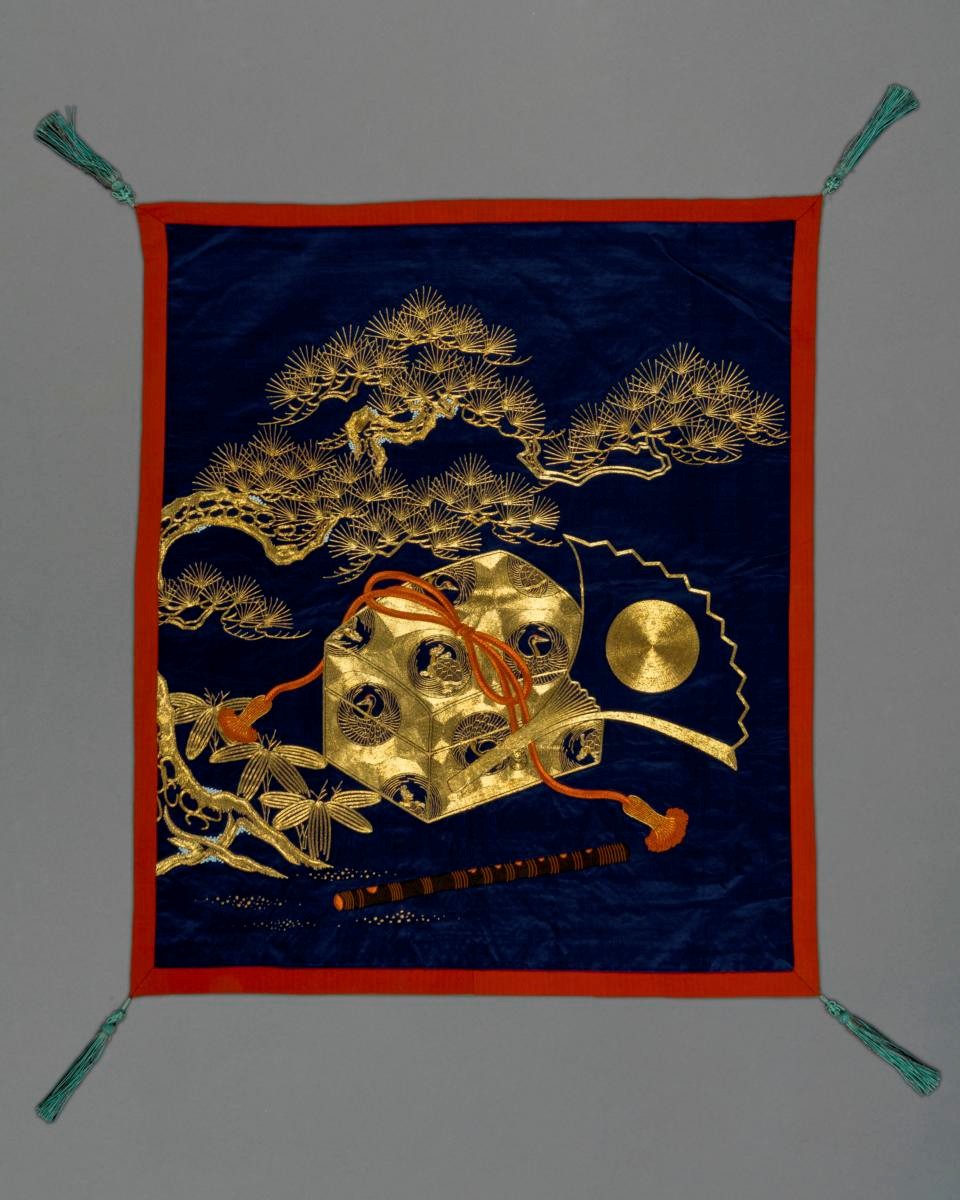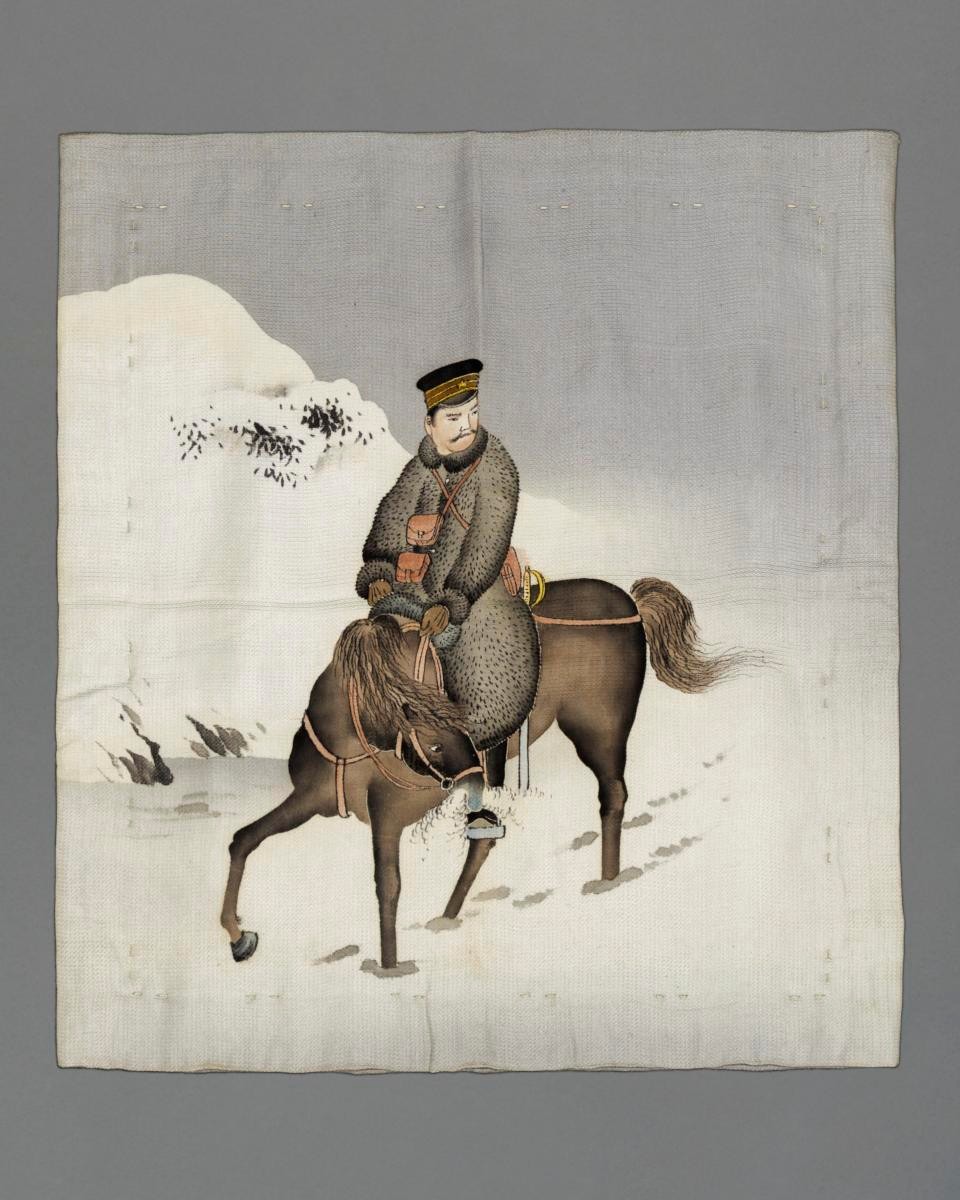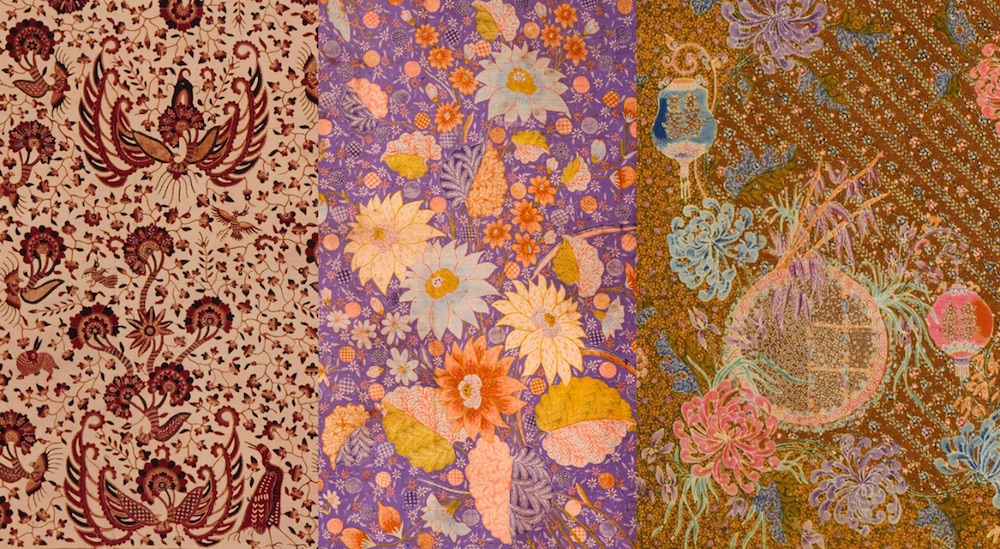

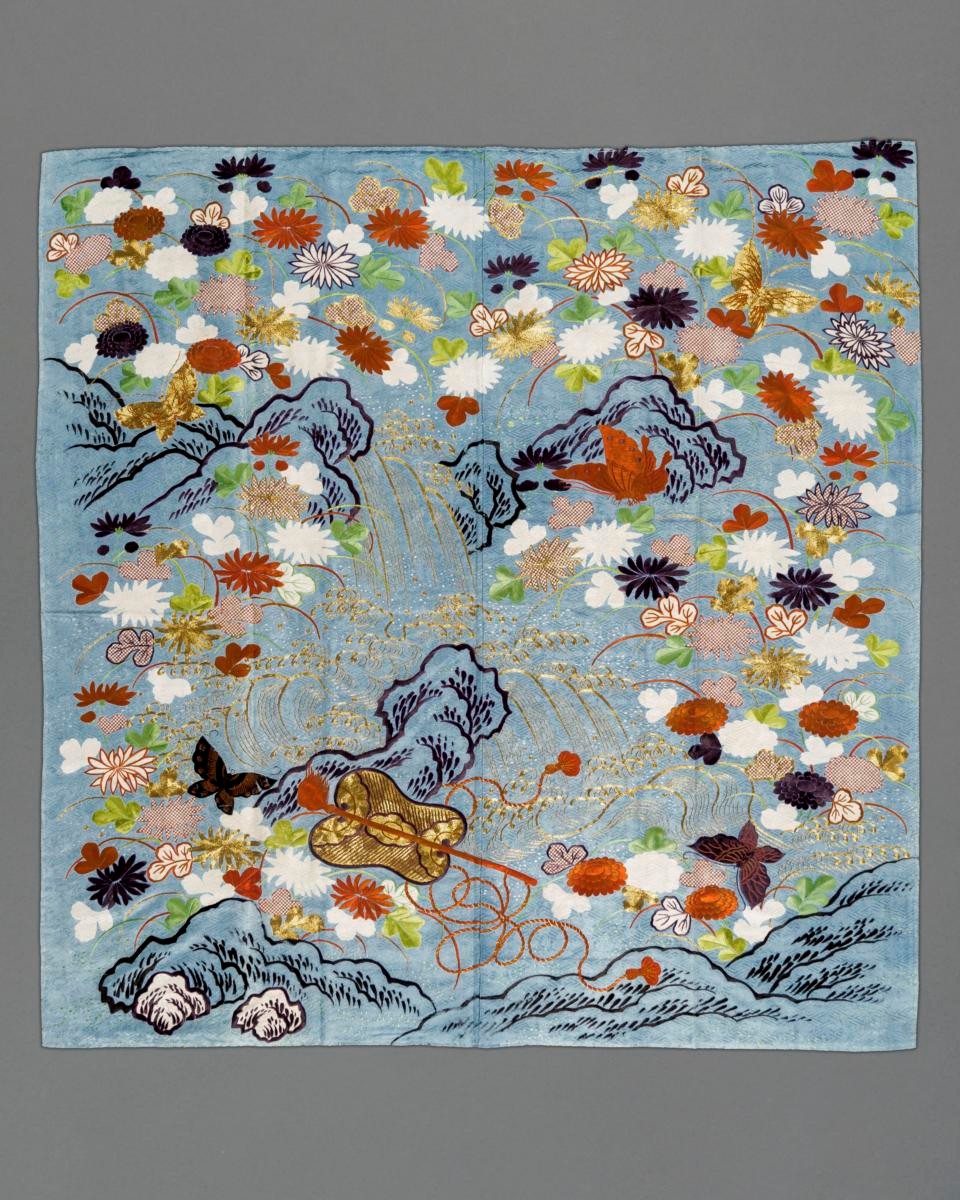
In Japan, the practice of formally presenting gifts with silk covers called fukusa began in the Edo period (1603–1868), around the late 17th or early 18th century. These covers were draped or folded over gifts for a variety of occasions, from seasonal festivities to important personal events. Each fukusa was carefully chosen to evoke the circumstance of the gift and to convey a message to the recipient through its design. Fukusa designs often feature symbolic objects or allusions to Japanese and Chinese stories. The choice of fukusa also reflected the giver’s wealth, taste, erudition, and cultural sensitivity. The use of fukusa continued into the early 20th century. Today, they are used in parts of Japan for weddings and corporate events. In contrast to some yūzen-dyed textiles, in which fine details were hand-painted with pigments at the end of the production process, here the individual petals and leaf veins were created during the resist-dye process by leaving these outlines exposed in the dye bath. To meet the growing demand for fabrics decorated with “fawn spot” tie dye (kanoko shibori), dyers developed the suri-hitta technique to quickly replicate the dappled spots using stencils. These stencilled circles, seen here in the flowers and leaves, lack the central dot of kanoko shibori (which was sometimes painted on after) and are more uniform than those produced by tie-dyeing. Although suri-hitta was already an established technique, it became more popular after sumptuary laws in 1683 prohibited commoners from wearing garments decorated all-over with kanoko shibori.