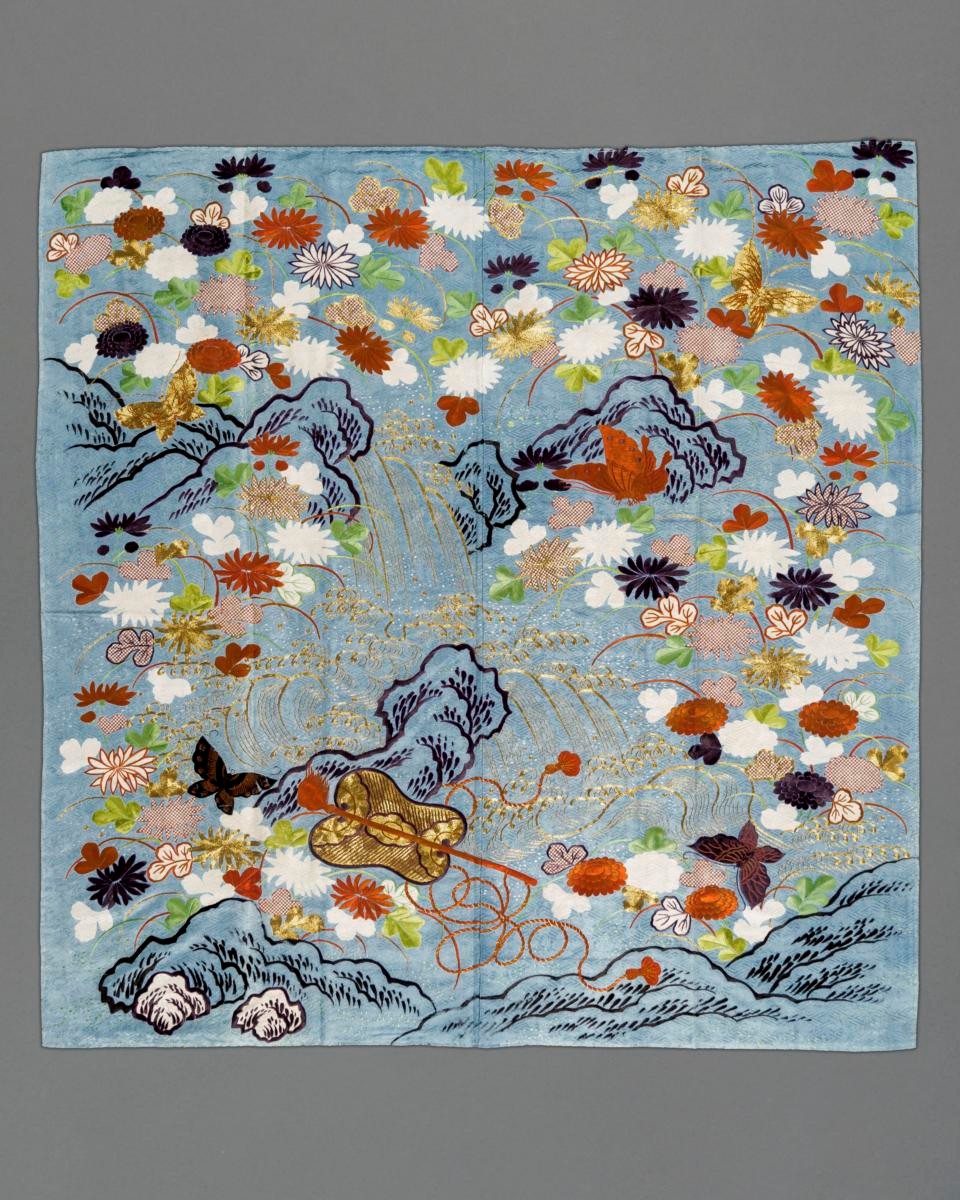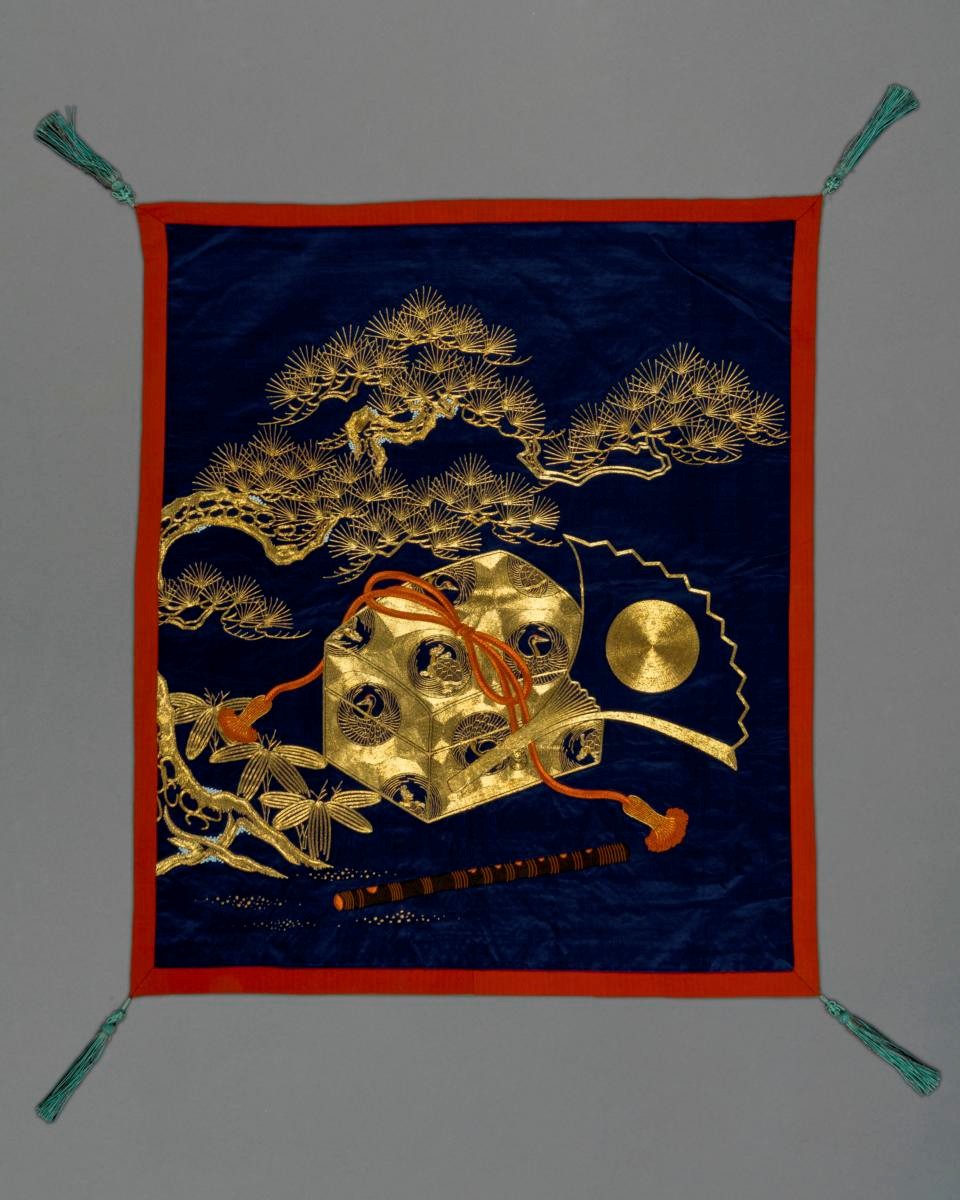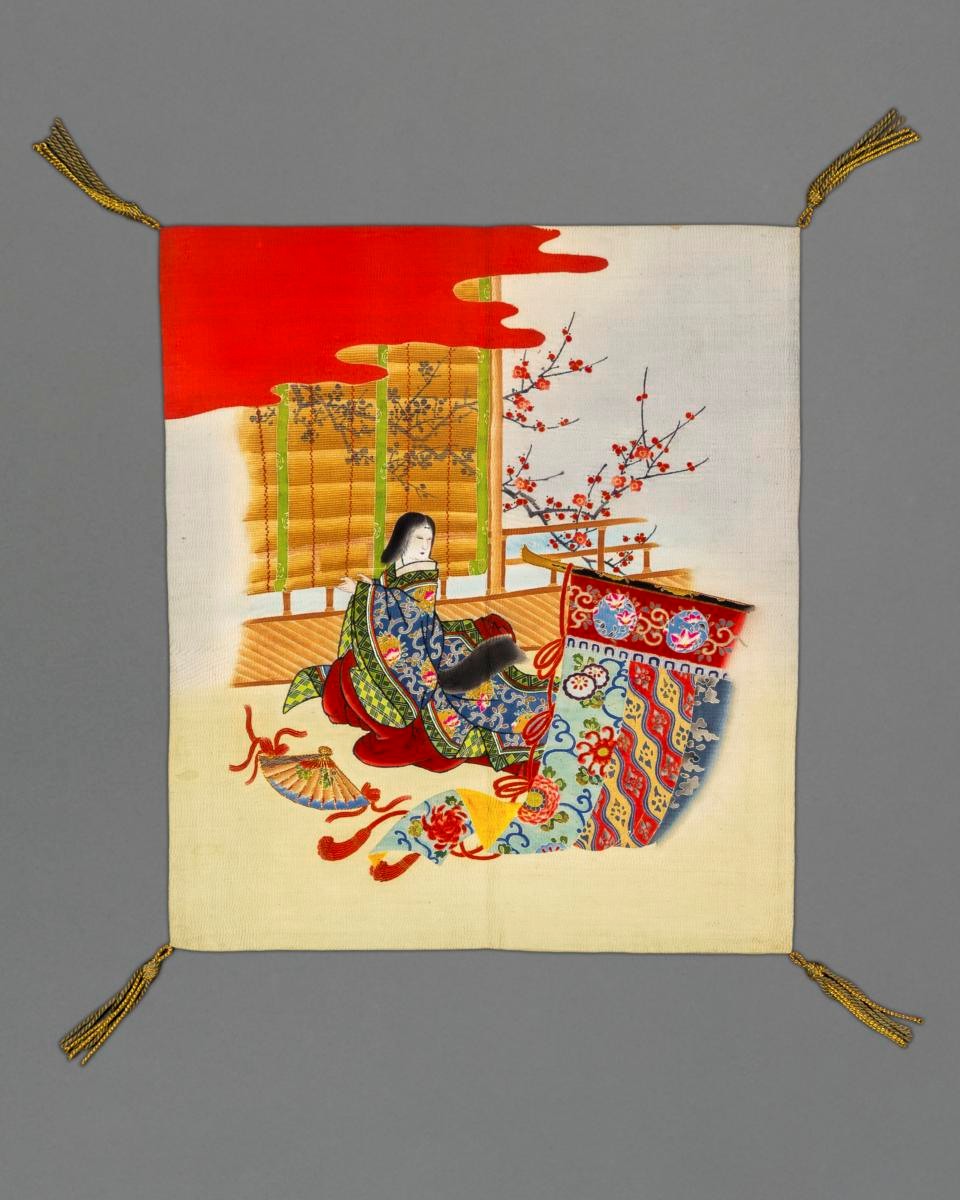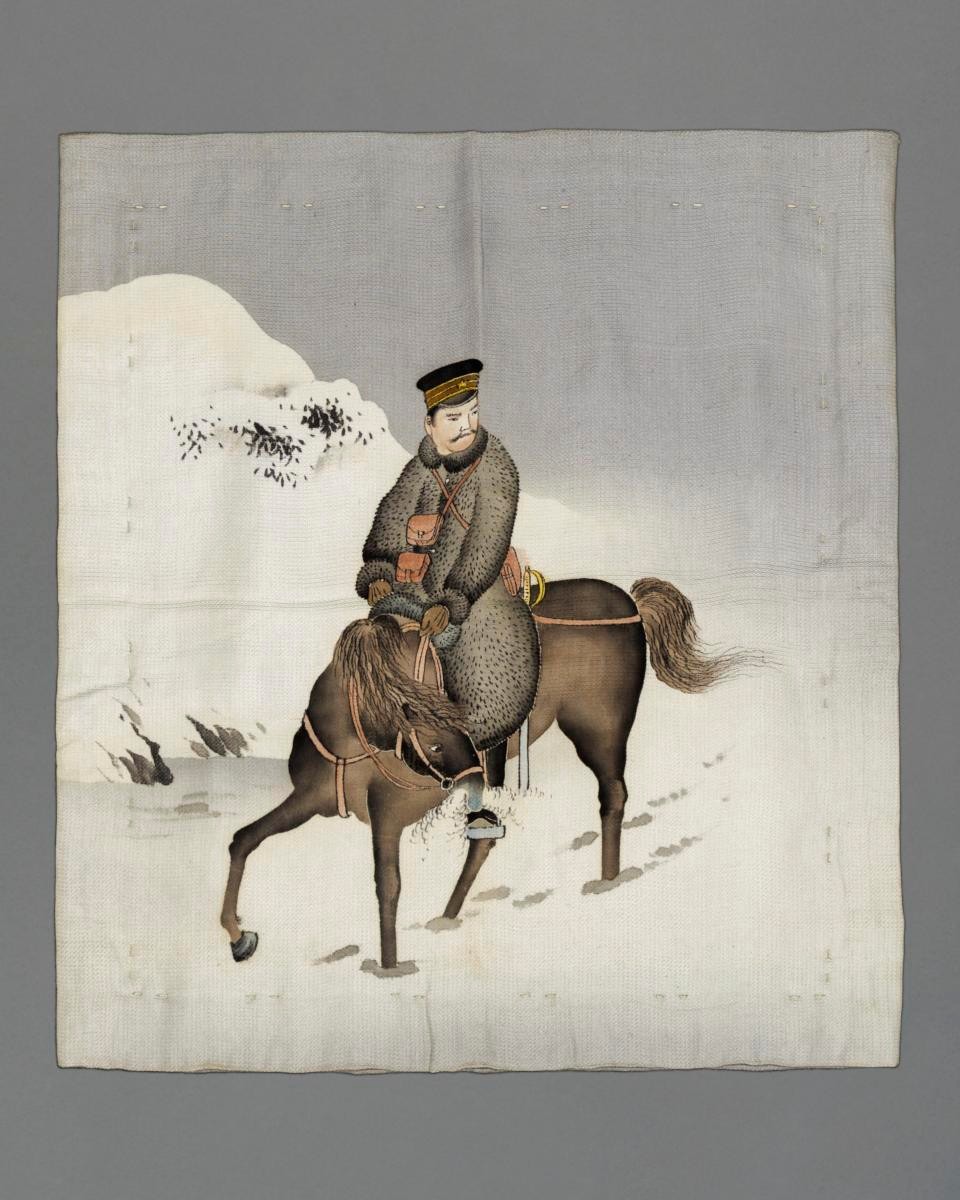

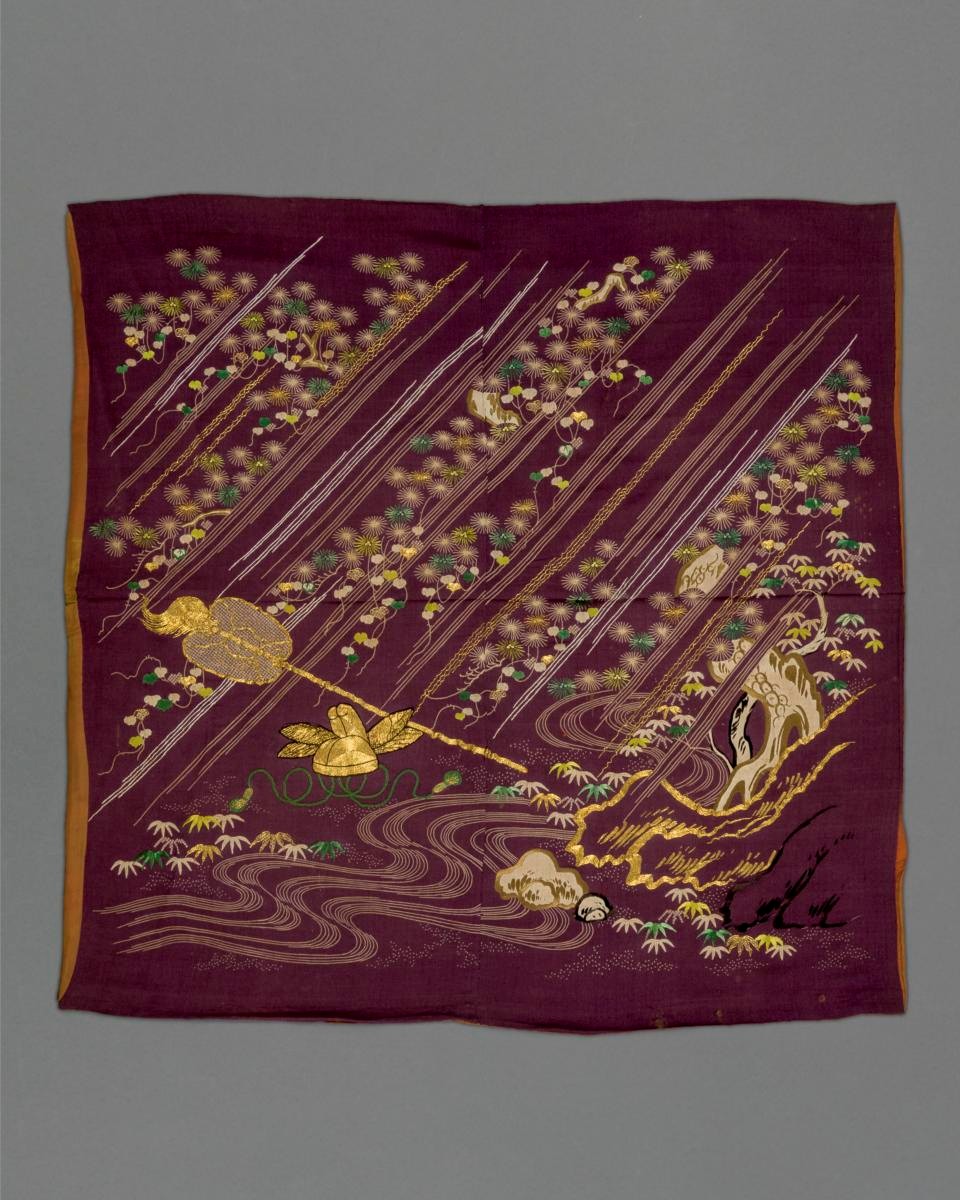
In Japan, the practice of formally presenting gifts with silk covers called fukusa began in the Edo period (1603–1868), around the late 17th or early 18th century. These covers were draped or folded over gifts for a variety of occasions, from seasonal festivities to important personal events. Each fukusa was carefully chosen to evoke the circumstance of the gift and to convey a message to the recipient through its design. Fukusa designs often feature symbolic objects or allusions to Japanese and Chinese stories. The choice of fukusa also reflected the giver’s wealth, taste, erudition, and cultural sensitivity. The use of fukusa continued into the early 20th century. Today, they are used in parts of Japan for weddings and corporate events. In this fukusa, the design of a war fan and headdress in an idyllic landscape resembles goshodoki (“palace landscape”) patterns on robes worn by the warrior class. War fans were used by the samurai as markers of status and to signal troops in battle. Headdresses of this type were worn by courtiers, aristocrats, and the emperor. These martial and civil symbols asserted the owner’s power and pedigree.