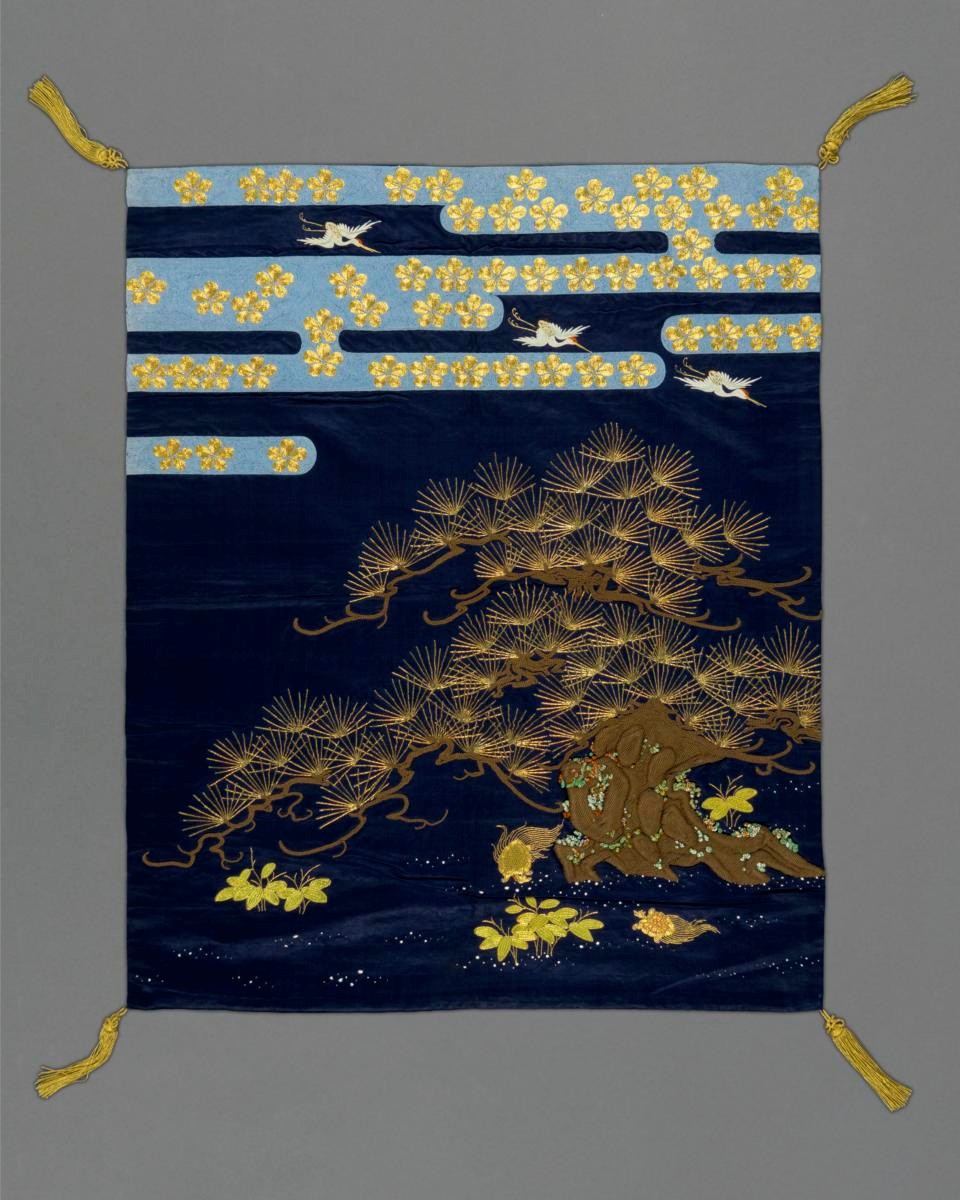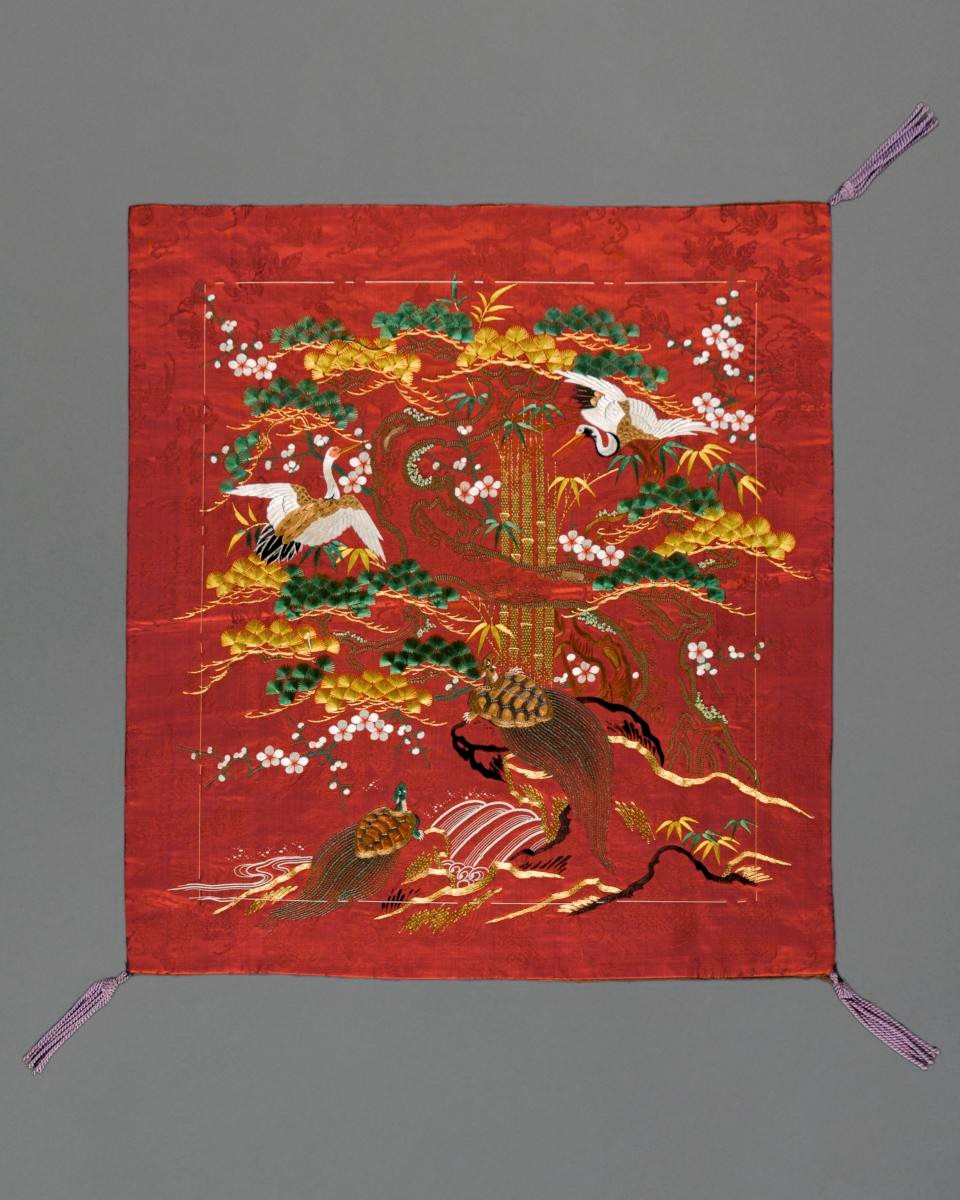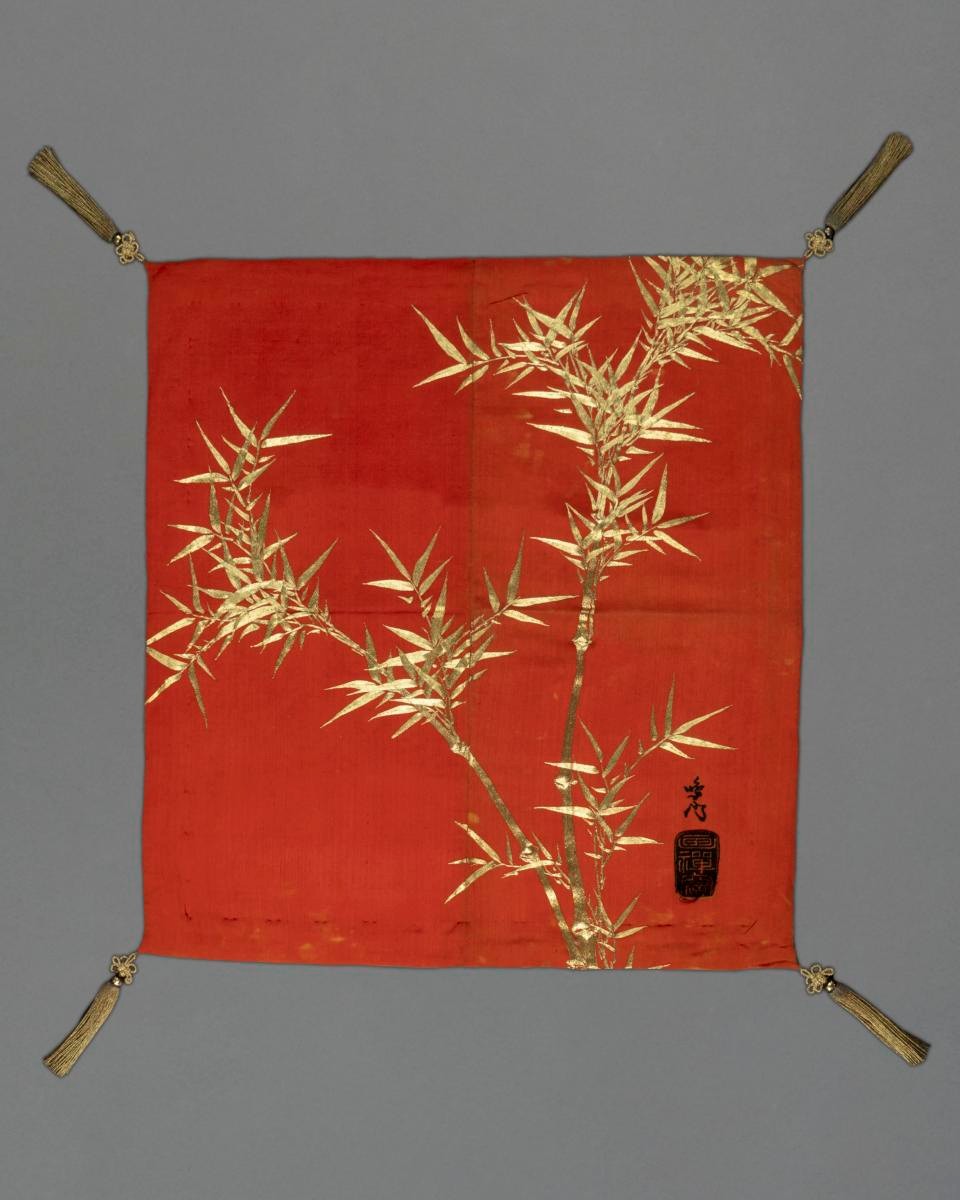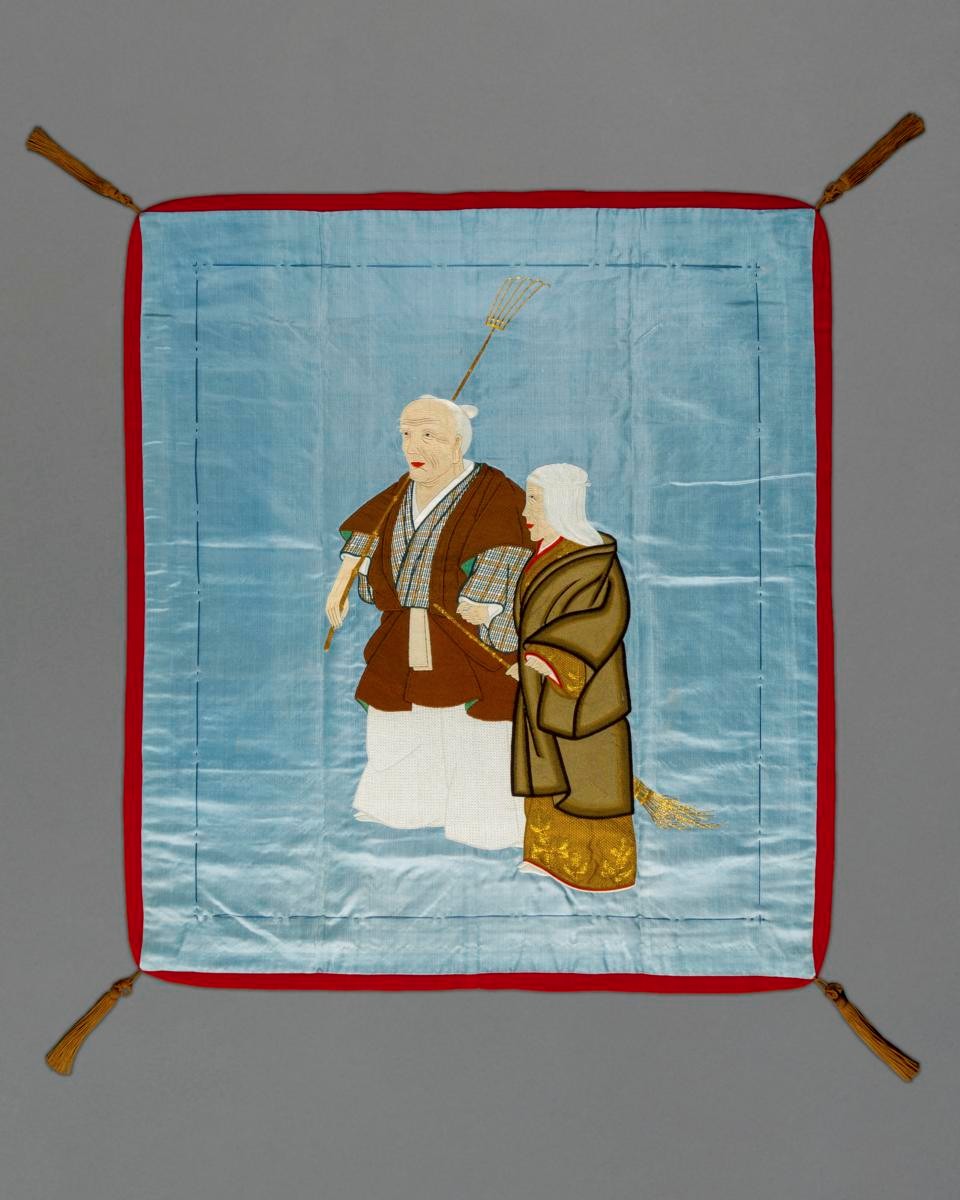

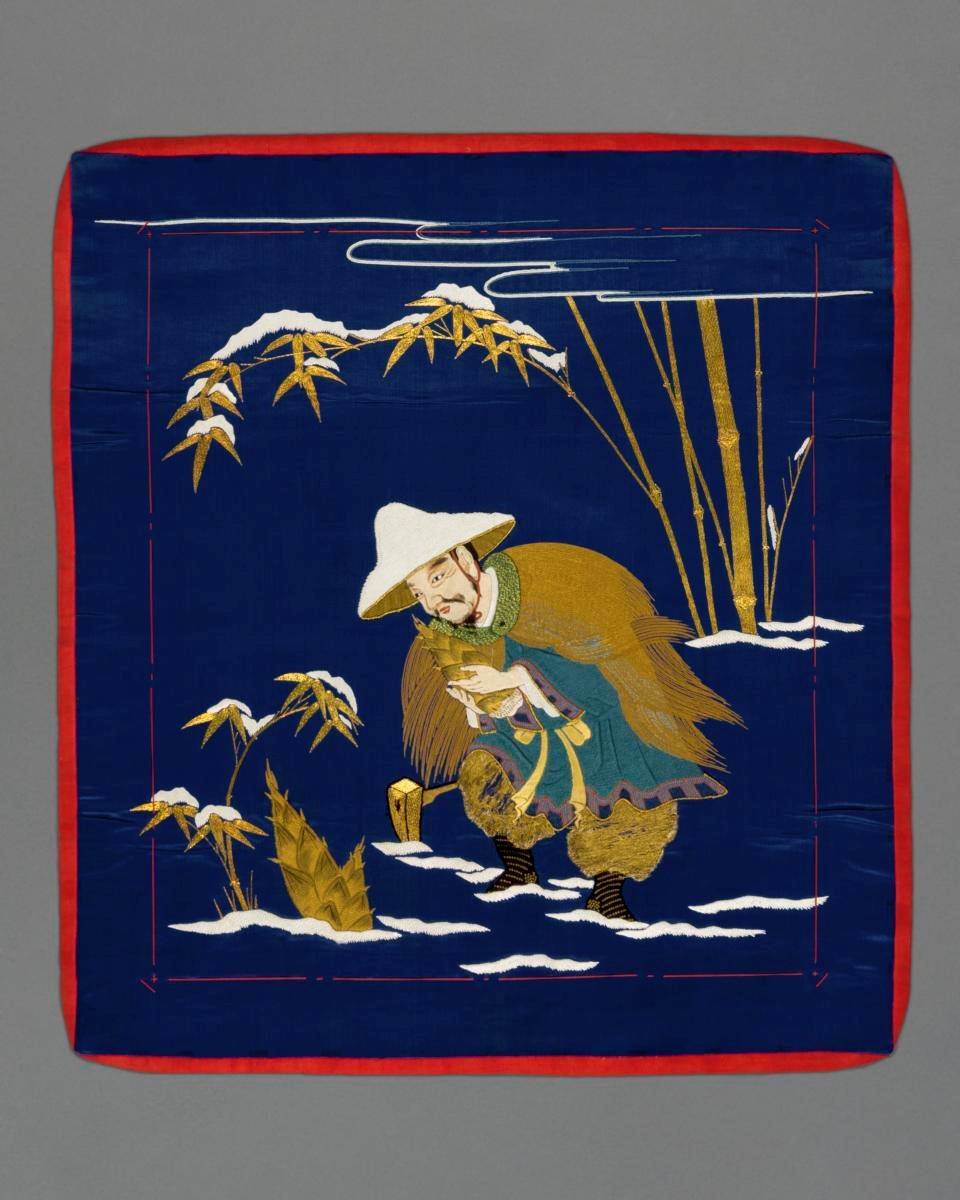
In Japan, the practice of formally presenting gifts with silk covers called fukusa began in the Edo period (1603–1868), around the late 17th or early 18th century. These covers were draped or folded over gifts for a variety of occasions, from seasonal festivities to important personal events. Each fukusa was carefully chosen to evoke the circumstance of the gift and to convey a message to the recipient through its design. Fukusa designs often feature symbolic objects or allusions to Japanese and Chinese stories. The choice of fukusa also reflected the giver’s wealth, taste, erudition, and cultural sensitivity. The use of fukusa continued into the early 20th century. Today, they are used in parts of Japan for weddings and corporate events. Mōsō (Meng Zong) is a figure from the Twenty-four Paragons of Filial Piety, a Yuan-dynasty text used to teach Confucian moral values. In one version, Mōsō’s mother became very ill and craved a broth of bamboo shoots. As it was winter, there were no fresh shoots, but he still went out in the snow to dig, to no avail. He began to cry, and bamboo shoots miraculously sprang forth from where his tears had fallen. The soup made from the shoots cured his mother’s illness and Mōsō was heralded as an exemplar of persistence and filial piety.