
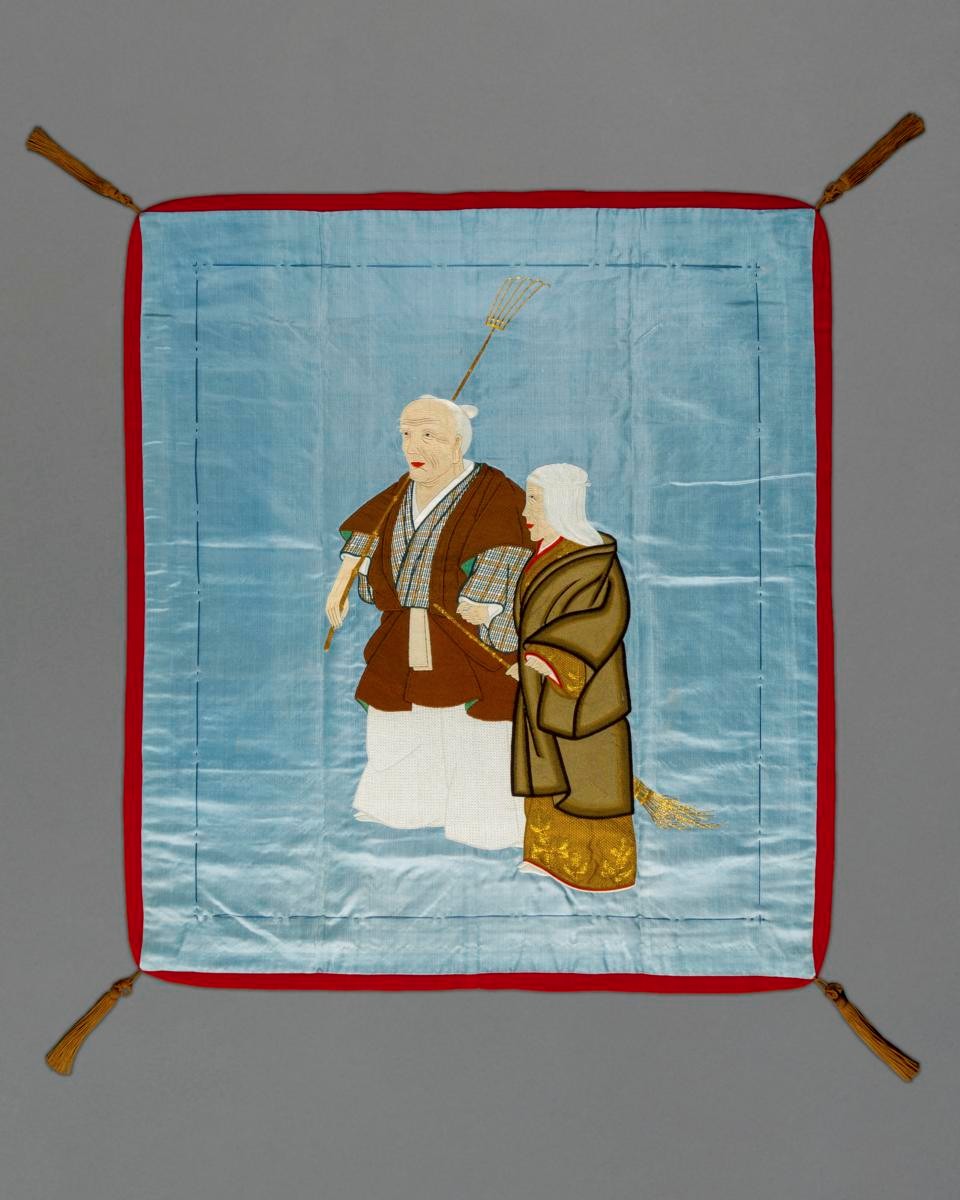
Object size: 97.5 x 93.0 cm (with tassels)
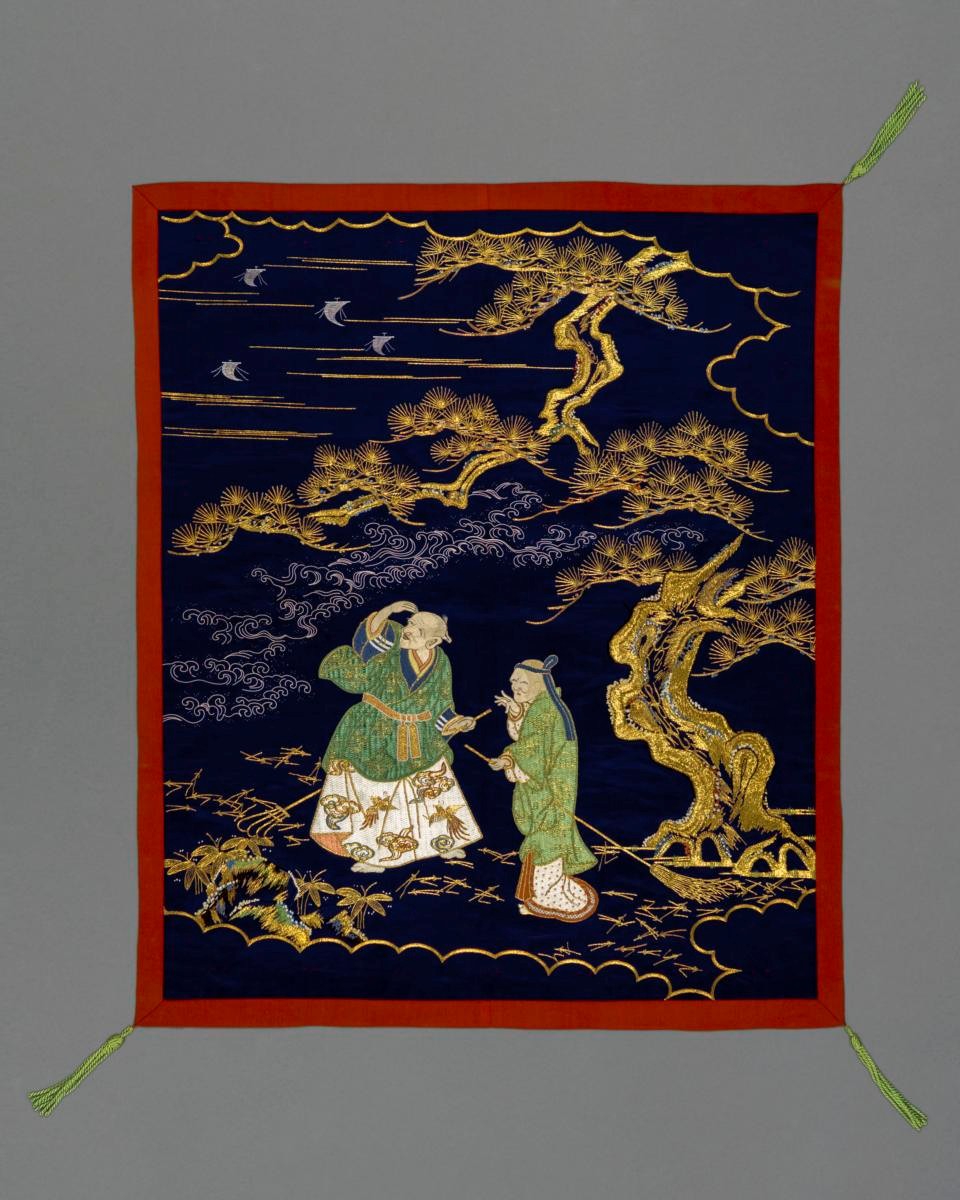
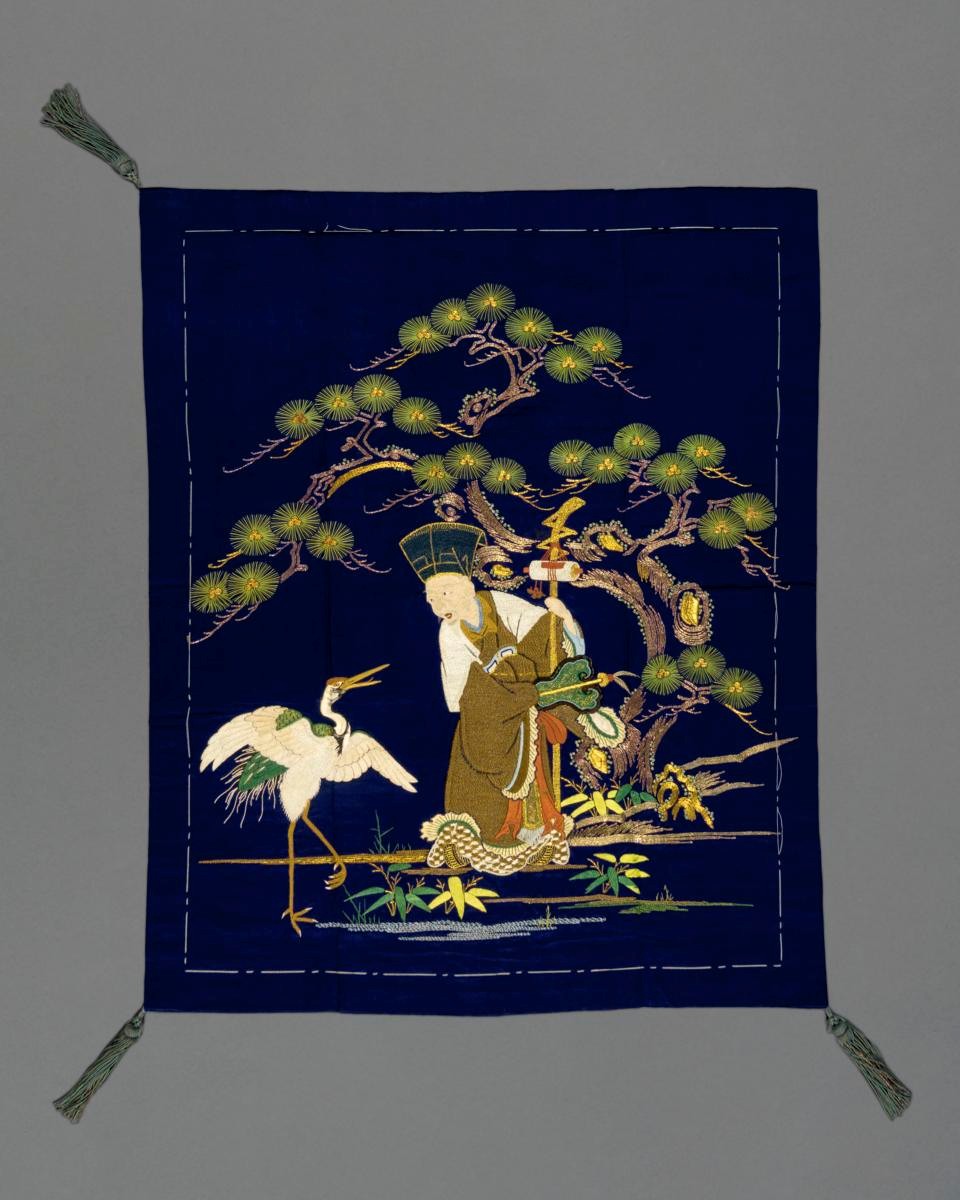
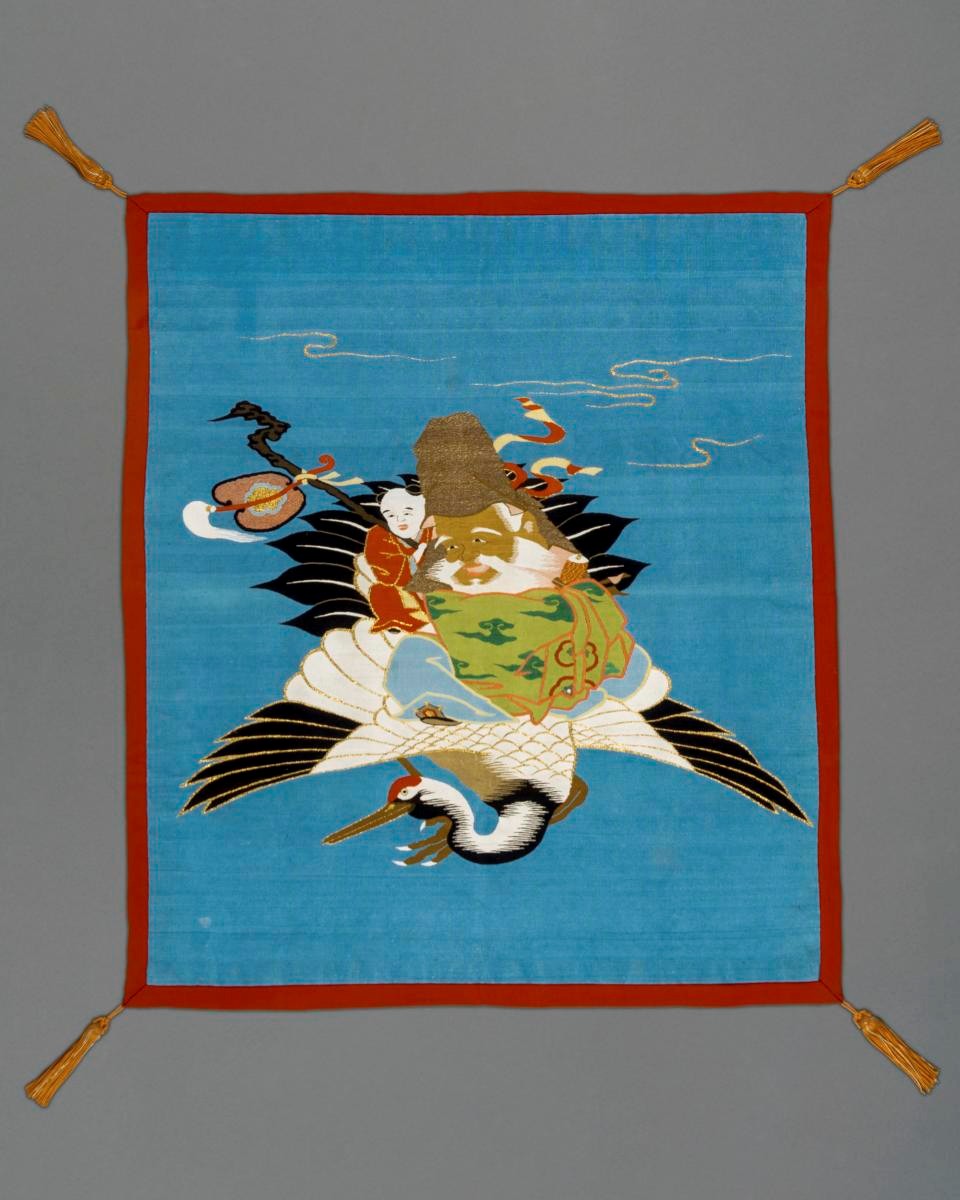
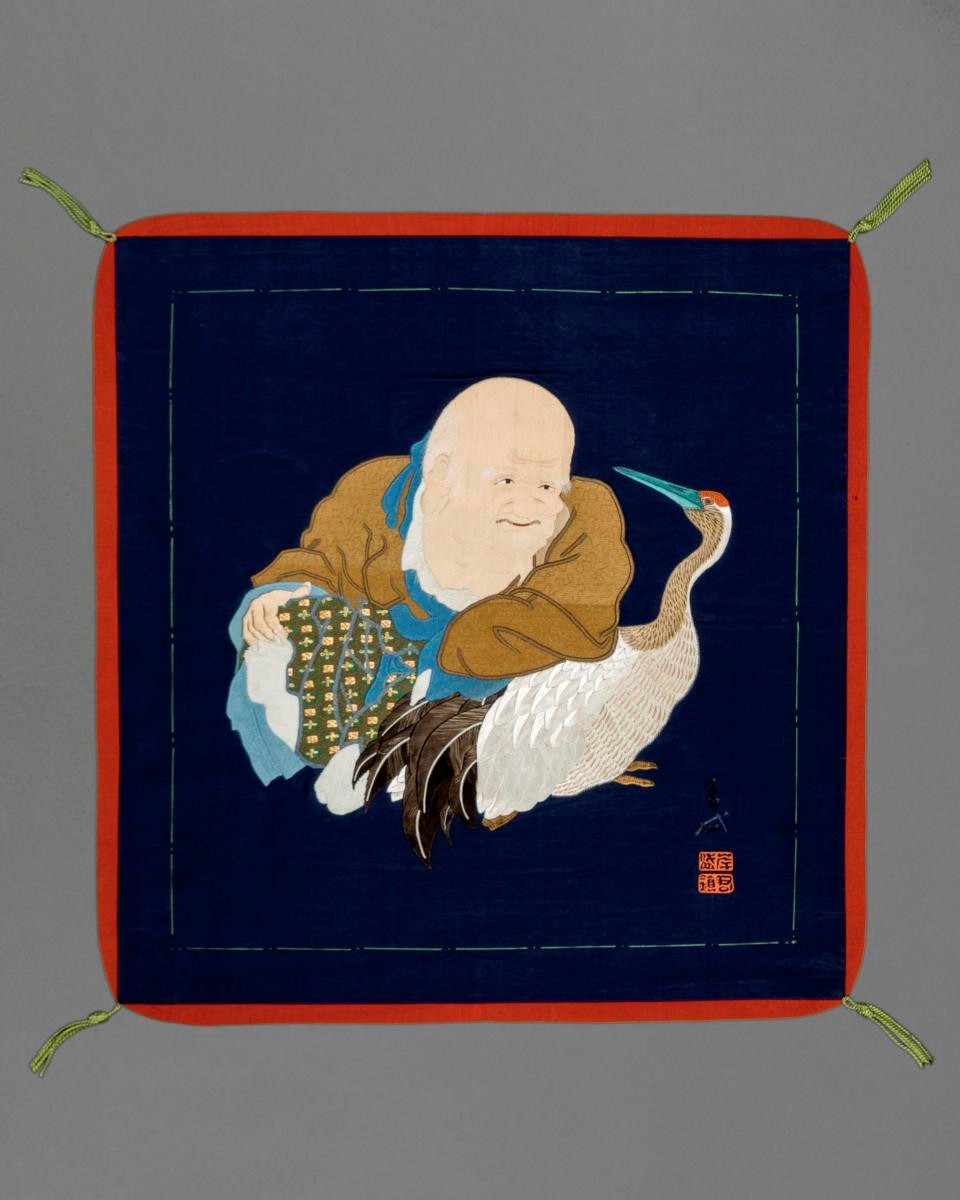
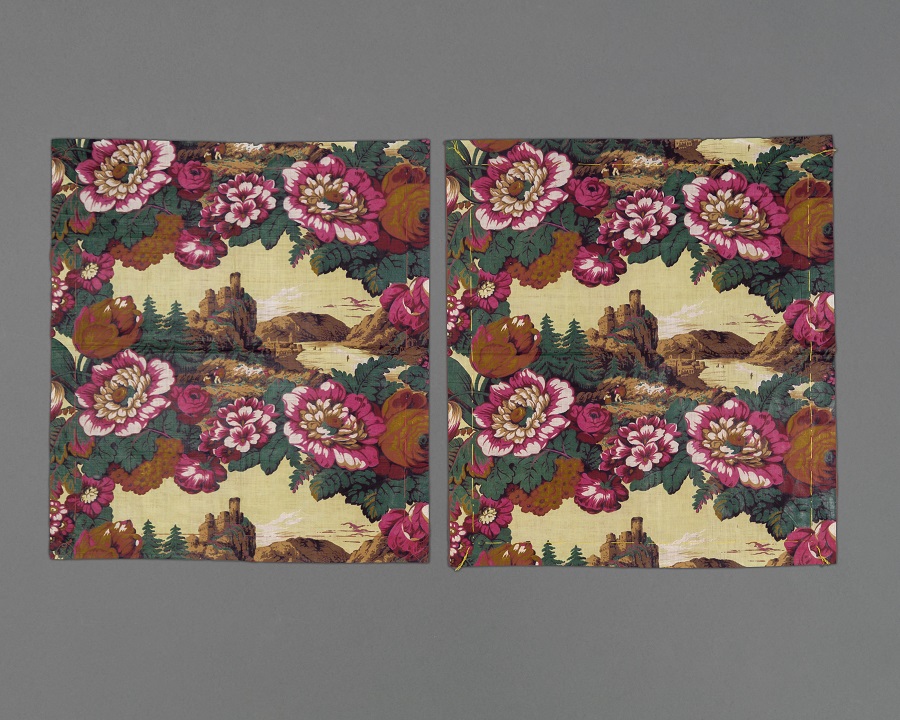
In Japan, the practice of formally presenting gifts with silk covers called fukusa began in the Edo period (1603–1868), around the late 17th or early 18th century. These covers were draped or folded over gifts for a variety of occasions, from seasonal festivities to important personal events. Each fukusa was carefully chosen to evoke the circumstance of the gift and to convey a message to the recipient through its design. Fukusa designs often feature symbolic objects or allusions to Japanese and Chinese stories. The choice of fukusa also reflected the giver’s wealth, taste, erudition, and cultural sensitivity. The use of fukusa continued into the early 20th century. Today, they are used in parts of Japan for weddings and corporate events. Takasago is a Noh play about an elderly couple who have enjoyed a long and happy life together. Originally a story symbolising safe passage over water, it was performed at weddings in the Edo period to bless the couple with a smooth and happy marriage. In visual representations of the narrative, the husband Jō and wife Uba are respectively identified by their rake and besom. Fukusa with Takasago designs were associated with the groom. Another interpretation developed in the twentieth century, in which Jō rakes in good fortune and Uba sweeps out bad luck. The Takasago song is still sung at weddings today.