
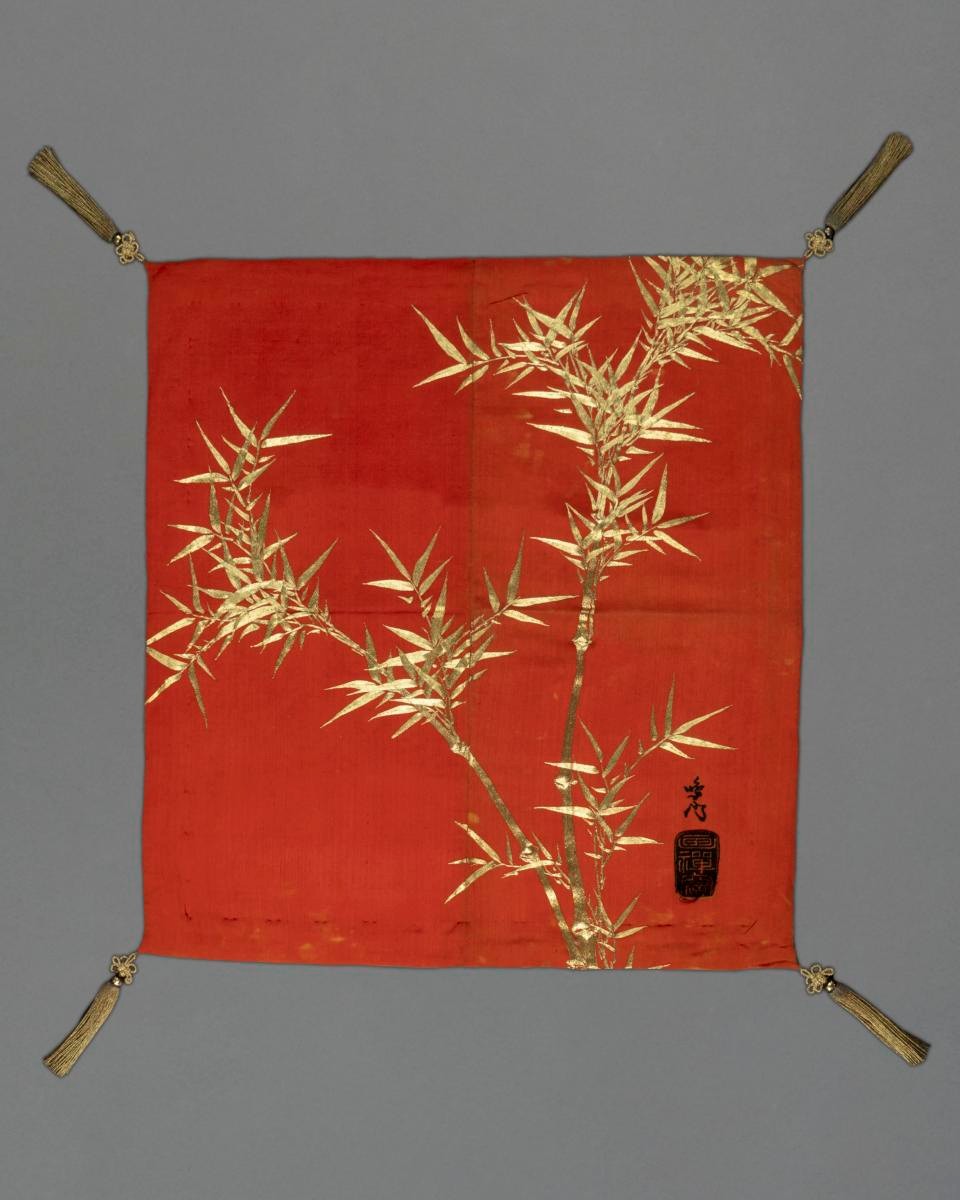
Object size: 107.0 x 100.5 cm (with tassels)
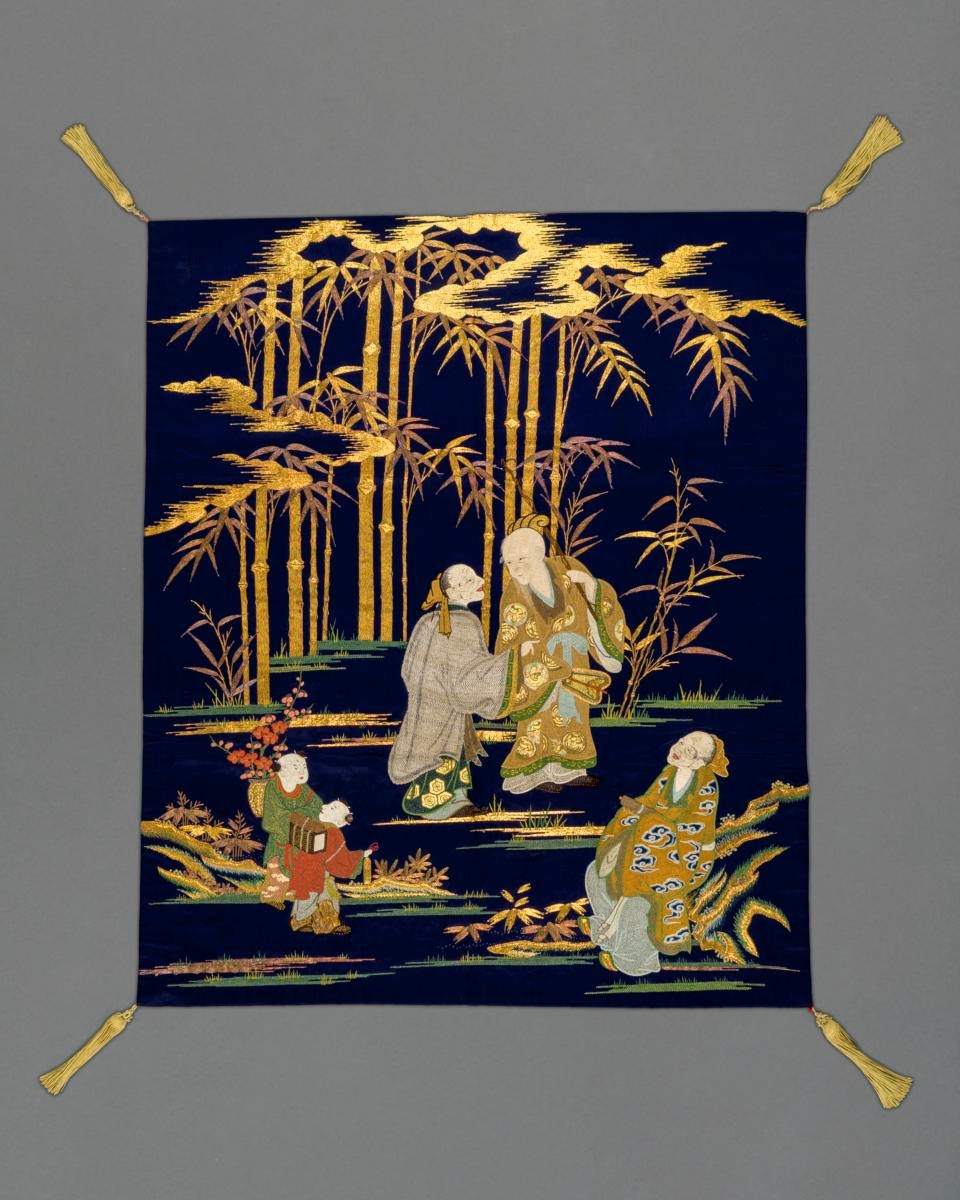
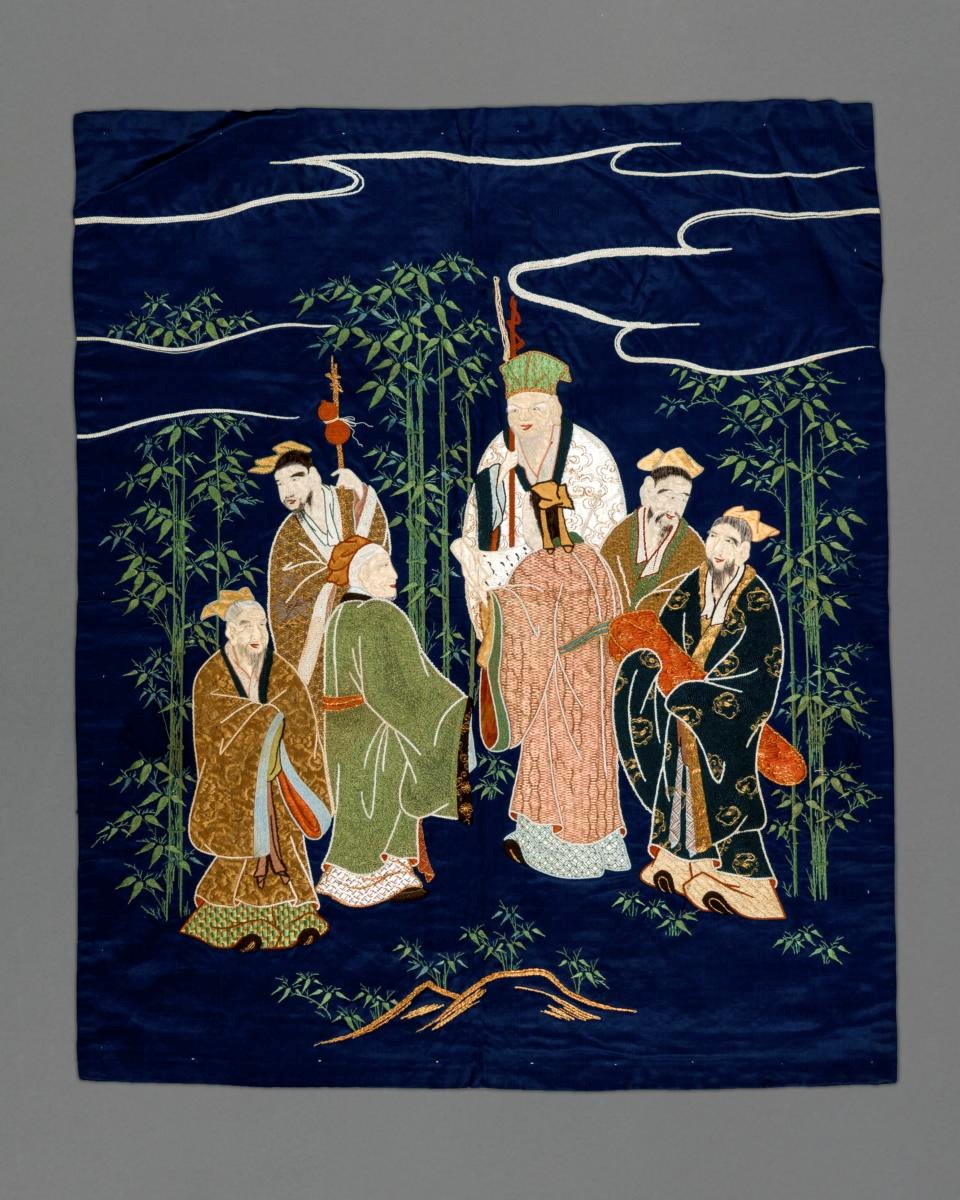
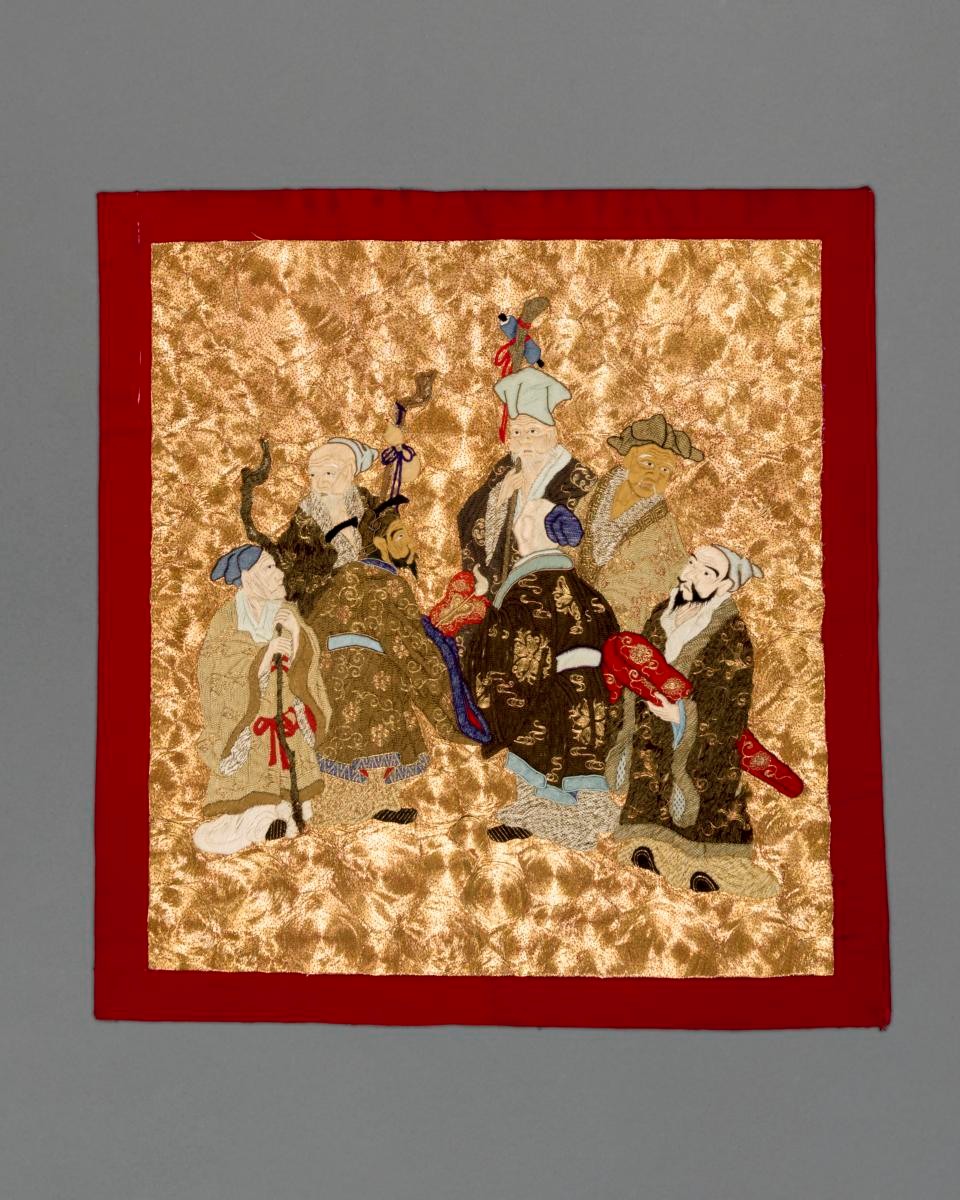
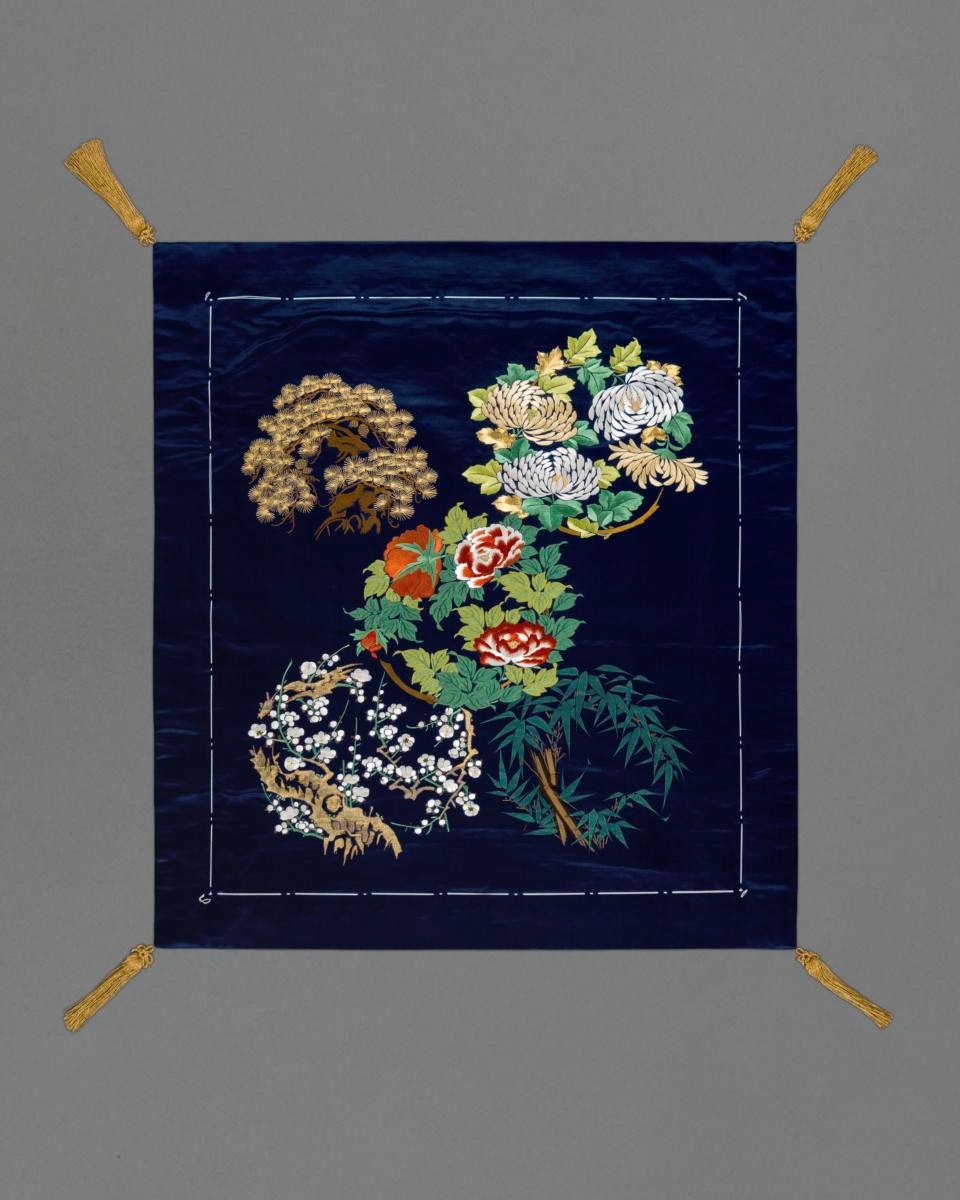
In Japan, the practice of formally presenting gifts with silk covers called fukusa began in the Edo period (1603–1868), around the late 17th or early 18th century. These covers were draped or folded over gifts for a variety of occasions, from seasonal festivities to important personal events. Each fukusa was carefully chosen to evoke the circumstance of the gift and to convey a message to the recipient through its design. Fukusa designs often feature symbolic objects or allusions to Japanese and Chinese stories. The choice of fukusa also reflected the giver’s wealth, taste, erudition, and cultural sensitivity. The use of fukusa continued into the early 20th century. Today, they are used in parts of Japan for weddings and corporate events. This unusual fukusa has decoration on both sides. Constructed in the shihohi style, it features an embroidered crepe lining turned up and under the metallic brocade. It was likely folded so that parts of the design were obscured, which gave the recipient an opportunity to ask to admire the fukusa in its entirety. The embroidered bamboo composition is based on a scholarly ink painting. It faithfully copies the seal 画禪寫 and signature of the artist in black thread. The rich metallic brocade, auspicious subject matter, gold threads, and vibrant red indicate that it was for celebratory use.