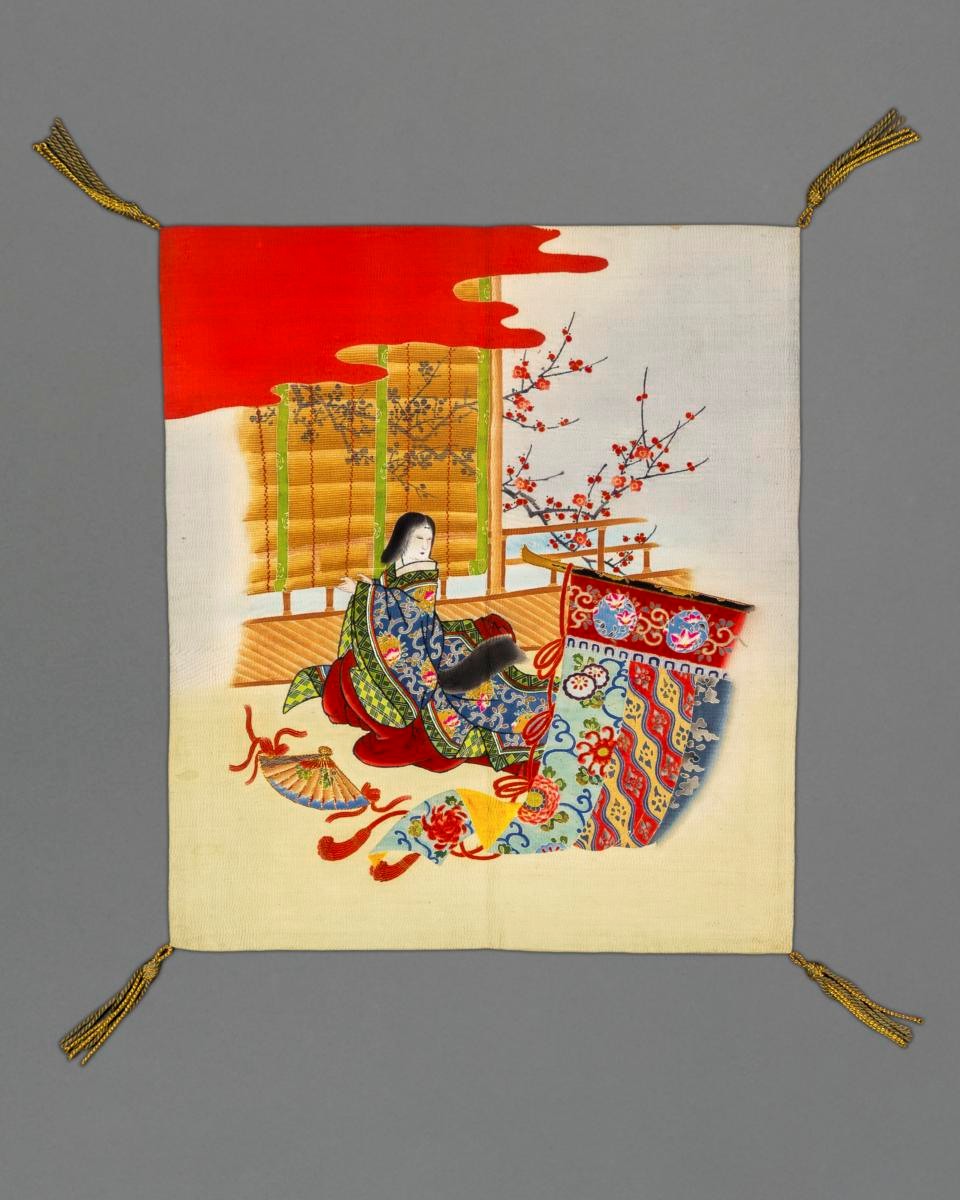

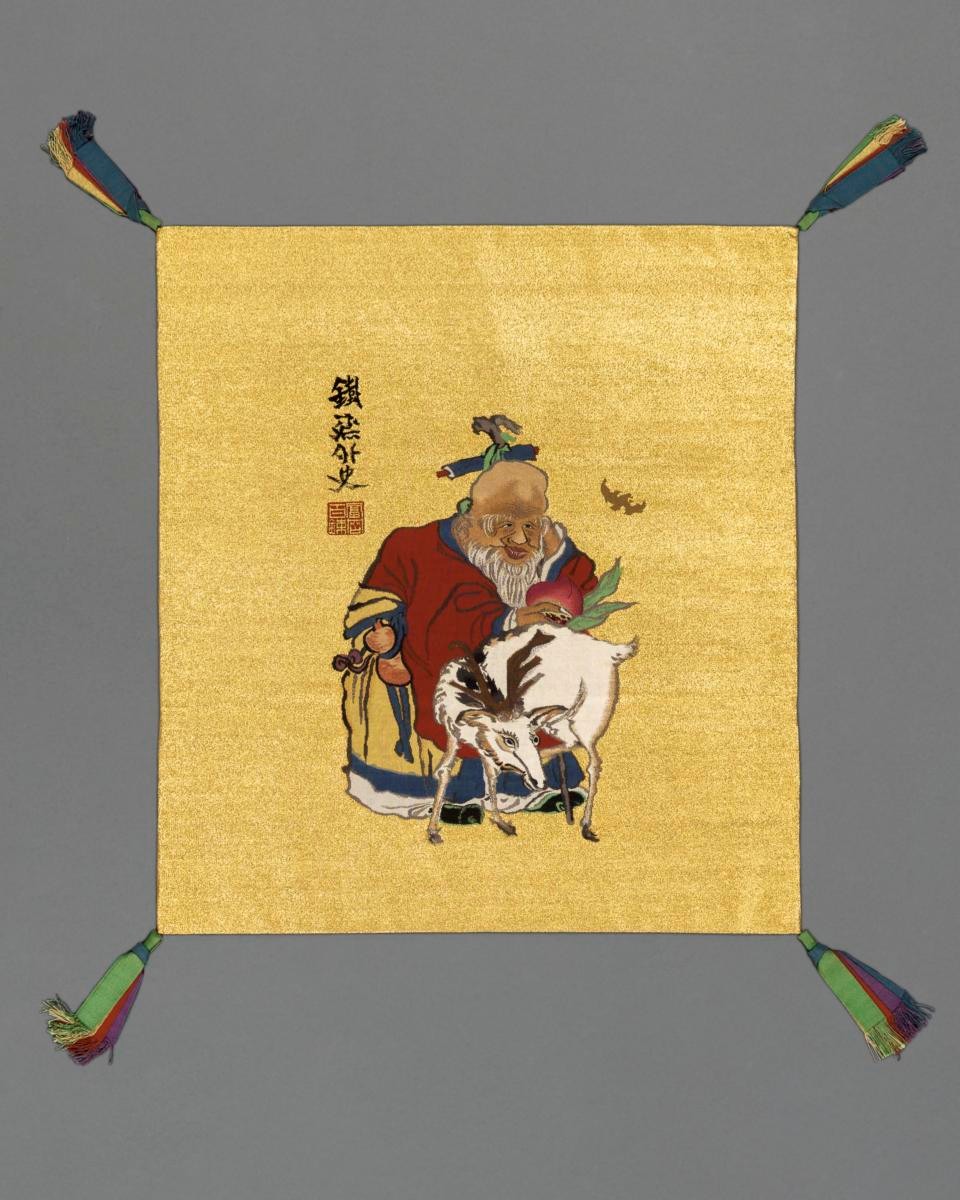
Object size: 78.0 x 71.2 cm (with tassels)
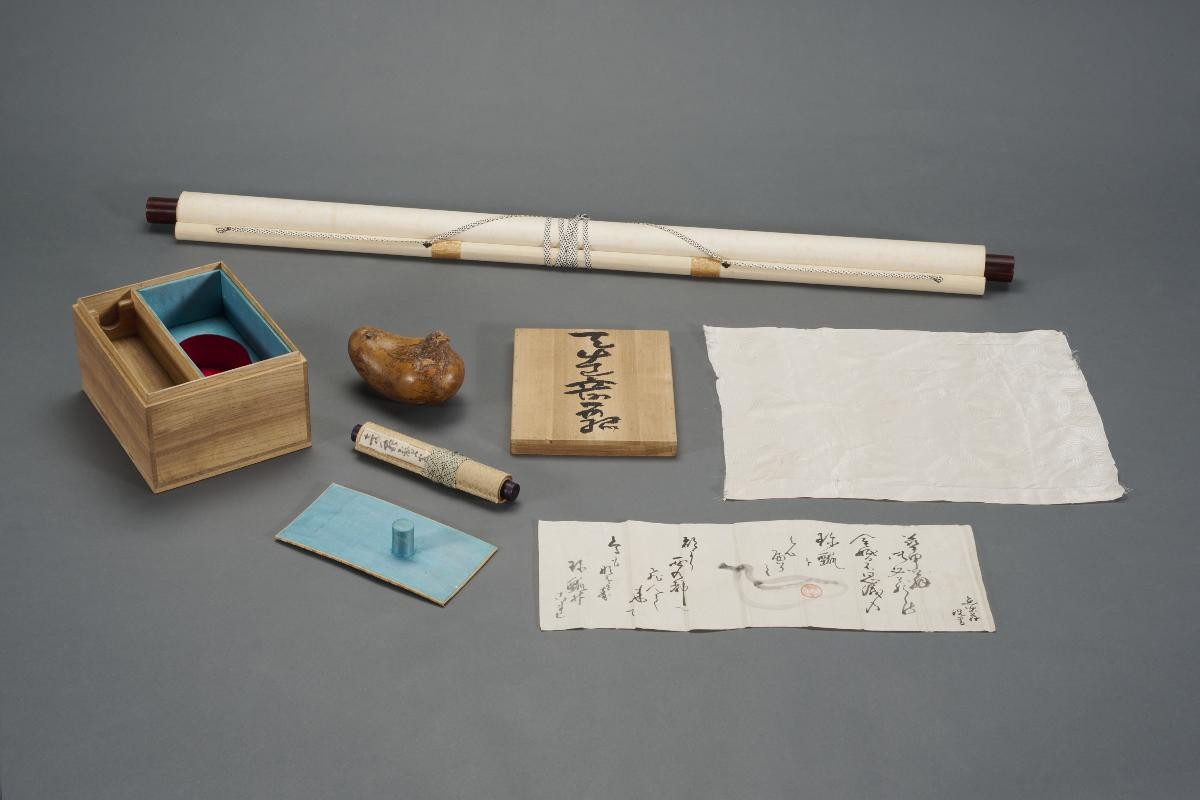
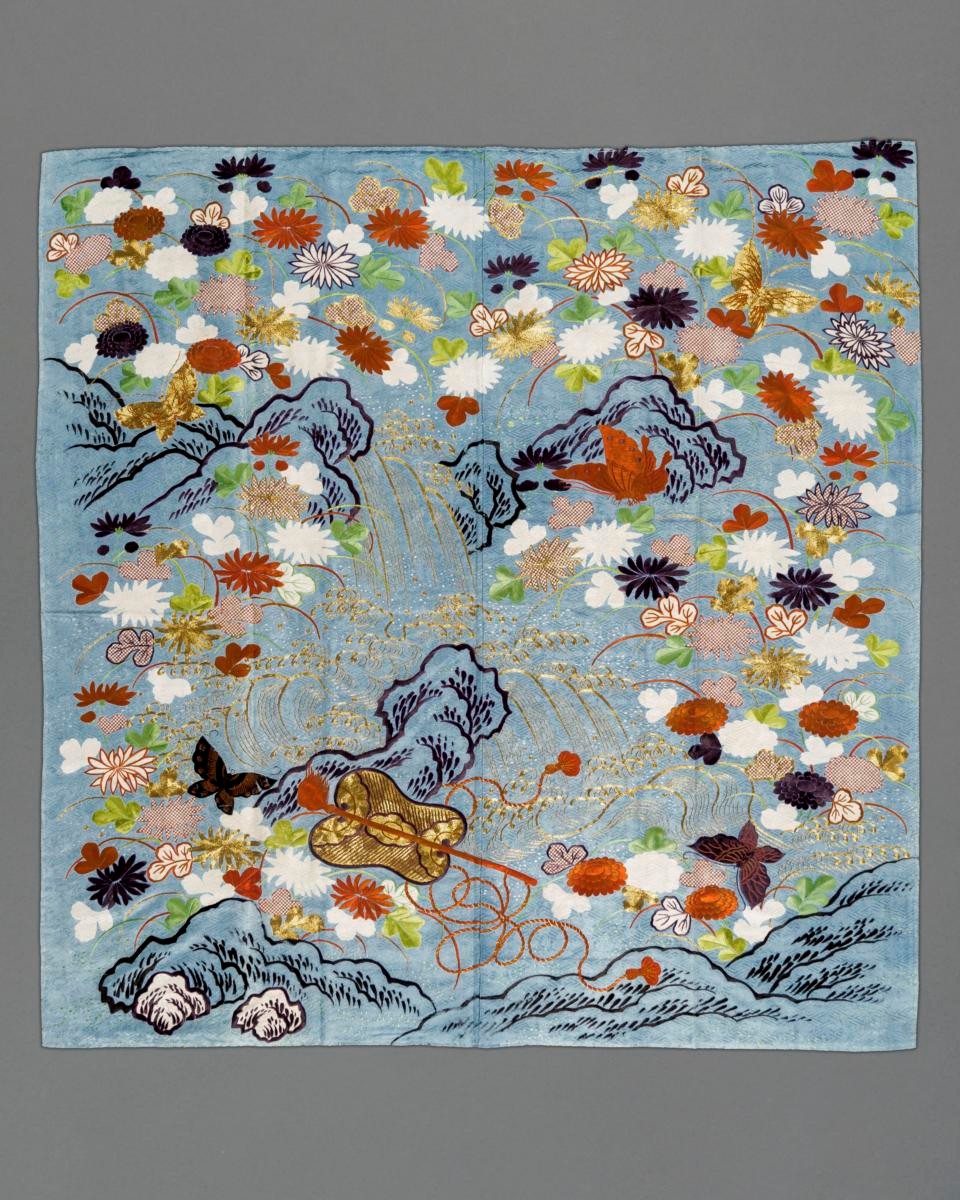
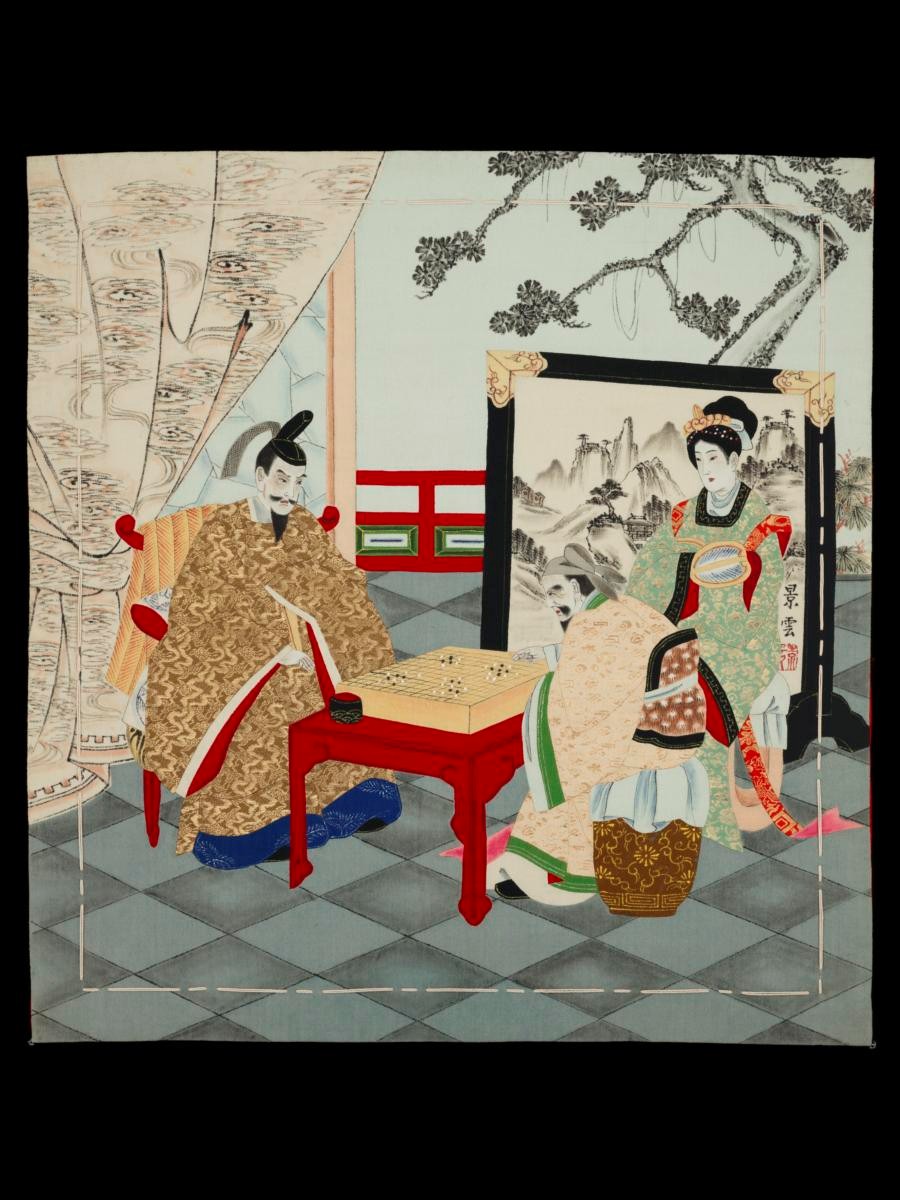
In Japan, the practice of formally presenting gifts with silk covers called fukusa began in the Edo period (1603–1868), around the late 17th or early 18th century. These covers were draped or folded over gifts for a variety of occasions, from seasonal festivities to important personal events. Each fukusa was carefully chosen to evoke the circumstance of the gift and to convey a message to the recipient through its design. Fukusa designs often feature symbolic objects or allusions to Japanese and Chinese stories. The choice of fukusa also reflected the giver’s wealth, taste, erudition, and cultural sensitivity. The use of fukusa continued into the early 20th century. Today, they are used in parts of Japan for weddings and corporate events.This fukusa is constructed in the hikikaeshi style, where the front and lining are made of the same fabric, folded in half, with the three edges stitched together. This style was prevalent from the late nineteenth century on, as it was particularly suited to mass production. Fukusa produced today are sewn in this manner. The reverse side is woven in green with a gold family crest, suggesting that it was used by a man. The fukusa is woven with a figure of Fukurokuju or Jurōjin, both gods of longevity, next to the seal (鉄斎外史 Tessai Gaishi) and signature (富岡百錬 Tomioka Hyakuren) of Tomioka Tessai (1837–1924). Tessai championed traditional styles of Japanese literati painting and his work frequently depicts Japanese and Chinese subjects. Auspicious symbols of longevity and prosperity like the bat, deer, peach, double-gourd, and a magical scroll surround the figure.