
Object size: Refer to parts
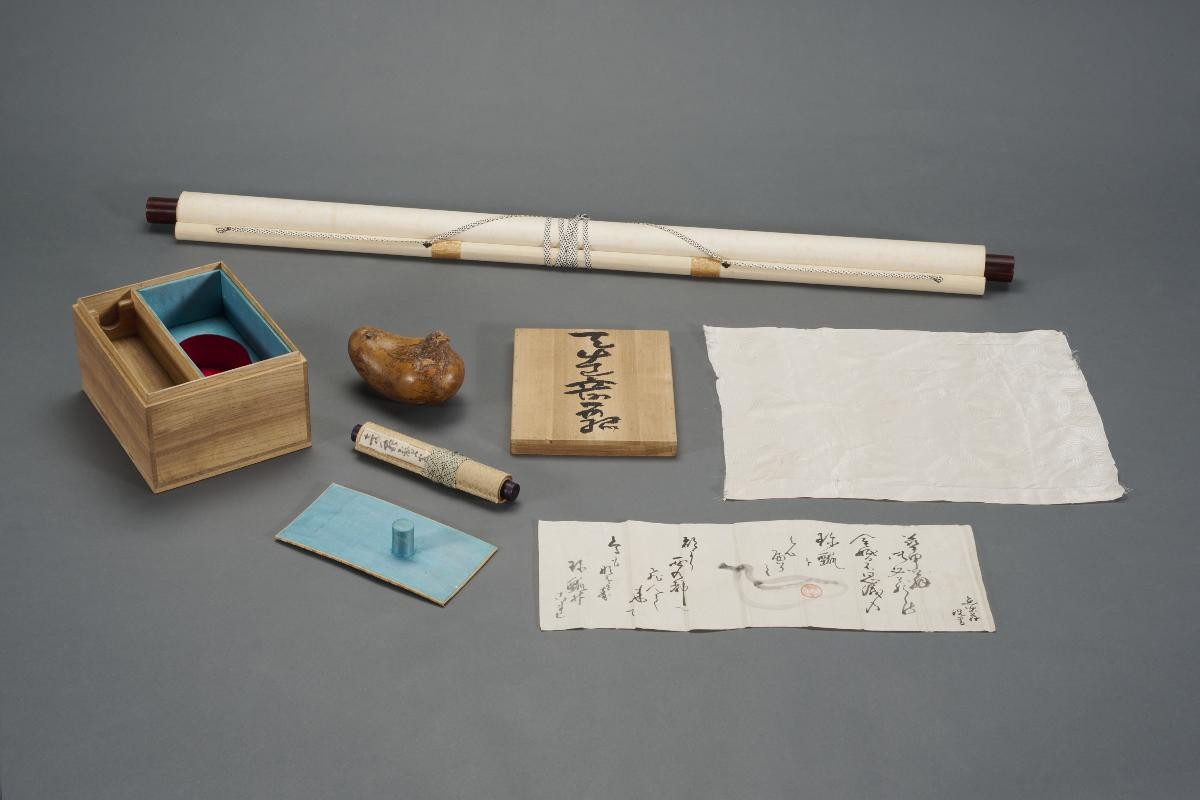
This is a unique set of artifacts that documents an occasion when a group of prominent Japanese artists of the late 19th and early 20th century, among them most notably Tomioka Tessai (1837 – 1924), followed values and conventions of Chinese literati culture when it was gradually falling out of favor in Japan.While Japan began a comprehensive modernization drawing heavily on western models after the Meiji Restoration, Chinese culture was still the foundation and source of inspiration to many Japanese artists. Tomioka Tessai, known as the last great nanga (“Southern-style painting”, a style that was heavily inspired by Chinese literati painting) master of Japan, was a typical example. It happened that Tessai came across a gourd that resembled a bird. He was so impressed by this coincidence that he showed this “bird” to his friends. Probably after each viewing, he would ask his friend to leave a few words (such as a poem) on a handscroll that he prepared. Most responses are written in Chinese, some of them even in poems in classical formats. The current set does not only preserve the original scroll (in a remounted format), but the gourd as well.
.jpg)