
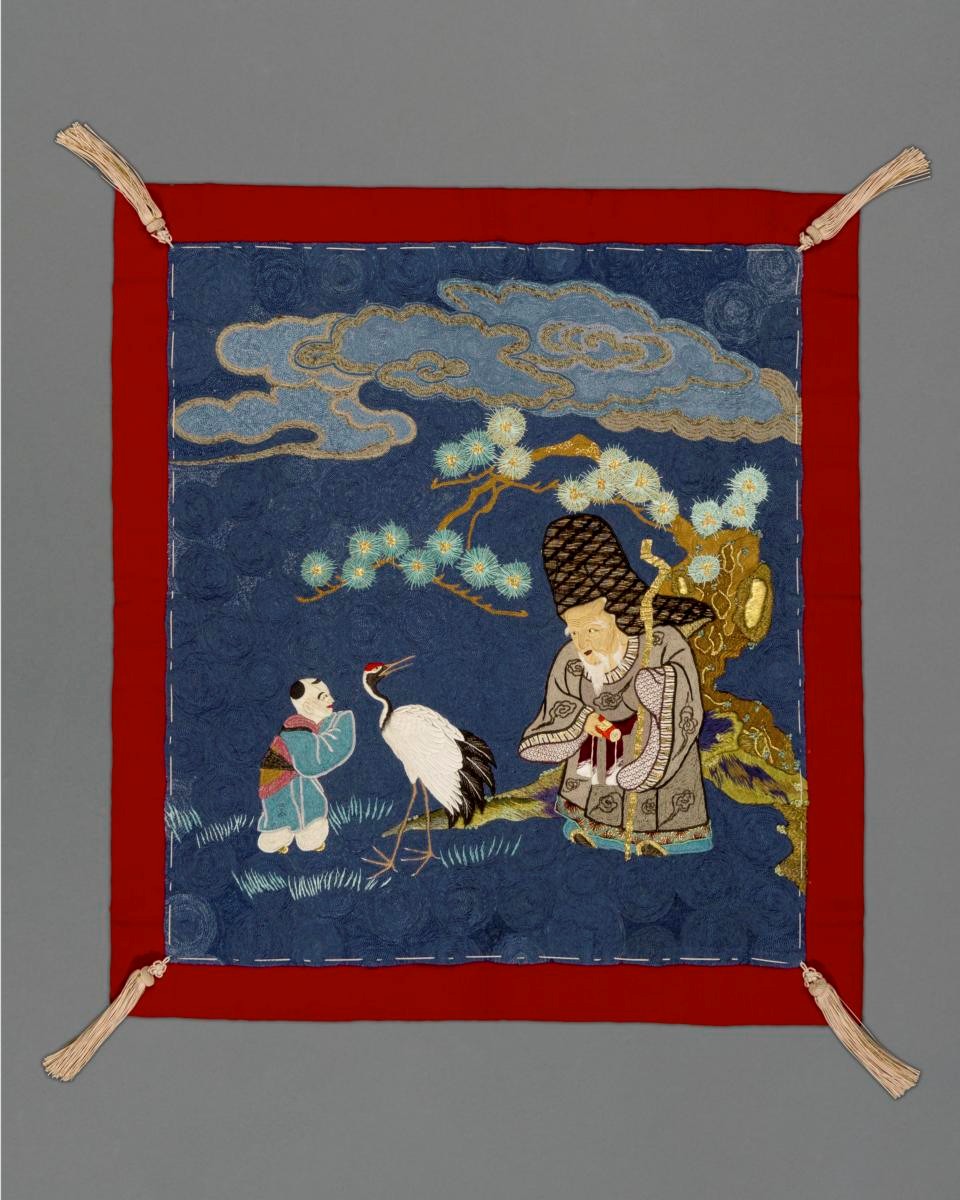
Object size: 93.3 x 79.0 cm (with tassels)
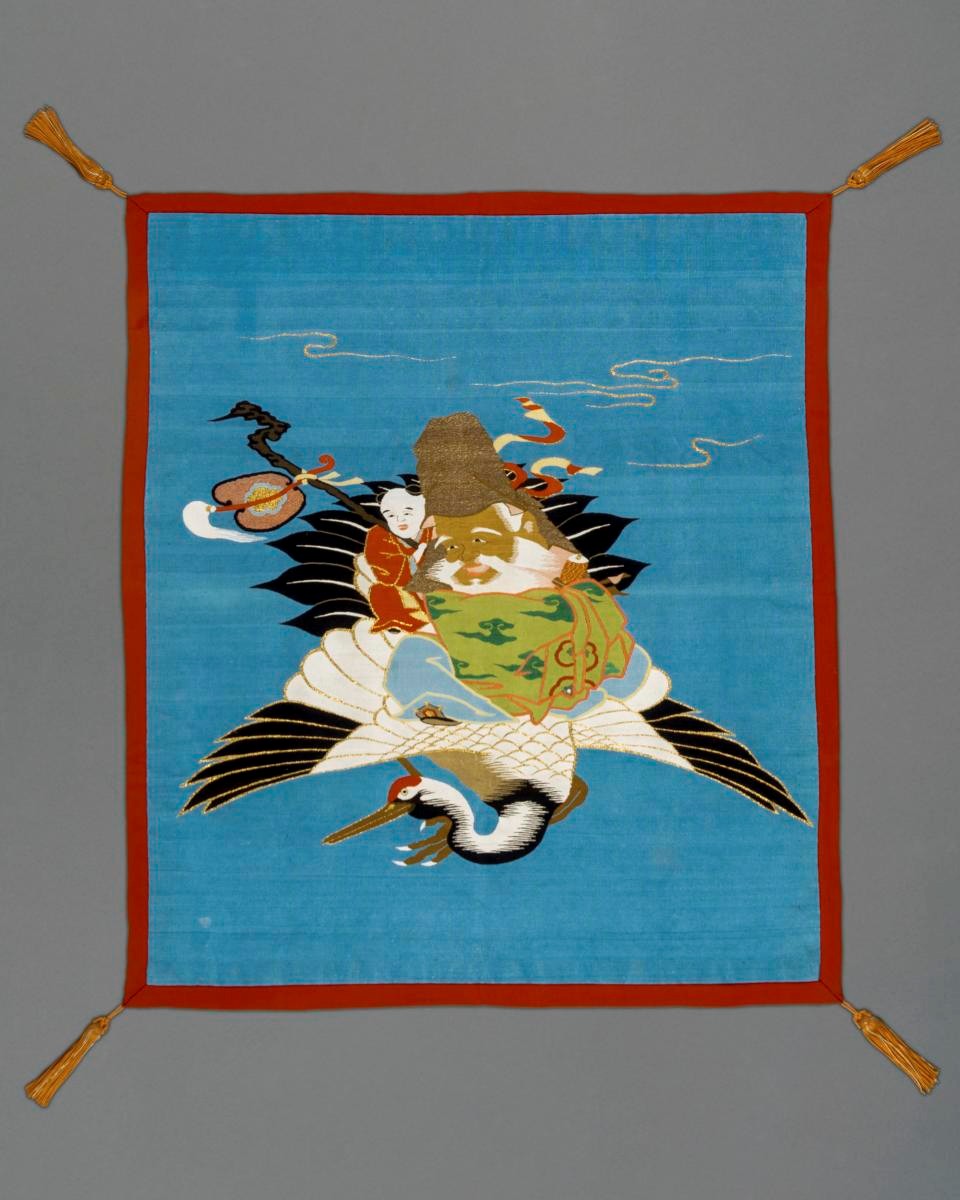
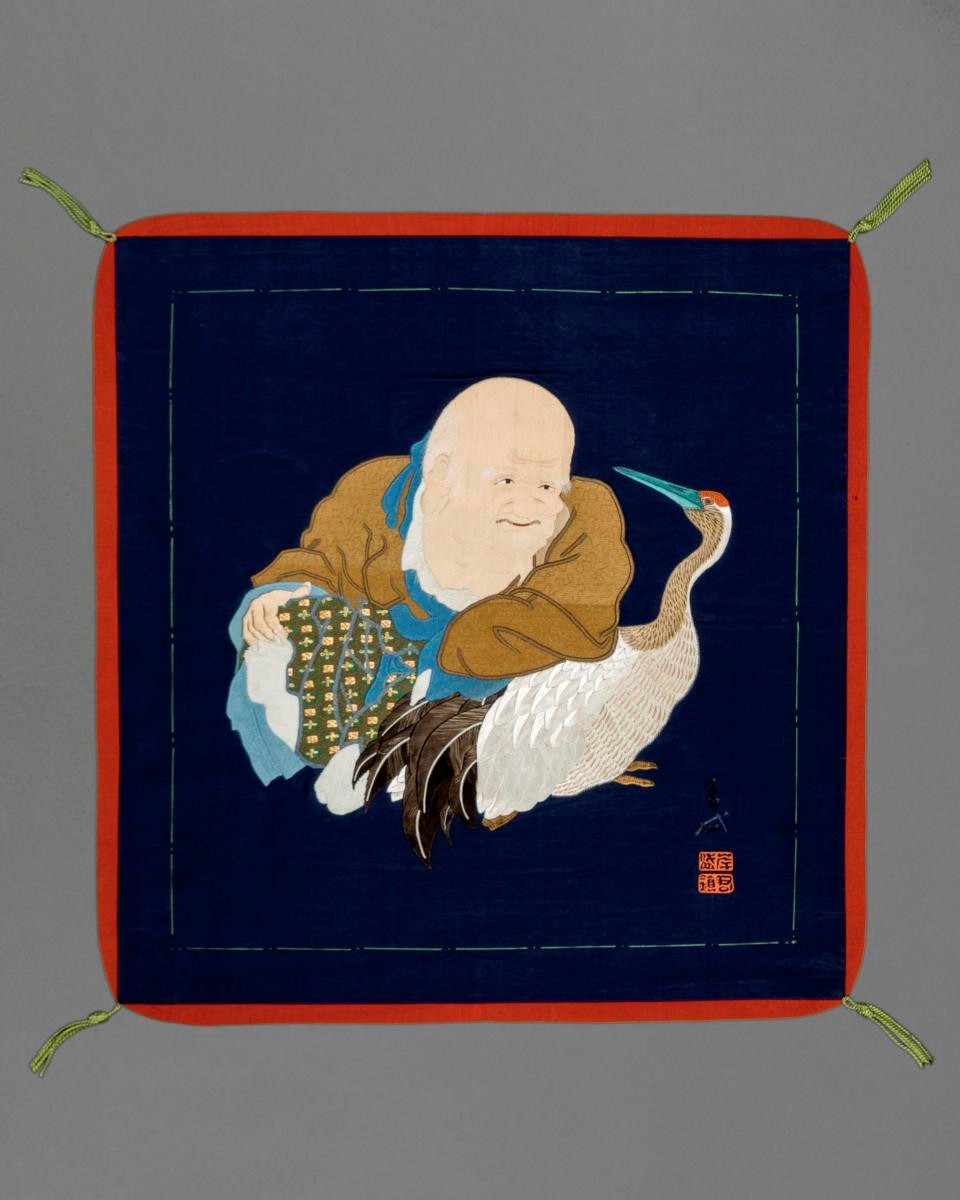
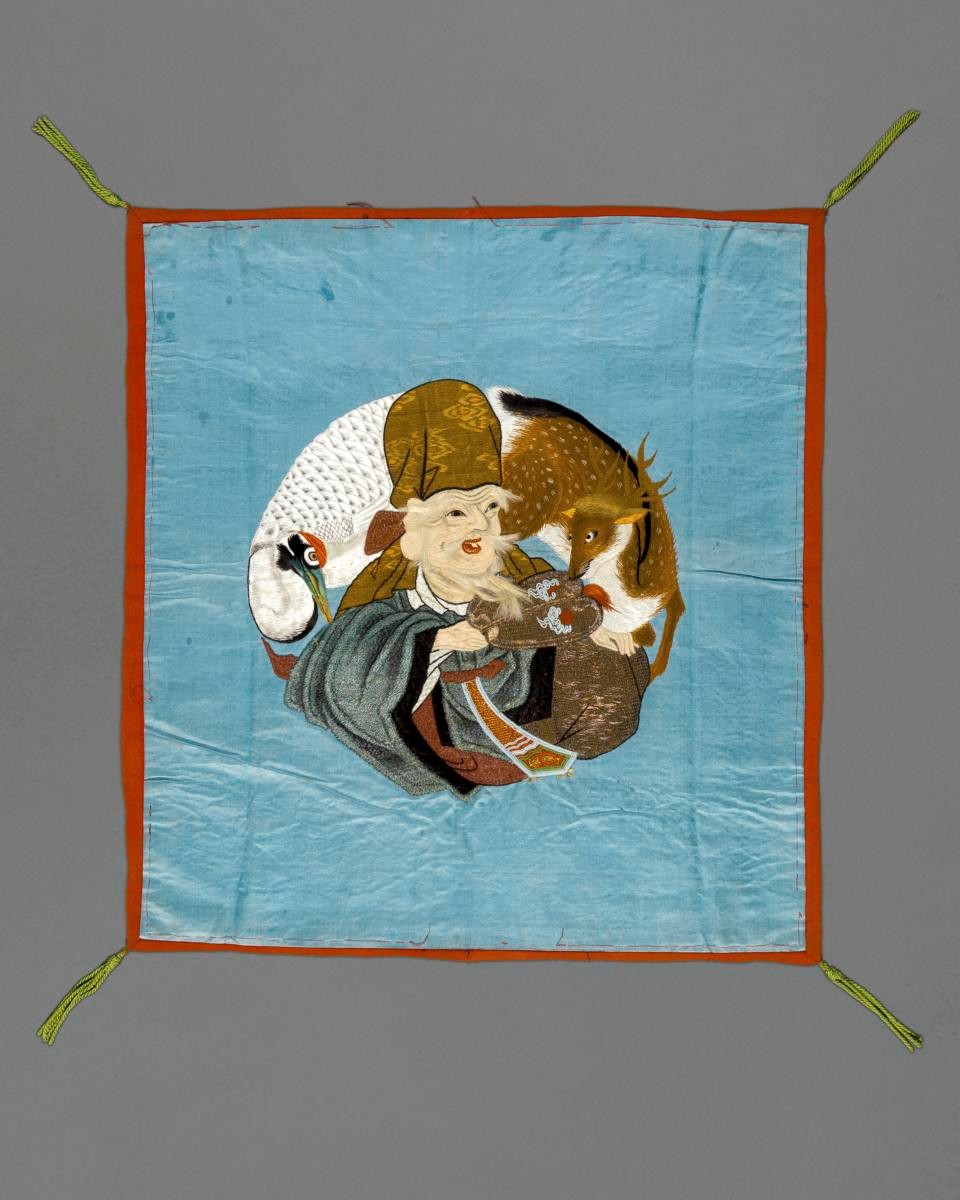
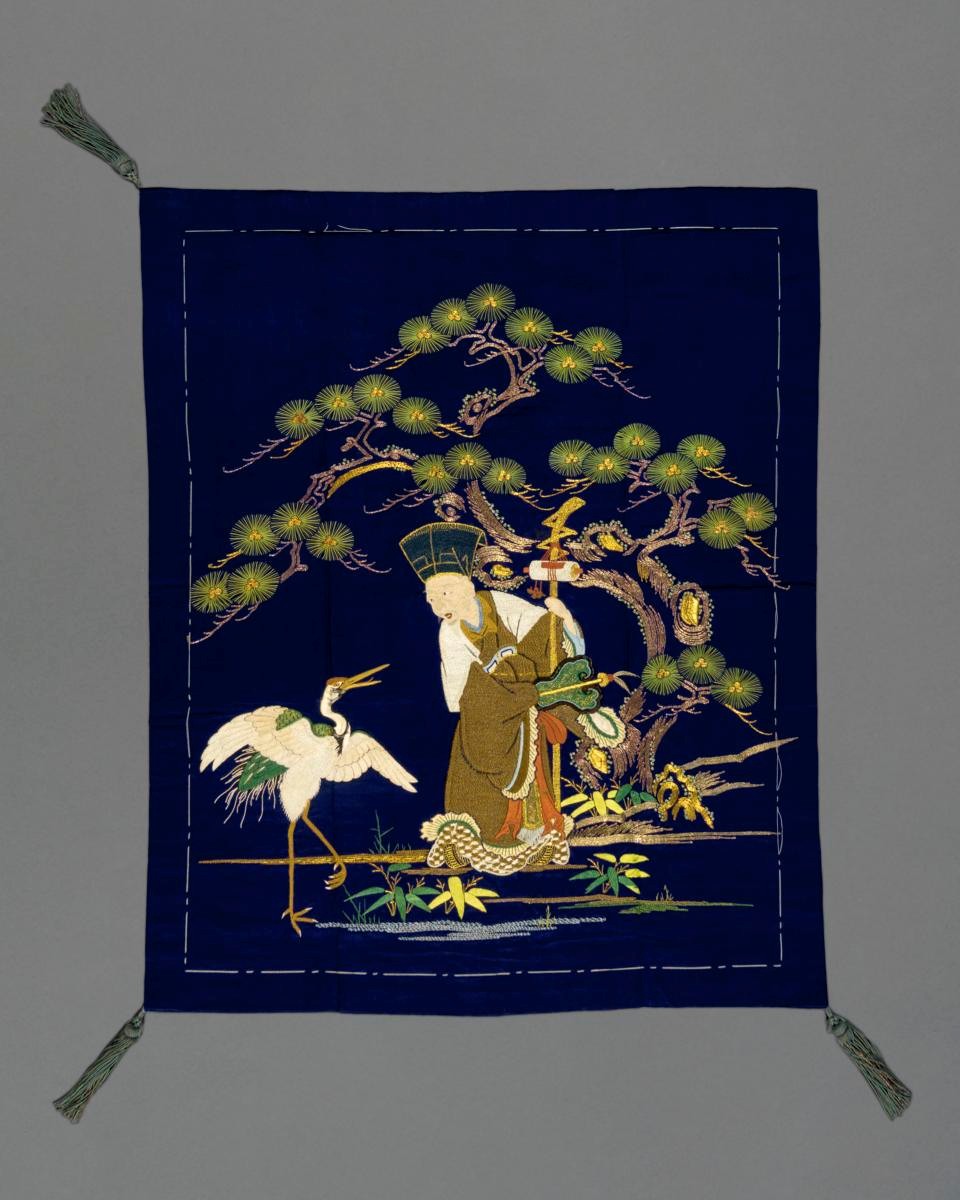
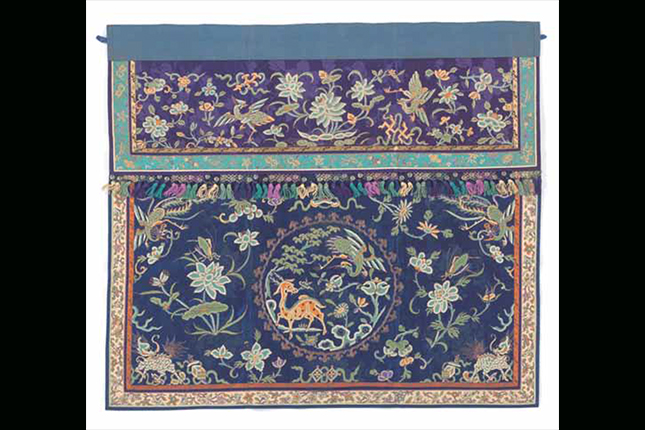
In Japan, the practice of formally presenting gifts with silk covers called fukusa began in the Edo period (1603–1868), around the late 17th or early 18th century. These covers were draped or folded over gifts for a variety of occasions, from seasonal festivities to important personal events. Each fukusa was carefully chosen to evoke the circumstance of the gift and to convey a message to the recipient through its design. Fukusa designs often feature symbolic objects or allusions to Japanese and Chinese stories. The choice of fukusa also reflected the giver’s wealth, taste, erudition, and cultural sensitivity. The use of fukusa continued into the early 20th century. Today, they are used in parts of Japan for weddings and corporate events. Fukurokuju, the god of wealth, longevity, and happiness, carries his sacred scroll which contains the lifespan of every person on earth. The crane and pine convey wishes for longevity. The entire surface is covered with fine embroidery, with the sky, ground, and swirling clouds worked in spiral-couched thread. This technique was frequently used on Meiji ornamental silks made for export.The discovery of synthetic dyes in the second half of the nineteenth century revolutionised textile production around the world. Previously difficult and costly to obtain colours were now easily and inexpensively achieved. The world’s first aniline dye, Perkin’s Purple, was created in 1856 and introduced to Japan as early as 1859. Alongside the textile industry, the chemical industry was one of the first to modernise in Japan. The official guide to the Japanese display at the 1876 Philadelphia Centennial notes that synthetic dyes were imported in considerable quantities to replace more difficult natural dyes. Analysis of this fukusa reveals the presence of both naturally and synthetically dyed threads, indicating that dyers incorporated new technologies that suited their needs while continuing to work with traditional methods.