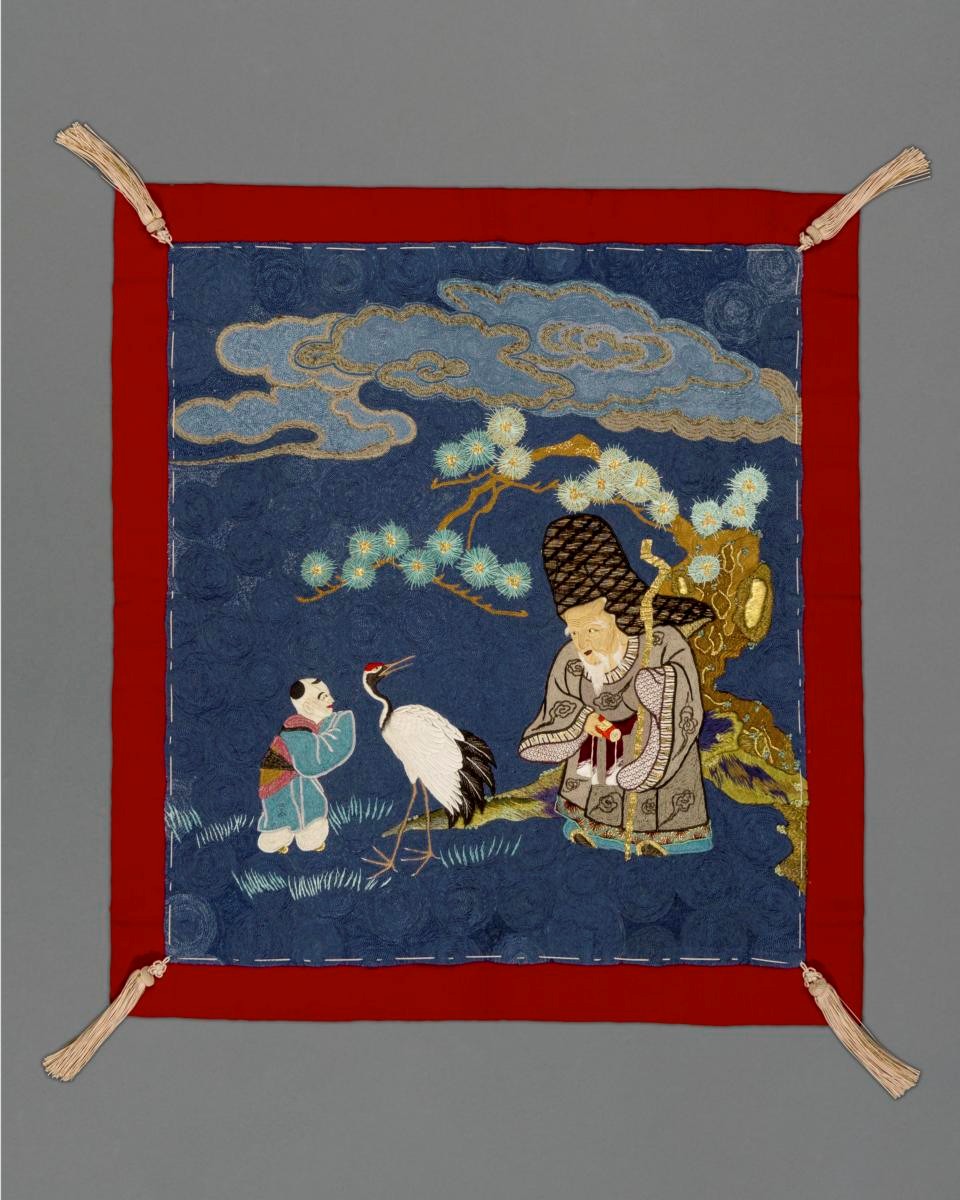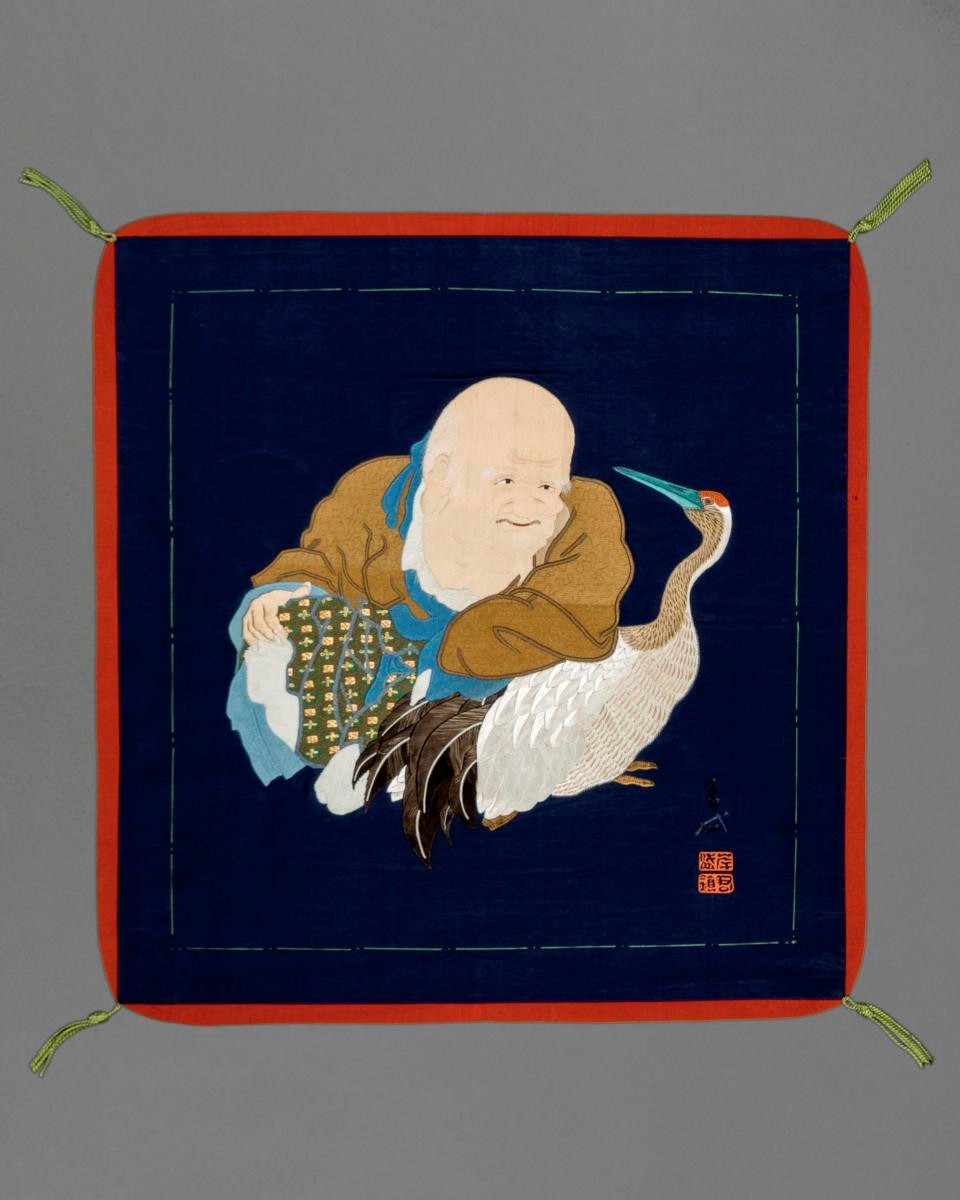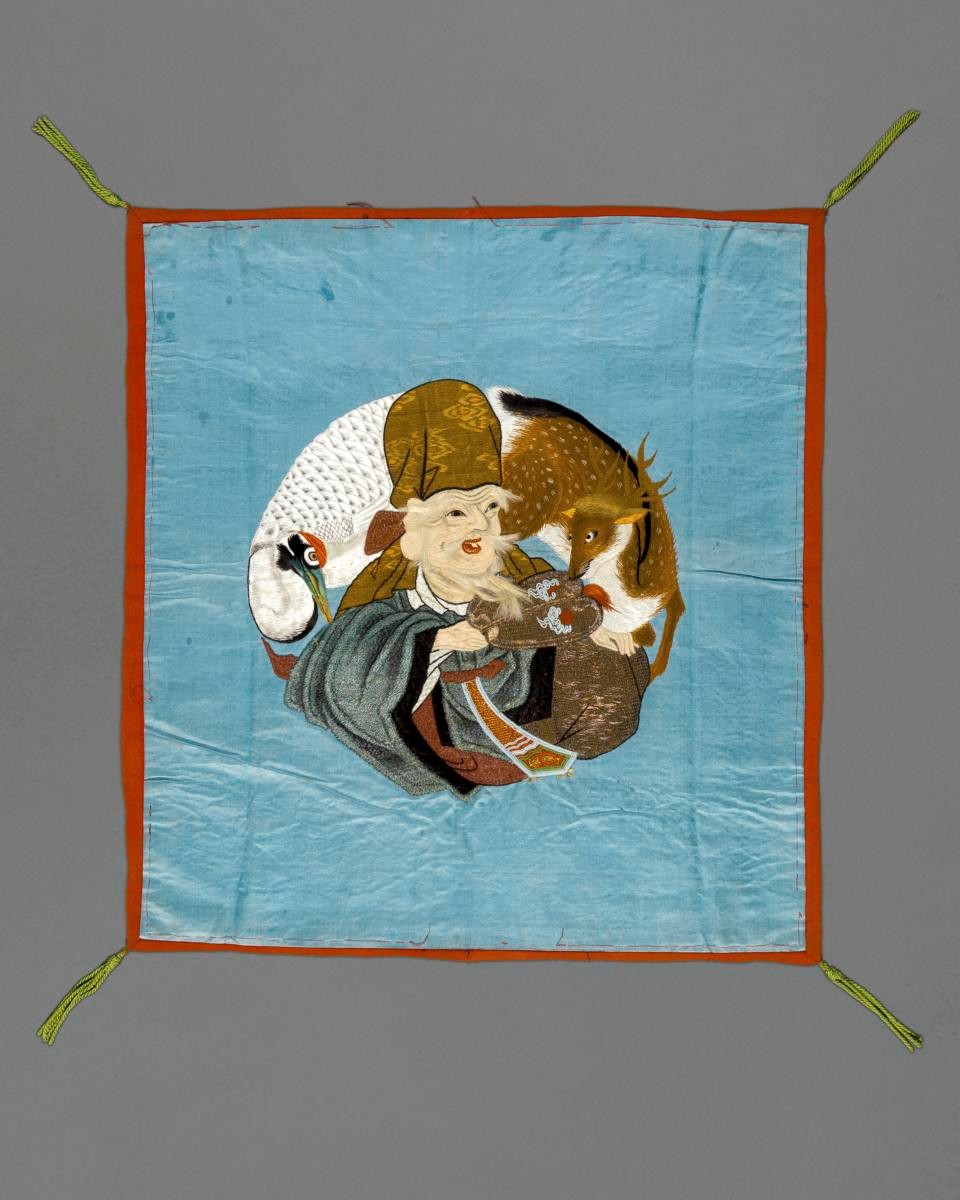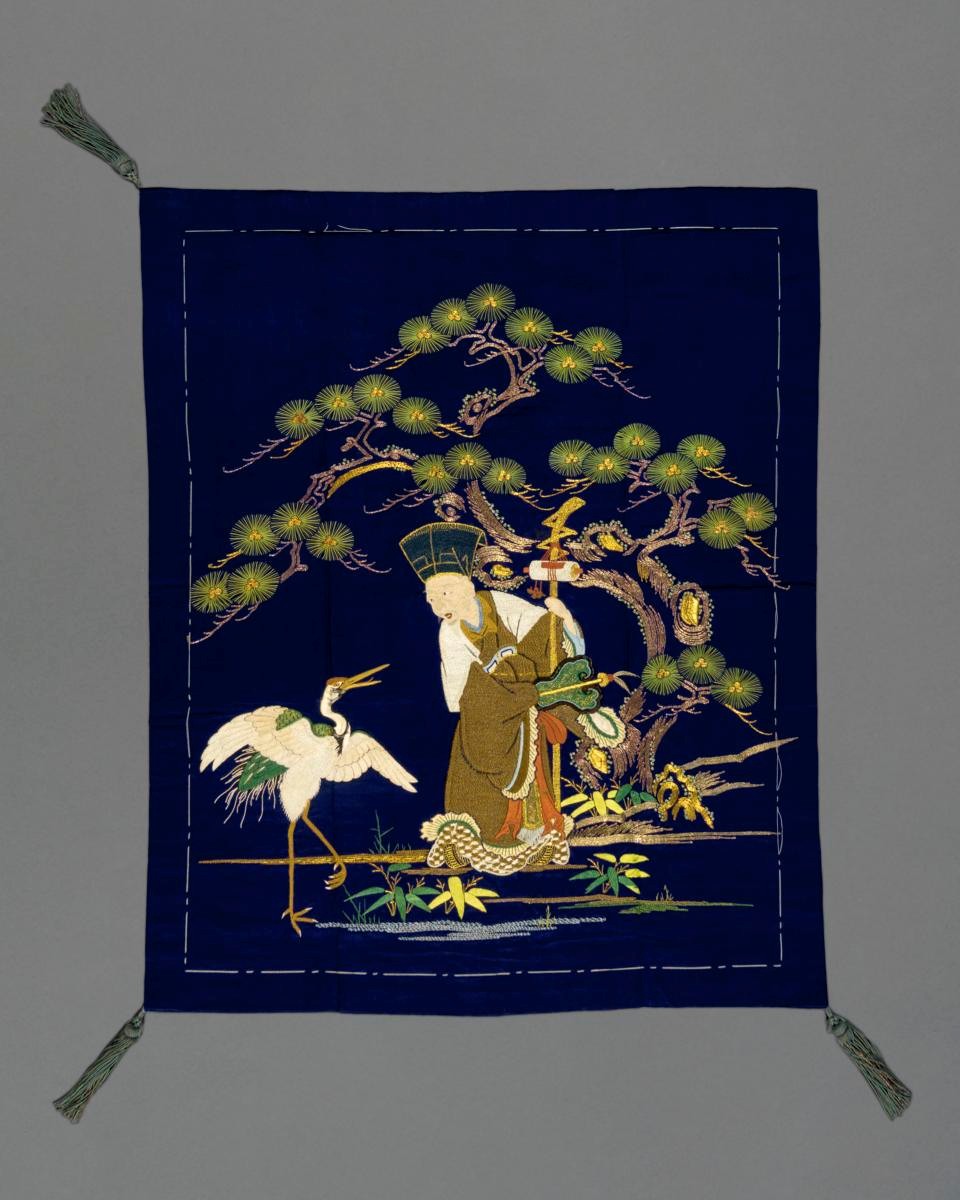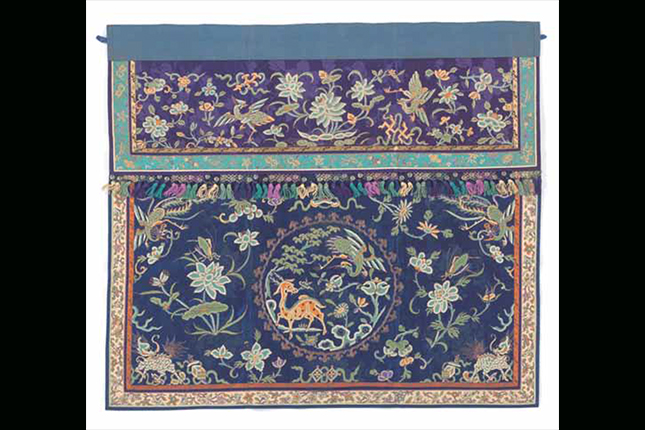

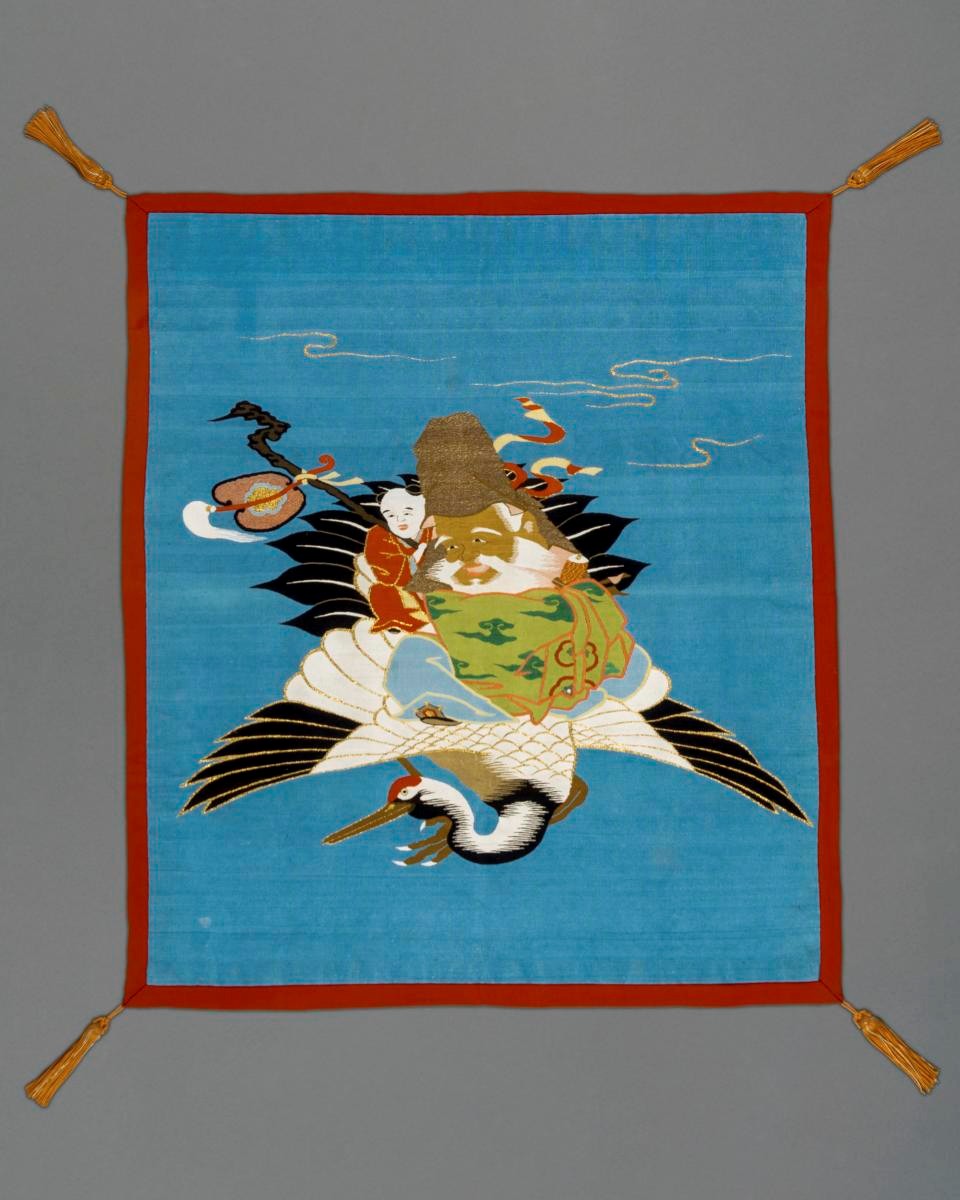
Object size: 93.5 x 83.5 cm (with tassels)
In Japan, the practice of formally presenting gifts with silk covers called fukusa began in the Edo period (1603–1868), around the late 17th or early 18th century. These covers were draped or folded over gifts for a variety of occasions, from seasonal festivities to important personal events. Each fukusa was carefully chosen to evoke the circumstance of the gift and to convey a message to the recipient through its design. Fukusa designs often feature symbolic objects or allusions to Japanese and Chinese stories. The choice of fukusa also reflected the giver’s wealth, taste, erudition, and cultural sensitivity. The use of fukusa continued into the early 20th century. Today, they are used in parts of Japan for weddings and corporate events.One of the Seven Gods of Luck, Fukurokuju bestows the blessings that comprise his name: fuku (happiness), roku (wealth), and ju (longevity). He is a conflation of the Three Star Gods (Fu Lu Shou). He has a bald, elongated forehead and whiskery beard, and is often accompanied by a crane or deer, emblems of longevity.