
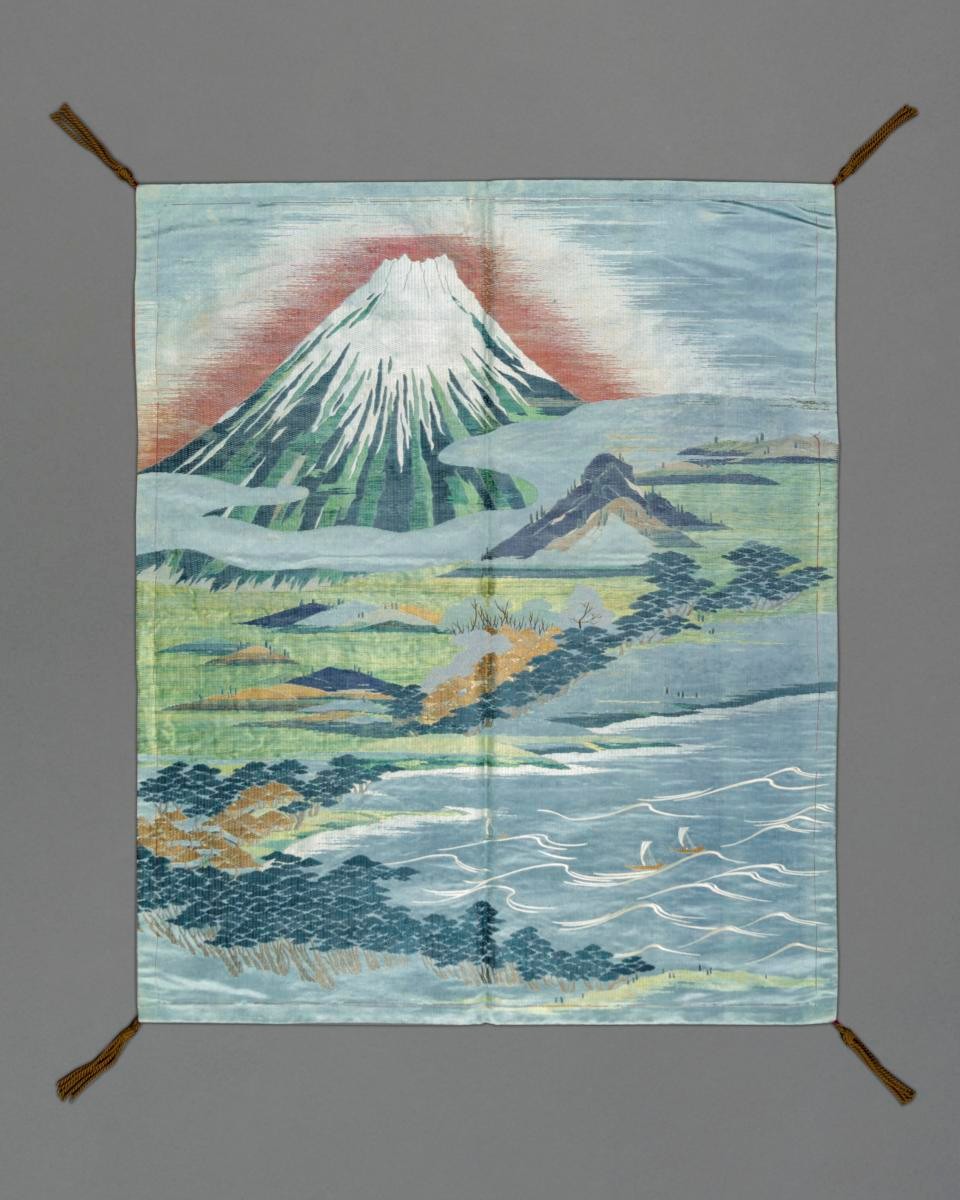
Object size: 98.0 x 80.0 cm (with tassels)
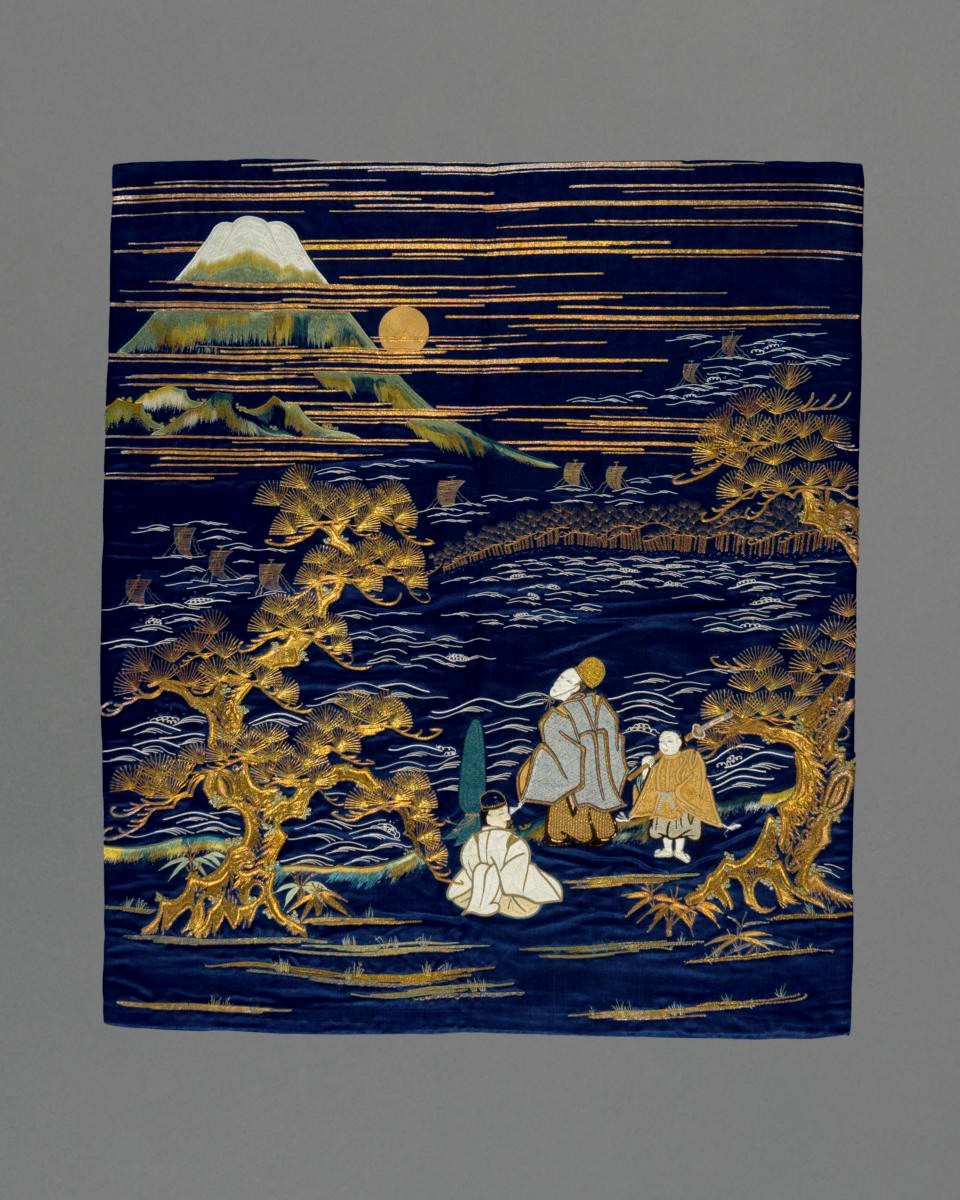
In Japan, the practice of formally presenting gifts with silk covers called fukusa began in the Edo period (1603–1868), around the late 17th or early 18th century. These covers were draped or folded over gifts for a variety of occasions, from seasonal festivities to important personal events. Each fukusa was carefully chosen to evoke the circumstance of the gift and to convey a message to the recipient through its design. Fukusa designs often feature symbolic objects or allusions to Japanese and Chinese stories. The choice of fukusa also reflected the giver’s wealth, taste, erudition, and cultural sensitivity. The use of fukusa continued into the early 20th century. Today, they are used in parts of Japan for weddings and corporate events. This fukusa is related to images known as meisho-e (“pictures of famous places”). Sacred, literary, or scenic sites have been important subjects in Japanese art since the Heian period (794–1185), but the genre proliferated during the Edo period. This time of relative peace, prosperity, improved transportation, and loosened travel restrictions saw more people travelling than ever before. Many guidebooks and prints of famous man-made and natural attractions were produced.The winding seashore lined with pine trees suggests that the view is from Miho no Matsubara, where the Noh play Hagoromo is set.