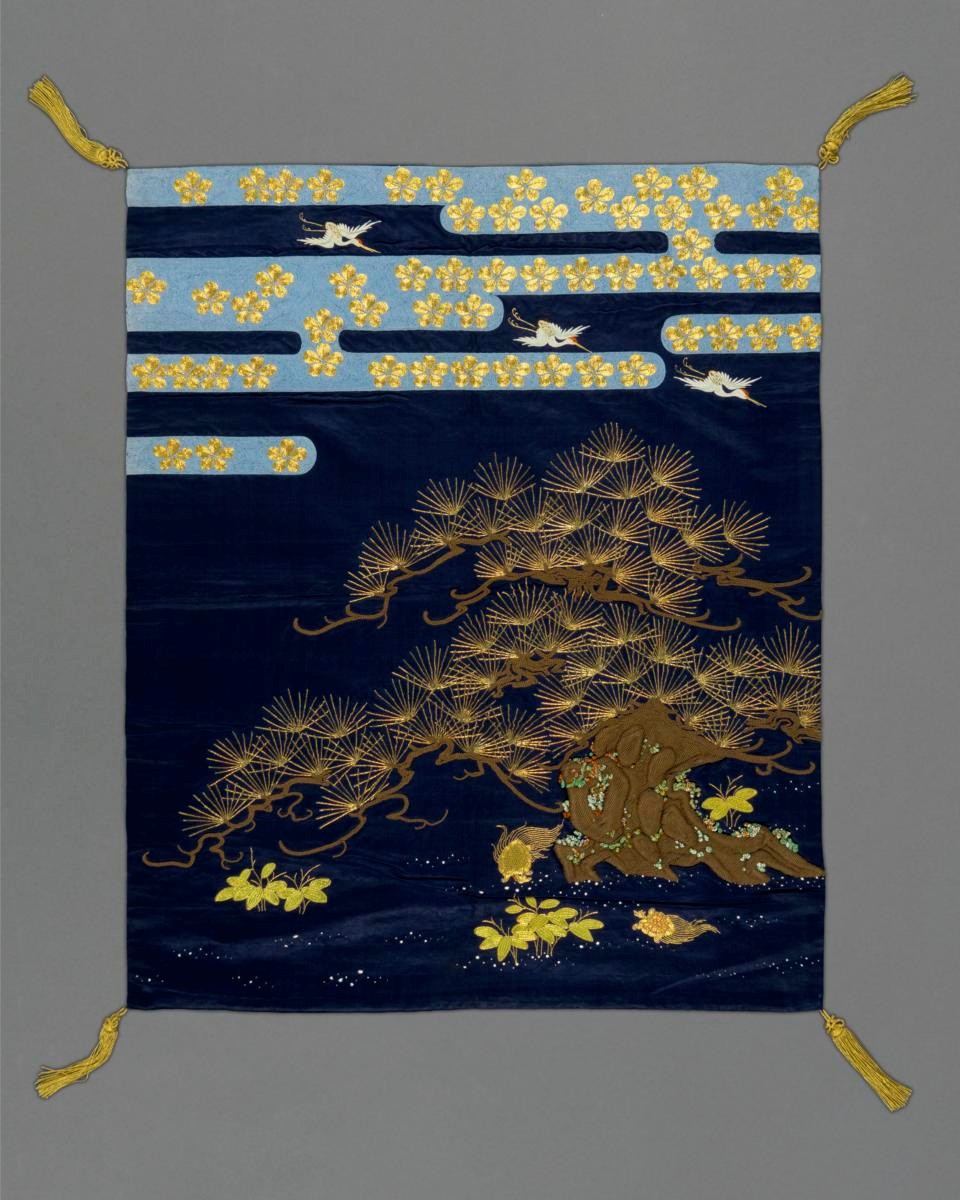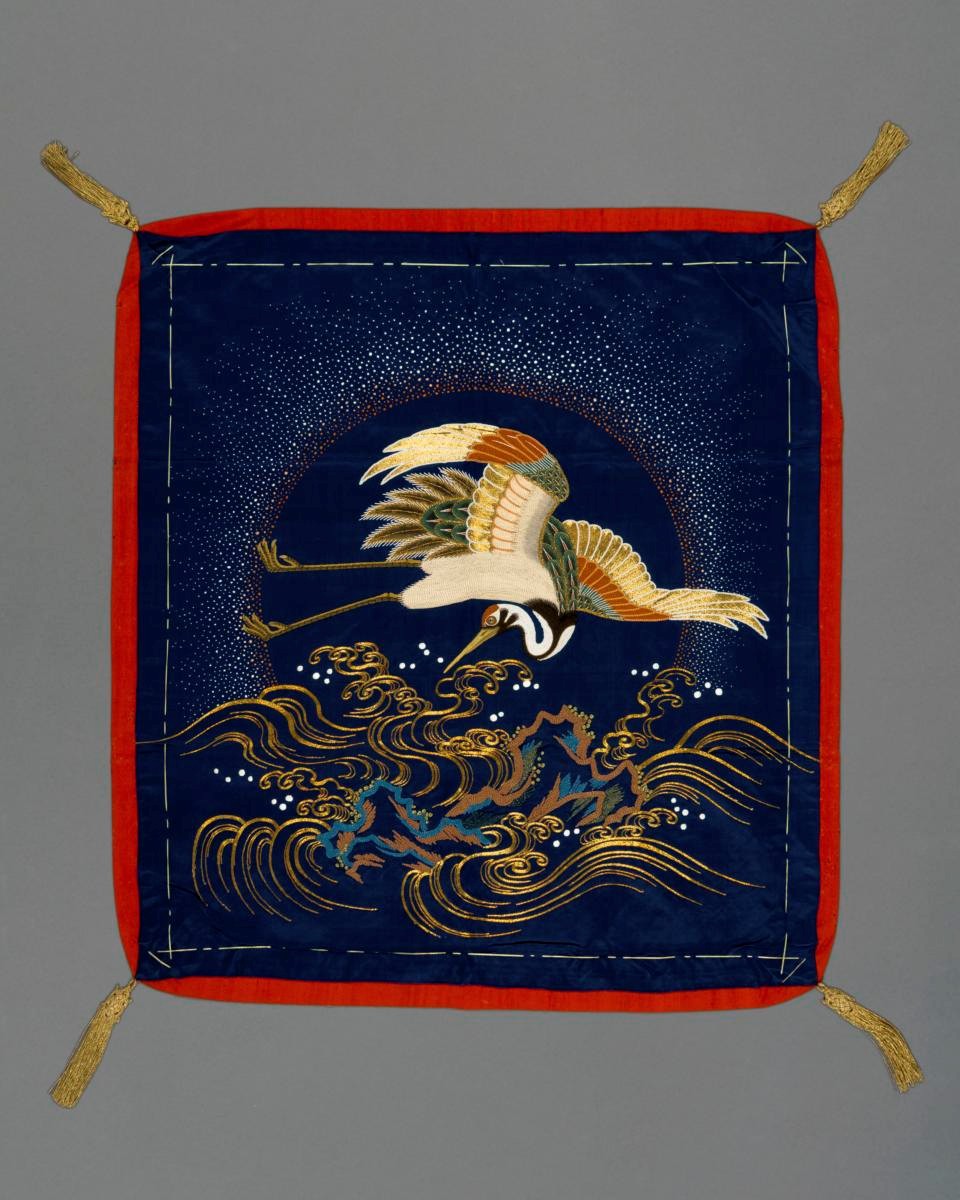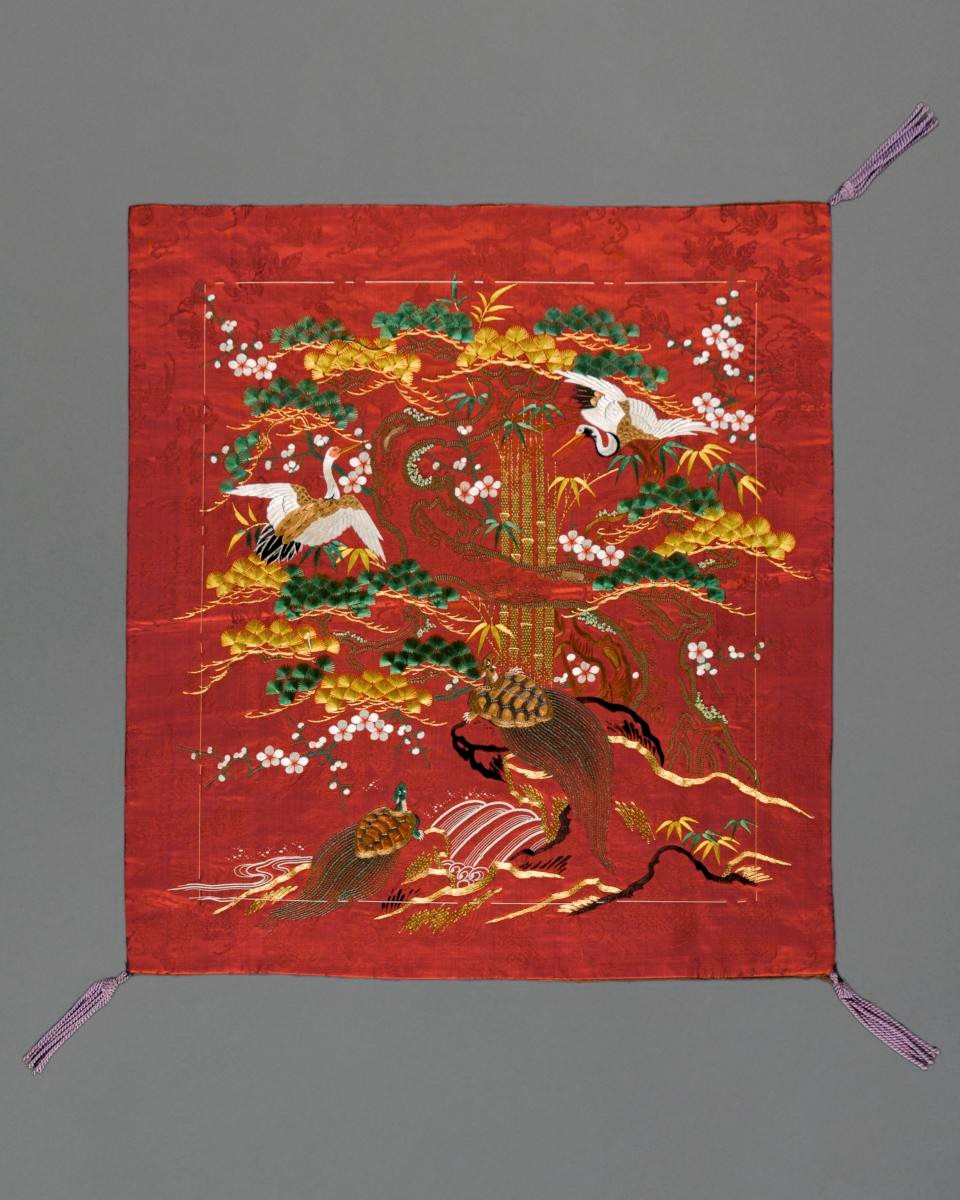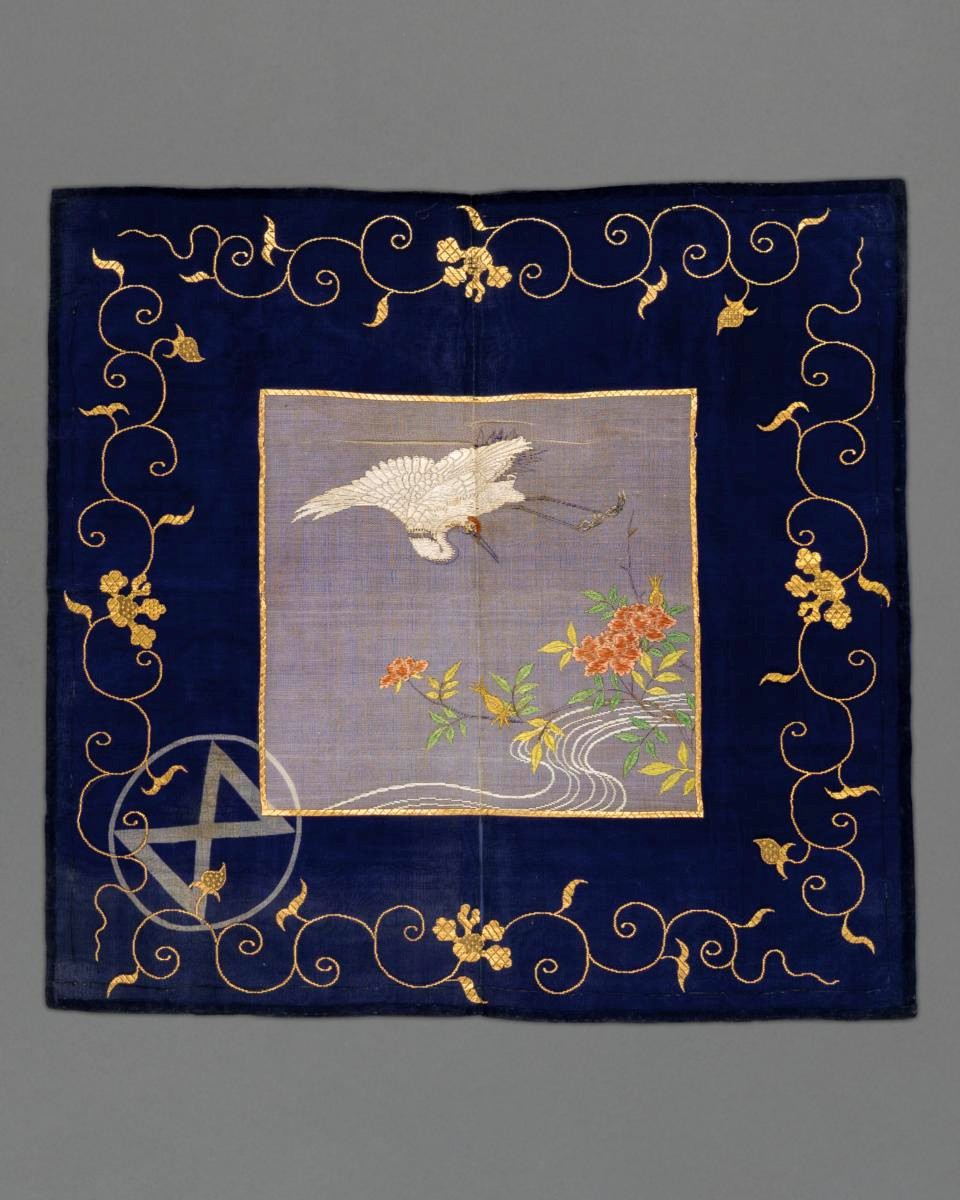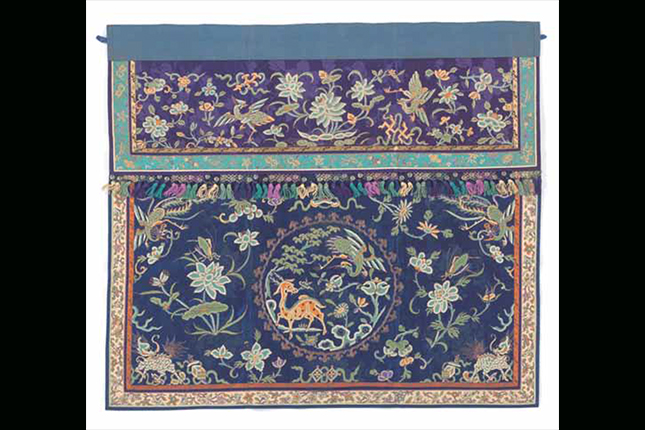

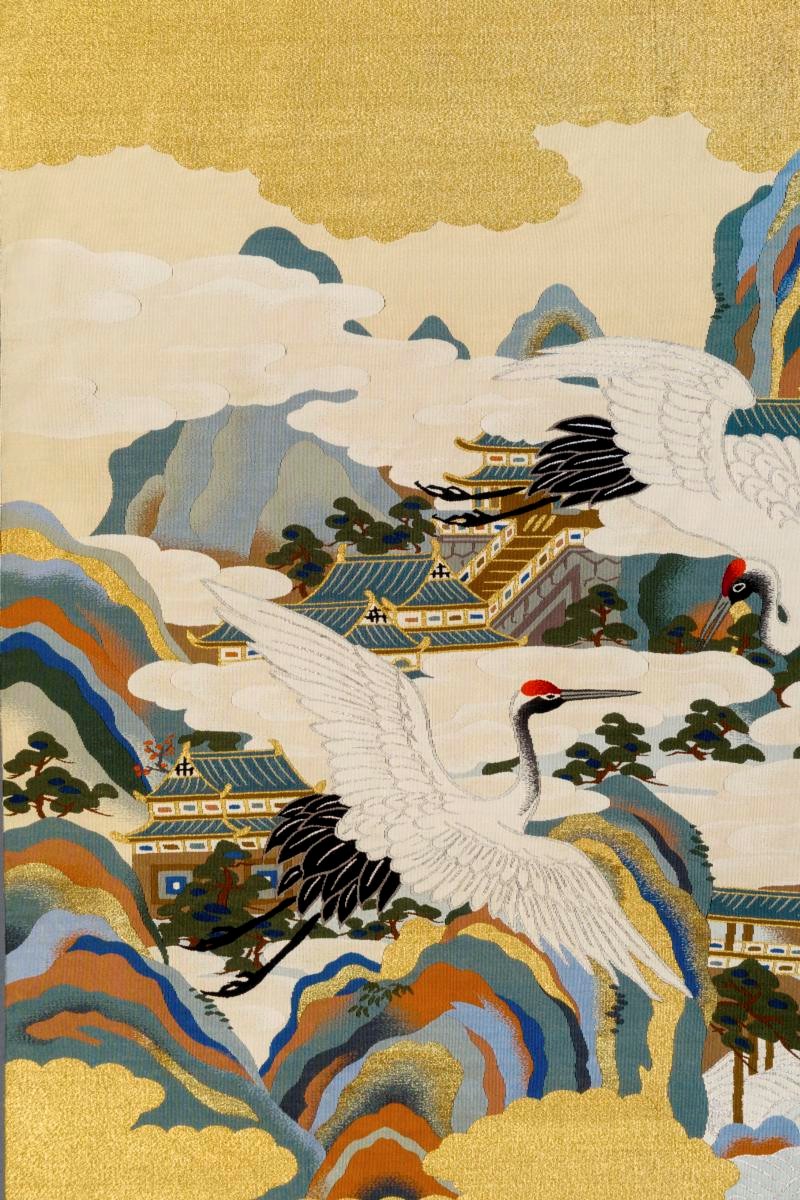
In Japan, the practice of formally presenting gifts with silk covers called fukusa began in the Edo period (1603–1868), around the late 17th or early 18th century. These covers were draped or folded over gifts for a variety of occasions, from seasonal festivities to important personal events. Each fukusa was carefully chosen to evoke the circumstance of the gift and to convey a message to the recipient through its design. Fukusa designs often feature symbolic objects or allusions to Japanese and Chinese stories. The choice of fukusa also reflected the giver’s wealth, taste, erudition, and cultural sensitivity. The use of fukusa continued into the early 20th century. Today, they are used in parts of Japan for weddings and corporate events. The auspicious design of cranes flying above Mount Hōrai, the paradisiacal island of immortality, makes this fukusa suitable for many celebratory occasions. It features a centrally placed crest woven on the green lining. In the early twentieth century, fukusa with crests woven on blue, brown, or green backgrounds were only used by men. In the past, when a gift was covered with a fukusa, the front would face upwards. After the recipient placed their return gift on the tray, they would cover it with the same fukusa with the family crest on the lining facing up. Today, the side with the crest is considered the front, even if there is an elaborate design on the other side.