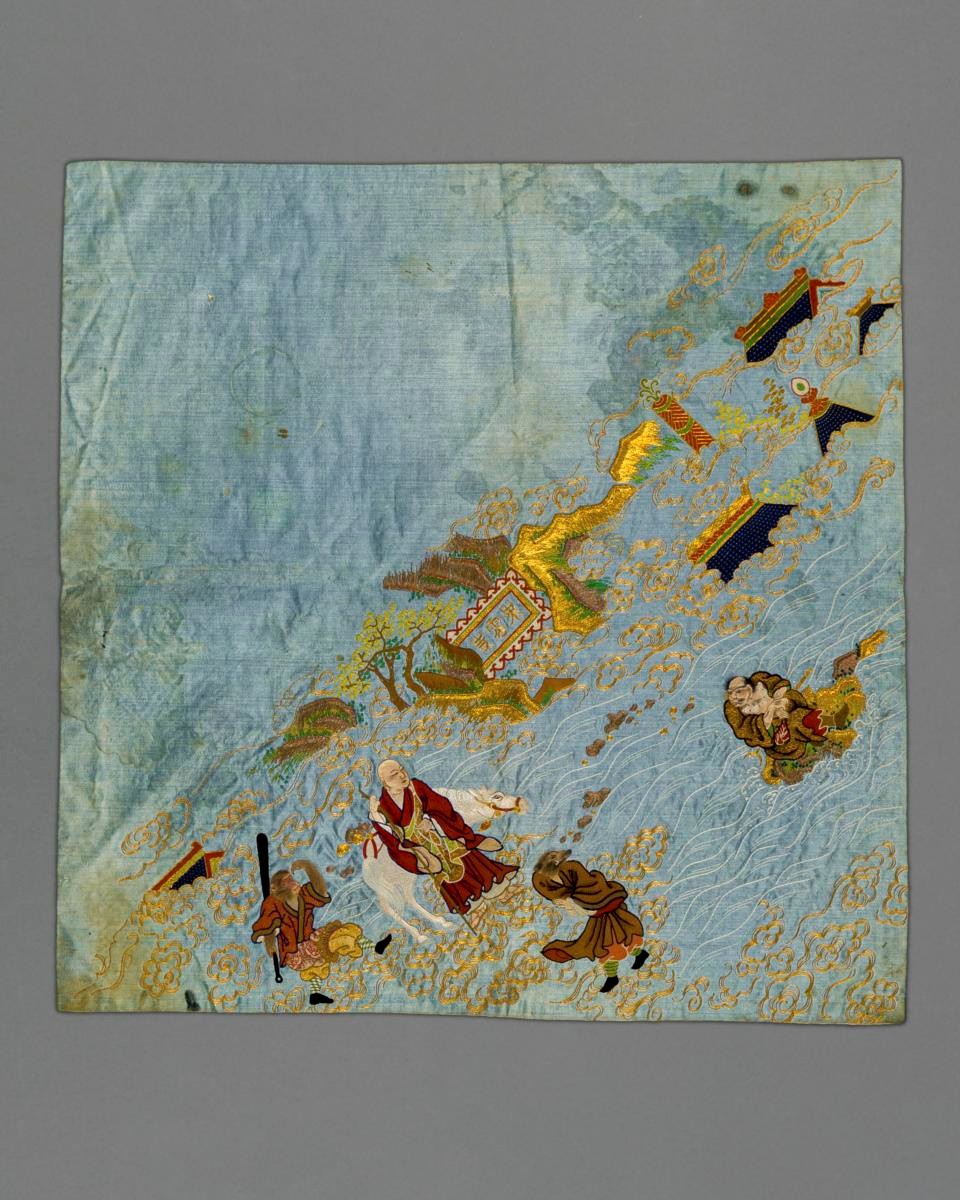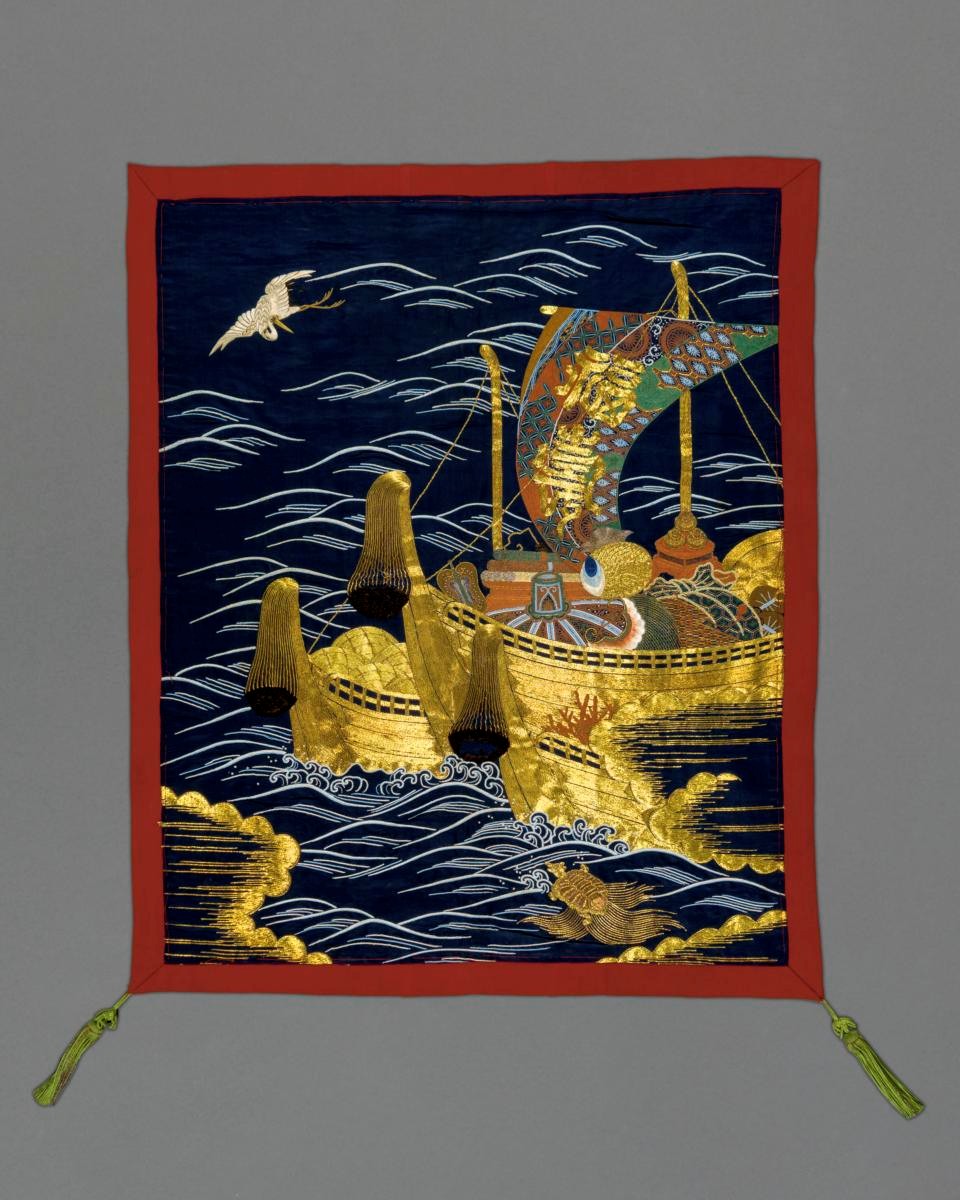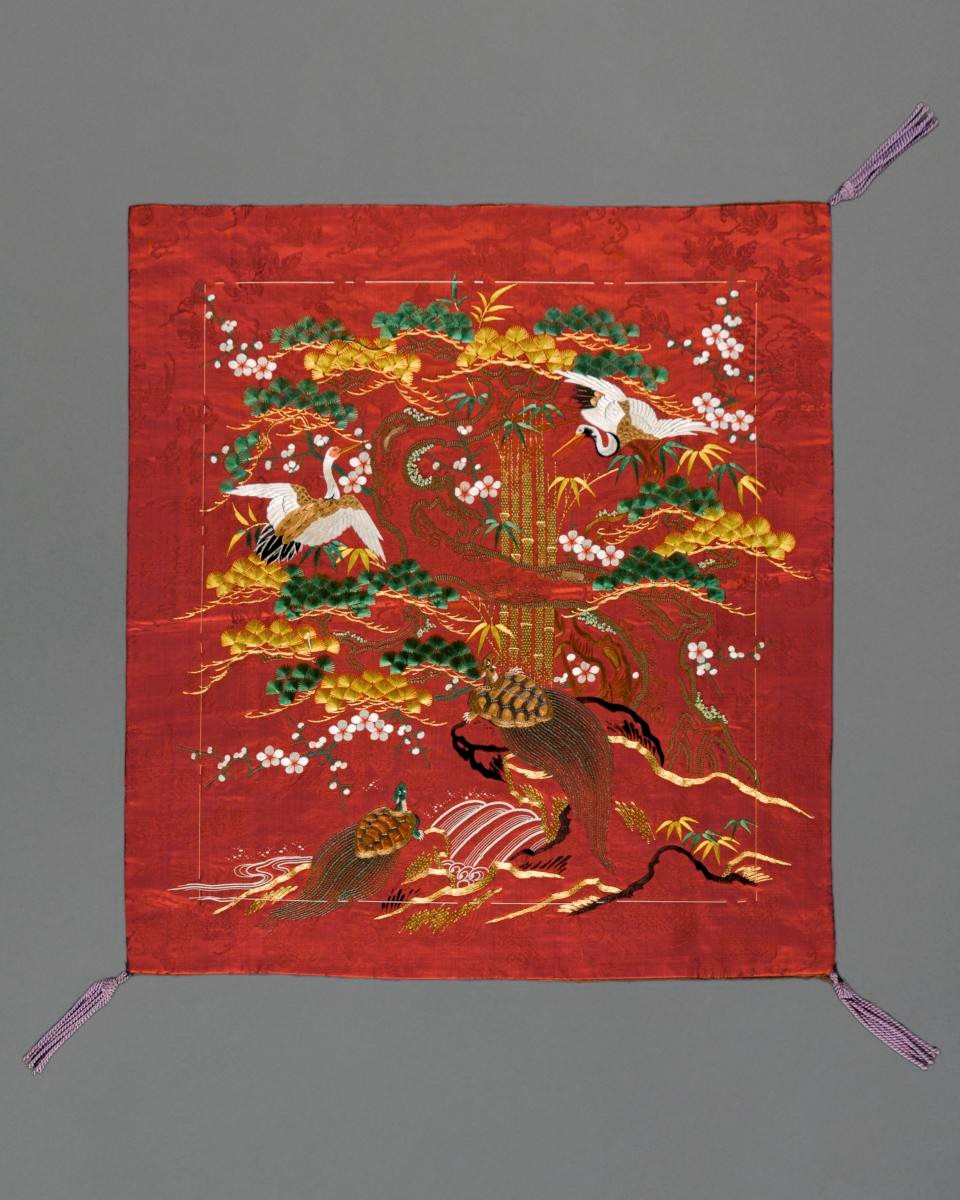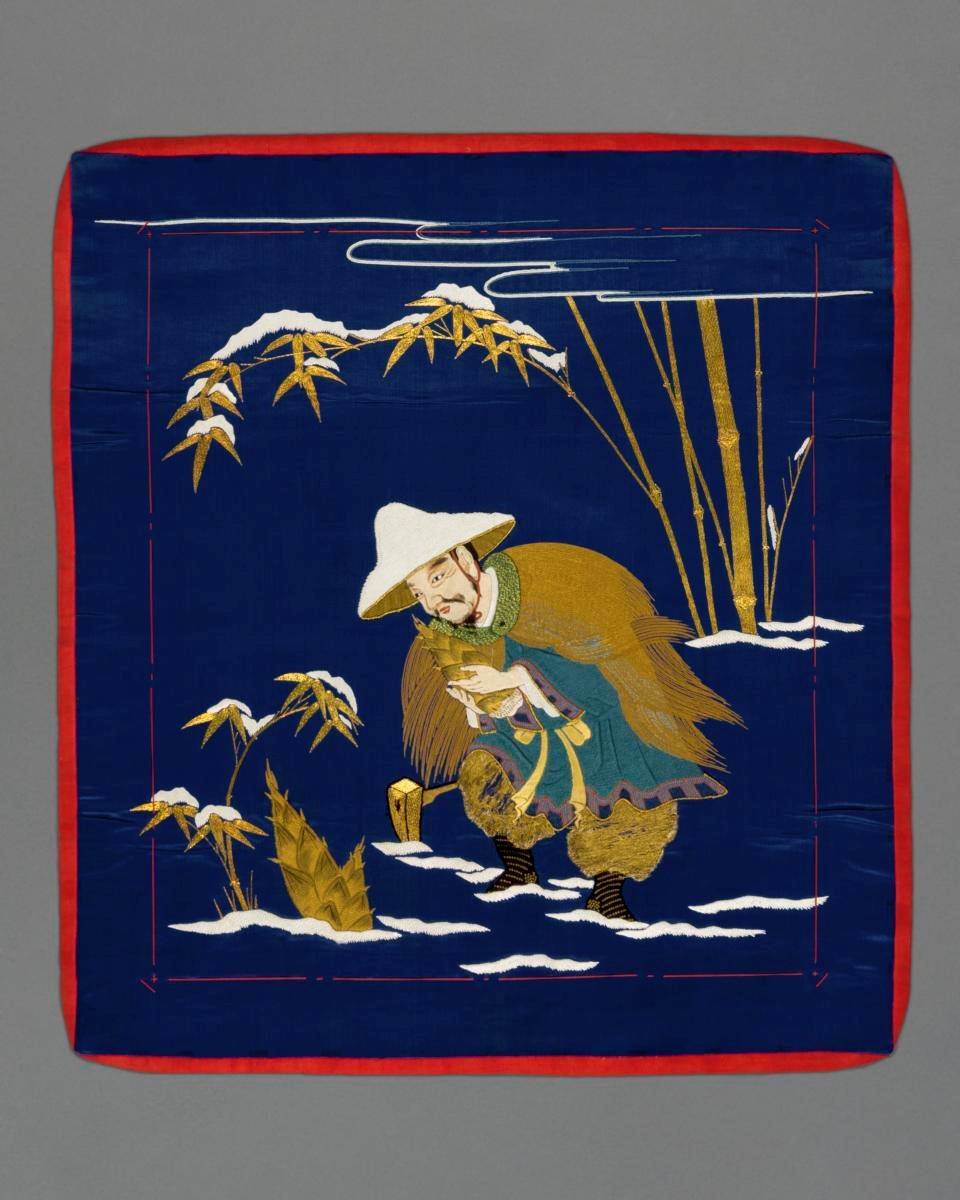

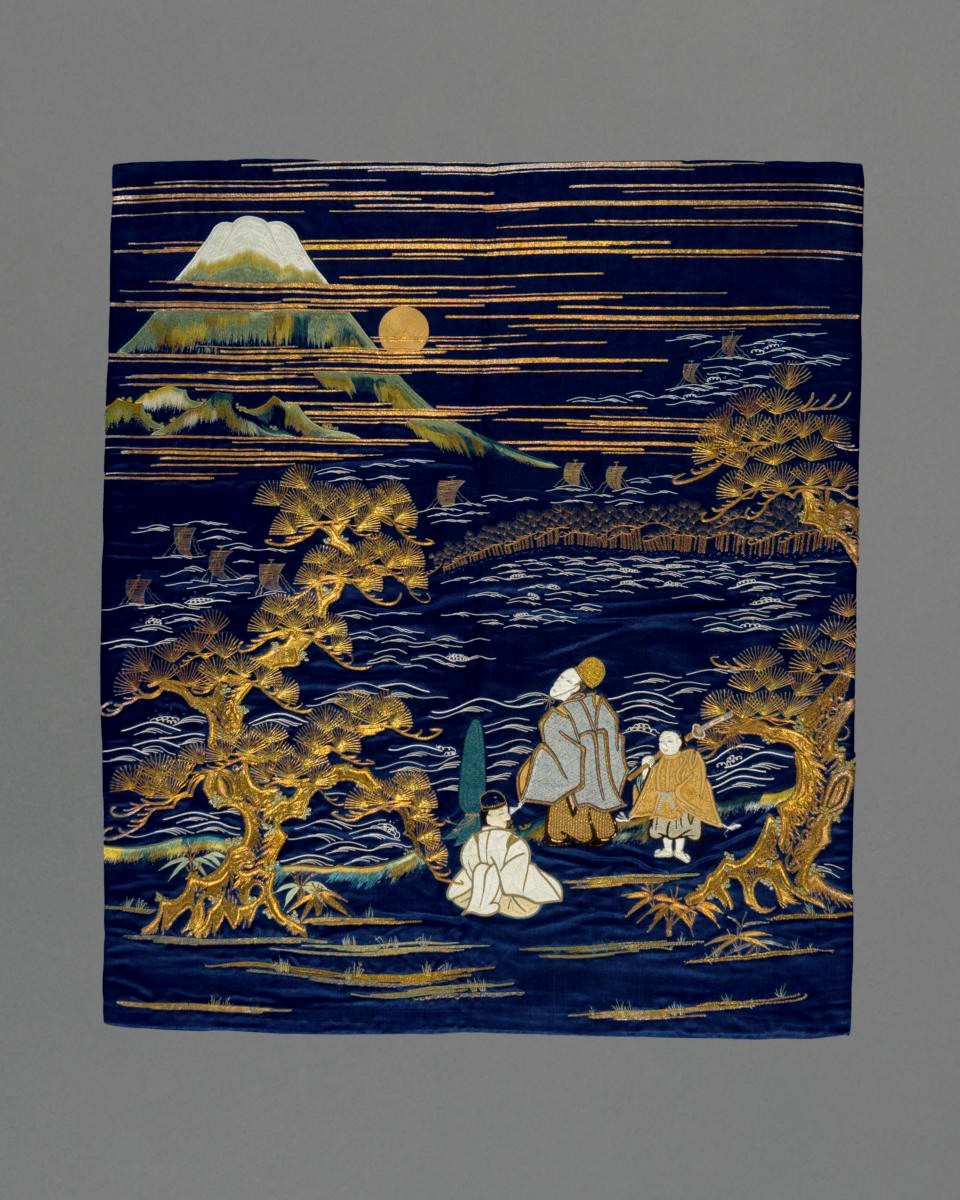
In Japan, the practice of formally presenting gifts with silk covers called fukusa began in the Edo period (1603–1868), around the late 17th or early 18th century. These covers were draped or folded over gifts for a variety of occasions, from seasonal festivities to important personal events. Each fukusa was carefully chosen to evoke the circumstance of the gift and to convey a message to the recipient through its design. Fukusa designs often feature symbolic objects or allusions to Japanese and Chinese stories. The choice of fukusa also reflected the giver’s wealth, taste, erudition, and cultural sensitivity. The use of fukusa continued into the early 20th century. Today, they are used in parts of Japan for weddings and corporate events. The Journey to the East (Azuma kudari) is one of the most popular episodes in the tenth-century Tales of Ise (Ise monogatari). The aristocratic protagonist leaves the capital to seek peace and solitude in the eastern provinces as he is no longer interested in pursuing a worldly life. As seen here, artists often represented the moment when he passes the foot of Mount Fuji. The mountain is coloured with a palette of blue, green, and brown silk floss blended together through a combination of long and short stitches (sashi-nui), reminiscent of the embroidery on ornamental silks made for export.