
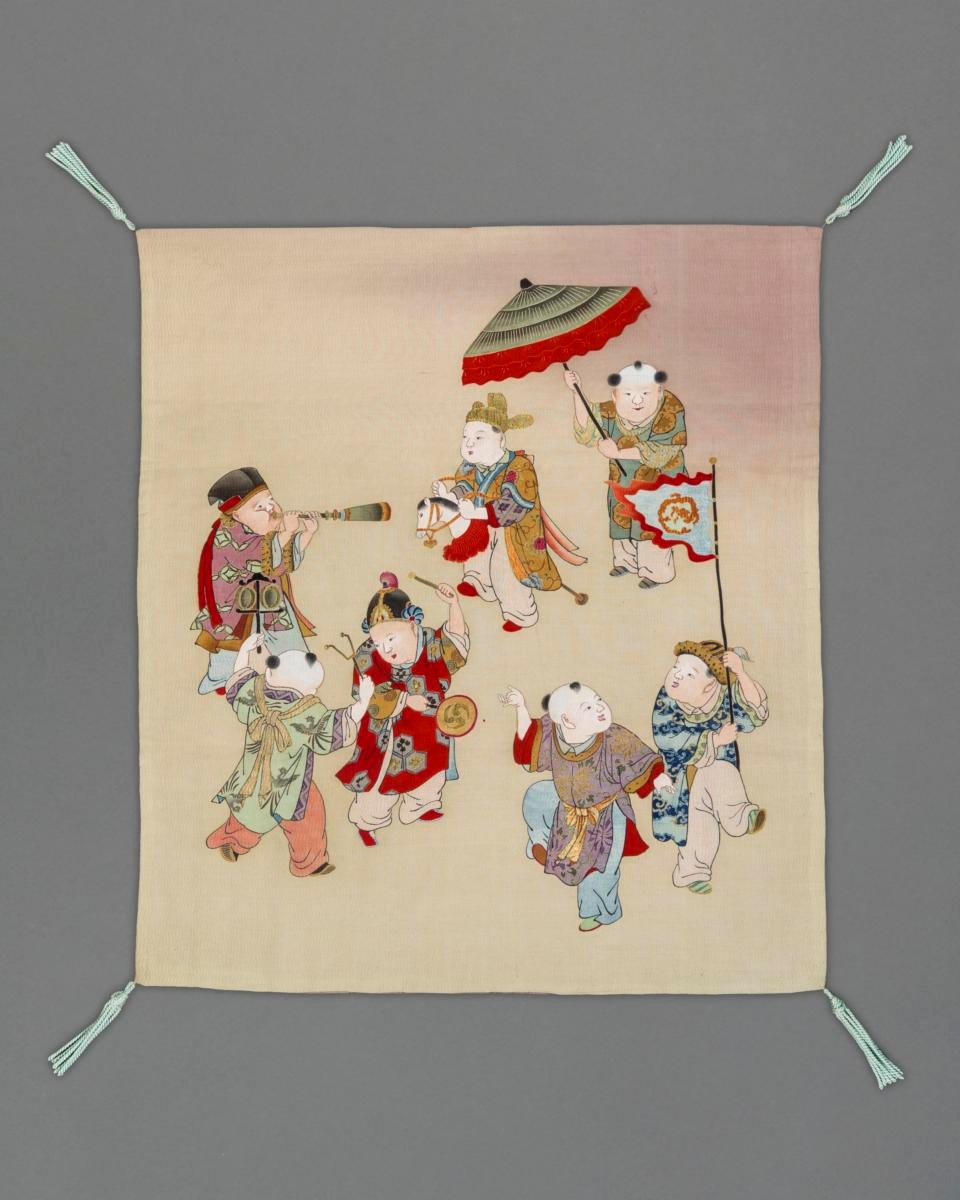
Object size: 92.5 x 83.5 cm (with tassels)
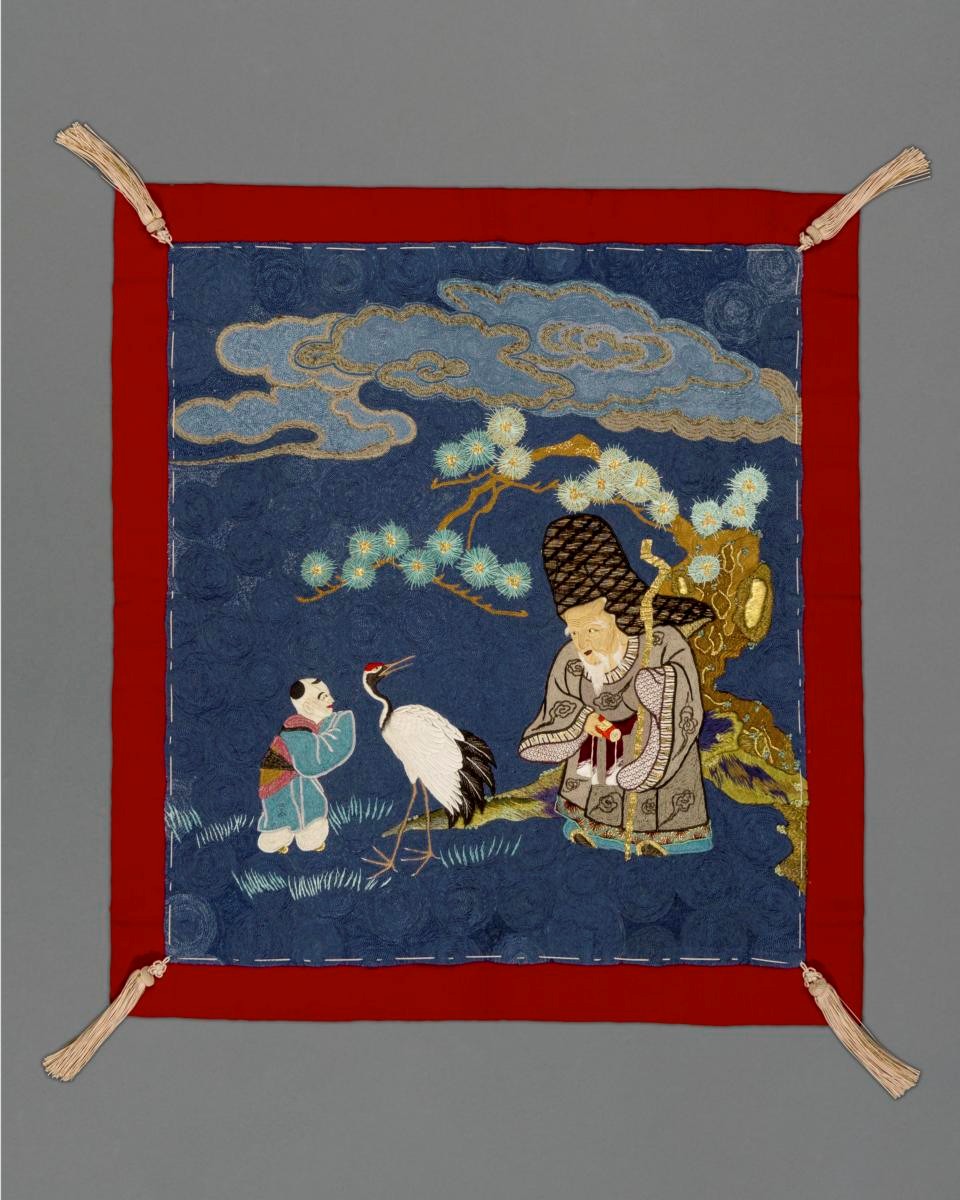
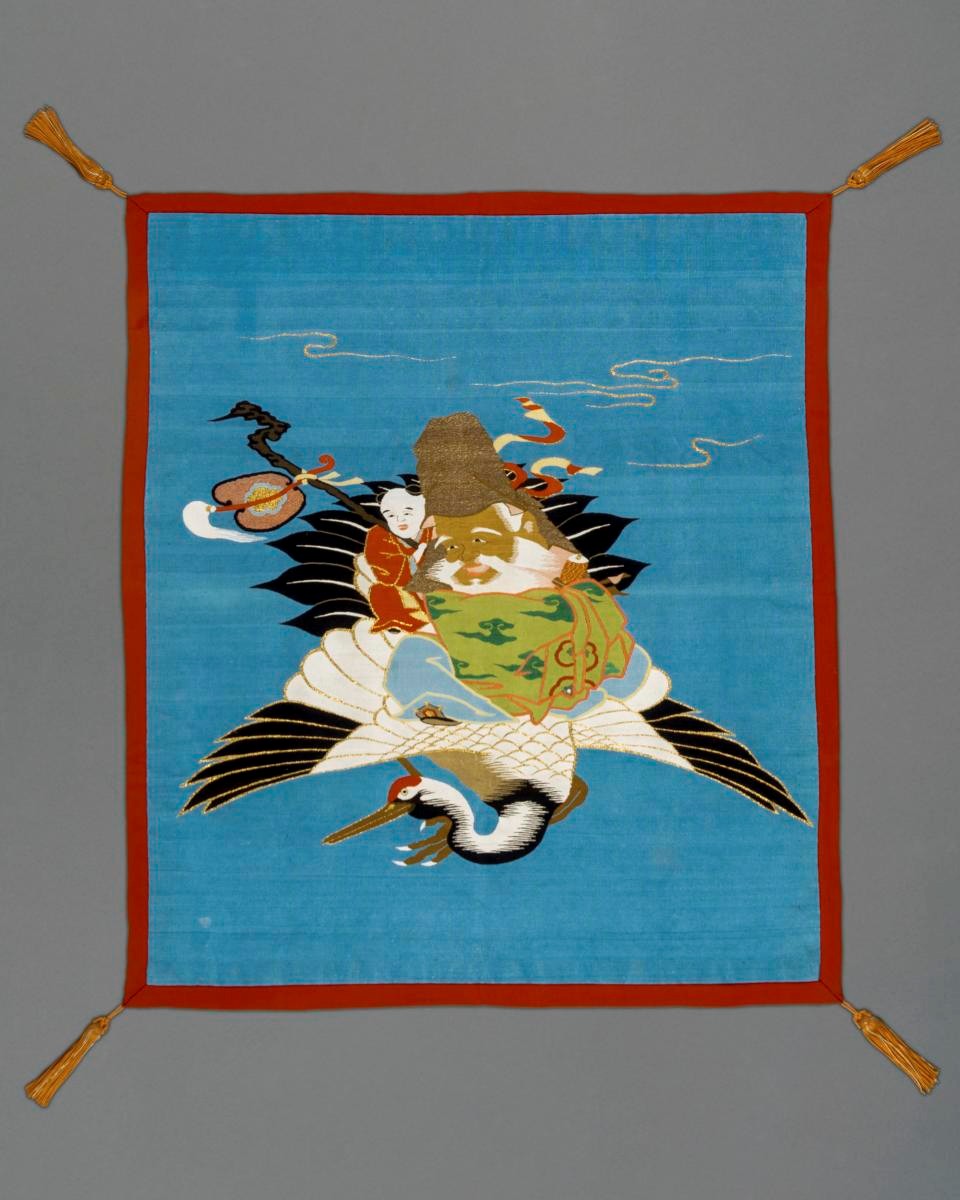
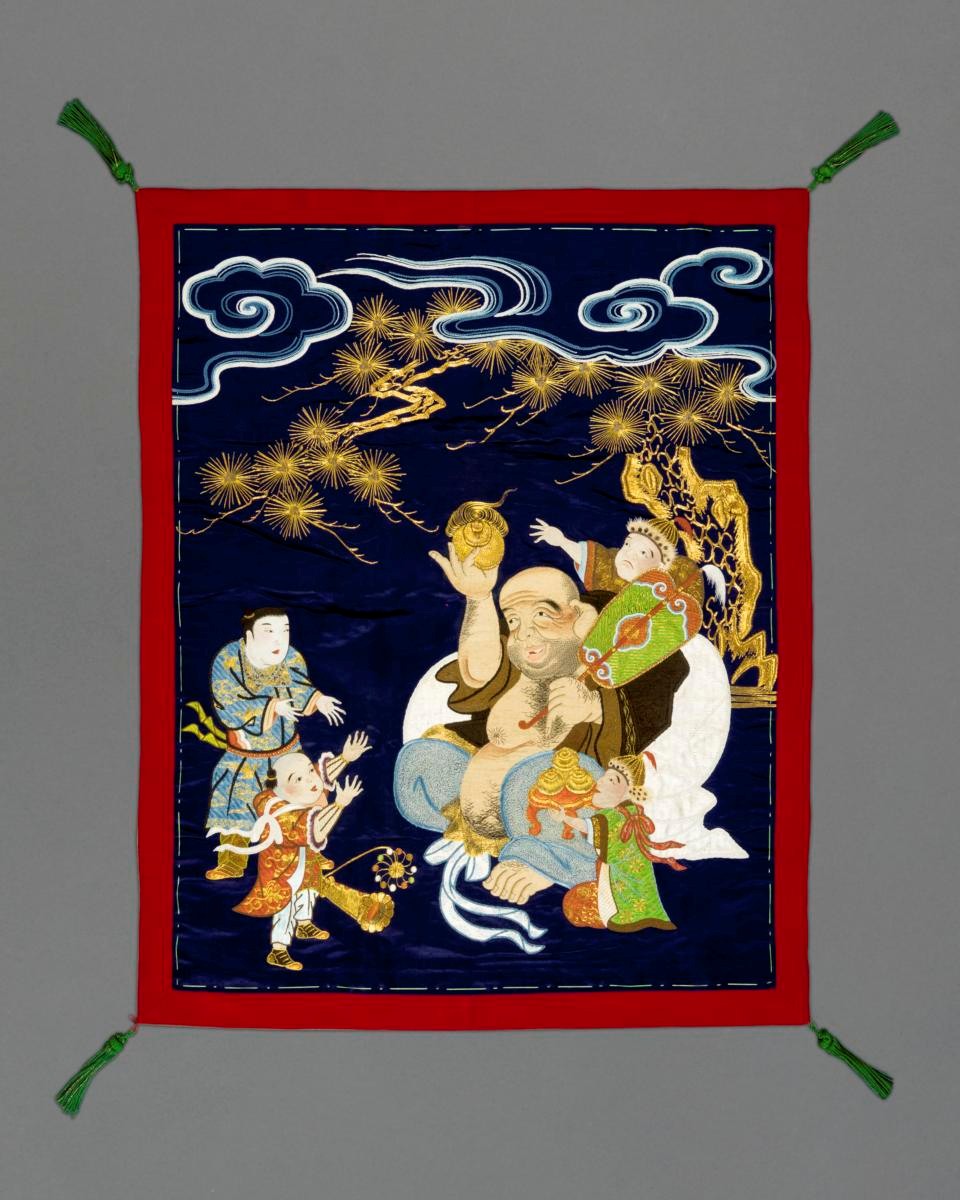
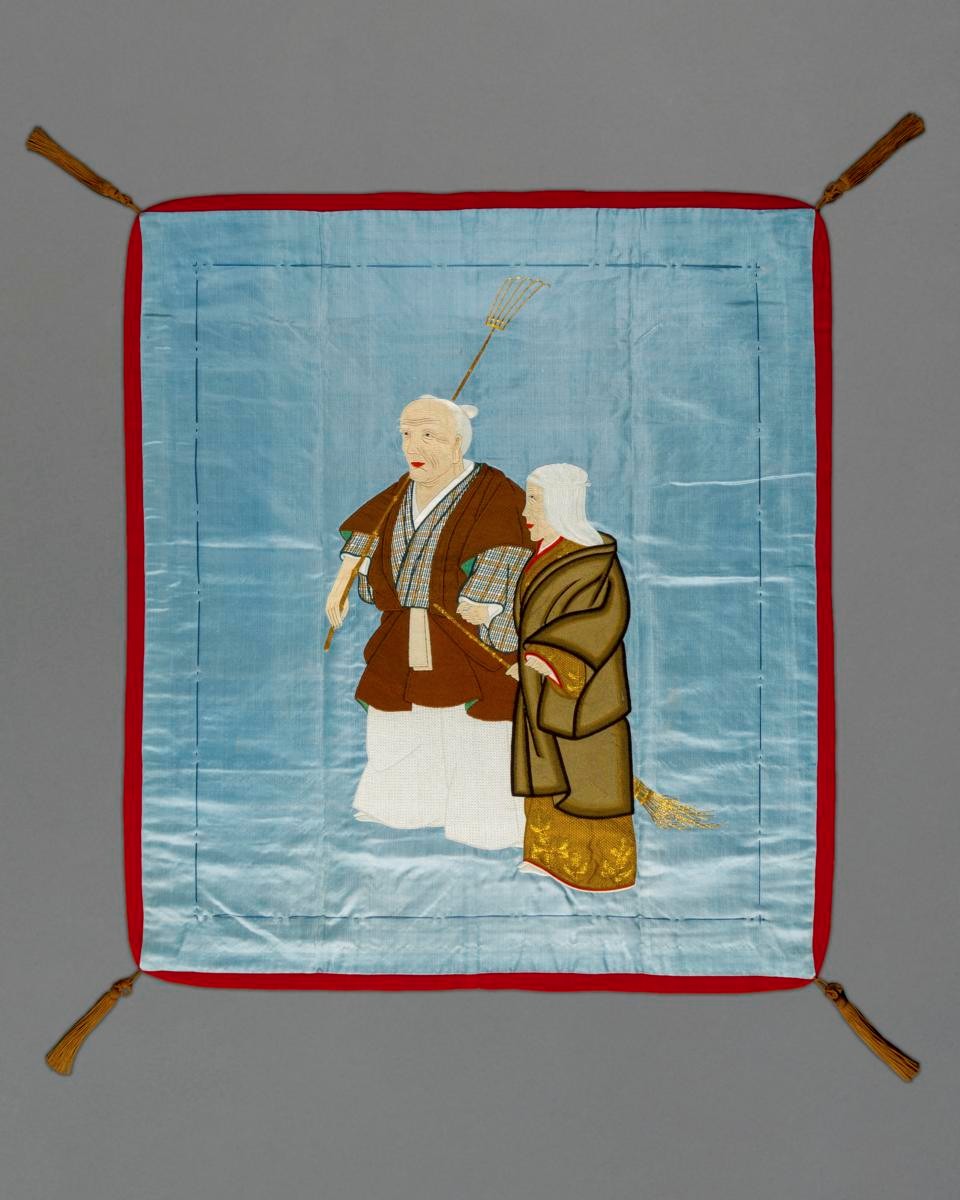
In Japan, the practice of formally presenting gifts with silk covers called fukusa began in the Edo period (1603–1868), around the late 17th or early 18th century. These covers were draped or folded over gifts for a variety of occasions, from seasonal festivities to important personal events. Each fukusa was carefully chosen to evoke the circumstance of the gift and to convey a message to the recipient through its design. Fukusa designs often feature symbolic objects or allusions to Japanese and Chinese stories. The choice of fukusa also reflected the giver’s wealth, taste, erudition, and cultural sensitivity. The use of fukusa continued into the early 20th century. Today, they are used in parts of Japan for weddings and corporate events. The placement of the crest on the lower right corner of the lining reveals how this fukusa was used. It was folded with the crest facing up and the main design on the inside, then placed diagonally on top of the gift. This manner of presentation was popular in the Meiji period. When a fukusa was folded this way, the recipient would request the honour of seeing the rest of the design. Introduced from China, the theme of boys at play (karako, “Tang children”) symbolises the wish for many descendants. Their tufted hairstyles resemble those worn by children during the Tang dynasty (618–907). Some patterns in the children’s clothing and toys are finely overlaid with gold thread, enlivening the yūzen-dyed surface.