
TL;DR
With more than 60 ground-up programmes and an ever-expanding network of Heritage Champions, the National Heritage Board’s (NHB) community-powered Heritage Activation Nodes (HAN) has made significant strides in rekindling affection for Singapore’s neighbourhoods since its launch in 2024. Muse meets the squad—Afiqah Zainal, Grace Huang, and Lim XingYi—who run the initiative.
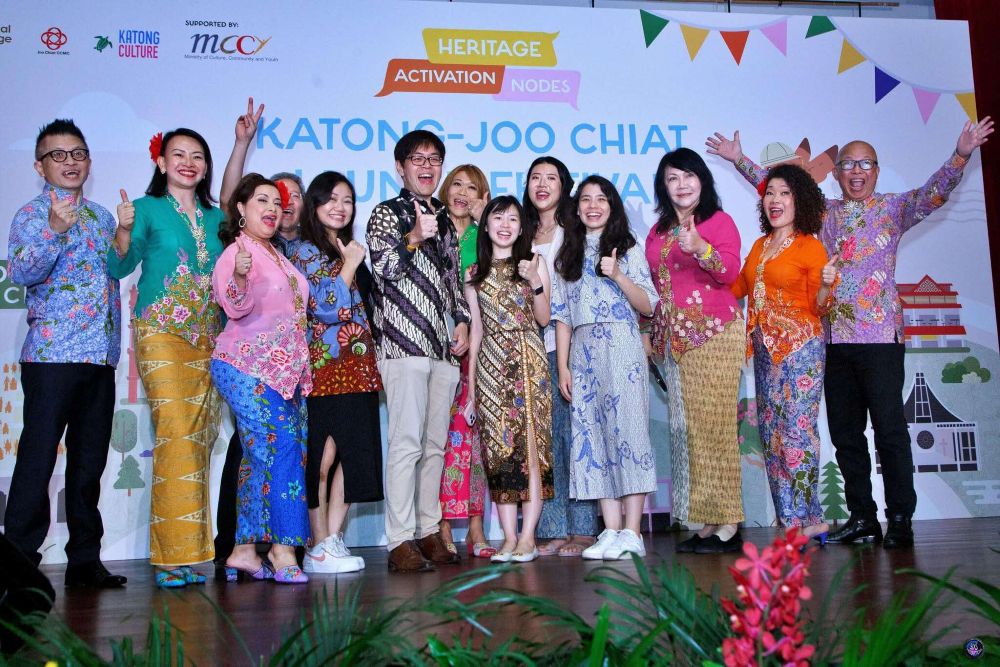
NHB’s Education and Community Outreach division’s HAN staff Afiqah Zainal (fifth from left), and Lim XingYi and Grace Huang (fifth and fourth from right) with community partners at the HAN@Katong-Joo Chiat launch in April 2024. A key initiative under the Heritage X Community pillar of Our SG Heritage Plan 2.0, HAN is designed to build a sustainable way to work with citizens to celebrate Singapore’s neighbourhoods. (NHB, 2024)
1. Can you tell us more about HAN and how it works?
Grace: HAN gives local communities agency and banks on their intimate knowledge of their neighbourhoods. We have three nodes to date: Katong-Joo Chiat, Clementi, and Punggol.
Nodes are designated based on the interest and availability of anchor partners, and we work closely with them to execute programmes and activities.
In Katong-Joo Chiat, we worked with our anchor partner, the interest group Katong Culture—and we put together a series of activities that reflect the neighbourhood’s rich culinary heritage and pre-war architecture. During the launch weekend, participants got to attend tours, a variety of heritage workshops, and even join a Tok Panjang, which is a traditional Peranakan dinner.
We also invite the public to work on heritage-related projects for each node, supporting them with funding via our Call for Collaboration
So far, we’ve awarded six projects in Katong-Joo Chiat, one of which was an immersive, anecdote-packed audio journey of old Katong created by HAN contributors Jessica Heng and Bambby Cheuk.
Through oral history accounts and fun facts, the creators walk listeners through the neighbourhood’s cultural and entertainment history, bringing to life landmark institutions such as Roxy and Odeon theatres during Singapore’s golden age of cinema.
These projects greatly enrich HAN’s offerings.
Afiqah: Clementi’s programmes are more youth-driven. Because you’ve got all these Institutes of Higher Learning (IHLs) in the area, we’ve been able to tap into that student energy. Our anchor partner there is Ngee Ann Polytechnic, and they’ve worked with students from other IHLs to create these projects and installations that shine a spotlight on the neighbourhood’s heritage gems, businesses, and hawkers.
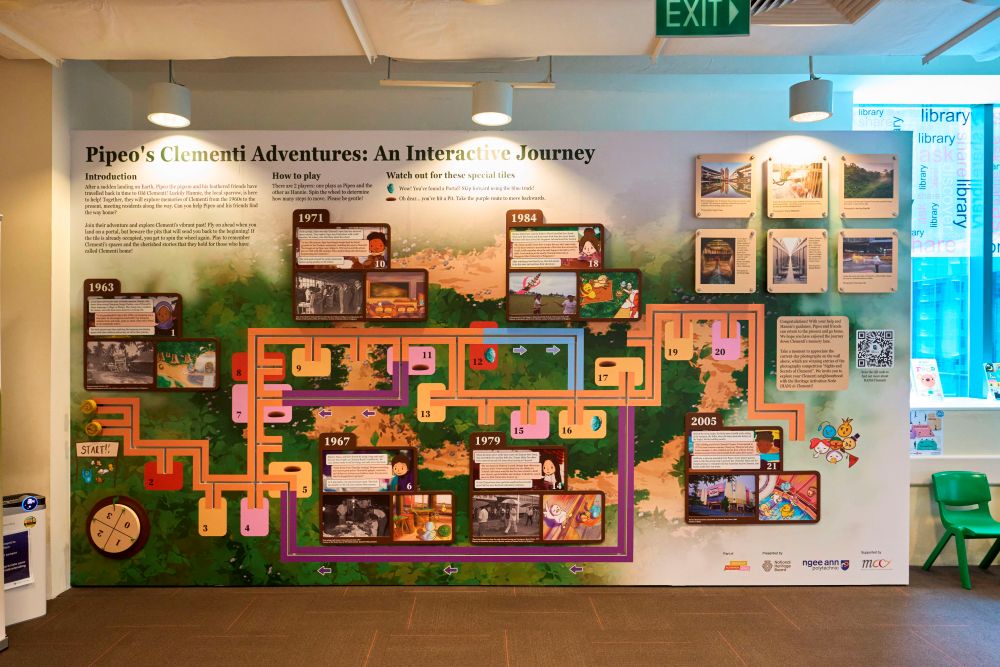
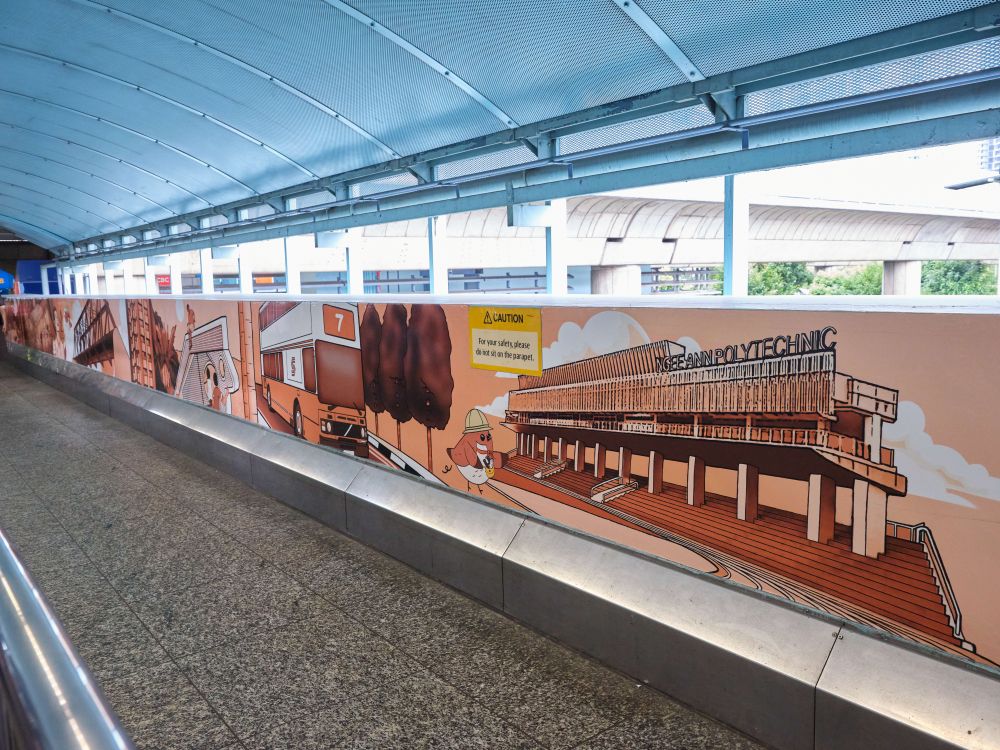 Student contributions at Clementi include the Echoes of Clementi mural at Clementi MRT Station (left), and a heritage wall at Clementi Public Library (right).
XingYi: Natural heritage has been the focus of the initial leg of programming in Punggol which has evolved from kampungs and pig farms to a modern waterfront district integrated with greenery and coastal biodiversity.
Independent arts organisation OH! Open House, which specialises in telling alternative stories of Singapore through art, has been leading the charge there, blending art and nature experiences to uncover Punggol's living heritage.
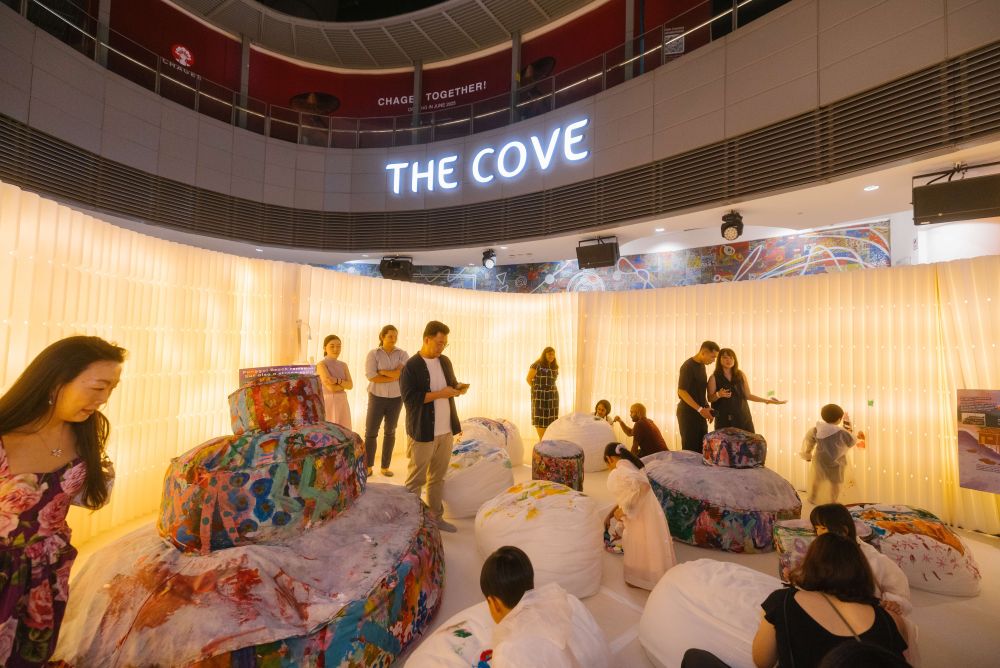
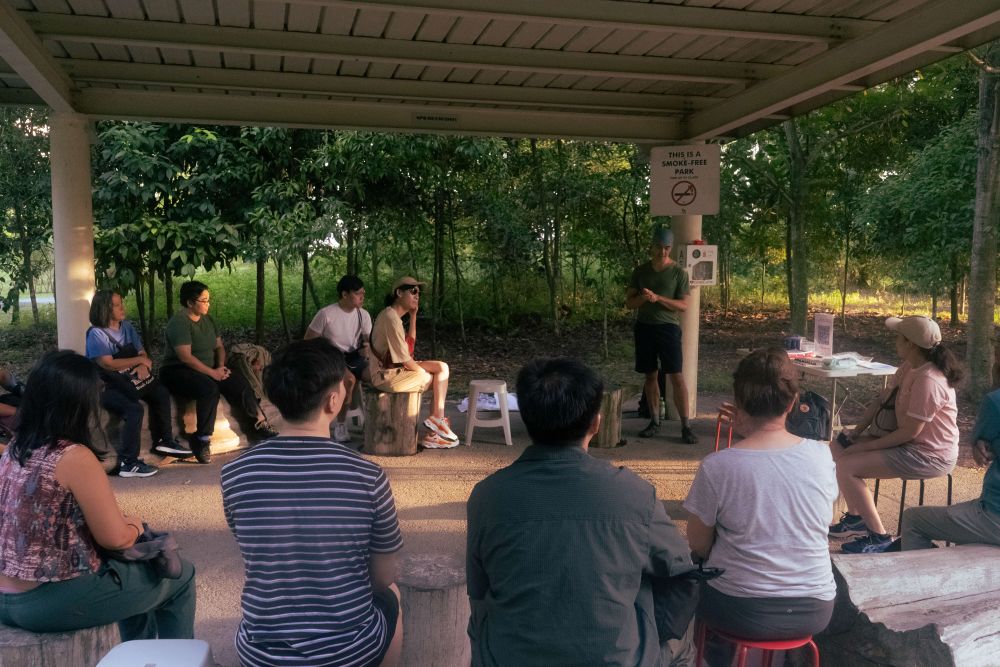 The Colours on Shore installation at Waterway Point in June 2025 (left) where visitors were encouraged to paint rock-like sculptures in homage to Punggol’s evolving relationship with water, and (right) participants at HAN@Punggol’s Attuning to Nature programme at Coney Island with artist Zai Tang. (Axel Toh, 2025; OH! Open House, 2025)
2. The heritage of vibrant neighbourhoods like Katong-Joo Chiat is well-charted territory. Did you uncover any interesting surprises while bringing this particular node to life?
Grace: Yes we did! A team of HAN Heritage Champions curated an architectural heritage tour in Katong-Joo Chiat called Stories in Stone: Katong-Joo Chiat Built Heritage and Historic Tour. It featured the Red House Bakery at 75 East Coast Road. While it was a neighbourhood favourite in the East, firsthand accounts of the beloved and now defunct bakery’s backstory were lacking.
During a HAN@Katong-Joo Chiat Call for Collaboration project on community memories, a participant called Alexandre Apery, a French expatriate living in Singapore, identified himself as a descendant of one of the bakery’s original owners. His great-grand-uncle, Tan Siang Fuan, was a Hainanese migrant who had purchased the business for $600 in 1931. Realising he could help build knowledge on the icon, Mr Apery began sifting through his family’s archives, pulling out photos and stories of the bakery.
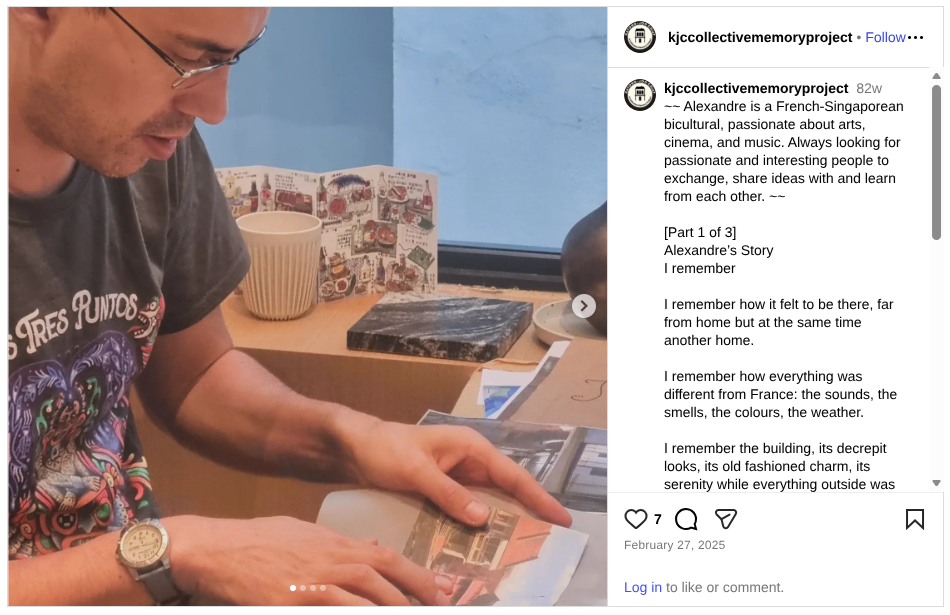
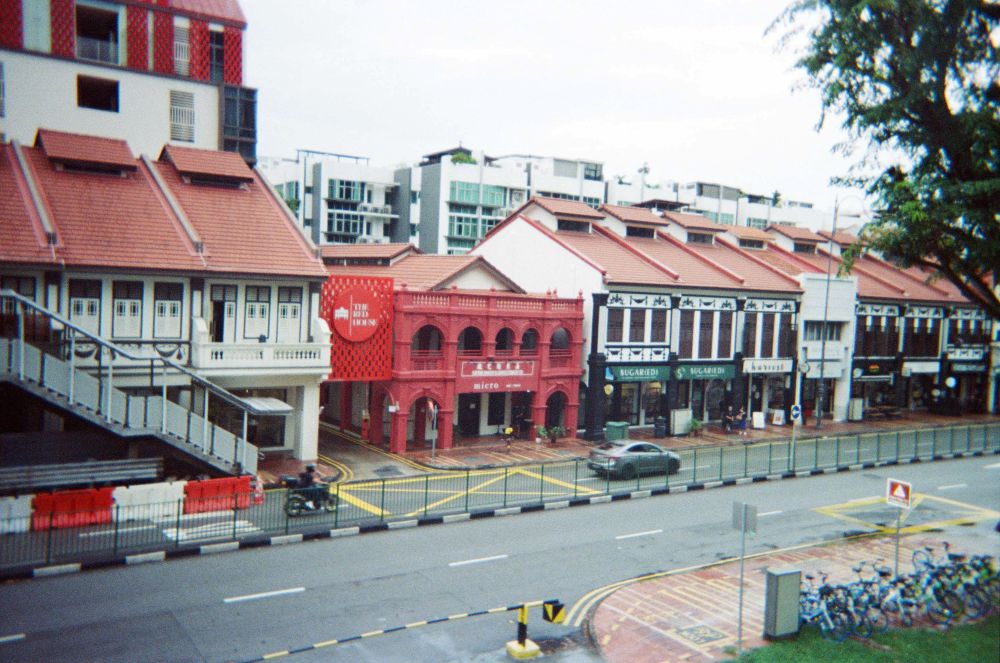
Mr Apery shared that the late Mr Tan had employed about 20 Hainanese workers. Mr Tan also housed his nephew—Mr Apery's maternal grandfather—who eventually took over the business.
During his school holidays from France, Mr Apery used to visit the shop and remembers the bakery for its elaborate wedding cakes. He noted that it supplied thousands of sandwich loaves and dinner rolls to Singapore Airport Terminal Services in Paya Lebar, the forerunner to Changi Airport.
Mr Apery’s stories of the three-generation family home and shophouse are now shared during HAN@Katong-Joo Chiat tours.
3. Are such discoveries a way in which NHB evaluates the success of HAN?
Grace: Our assessment strategy is multifaceted. We look at indicators of identity, community, and active citizenry.
Across the three nodes, we’ve partnered with 80 stakeholders, co-created 60 programmes, and mobilised over 300 HAN Heritage Champions, of whom 90 percent are new to heritage volunteering.
.jpg?width=1000&height=1655) HAN Heritage Champions at the Katong-Joo Chiat launch in April 2024. (NHB)
XingYi: We’re stoked that our anchor partner Katong Culture is growing really well. It is taking the lead in a lot of initiatives and expanding its expertise and skills.
One of its key members, Tan Li Ming, a scientist, started as a volunteer for a HAN programme with the goal of becoming a tour guide. She now trains guides and represents the group at heritage engagement sessions with government agencies alongside Katong Culture’s founder Gavin Gareth Chan.
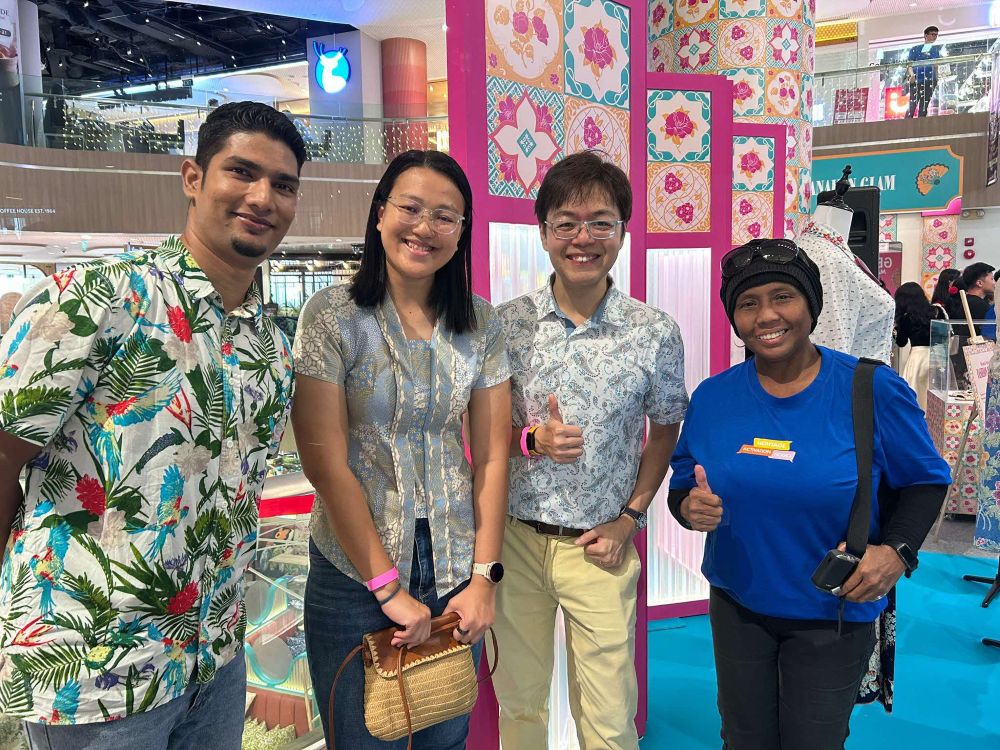 Katong Culture members (left to right) Arther Joseph, Tan Li Ming, Gavin Gareth Chan, and Lea Zaleha. (NHB, 2024)
4. What is it like preparing for the launch of a new HAN? What are some of the joys and challenges you’ve encountered behind-the-scenes?
XingYi: We begin by mapping neighbourhoods and their key heritage elements. Next, we consult our anchor partners to consolidate initiatives for greater impact. Thereafter, we engage established organisations like the People’s Association and National Library Board, which know the ground well.
We then move on to connecting with community partners such as business and merchants’ associations. We’ve learned that some of these associations are keen to experiment with different outreach styles and HAN provides them with an avenue to reach their audiences beyond the usual pasar malam (night bazaar) format. So there’s great synergy in such partnerships. It usually takes about a year to foster connections and kickstart conversations.
Afiqah: For HAN to work, we need an army of passionate HAN Heritage Champions. So far, we’ve offered over 740 volunteering opportunities in support of HAN programmes. Interestingly, almost 60 percent of our volunteer base are youths, demonstrating a growing interest in heritage volunteering amongst the young. We provide volunteer training and equip our anchor partners with skills for social media, oral history interviews, and the documentation of social histories.
XingYi: For many of our youth volunteers, HAN is a rewarding introduction to heritage. For instance, the Ngee Ann Polytechnic students who created the JourneyX series of documentaries on business owners in Clementi, connected deeply with the community. The uncles and aunties they interviewed surprised them at the festival launch in September 2024 with teh tarik (pulled tea), curry puffs, and a basket of chicken. It was very heartwarming to see!
XingYi: Our team is pretty diverse. I majored in Fine Arts (Sculpture) and Arts Management. One of my sculptures, of British naturalist Alfred Russel Wallace and his assistant Ali, stands at the Lee Kong Chian Natural History Museum.
As the one spearheading publicity and marketing in the HAN Education and Community Outreach (ECO) division, I drew on my art and sculpting experience to create a mascot for HAN. We knew we wanted something that could represent every neighbourhood across Singapore, so we considered a cat or a crow, but in the end, we went with the Eurasian tree sparrow. You see them everywhere, which made them perfect for what we were trying to do.
Our version of the sparrow is plump and chonky. We call it Hannie. Singaporeans love their ling ling long long (trinkets) so we’ve made plushies of it to incentivise them to participate in our activities.
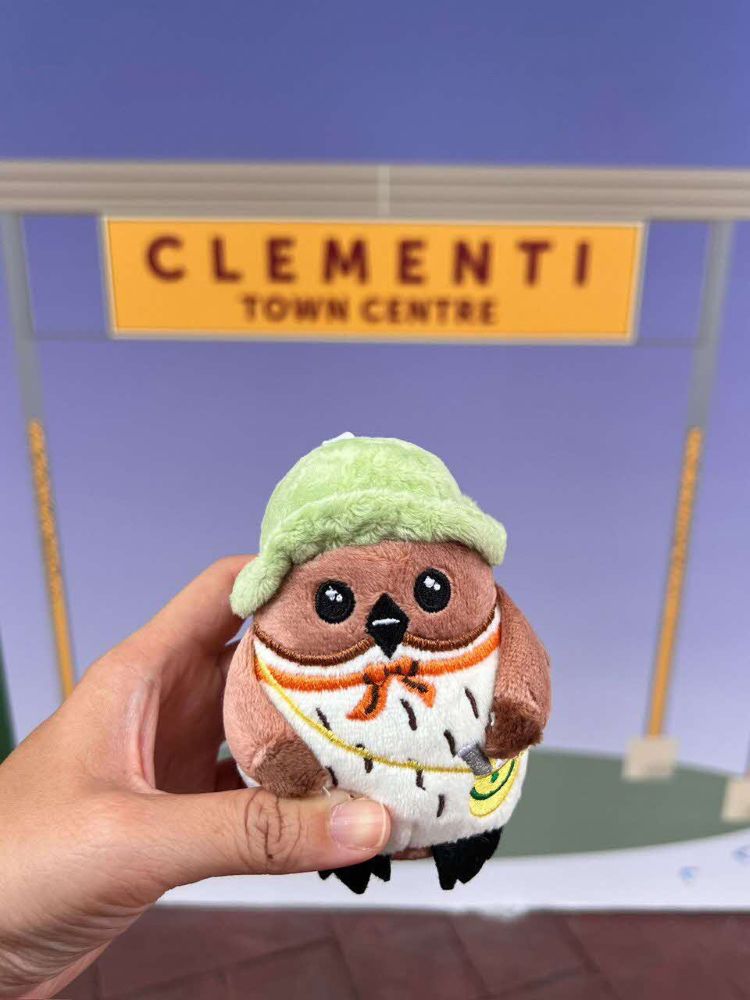
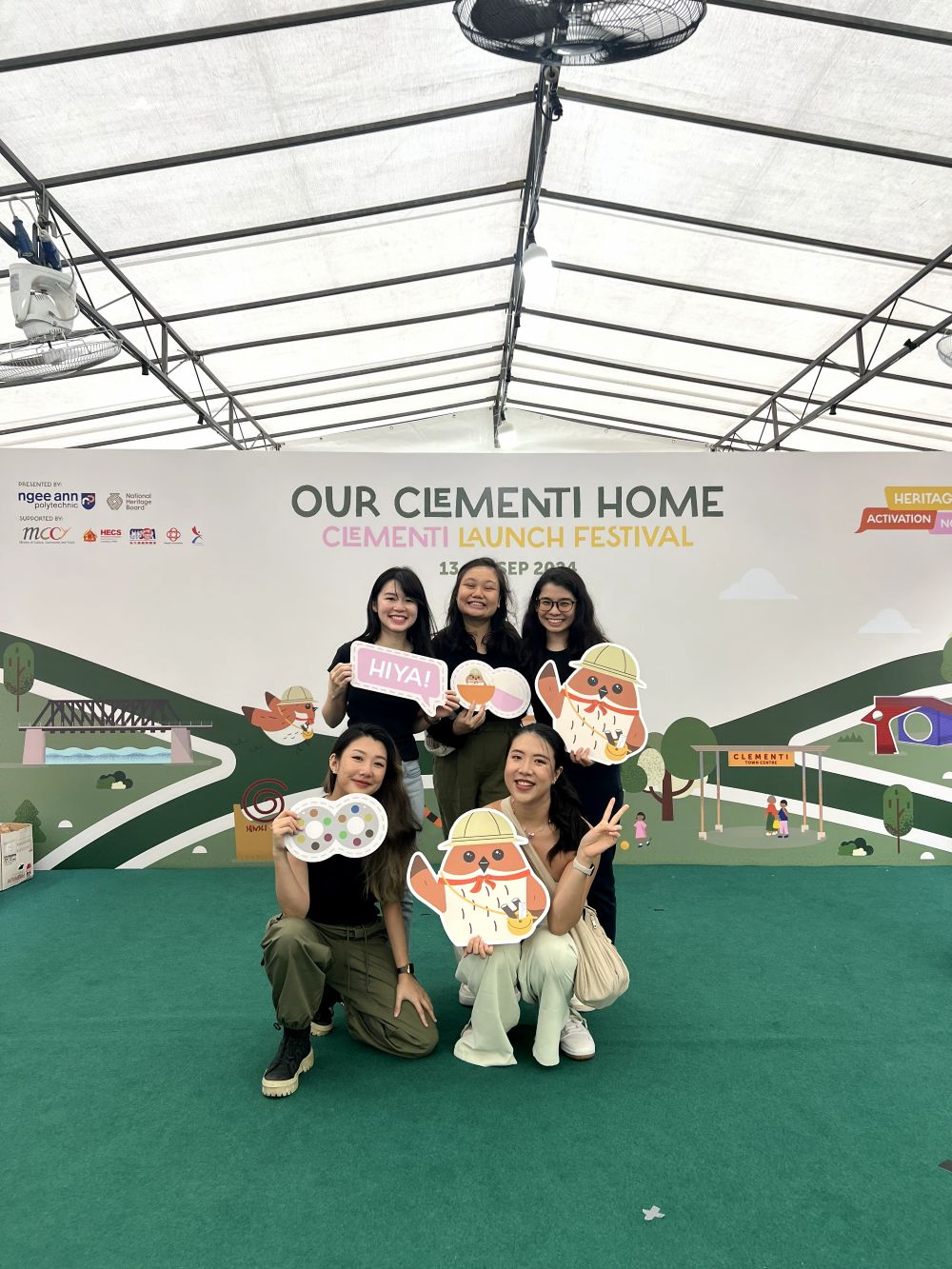 The sought-after Hannie sparrow mascot, and past and present members of the ECO HAN team. (NHB, 2024)
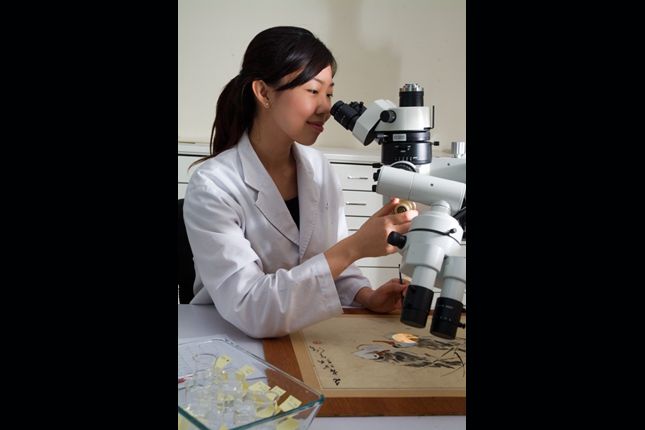
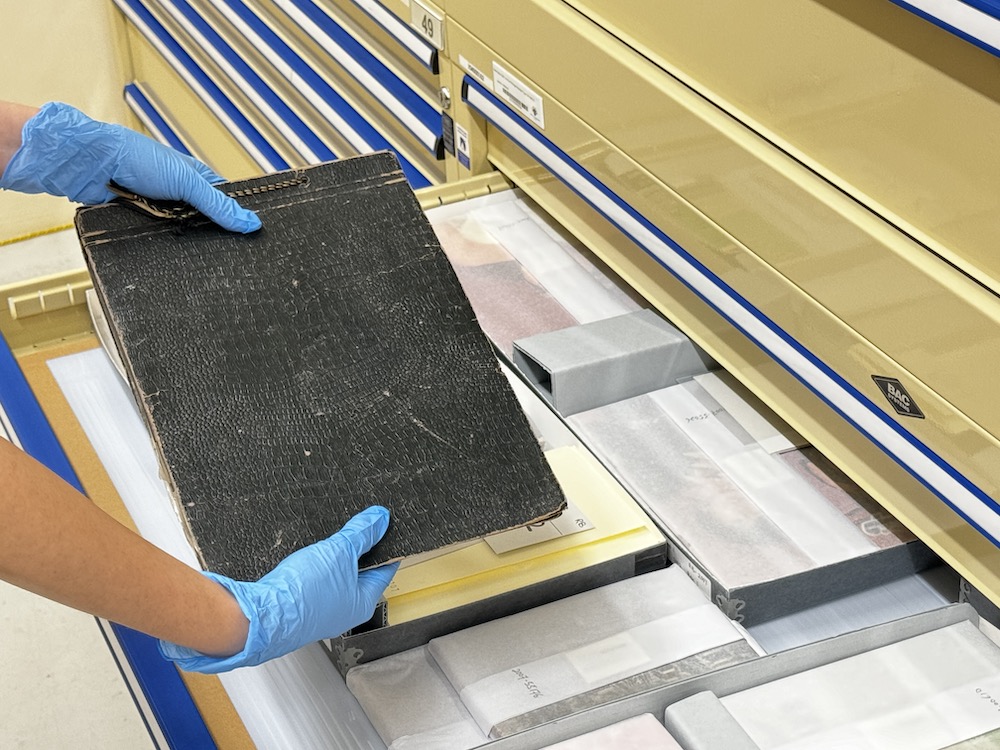
Afiqah: I studied Political Science and History. My first five years at NHB were spent at the Heritage Conservation Centre (HCC) where I did cataloguing for our National Collection and developed a niche specialisation with deep insight on Singapore’s artefacts and artworks.
Now, with the ECO division of NHB, I work more closely with the public. I feel a strong sense of motivation and fulfillment getting to work closely with our various partners. I oversee volunteer management among other duties, and I think my time at the HCC has helped me learn to manage large volumes of information. You should see my excel sheet of HAN volunteers!
Grace: I studied English Language at NUS and have worked on content development and programming for NHB’s Heritage Trails, Community Galleries, Street Corner Heritage Galleries, and MUSE SG for some time. Now, I’m usually the one writing and reviewing HAN content.
5. What’s next for HAN? How do you see it growing and expanding? What is its potential?
Afiqah: We are supporting more Call for Collaboration projects in 2026! In Clementi, the public can look forward to art installations and guided tours by resident and artist Stacy Huang.
XingYi: OH! Open House is working on two different oral history projects in Punggol to be launched in March. One is a neighbourhood directory that maps and documents past occupants, such as boatel owners and the residents of Wak Sumang, one of Singapore’s earliest fishing villages.
The other is a neighborhood story collection project where some 30 story collectors will go door-to-door to produce 1,000 portraits and stories of residents. The goal is to establish fresh connections with and between residents and derive fresh programming content.
Grace: Anyone with interest in spearheading projects for HAN can connect with us via our Get Involved page! We’re also launching a fourth HAN in the Southern part of Singapore very soon. Stay tuned for updates!