
TL;DR
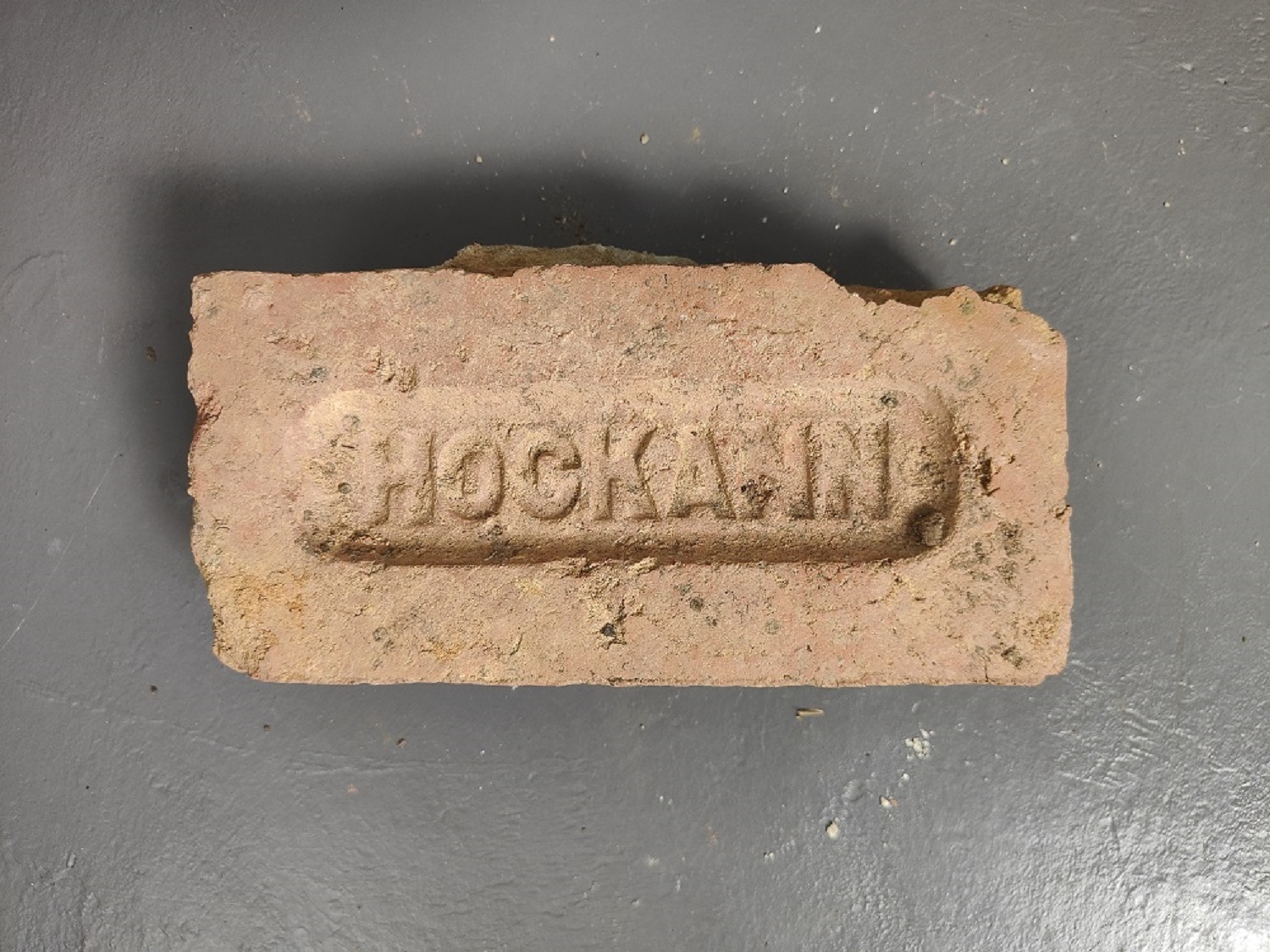
As a highly urbanised nation, Singapore’s built environment is characterised by a combination of various construction methods and materials. Much human effort goes into the design, choice of materials, and calculations to transform plans on paper into actual physical structures. This article examines the history of one such material—locally fired bricks—and the industry that produced them. With the diverse building materials available today, some have become less prominent in recent times, often hidden by more aesthetically preferred finishing or facades. One such building material is the humble brick.Brick from Hock Ann Brickworks. Image courtesy of the author.
Made of clay and often fired to a rich red tone, the brick was one of the simplest and most common building material used in Singapore’s construction industry. Most of the bricks used in Singapore up to the 1980s were manufactured locally, using clay excavated from deposits scattered throughout the island. These deposits were often estuarine in origin, located near old river courses or historical coastline. We still see some of the bricks examined in this article today, whether as part of a building or lying discarded.
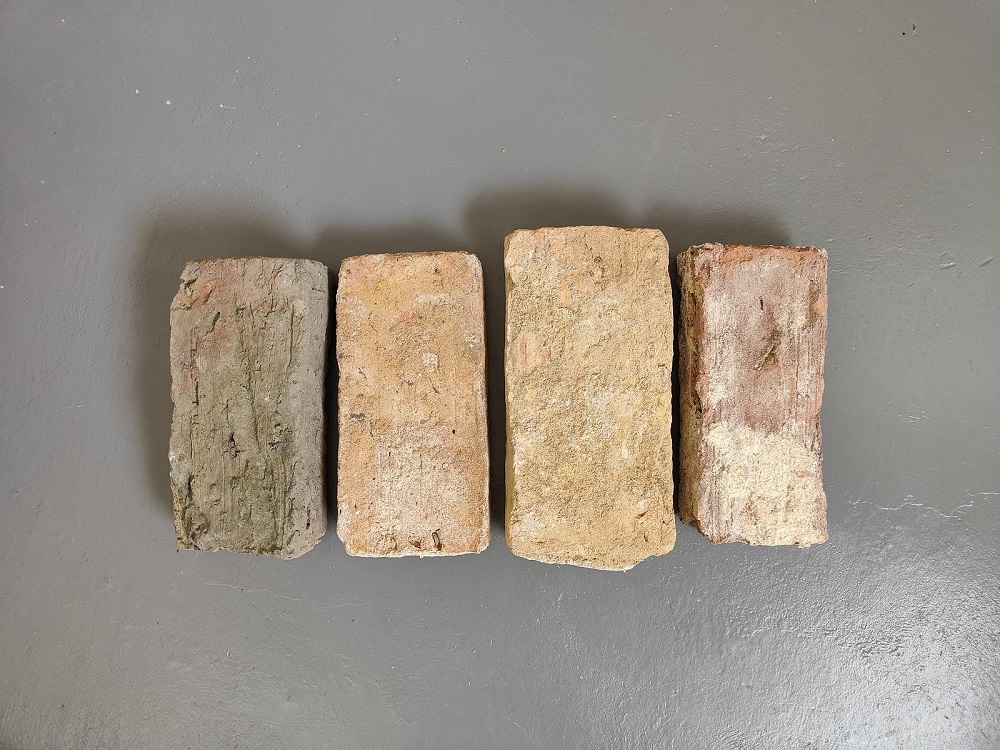 Handmade bricks from the 19th century. Image courtesy of the author.
Handmade bricks
Bricks from 19th-century Singapore were mostly made manually, using simple methods and moulds. Local clay was excavated from deposits then mixed with water, often using cattle to ground the mixture into a more pliable material. A brick moulder would then take an appropriate amount of wet clay and press it into a sand or water-lubricated wooden mould. Excess clay would then be scrapped off, the wet brick turned out of the mould, then left to dry in a drying shed. Once suitably dry, the bricks would be brought to a simple kiln where they would be stacked and fired over several days. These early bricks were sometimes called “cattle-trodden bricks” 牛踏砖 because of the use of cattle in the clay mixing process.
Many early brick kilns were located along rivers, where clay and water were readily available and transport along waterways was easy. Some of the kilns were located in the coastal swamps of Kallang and Paya Lebar, where clayey mud was ample. One might occasionally see remnants of seashells stuck in an old handmade brick, indicating the brick’s likely origins from coastal clay material.
Bricks were also manufactured by the colonial government. From the 1840s, convict labour was used to manufacture bricks for public projects. Two brickworks were set up, one at Upper Serangoon and the other at Balestier[1], where convicts would churn out good quality handmade bricks. Unlike bricks by private kilns that usually bore no identification marks, these convict-made bricks often have a “crow’s foot” or “broad arrow” symbol pressed onto the top surface of the bricks before firing. These bricks are likely the earliest bricks that can be traced to specific factories.
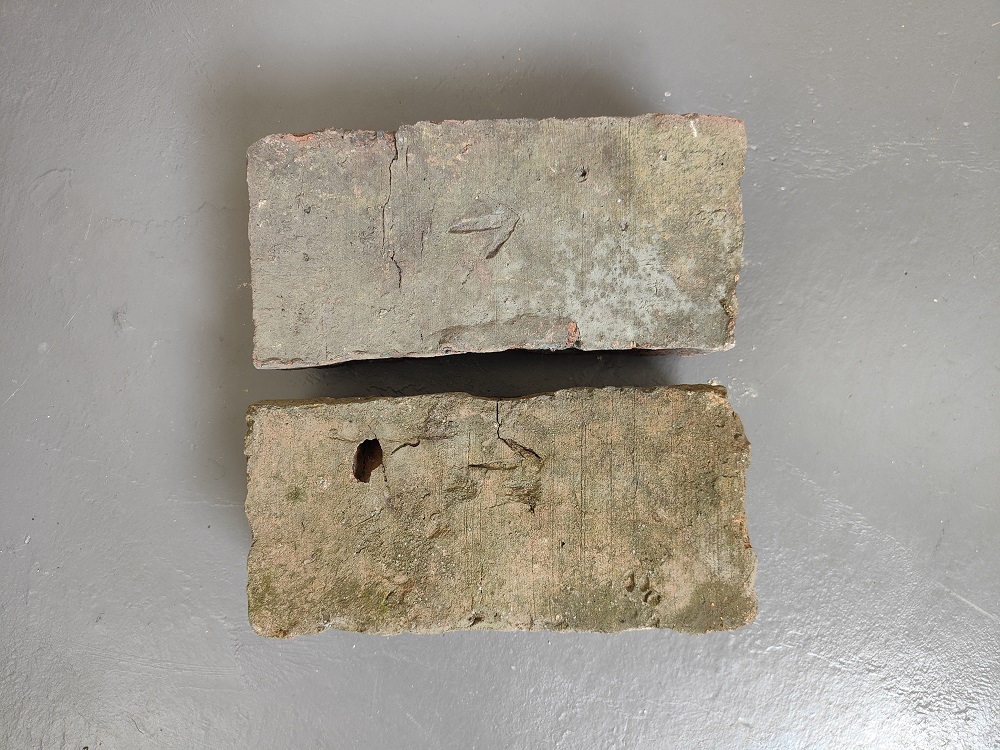 Convict-made bricks bearing the broad arrow or crow’s foot mark. Image courtesy of the author.
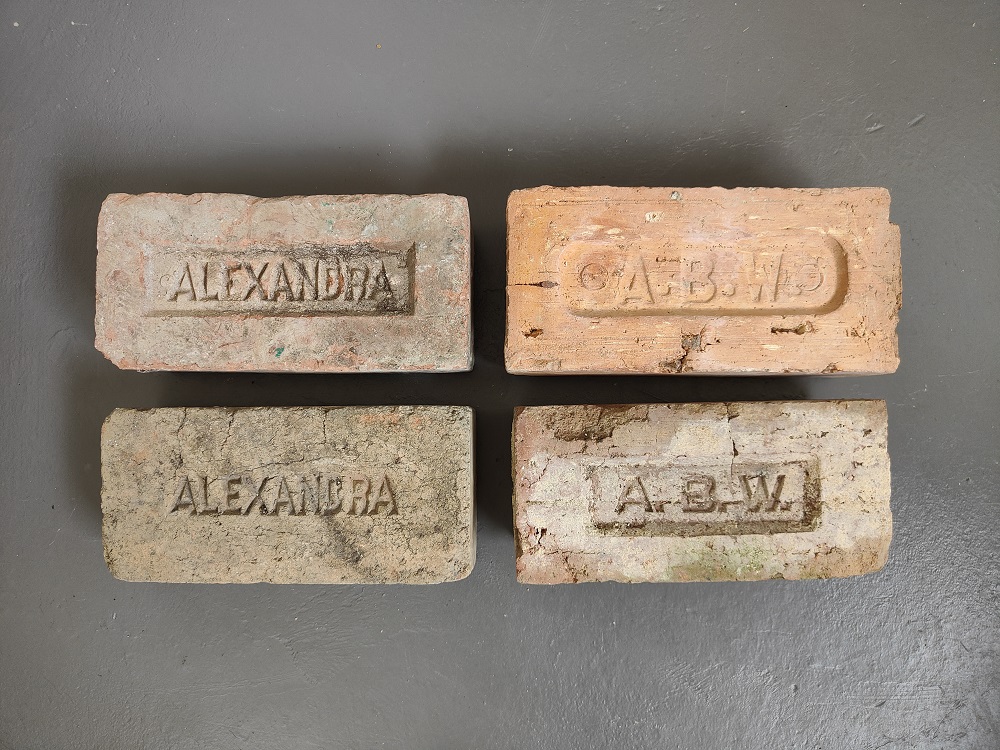 Bricks from Alexandra Brickworks, bearing four different marks. Image courtesy of the author.
Dawn of Industrialisation
With the abolishment of convict labour in 1873, the demand for bricks by both public and private construction projects had to be met by smaller local manufacturers or through import. The European-owned Borneo Company set up the Alexandra Brickworks, which was open for orders in 1890.[2] Although not the earliest to imprint a manufacturer’s mark on the brick,[3] Alexandra Brickworks was probably the earliest local brick factory to mass-produce bricks using relatively modern equipment and machines. Using industrial methods to crush and mix raw clay, shape wet clay, and fire clay bricks in continuous kilns, Alexandra Brickworks sustained a steady rate of high production output capable of meeting the increasing demand of a rapidly growing colony.[4]
Being machine-pressed, bricks from Alexandra Brickworks are easily distinguished from handmade bricks by their uniformly flat surfaces and sharp edges. They are also identical in weight, shape, and size, much to the delight of contractors determining the quantity needed for any building projects; their quality also rivalled imported bricks from Batam Brickworks. Alexandra Brickworks was also likely the earliest local brickworks to manufacture firebricks, which are bricks that can withstand significantly higher temperatures without deterioration.[5]
Bricks produced by Alexadra Brickworks are recognisable from the mark “A.B.W.” set in the “frog”—the technical term for the depression at the top of a brick. In 1928, the Borneo Company consolidated their brick-making operations, including factories at Pasir Panjang and Butterworth, Penang.[6] Bricks manufactured later on from the 1930s bore the mark “ALEXANDRA”. Alexandra Brickworks would continue operations until 1972.[7]
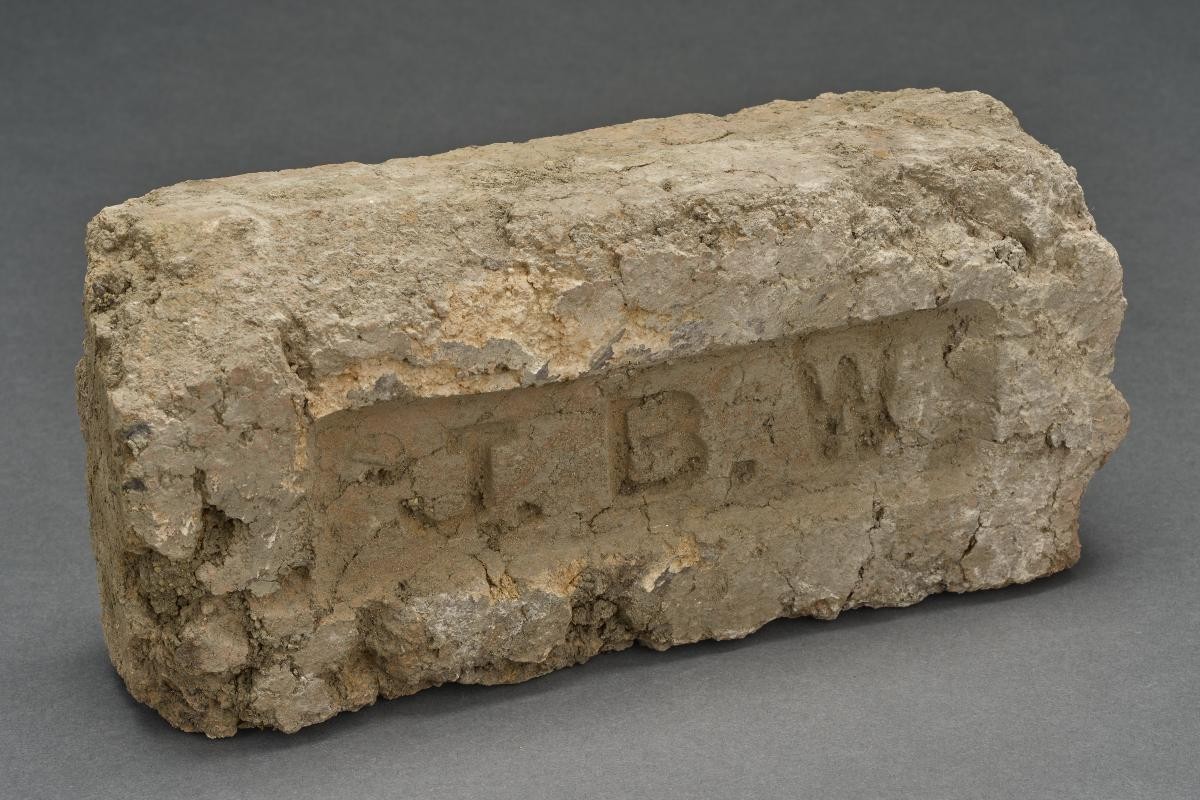
Pioneering Chinese businessmen also began setting up brickworks that made use of machines. In 1912, Chew Boon Lay set up the Pulo Tekong Brickworks,[8] which he sold off soon after, before Tan Kah Kee bought it in 1919.[9] Tekong Brickworks became one of few major brick manufacturers prior to the Second World War, producing bricks bearing the mark “TEKONG”. The brickworks remained operational from 1943-45, under Japanese administration.[10]
Lim Chee Ghee, better known as Lim Loh, a contractor and businessman, owned Hock San Brickworks along Alexandra Road and Teng San Brickworks at Upper Serangoon.[11] Two of his sons, Lim Bo Seng and Lim Bo Yam, took over operations of the brickworks after his death in 1929. Bricks produced from the factories bore the marks “HOCK ANN” or “TENG SAN”. The brickworks remained operational through the Japanese Occupation;[12] Teng San Brickworks continued producing bricks until the 1960s.
Around the 1920s, Wee Thiam Ghee’s Sin Choon Kee Brick Works began operating in Jurong. The factory was later known as Jurong Brickworks in 1929,[13] advertising machine-pressed bricks. When Wee passed on, the brickworks was managed by relatives Koh Eng Poh and Chan Wah Chip,[14] producing bricks bearing the mark “J.B.W.”.
On the eve of the Second World War, brickworks such as Alexandra, Hock Ann, Tekong, and Jurong Brickworks supplied the bulk of Singapore’s demand. Smaller kilns producing hand-made bricks had mostly ceased operations, not able to compete with the quality and production rate of machine-pressed bricks.
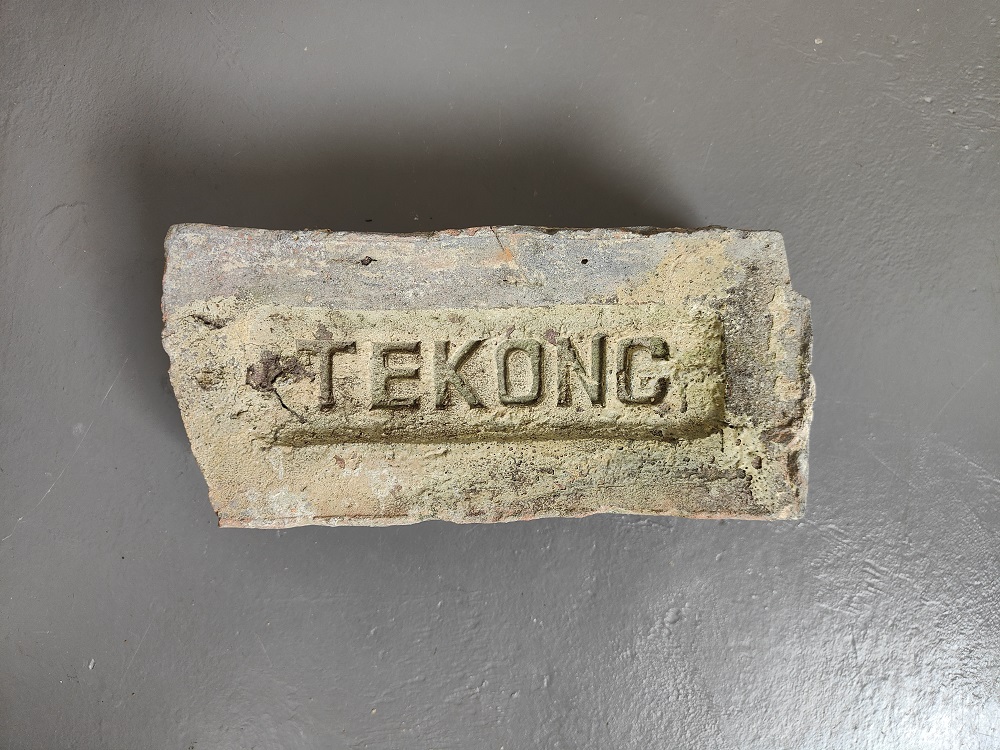 A brick from Tekong Brickworks. Image courtesy of the author.
Brick-building a Young Nation
Much effort was put into rebuilding Singapore after the war. As some brickworks such as Hock San and Tekong did not resume operations, new brickworks were set up to meet the demand for bricks. The government recognised the urgent need to modernise basic infrastructure, including housing, sanitation, and water supply systems. To stimulate investment and revitalise the economy, extensive land clearance for development became a priority. These developments significantly impacted the brickworks industry—some factories could not withstand the volatile market conditions, whilst others were displaced to make way for urban development. By the early 1970s, operational brickworks had consolidated into just two areas: the Bulim-Tengah region and the newly established Jurong Industrial Estate.
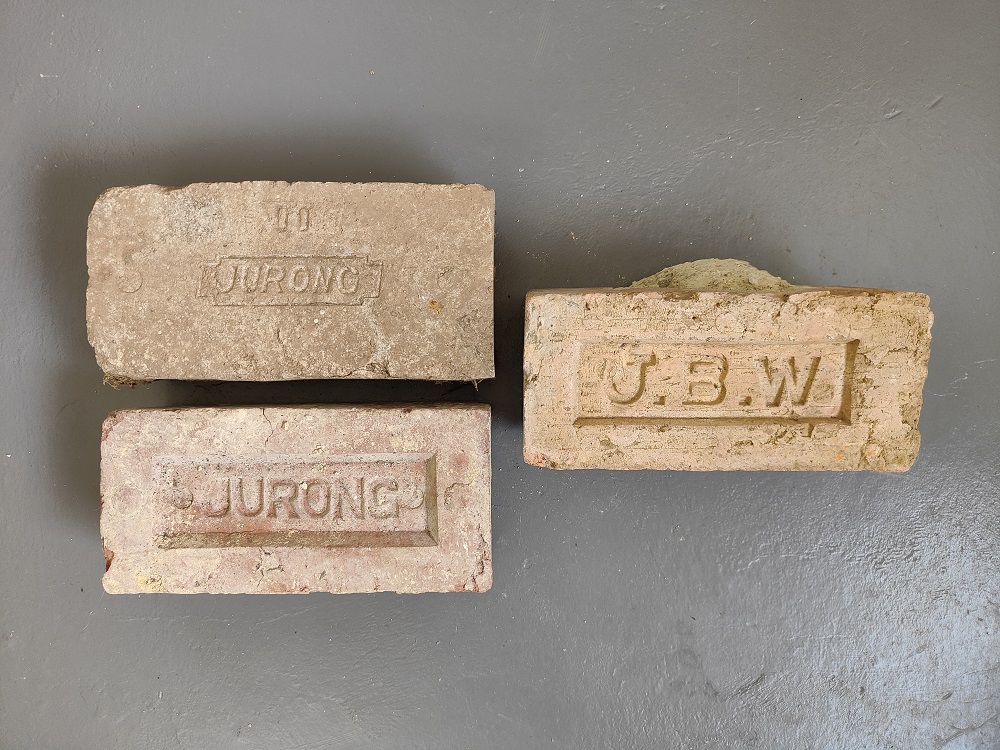 Bricks from Jurong Brickworks carrying three different marks. Image courtesy of the author.
Jurong Brickworks survived the war and, by the 1970s, established itself as a market leader in the local brick manufacturing industry under the management of Chan Tai Chuan. Its factory at Jurong Road Track 22 manufacturing bricks with the mark “JURONG”.[15] The brickworks expanded to produce a variety of products, including clay tiles, common bricks, facing bricks, patterned bricks, hollow core bricks, and firebricks. A further expansion and improvement in 1982 allowed their production capacity to reach 3.5 million bricks a month, becoming the largest private brick manufacturer in Singapore.[16]
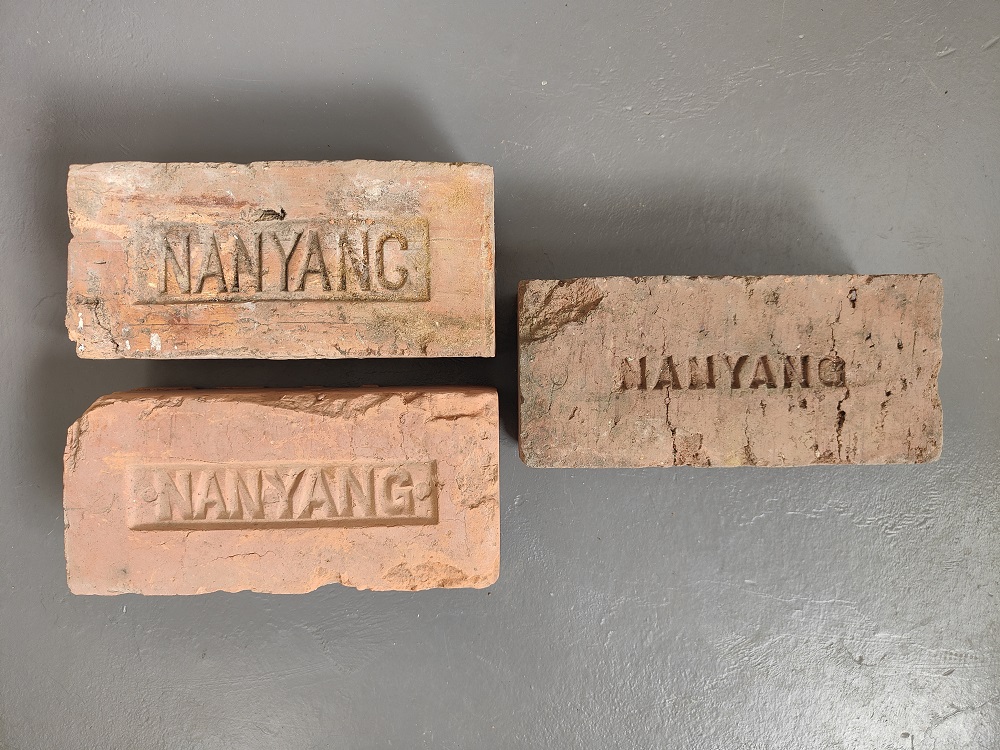 Bricks from Nanyang Brickworks carrying three different marks. Image courtesy of the author.
Nanyang Brickworks was set up in 1950, just across the road from Jurong Brickworks.[17] Beginning with handmade bricks,[18] the brickworks mechanised soon after and modernised its operations in 1960.[19] One of a few brickworks that continued operations through the post-independence years, it produced bricks bearing the mark “NANYANG” well into the 1980s. The brickworks wound down operations by the end of the 1980s after the government acquired land on which the brickworks stood.[20]
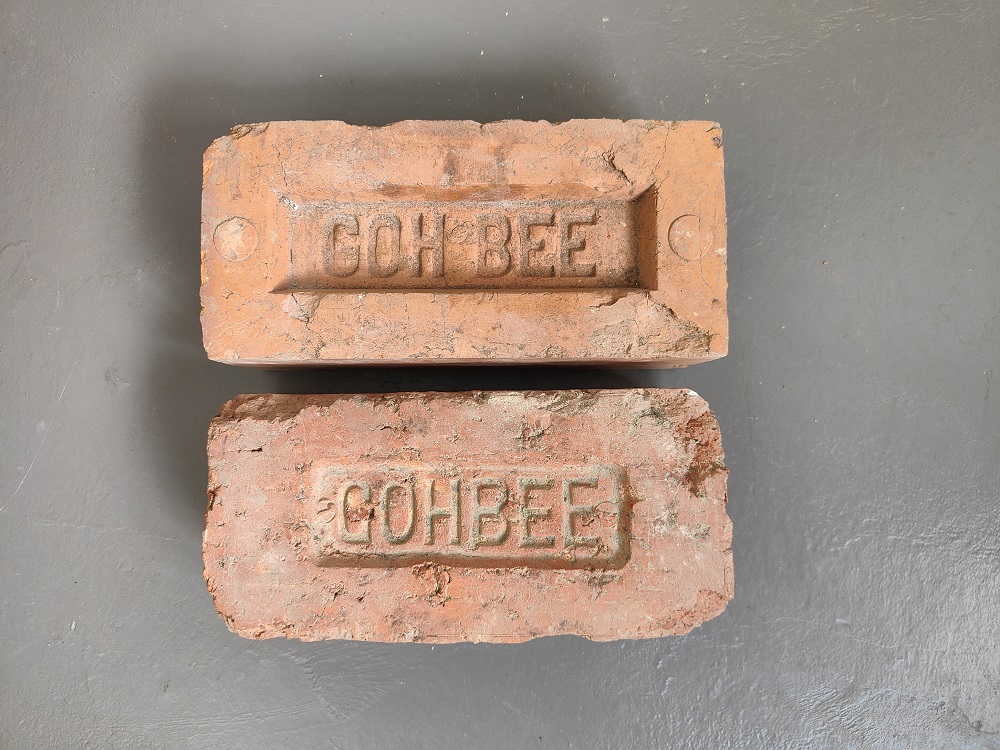 Two bricks from Goh Bee Brickworks. Image courtesy of the author.
Goh Bee Brickworks and Goh Bee Firebricks were registered in 1950[21] and 1966[22] respectively, producing both clay bricks and firebricks at their factories along Jurong Road Track 20. Clay bricks produced by Goh Bee bear the mark “GOH BEE” in the frog. The brickworks was one of the last to cease operations in Singapore.[15]
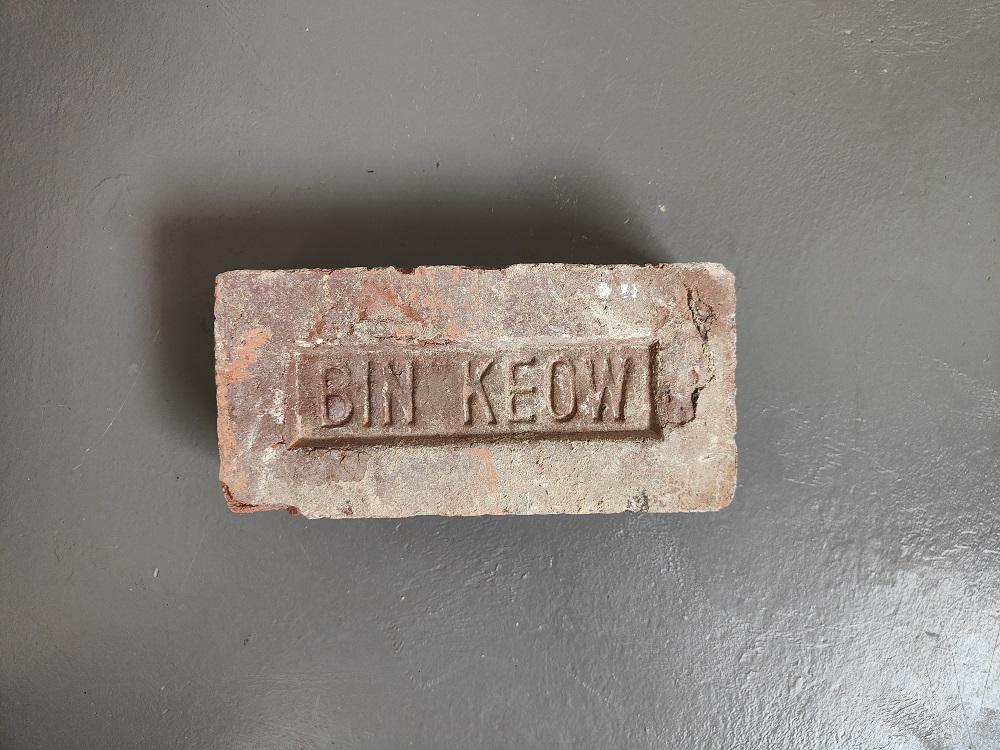 Brick from Bin Keow Brickworks. Image courtesy of the author.
Bin Keow was set up in 1949,[23] also along Jurong Road Track 20. It produced mainly clay common and facing bricks bearing the mark “BIN KEOW”. Bin Keow Brickworks operated until the cessation of the brick making towards the end of 2001.
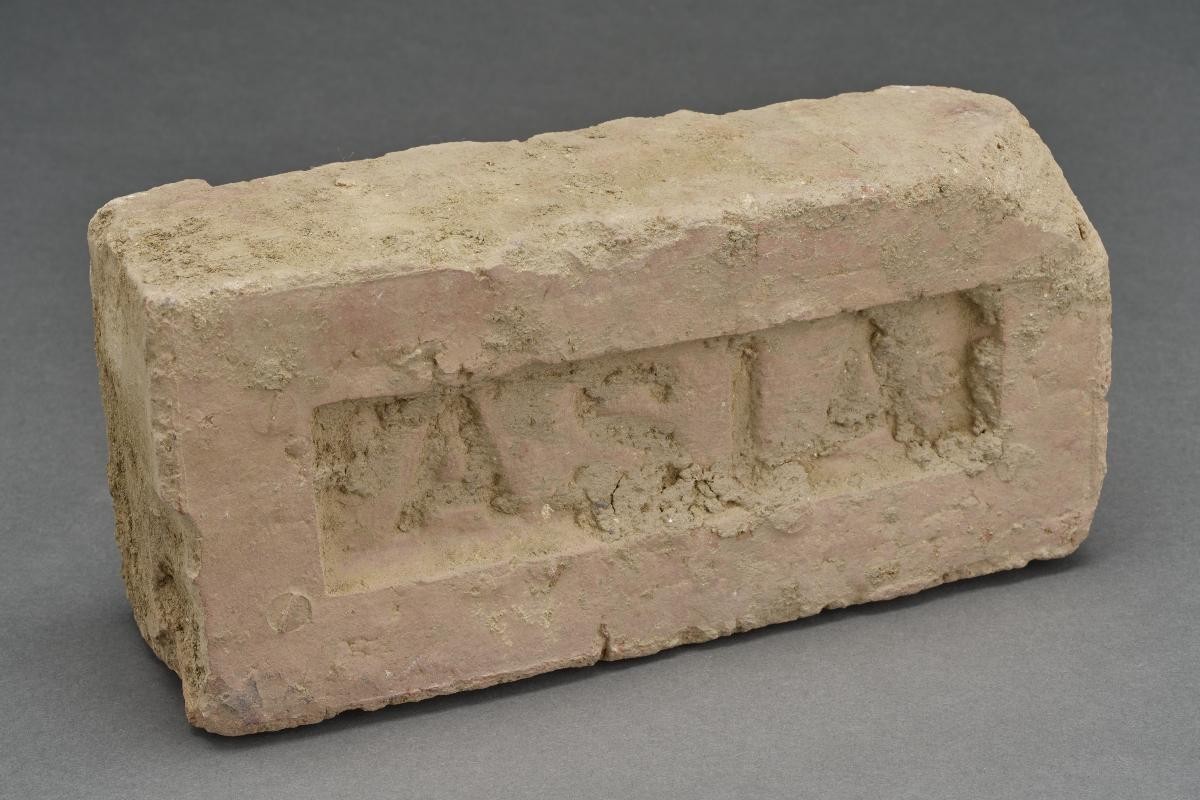
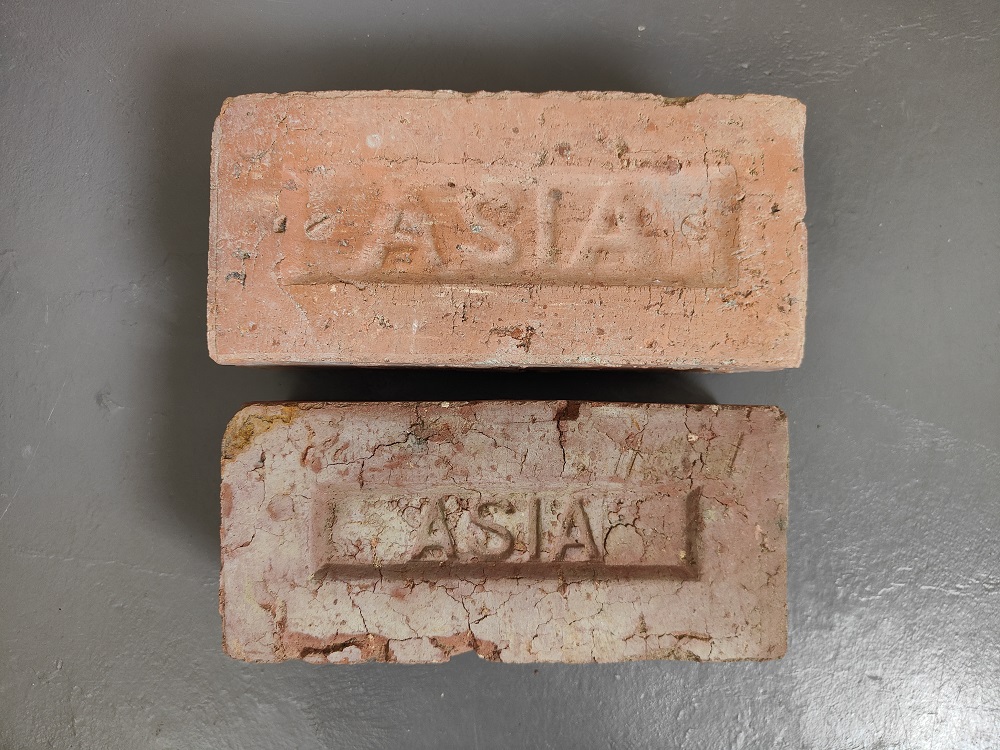 Brick from Asia Brick Factory carrying two different marks. Image courtesy of the author.
Asia Brick Factory was set up in 1952 by Ng Chung Hang along Jalan Lam Sam, off Choa Chu Kang Road. Initially producing handmade bricks, the factory later modernised and expanded, providing employment for residents in the surrounding villages.[24] Bricks produced in the factory bore the mark “ASIA”, and were fired with either Hoffman Kilns for facing bricks or Tunnel Kilns for hollow core bricks.[25] After a round of upgrading in 1985, the factory was capable of producing 3 million bricks a month, as well as making bricks of different colours.[26]
The Housing Development Board also began producing bricks from 1972 to meet the demand of HDB building programmes.[27] HDB acquired land previously operated by Sin Sin Brickworks off Jurong Road at Track 14,[17] expanding and improving operations in 1982 such that it could produce 6.5 million bricks a month, becoming the largest brickworks in Singapore.[28] The brickworks produced hollow core bricks fired in modern tunnel kilns and coloured bricks, which bore no identifiable markings.[29] As HDB moved towards prefabrication, the brickworks eventually wound down operations in the 1990s.
The sun would eventually set on the local brick making industry. Competition from cheaper imported bricks, rising cost of operations, requirements to meet stringent environmental standards, and other land use needs led to the closure of the last three brickworks—Jurong, Asia and Goh Bee Brickworks—in 2004, closing an important chapter in the story of Singapore’s manufacturing industry. The next time you walk past an old brick building or structure, take a pause and see if the bricks bear the marks of one of these local brickworks, and imagine for a while how workers and machines would toil with red clay and heat to produce these bricks, now artefacts of a past time.
The author's work in NParks includes field visits to regrowth secondary forest and development areas. These sites sometimes contain bricks from past villages or infrastructure, and an initial pursuit in using bricks to chronologically date the sites developed into an interest in the past brick-making industry in Singapore. He would like to express my thanks and gratitude to Mr Chan Tai Chuan, Mr Ng Kok Keng, Mr Quek Hong Peng and Mr Marcus Tan for sharing their recollections and memories of the brickworks, and to friends who have given advice and guidance during the research on this topic.
Notes
[2] Advertisement by Alexandra Brickworks were published from 1900 in The Straits Times and The Singapore Free Press and Mercantile Advertiser.
[3] Fraser and Cumming’s brick factories produced bricks from the 1880s were imprinted with their own marks. However, the bricks were mostly handmade.
[4] Singapore Free Press and Mercantile Advertiser (1932) Fifty Million Bricks A Year, 2 January 1932, page 13.
[5] Singapore Free Press and Mercantile Advertiser (1904) Advertisement, 1 November 1904, Advertisements column 5, page 4.
[6] Straits Times (1928) Alexandra Brickworks, 18 June 1928, page 10.
[7] Straits Times (1972) Company Highlights, 29 December 1972, page 37. See also Alexandra Brickworks Ltd Annual Reports (1970 – 1972) at Lee Kong Chian Reference Library, National Library Board (Reference Closed Access).
[8] Ong, C.I. (2002) Chew Boon Lay: a family traces its history, a family album. Ong, C.I., Singapore.
[9] Malaya Tribune (1919) Notice. 20 October 1919, Advertisements column 4, page 7. A notice put out by Tan Kah Kee & Co stating its purchase of the Pulo Tekong Brick Works and the surrounding rubber estate.
[10] Tan K.K. (1982) Pioneers of Singapore, Oral Archives Record, Reel 6 (Accession No. 000232), National Archives Singapore. Recollection by Tan Kok Kheng, son of Tan Kah Kee, of the Tekong Brickworks.
[11] Chen, Y. & Onda, S. (2018) Lim Loh Family: the journey home. On-LABO, 175pp.
[12] Lim, B.Y. (1983) Japanese Occupation of Singapore, Oral Archives Record, Reels 2, 3 & 6 (Accession No. 000314), and Lim. B.Y. (1994) Reels 1 & 2 (Accession No. 001515). Recollections by Lim Boh Yam on the family brickworks before, during and after WWII.
[13] Straits Times (1929) Advertisement, 14 June 1929, Advertisements column 4, page 4.
[14] Wan, H.C. (1984) Special Project, Oral Archives Record, Reel 4 (Accession No. 000466), National Archives Singapore. Recollection by Wan Hong Cheong of the Sin Choon Kee Brick Factory and renaming to Jurong Brick Factory.
[15] Chan, T.C., pers. comms. 2018 and 2024. Conversations with Mr Chan Tai Chuan on Jurong Brickworks.
[16] Business Times (1982) Brick makers move to upgrade and expand. 26 October 1982, page 3.
[17] Quek H.P., pers. comms. 2018. Conversations with Mr Quek Hong Peng on Nanyang Brickworks and Sin Sin Brickworks.
[18] Nanyang Siang Pau (1982) 为你介绍南洋砖厂私人有限公司的工友. 20 March 1982, page 43.
[19] Straits Times (1960) Big expansion plan for brick works. 26 August 1960, page 10.
[20] Straits Times (1986) Land being acquired. 5 April 1986, page 13.
[21] Registry of Business (1950) Goh Bee Brickworks & Co. Defunct Business Files, Record Number ROB 16883, Registry of Business, Singapore.
[22] Economic Development Board (1966) Goh Bee Fire Bricks (Pte) Ltd. Record Number 3311/9 V1, Economic Development Board, Singapore.
[23] Registry of Business (1949) Bin Keow Brick Works Co. Defunct Business Files, Record Number 15177, Registry of Business, Singapore.
[24] Lianhe Zhaobao (2014) 亚洲砖厂第二代: 轻营砖厂如开杂货店. 7 September 2014.
[25] Ng, K.K., pers. comms. 2024. Conversation with Mr Ng Kok Keng on Asia Brick Factory.
[26] Straits Times (1986) Singapore factory makes fancy bricks. 8 August 1986, page 16.
[27] New Nation (1975) HDB almost doubles its annual brick output. 24 April 1975, page 17.
[28] Business Times (1982) Two brickworks to expand despite glut. 26 May 1982, page 1.
[29] Tan, M., pers. comms. 2024 – 2025. Conversations with Mr Marcus Tan on HDB Brickworks.