
TL;DR
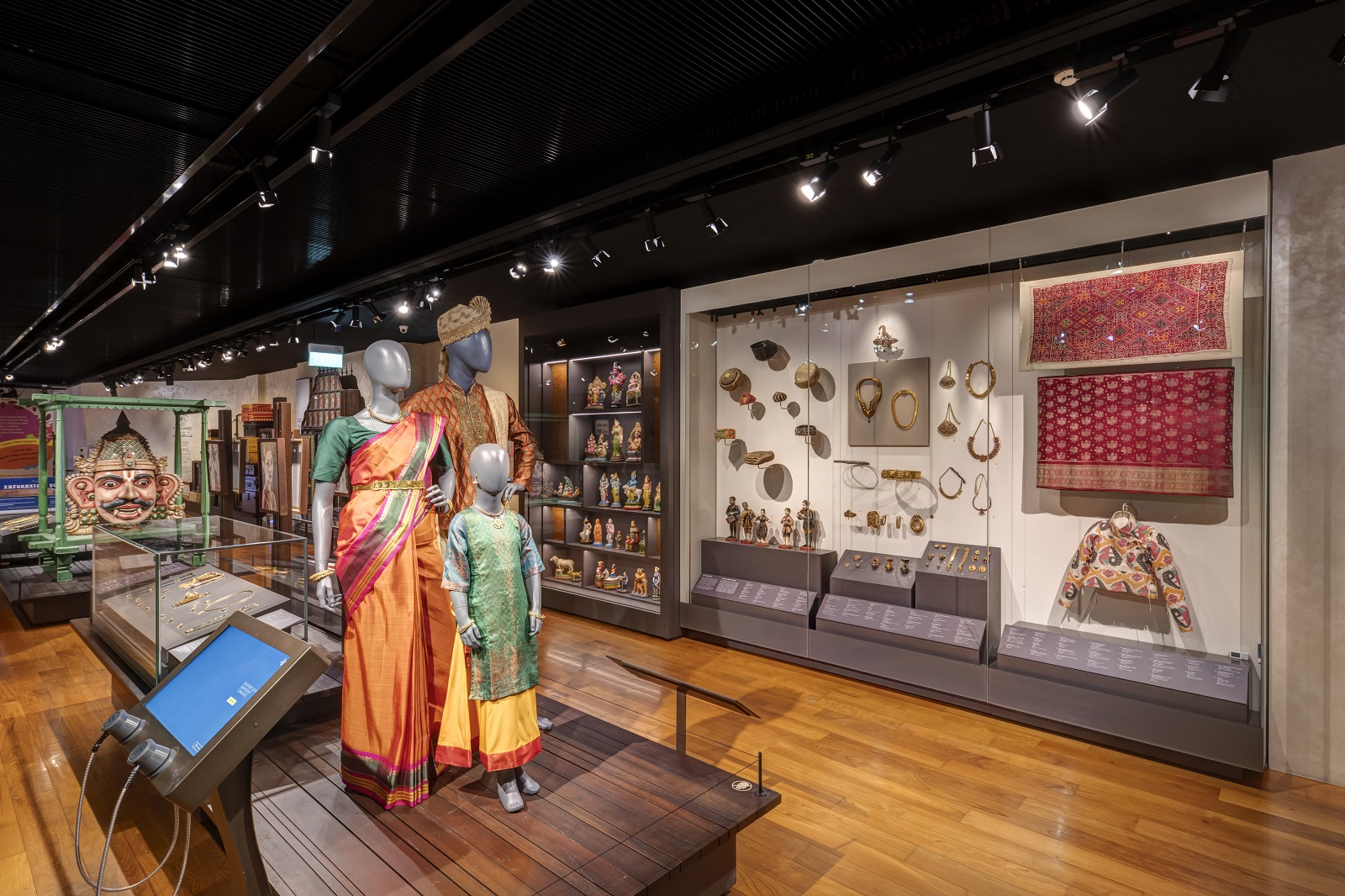
2025 marked a significant double milestone for the Indian Heritage Centre (IHC). As Singapore celebrated 60 years of independence, IHC also commemorated a decade since its opening. While SG60 was a national moment of reflection, for all of us at IHC, it was equally a time to pause and reflect on our own journey - on how we began, how we have evolved and how we continue to grow alongside the communities we representGiven the convergence of these milestones, there felt no more fitting way to mark the occasion than by returning to the foundation of the Indian Heritage Centre: our Permanent Exhibition, Indians in Singapore: Past and Present. Beyond a physical space, the exhibition is the bedrock of IHC’s curatorial vision and narrative voice. To commemorate IHC’s 10th anniversary and coincide with SG60, we undertook our first major gallery rotation, which included the installation of 60 artefacts from the National Collection alongside new community loans. The IHC10 & SG60 Gallery Rotation was conceived not only as a refresh of our display, but as a deeper re-engagement with the very roots of IHC. It was an opportunity to reflect on the histories and contributions of Singapore’s Indian and South Asian communities, while setting the tone for the future. It reminded us that IHC’s story is far from static—it continues to evolve, shaped by the ongoing journeys and trajectories of the communities it serves.
Looking Back: Building the IHC Collection
Although IHC officially opened its doors in 2015, the story of its collection began much earlier. In fact, the oldest artefact in the IHC collection dates to 2010, when the founding curatorial team started acquiring materials through purchases from auction houses, dealers and private collectors. These early acquisitions laid the groundwork for what would eventually become IHC’s rich and diverse collection.
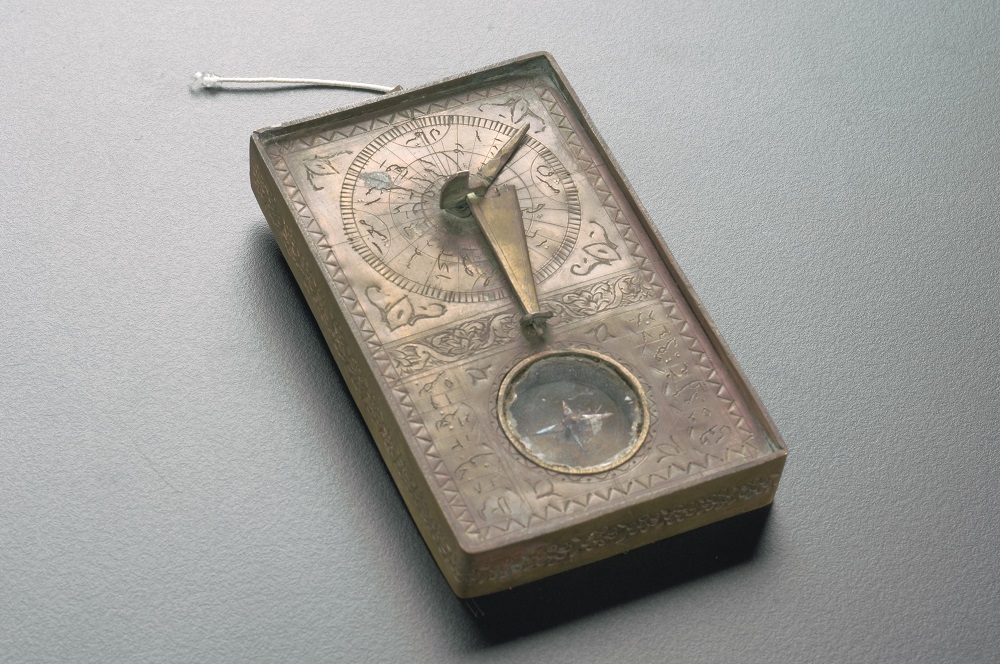
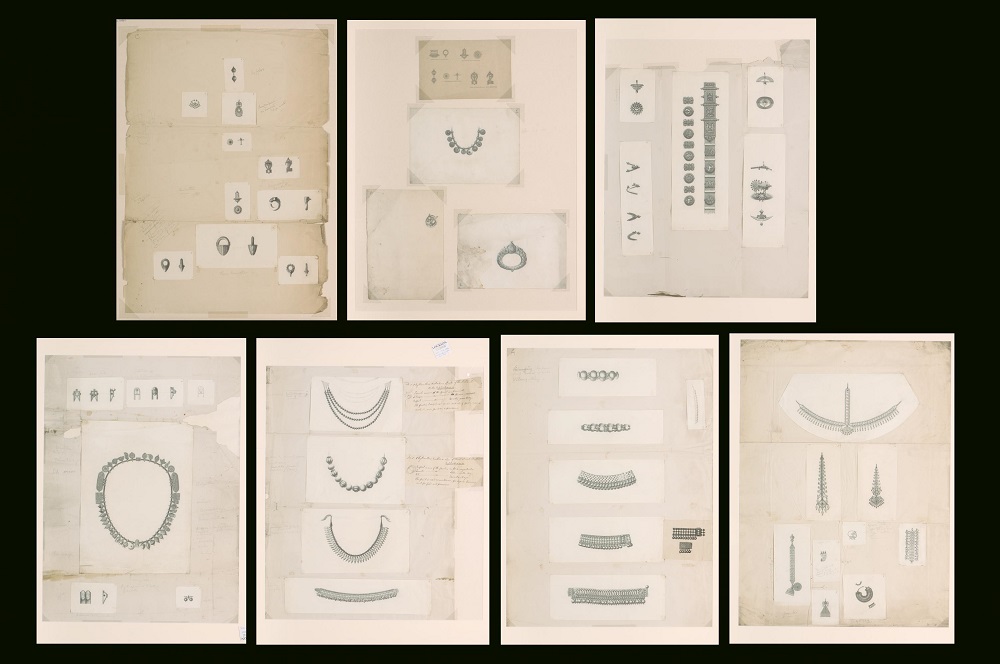 Some of IHC’s earliest acquisitions in 2010 included a Qibla indicator (left) and Indian jewellery designs (right). Collection of the Indian Heritage Centre.
A significant milestone followed in 2011, when IHC held its first artefact collection drive. This open call to the public invited donations and loans from community members and organisations, greatly expanding the scope of the collection. This move not only broadened the range of artefacts but also firmly embedded community engagement at the heart of IHC’s curatorial and collecting practices.
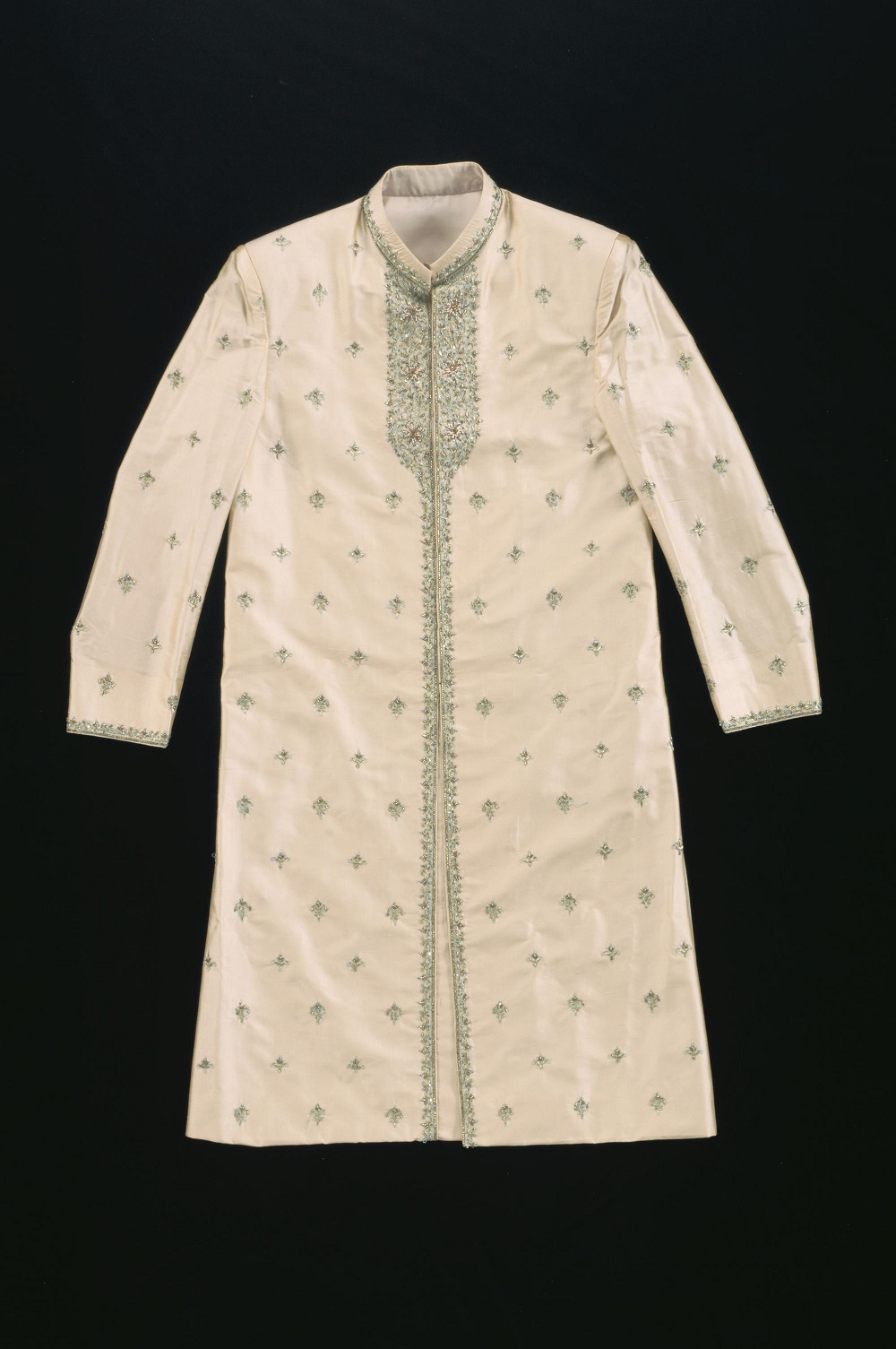
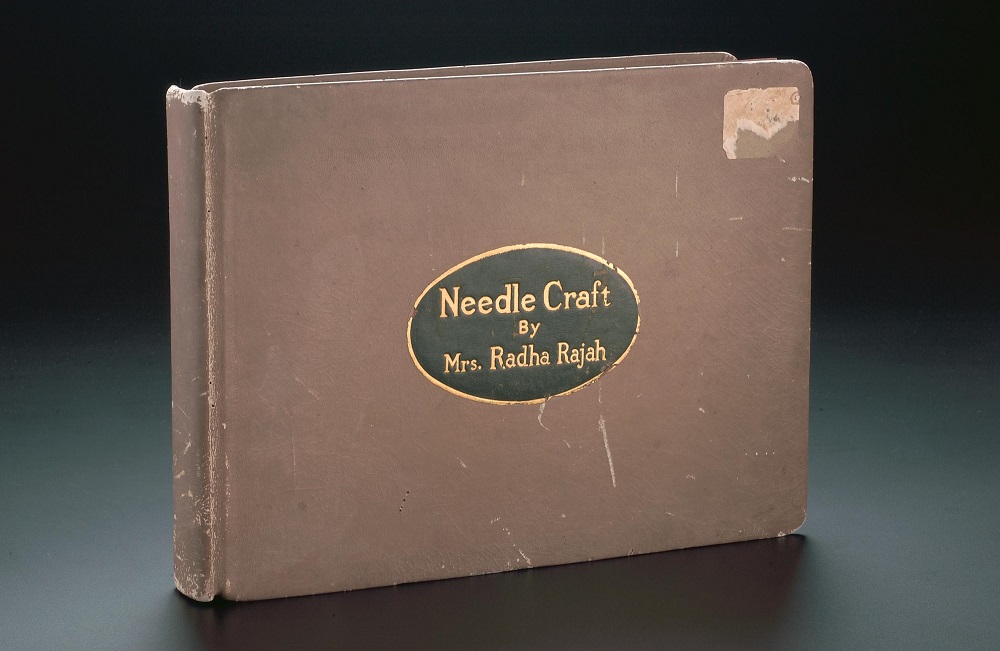
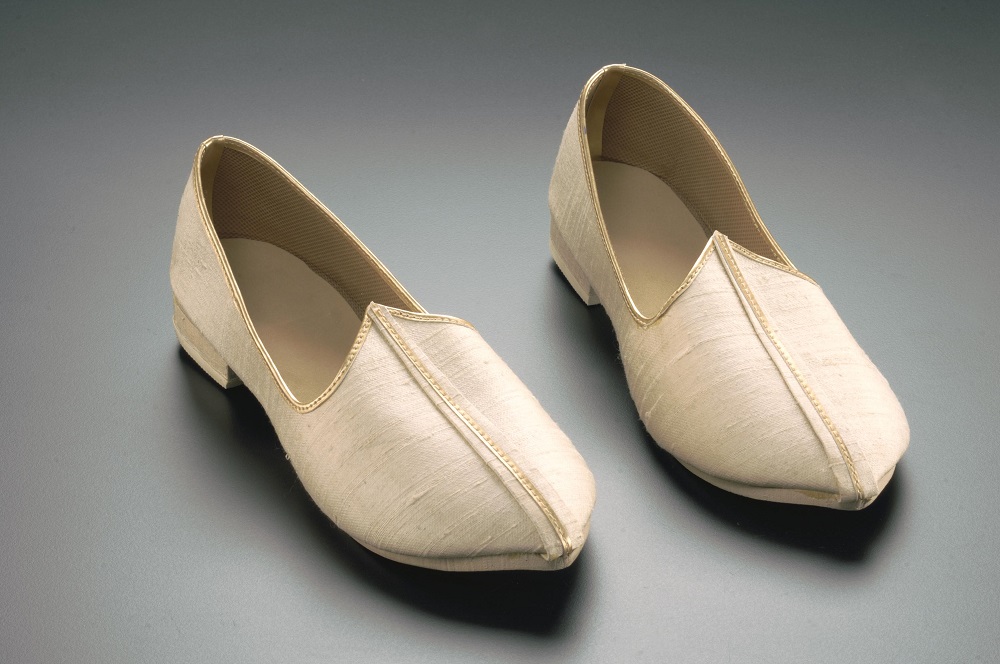
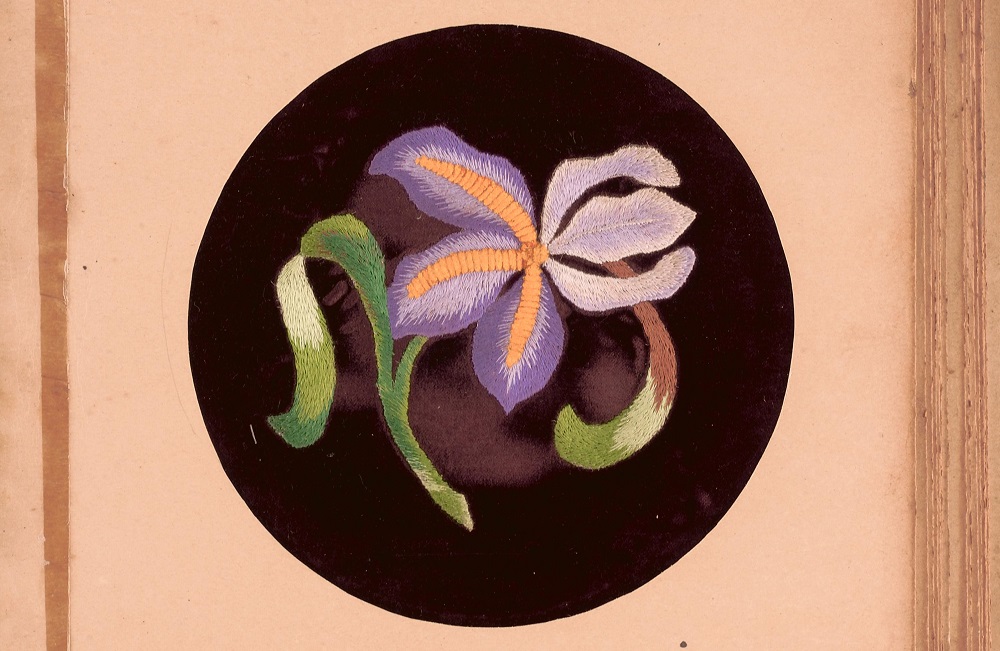 Artefacts donated to the IHC by Singapore’s Indian and South Asian communities in 2011 included a traditional kurta (top) and pair of shoes belonging to Dr Balaji Sadasivan, former Senior Minister of State for Foreign Affairs and the first Chairman of IHC’s Steering Committee (left). A needle craft album belonging to Mrs Radha Rajah, a member of Singapore’s Ceylon Tamil community who conducted needlework classes at Orchard Road in the 1930s and 40s was also donated (right). Gifts of Dr Ma Swan Hoo (kurta and shoes) and Mrs Thanabalasingam (album). Collection of Indian Heritage Centre.
The IHC collection has grown steadily since, now comprising more than 5,000 artefacts, each representing key curatorial themes that form the foundation of IHC’s storytelling. These themes are rooted in the historical connections between South and Southeast Asia since the 1st century CE, the vibrant cultural heritage of Singapore’s Indian and South Asian communities and their migration, settlement and contributions to Singapore’s development through pivotal historical episodes, including the British colonial era, World War II, nation-building and independence. However, due to space constraints, only about 500 artefacts are displayed in the Permanent Exhibition at any given time. This underscores the importance of timely rotations, allowing a greater diversity of artefacts and stories to be shared over time.
Curating the IHC10 & SG60 Gallery Rotation
Artefact rotations have long been a core part of IHC’s curatorial practice, typically carried out on a regular basis to either showcase a wider selection of objects from the collection or to replace artefacts deinstalled for conservation. However, as the Centre’s first major rotation, the IHC10 & SG60 Gallery Rotation was conceived with a distinct purpose. Celebrating both a national and organisational milestone, this rotation aimed to spotlight the rich diversity of Singapore’s Indian and South Asian communities, whose contributions are integral to the nation’s unique multicultural fabric. Beyond a mere exploration of these communities, the rotation positioned their journey within the broader Singapore Story, underscoring their role in the nation’s growth and development over time. In doing so, it not only uncovered new stories of Singapore’s Indian and South Asian heritage but also set the tone for future curatorial thinking and collection development, building on existing narratives rather than redefining them. The rotation was implemented in two phases, with the first 30 artefacts introduced in March 2025, followed by the remaining 30 in September 2025.
Phase 1 - Capturing the Cultural Kaleidoscope
Phase 1 of the rotation set out to foreground the rich diversity within Singapore’s Indian and South Asian communities, celebrating their integral role in shaping the nation’s unique multicultural identity. Although these communities constitute a relatively small proportion of Singapore’s population, around nine per cent, they are often viewed as a single, homogenous group. In reality, their ethnic and cultural landscape is deeply multifaceted and complex. It was this diversity of histories, identities and cultural nuances that Phase 1 sought to bring into sharper focus, inviting visitors to recognise diversity not merely as something that exists, but as something worth celebrating.
This perspective guided the selection of artefacts for Phase 1, which focused on Galleries 1 and 2 —Early Contact: Interactions between South and Southeast Asia and Roots and Routes: Origins and Migration. The first 30 artefacts included ancient sculptures and export trade goods that reflect the long-standing maritime and cross-cultural exchanges between South and Southeast Asia since pre-colonial times, setting the historical context for the migration of Indian and South Asian communities to the region. These were complemented by personal memorabilia, photographs and cultural objects that speak to the tangible and intangible cultural heritage carried by these communities, particularly during their large-scale migration to Singapore in the 19th and 20th centuries. Together, these artefacts illustrate how different sub-ethnic groups preserved their traditions, rites of passage and cultural markers such as attire and festivals.
A key curatorial approach was to emphasise the broader South Asian region, acknowledging that Singapore’s Indian and South Asian communities include people with roots in countries such as Nepal, Sri Lanka and Pakistan—an aspect often overlooked due to the perception that the Indian Heritage Centre represents Indian heritage alone. Artefacts from these regions were therefore included to present a more inclusive and representative narrative. Diversity was further articulated through artefacts reflecting cultural traditions such as festivals, attire and wedding customs—both those unique to specific sub-ethnic groups and those shared across communities. Together, these curatorial choices reinforced the idea that diversity is not incidental, but foundational to understanding the Indian and South Asian communities’ place within Singapore’s multicultural fabric.
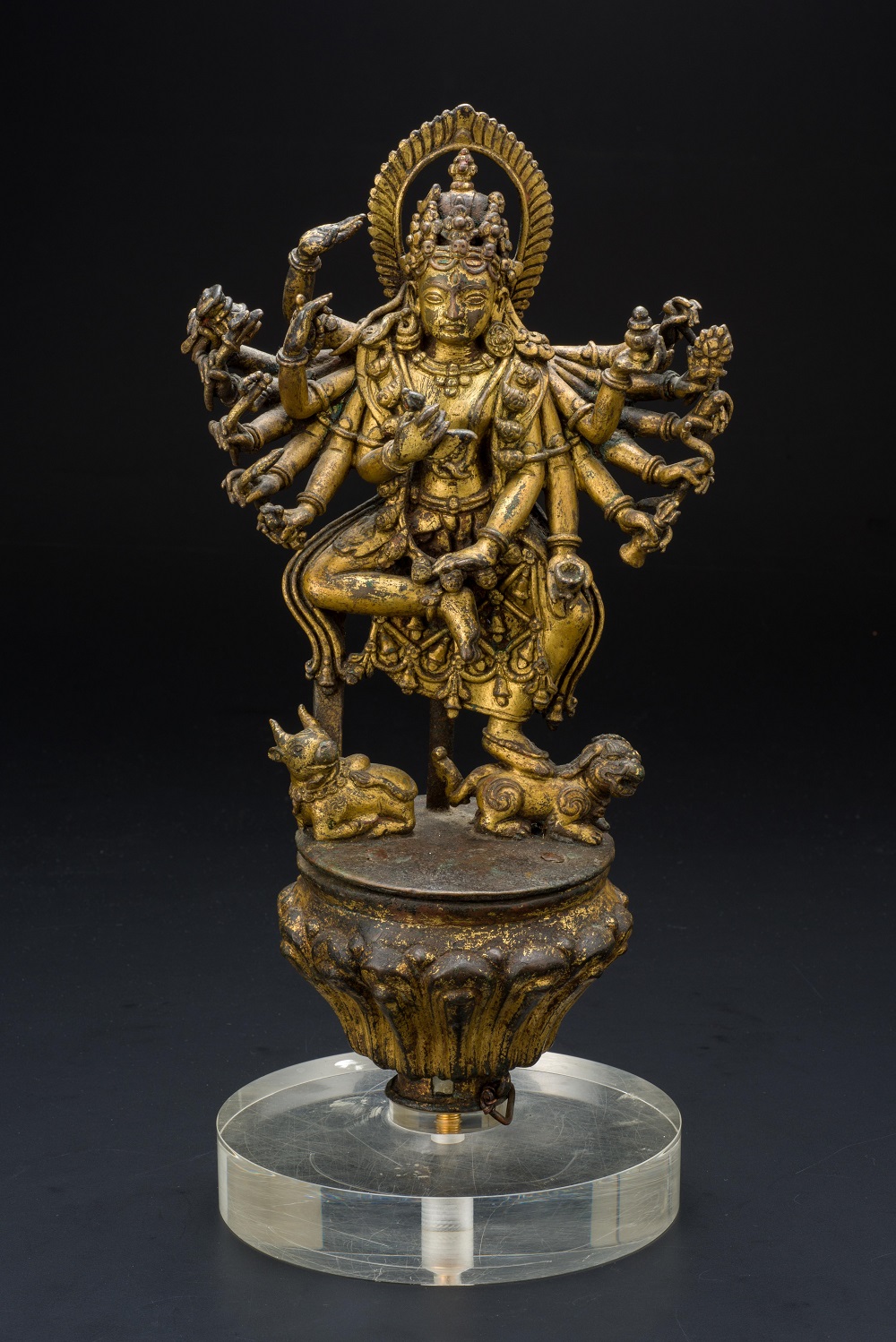
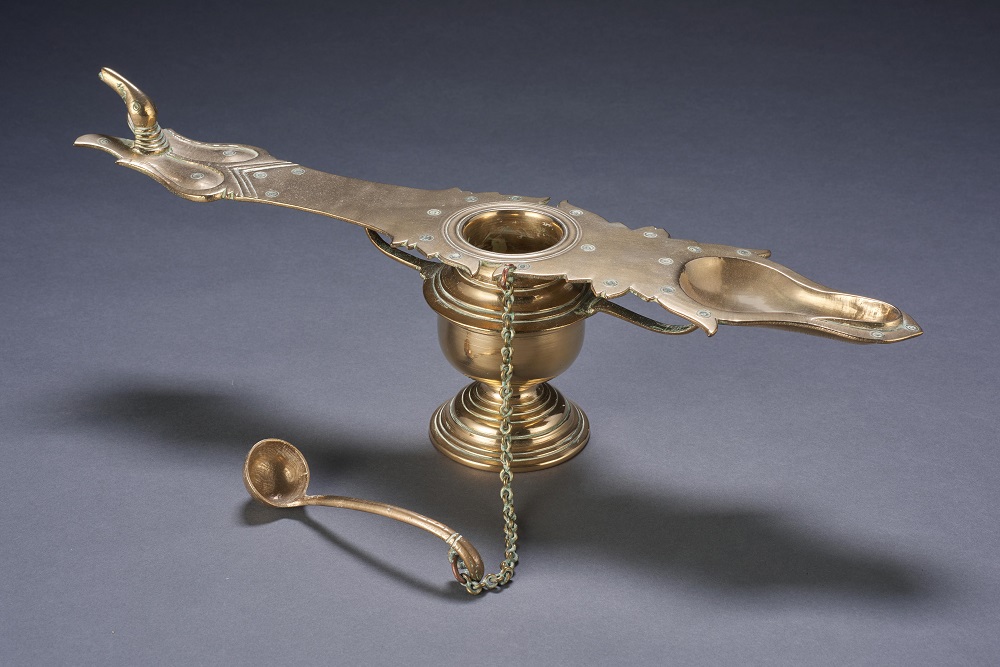
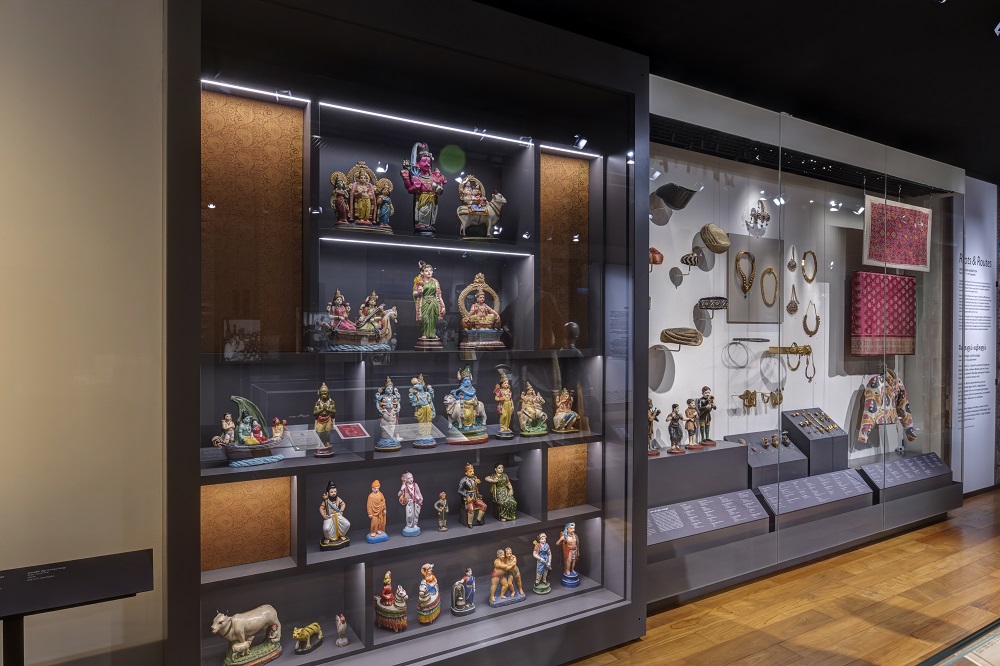 Artefacts featured in Phase 1 include the Dancing Ardhanarishvara from 17th to 18th century Nepal (left), Changala Vatta (Greek Lamp) used in Malayalee weddings (center) and a new Navaratri Festival Bommai Golu (Court of Dolls) showcase (right). Gift of Ms Vatsala Mohandas (Changala Vatta), Collection of Indian Heritage Centre
Phase 2 - Spotlighting the Singapore Story
While Phase 1 laid the groundwork for understanding the ancestral and cultural heritage of Singapore’s Indian and South Asian communities through many visually striking cultural objects, Phase 2 shifts the lens towards community narratives, placing lived experience at the centre of the interpretation. Focusing on Galleries 2 to 5 - Roots and Routes: Origins and Migration, Pioneers: Early Indians in Singapore and Malaya, Social and Political Awakening of Indians in Singapore and Malaya, and Making of the Nation: Contributions of Indians in Singapore - this phase invites visitors to look beyond surface and appreciate the beauty of stories embedded within personal collections, often expressed through photographs, archival documents and everyday objects that carry memory and meaning.
Moving beyond the community as a standalone entity, Phase 2 also widens the frame to consider Singapore’s multicultural landscape more broadly. Rather than presenting multiculturalism as a literal blending of cultures, Phase 2 foregrounded symbolic coexistence—the ways in which different cultural traditions are recognised, interpreted and expressed within shared social and civic spaces. A striking example is Singaporean visual artist Yip Yew Chong’s painting of the Theemithi (firewalking) festival, in which a Chinese artist reimagines a Hindu ritual. His portrayal reflects how cultural practices in Singapore can be embraced beyond the communities from which they originate. Similarly, the Sikh Guard statues from Bukit Brown Municipal Cemetery, a site historically associated with the Chinese community, offer a powerful metaphor for multicultural coexistence, where shared spaces become sites of mutual presence, respect and understanding.
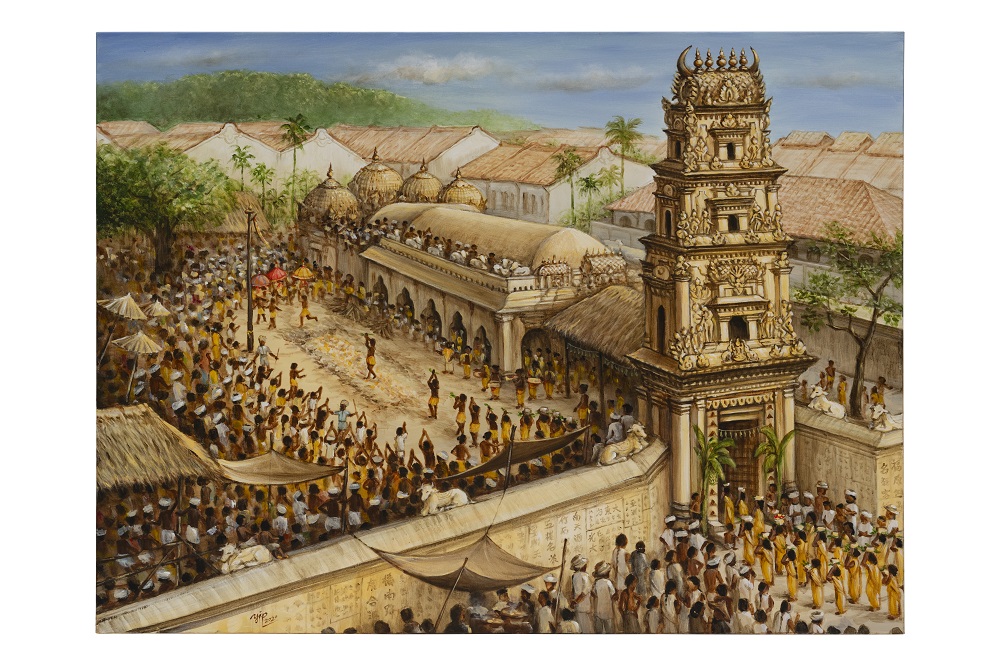 Painting of the Theemithi (firewalking) Festival by Yip Yew Chong, Collection of Indian Heritage Centre
Phase 2 also traced the migration journeys of Indian and South Asian communities, examining how they settled across Singapore, established key trades and institutions and forged collective identities over time. Spanning the colonial period through World War II, nation-building and independence, we view a glimpse of how these communities both shaped and were shaped by critical episodes in Singapore’s history. The contributions of early pioneers, particularly through the establishment of trades, associations and schools, were instrumental in laying the foundation for the communities’ growth while fostering social cohesion and integration within the wider society.
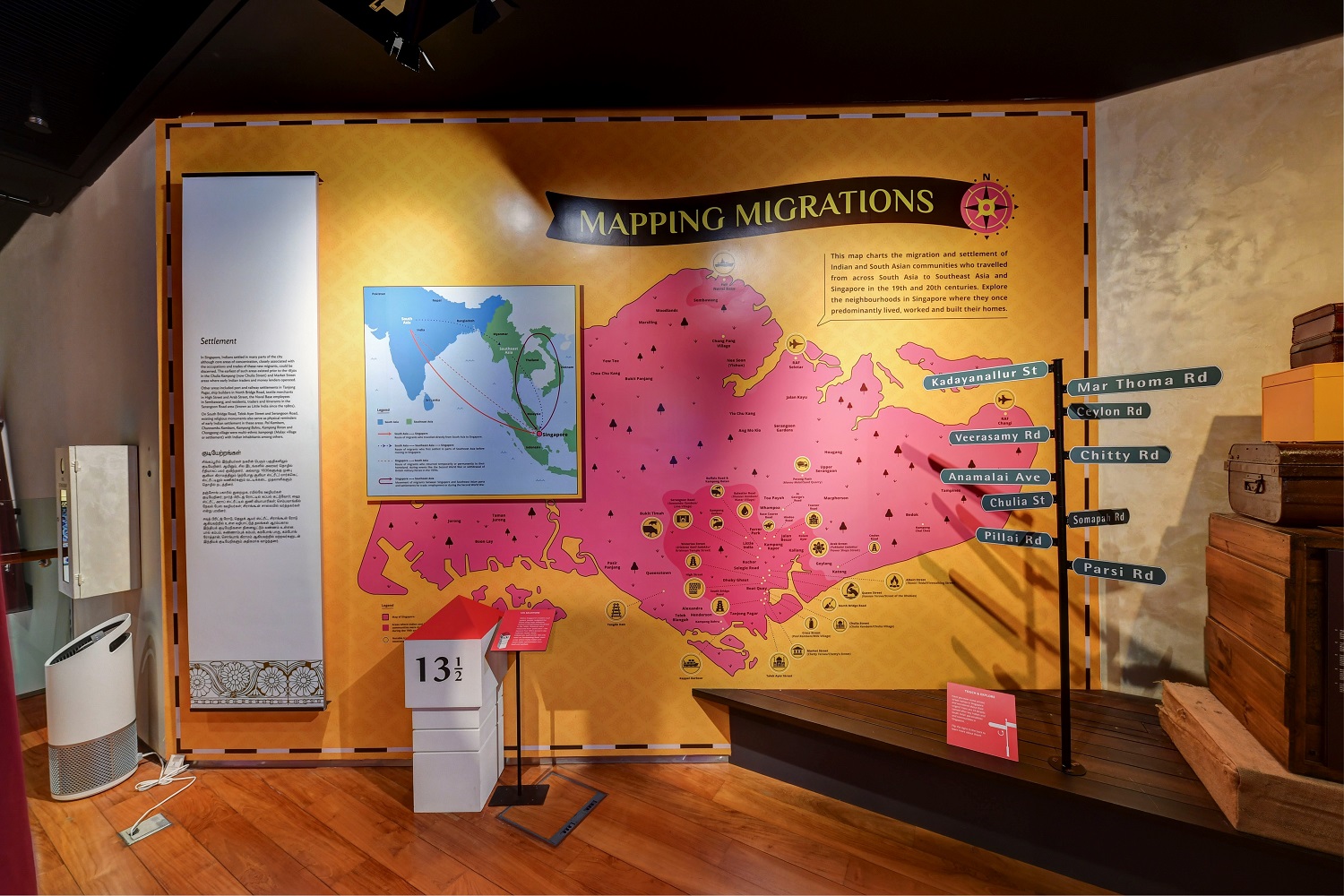 New map installation charting the migration and settlement of Indian and South Asian communities, alongside signs of ten streets named after them.
IHC’s World War II narrative was expanded by broadening its focus beyond Indian Independence movements to include the lived experiences of ordinary civilians during the Japanese Occupation. This shift situates the community’s wartime experience within a wider regional context, recognising the intersections between anti-colonial movements and the realities of occupation in Southeast Asia.
Finally, this phase concluded by spotlighting contributions across diverse sectors in post-war and independent Singapore, including arts, sports, and social service. New narratives, such as that of Nellachi Pillay from the Chetti Melaka (Peranakan Indian) community, introduced stories of accessibility and inclusion for the first time in IHC’s Permanent Exhibition. Together, these narratives reposition Indian and South Asian communities not only as bearers of heritage, but as active contributors to Singapore’s shared past, present, and future.
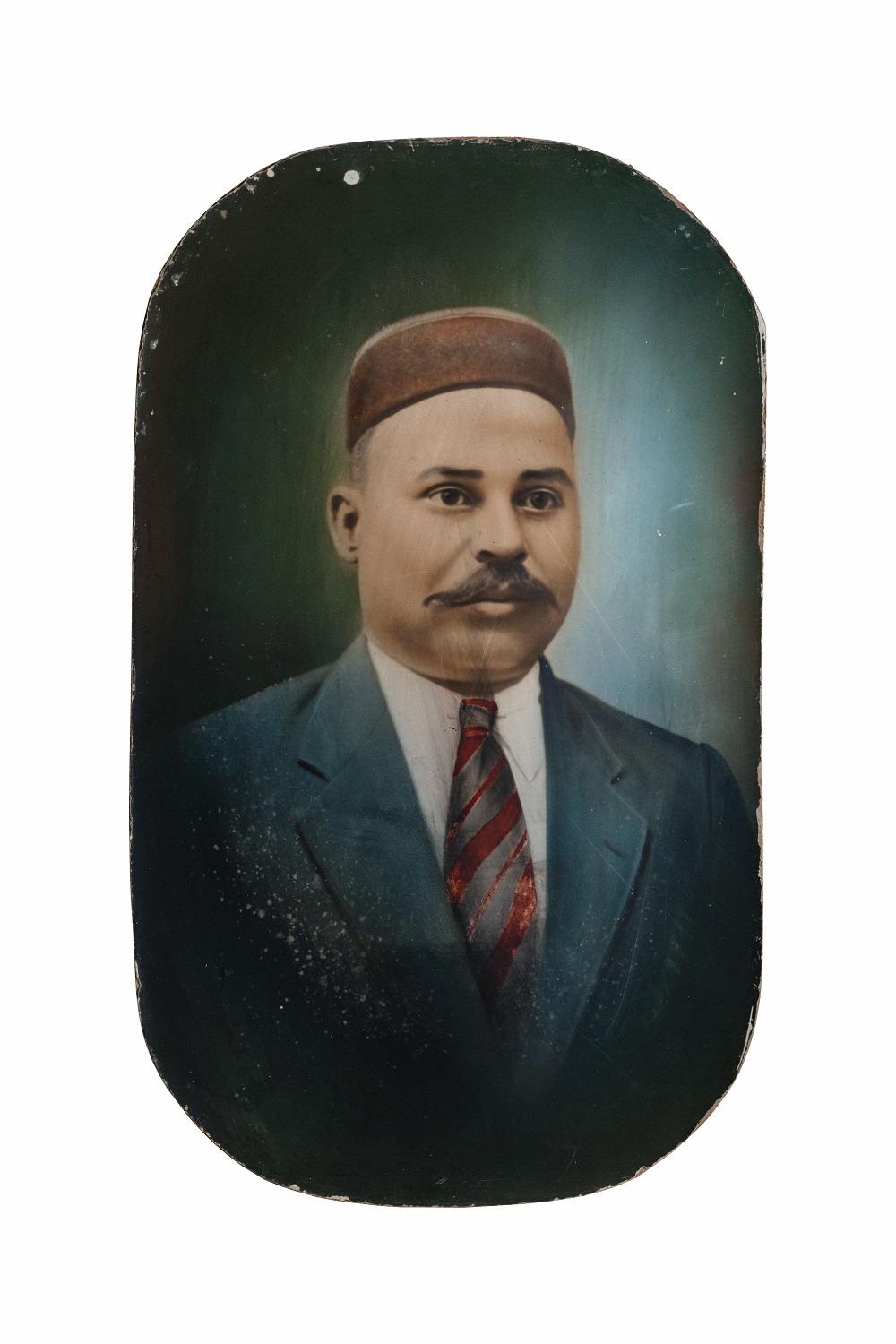
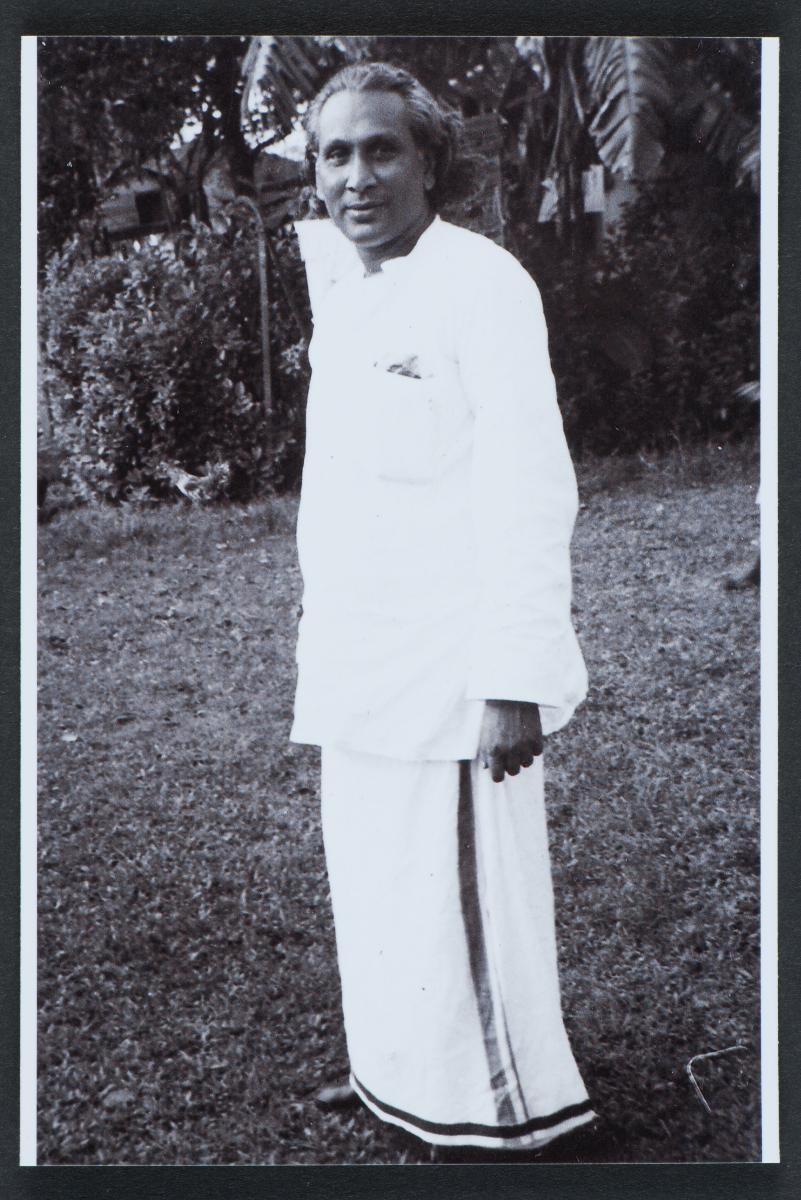
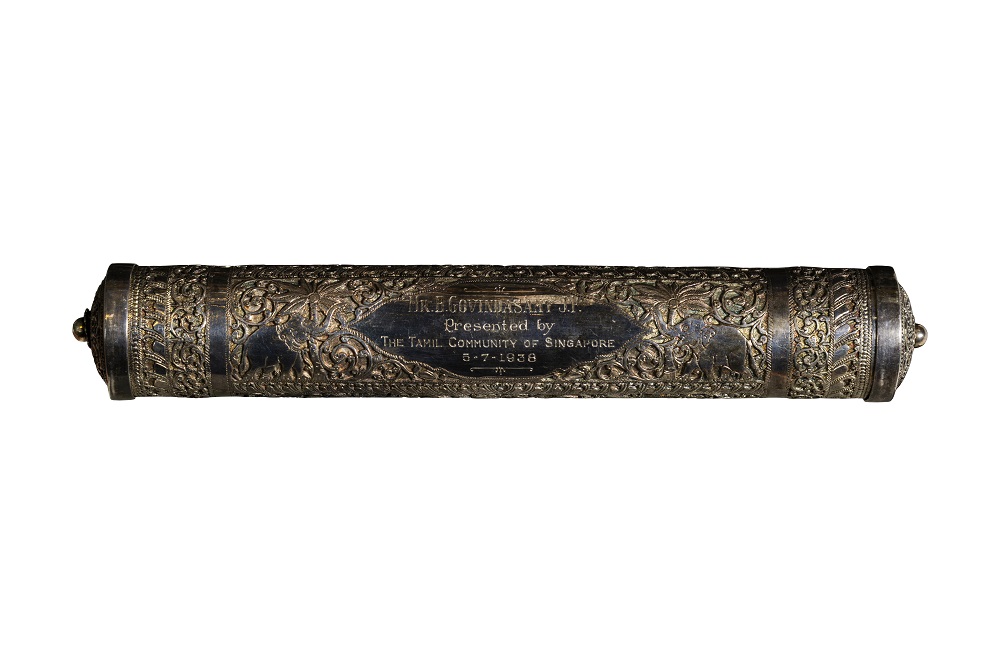 Portrait of B Govindasamy Chettiar, alongside a congratulatory scroll presented by the Singapore Tamil community upon his appointment as Justice of the Peace in 1938. On loan from Ms S L Mythili Perumal
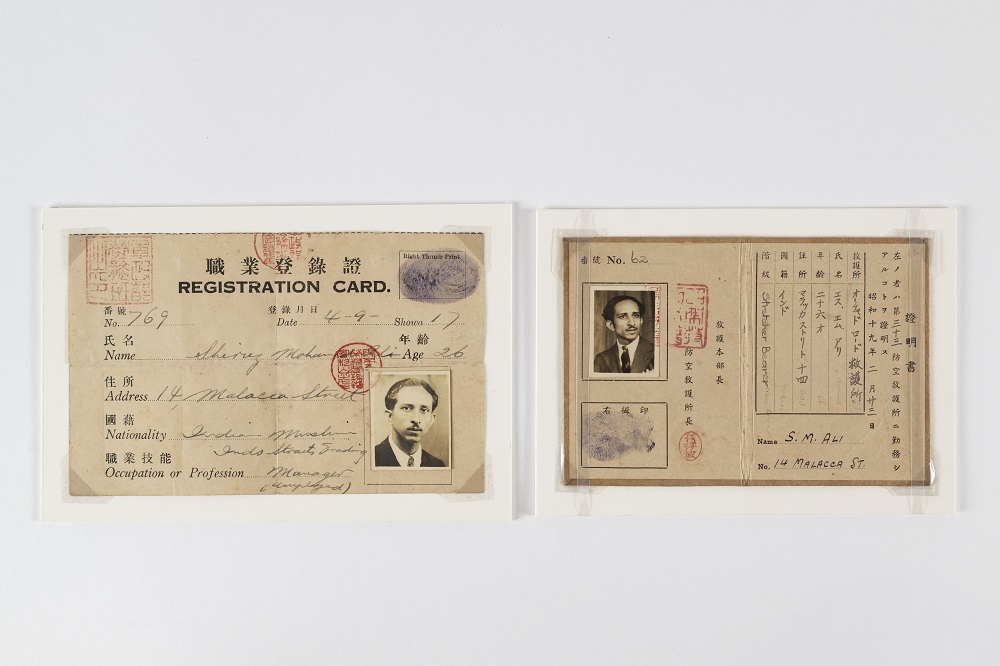 Registration Card and Syonan Tokubetu Si Medical Auxiliary Service Booklet issued to Shiraz s/o Mohd Ali during the Japanese Occupation of Singapore. On loan from Mr Asad Shiraz
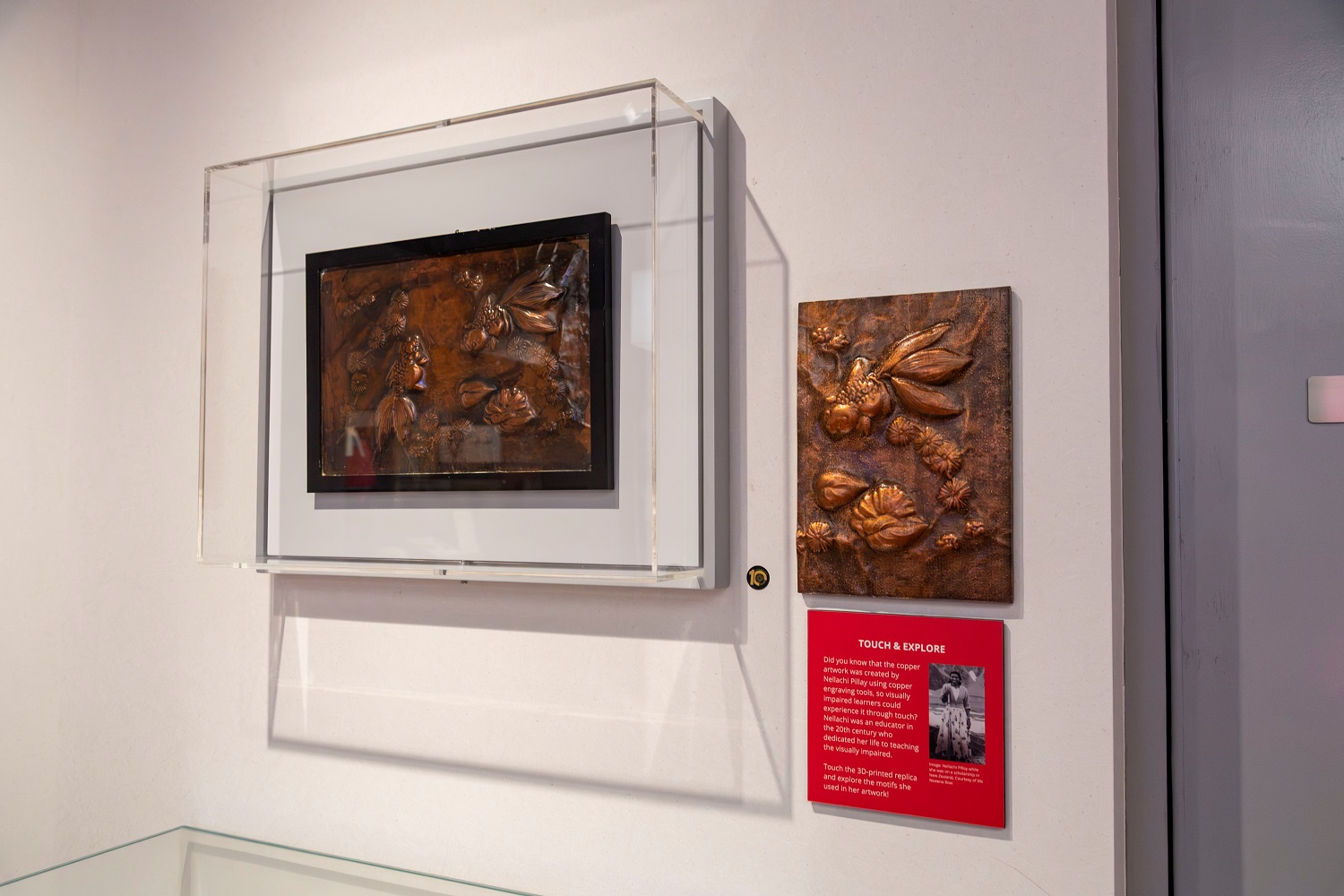 Copper Artwork and Teaching Tools made by Nellachi Pillay for Visually Impaired Children, alongside a tactile 3D replica. Gift of Mrs Nellachi Pillay and Mr David Row, Collection of Indian Heritage Centre
For the Community, By the Community
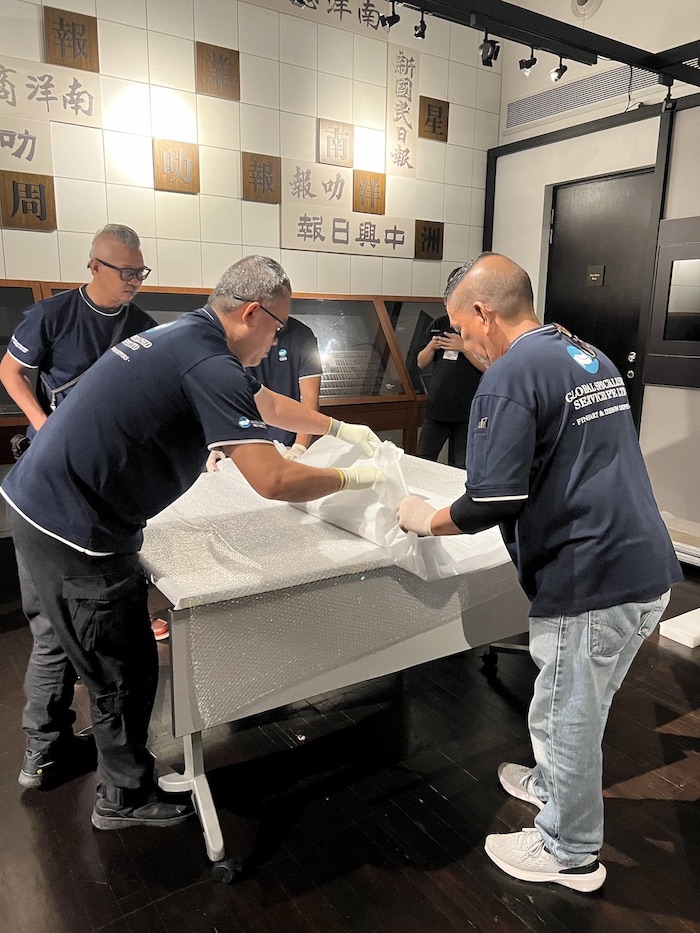
Ten years on, the IHC10 & SG60 Gallery Rotation reflected not only what IHC has grown to become, but also how that growth has always been communal. Many artefacts on display arrived through acts of trust and generosity by donors and lenders who shared personal and organisational treasures. Around them gathered another kind of community: art handlers, fabricators, collections and exhibitions managers and many others whose work made the displays possible, safe and meaningful. Within this network, I found my place as a curator—threading these artefacts into a larger narrative of Singapore’s Indian and South Asian heritage, one that speaks to our Singapore Story. Together, the rotation became an expression of collective stewardship: an affirmation that heritage is sustained not by a single voice, but by many hands and perspectives coming together.
The Indian Heritage Centre’s newly rotated Permanent Exhibition is now on view. Please visit www.indianheritage.gov.sg for more information.