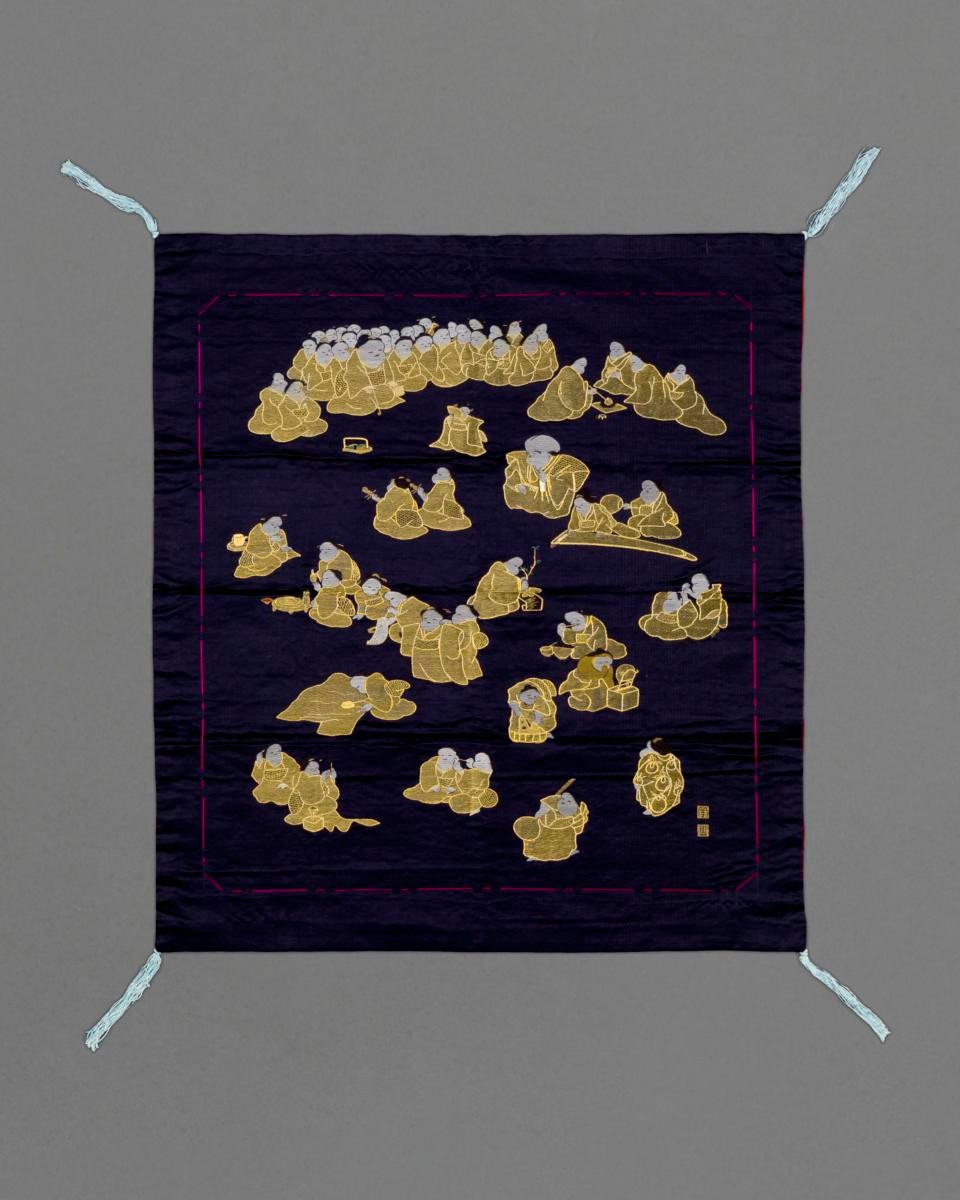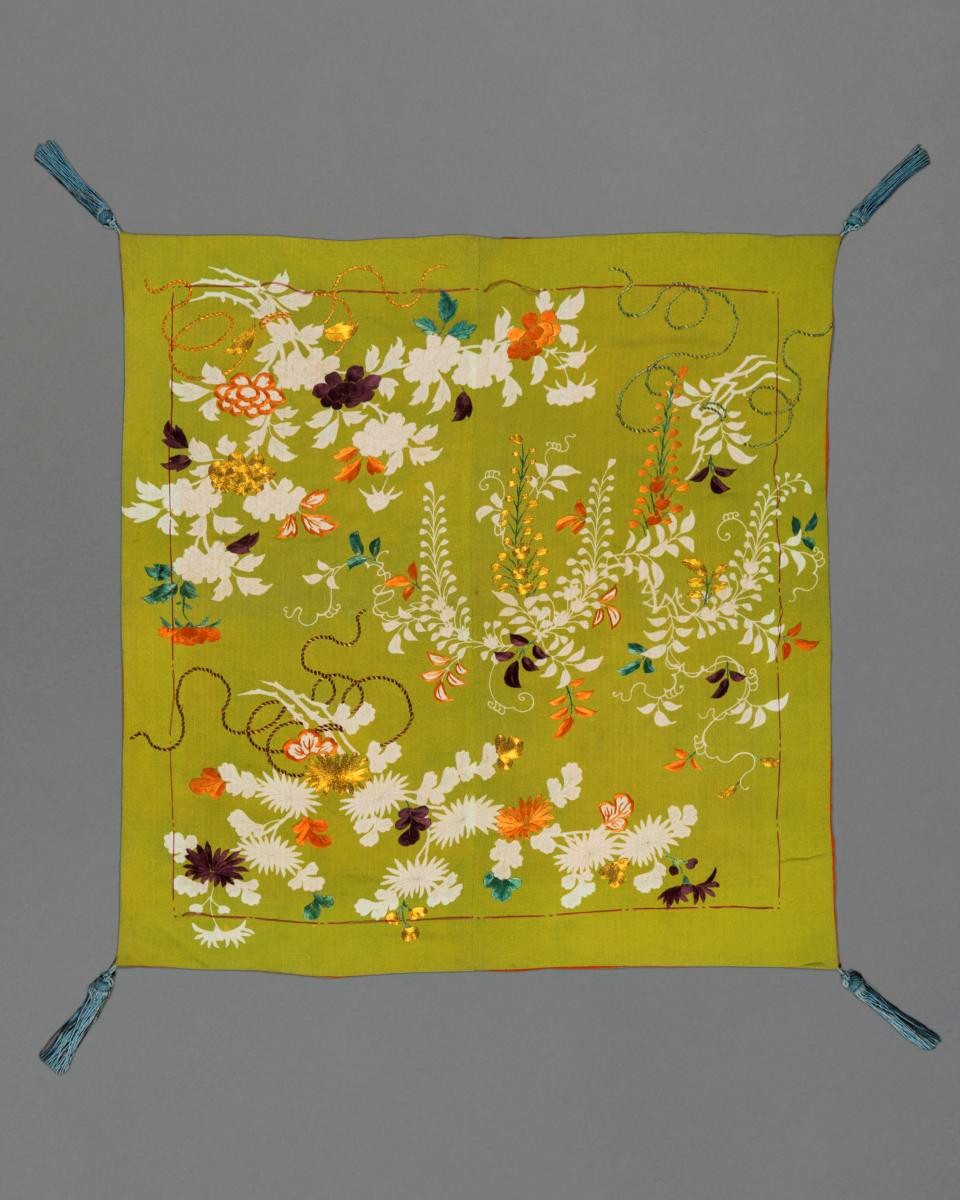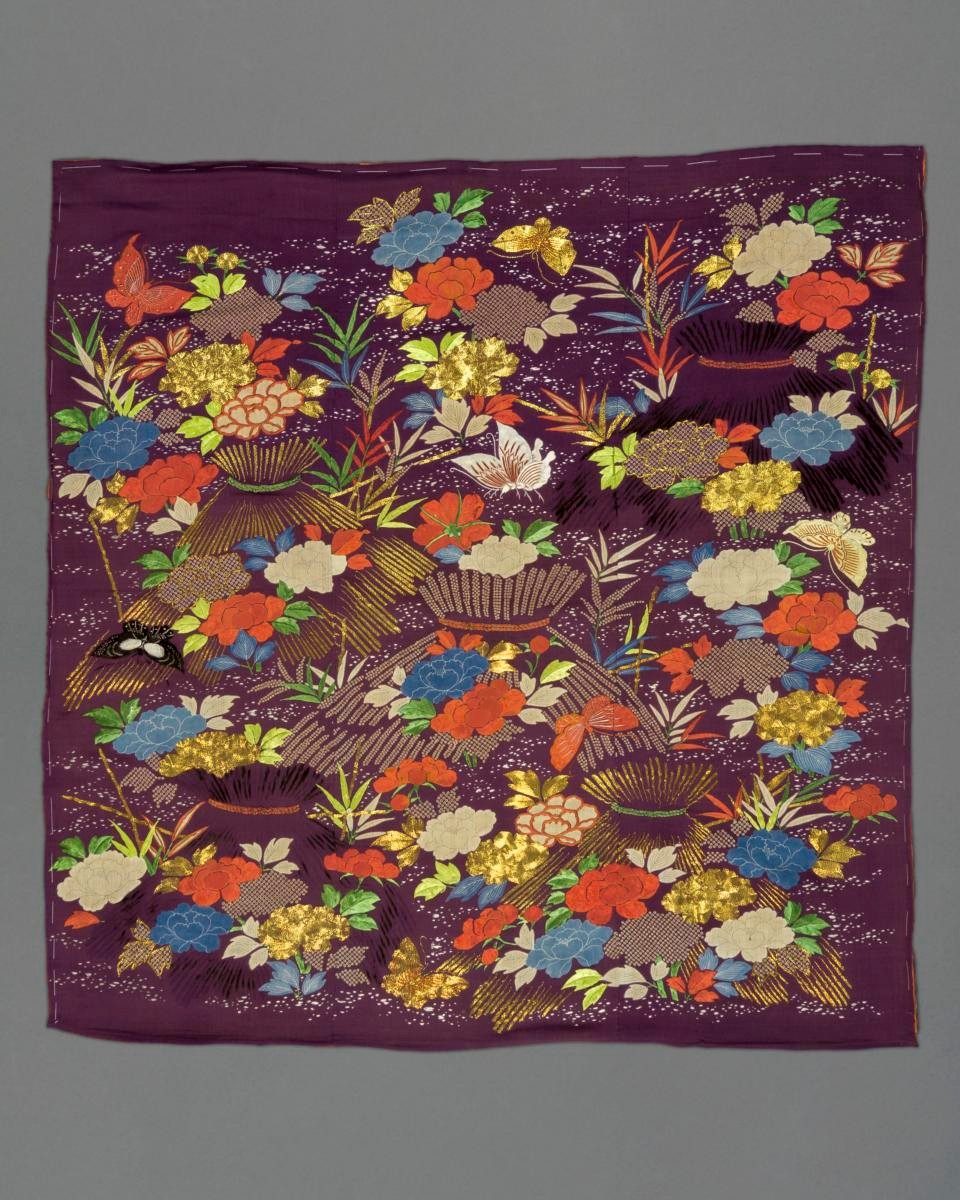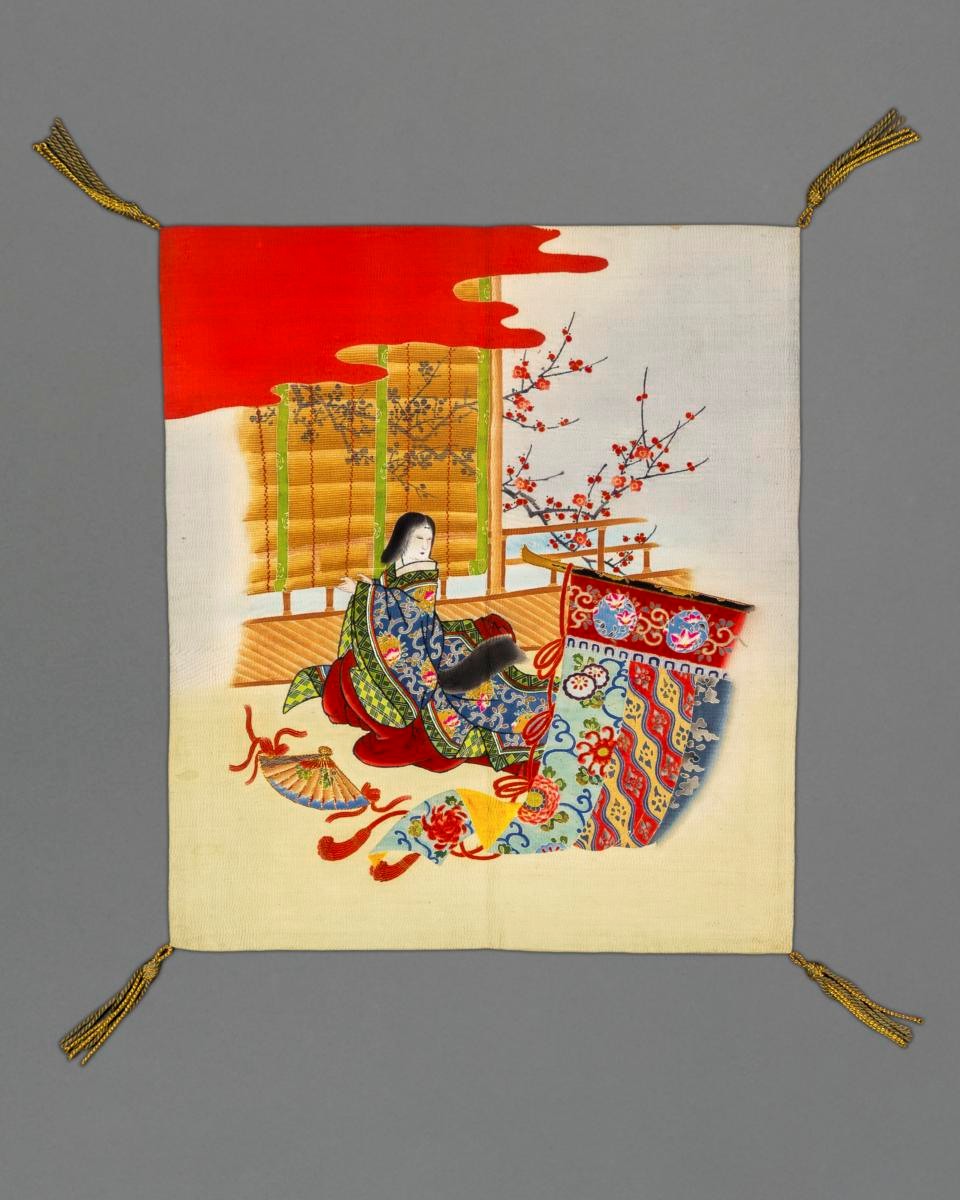

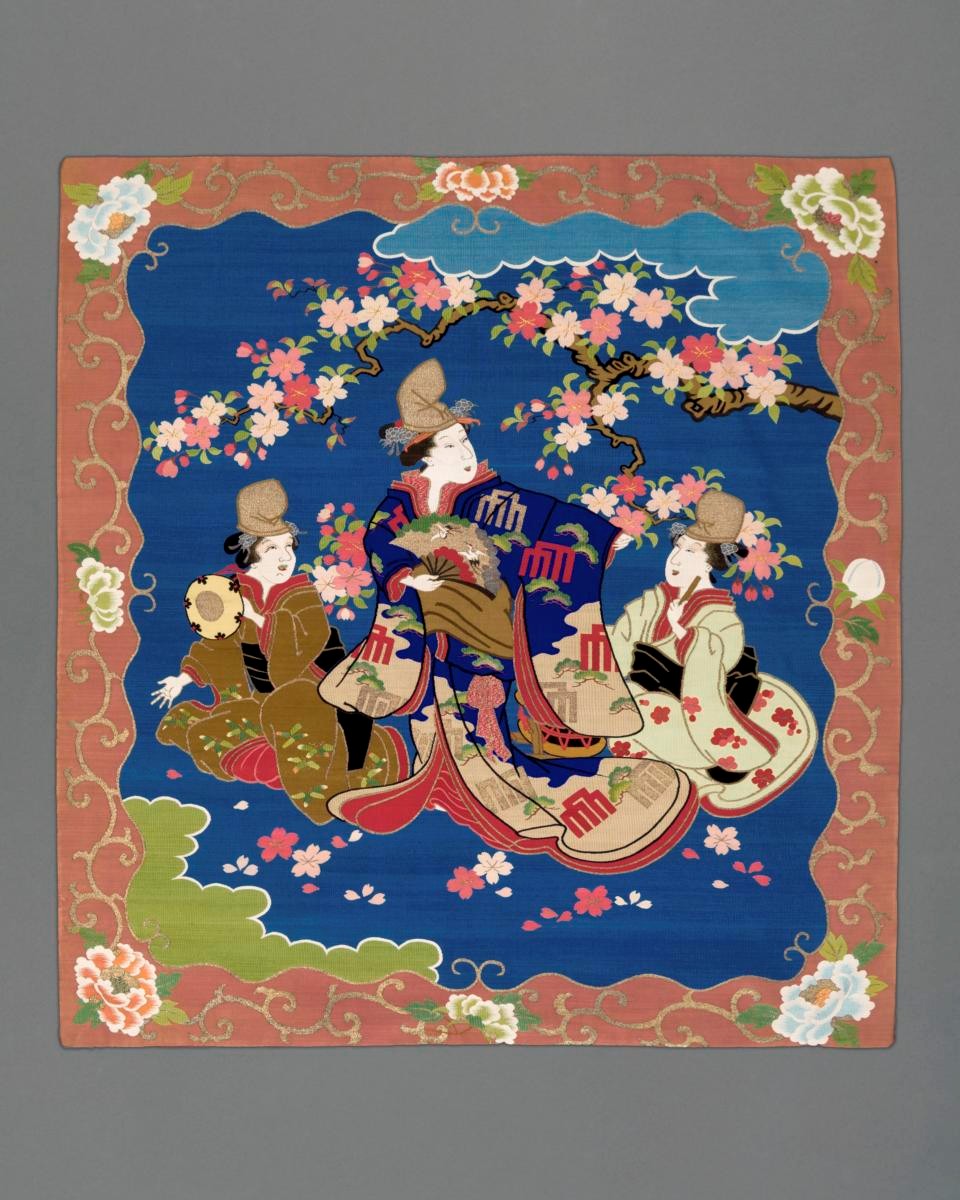
In Japan, the practice of formally presenting gifts with silk covers called fukusa began in the Edo period (1603–1868), around the late 17th or early 18th century. These covers were draped or folded over gifts for a variety of occasions, from seasonal festivities to important personal events. Each fukusa was carefully chosen to evoke the circumstance of the gift and to convey a message to the recipient through its design. Fukusa designs often feature symbolic objects or allusions to Japanese and Chinese stories. The choice of fukusa also reflected the giver’s wealth, taste, erudition, and cultural sensitivity. The use of fukusa continued into the early 20th century. Today, they are used in parts of Japan for weddings and corporate events. The introduction of larger looms and mechanised attachments from Europe in the late nineteenth century revitalised Japanese tapestry weaving. Kawashima Jinbei II (1853–1910) of the Kawashima Textile Company is widely credited for reinvigorating the industry in Kyoto. Following a visit to the Gobelins Manufactory around 1886, he was determined to produce high quality, ornamental silk weavings that could rival or surpass those made in France. He focused on increasing the size and pictorial complexity of tapestries. Although the maker of this textile is not known, its sheer size reflects these developments. Over the course of the Meiji period, the width of looms gradually increased from 60 centimetres to 18 metres by 1903, which allowed multiple weavers to work on a single piece at the same time. This piece may have been made as a pictorial hanging, intended to take advantage of the higher prices and prestige accorded to objects designated as “fine” art (bijutsu) at world’s fairs. By the late 1870s and 1880s the increased awareness of Western concepts of fine and decorative art encouraged makers and dealers to frame their silk hangings with Western-style wood frames or contrasting borders as a means of enhancing their value.