
Object size: 93.0 x 79.0 cm (with tassels)
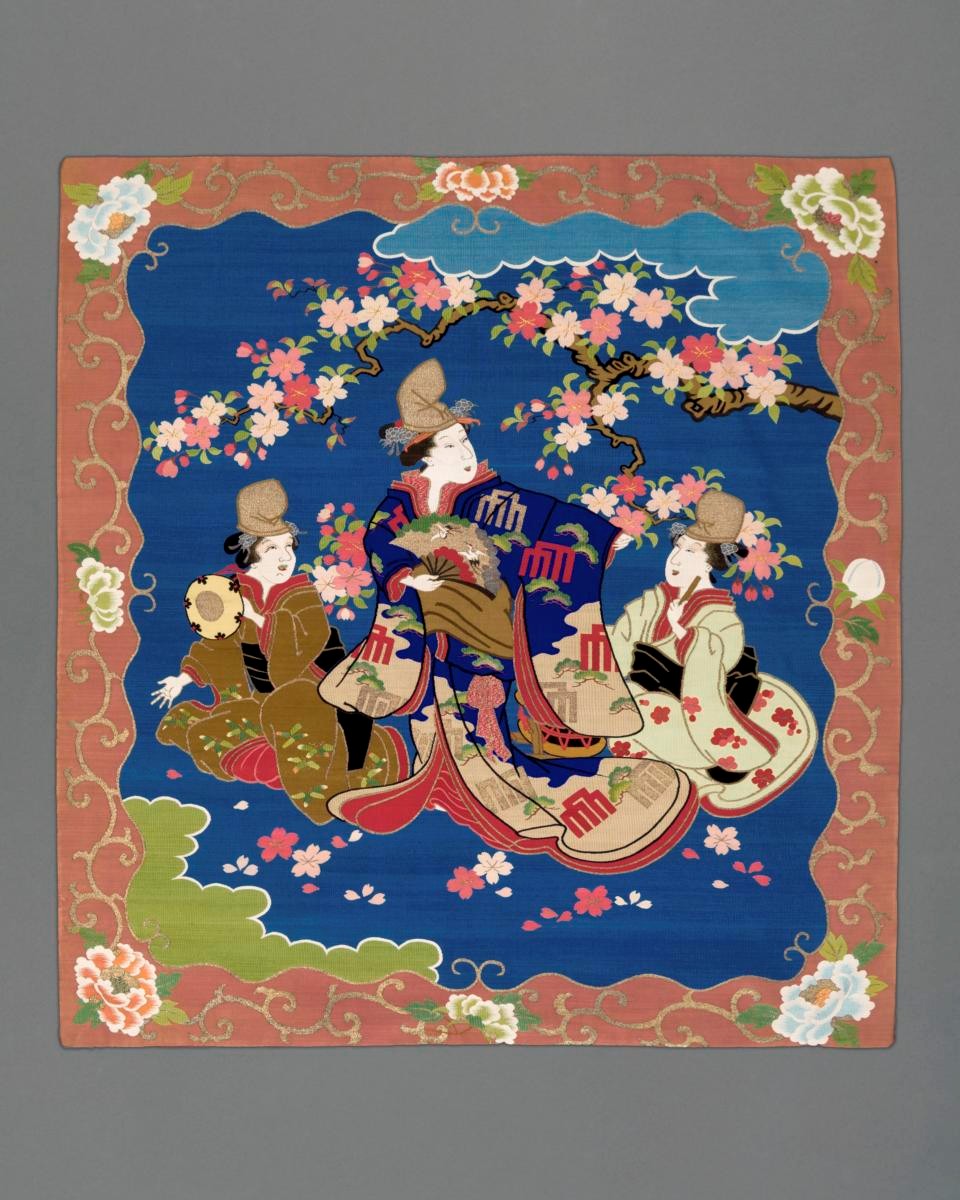
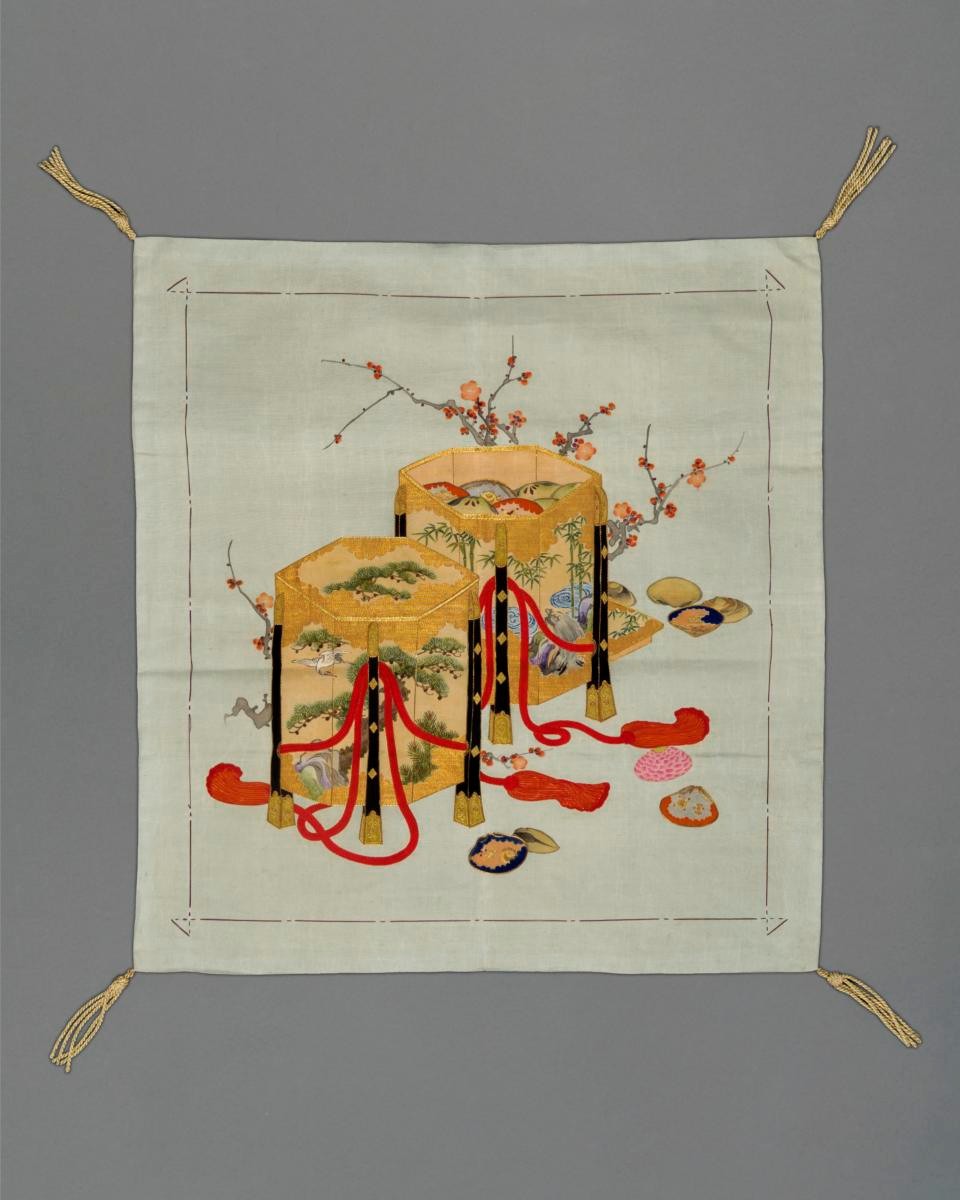
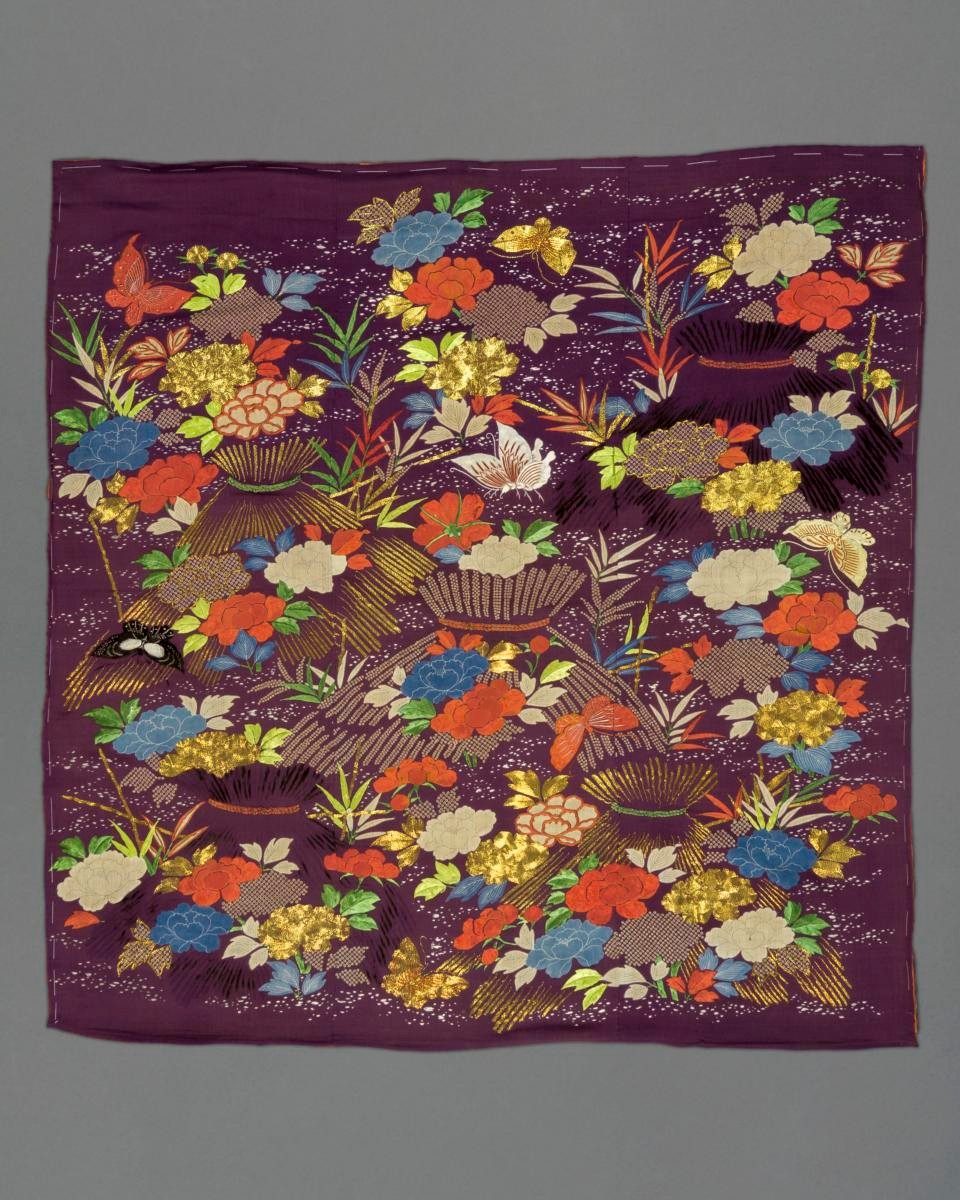
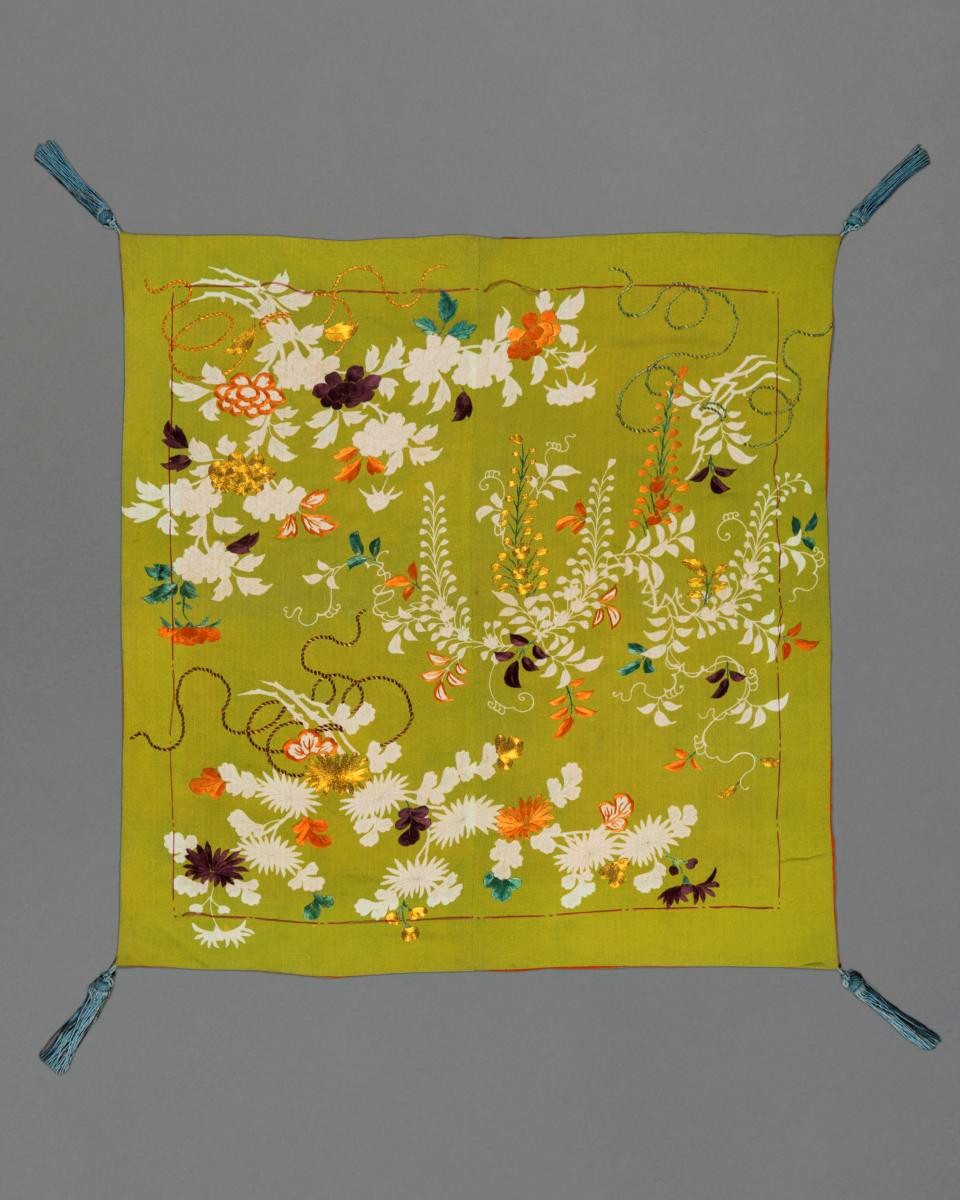
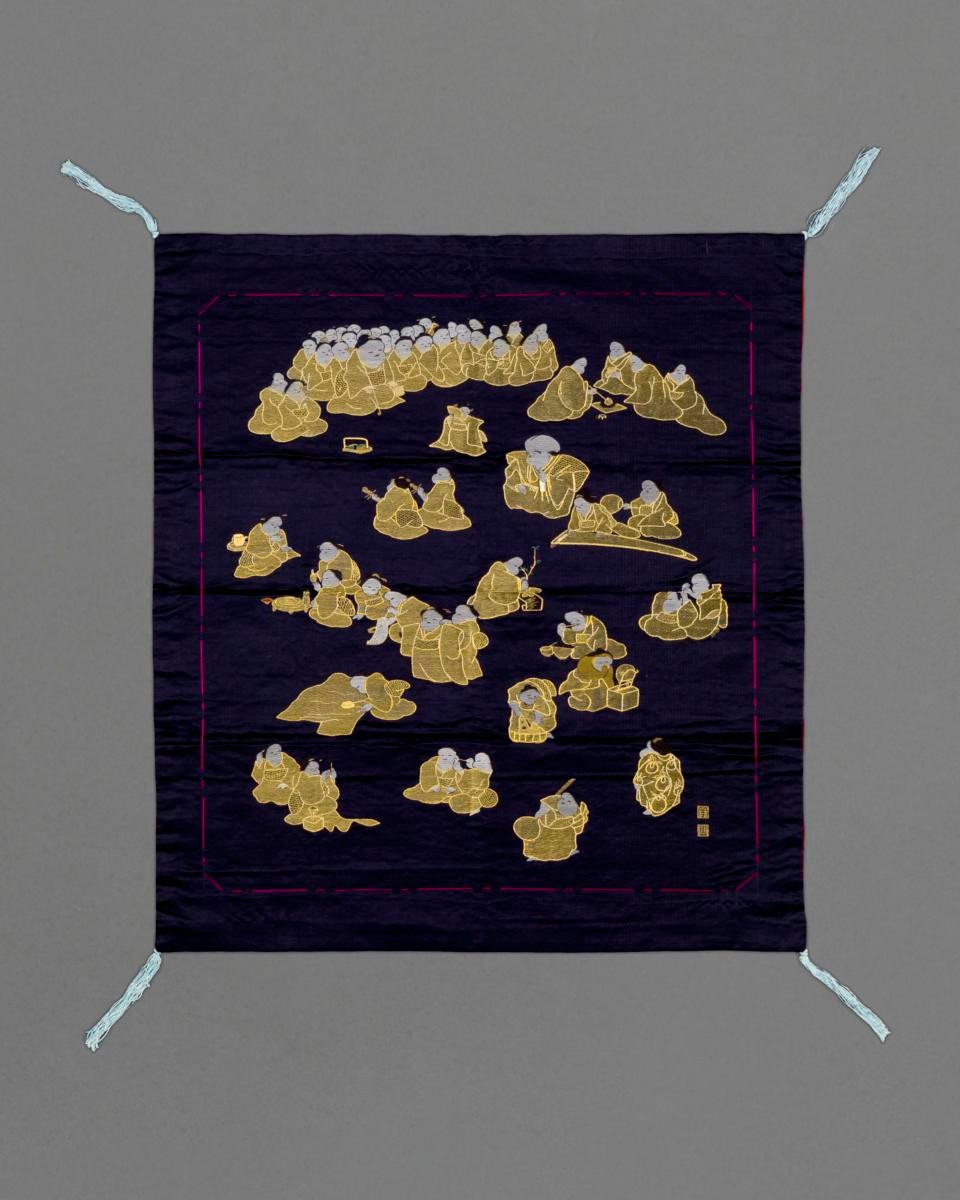
In Japan, the practice of formally presenting gifts with silk covers called fukusa began in the Edo period (1603–1868), around the late 17th or early 18th century. These covers were draped or folded over gifts for a variety of occasions, from seasonal festivities to important personal events. Each fukusa was carefully chosen to evoke the circumstance of the gift and to convey a message to the recipient through its design. Fukusa designs often feature symbolic objects or allusions to Japanese and Chinese stories. The choice of fukusa also reflected the giver’s wealth, taste, erudition, and cultural sensitivity. The use of fukusa continued into the early 20th century. Today, they are used in parts of Japan for weddings and corporate events. This rare depiction of women at leisure is a stark contrast to the male-dominated themes on many fukusa. A comprehensive array of activities considered acceptable for highborn ladies is shown, including playing music, applying cosmetics, dancing, tending to bonsai, ironing, calligraphy, and enjoying tea. The subject matter suggests that this may have been given to a girl or young woman, perhaps as a representation of feminine self-cultivation, comportment, and virtue. The image echoes a genre of prints known as monozukushi – exhaustive depictions of things, animals, or people in various iterations. The rounded, abbreviated forms of the figures also evoke the simple style of paintings that accompanied haikus. The seal at the lower right corner is probably associated with the woodblock artist, since embroiderers seldom signed their work.