
Object size: 104.5 x 78.0 cm (with tassels)
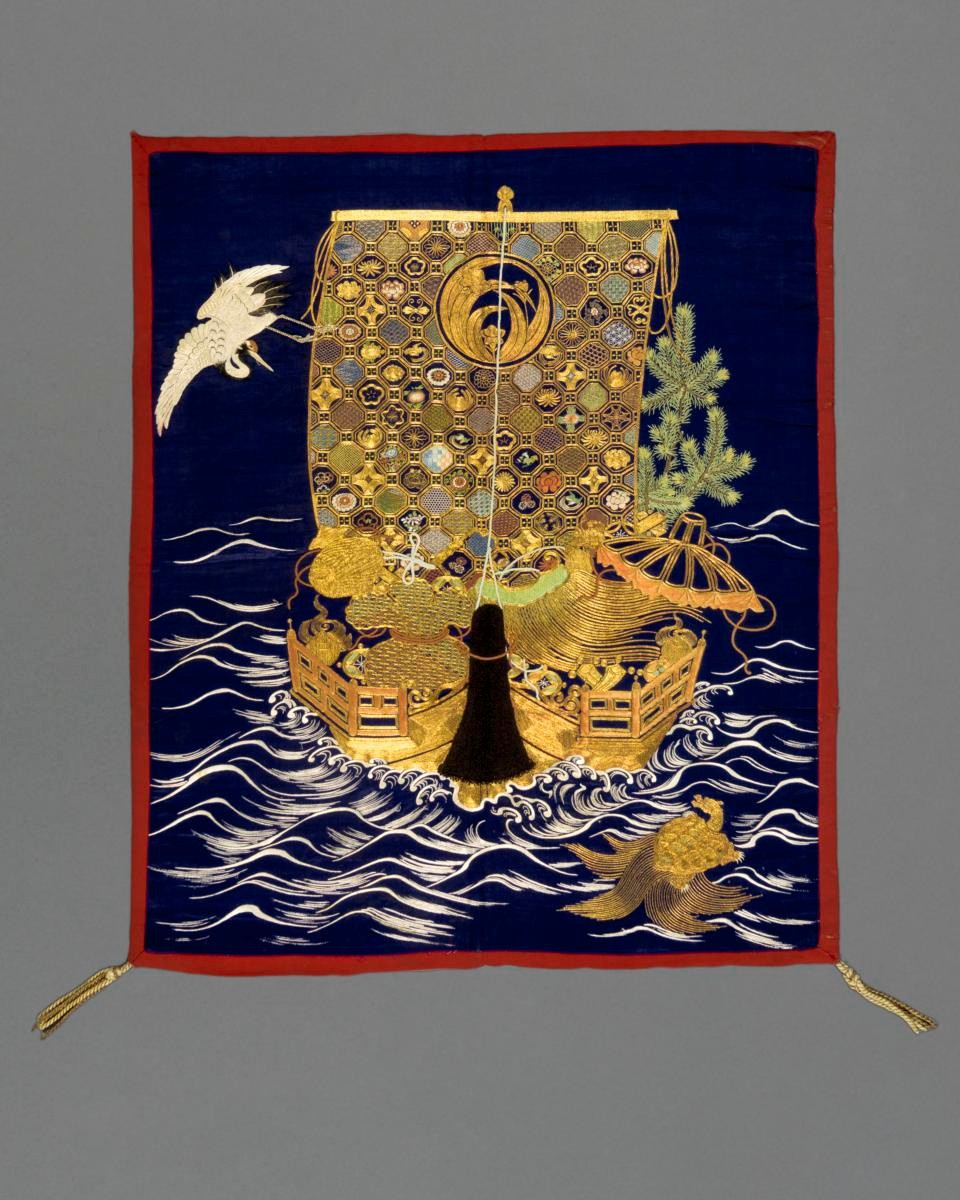
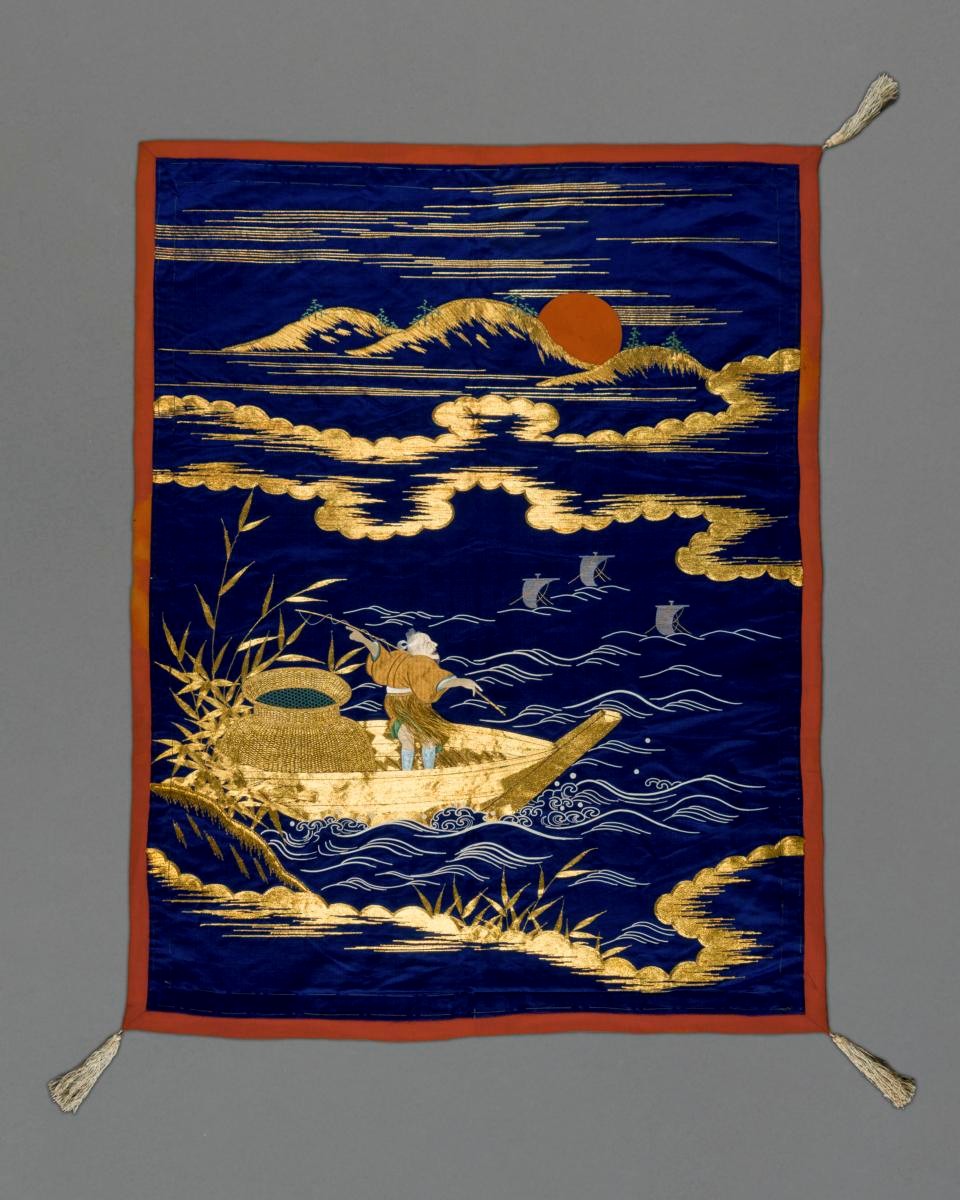
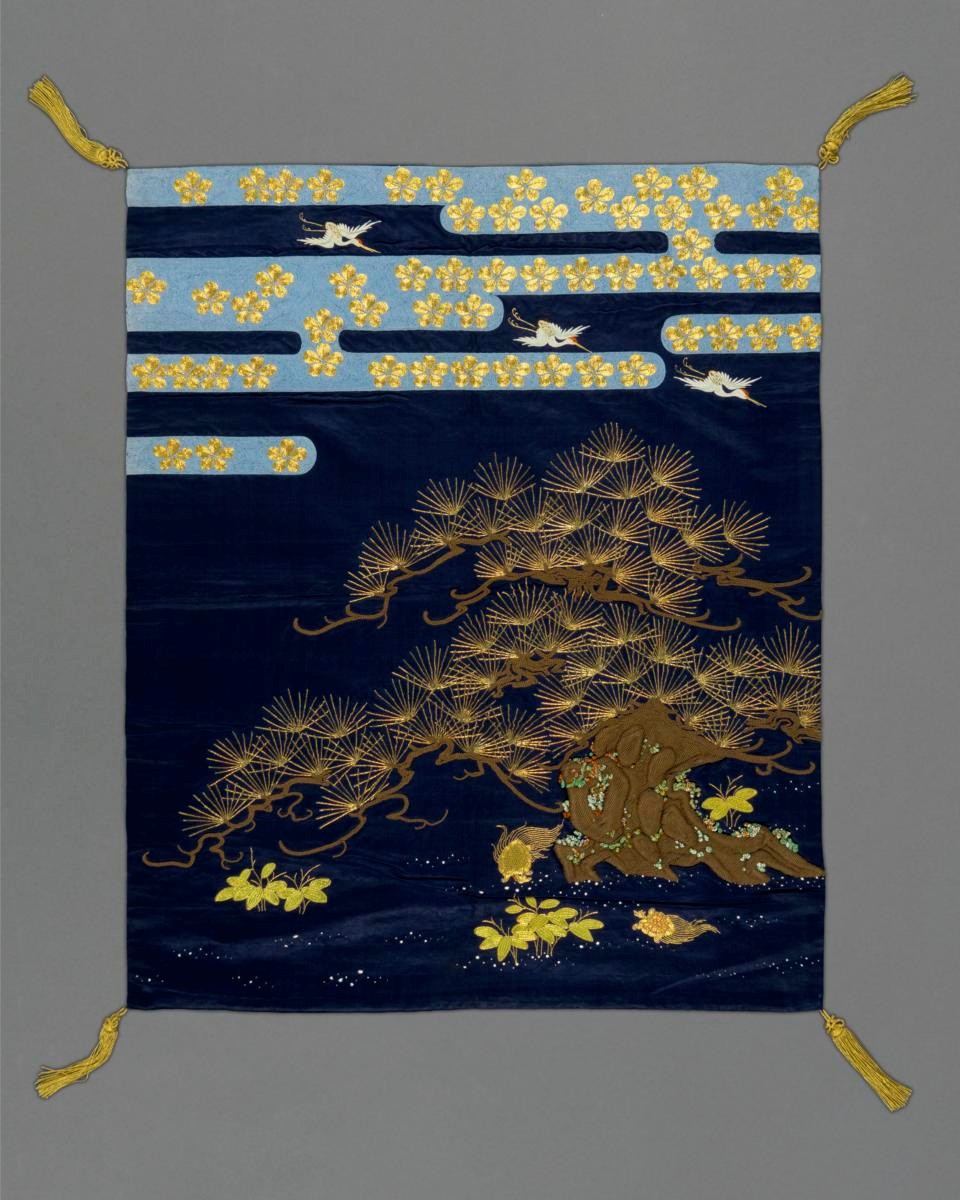
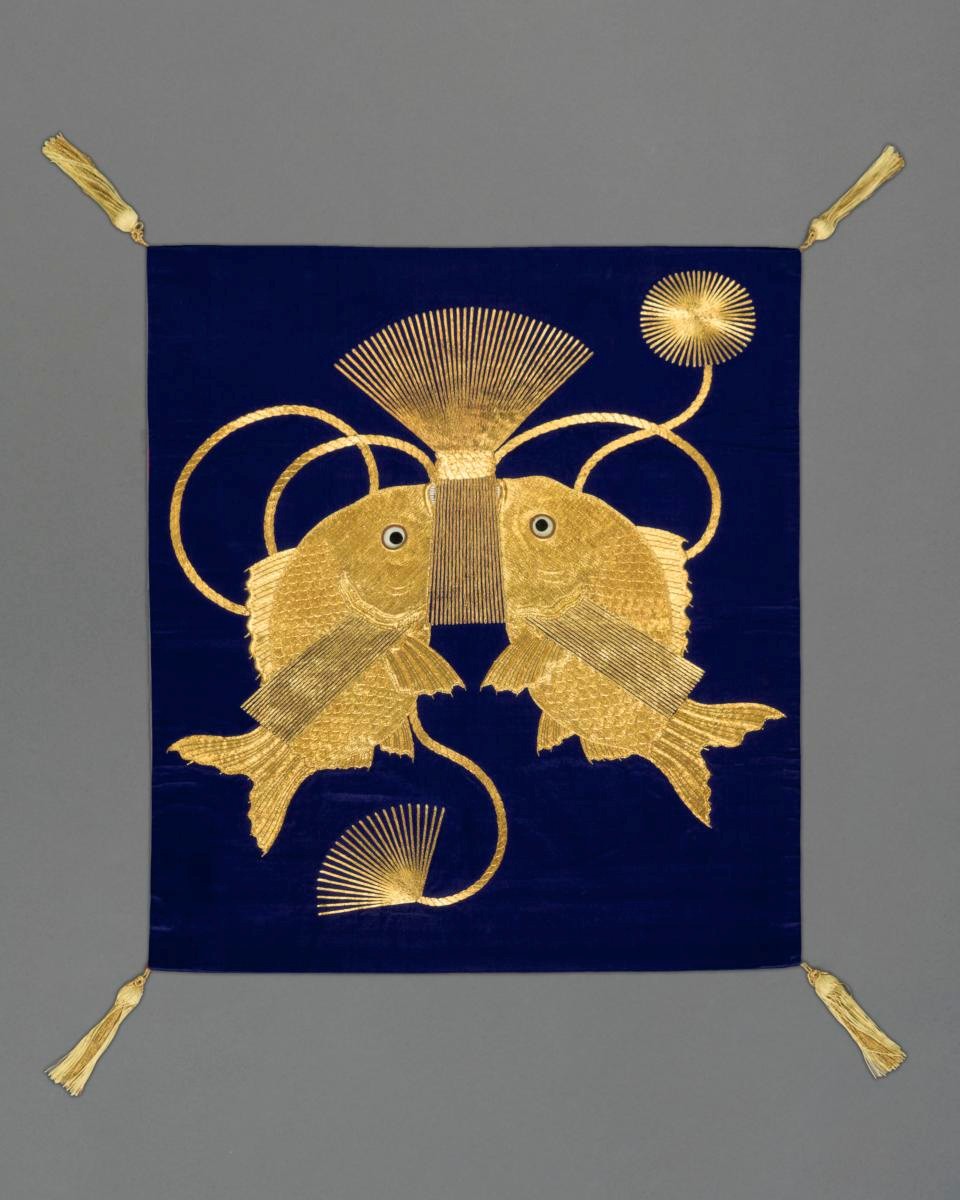
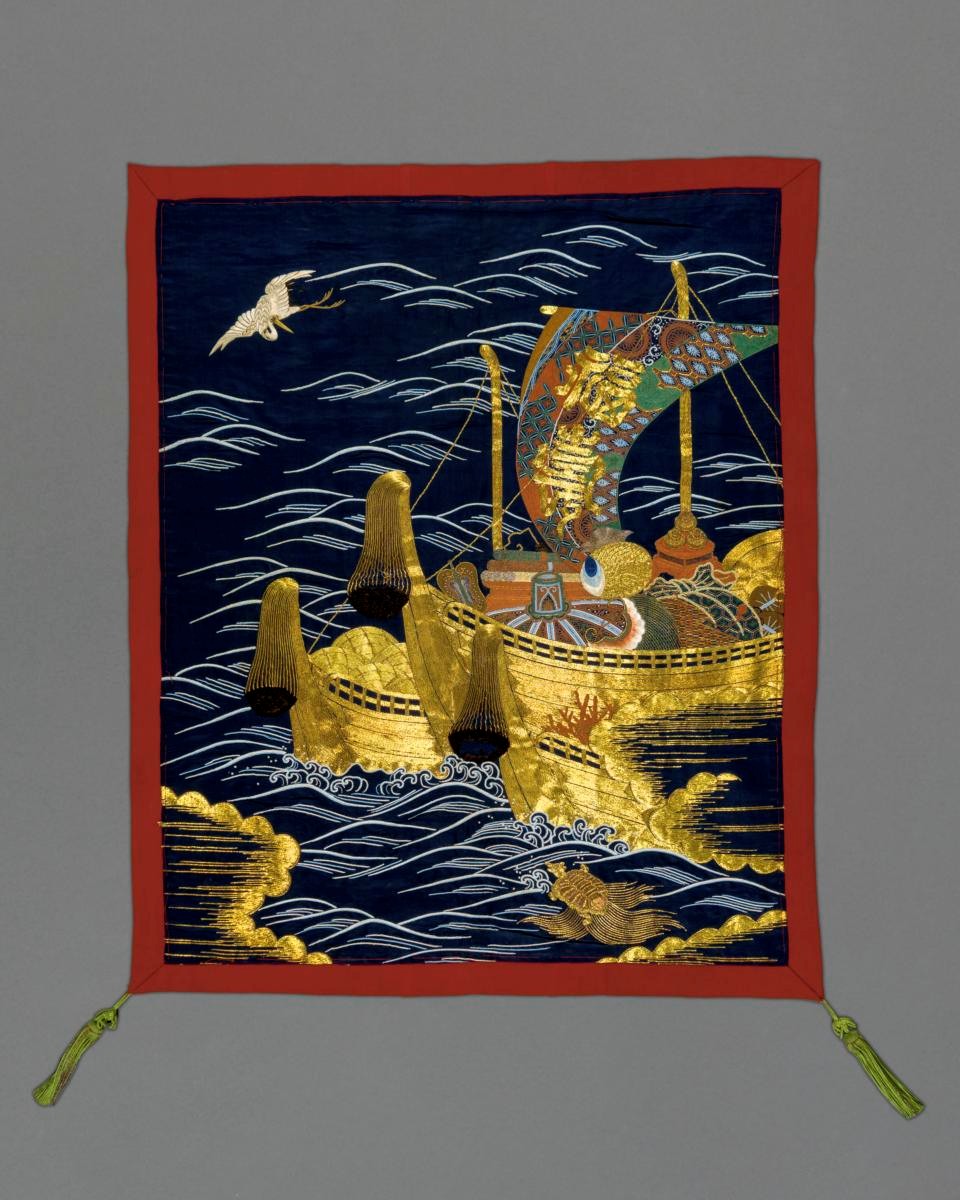
In Japan, the practice of formally presenting gifts with silk covers called fukusa began in the Edo period (1603–1868), around the late 17th or early 18th century. These covers were draped or folded over gifts for a variety of occasions, from seasonal festivities to important personal events. Each fukusa was carefully chosen to evoke the circumstance of the gift and to convey a message to the recipient through its design. Fukusa designs often feature symbolic objects or allusions to Japanese and Chinese stories. The choice of fukusa also reflected the giver’s wealth, taste, erudition, and cultural sensitivity. The use of fukusa continued into the early 20th century. Today, they are used in parts of Japan for weddings and corporate events.In the Edo period pictures of treasure ships were placed under pillows in the New Year to induce auspicious good dreams. Gold, silver, rolls of brocade, and other precious cargo fill these treasure ships (Takarabune). Ships in profile always sail from right to left (west to east) to signal the arrival of good fortune. In traditional Chinese and Japanese cosmology, south is at the top, north at the bottom, west to the right and east to the left. On this fukusa, auspicious characters adorn the sails, bringing further blessings of longevity and prosperity. A crane and turtle welcome the boat. They recall the proverb, “The crane lives for a thousand years, and the turtle for ten thousand years”. Together with the pine branch, they symbolise longevity.