
Object size: 95.0 x 85.0 cm (with tassels)
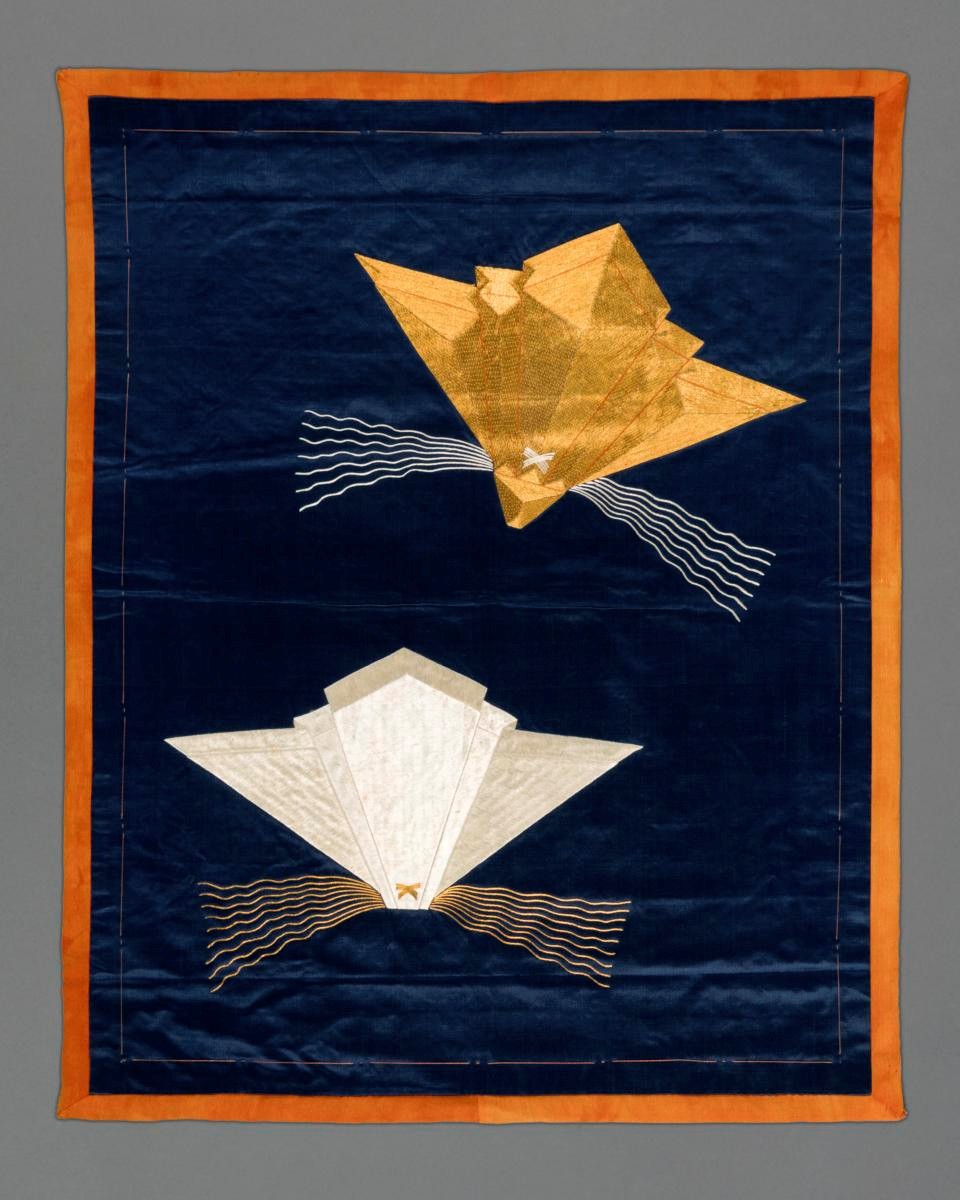
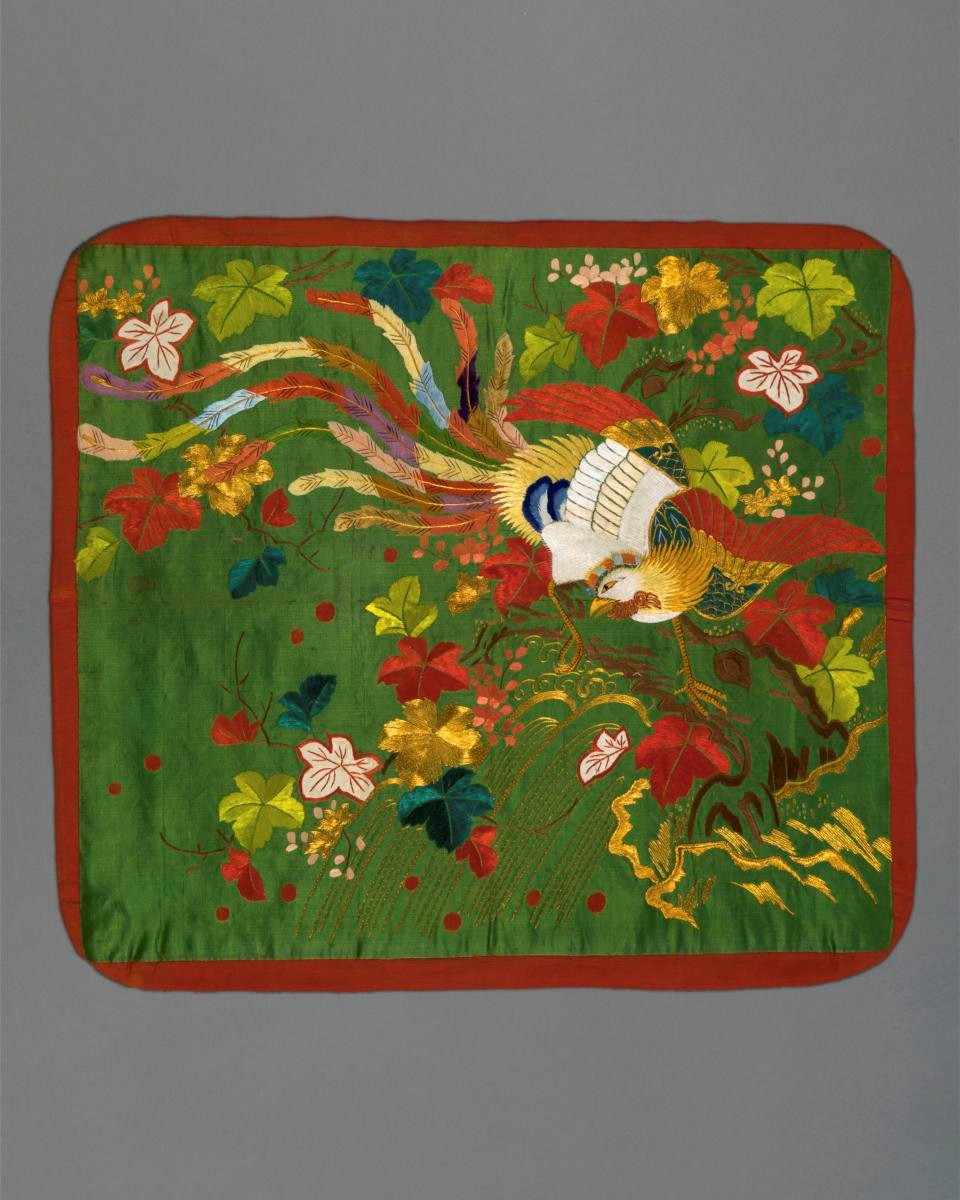
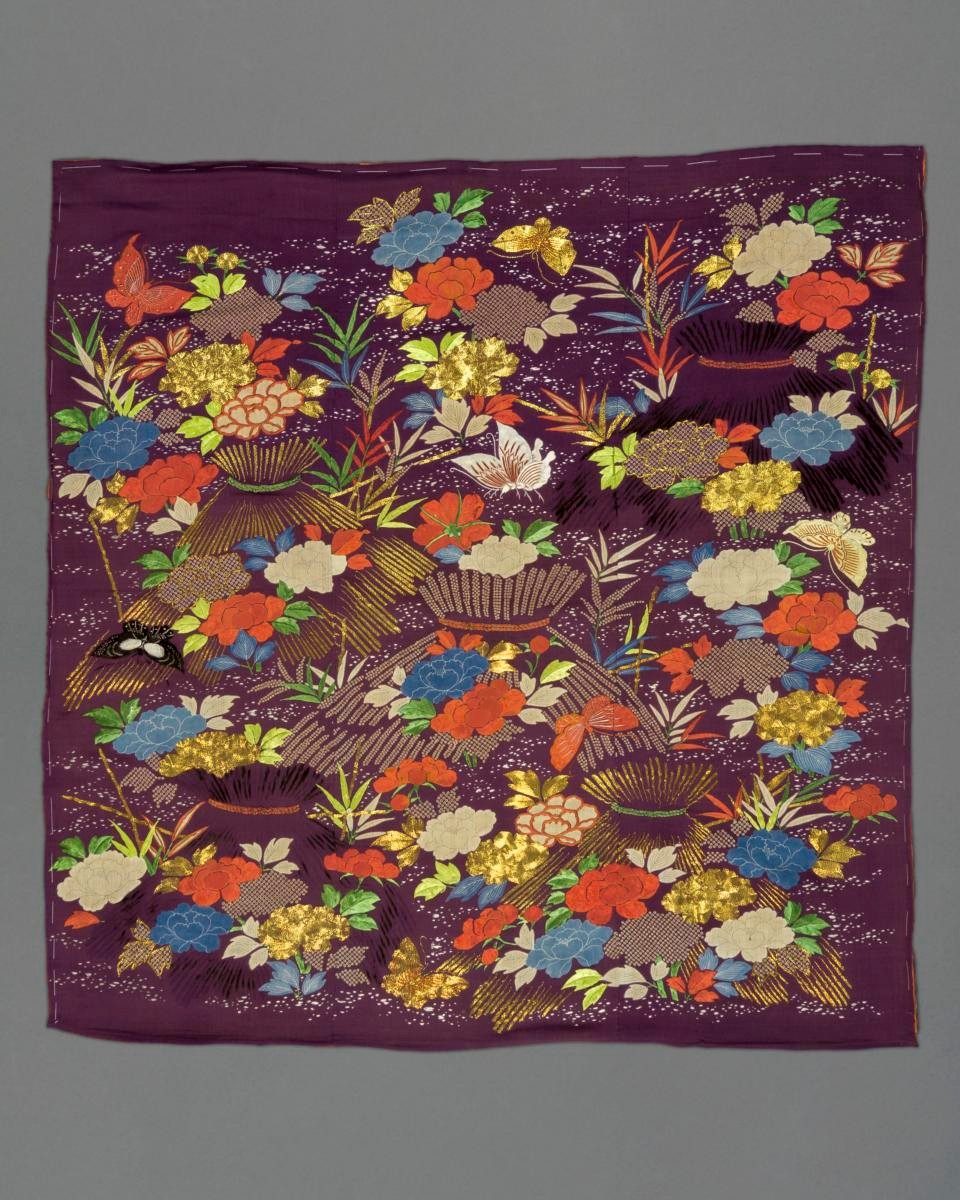
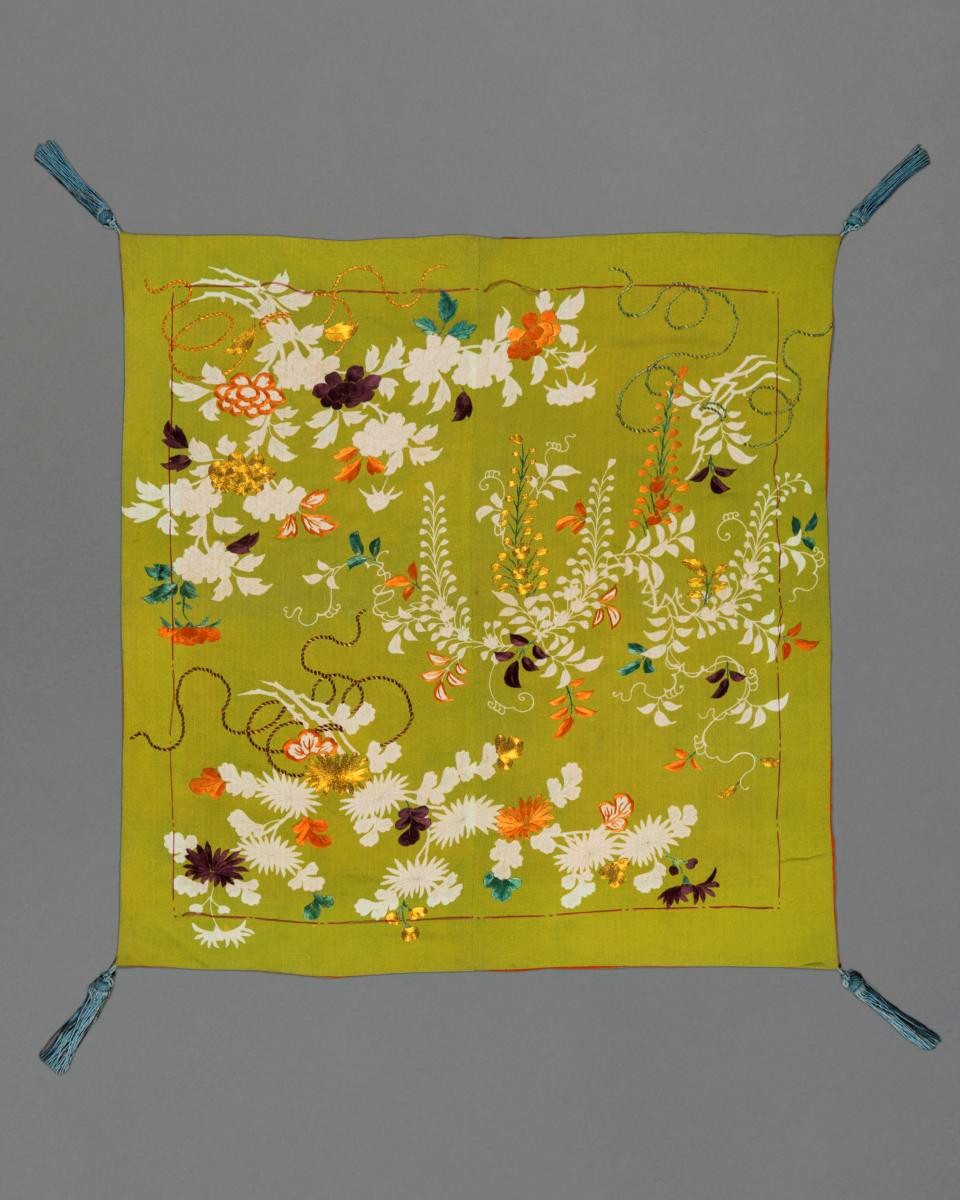
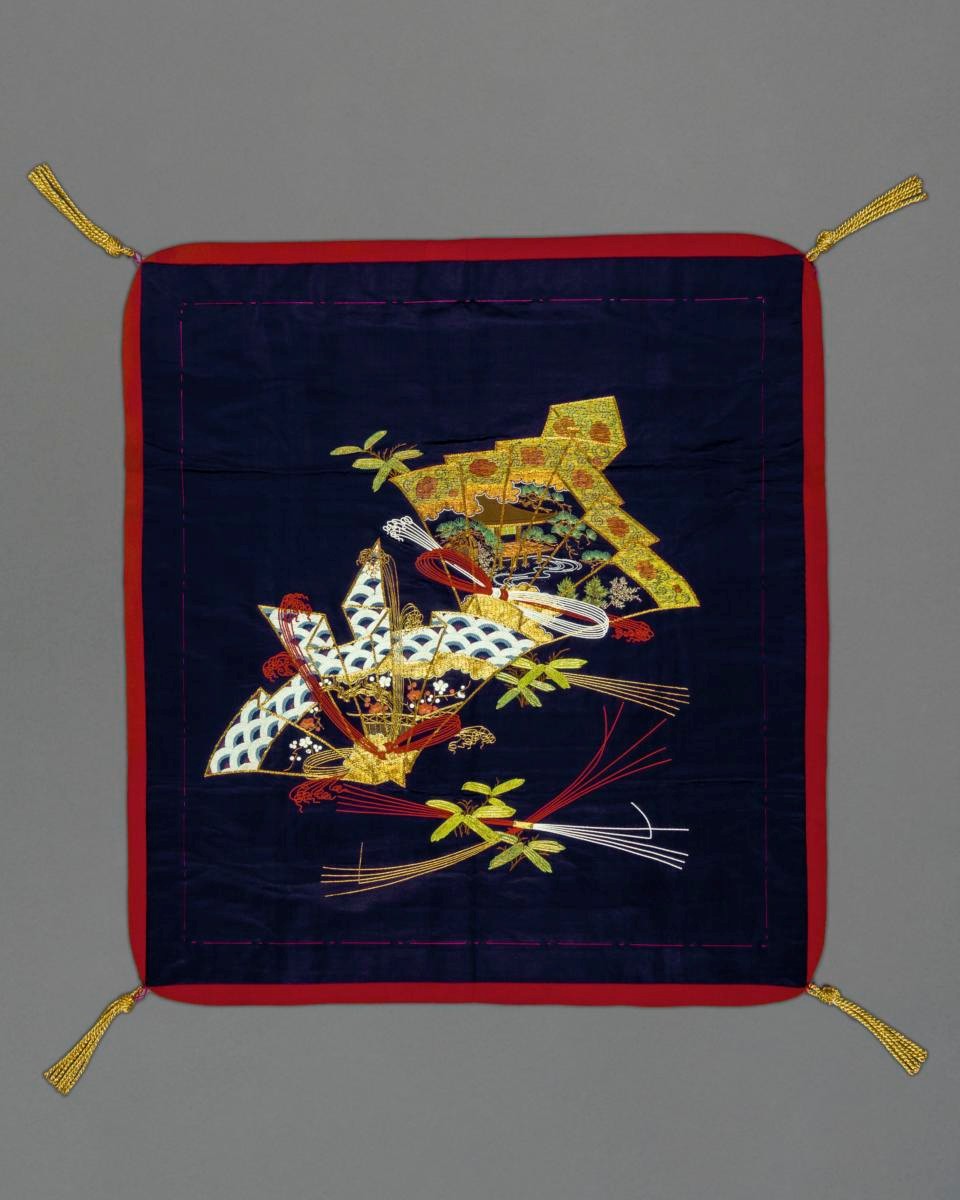
In Japan, the practice of formally presenting gifts with silk covers called fukusa began in the Edo period (1603–1868), around the late 17th or early 18th century. These covers were draped or folded over gifts for a variety of occasions, from seasonal festivities to important personal events. Each fukusa was carefully chosen to evoke the circumstance of the gift and to convey a message to the recipient through its design. Fukusa designs often feature symbolic objects or allusions to Japanese and Chinese stories. The choice of fukusa also reflected the giver’s wealth, taste, erudition, and cultural sensitivity. The use of fukusa continued into the early 20th century. Today, they are used in parts of Japan for weddings and corporate events. Starting in the sixteenth century, pairs of origami butterflies known as chōhanagata (“butterflies in the shape of a flower”) were placed on sake bottles at weddings. One represents a male and the other a female. They were tied with decorative cords used for wrapping presents, arranged to look like antennae. Together they represent conjugal harmony and two families coming together. Fukusa with this design were used in matrimonial ceremonies such as exchanging fans, the engagement, receiving the bride’s dowry, the return gift, the bride’s first visit to her family after the wedding, and the party to introduce the groom.