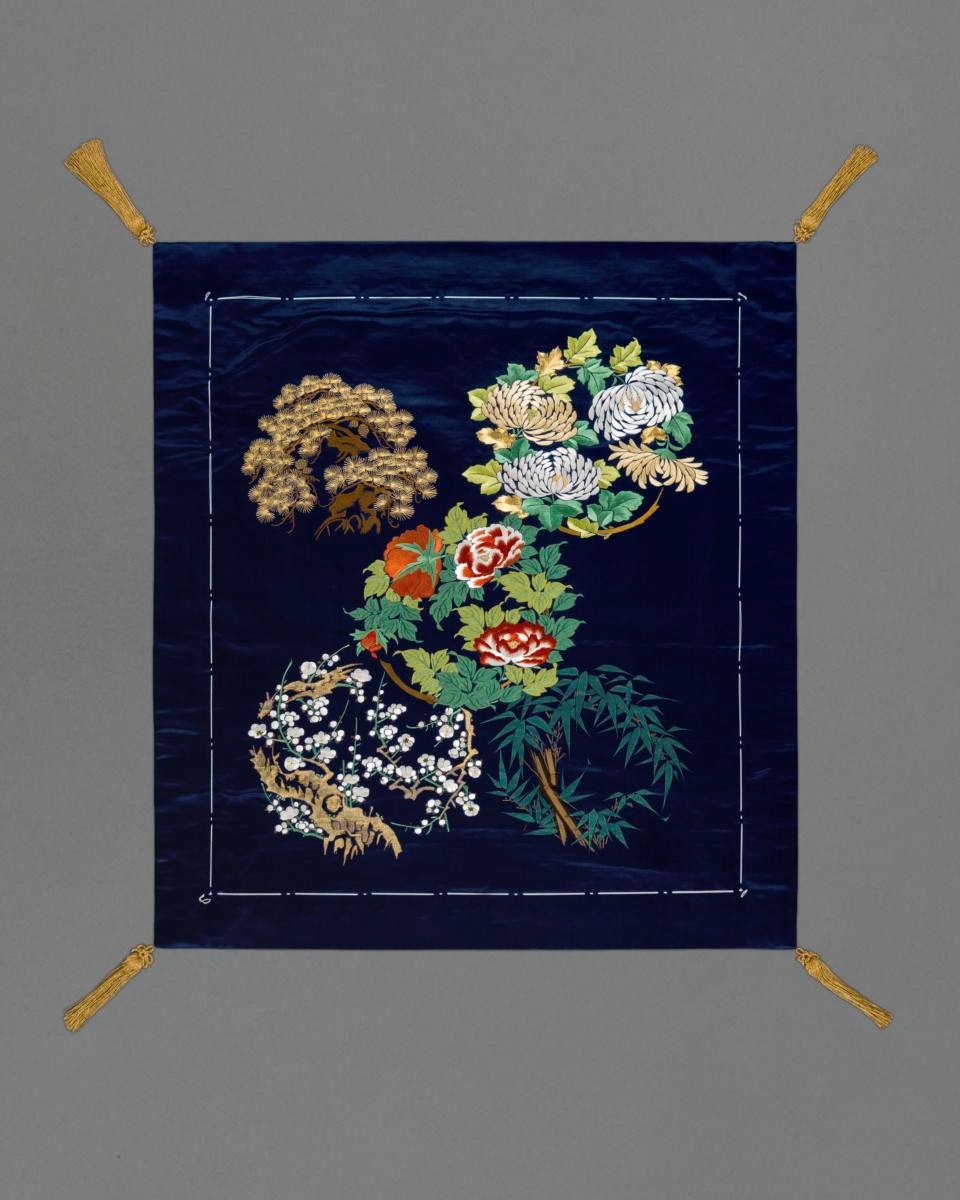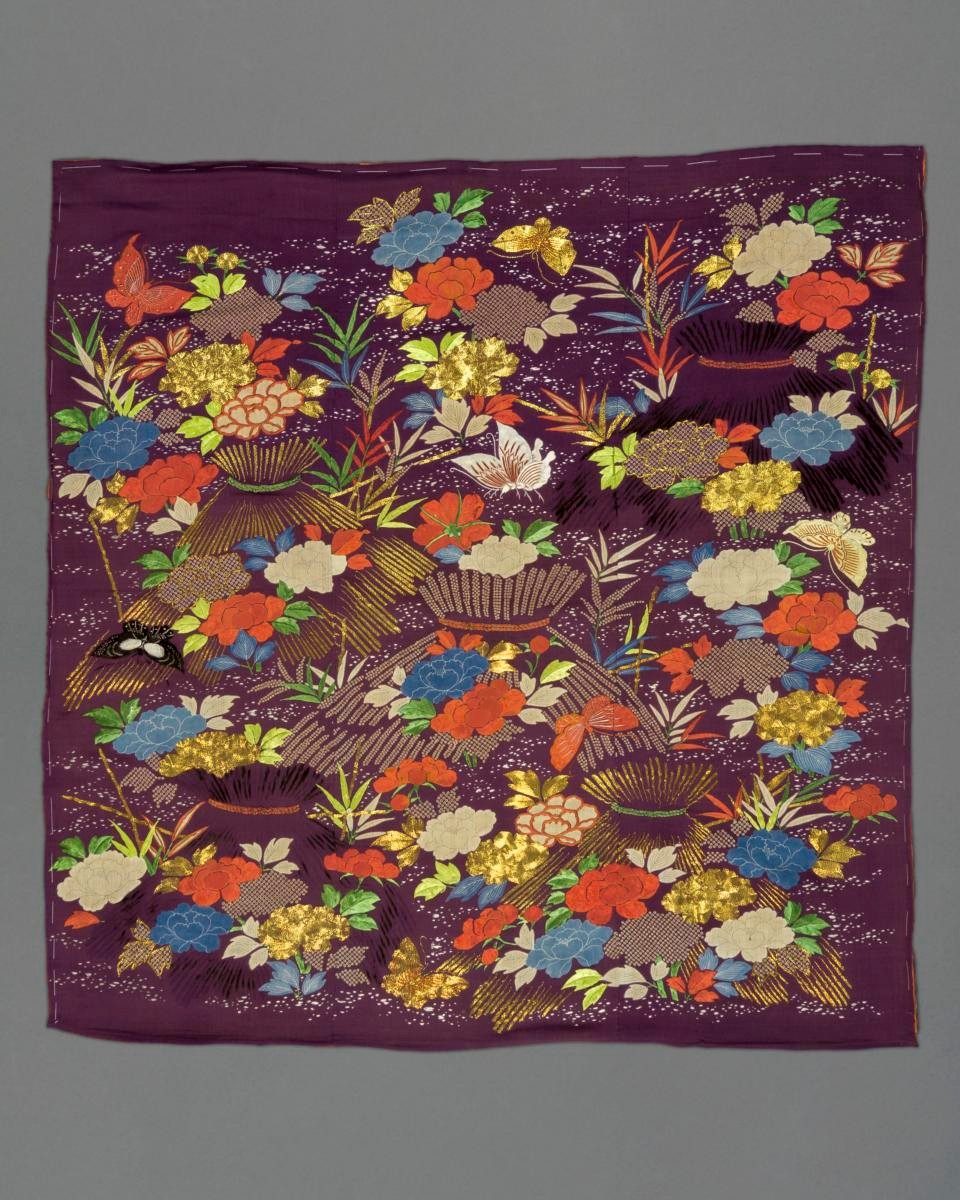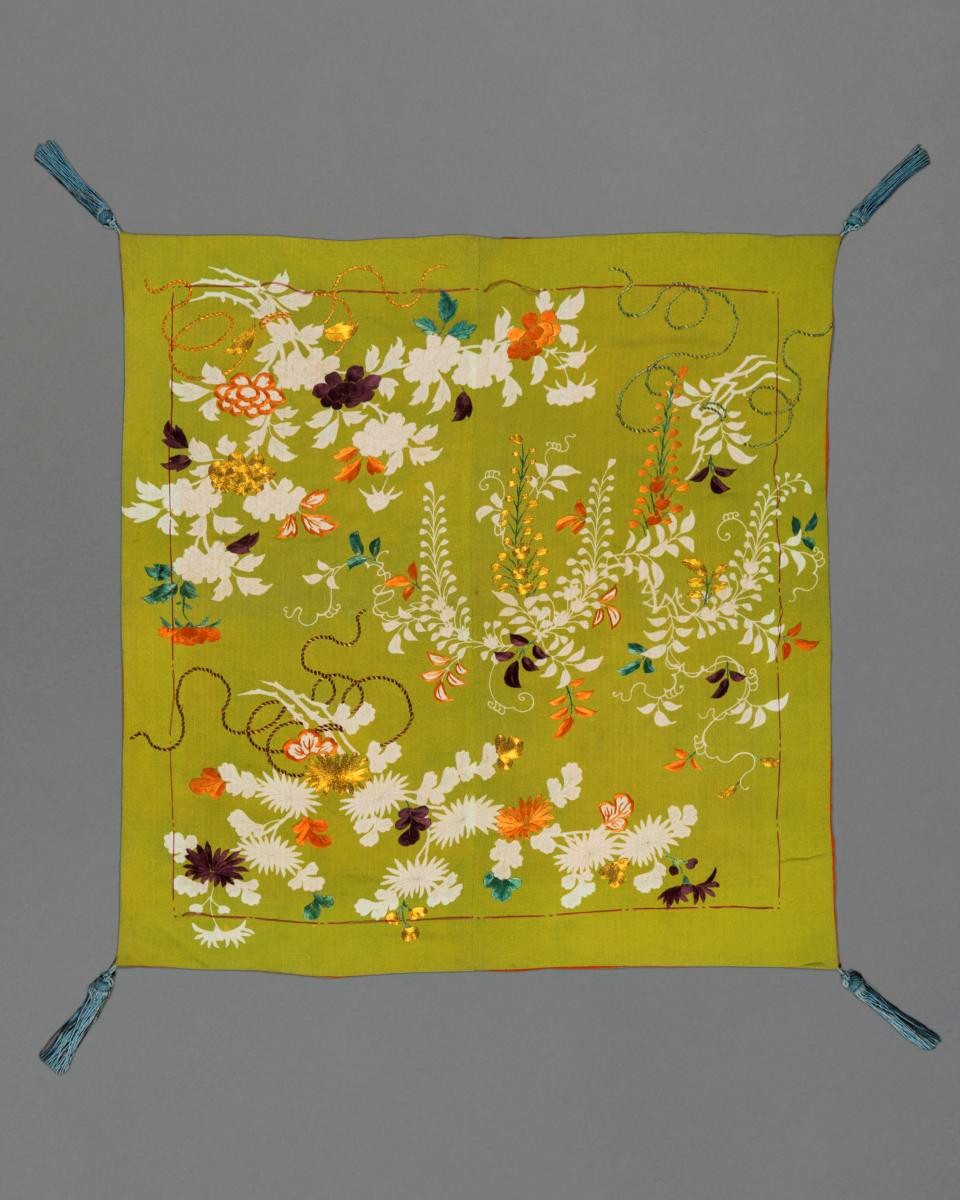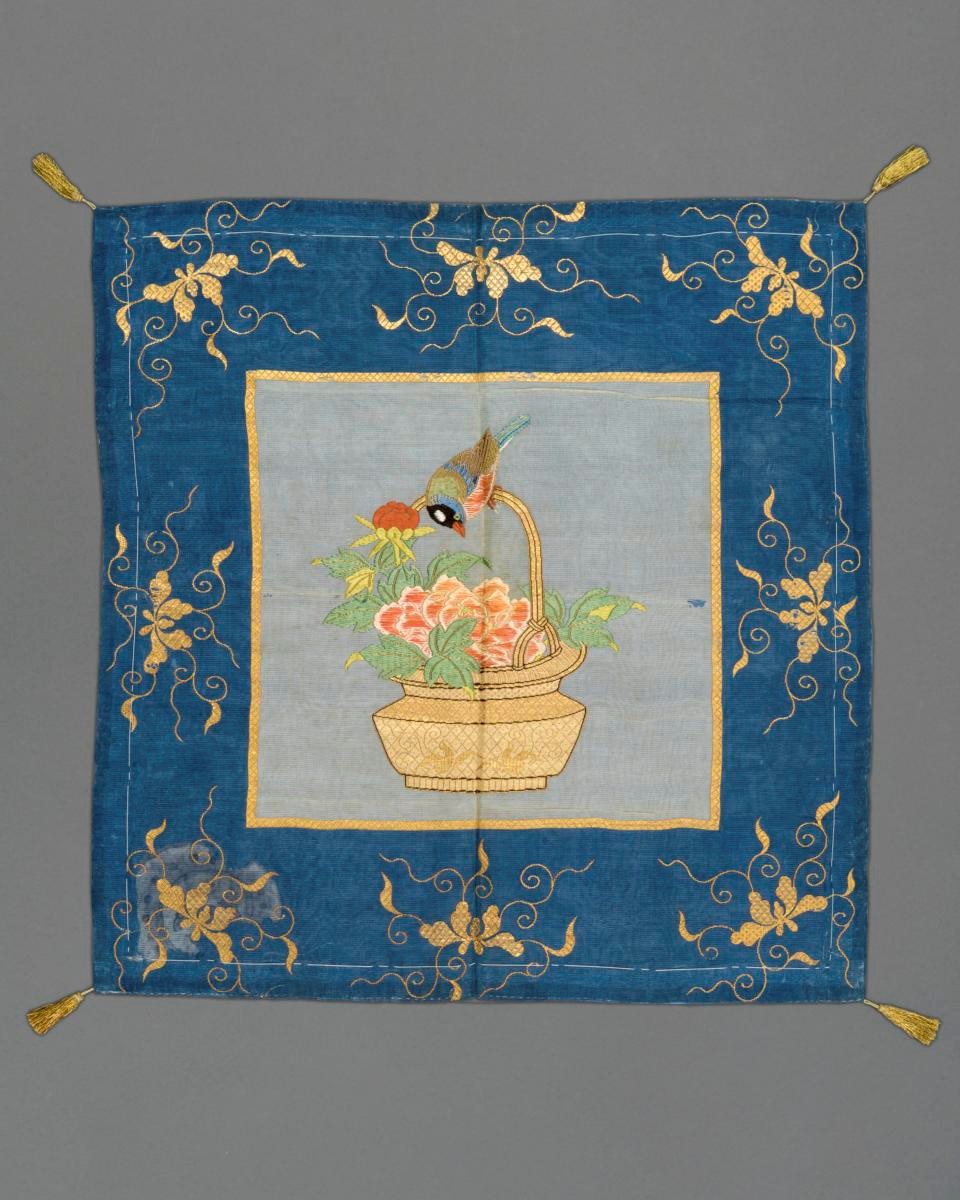

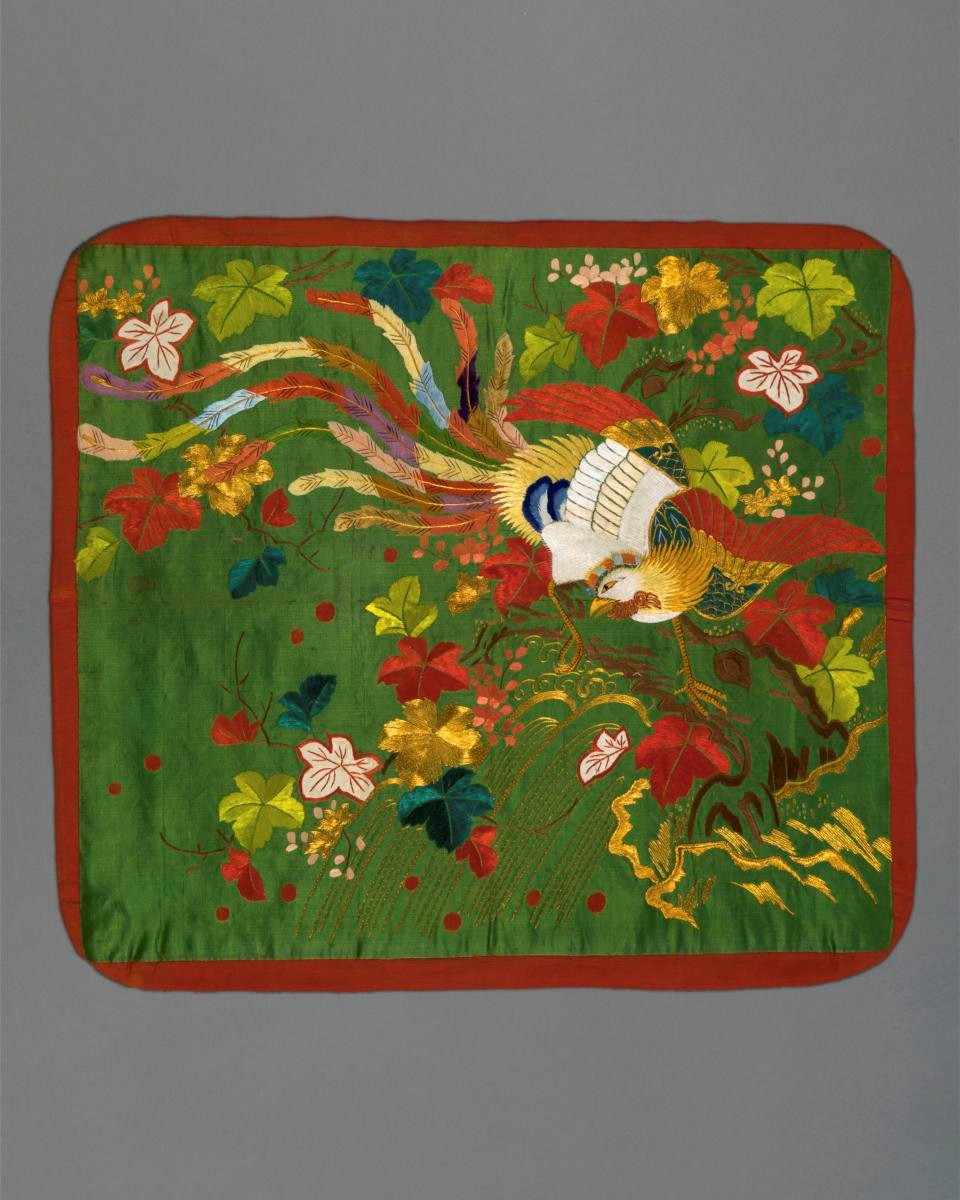
In Japan, the practice of formally presenting gifts with silk covers called fukusa began in the Edo period (1603–1868), around the late 17th or early 18th century. These covers were draped or folded over gifts for a variety of occasions, from seasonal festivities to important personal events. Each fukusa was carefully chosen to evoke the circumstance of the gift and to convey a message to the recipient through its design. Fukusa designs often feature symbolic objects or allusions to Japanese and Chinese stories. The choice of fukusa also reflected the giver’s wealth, taste, erudition, and cultural sensitivity. The use of fukusa continued into the early 20th century. Today, they are used in parts of Japan for weddings and corporate events. The padded and curved borders of this fukusa recall fashions from the late eighteenth and nineteenth centuries. It is sewn in the yatsuzuma style (literally “eight tsuma”). A tsuma is created by padding and sewing together the hem of the kimono and its lining in a curve, so that a segment of the lining is revealed. The front and back of the curved lining meet to form two tsuma, so the four corners of the fukusa make eight tsuma. These borders echo the edges of kimono and frame the main pictorial design. Padded edges might have enhanced the drape of the fabric over a gift, while curved corners elegantly accentuated the contours of the falling silk.