
Image size: 23.0 x 32.5 cm
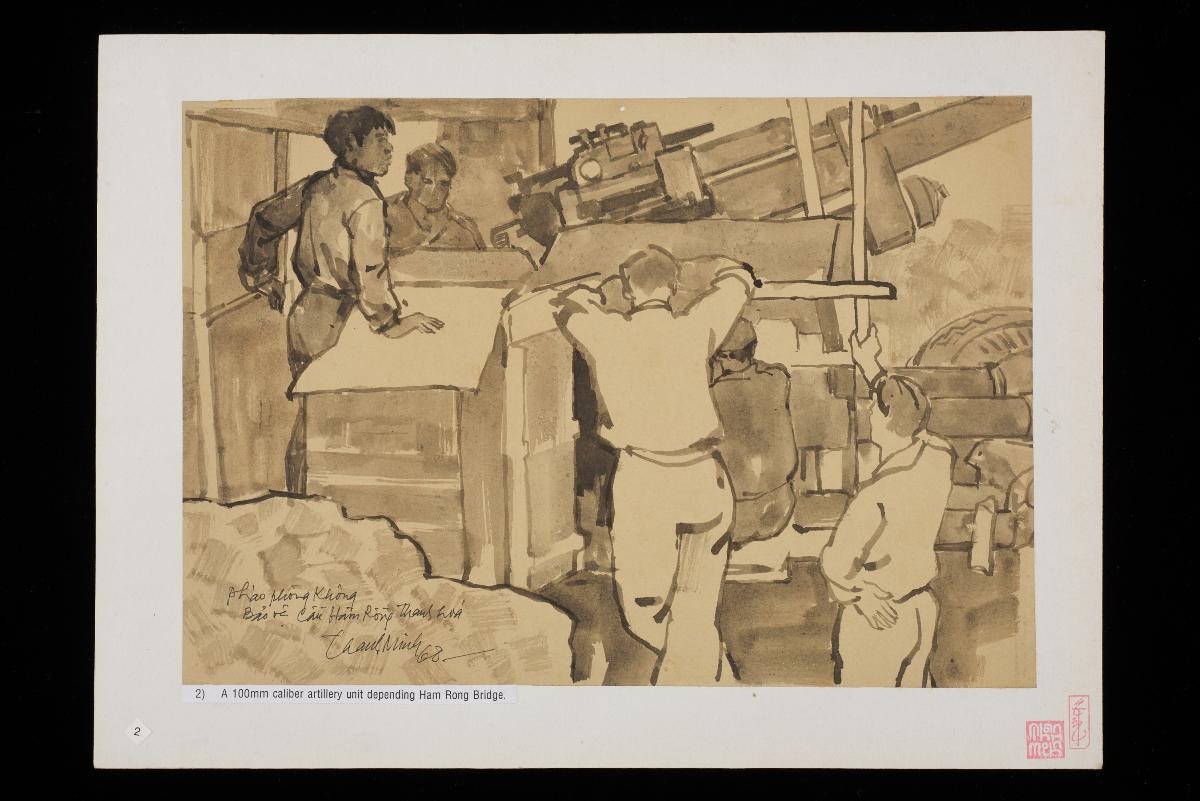
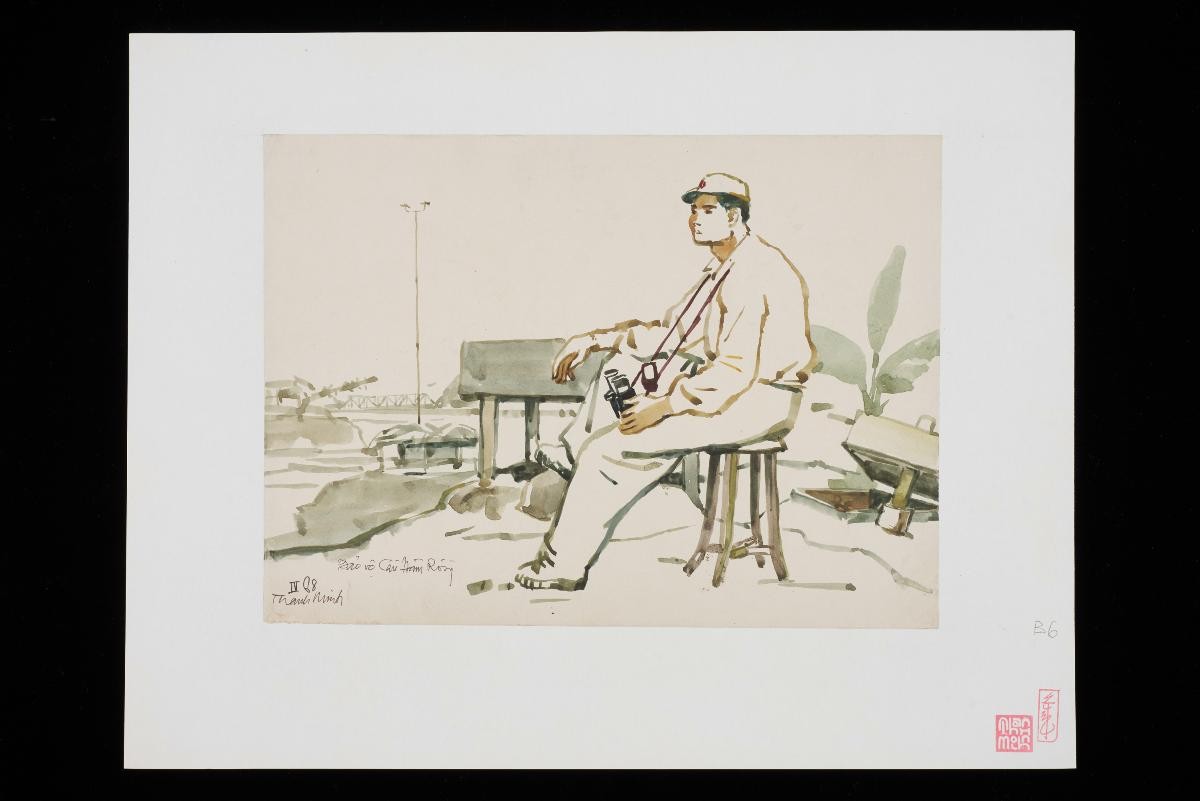
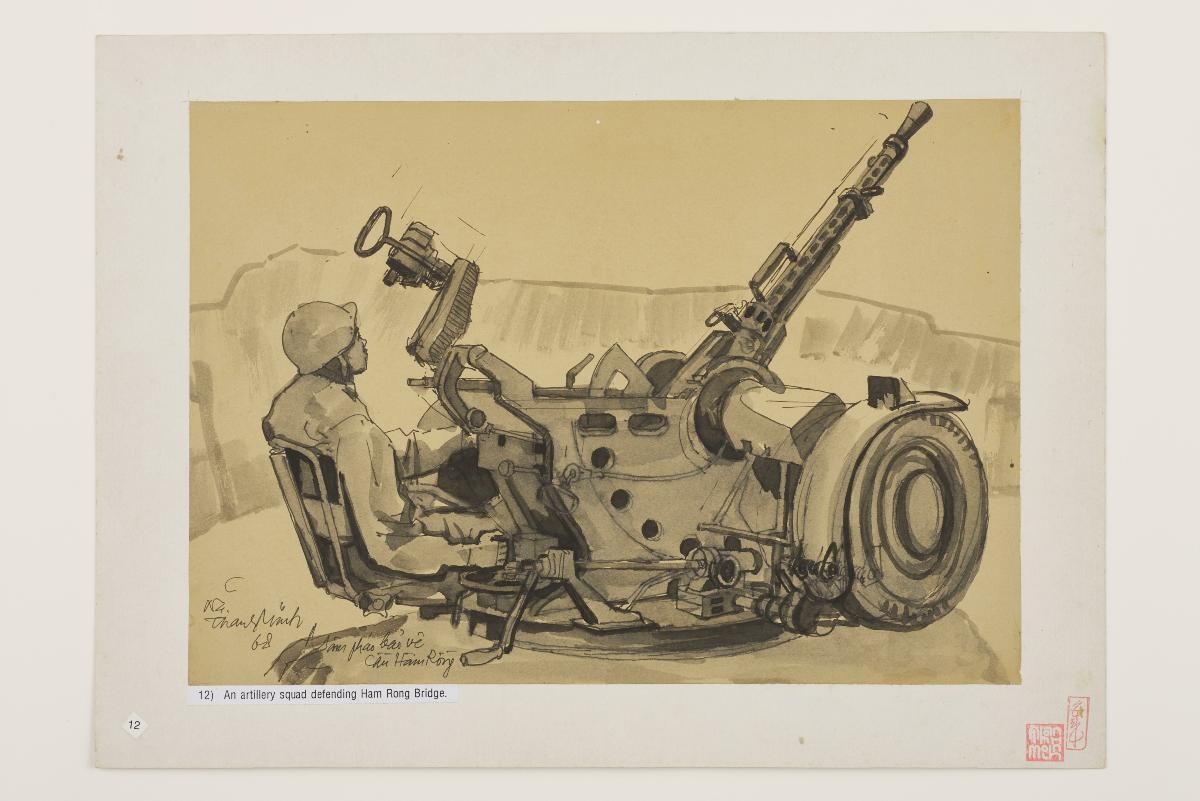
Artists from Vietnam played an integral role in both the First Indochina War (1946-1954), where they fought for independence from French colonial rule, and the Second Indochina War (commonly known as the Vietnam War or the American War), which continued until 1975. Artists documented conditions for soldiers in the battlefields, as well as for civilians in the cities and the countryside. They also created propagandistic and sometimes romantic images to articulate and advocate ideological positions. In the Democratic Republic of Vietnam (DRV or North Vietnam), artists were employed by the military or the state; sometimes their works were created as personal mementoes, and sometimes they were exhibited or published during the wartime. Nguyễn Thanh Minh was active in the Resistance in Vietnam from the age of ten. During the Second Indochina War, he drew many works in-situ,on study and field trips to different areas of Vietnam. This artwork was made when the artist spent three months at Hàm Rồng Bridge, Thanh Hoá Province, and represents a soldier operating anti-aircraft artillery to protect this strategically important site.This artwork is part of a significant collection of drawings, sketches, paintings, posters and photographs in Singapore’s National Collection. These works reflect the diversity of artistic production during the First and Second Indochina Wars among artists affiliated with the communist side of the conflict. Many key figures active as war artists during this period have also had a lasting impact on the development of modern art in Vietnam and beyond.