
A National Treasure Trove
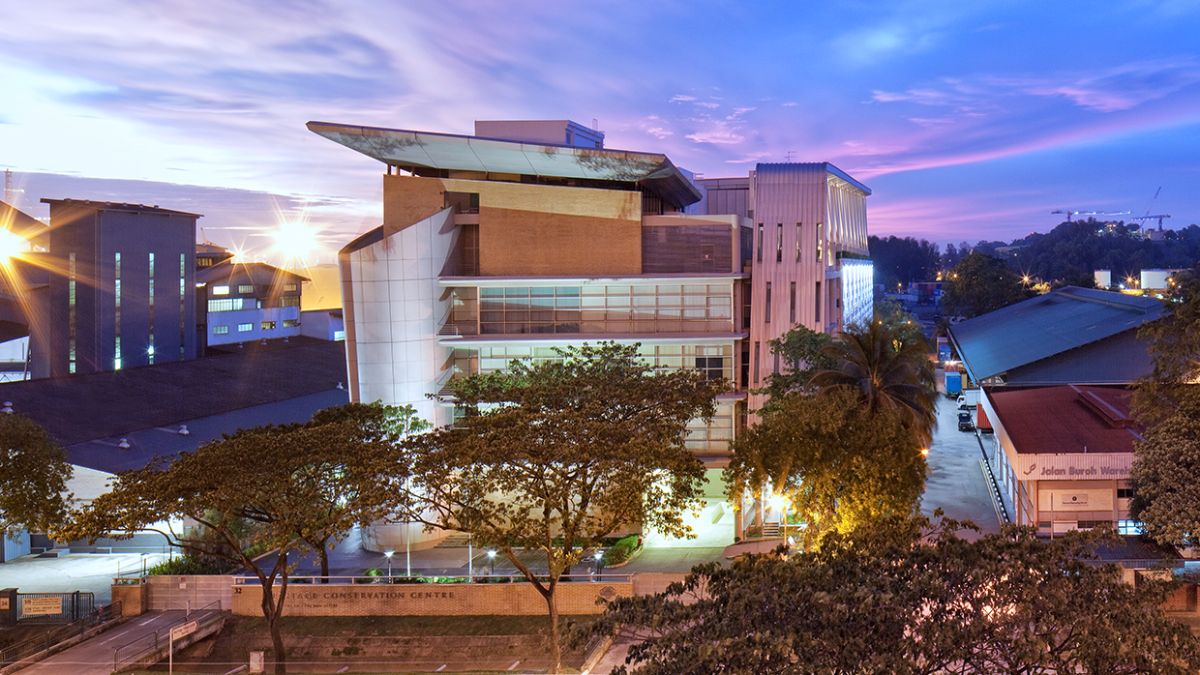
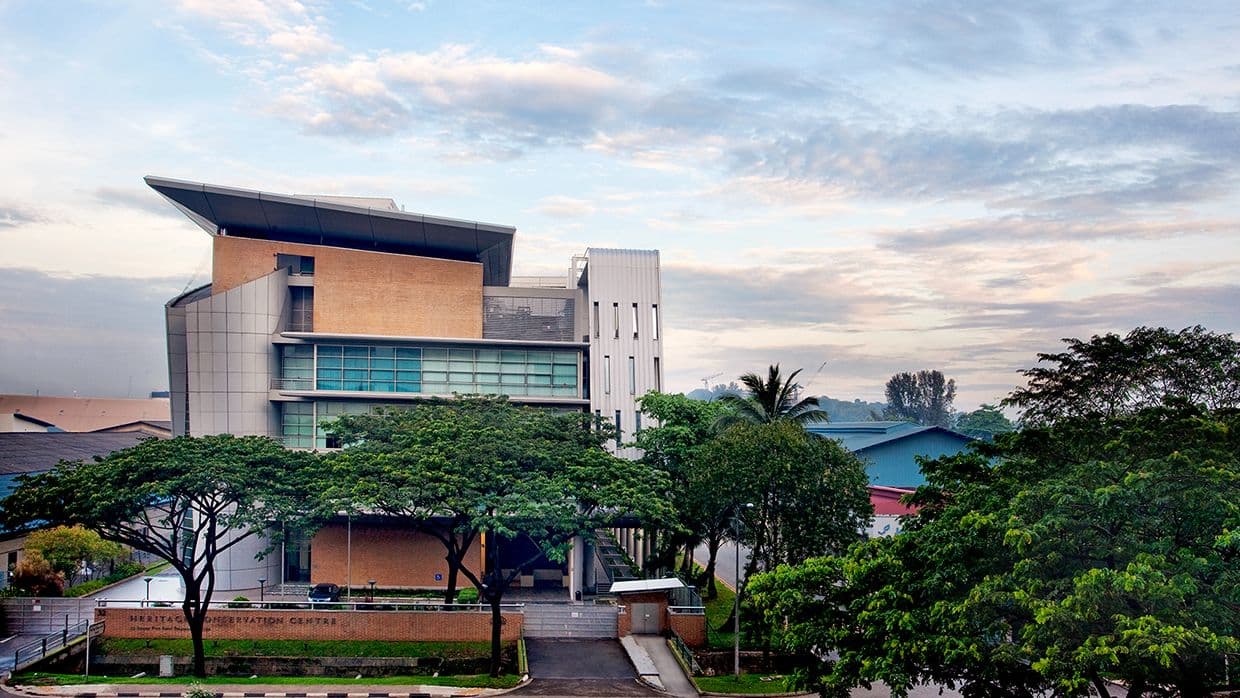
Opened in 2000, the Heritage Conservation Centre (HCC) is a purpose-built facility located on Jurong Port Road that serves as the repository of the National Collection (NC). It houses more than 250,000 artefacts and artworks in climate-controlled stores and conservation laboratories. Here, a dedicated team of cataloguers, collections managers, conservators, estates and support staff, photographers and scientists strive to manage and care for them to the highest professional standards.
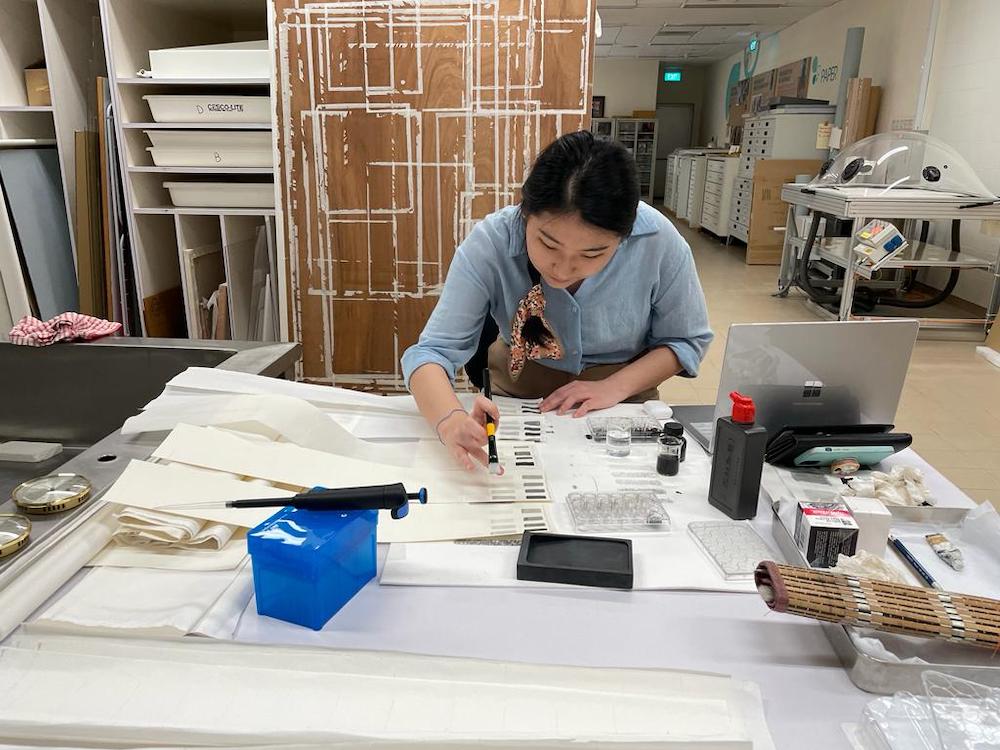
As a part of wider efforts to make the NC accessible to the public, HCC plays a crucial role in supporting museum exhibitions such as An Old New World which was at National Museum Singapore (NMS) in 2019. Here at the HCC, we document and capture important information about the artefacts and artworks and prepare them for both physical and online display. We see to it that they are inventoried, and safely packed and transported to the museums. We work with our colleagues at the museums to ensure that the artefacts are displayed using methods and materials that are as safe as possible for the artefacts. For online display, besides including well taken photographs, we ensure that the artefact records are tagged with suitable metadata to enhance their searchability.
These essential processes are often unseen, unnoticed and unknown to the public. Check out this mini-series for information on the HCC and its different departments. Learn about the work done behind the scenes by the team in caring for the NC, whether on a regular basis or in preparation for museum exhibitions.
Architecture and Unique Features of the Building
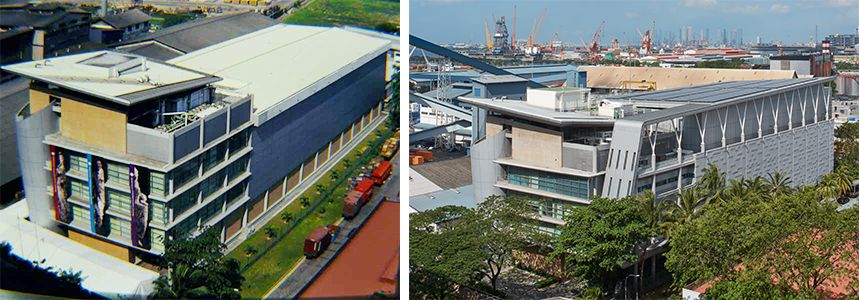
HCC in 2000 (left); 20 years later, HCC in 2020 (right)
The original building opened in 2000 was a four-storey building. Due to the growing number of artefacts and artworks, the building was renovated into a six-storey building in 2008 – 2010 to create more space.
As HCC houses Singapore’s NC of artefacts and artworks, the building is purpose-built to preserve and conserve the collection of artefacts and artworks. The design of the building is shaped by physical site constraints and functionality. The Loading Bay, Security Control Room and Building Automation Control Room are all located at the front of the building on the ground floor to minimise circulation requirements. It also offers the benefit of immediate building control and the optimum efficient arrangement for artefacts delivery, loading and control. The five storeys above consist of repository rooms, a viewing room, conservation laboratories and administrative offices. The floors are sealed with epoxy coating to minimise dust pollution. The custom-built steel doors, measuring 3.5m by 2.3m, are among the largest steel doors in Singapore. The walls are concrete–reinforced and aluminium–clad, for security reasons and to insulate all artefacts in the building. The building is designed with minimal windows. This also prevents sunlight from entering the building, which can harm the artefacts. The design also takes into account separate access to the artefact collections areas and building amenities; allowing access to areas with collections to be limited to authorised personnel only.
The images below depict the interior of the building when it was completed in 2000, before all the stores were filled. These spaces and structures remain the same till today.
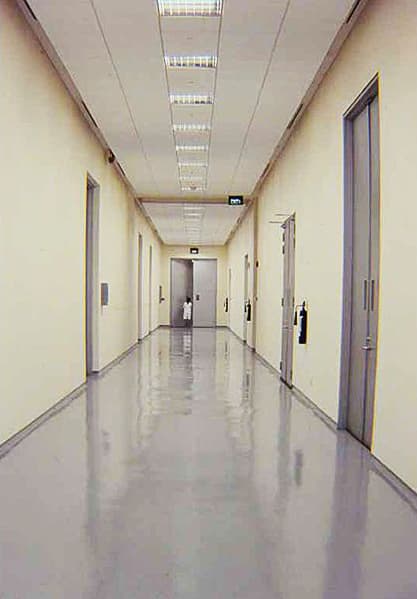
The long corridor with the 3.5m by 2.3m steel door (one of the largest steel doors in Singapore) at the entrance on Level 1.
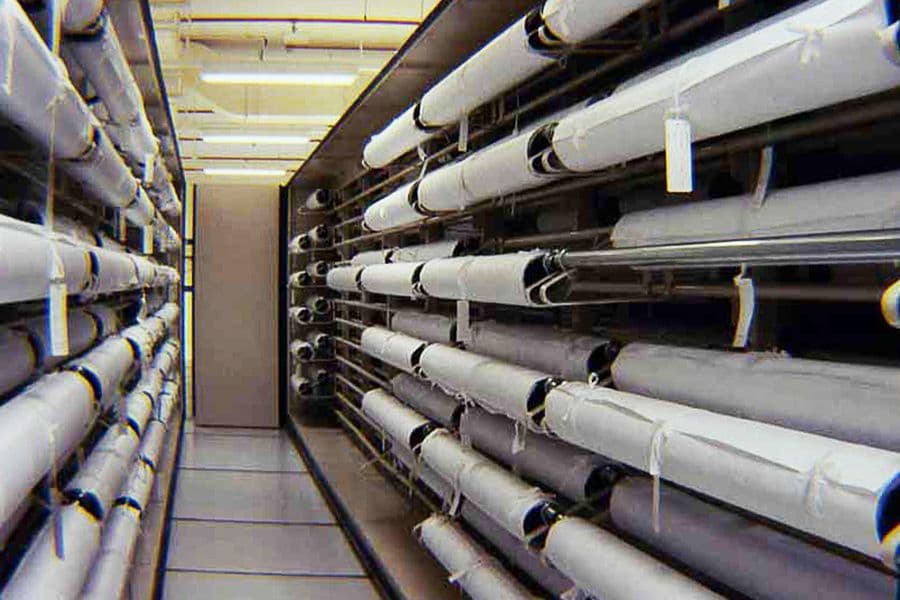
Flat textiles (textiles with no embroidery or decorations sewn on) are rolled on rollers and protected with Tyvek paper. These textiles are kept in the Textile Store with identification tags attached.
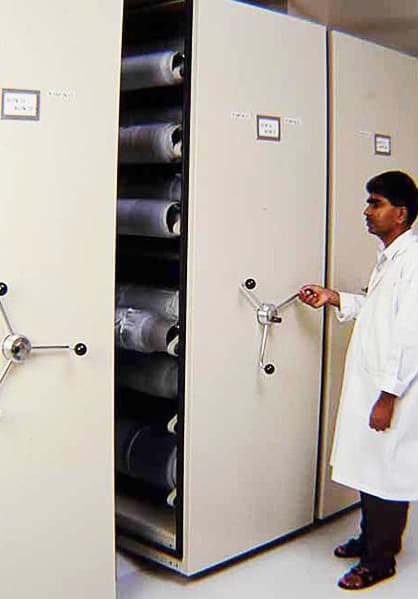
Collections Manager, Raj opening the compactors to retrieve a piece of textile in the Textile Store.
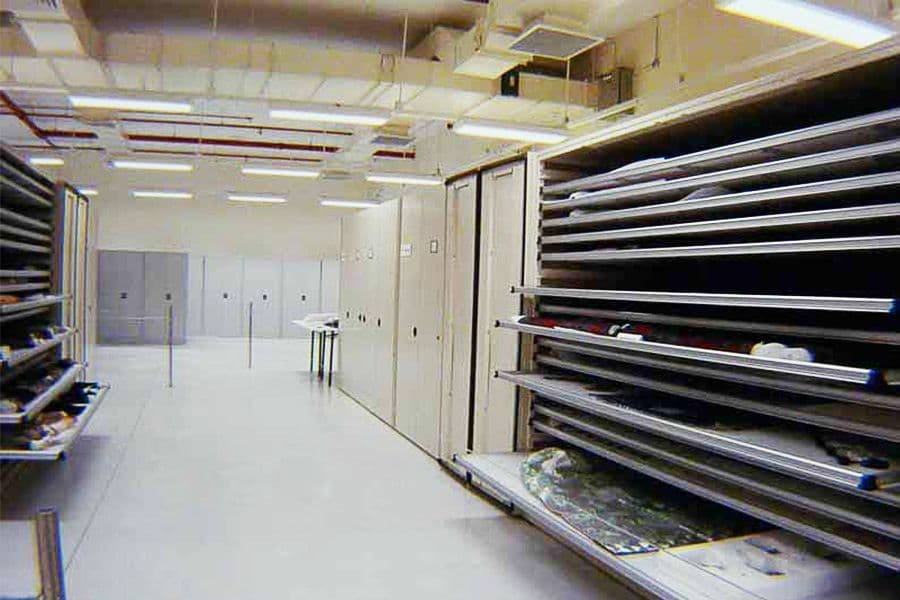
Drawer storage for textiles in the Garments Store.
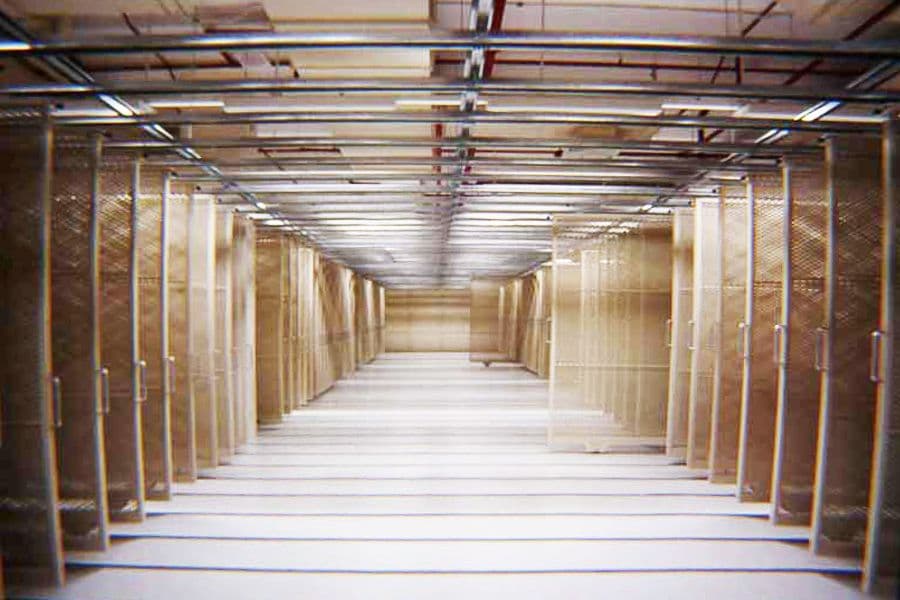
Compactors for paintings in the Paintings Store.
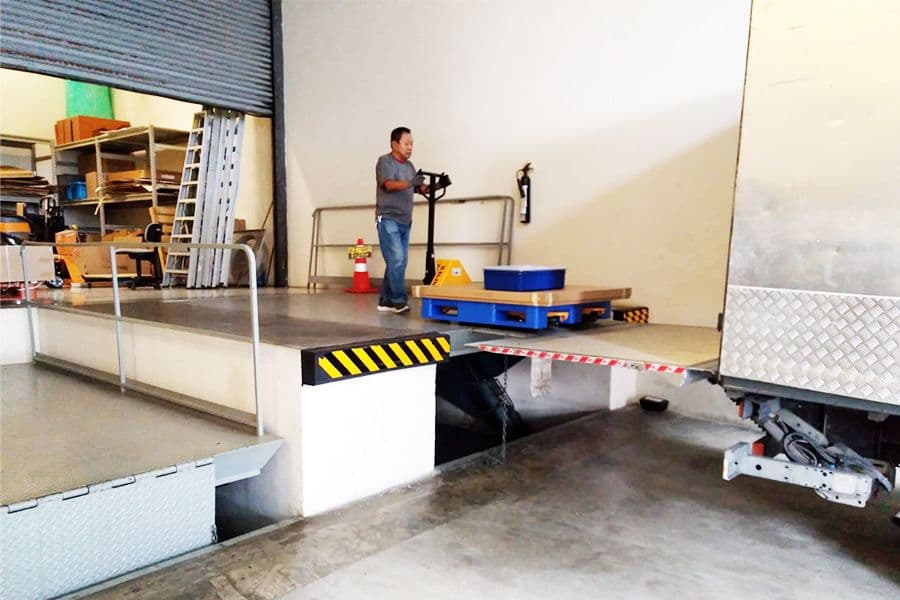
The present loading bay where artefacts and artworks are loaded on to or from art movers’ trucks at HCC.
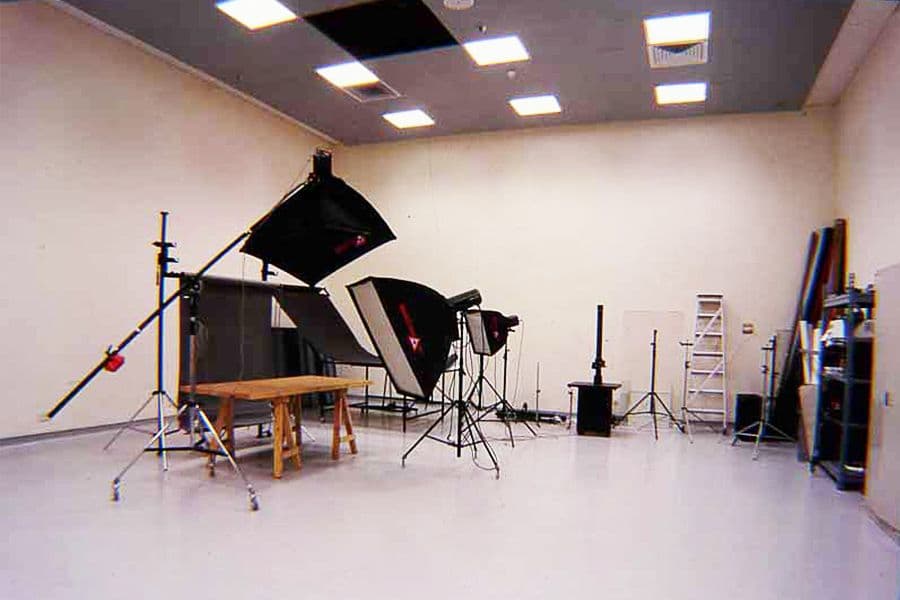
Management and Operations Group
by Chun Boon BengThe Management & Operations Group (MOG) is the corporate services arm of HCC and the key functions that it oversees include estates management, outreach, capability development, finance and office administration. HCC is continuously improving its infrastructure to ensure a conducive and safe working environment as well as to enhance the security and efficiency of the building. HCC also organises tours to our facility and workshops to share about how we conduct collections management and our conservation efforts. Read on to find out more about two tasks carried out by MOG colleagues.
Prevention is Better Than Cure
by Ang Boon Kok
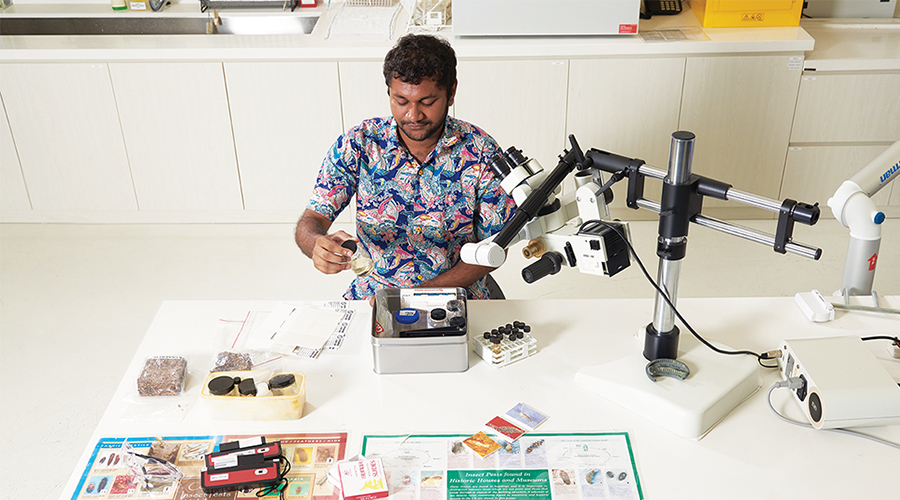
Besides the MOG overseeing the building maintenance aspect, the Prevention Conservation Work Group at HCC also looks at prolonging the life span of an artefact through the practice of preventive conservation. As the name suggests, this function of conservation aims to prevent or slow down the rate of deterioration of artefacts by managing various factors like the environment in which artefacts are stored, pests, mould growth and even how artefacts are handled and transported.
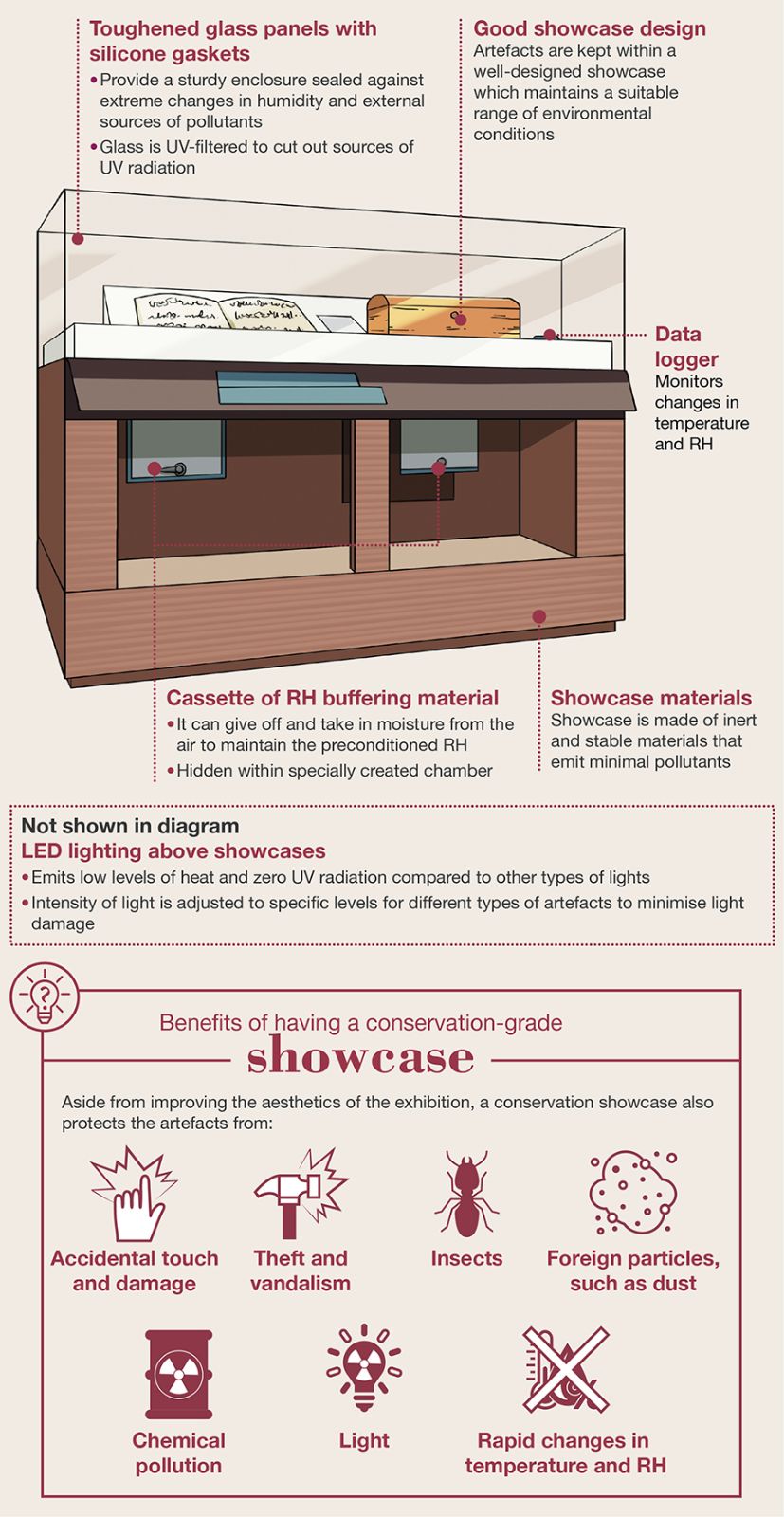
While conservation treatment procedures such as surface cleaning and crease relaxation help to improve the condition and appearance of artefacts, there is another important aspect to prolonging their life span – preventive conservation. As its name suggests, this function of conservation aims to prevent or slow down the rate of deterioration of artefacts, and is done through managing various factors like the environment in which artefacts are stored, pests, mould growth, and even how artefacts are handled and transported. In an exhibition, one of the ways in which appropriate environmental conditions can be provided for different types of artefacts is through the use of a well-designed showcase.
How do we minimise the deterioration of an artefact?
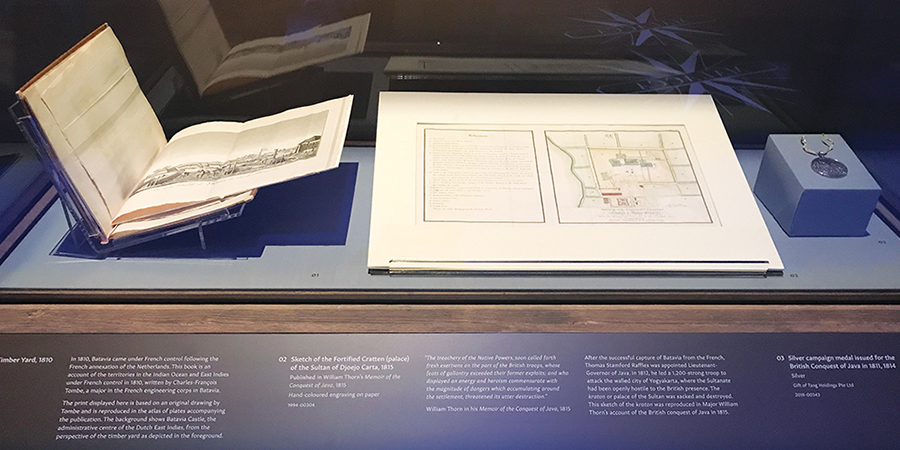 Sketch of the Fortified Cratten (Palace) of the Sultan of Djoejo Carta and Voyage aux Indes orientales by Charles-François Tombe)

Effects of Temperature and RH fluctuations
Constant rapid fluctuations of temperature and relative humidity can result in warping, splitting, and delamination of certain sensitive material types.
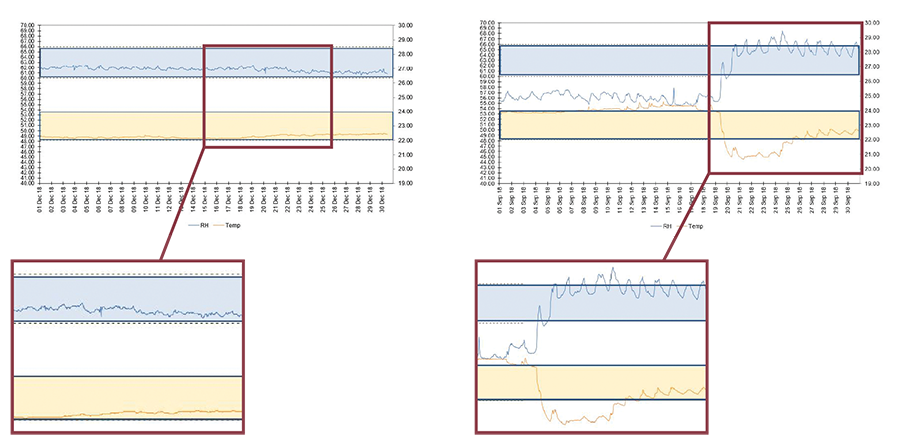
Graphs of temperature (yellow) and RH (blue) over time. (Left) Readings stay within acceptable range. (Right) This shows large fluctuations in readings that are also constantly out of recommended ranges.
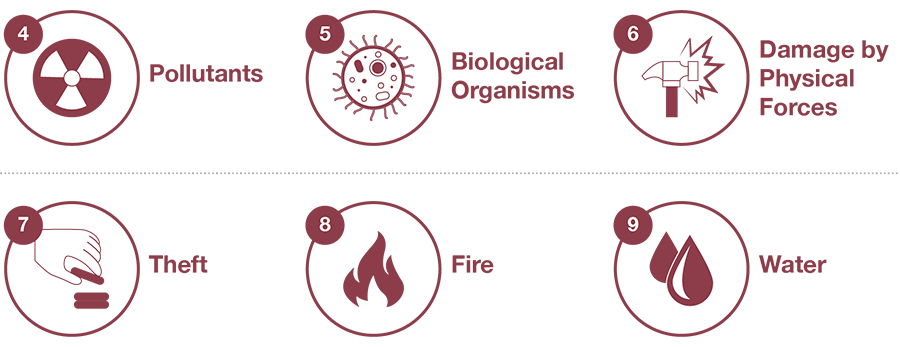
In addition, artefacts are also vulnerable to other agents of deterioration, such as:
Conservation-grade showcase
Artefacts and Artworks Featured
Asian Civilisations Museum, Tang Shipwreck Collection
1. 2005.1-00086, Changsha Ewer with tall neck, Tang Dynasty, China (618 - 907)
2. 2005.1-00497, Tripod incense burner with figure and lion, Tang Dynasty, China (618 - 907)
3. 2005-1-00487, Changsha Ovoid Jar four indentations and two vertical lugs, Tang Dynasty, China (618 - 907)
Collection of National Museum of Singapore, National Heritage Board
1. 1994-00304, Sketch of the Fortified Cratten (Palace) of the Sultan of Djoejo Carta, 1815
2. 2018-00691, Voyage aux Indes orientales, Charles-François Tombe, 1810
3. HP-0014, Portrait of Sir Shenton Whitelegge Thomas, 1939
Collection of Singapore Art Museum
1. 2009-02147, Cycle, Sopheap Pich, 2004-2008
2. 2009-02958, Paraisado Rampa Blanko, Jose Tence Ruiz in collaboration with Danilo Ilag-Ilag, 2007-2008
3. 2017-00486, Bryde’s Fountain (After Marcel Duchamp), Krit Ngamsom, 2016
Credits
1. Chun Boon Beng, Senior Assistant Director, Management & Operations Group
2. Darren Wong, Assistant Director, Management & Operations Group
3. Khoo Lor Nam, Senior Manager, Management & Operations Group
4. Arul Krishnan, Manager, Management & Operations Group
5. Kathleen Lau, Manager, Management & Operations Group
6. Ang Boon Kok, Manager, Collections Management
7. Dave Lee, Photographer, Knowledge & Information Management
8. Chan Xian Li, Senior Common Ops Spaces Assistant, Tunity Technologies Pte Ltd