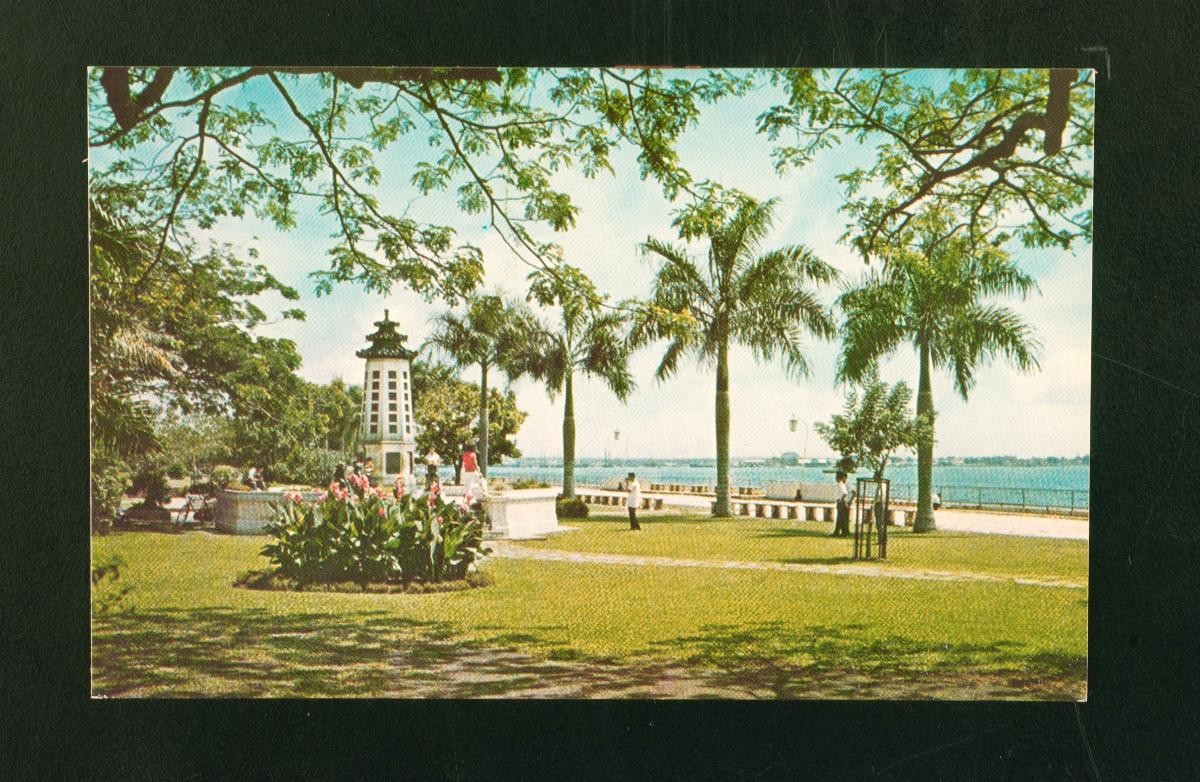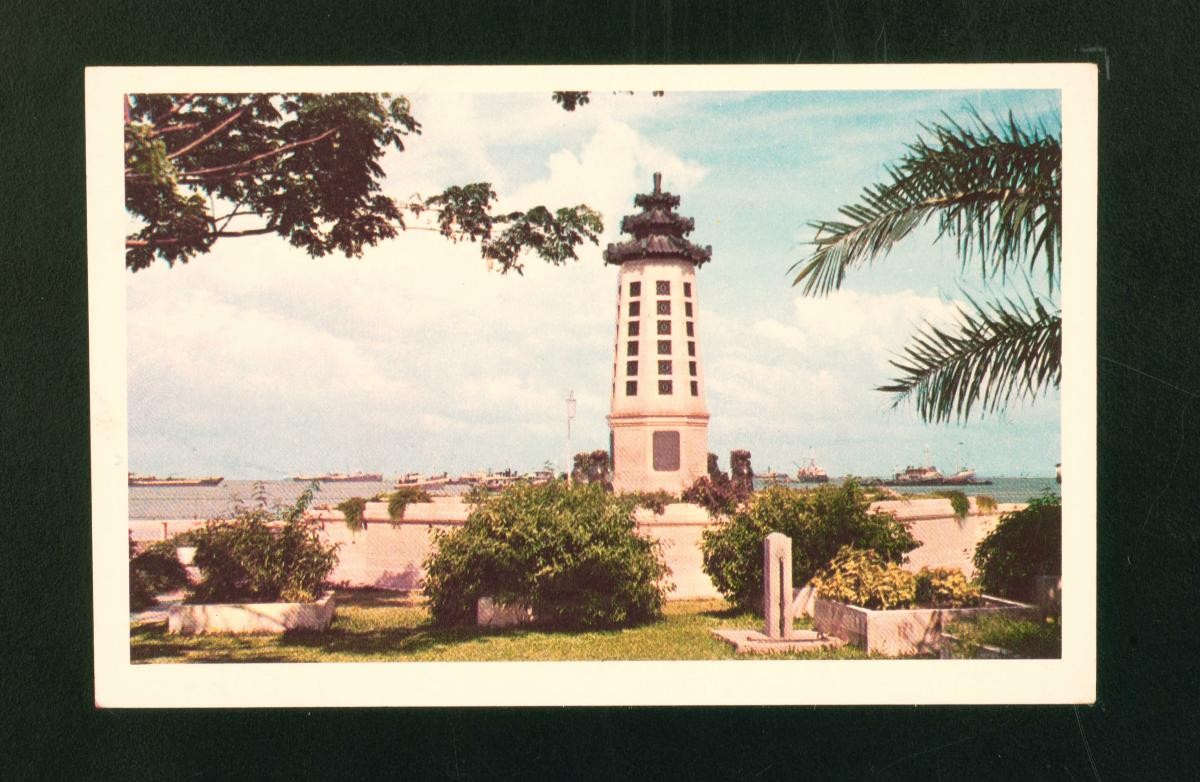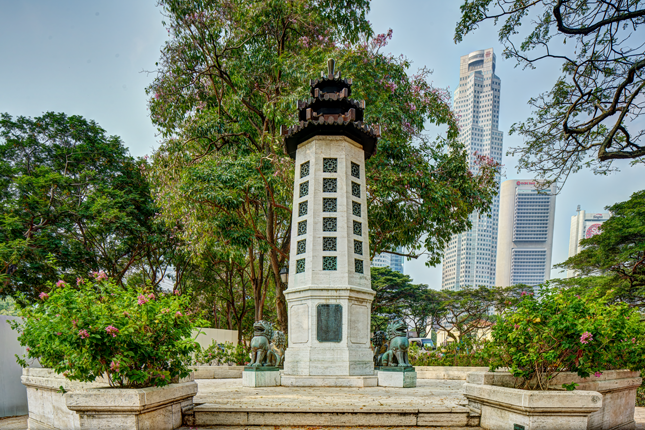

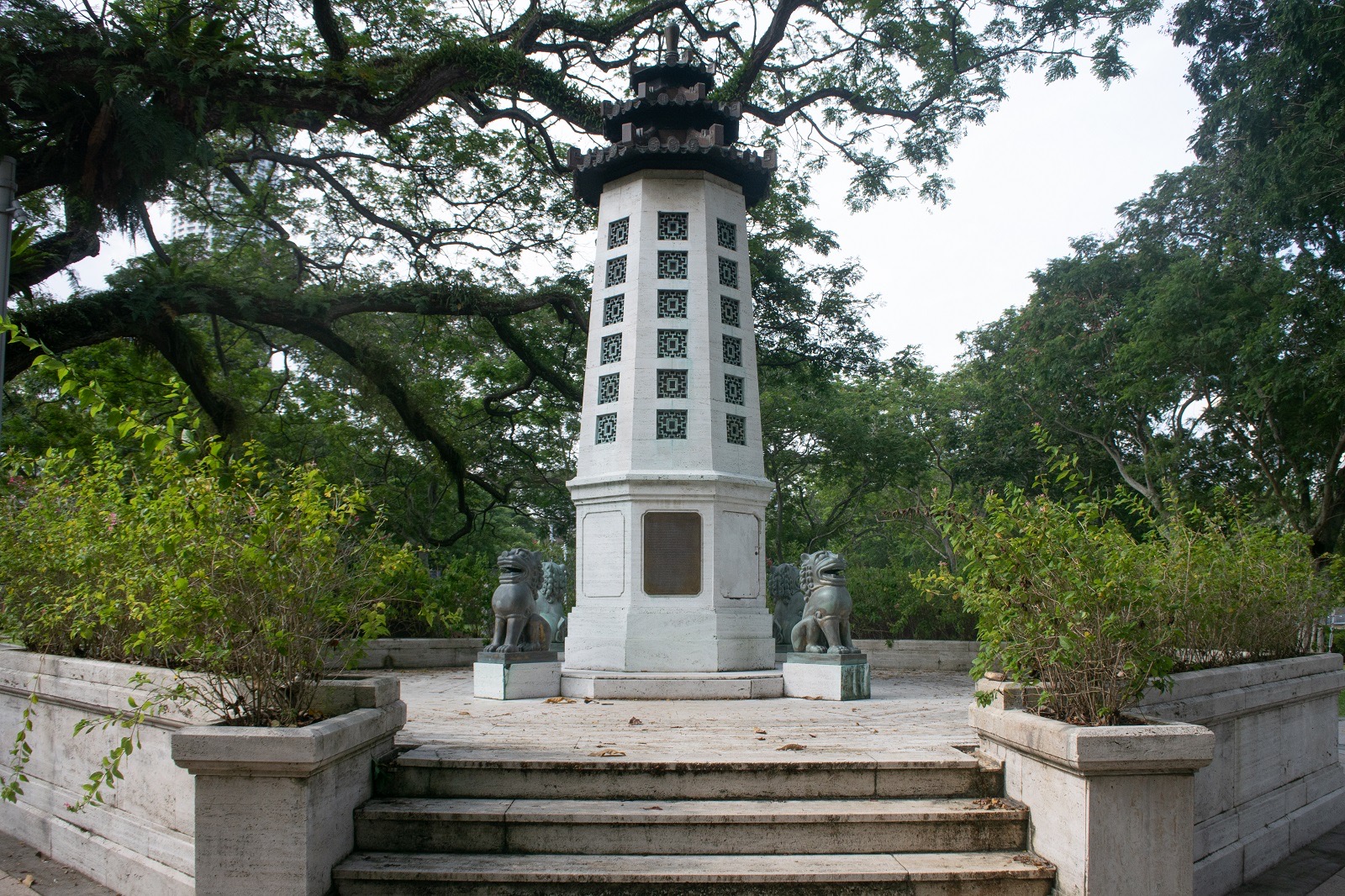
The Lim Bo Seng Memorial at Esplanade Park.
This eight-sided pagoda in Esplanade Park commemorates Lim Bo Seng (林谋盛; 1909–1944), a prominent figure in Singapore's wartime resistance. Designed in the Chinese National style, the memorial reflects both his contributions during the Second World War and the architectural traditions of the period.
Wartime Service
Following the Fall of Singapore in 1942, Lim Bo Seng joined Force 136, a branch of the British Special Operations Executive, serving as a Regional Liaison Officer. His role involved recruitment and espionage training, utilising his social connections to build networks of Chinese agents supporting resistance activities.
From May to November 1943, Lim participated in operations in Perak, where he helped establish contact between Force 136 and the Malayan People's Anti-Japanese Army (MPAJA). His efforts contributed to negotiations that resulted in the "Blantan Agreement", formalising cooperation between the two organisations.
In March 1944, shortly after leaving Blantan, Lim was arrested and imprisoned at Batu Gajah Prison. He died of dysentery on 29 June 1944 and was initially buried in an unmarked grave. His remains were later exhumed and returned to Singapore in December 1945, where he was reinterred beside MacRitchie Reservoir following a ceremony at the Municipal Building (now the Former City Hall).
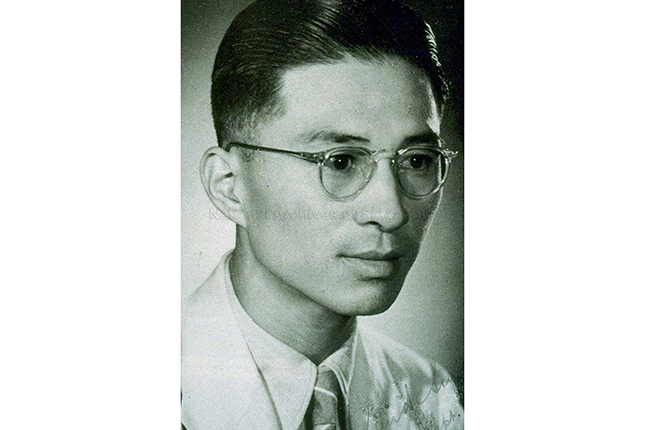
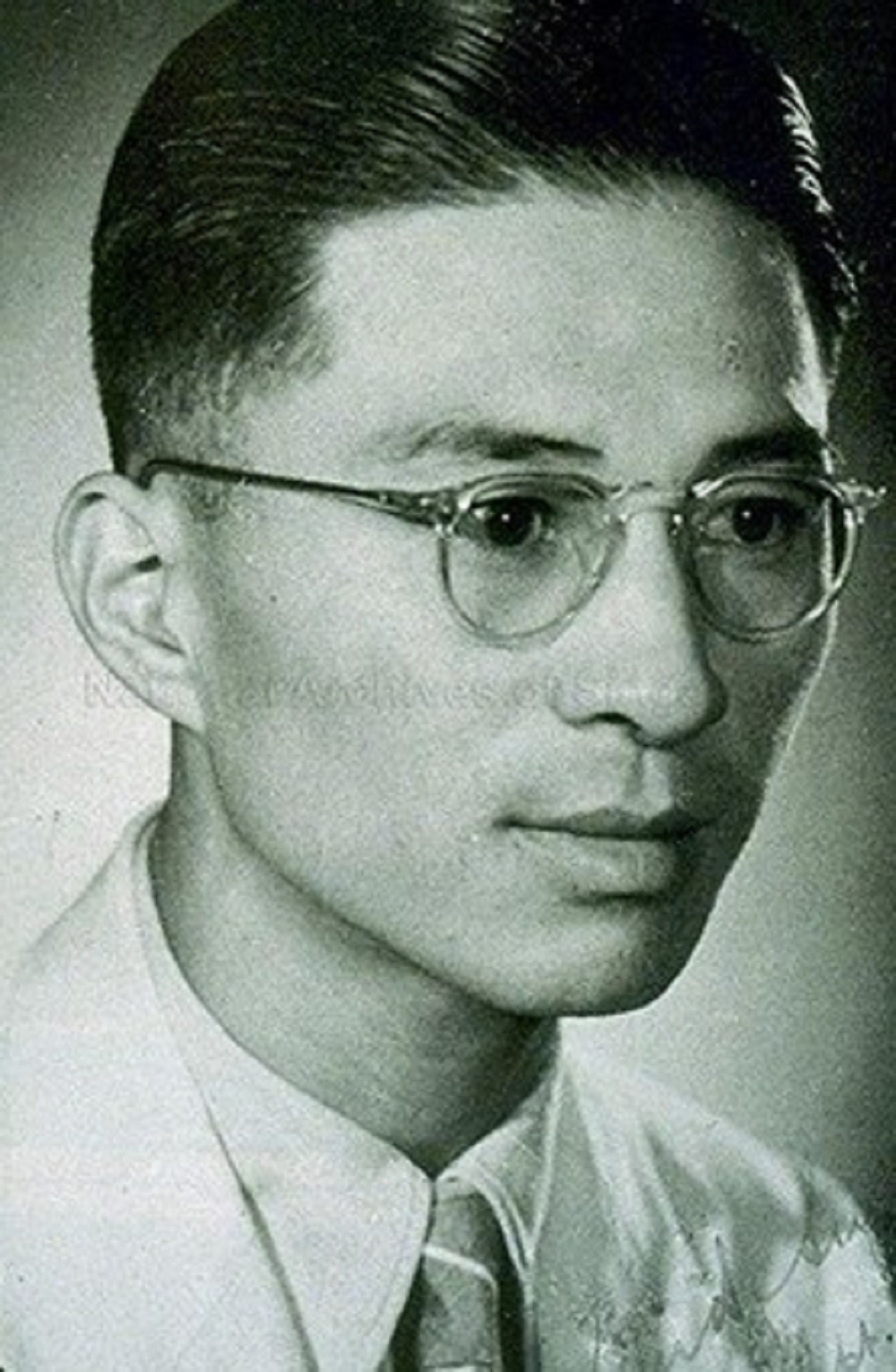 Portrait of Lim Bo Seng, c.1941-1944. Image from the Lim Leong Geok Collection, courtesy of National Archives of Singapore.
Memorial Development
Plans for a memorial at the Esplanade were approved in 1951, with the Lim Bo Seng Memorial Committee overseeing the project. After an initial design by K. Berkovits was rejected, architect Ng Keng Siang was commissioned. Ng, who was the first Singaporean certified by the Royal Institute of British Architects, submitted five proposals before his final design was approved in March 1952.
The memorial follows the Chinese National style, an architectural approach that combined traditional Chinese forms with Western construction methods. Consistent with memorial practices in Republican China, Ng designed the structure as a pagoda, a form commonly used for commemorating martyrs.
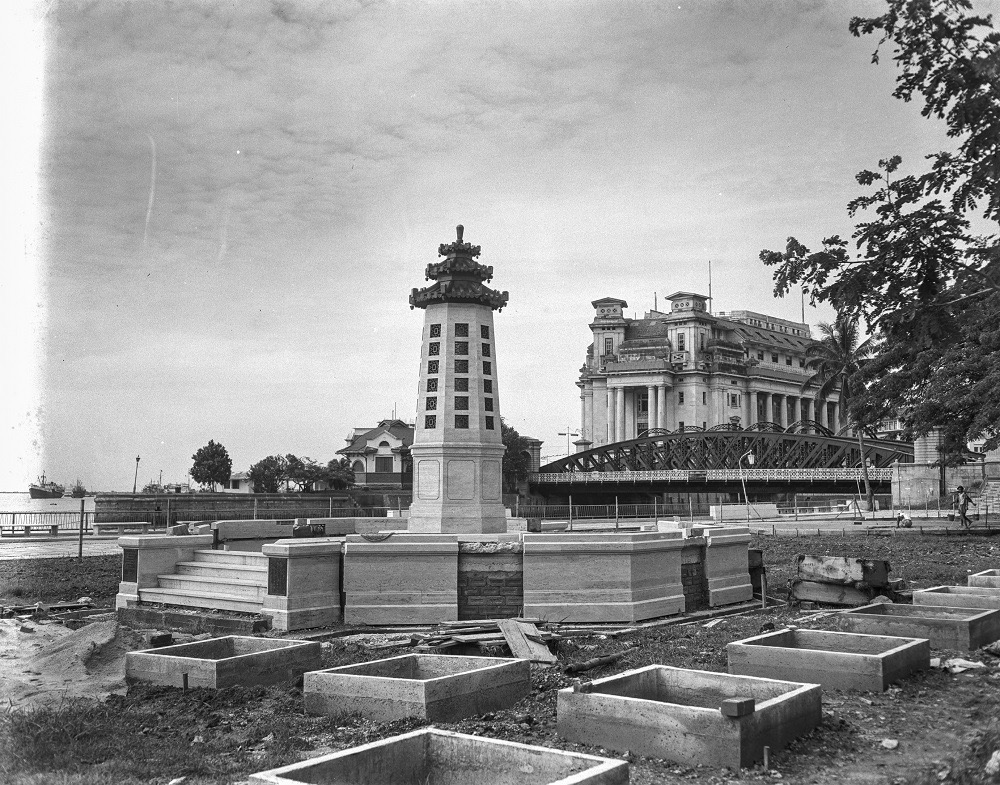 Lim Bo Seng Memorial under construction, 1954. Courtesy of National Archives of Singapore.
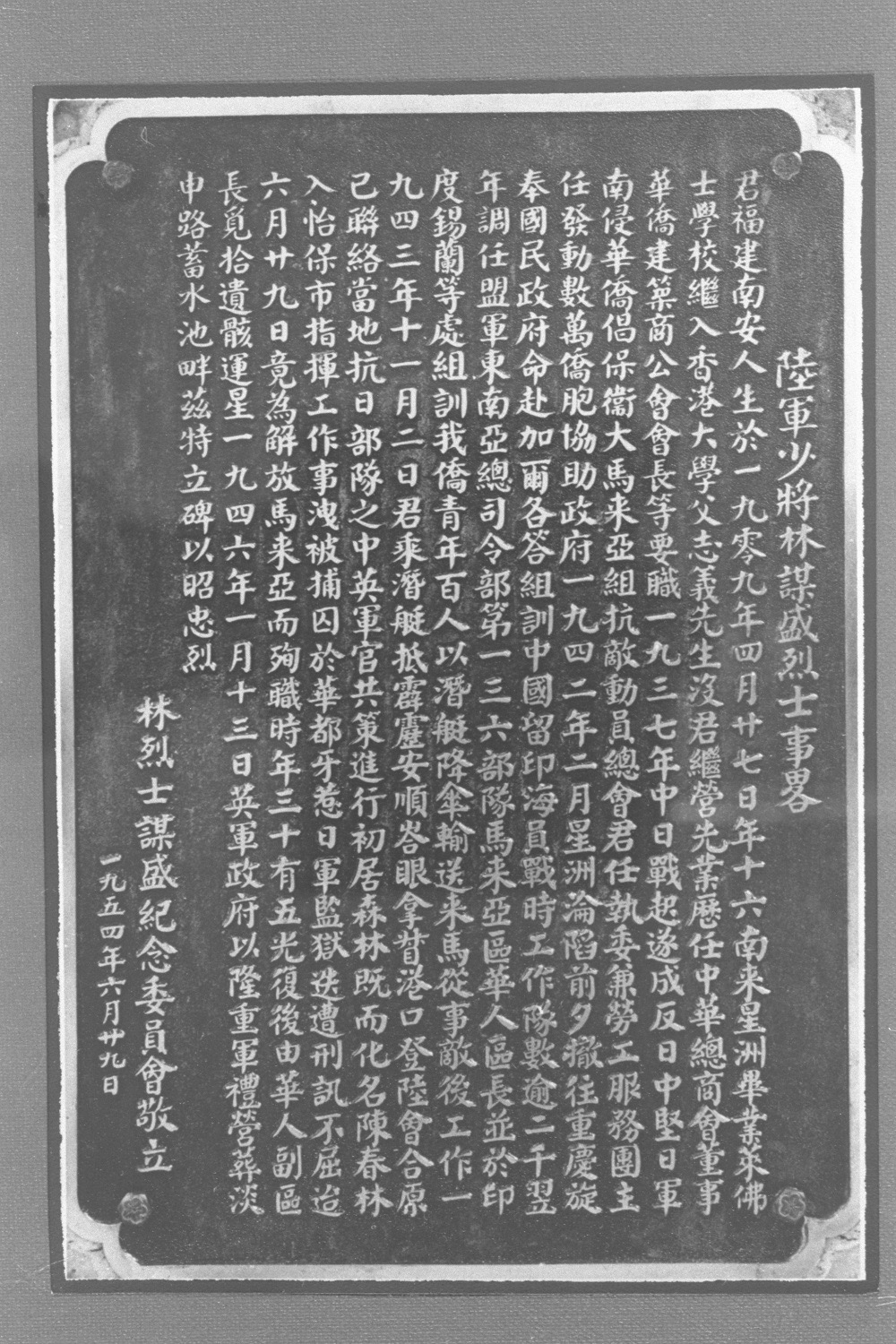 Chinese epitaph attached to the Lim Bo Seng Memorial, 1954. Courtesy of the National Archives of Singapore.
Construction and Features
Built between 1953 and June 1954, the memorial is constructed of travertine stone with bronze plaques displaying epitaphs in English, Malay (Jawi script), Chinese, and Tamil. The structure features a three-tiered brass roof and eight brass lions, elements crafted by Raoul Bigazzi's workshop in Hong Kong—the same workshop that produced sculptures for Tanjong Pagar Railway Station and the lions on Merdeka Bridge.
The memorial was officially unveiled on 29 June 1954, the tenth anniversary of Lim Bo Seng's death, by General Sir Charles Loewen, Commander-in-Chief Far East Land Forces. The ceremony was broadcast by the Malaya Broadcasting Corporation, and annual memorial services were subsequently held on this date.
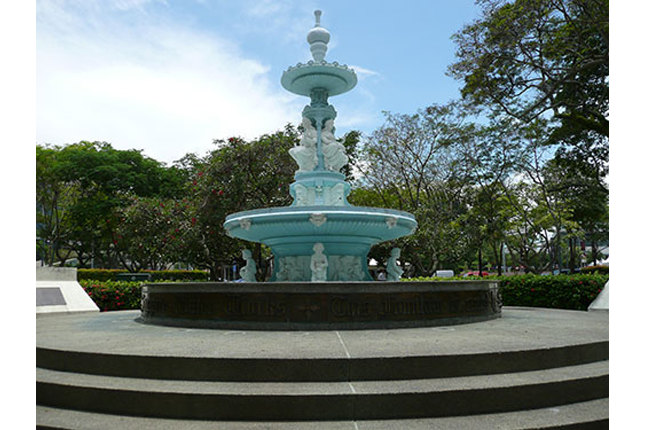
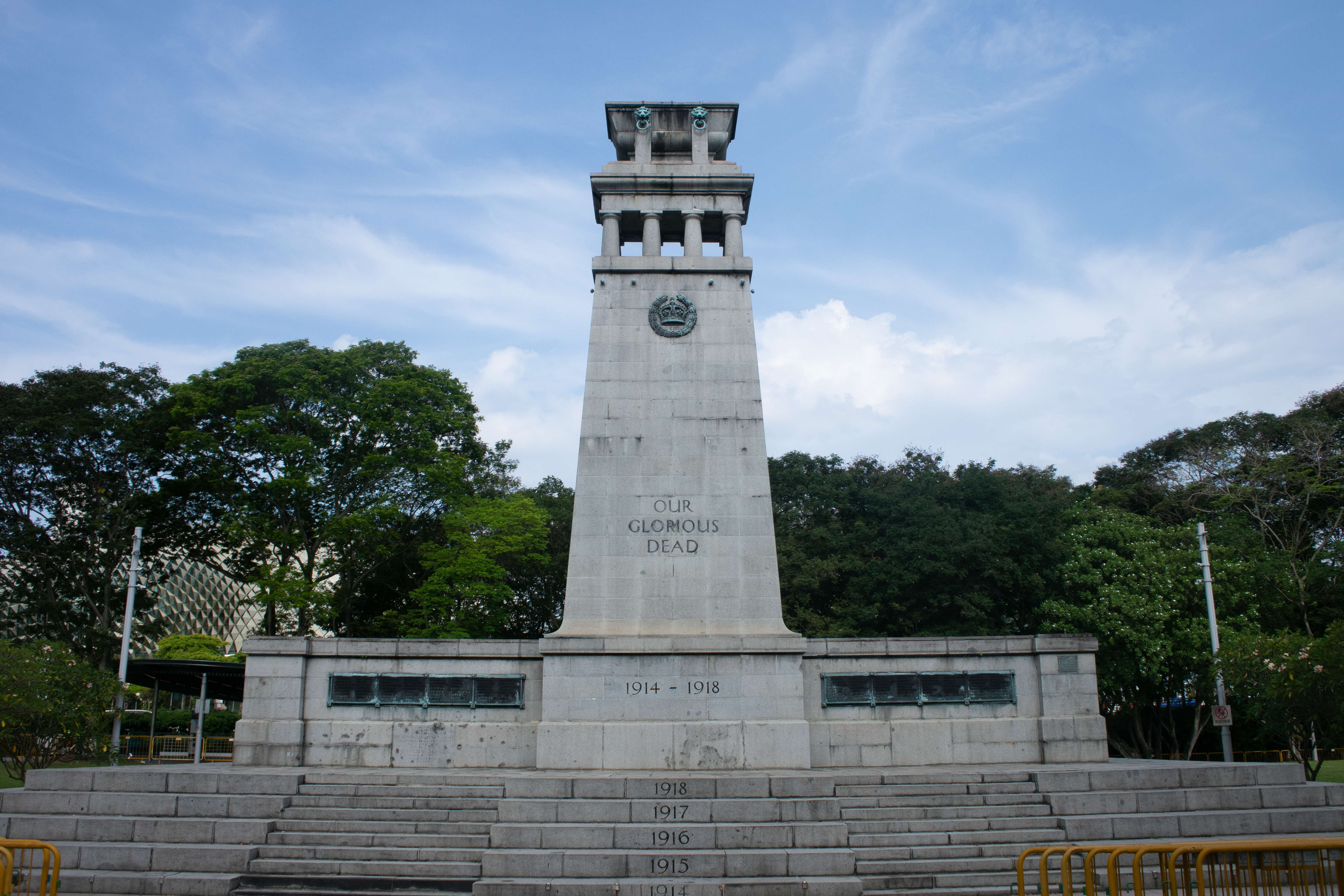
On 28 December 2010, the Esplanade Park Memorials, including the Lim Bo Seng Memorial, the Cenotaph, and the Tan Kim Seng Fountain, were collectively designated as a National Monument, recognising their historical significance in Singapore's heritage.
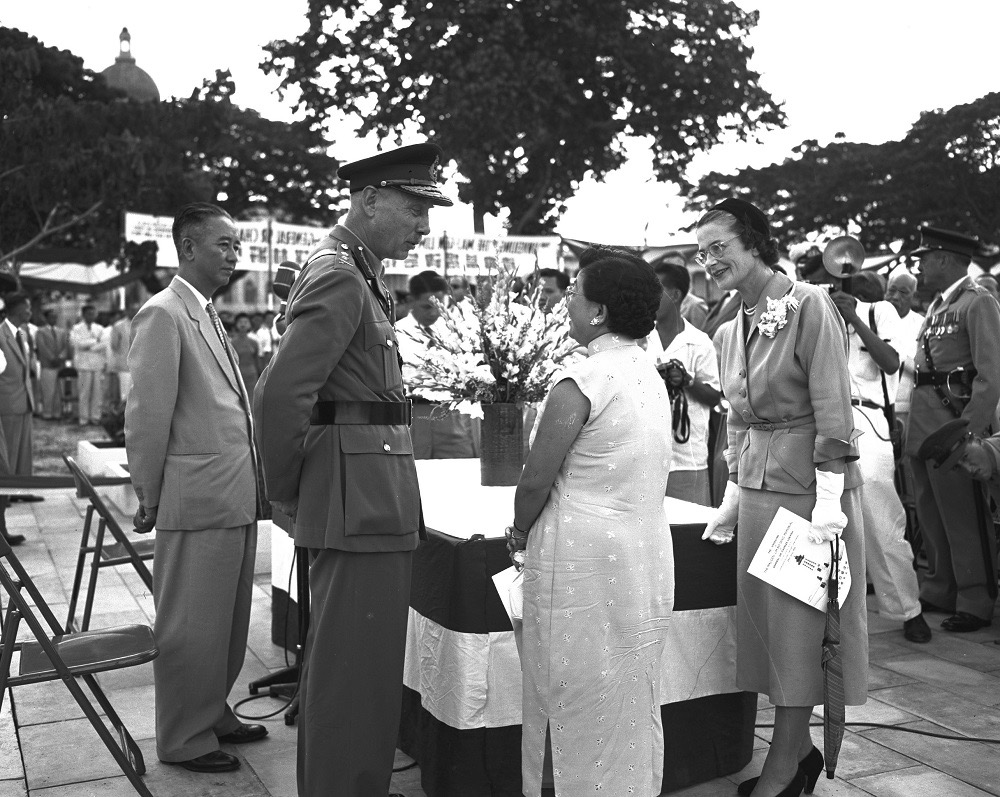 Commander-In-Chief, Far East Land Forces Sir Charles Loewen talking to the family members of Lim Bo Seng at the unveiling of Lim Bo Seng Memorial, 1954. Courtesy of the National Archives of Singapore.
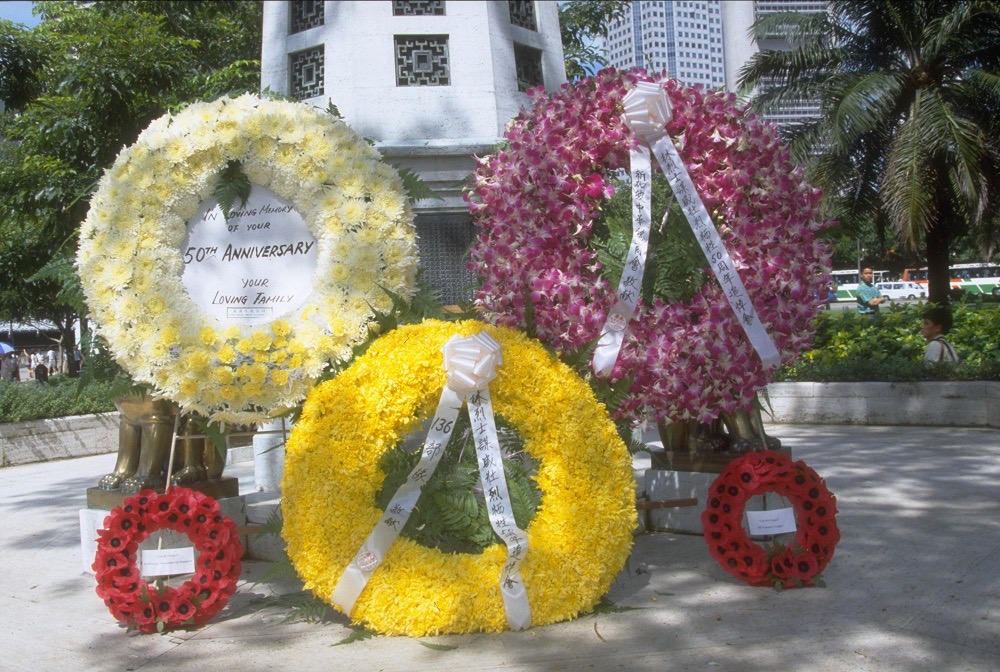 Lim Bo Seng’s 50th anniversary memorial ceremony at Esplanade, 1994. Courtesy of the National Archives of Singapore.