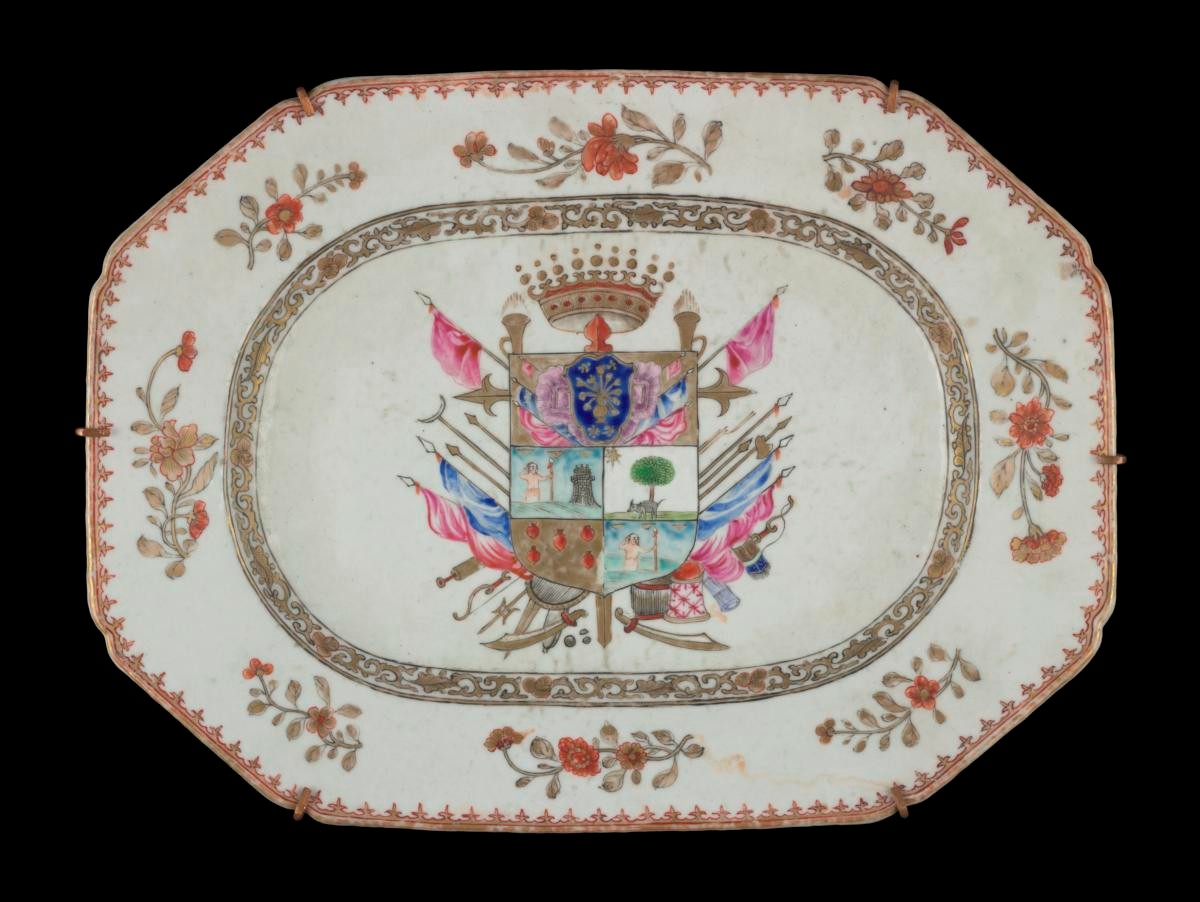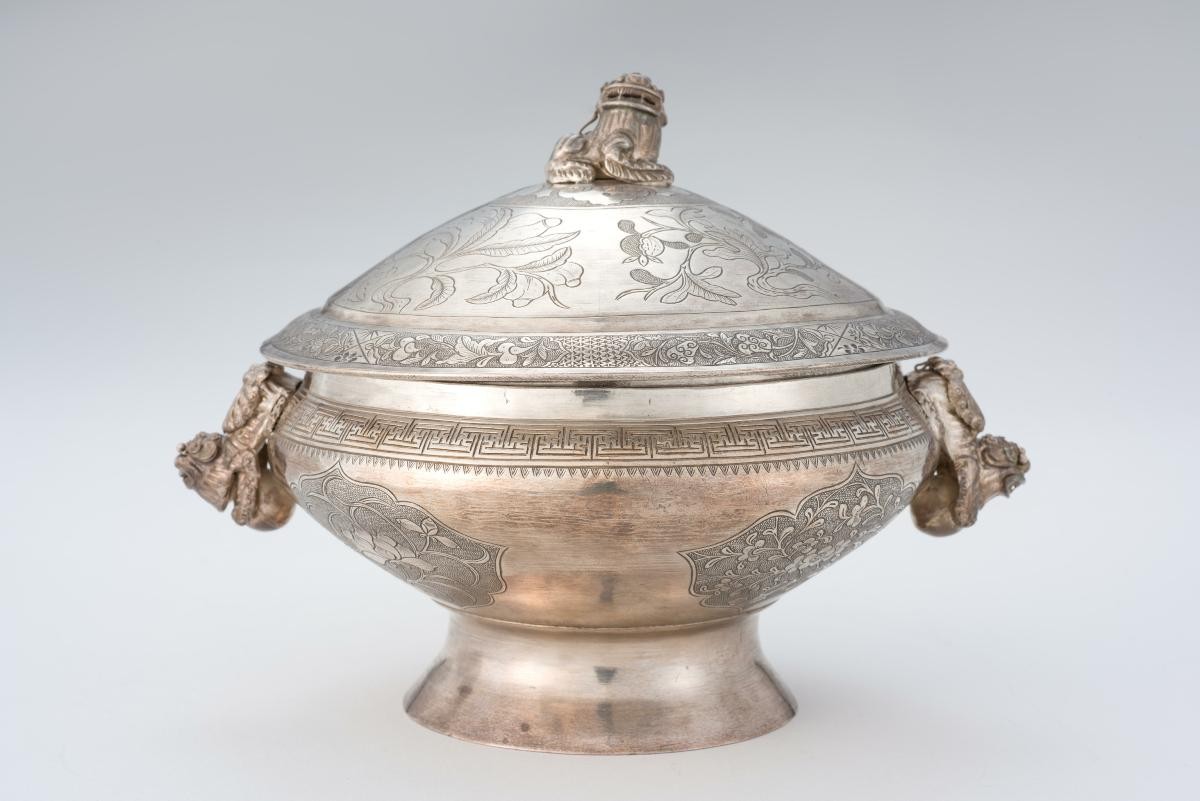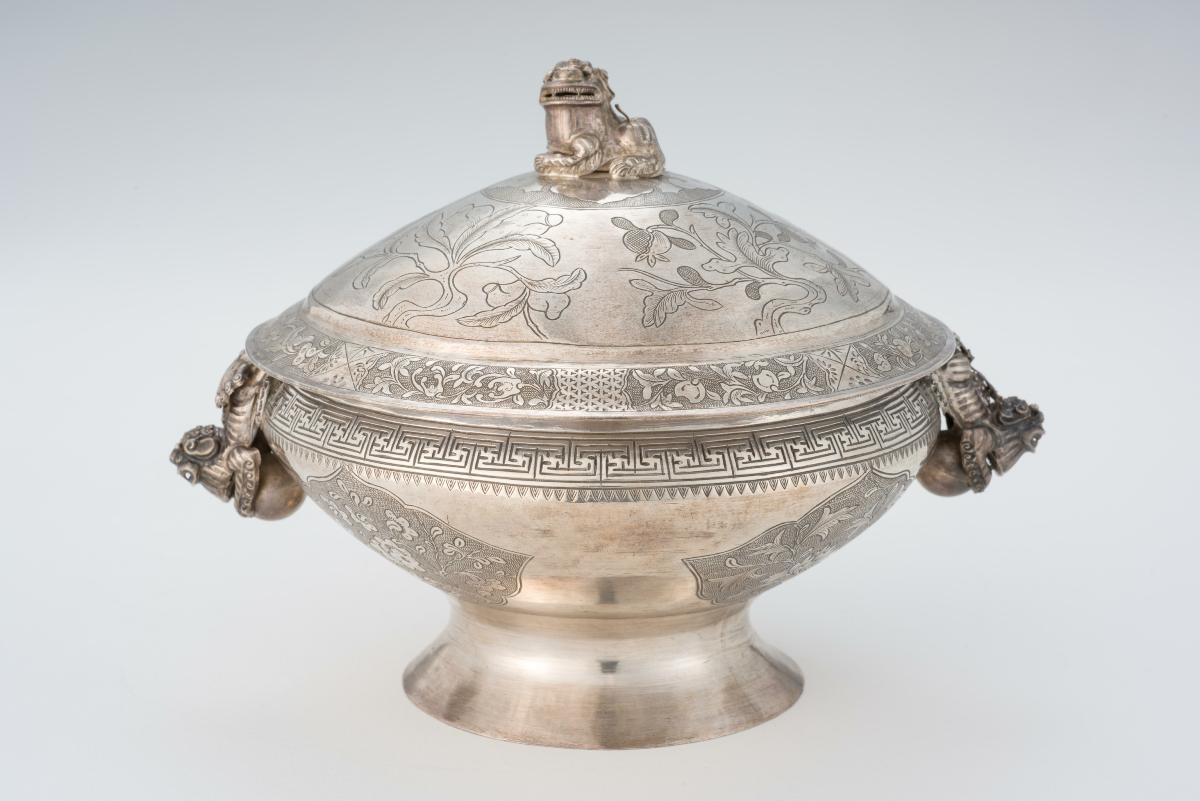

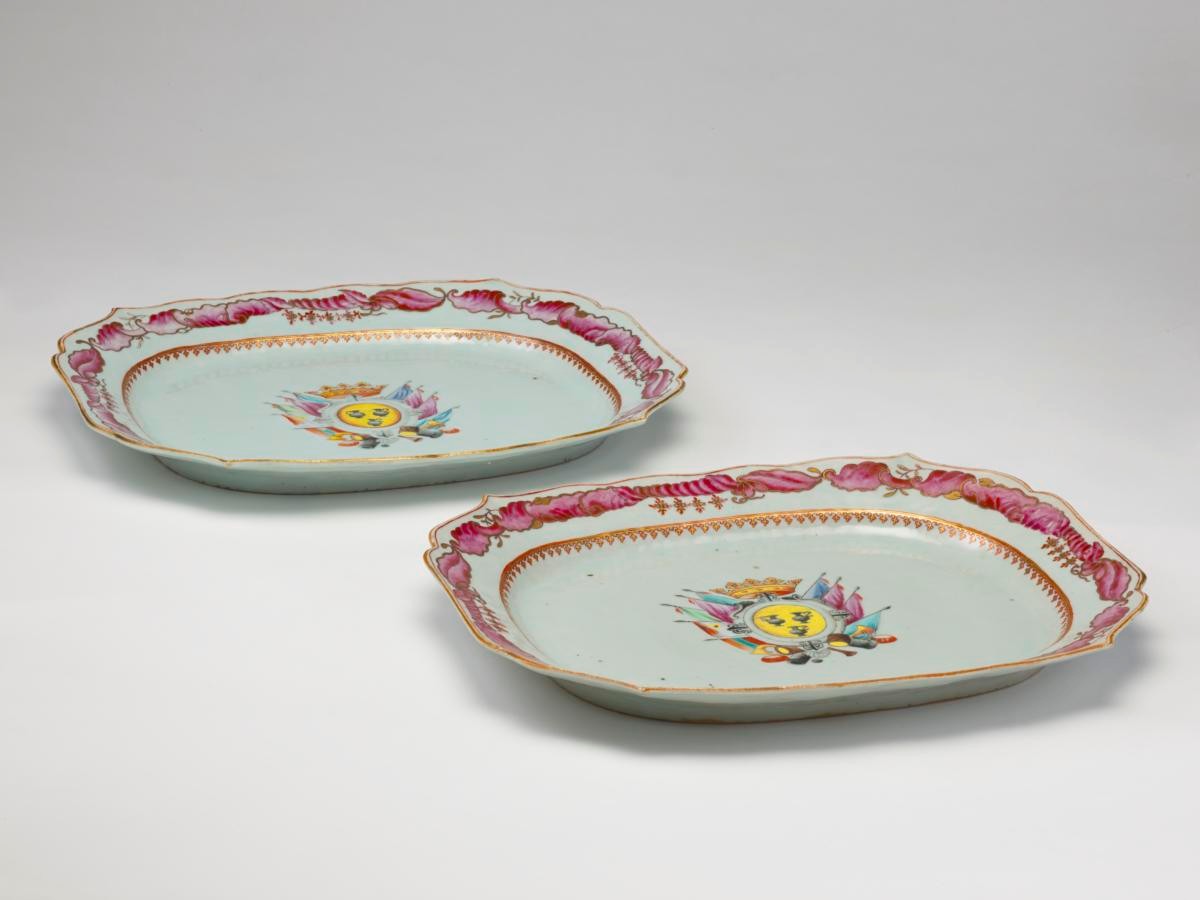
These dishes are part of a 542-piece dinner service made for Cayetano Pignatelli (around 1725–1795), a Spanish nobleman. Pignatelli was appointed by King Charles III of Spain to inspect frontier garrisons at the northern border of New Spain (Mexico), and to make recommendations to prepare the garrisons for conflict with indigenous communities. Each dish would have supported a tureen, for serving soup or other liquids.The trade in Chinese porcelain was an important part of the Spanish-controlled Manila Galleon trade, which flourished from the mid-16th to early 19th century. The galleons shipped Asian commodities from Manila to Acapulco, which were then transported onwards to the Americas and Spain. While most porcelains on the galleons had popular designs that were exported around the world, some, such as these, were special orders made specifically for Spain and New Spain. The galleons paid for these goods with silver sourced from the Americas.