
Object size: 100.0 x 83.0 cm (with tassels)
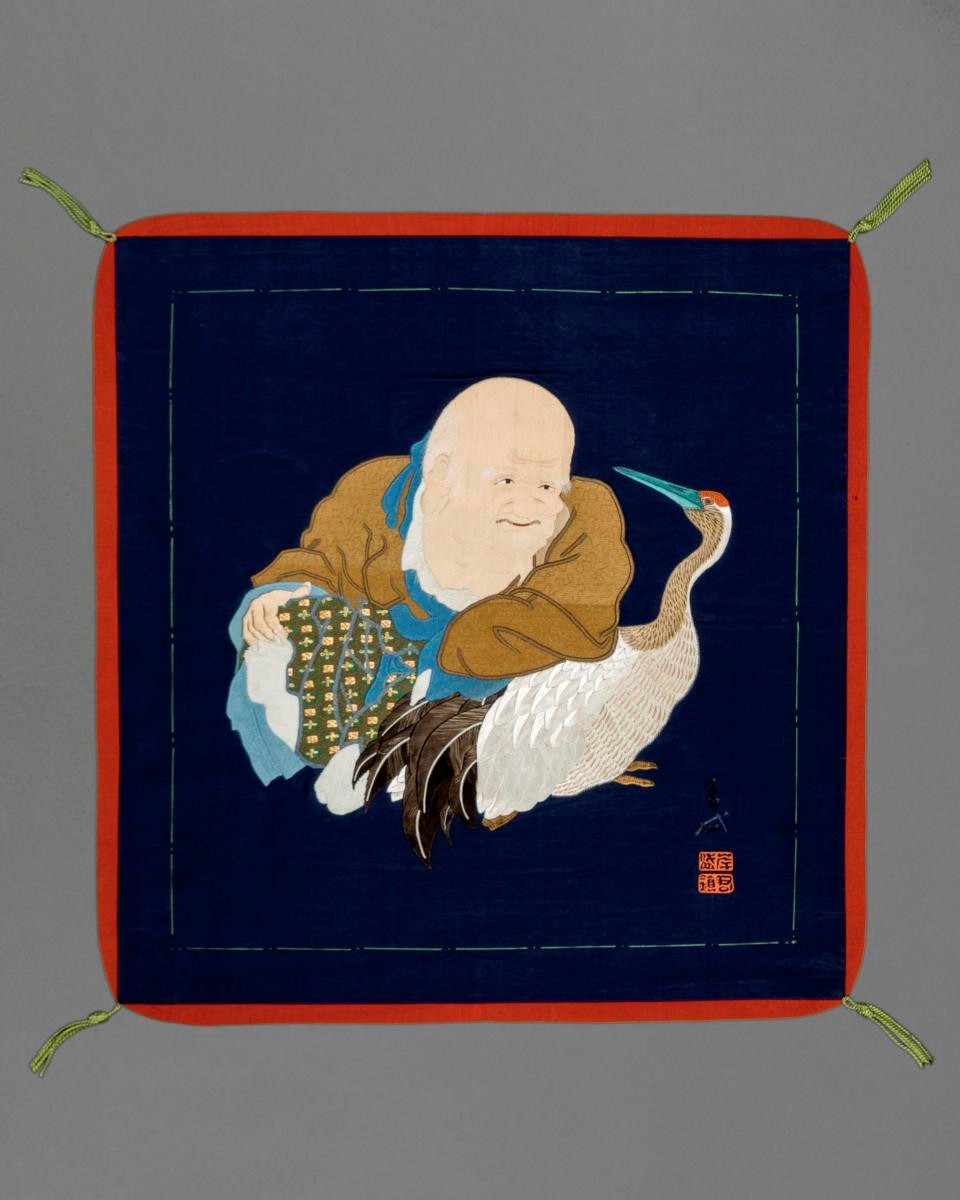
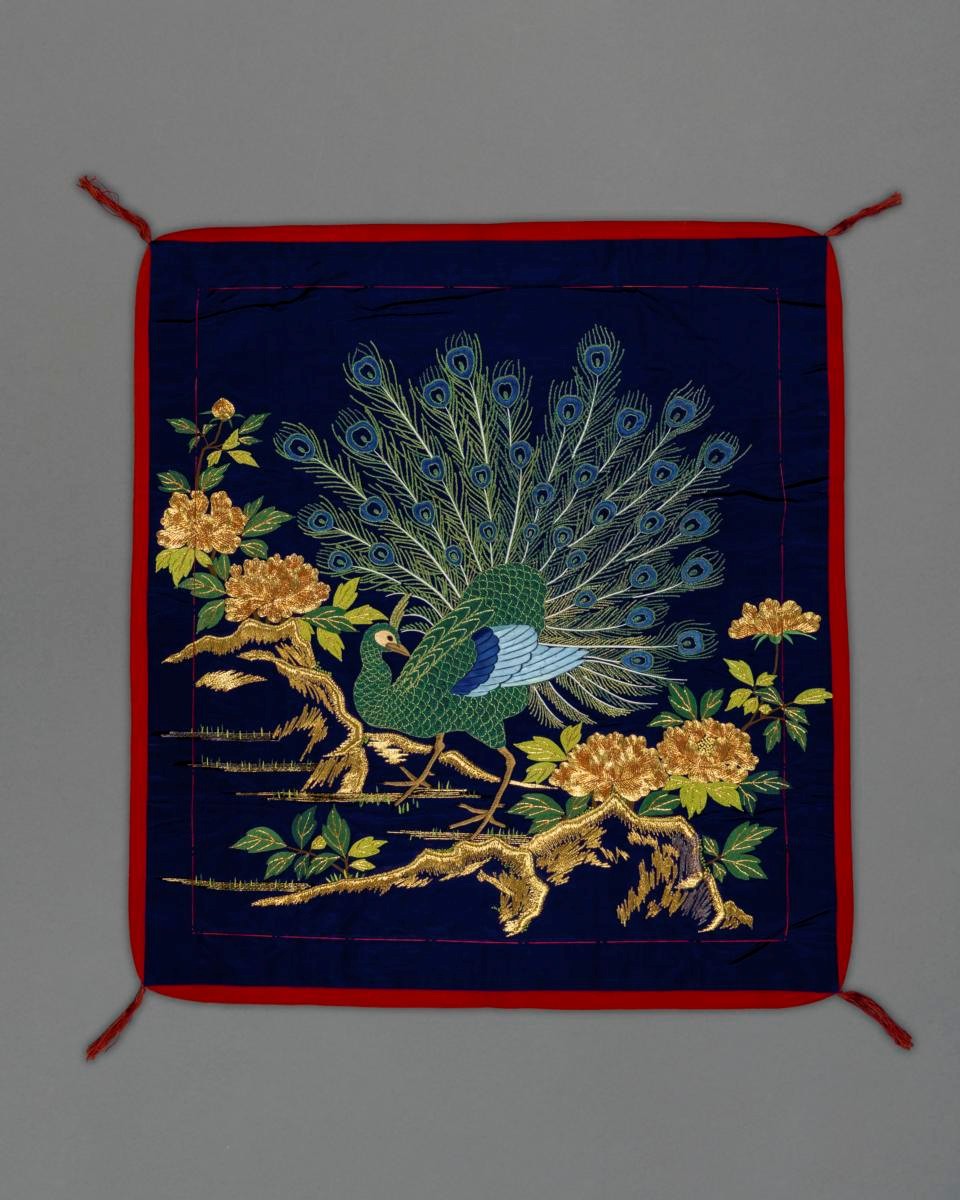
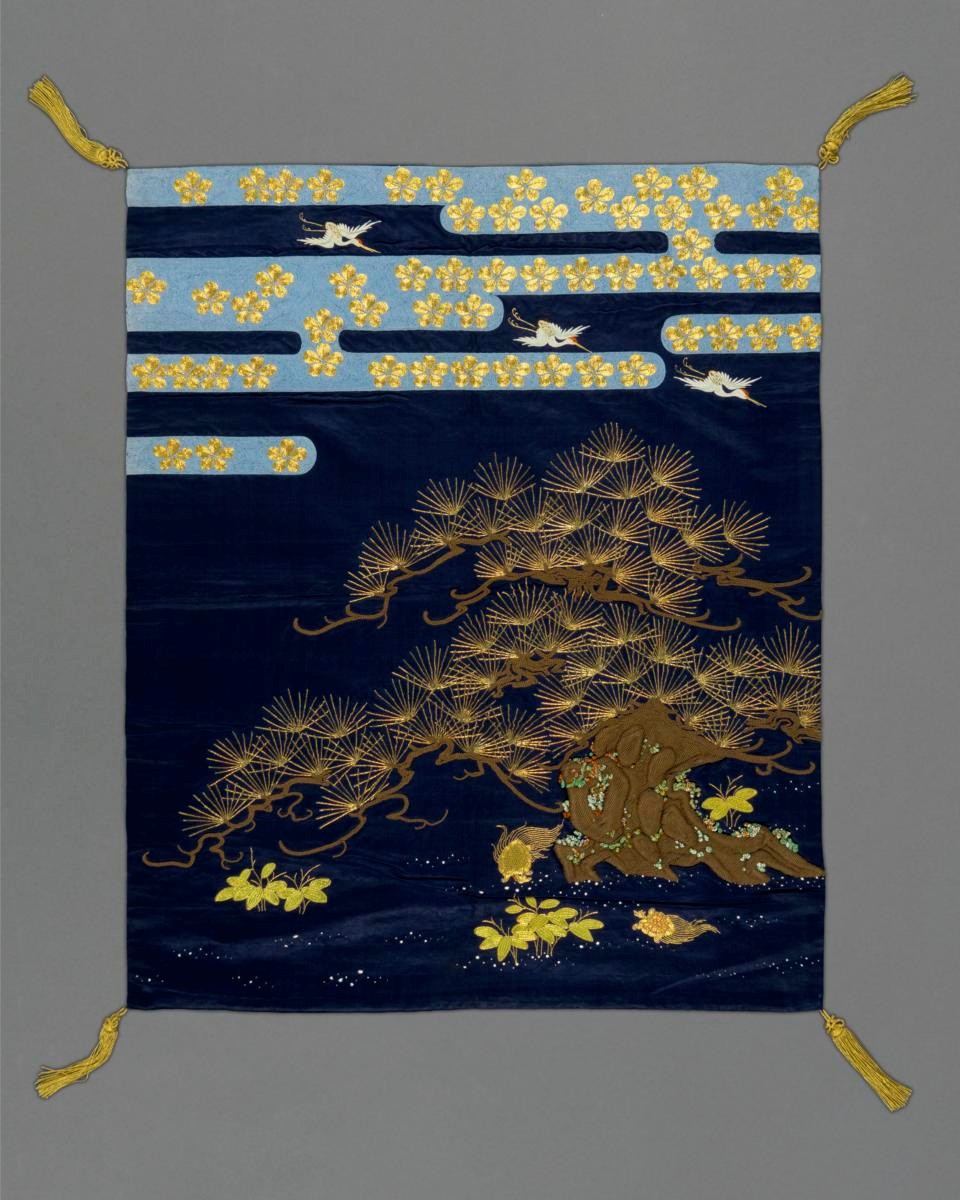
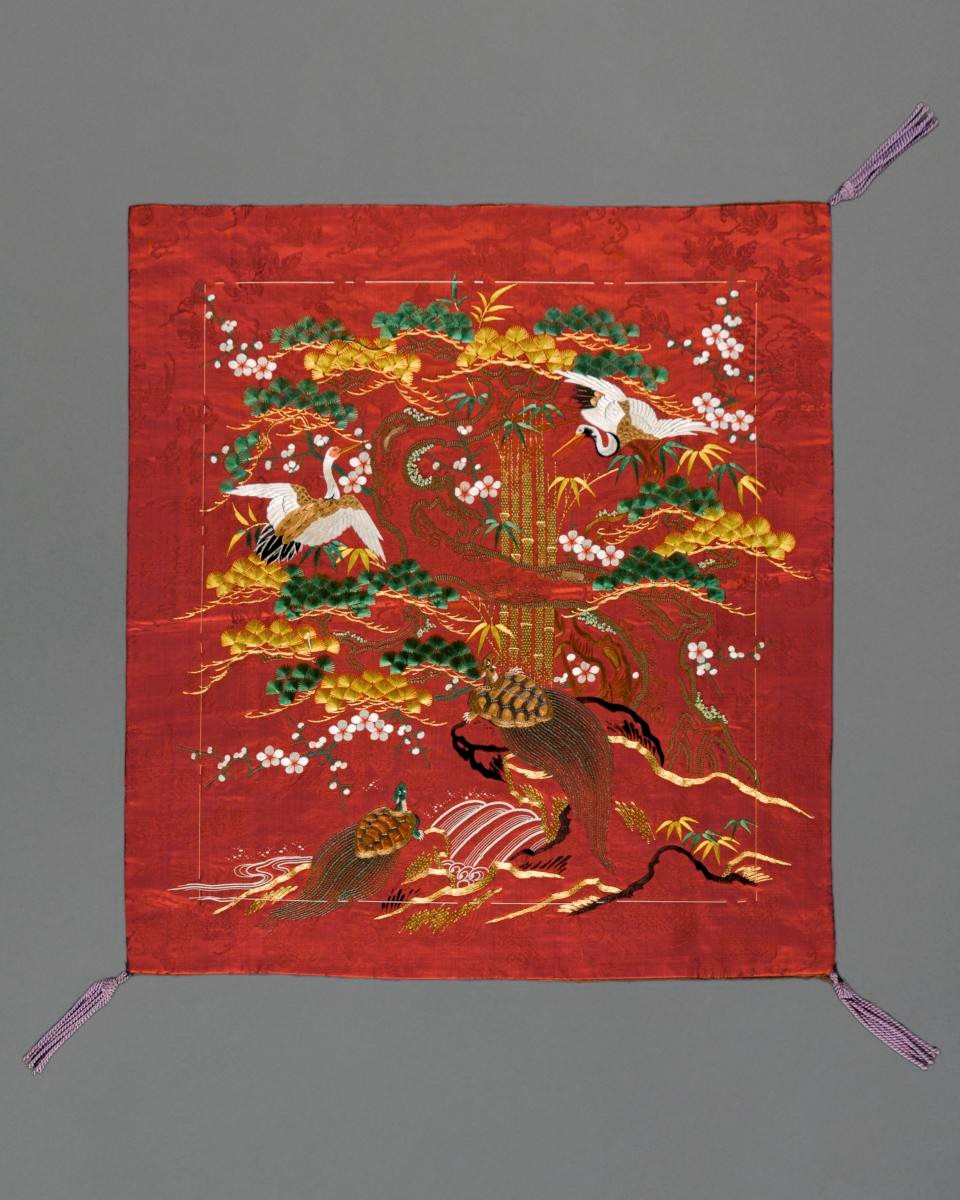
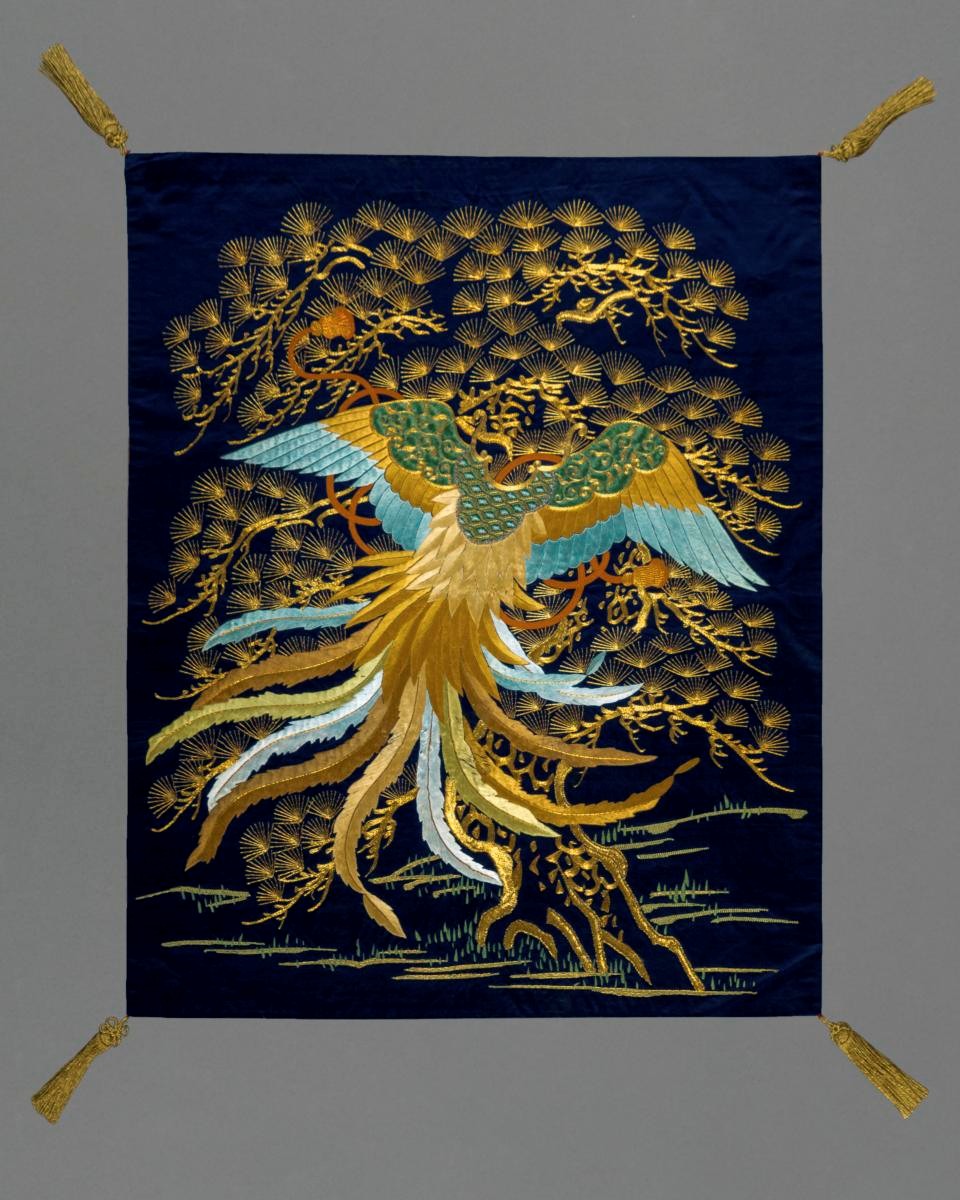
In Japan, the practice of formally presenting gifts with silk covers called fukusa began in the Edo period (1603–1868), around the late 17th or early 18th century. These covers were draped or folded over gifts for a variety of occasions, from seasonal festivities to important personal events. Each fukusa was carefully chosen to evoke the circumstance of the gift and to convey a message to the recipient through its design. Fukusa designs often feature symbolic objects or allusions to Japanese and Chinese stories. The choice of fukusa also reflected the giver’s wealth, taste, erudition, and cultural sensitivity. The use of fukusa continued into the early 20th century. Today, they are used in parts of Japan for weddings and corporate events. The wings hanging on the pine tree in this fukusa allude to the Noh play Hagoromo (The Feather Robe), a story of friendship, kindness, and reciprocity – sentiments especially fitting on gift covers used to give and return presents. In the tale, a beautiful celestial maiden flying over Miho no Matsubara is overcome by the beauty of its white beaches, pine trees, and sparkling water. She decides to go for a swim and hangs her long scarf, hagoromo (“feather robe”) on a nearby bough. A fisherman finds the gown. She pleads for him to give it back, as she cannot fly to heaven without it. He agrees only if she dances for him. Wearing the hagoromo, the maiden dances and praises the beauty of Miho. In the play, the actor’s costume is patterned with the wings of a bird. The brilliance of the robe on this fukusa is achieved with flat stitches (hira-nui) of untwisted silk floss, which create a sheen that is enhanced by the couched gold pine firs.