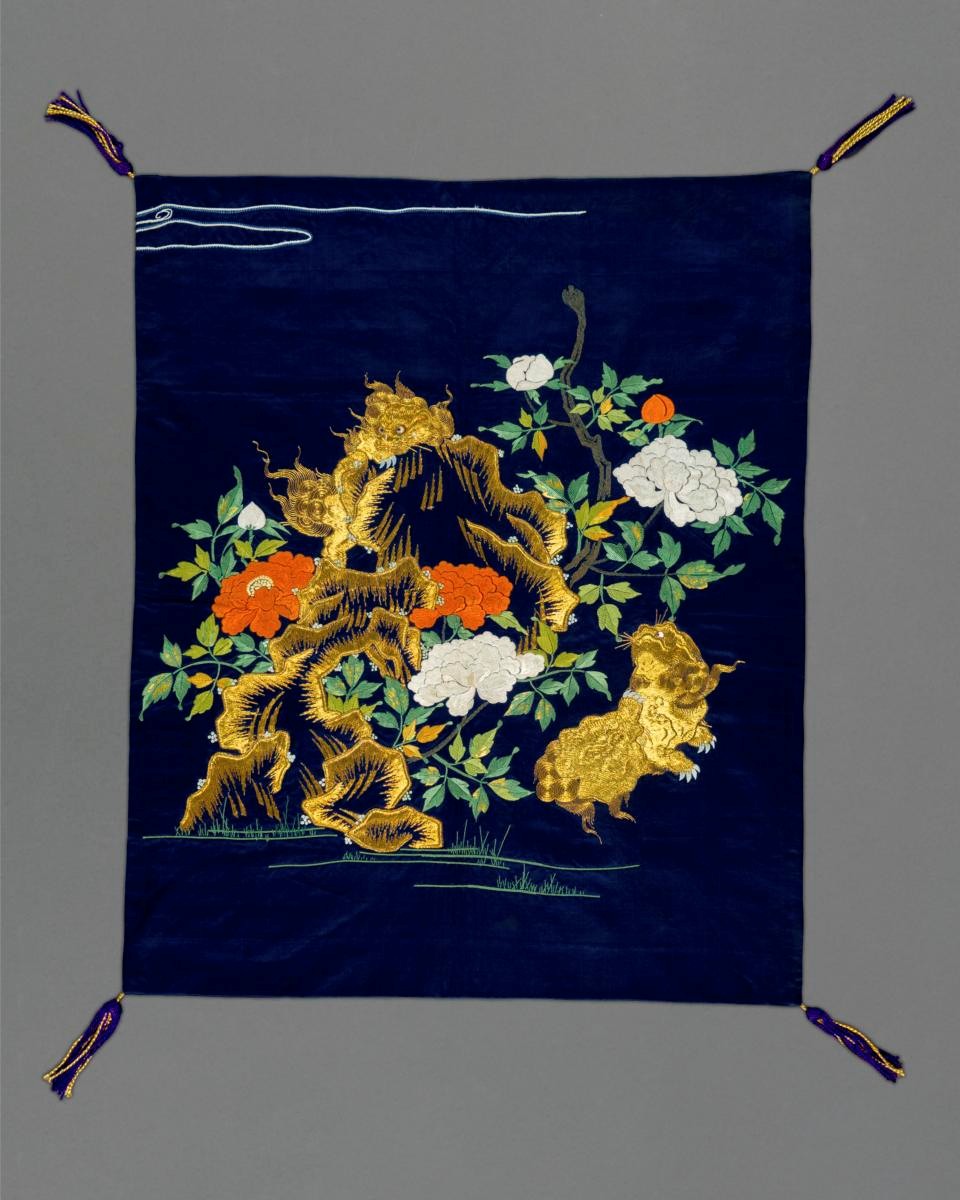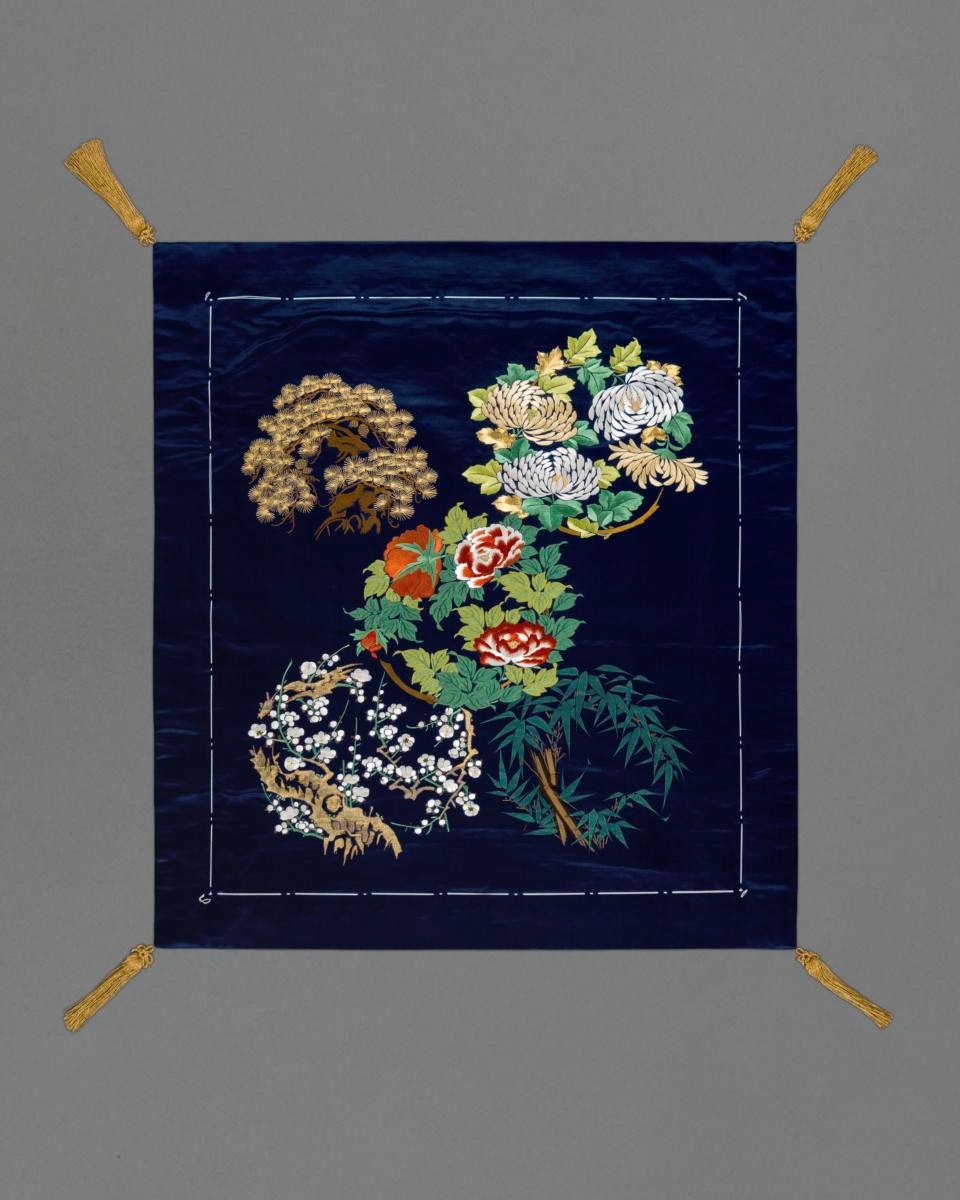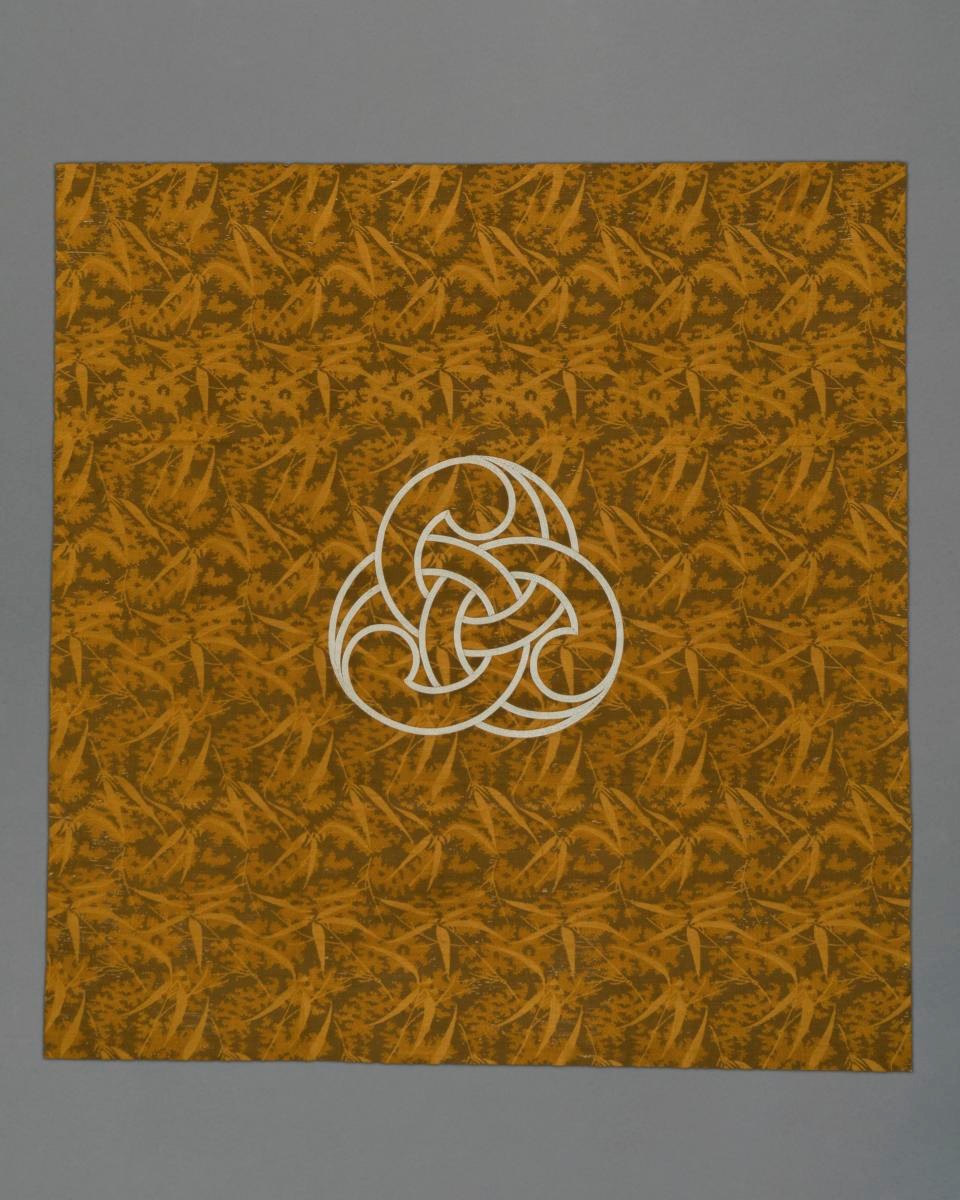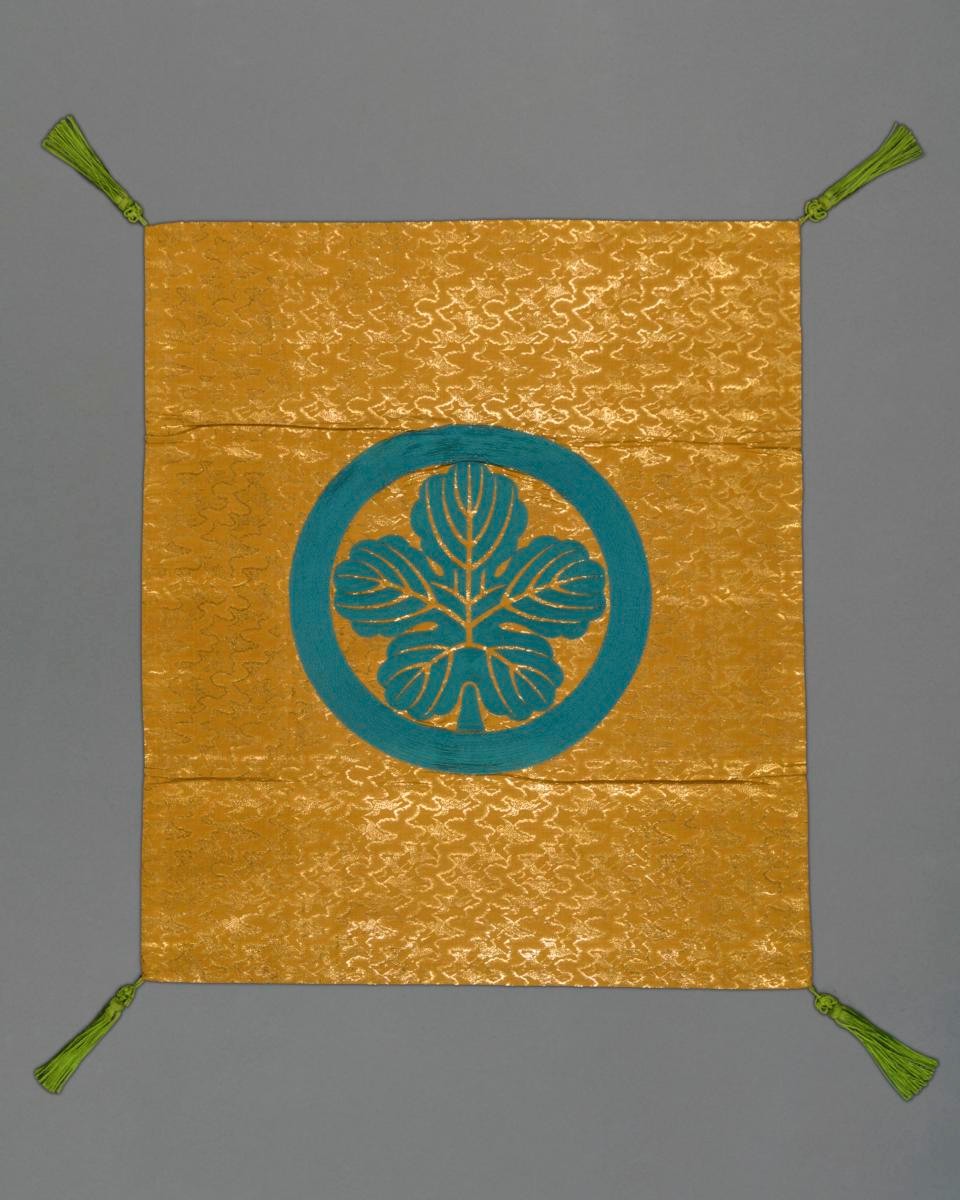

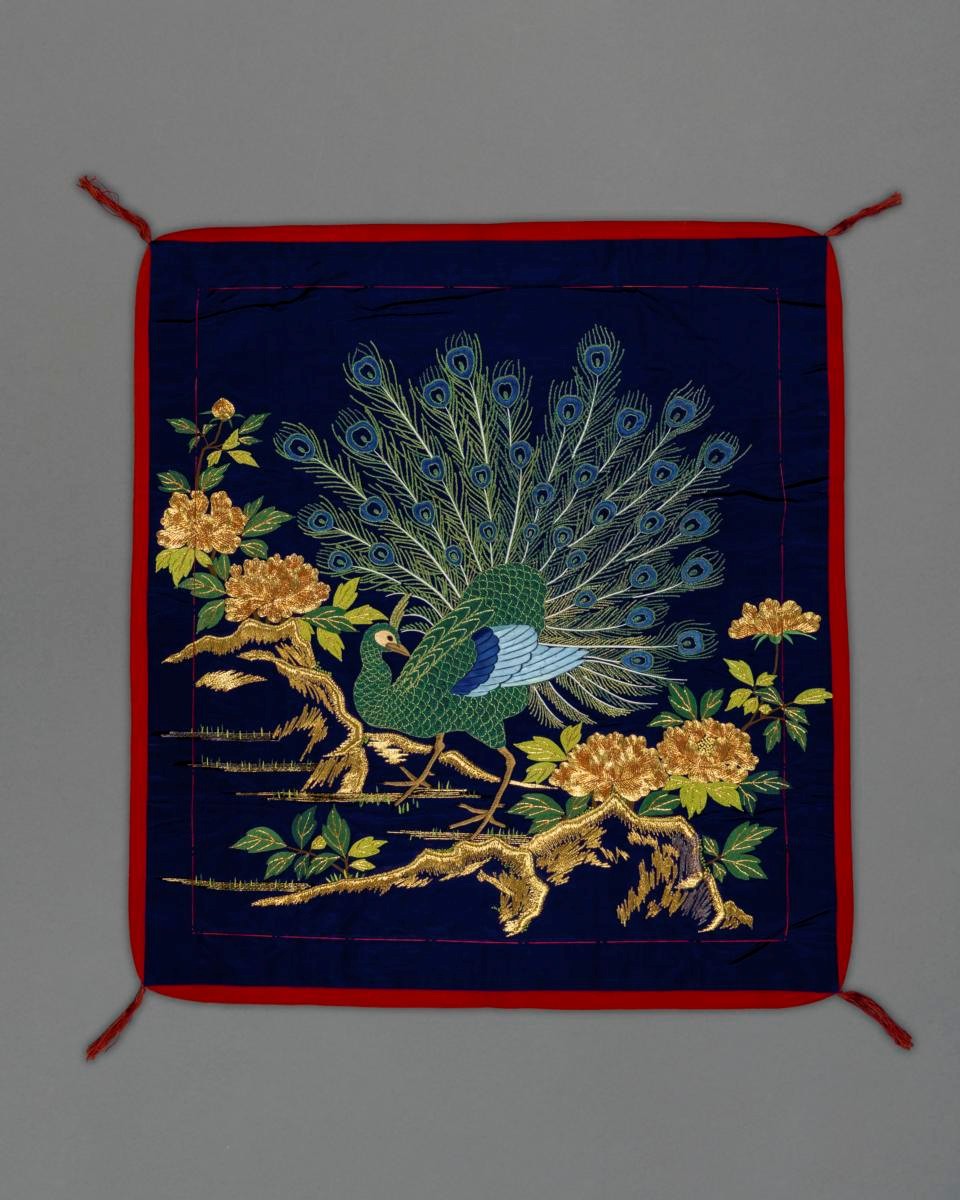
Object size: 86.0 x 80.6 cm (with tassels)
In Japan, the practice of formally presenting gifts with silk covers called fukusa began in the Edo period (1603–1868), around the late 17th or early 18th century. These covers were draped or folded over gifts for a variety of occasions, from seasonal festivities to important personal events. Each fukusa was carefully chosen to evoke the circumstance of the gift and to convey a message to the recipient through its design. Fukusa designs often feature symbolic objects or allusions to Japanese and Chinese stories. The choice of fukusa also reflected the giver’s wealth, taste, erudition, and cultural sensitivity. The use of fukusa continued into the early 20th century. Today, they are used in parts of Japan for weddings and corporate events. Peacocks are popular motifs in Japanese art and are frequently paired with peonies. As symbols of beauty, peacocks and their feathers were also associated with the Aesthetic movement and its ethos that art should be beautiful above all else. They were fashionable in late nineteenth-century Western art and design, coinciding with the interest in Japonisme. This is best represented by the Peacock Room designed by James McNeill Whistler, once in Kensington, London, and now at Freer Gallery of Art in Washington, DC. Whistler was a key figure in the Aesthetic movement and heavily influenced by Japanese art. The room features a large mural of two peacocks, together with a painting by Whistler, The Princess from the Land of Porcelain, depicting a woman surrounded by Japanese and Chinese objects. Recognising the popularity of the peacock motif overseas, Meiji textile makers and merchants used it on many fine art textiles and other silks exported to the West.