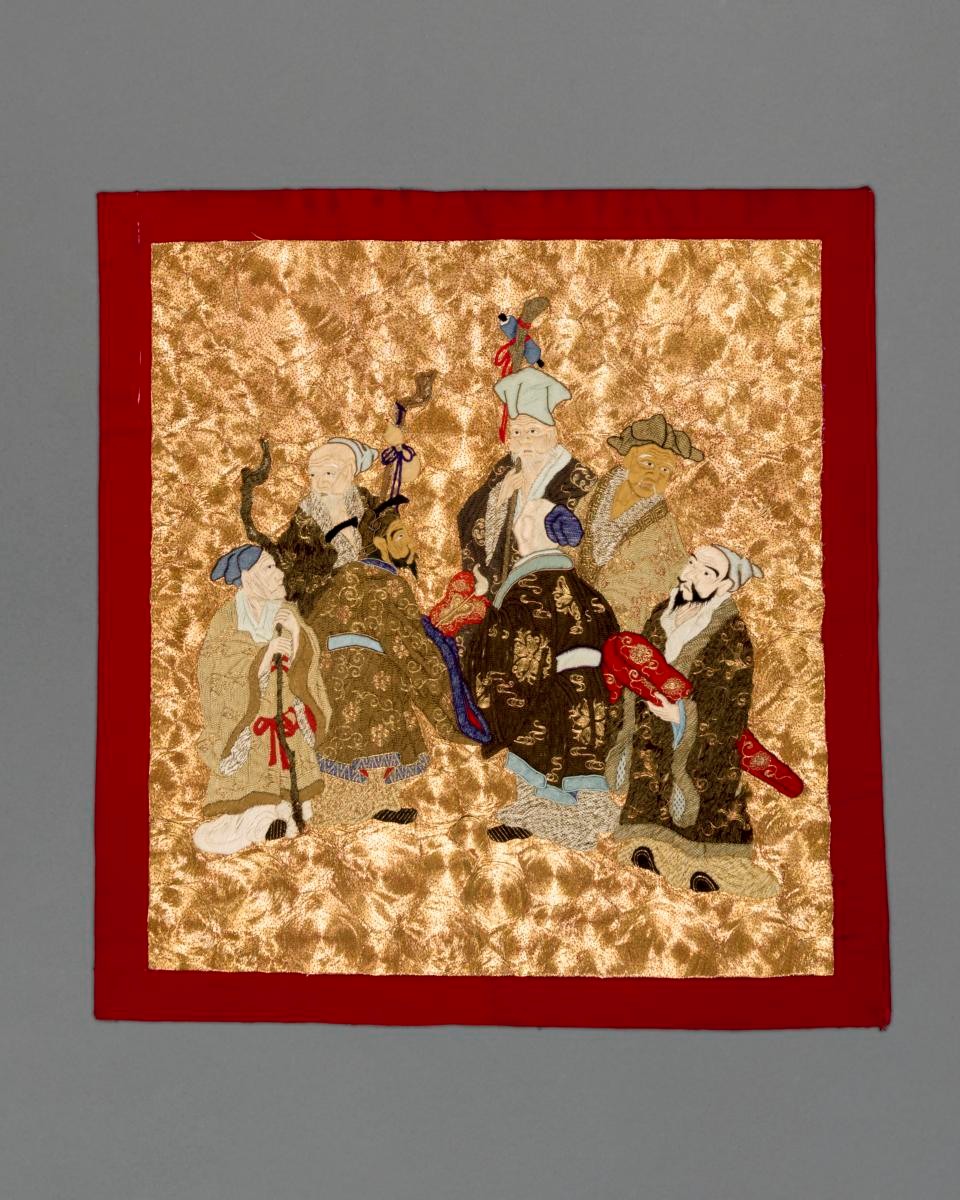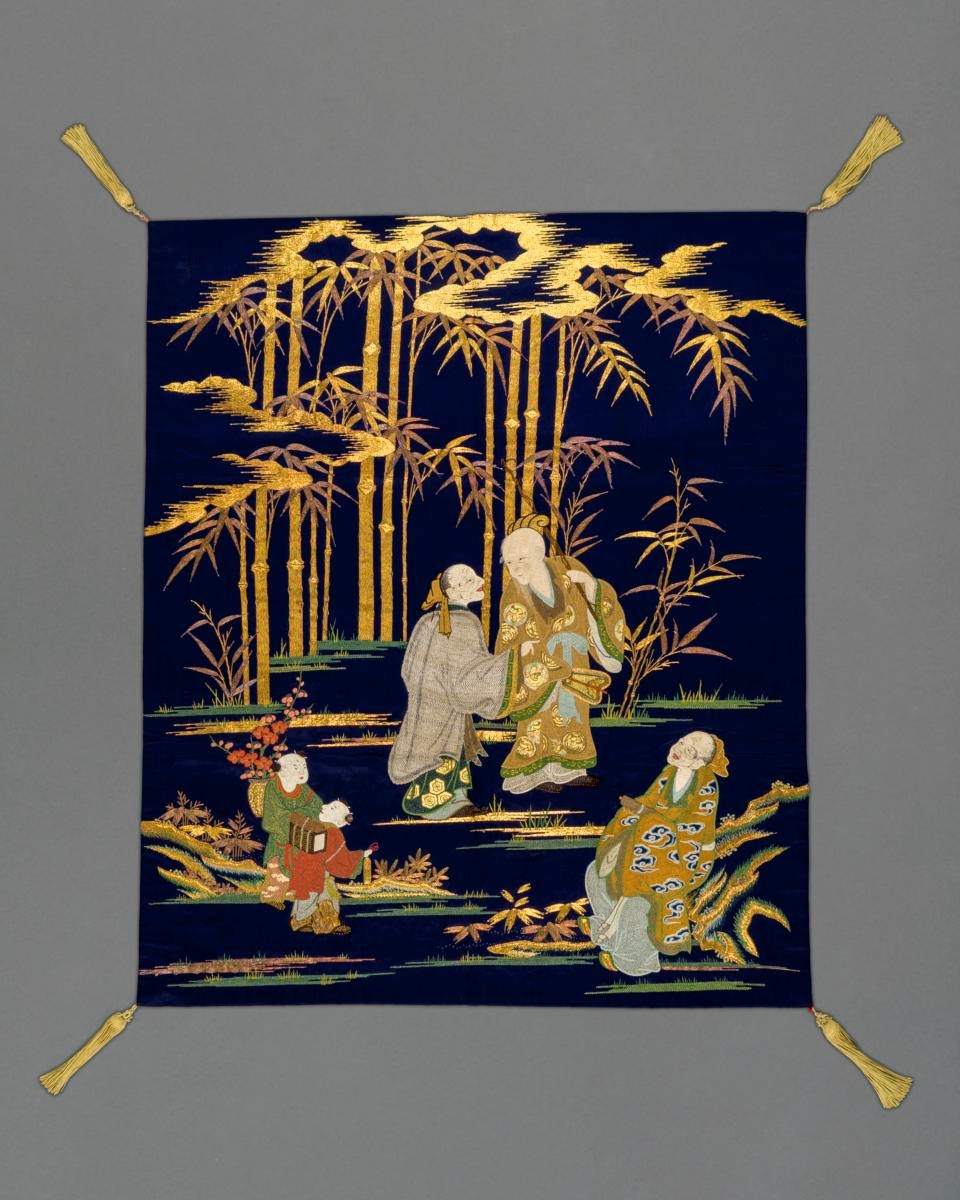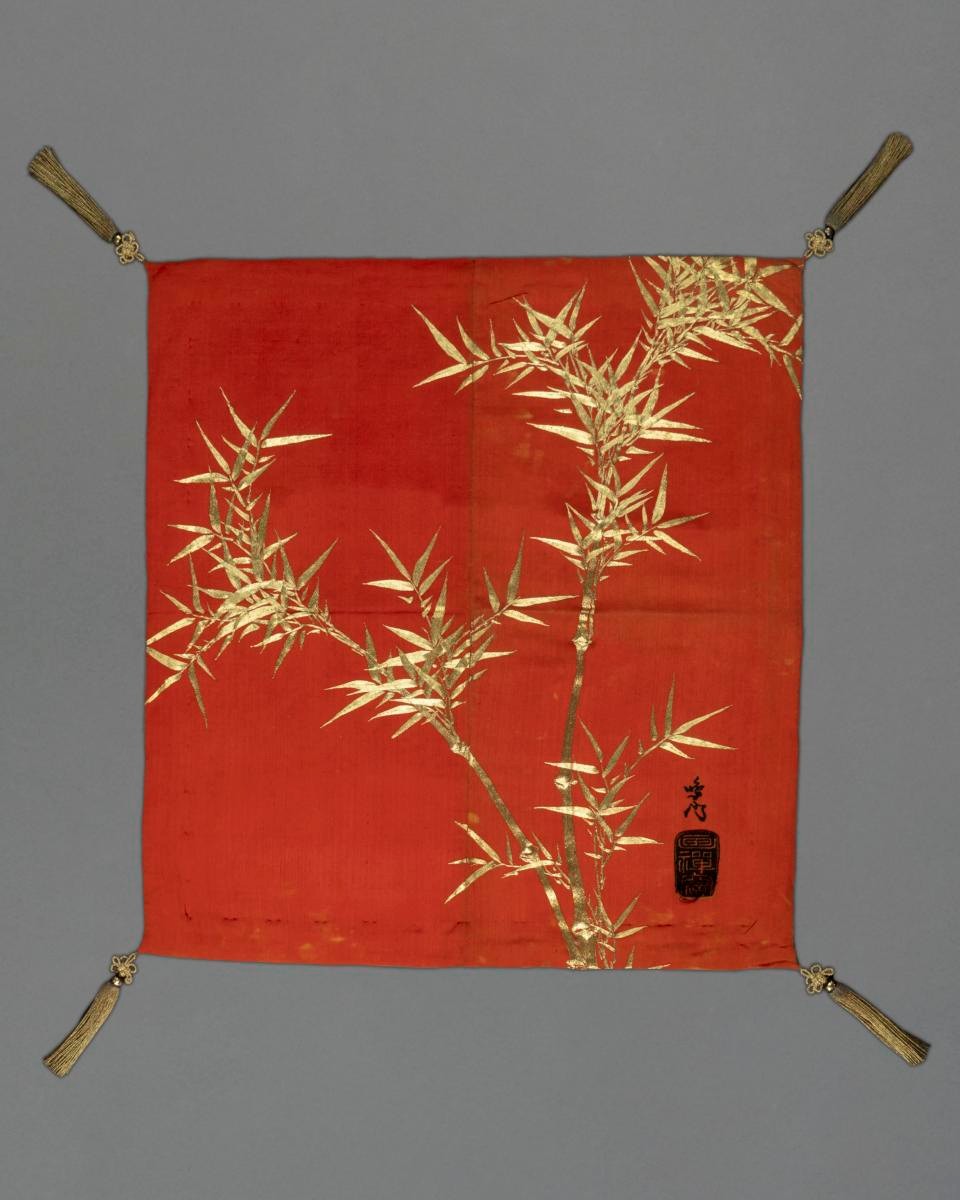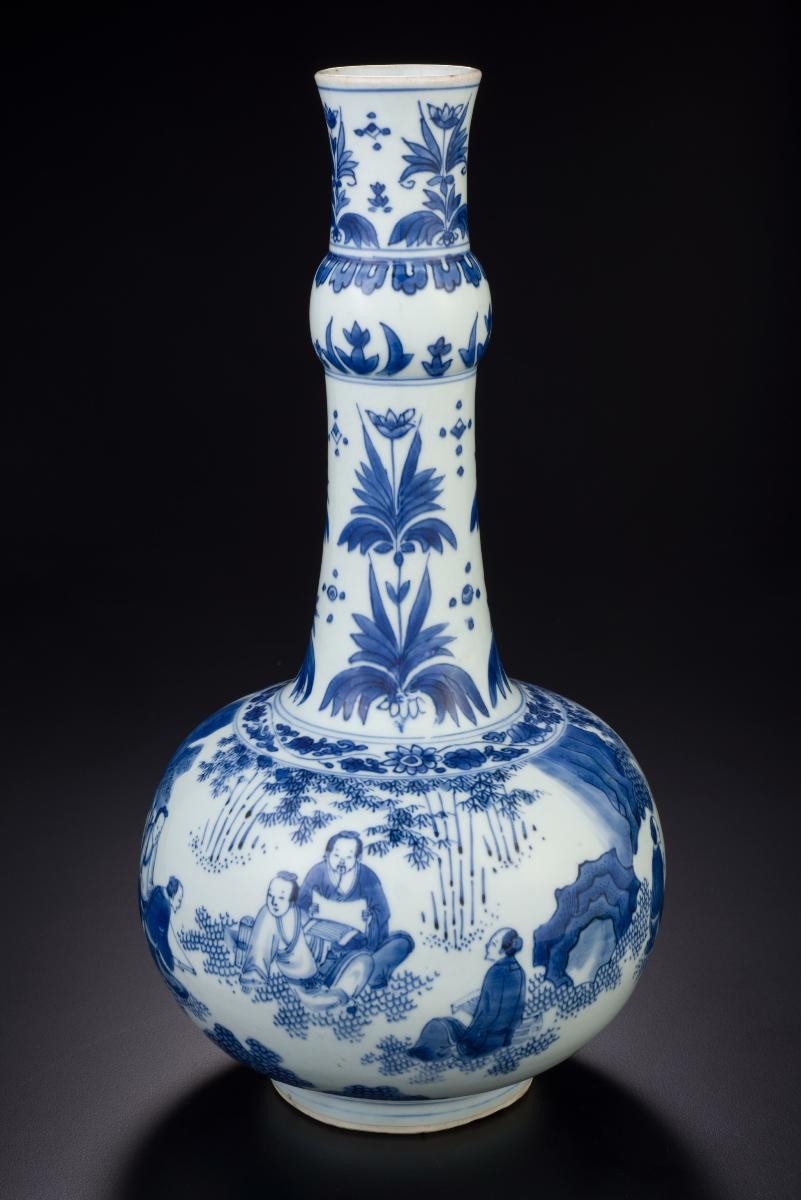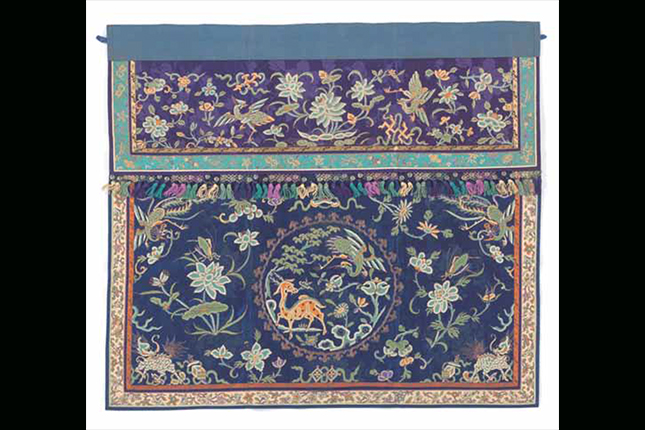

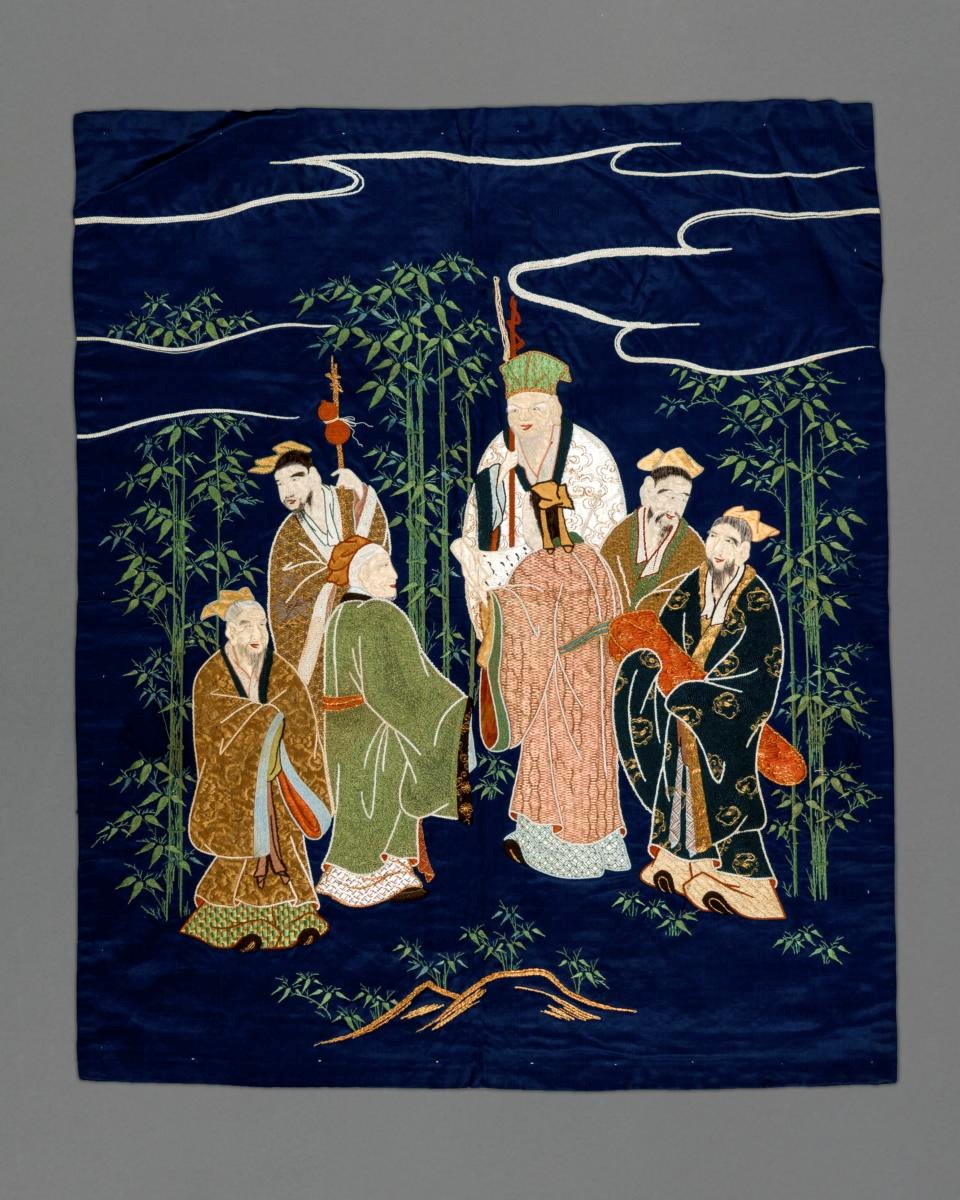
In Japan, the practice of formally presenting gifts with silk covers called fukusa began in the Edo period (1603–1868), around the late 17th or early 18th century. These covers were draped or folded over gifts for a variety of occasions, from seasonal festivities to important personal events. Each fukusa was carefully chosen to evoke the circumstance of the gift and to convey a message to the recipient through its design. Fukusa designs often feature symbolic objects or allusions to Japanese and Chinese stories. The choice of fukusa also reflected the giver’s wealth, taste, erudition, and cultural sensitivity. The use of fukusa continued into the early 20th century. Today, they are used in parts of Japan for weddings and corporate events. The Seven Sages of the Bamboo Grove (Chikurin Shichi Kenjin) were a group of learned men from third-century China. During this politically fraught period, they distanced themselves from government service and gathered in a bamboo grove to enjoy rustic pleasures and conversation, poetry, music, and wine. In China, Japan, and Korea they served as role models for the literati. Fukusa with the Seven Sages would have been presented to a superior or when a child entered a new school (nyūgaku). Different kinds of stitches create an array of textures and patterns on the figures’ robes. Losses to some areas on this fukusa, as seen on the second figure from the left, reveal a paper substrate beneath the embroidery, which helps to support heavy twisted cords or metal threads.