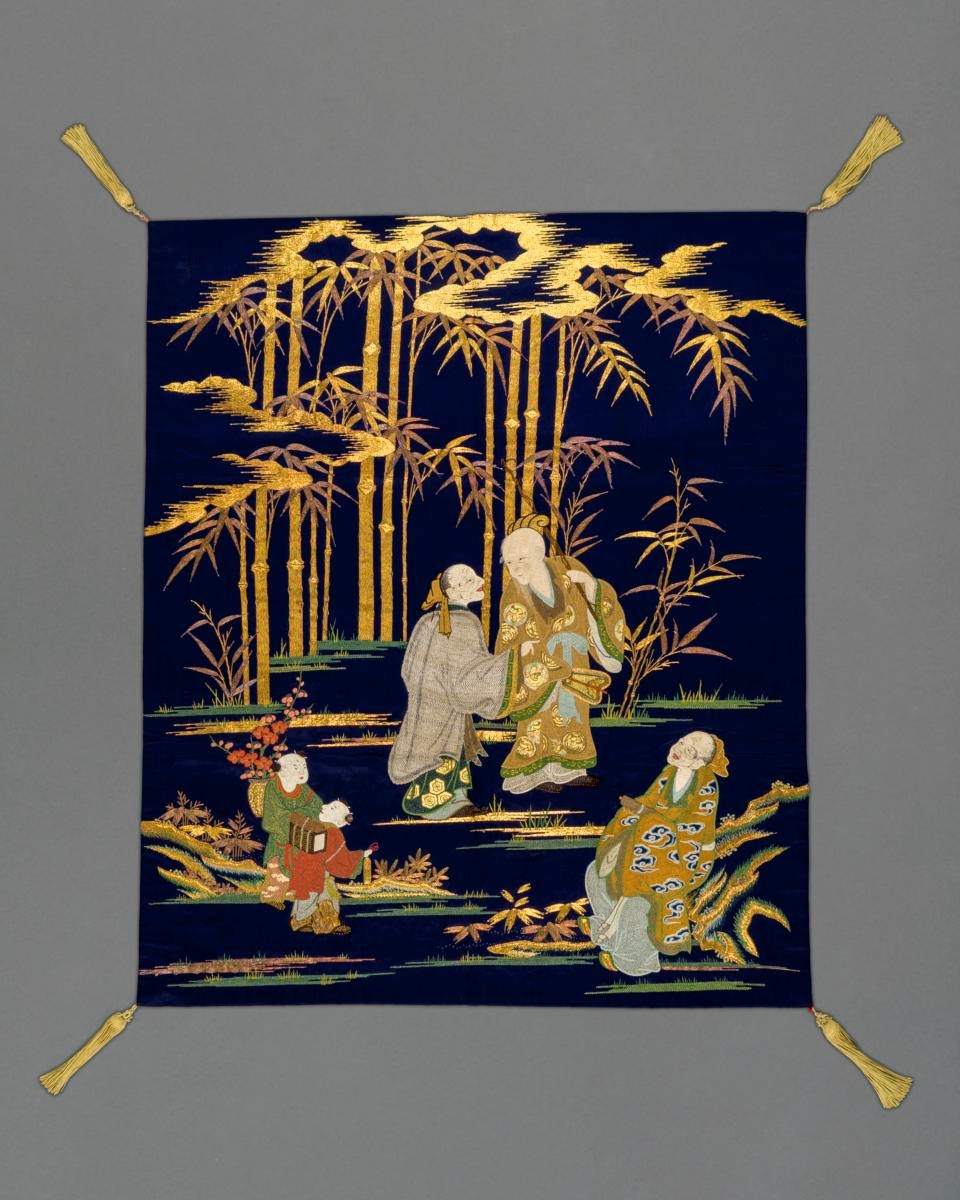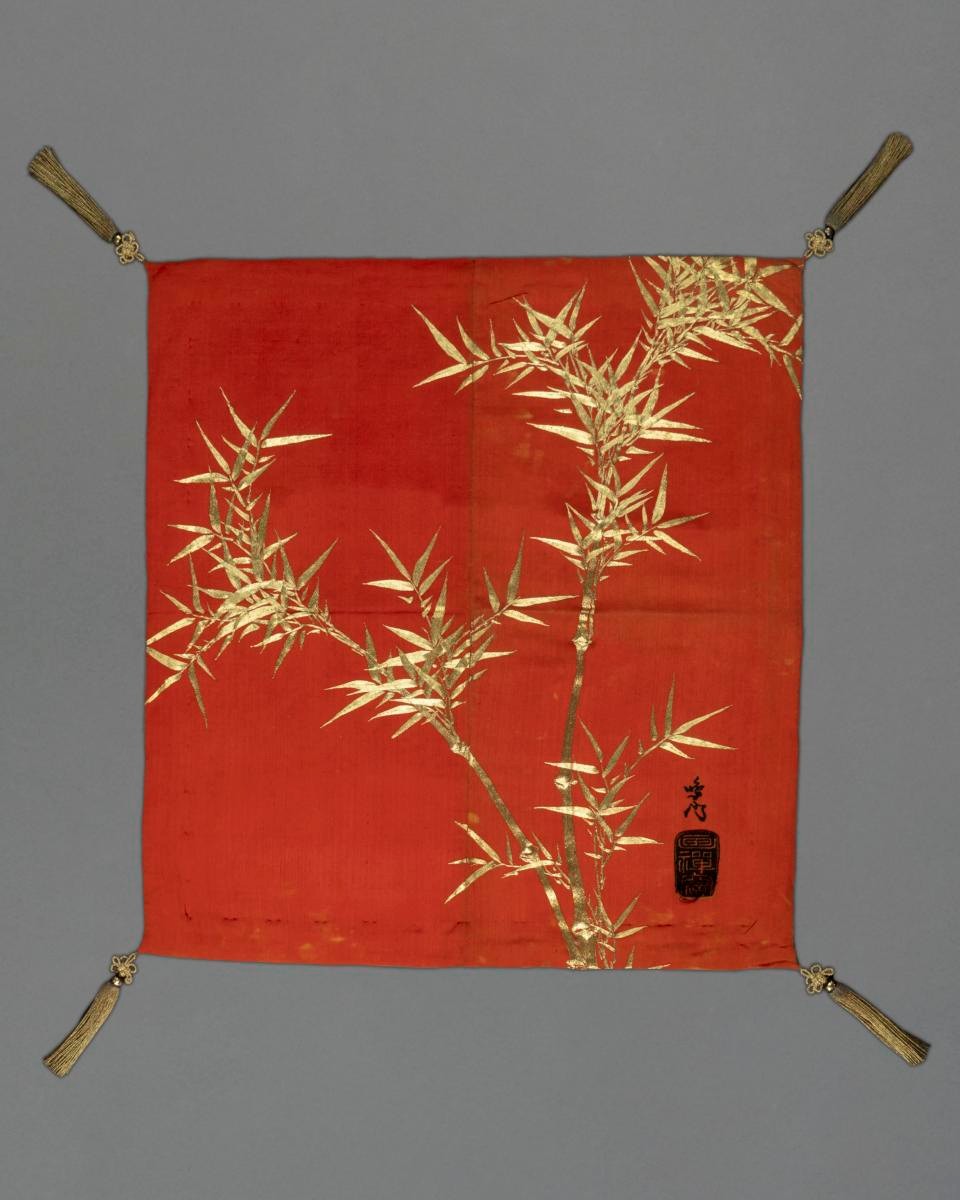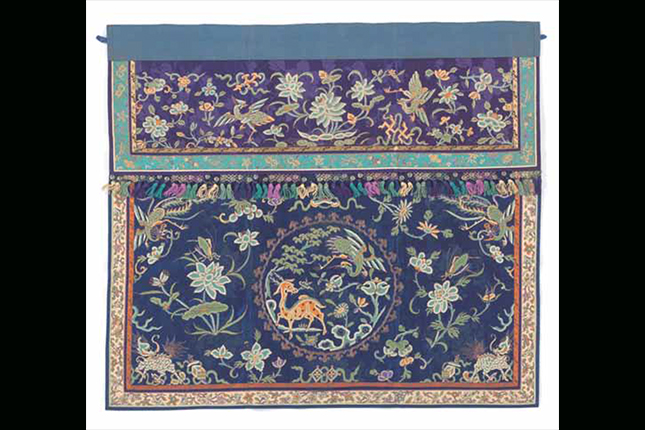

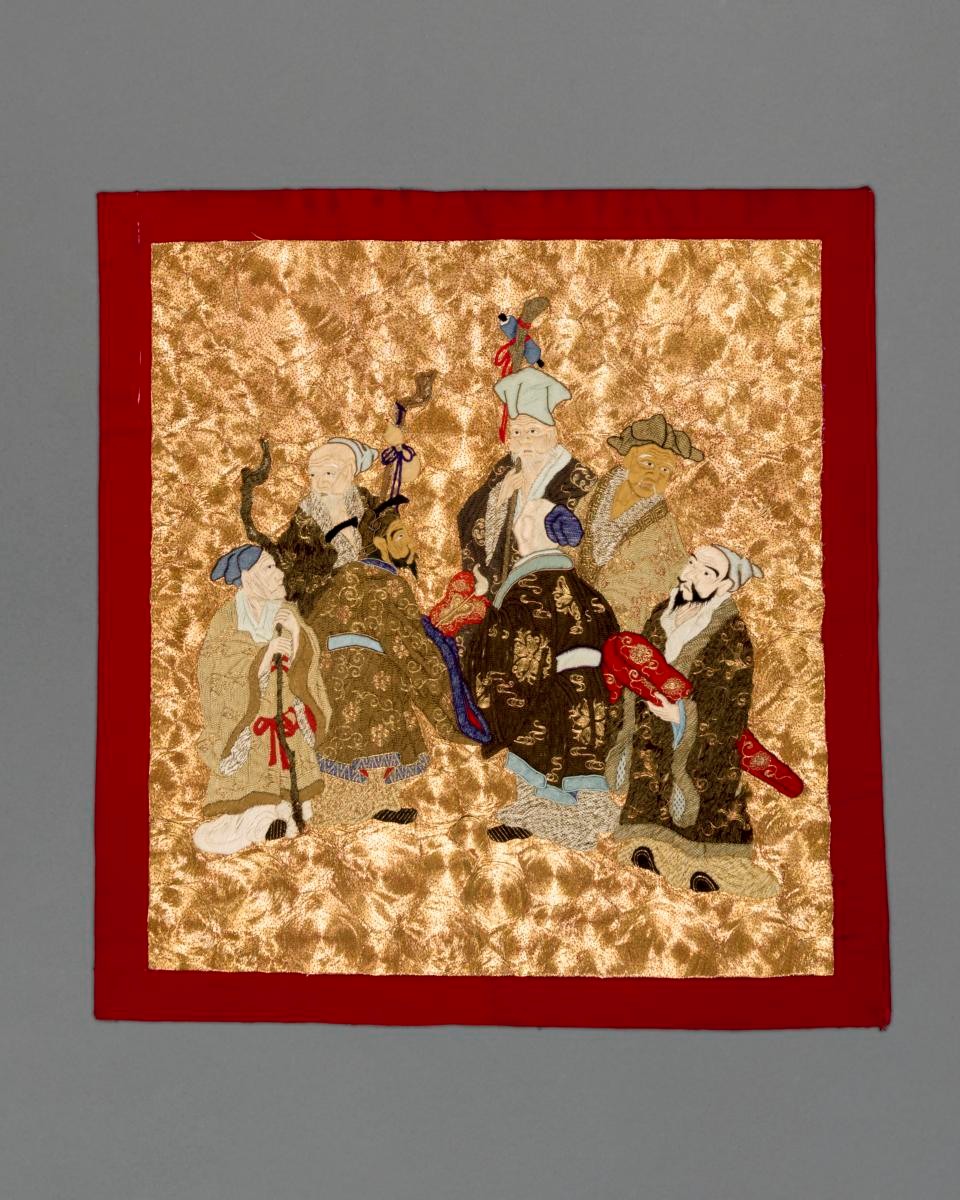
In Japan, the practice of formally presenting gifts with silk covers called fukusa began in the Edo period (1603–1868), around the late 17th or early 18th century. These covers were draped or folded over gifts for a variety of occasions, from seasonal festivities to important personal events. Each fukusa was carefully chosen to evoke the circumstance of the gift and to convey a message to the recipient through its design. Fukusa designs often feature symbolic objects or allusions to Japanese and Chinese stories. The choice of fukusa also reflected the giver’s wealth, taste, erudition, and cultural sensitivity. The use of fukusa continued into the early 20th century. Today, they are used in parts of Japan for weddings and corporate events. The techniques used to make traditional textiles like fukusa and kimonos were shared with Meiji ornamental silks. Some fukusa were made of separately worked pieces, often padded to add dimensionality, and then configured on a ground fabric. As seen here, padding accentuates the men’s facial features and draped robes. The ground was then lavishly covered in spiral-couched gilt thread, placing the figures in a sea of gold. This style was frequently featured in decorative textiles made for export, probably in response to the Western penchant for Japanese embroidery. Although scholarly accoutrements like the zither reflect the figures’ literati identities, it is curious that there is no representation of bamboo. Beginning in the Edo period, the Seven Sages (Chikurin Shichi Kenjin) became a very popular motif used by commoners. This fukusa may reflect a generalisation of the theme. Based on its lavish embroidery, this piece may have also been a decorative cover made for export, where the significance of the figures would be lost on foreign audiences.