
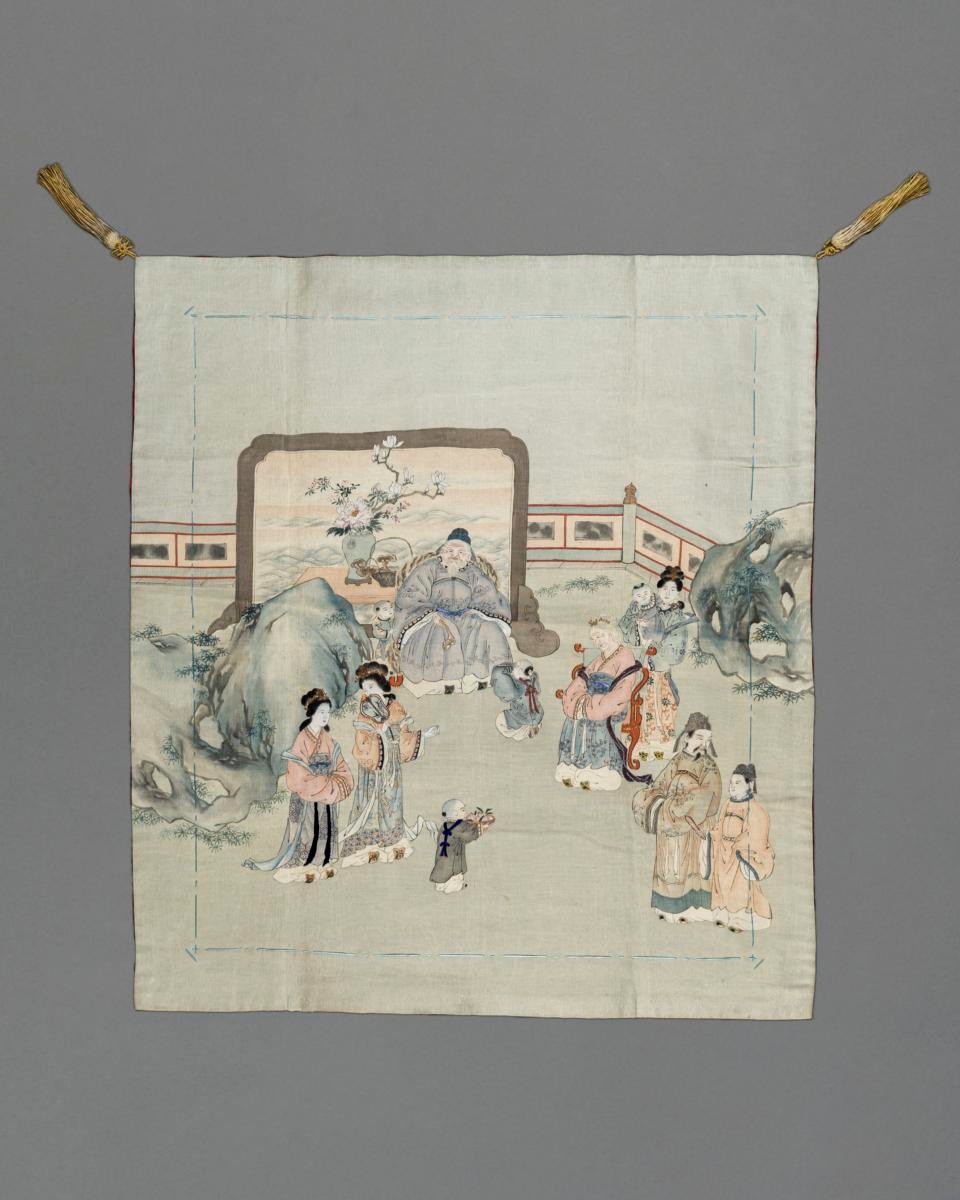
Object size: 84.0 x 64.8 cm (with tassels)
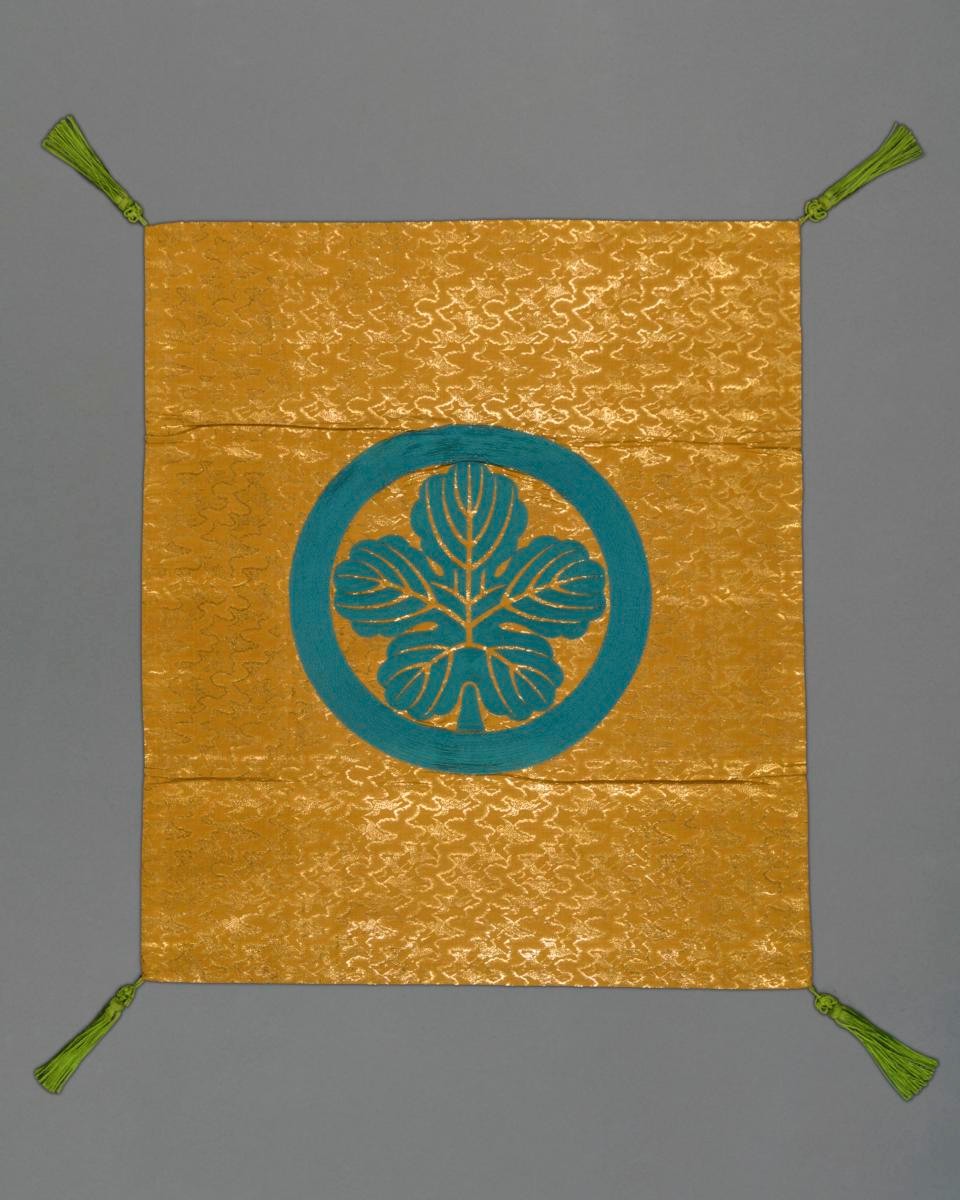
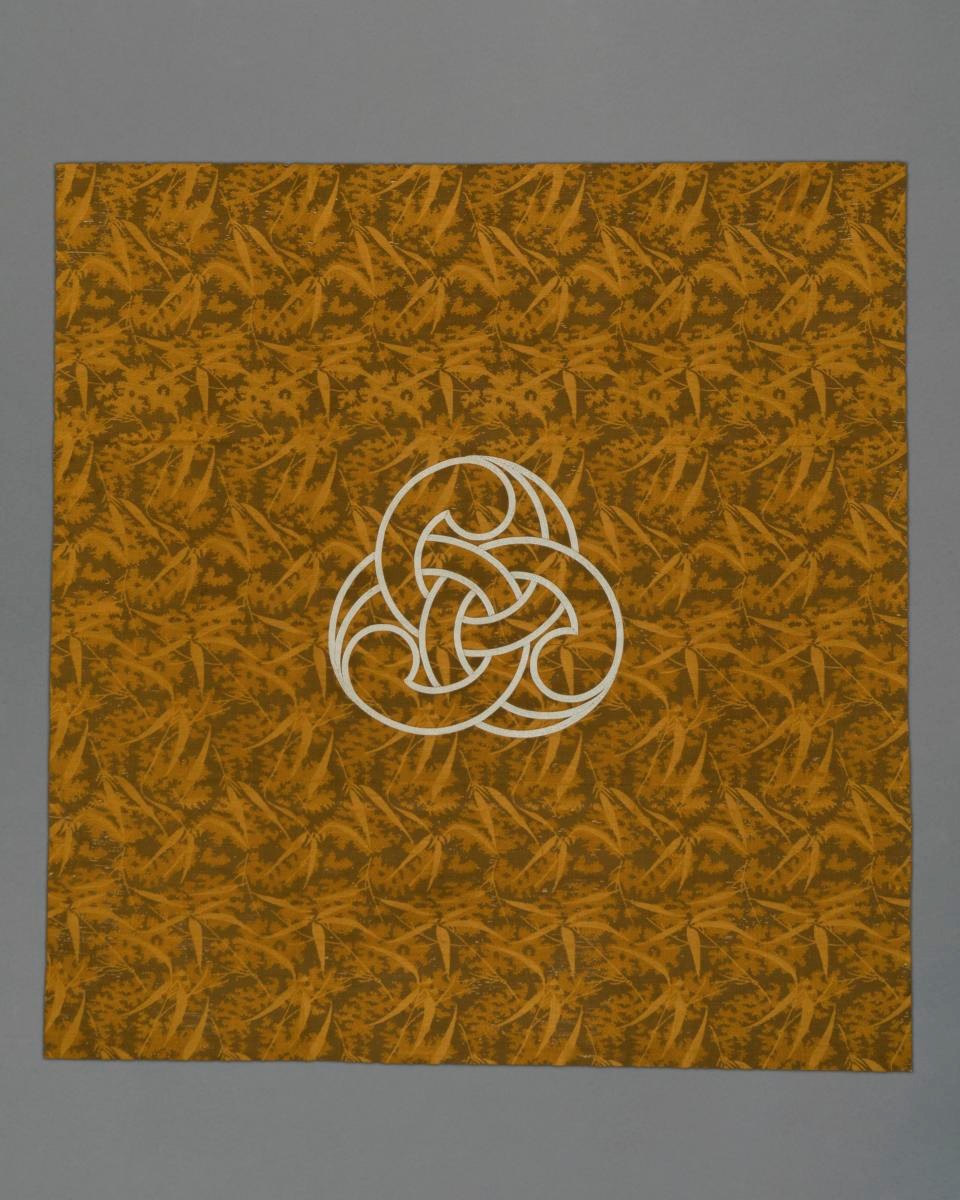
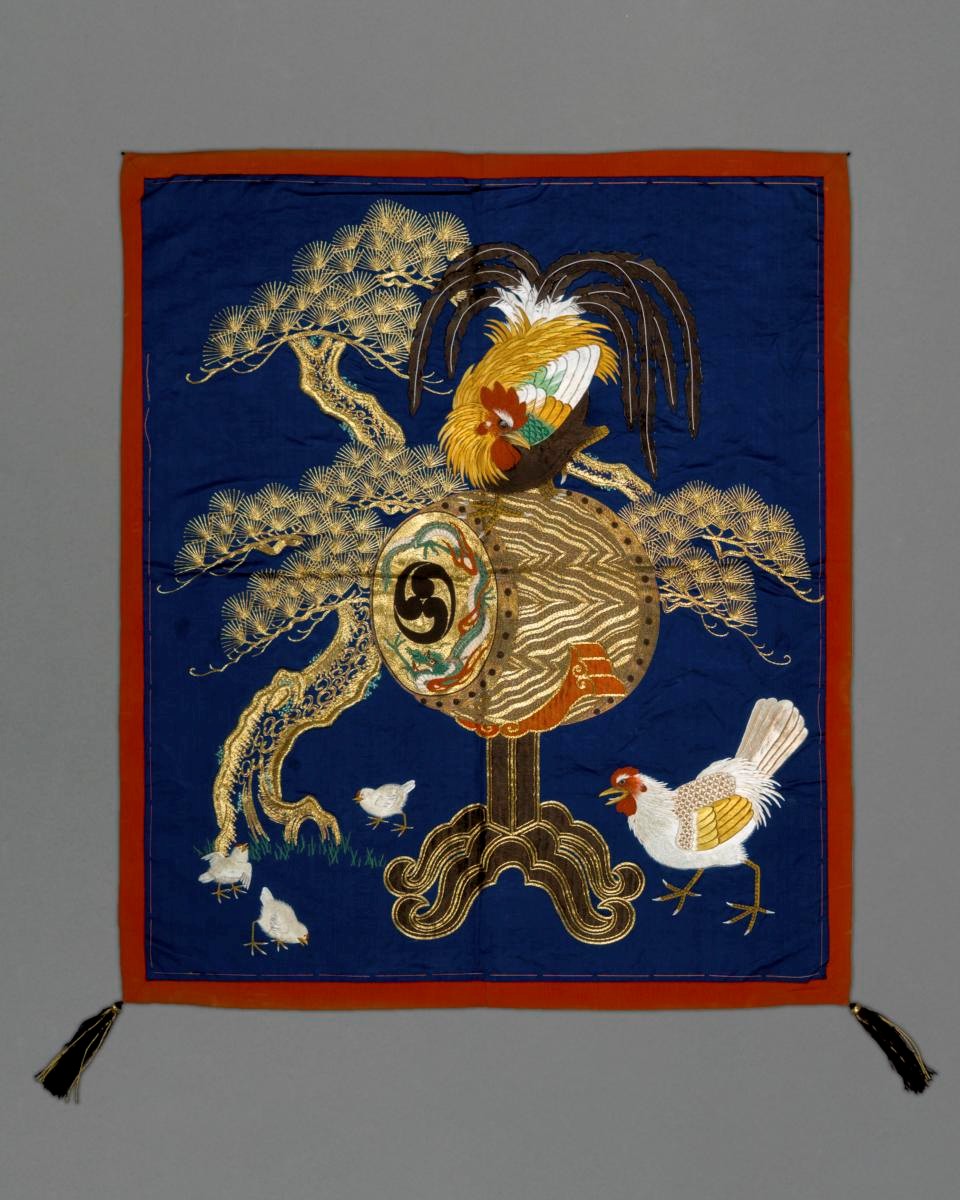
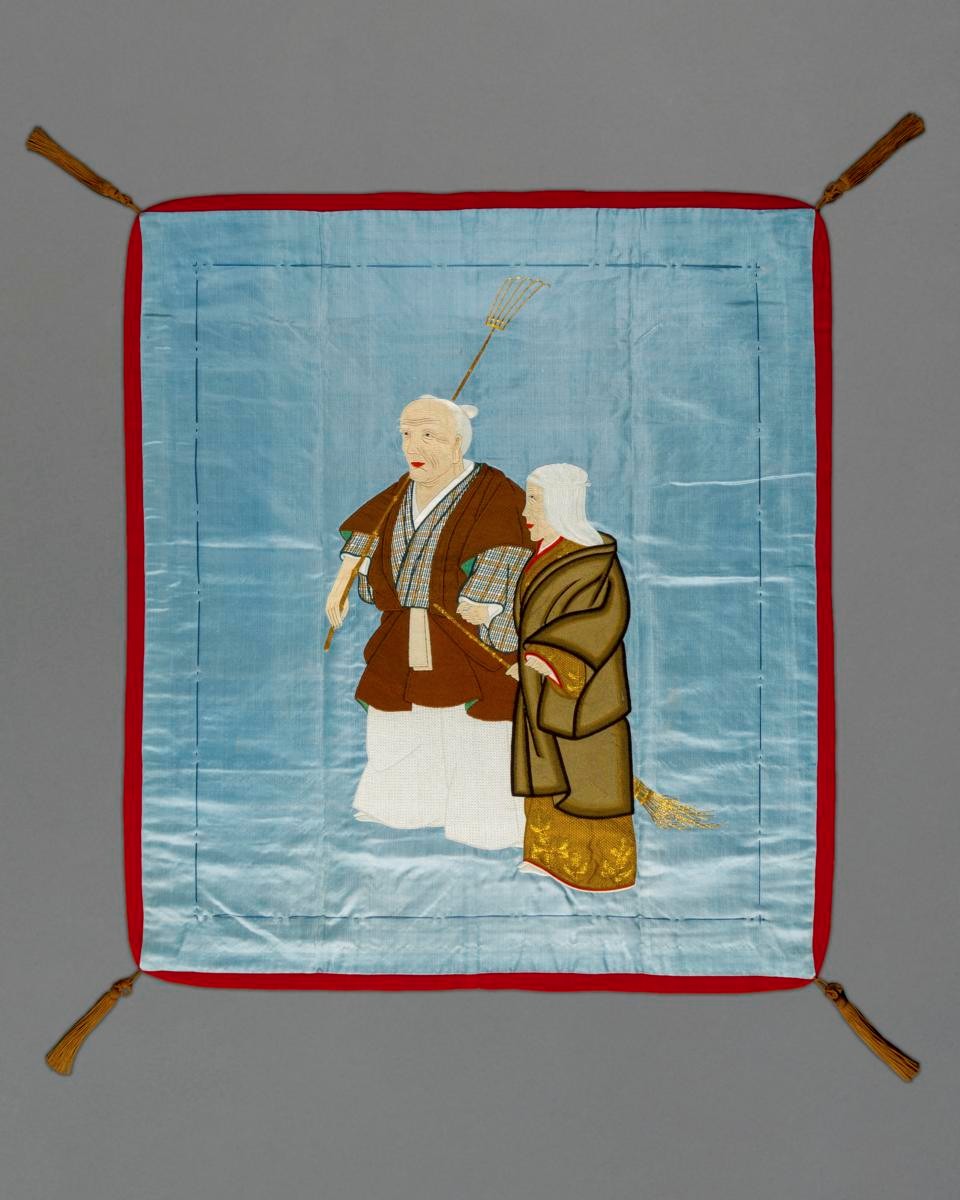
In Japan, the practice of formally presenting gifts with silk covers called fukusa began in the Edo period (1603–1868), around the late 17th or early 18th century. These covers were draped or folded over gifts for a variety of occasions, from seasonal festivities to important personal events. Each fukusa was carefully chosen to evoke the circumstance of the gift and to convey a message to the recipient through its design. Fukusa designs often feature symbolic objects or allusions to Japanese and Chinese stories. The choice of fukusa also reflected the giver’s wealth, taste, erudition, and cultural sensitivity. The use of fukusa continued into the early 20th century. Today, they are used in parts of Japan for weddings and corporate events. Guo Ziyi (697–781), known as Kaku Shigi in Japan, was an illustrious general credited with saving the Tang dynasty from the An Lushan rebellion. Besides his military accomplishments, he also lived to old age and had a large family with many successful children. He was thus celebrated as the ideal Confucian model in China, Japan, and Korea. Kaku Shigi is shown seated in a Chinese garden receiving congratulations from his family. The scene is almost certainly based on a painting, perhaps by Maruyama Ōkyo or one his disciples, suggesting a close relationship between art, textile design, and fukusa production in the Meiji period. Some metal-wrapped threads on this fukusa are enhanced with contrasting colours, creating an iridescent sheen. For example, the man in the lower right corner wears a hat embroidered with metallic thread twisted with purple silk floss.