
Object size: 95.0 x 72.0 cm (with tassels)
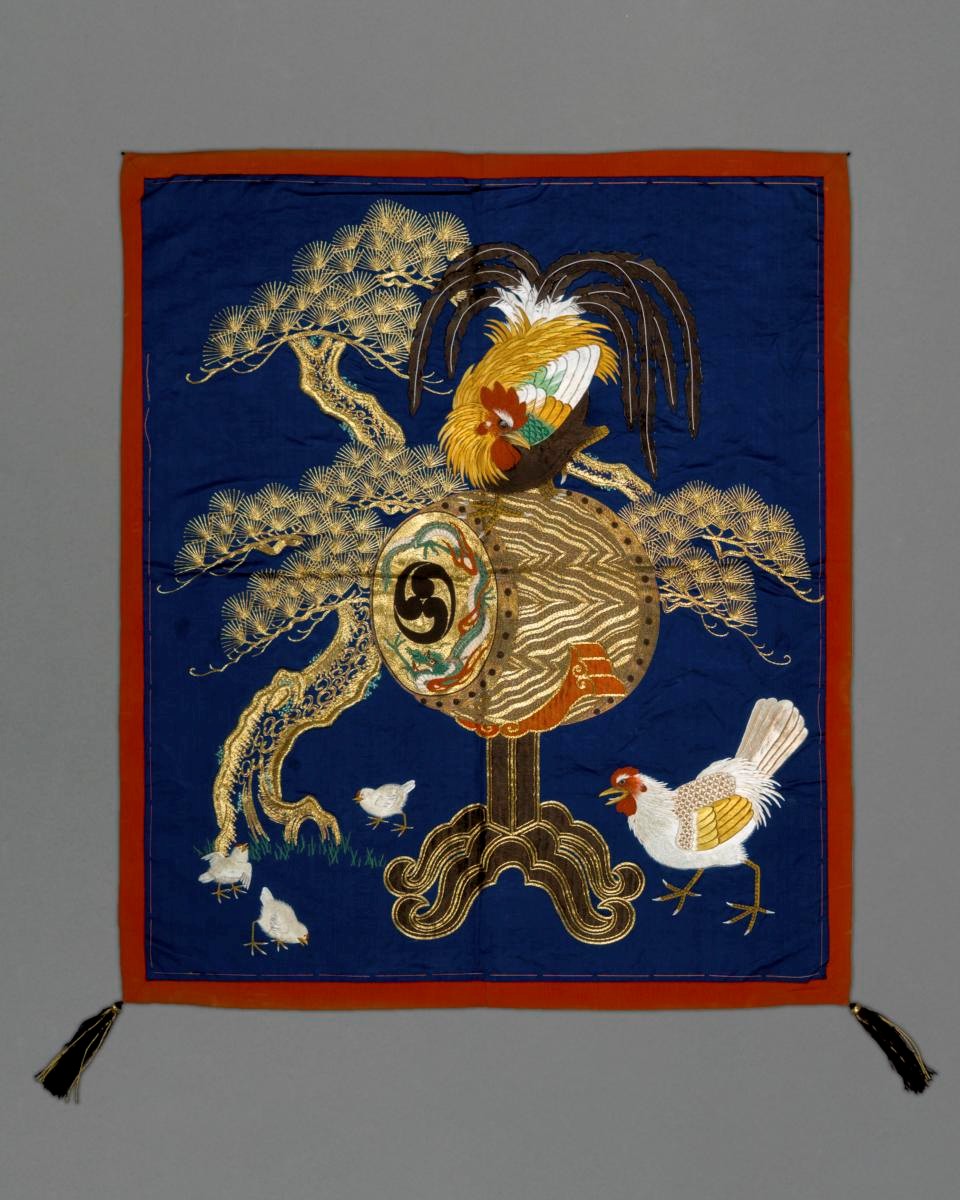
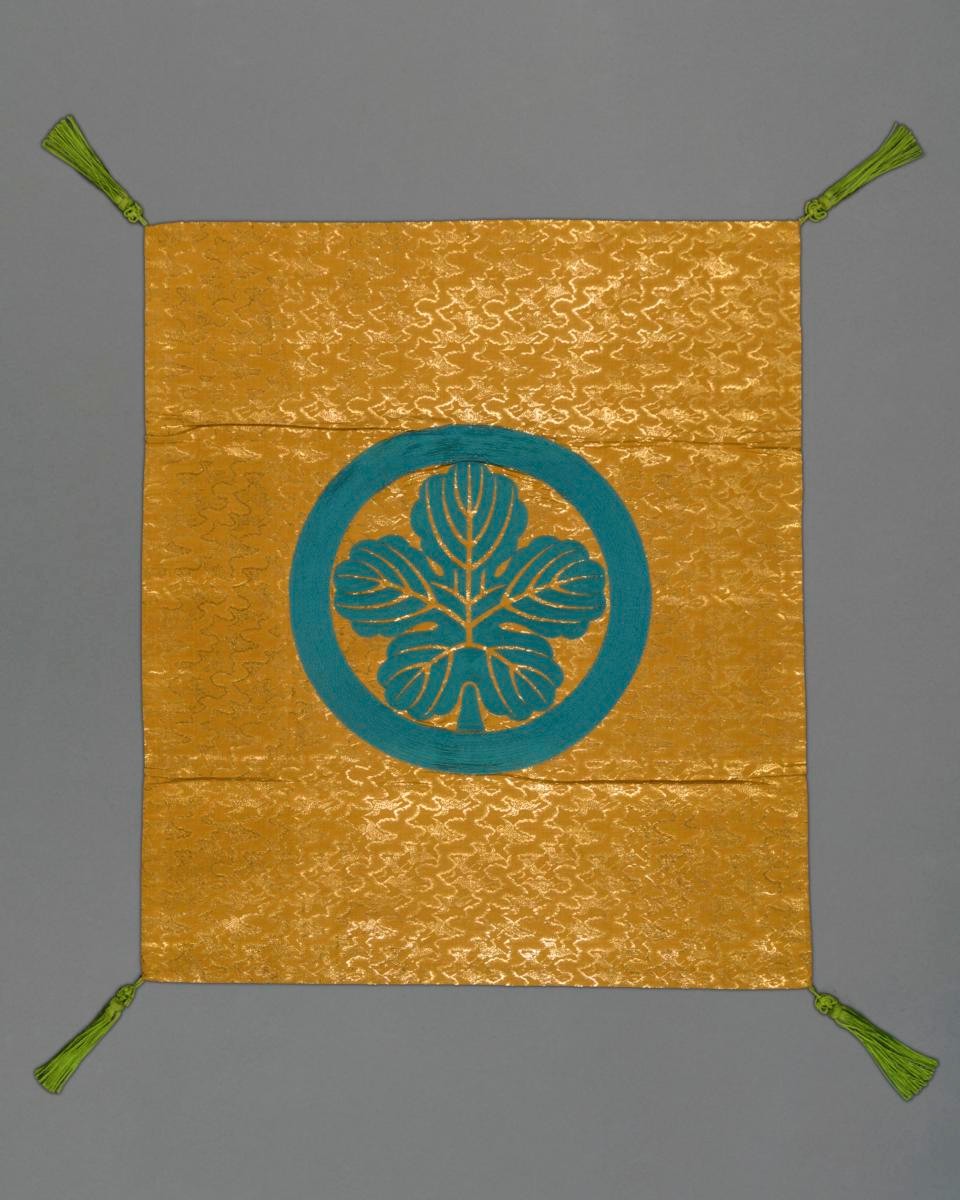
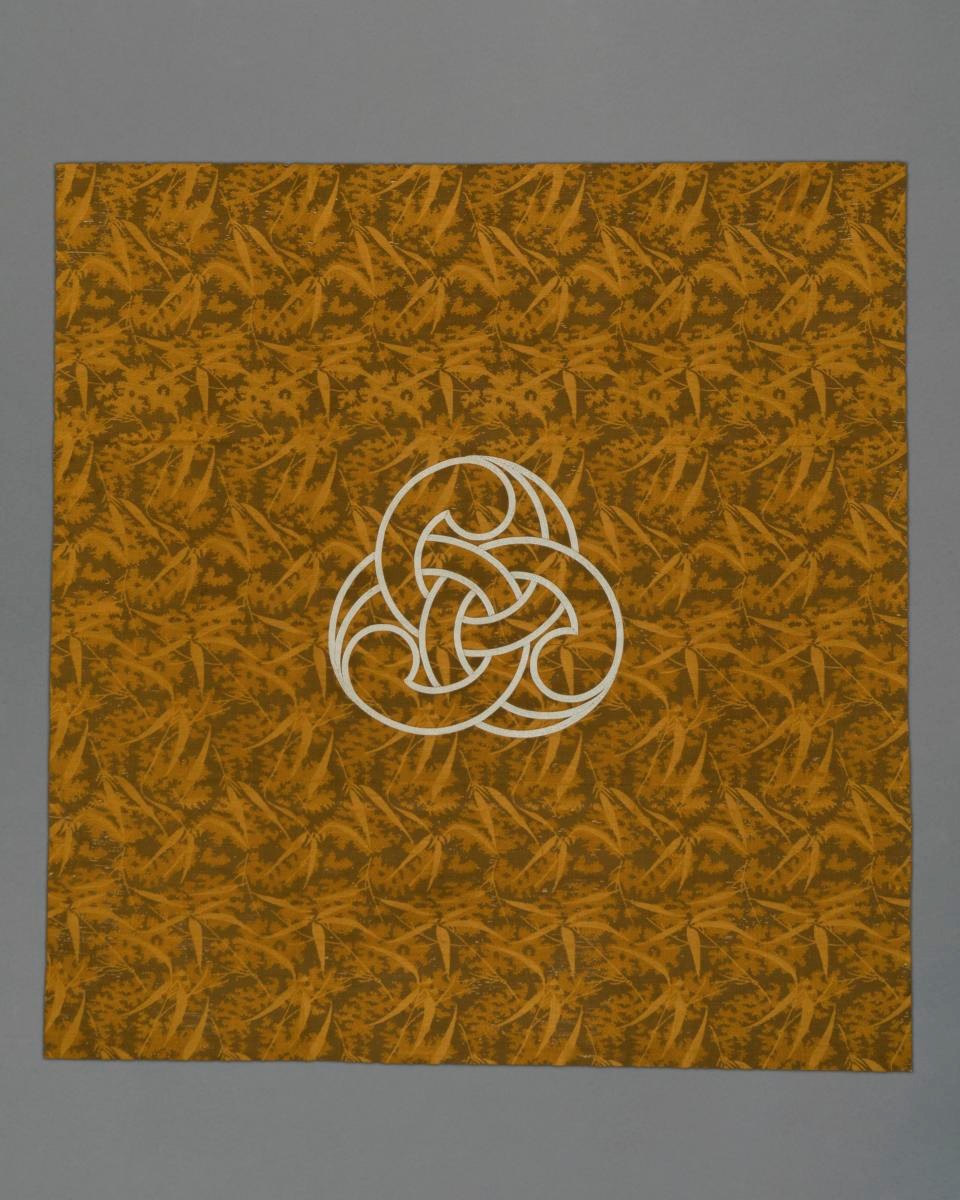
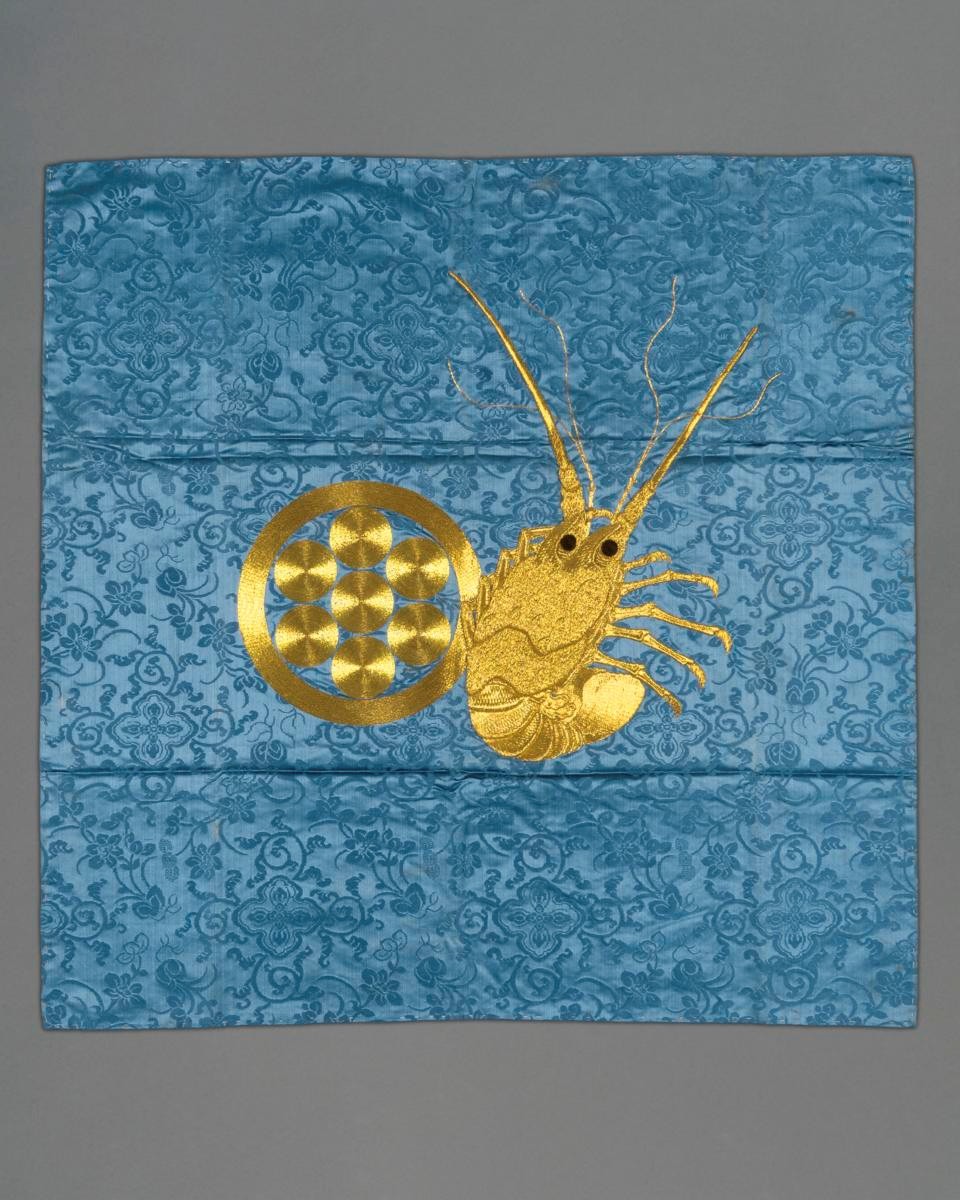
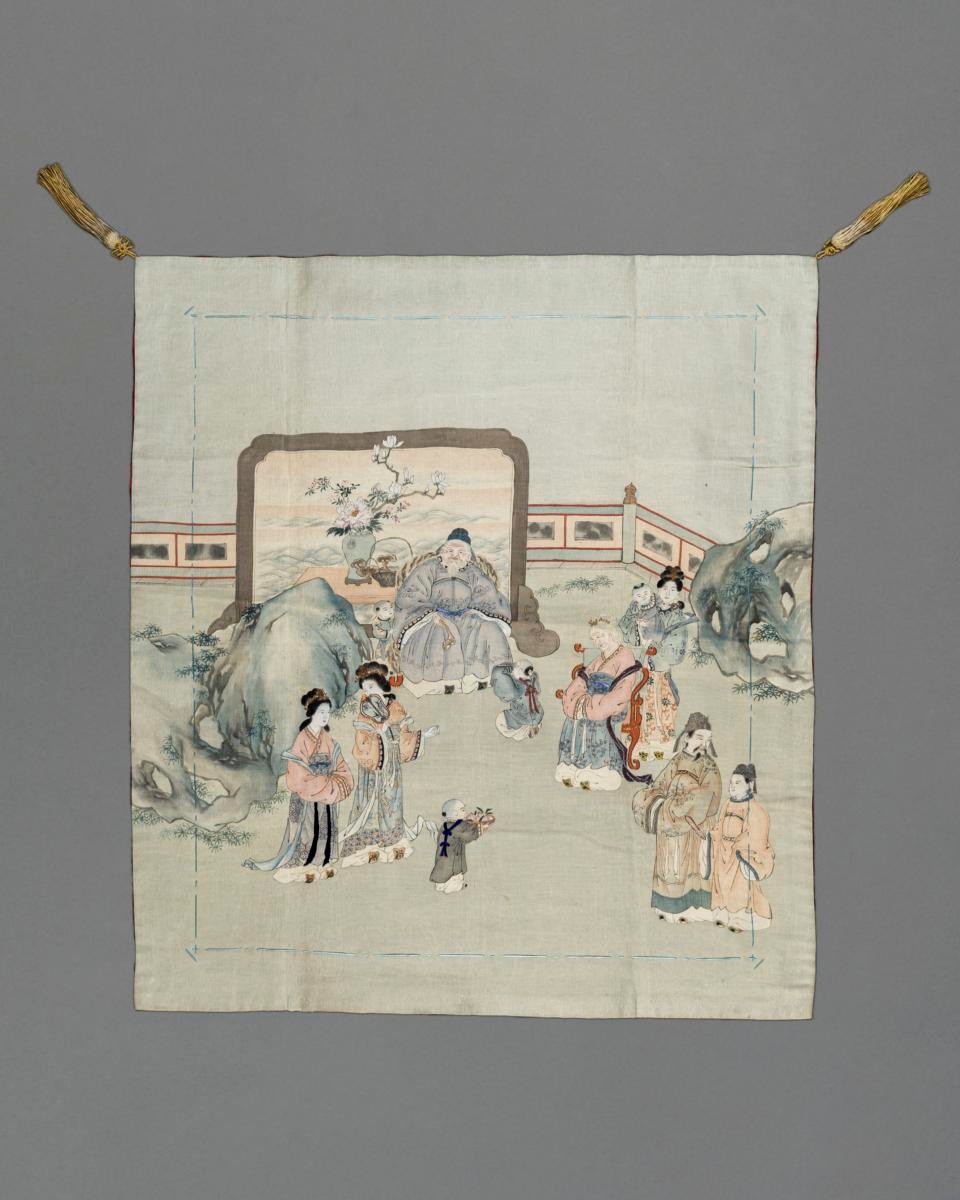
In Japan, the practice of formally presenting gifts with silk covers called fukusa began in the Edo period (1603–1868), around the late 17th or early 18th century. These covers were draped or folded over gifts for a variety of occasions, from seasonal festivities to important personal events. Each fukusa was carefully chosen to evoke the circumstance of the gift and to convey a message to the recipient through its design. Fukusa designs often feature symbolic objects or allusions to Japanese and Chinese stories. The choice of fukusa also reflected the giver’s wealth, taste, erudition, and cultural sensitivity. The use of fukusa continued into the early 20th century. Today, they are used in parts of Japan for weddings and corporate events. A rooster and his family surround a drum in this fukusa. The scene is an expression of the proverb “The drum for raising the alarm is now covered in thick moss, and the fowls are left undisturbed.” According to Chinese legend, the reign of Emperor Yao was so peaceful that the drum used to raise alarms was never used. Moss grew on its surface, and birds built their nests around it. The motif symbolises peace and prosperity, and the hen and chicks convey blessings of familial harmony. As the rooster is also a divine messenger of the Ise Shrine, this fukusa would have been used for gifts given during the New Year and following Shinto ceremonies, such as celebrations of births, milestones in a child’s life, or reaching old age.
.jpg)