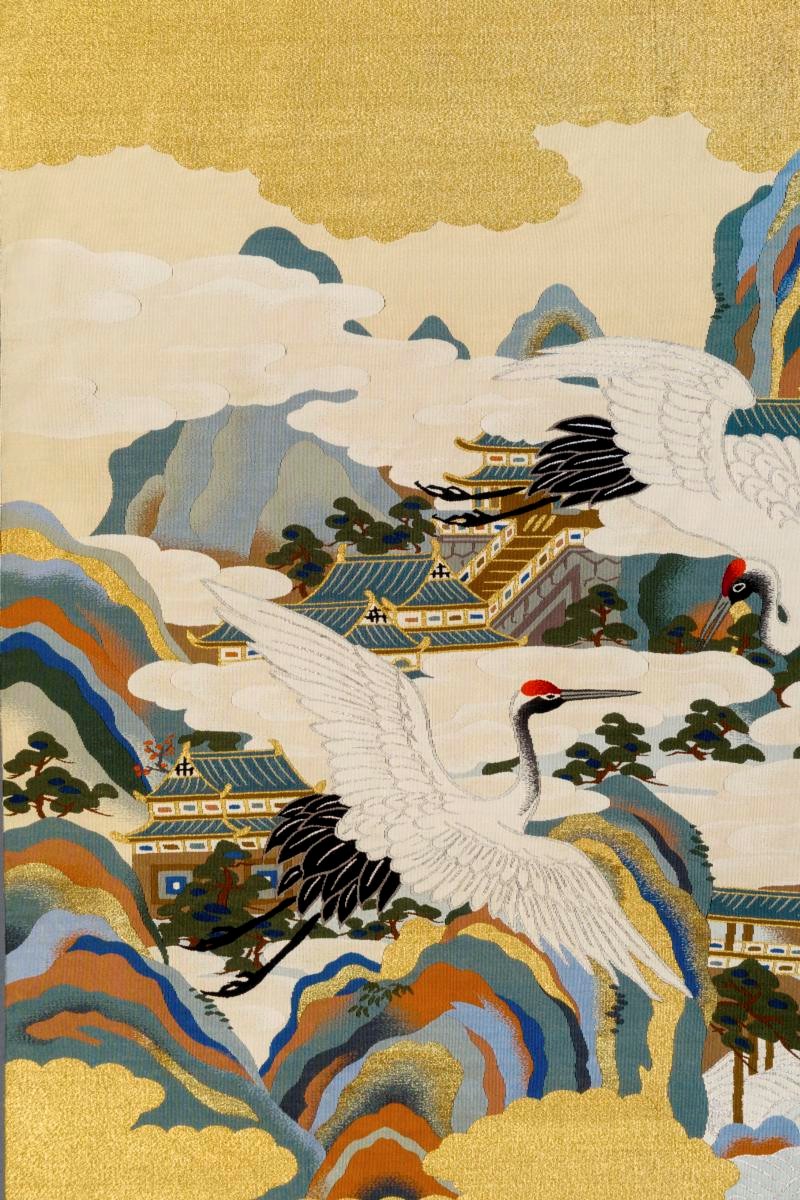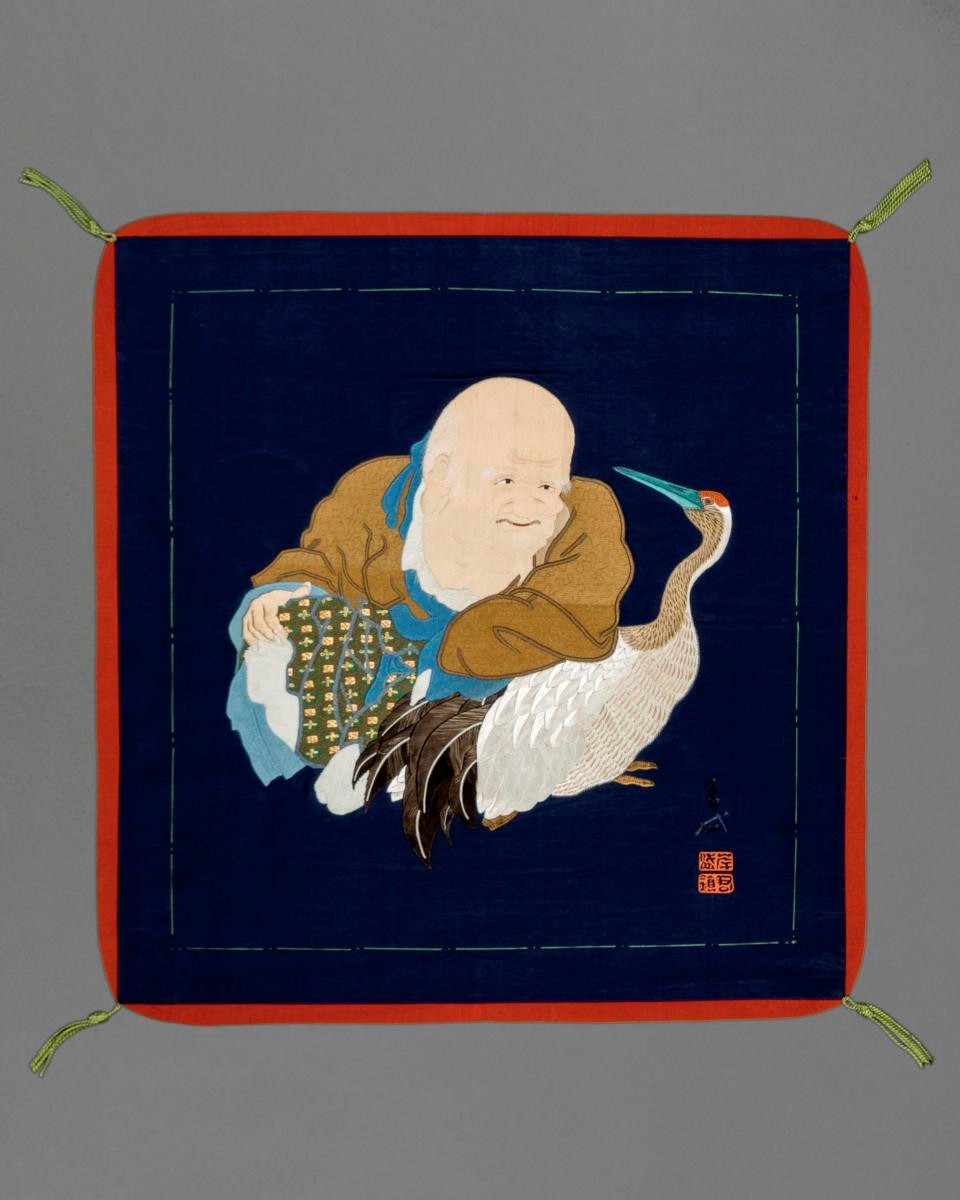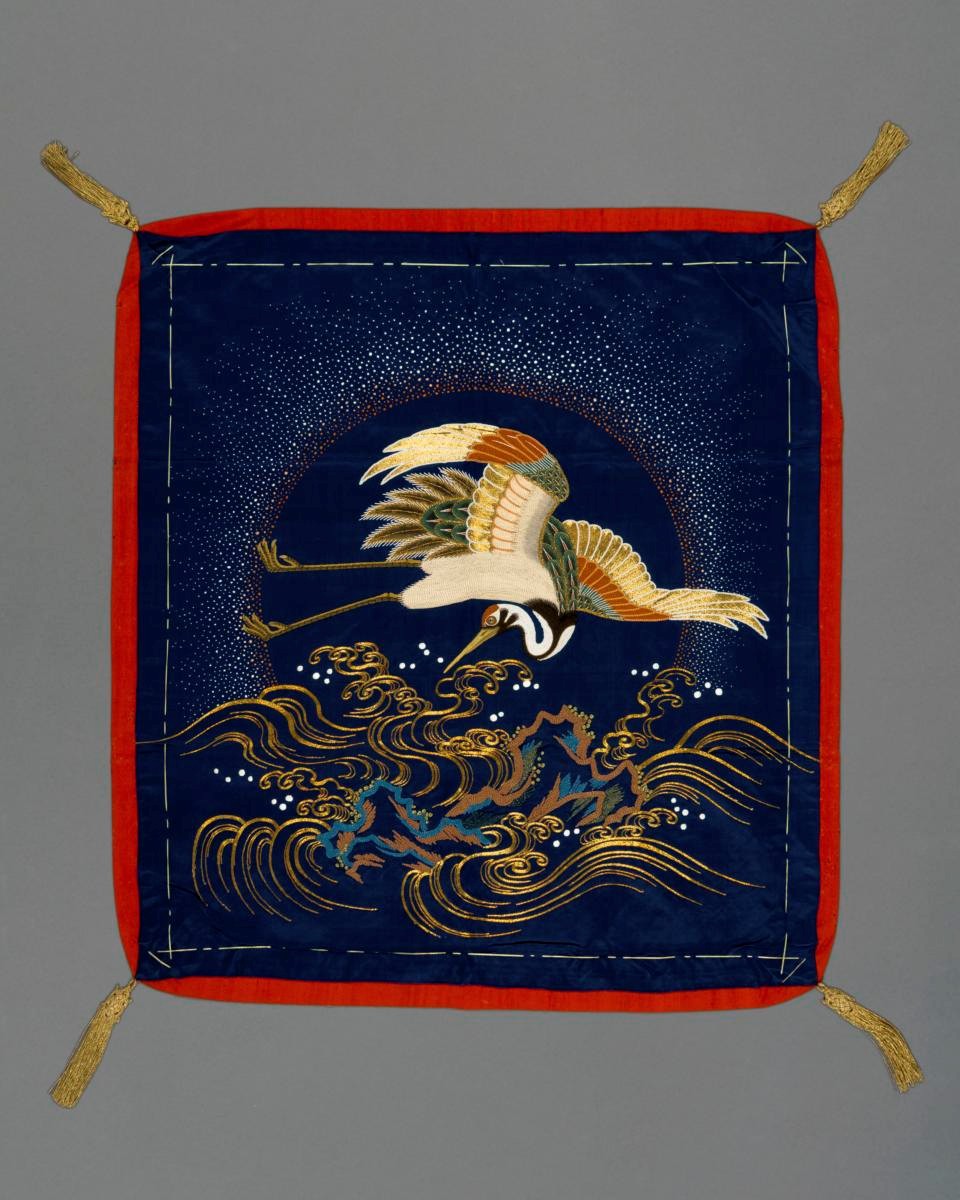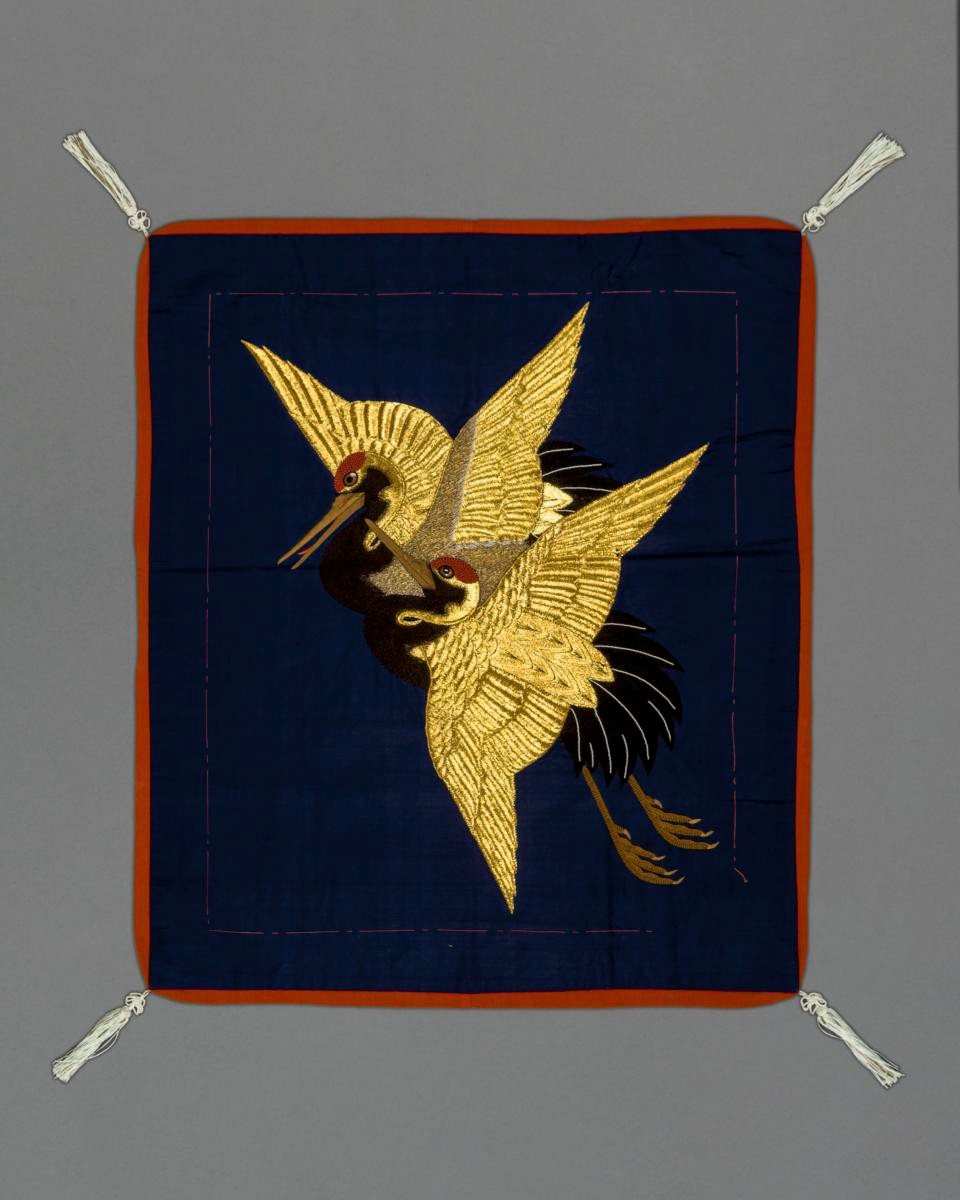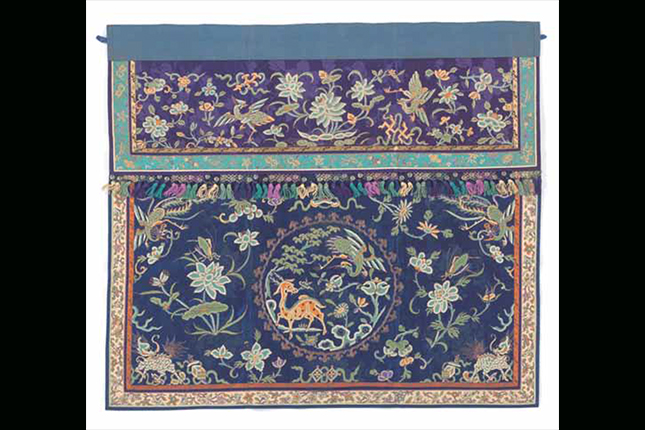

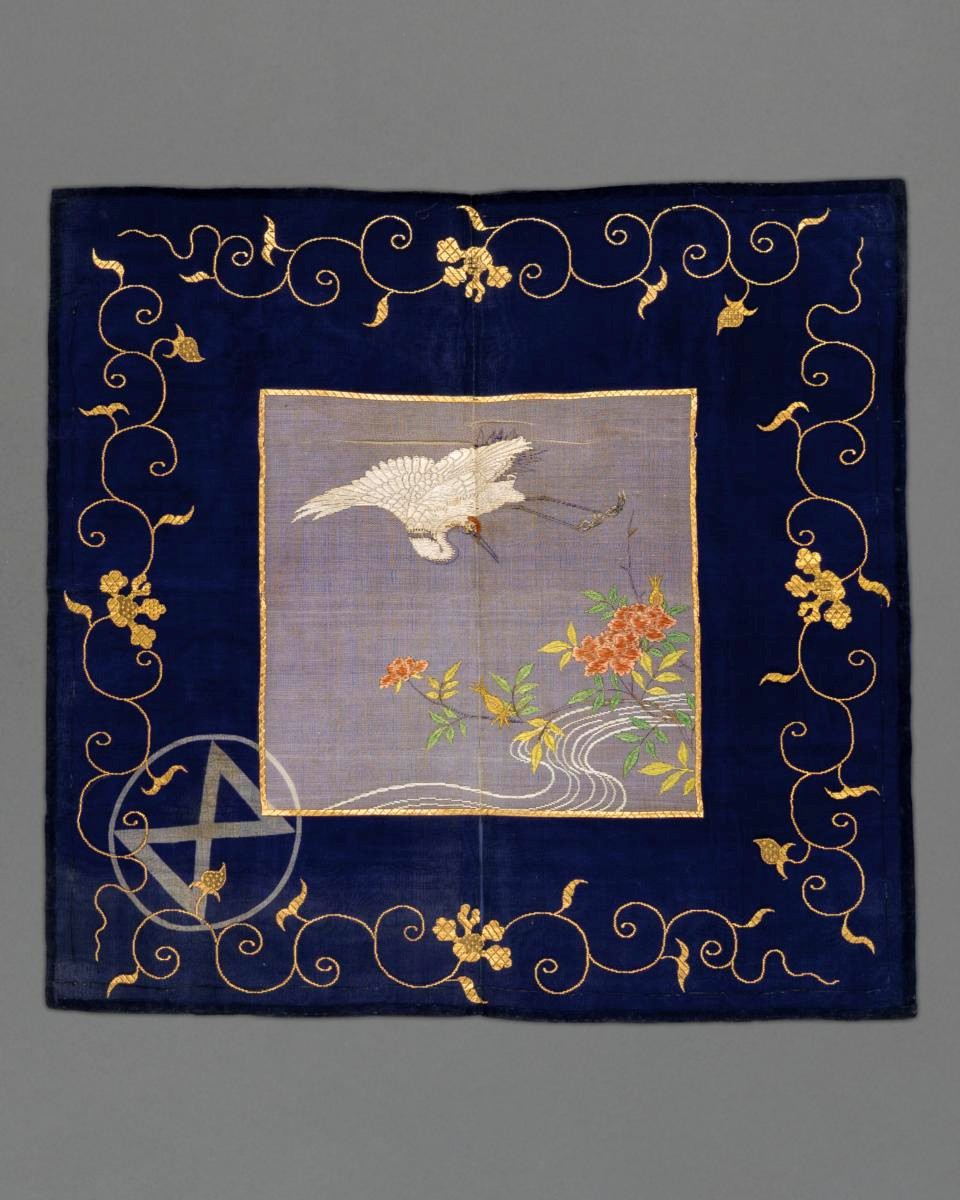
In Japan, the practice of formally presenting gifts with silk covers called fukusa began in the Edo period (1603–1868), around the late 17th or early 18th century. These covers were draped or folded over gifts for a variety of occasions, from seasonal festivities to important personal events. Each fukusa was carefully chosen to evoke the circumstance of the gift and to convey a message to the recipient through its design. Fukusa designs often feature symbolic objects or allusions to Japanese and Chinese stories. The choice of fukusa also reflected the giver’s wealth, taste, erudition, and cultural sensitivity. The use of fukusa continued into the early 20th century. Today, they are used in parts of Japan for weddings and corporate events. The use of gauze for fukusa is uncommon. The family crest at the lower right corner of the lining and the crease marks on the fukusa indicate that it was folded in quarters for presentation and storage. The gold “threads” are made of very fine strips of paper covered in gold leaf. Fine geometric patterns in the goldwork are created by lacing these threads in front or behind the gauze weave.With its snow-white body, red crown, and areas of black on the wings and neck, the bird depicted on this fukusa is a red-crowned crane, a symbol of longevity native to East Asia. In Japan, it is known as tanchōzuru and is said to live for 1,000 years.