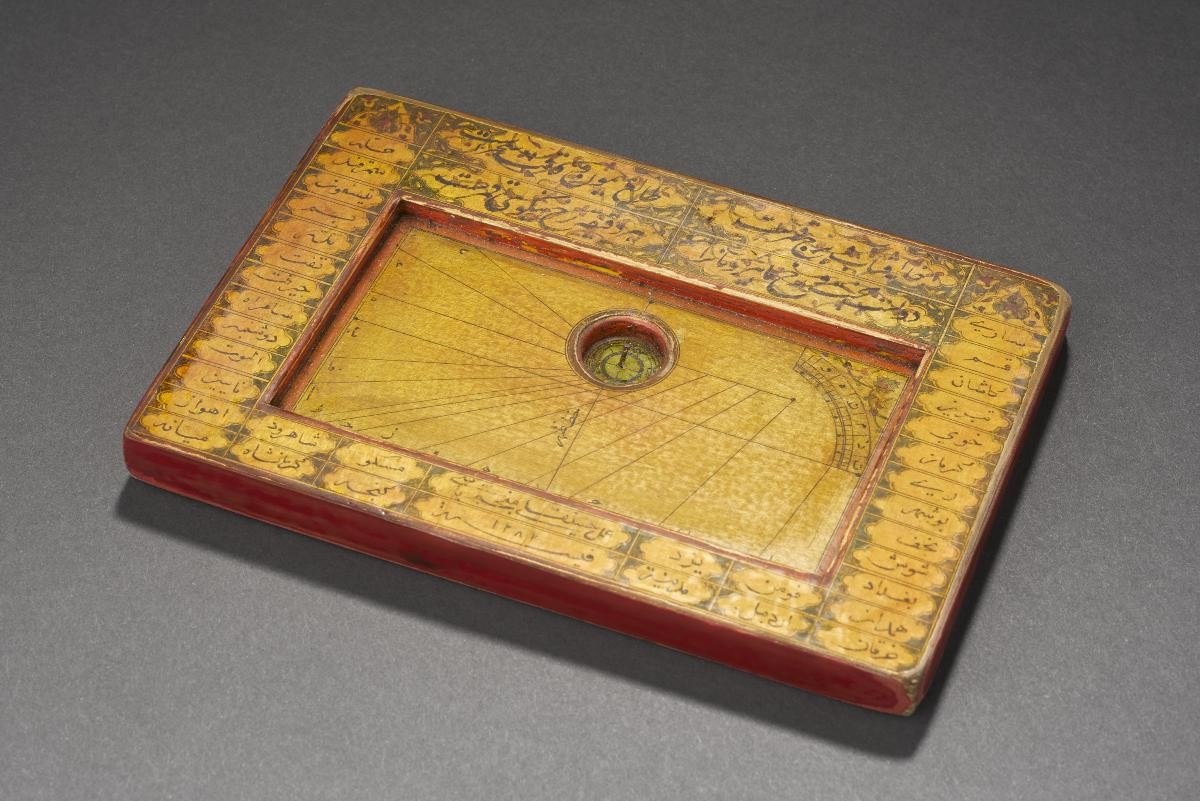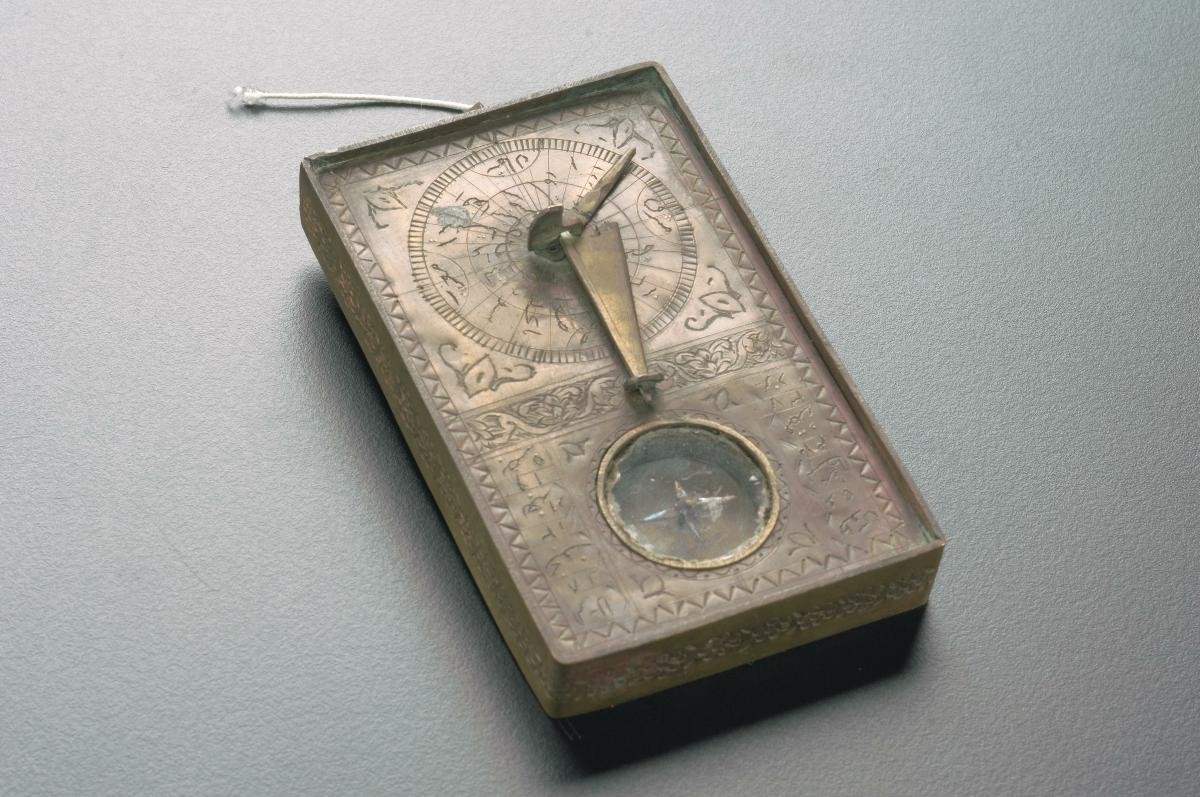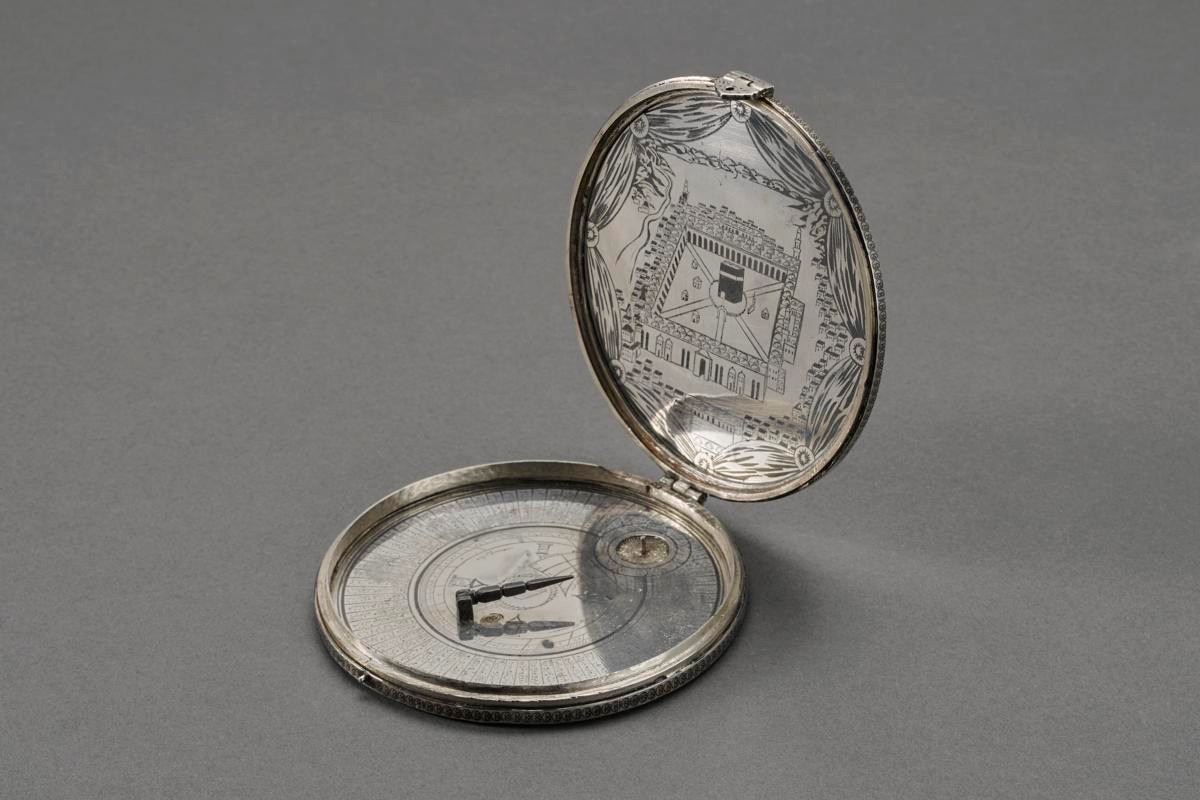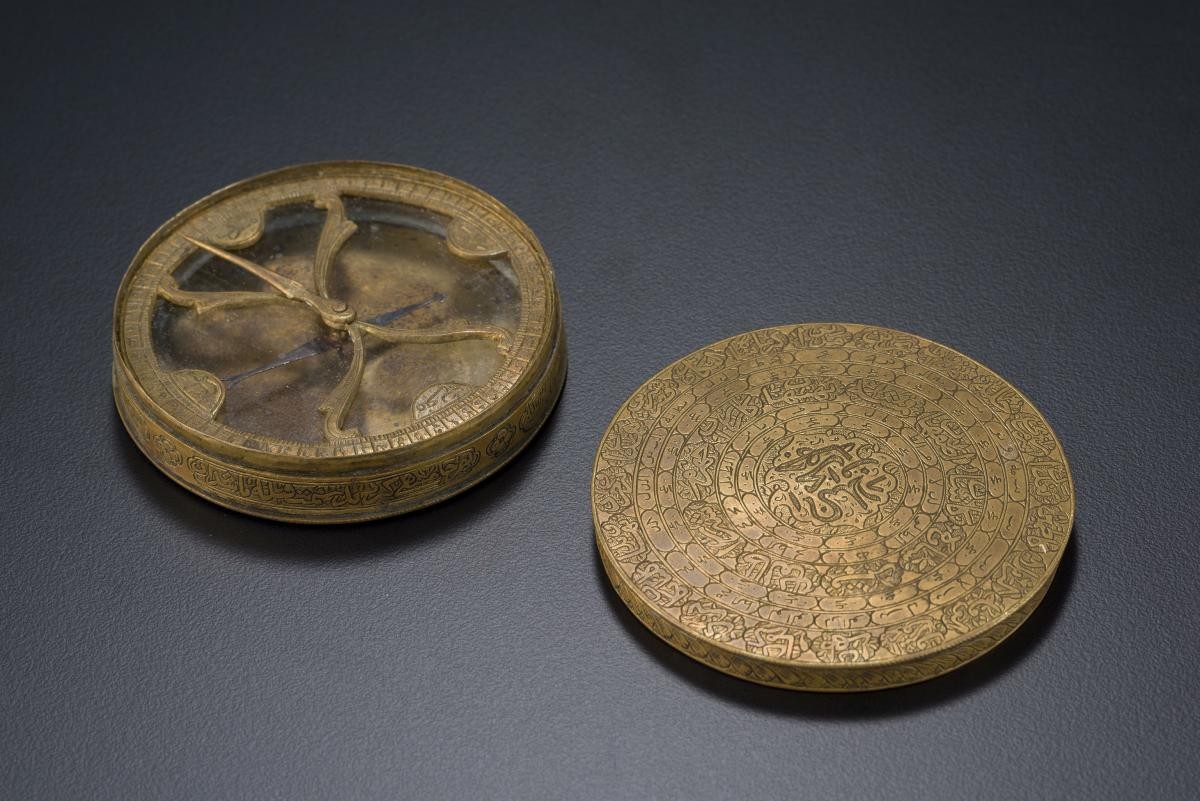

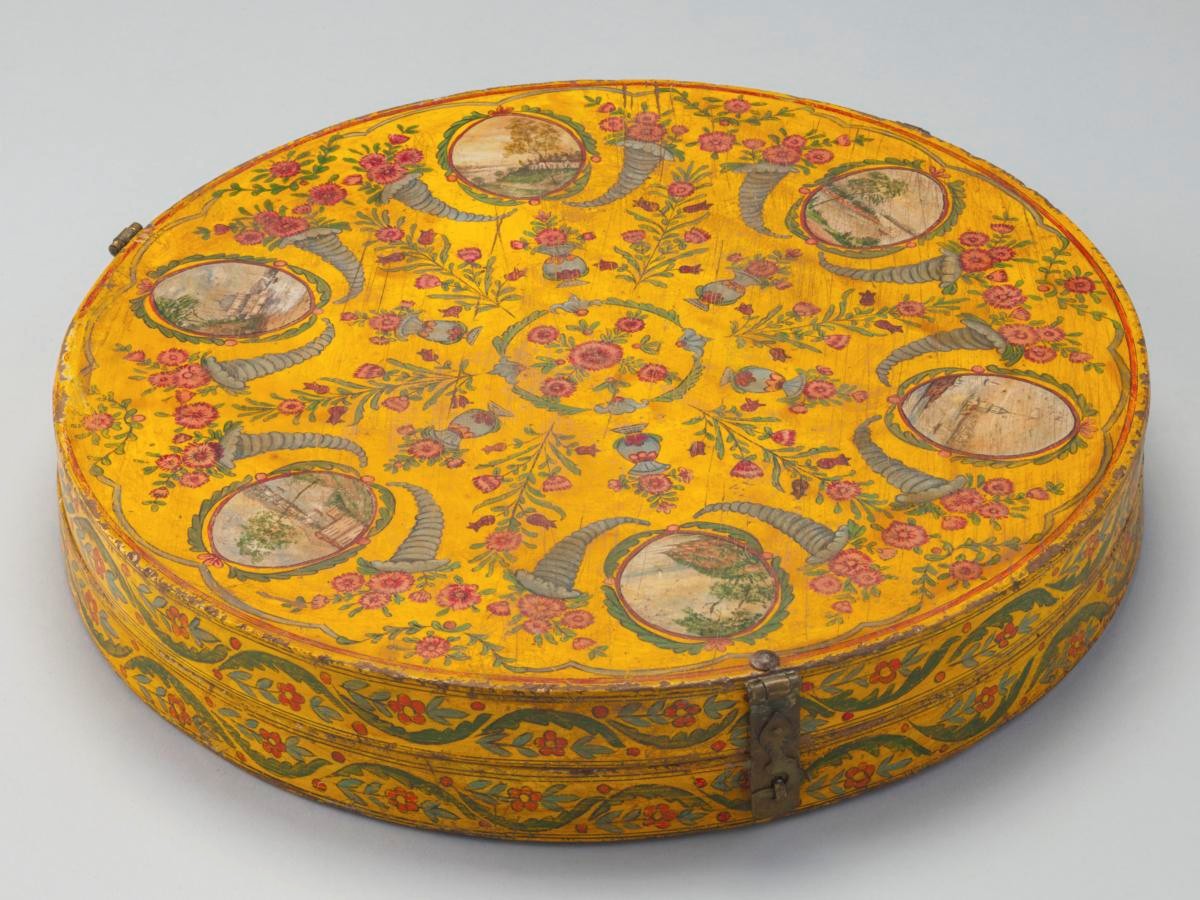
This is a universal qibla indicator modelled upon the original produced by Bārūn al-Mukhtariʽ (born Petros Baronyan) of Armenian descent around 1738, and presented to the Ottoman Grand Vizier, Yegen Mehmet Pasha, soon after. Although most of the text are replicated from the original, this later instrument is distinctive as the decoration, illustrations and texts are handwritten and painted. The original Baronyan instrument’s drawings and text are printed from copperplates. Unfortunately, the maker of this instrument is not known as there is no inscription or indication on the instrument. The instrument’s primary aim is to help Muslims determine the direction towards Mecca (qibla) from his location to enable him to carry out his prayers. Beyond the daily prayers, the qibla is also necessary for burials in terms of orientating the body. With Islam’s spread over a vast geographical, determining the qibla became a more vital problem to solve. This pursuit yielded sophisticated methods of mathematical calculations deployed in applications of astronomy and geography. As a result, qibla finders were invented as portable devices that could make it easy for the layperson to look up the qibla without having to carry out complex calculations.