
x L: 33.5,
x W: 33.5
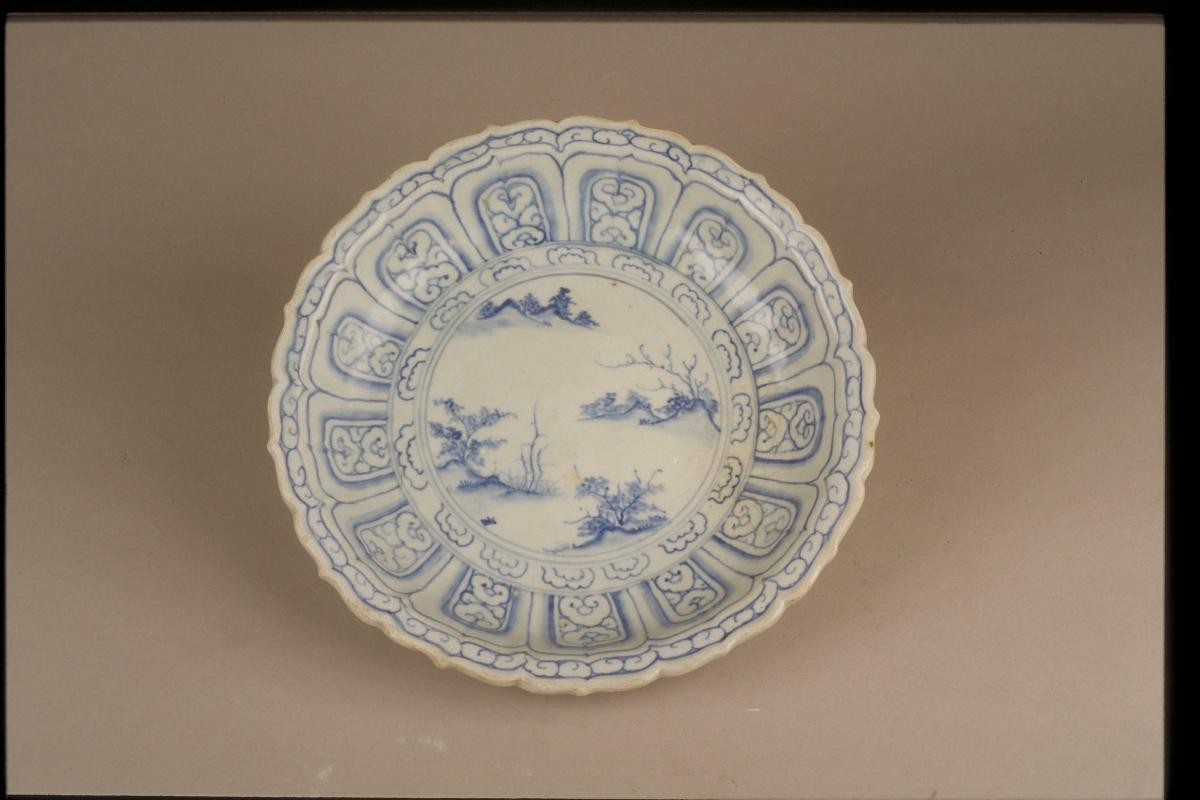
This large potted dish has a design of a rocky landscape with gnarled trees. It is executed in a painterly style with generous allowance of space. It is thought to be a unique 15th century design with no known Chinese prototype. The poetic use of space is quintessentially Chinese convention that was reinterpreted in the spirit of Vietnamese nationalism. The significance of the wash of chocolate brown slip on the base could have been thought as an attempt to emulate the orange-red finish of the bases of Chinese Yuan blue and white wares. The quality of the decoration suggests that Vietnamese potters catered for an overseas market with a sophisticated clientele.Although heavily influenced by the Chinese ceramic tradition, Vietnam materials and potting styles are unique. Technically not ‘porcelain’, which is translucent and pure white, these stonewares are different in appearance from Chinese and other Southeast Asian ceramics. Vietnamese wares are typically more heavily potted and have an off-white clay body. Cobalt oxide could have been imported from West Asia via China to produce the blue tones.Vietnam entered the international trade during the 14th century and produced the greatest volume and variety of wares for Southeast Asia, particularly Indonesia, the Philippines and Malaysia. However, by the 16th century, due to intense competition from the Chinese kilns, the export of Vietnamese wares to these markets was greatly reduced.