
TL;DR
On 7 August 2015, Istana Kampong Gelam was officially gazetted as Singapore’s 70th National Monument. The current revamp of the Malay Heritage Centre (MHC), housed within the Istana, is therefore more than a refresh of its galleries. At its core, it is a project to conserve the monument, whose history and architecture embody the story of Kampong Gelam and the wider Malay world. The works balance the immediate need to update its exhibition spaces and narratives with the longer view of safeguarding the Istana Kampong Gelam for future generations.This article highlights three interlinked dimensions of the project: the architectural typology that situates the Istana within Malay and colonial traditions; the conservation treatments required for a historic structure; and the current works that are future-proofing the Centre. Together, these demonstrate how the MHC is positioning itself as both a museum and a living heritage institution that bridges past, present, and future.
3D model of Istana Kampong Gelam. Courtesy of the National Heritage Board.
Istana Kampong Gelam’s Architectural Typology and Cultural Context
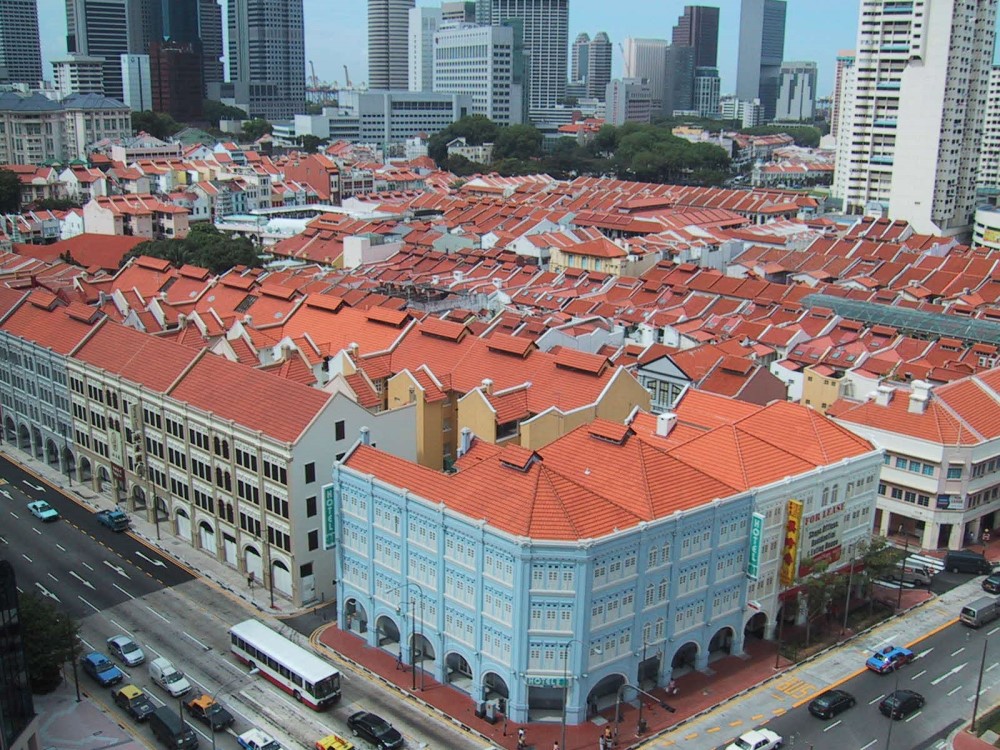
Kampong Gelam was selected as the seat of Sultan Hussein in 1819 as part of the treaty that allowed the British to establish a trading post in Singapore. Yet long before this, the area was already an active maritime hub, known to the Orang Laut as Seduyong. They built and repaired vessels, caulked boats, and produced sails along the shore. With its waterfront location and links via the Rochor and Kallang Rivers, Kampong Gelam was naturally positioned within Singapore’s early entrepôt system. Sultan Hussein’s presence attracted more settlers—Bugis, Javanese, and Malays from Palembang and Riau— turning the district into a cosmopolitan port town with distinct enclaves such as Kampong Jawa, Kampong Kaji, and Kampong Intan.[1] At the heart of this precinct was the Istana Kampong Gelam. The earliest royal residence, built for Sultan Hussein, was a timber structure, possibly constructed in line with other wooden royal residences. Similar timber royal residences include Istana Kenangan in Perak (1926-1931) and Istana Jahar in Kelantan (1887).
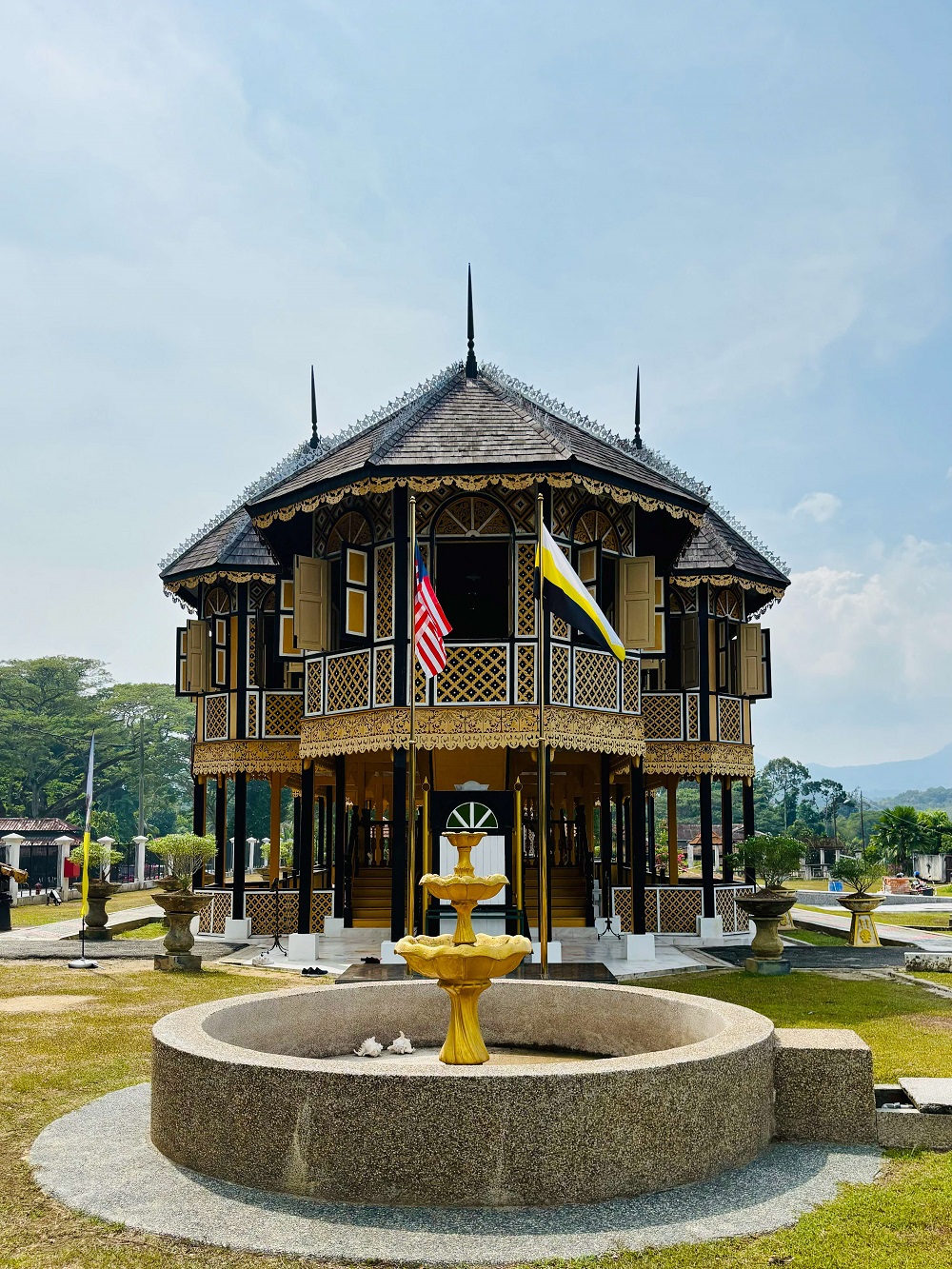
 Istana Kenangan, Kuala Kangsar, Perak (top, 1926-1931), and Istana Jahar, Kota Bharu, Kelantan (bottom, 1887). Top: photograph by the author. Bottom: photograph by CK Tan, retrieved from Wikimedia Commons (CC BY 3.0).
The present Istana was built for Tengku Alam, recognised by some as Sultan Alauddin Alam Shah, in 1890. The new residence was constructed in brick and plaster, succeeding earlier structures on the site. Architecturally, it followed the compound house typology common among nineteenth- and early twentieth-century elite residences that blended local and colonial influences. In this form, the spatial layout of a traditional Malay house was reinterpreted in permanent masonry, combining Malay features such as the limas roof, wide eaves, and tall shuttered jendela windows with European symmetry and plaster detailing. Comparable examples include Istana Hulu in Kuala Kangsar, Perak (1898–1903), and Gedung Kuning at Sultan Gate, associated with Tengku Mahmud, Tengku Alam's younger half-brother.[2]
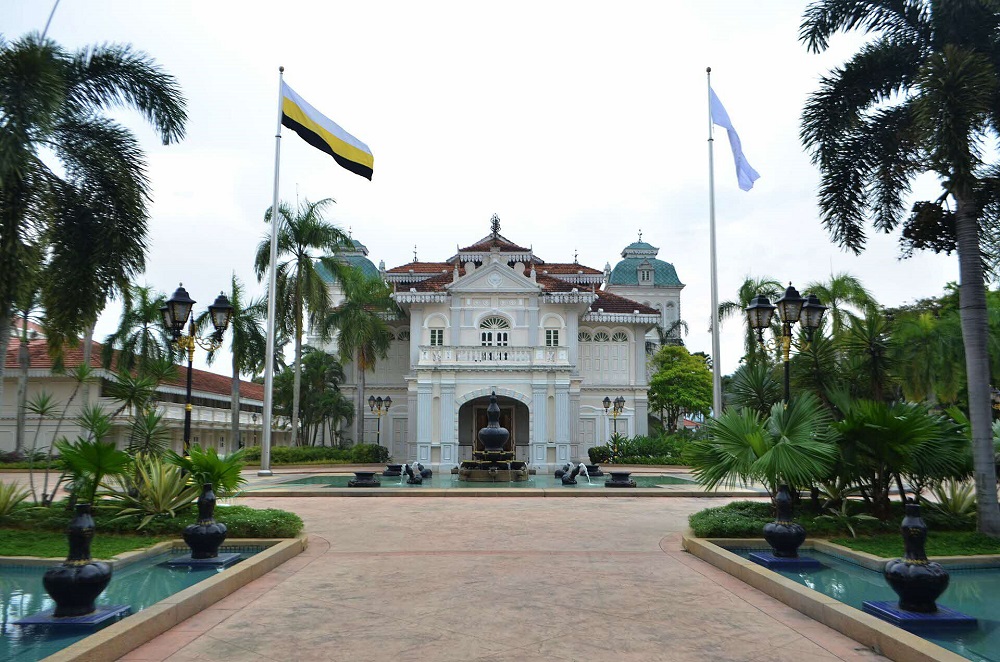
 Istana Hulu (top, 1898–1903), Kuala Kangsar, Perak, Malaysia, and Gedung Kuning (bottom, 1920s), Sultan Gate, Singapore. Top: photograph by Miss Prema Darshini, retrieved from Wikimedia Commons (CC BY-SA 4.0). bottom: photograph by Eclectique F&B Concepts, retrieved from Wikimedia Commons (CC BY-SA 4.0).
Conservation Challenges and Treatments
Restoring a historic monument like the Istana Kampong Gelam differs from constructing a new building. Unlike modern materials such as reinforced concrete and steel, traditional building materials such as lime plaster, clay brick, and timber are highly porous and vulnerable to deterioration. They behave more like living materials, expanding and contracting with humidity. In accordance with guidelines from the Preservation of Sites and Monuments (PSM) division of the National Heritage Board and Urban Redevelopment Authority–International Council on Monuments and Sites (URA–ICOMOS) conservation guidelines, any new material must be compatible with the original fabric, much like an organ transplant. Modern concrete or waterproof coatings could trap moisture and worsen decay.[3]
Between 1999 and 2004, major restoration works were carried out on the Istana. Of its original nineteenth-century structure, only the brick walls survived intact; other elements, such as the timber floors, windows, and roof, had been replaced over time. These original bricks represent the last surviving fabric of the building’s nineteenth-century construction. Like many historic masonry buildings, the Istana faces rising damp, where groundwater is drawn upward through porous walls, leaving behind crystallised salts that gradually weaken plaster and brickwork.
To mitigate these problems, conservation interventions addressed both symptoms and causes. Chemical damp-proof injections were applied at the base of the walls to halt moisture movement, while poultice treatments removed accumulated salts. Lime-based plasters were used instead of cement, allowing the building to “breathe” and reducing the risk of trapped moisture.[4]
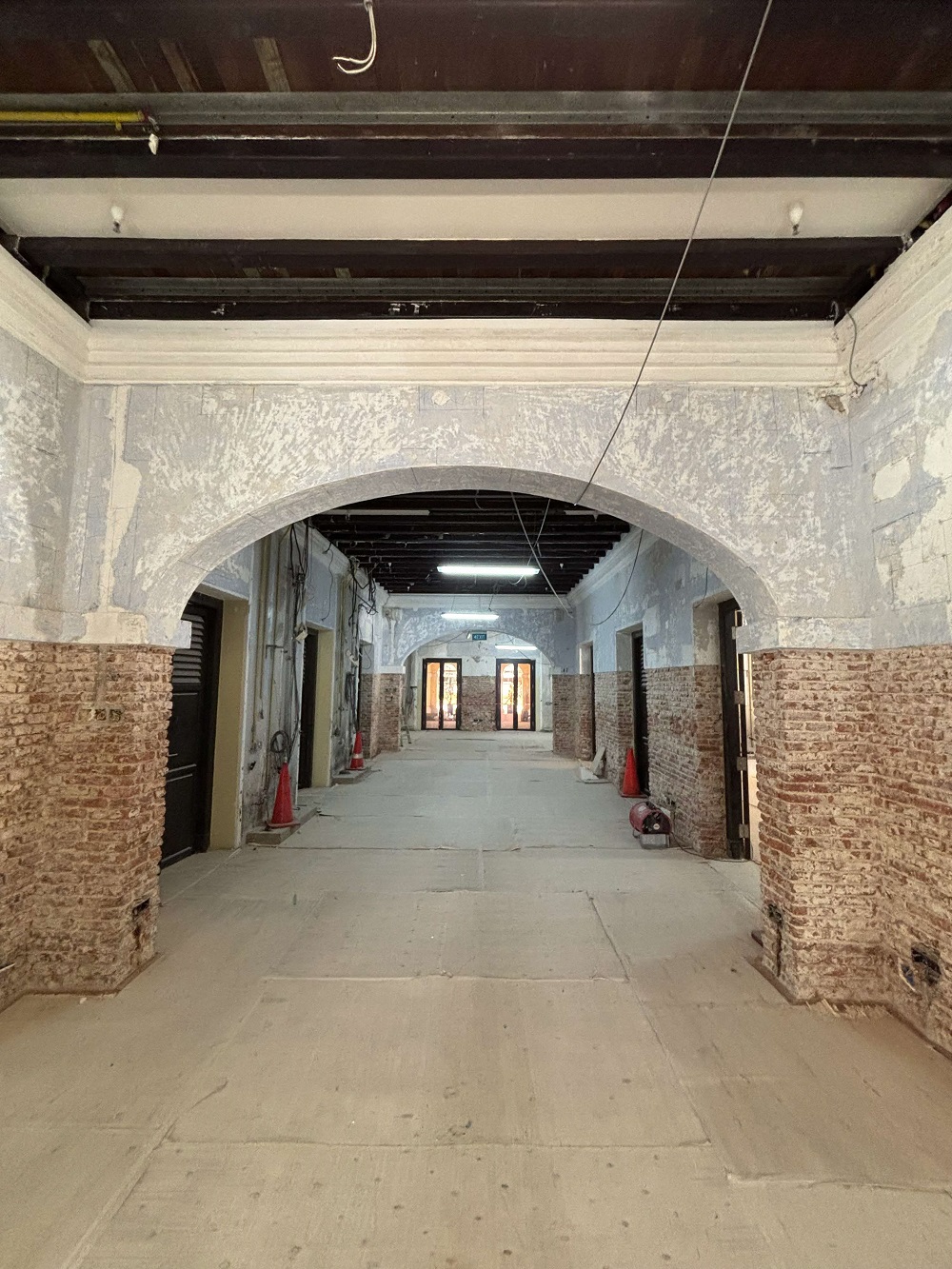
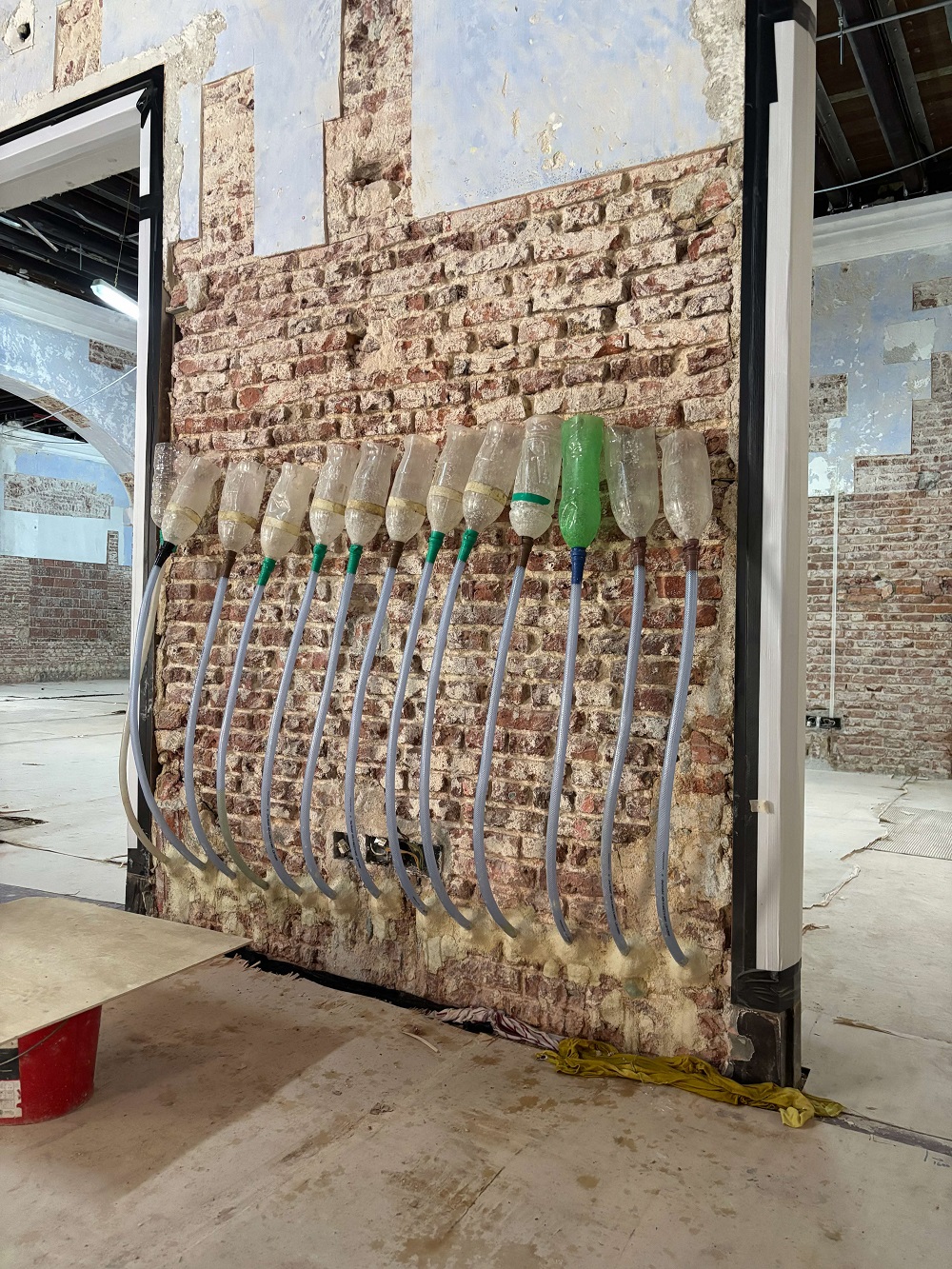
 Conservation works at Istana Kampong Gelam. Top: efflorescence and salt crystallisation on brick surface prior to treatment (2024). Centre: chemical damp-proof injections applied at the base of the walls to halt upward moisture movement. Bottom: application of lime-based plaster to replace cement render, allowing masonry to breathe and reducing risk of trapped moisture. Photographs by the author.
Adapting the Istana from a royal residence into a museum required careful mediation between historical authenticity and functional requirements. The Conservation Technical Handbook defines such projects as “adaptive reuse,” where “the building is remodelled to accommodate new functions” while retaining heritage value.[5] Accordingly, air-handling units, humidity sensors, and climate-control systems were installed to meet museum environmental standards while minimising impact on the building’s historic fabric.[6]
A Living Heritage Institution
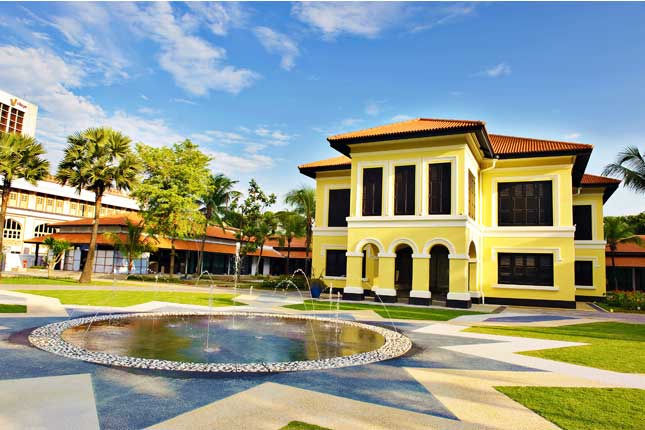
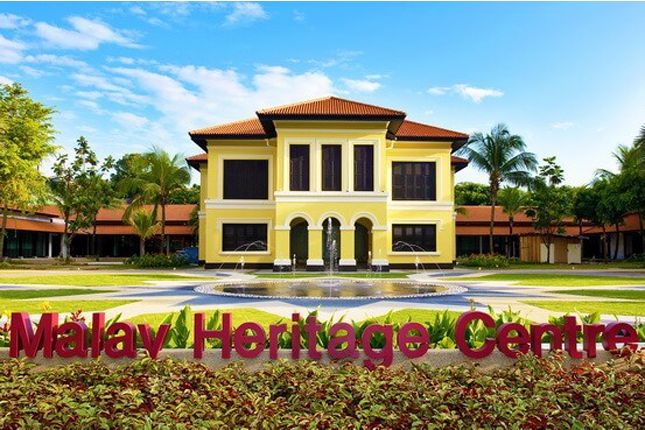
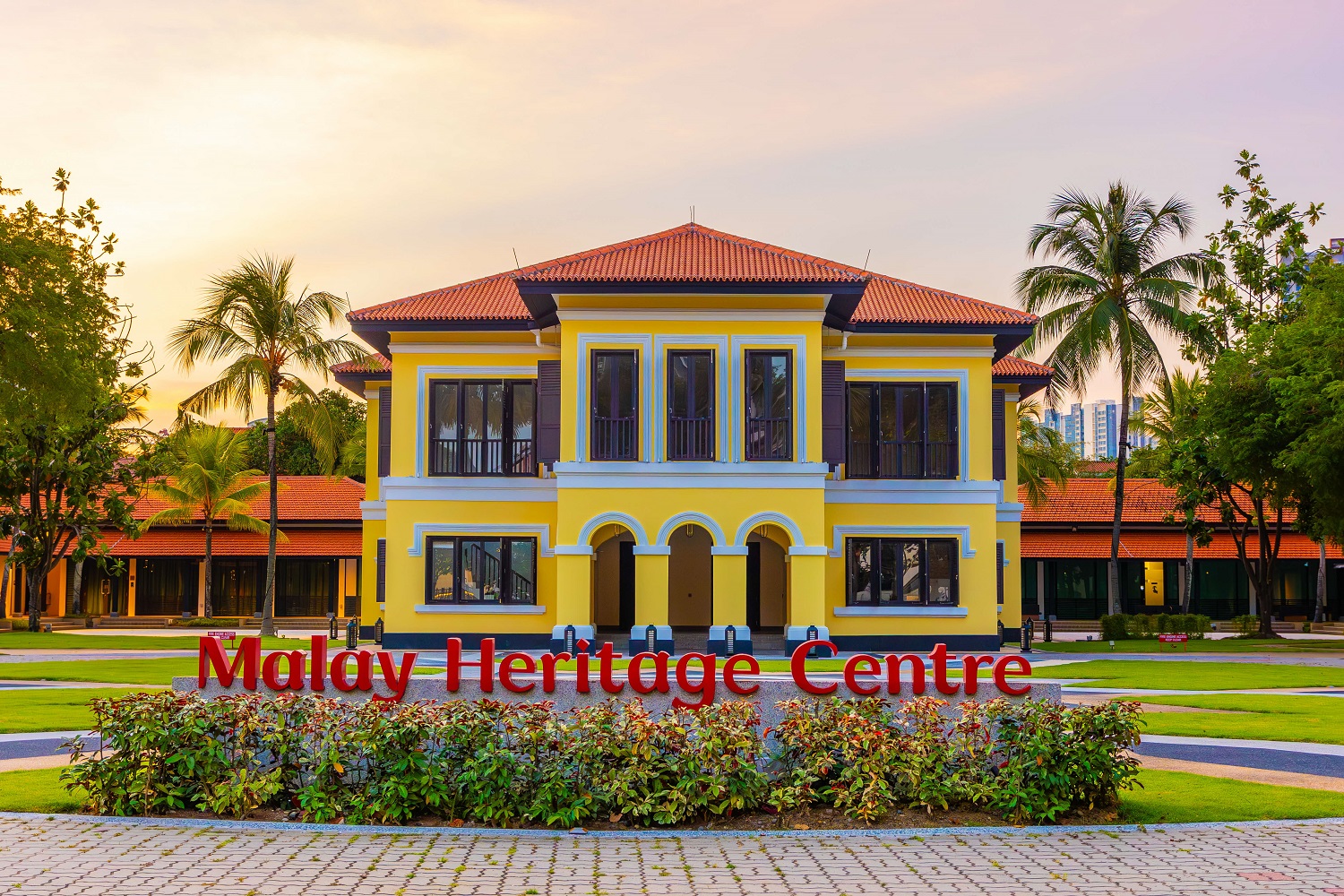
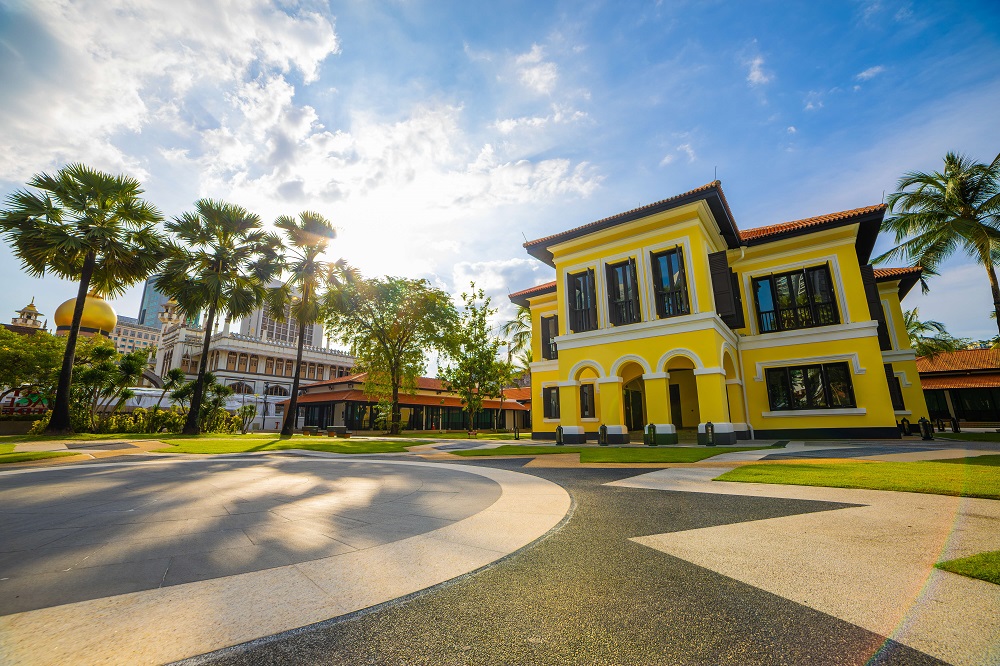 Istana Kampong Gelam, exterior façade following the 2026 revamp of the Malay Heritage Centre. Image courtesy of the Malay Heritage Centre.
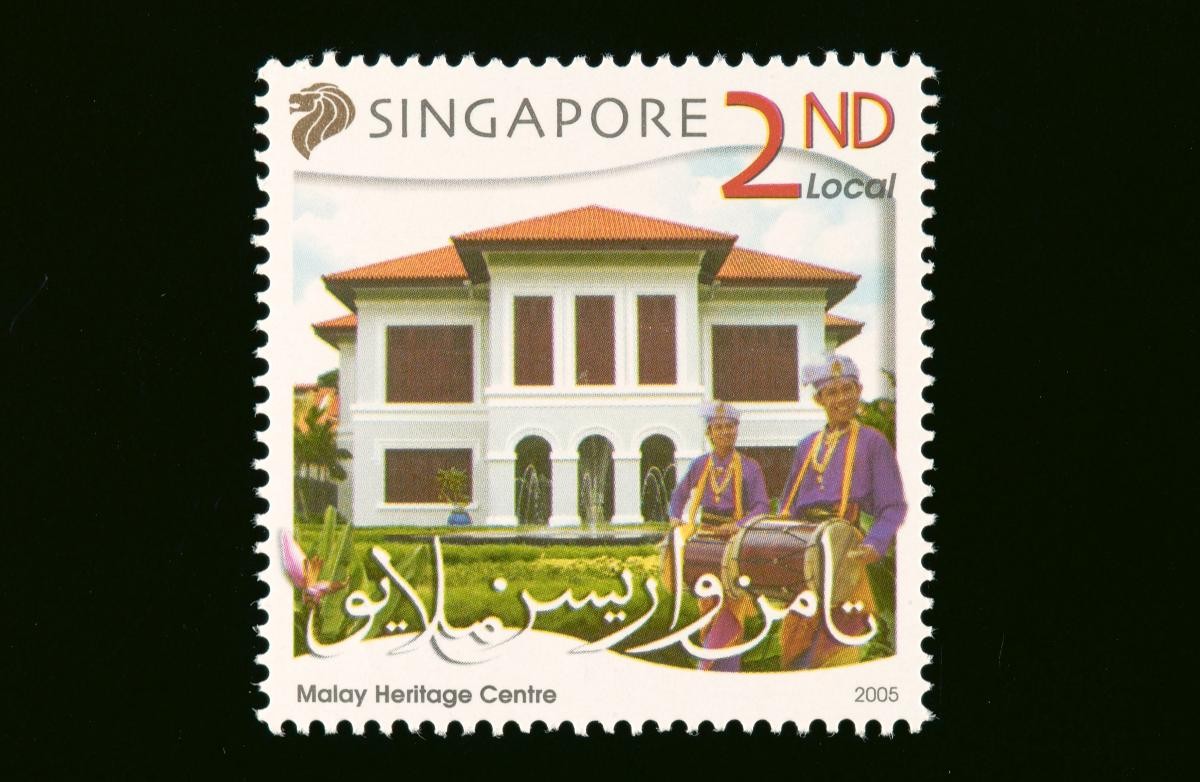
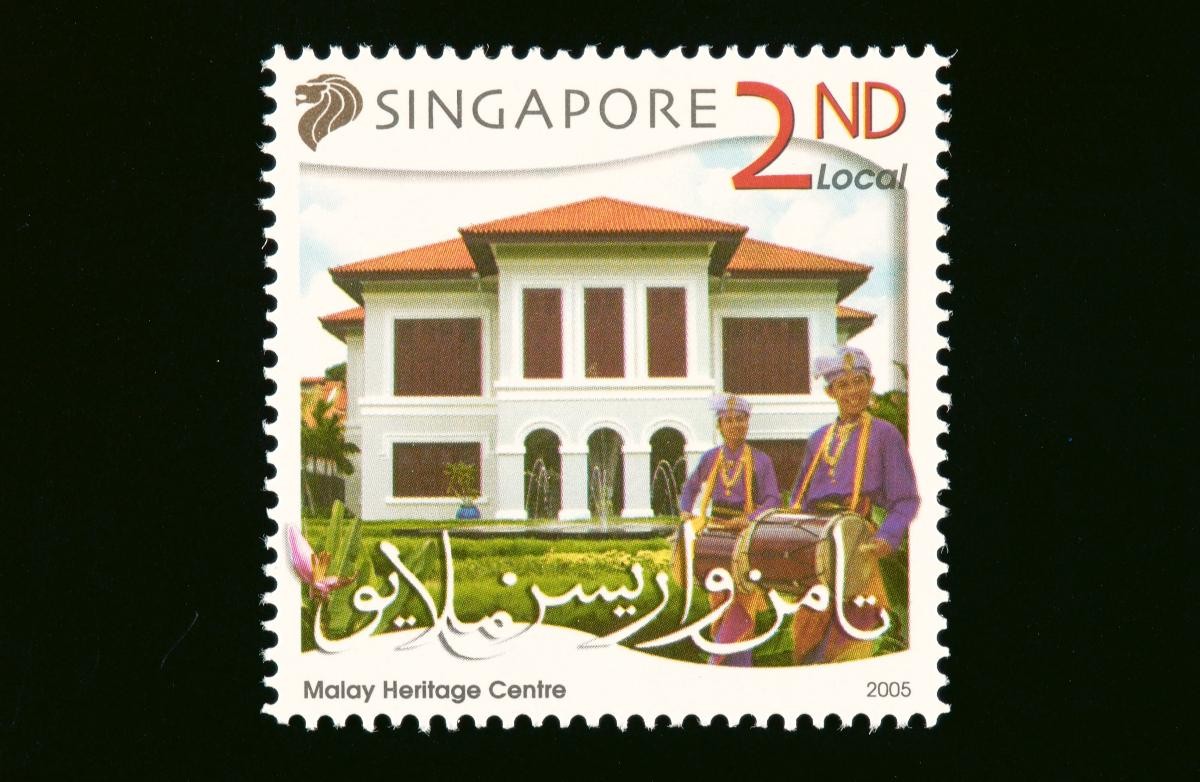
The MHC first opened its doors in June 2005. Since then, it has functioned not only as a museum but also as a gathering place for cultural exchange, education, and the aspirations of the Malay/Muslim community. The current revamp builds on this foundation, extending conservation efforts beyond the Istana’s physical restoration to its continued social and cultural relevance.
Beyond bricks and mortar, the refreshed galleries present narratives shaped by the community’s evolving identity and contributions. Additionally, by integrating preventive conservation with adaptive reuse, the Istana’s restoration has ensured its long-term stability while enabling new uses as a museum and cultural space. Climate control systems, flexible galleries, and supporting infrastructure have been sensitively incorporated, future-proofing the building without compromising its historical integrity. This aligns with broader aspirations articulated in national discourse to preserve Malay culture and heritage as part of Singapore’s multiracial and multireligious society.
As the Centre reopens in 2026, visitors are invited to view its galleries and experience the Istana, a conserved former royal residence and a living heritage institution that continues to evolve as part of Singapore’s cultural landscape.
Malay Heritage Centre, "MHC Revamp Documentation Series, Episode 3: Restorations," YouTube video, 6 March 2026,
This short documentary, produced by the Malay Heritage Centre, offers a behind-the-scenes look at the conservation and restoration works undertaken during the Centre's revamp of Istana Kampong Gelam.
Malay Heritage Centre, "MHC Public Lecture Series: Transforming an Istana into a Museum," YouTube video, 4 March 2026,
This public lecture covers the conservation challenges and opportunities in adapting Istana Kampong Gelam for museum use. Speakers include Dr Imran bin Tajudeen on new architectural findings, Farzan Aziz on conservation challenges, and Muhd Noor Aliff on internal modifications to meet museum standards.
Notes
[1] Imran bin Tajudeen. (2005). Reading the traditional city in maritime Southeast Asia: Reconstructing the 19th century port town at Gelam-Rochor-Kallang, Singapore. Journal of Southeast Asian Architecture, 8, pp. 1, 13-14.
[2] Imran bin Tajudeen. (2017). Colonial-vernacular houses of Java, Malaya, and Singapore in the nineteenth and early twentieth centuries. ABE Journal, 11, paras. 11-18. https://journals.openedition.org/abe/3715.
[3] Preservation of Sites and Monuments, National Heritage Board. (2022). Painting national monuments (2nd ed., pp. 6-7). National Heritage Board. https://www.nhb.gov.sg/-/media/nhb/images/nhb2017/what-we-do/preservation-of-sites-and-monuments/psm-tech-guide-painting.pdf; Preservation of Sites and Monuments, National Heritage Board. (2022). A brief guide for owners and occupiers of national monuments (2nd ed., pp. 4-5). National Heritage Board. https://www.nhb.gov.sg/-/media/nhb/images/nhb2017/what-we-do/preservation-of-sites-and-monuments/psm-tech-guide-general-guide.pdf
[4] Preservation of Sites and Monuments, Painting National Monuments, 6-7.
[5] Urban Redevelopment Authority & ICOMOS Singapore. (2021). Managing change. In Conservation technical handbook: A guide for best practices (Vol. 8, p. 106). Urban Redevelopment Authority. https://www.ura.gov.sg/-/media/Corporate/Guidelines/Conservation/Best-Practices/Vol-8-Managing-Change.pdf
[6] Urban Redevelopment Authority and ICOMOS Singapore, "Managing Change," 28, 32, 138.