
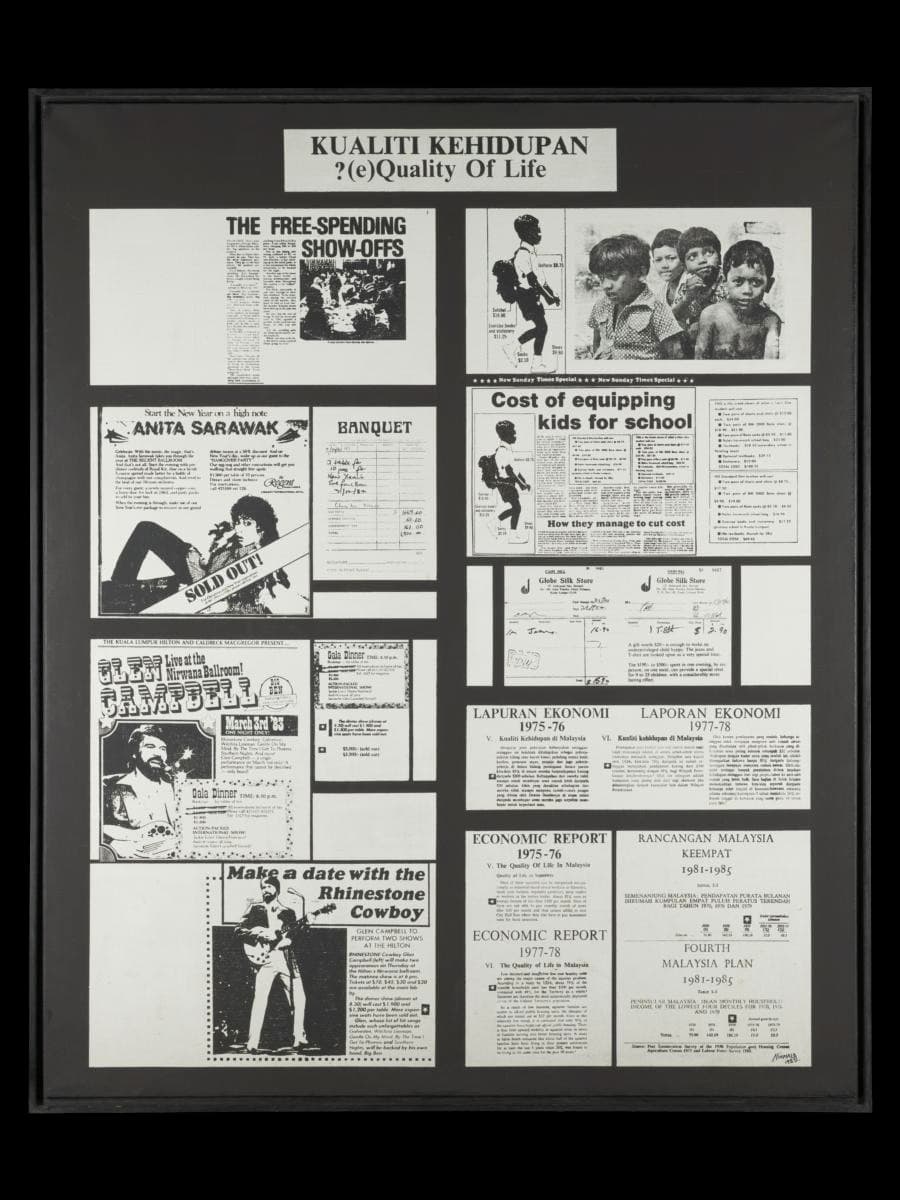
Frame size: 173.0 x 142.0 x 4.0 cm
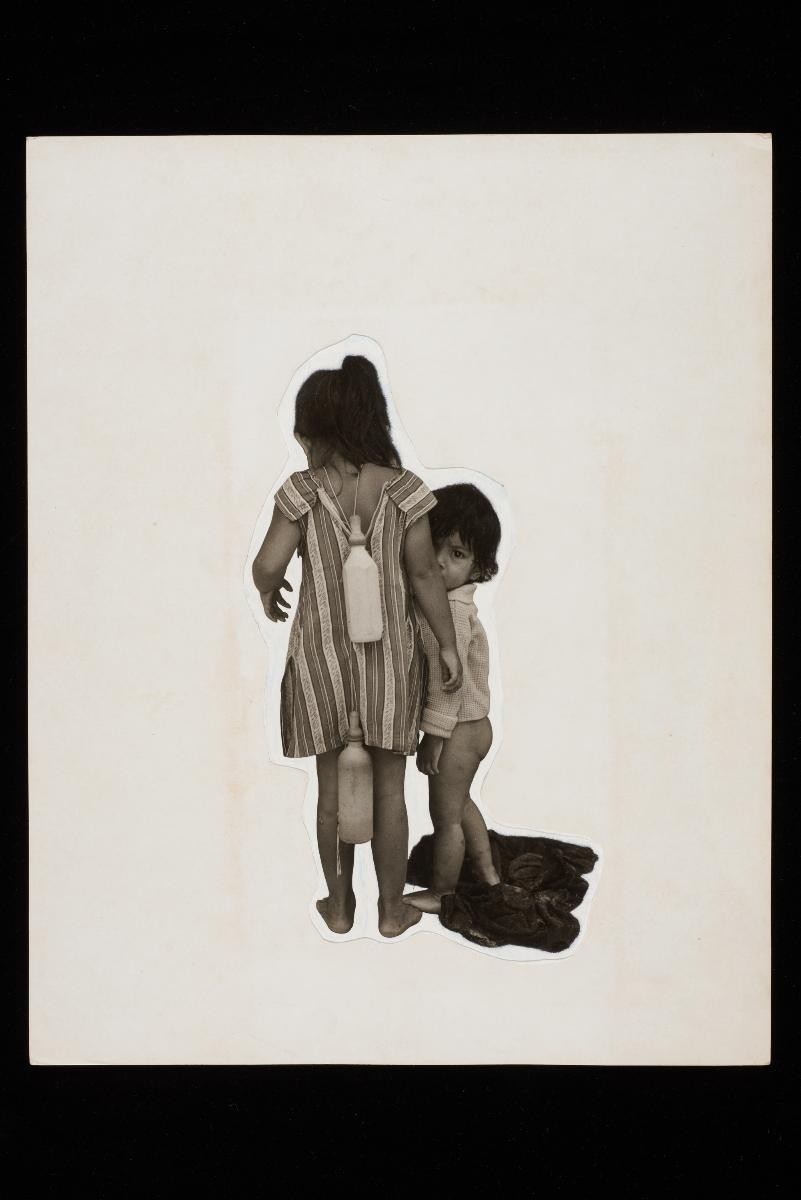
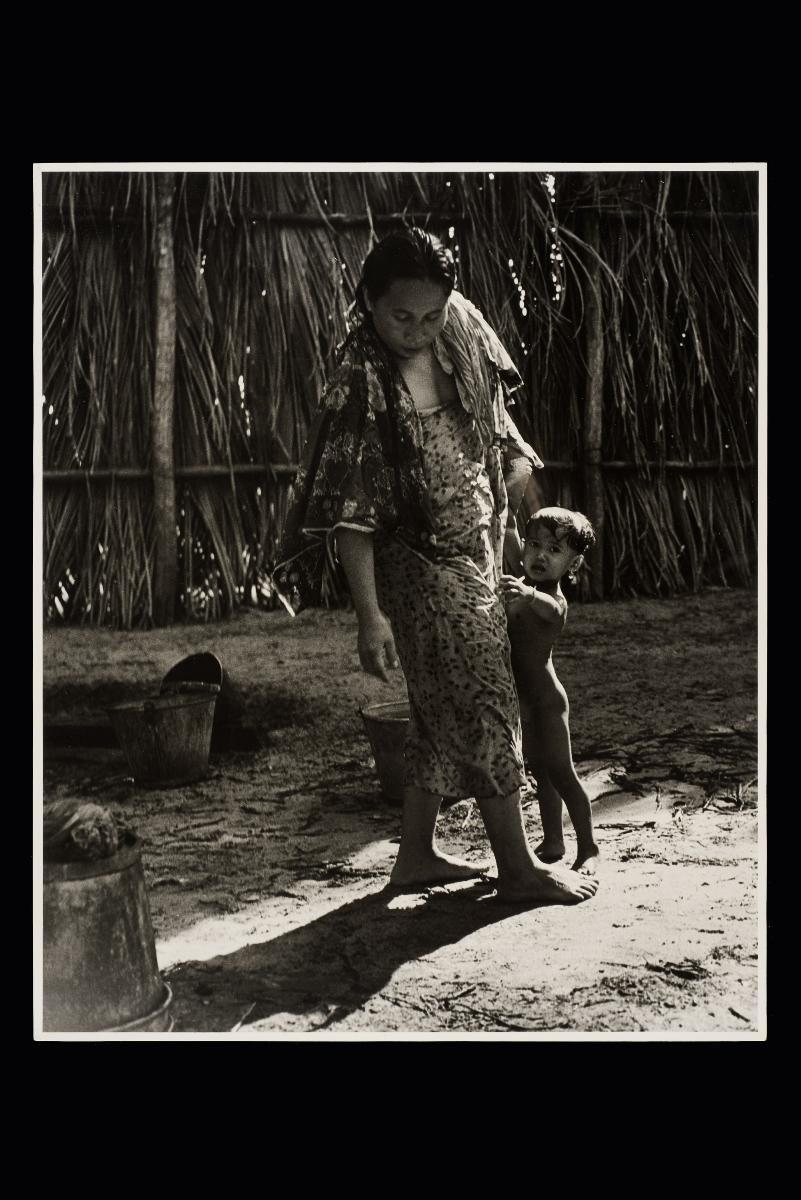
Nirmala Dutt (b. 1941, Malaysia) was one of the most prominent artists to have emerged in Malaysian art scene in the 1970s. After her relocation from Penang to Kuala Lumpur in the early 1960s, Dutt attended painting classes with artists of Angkatan Pelukis Semenanjung (APS) founded by Hoessein Enas. In a lifelong pursuit of education spanning across decades, Dutt studied art, art history, psychology and printmaking in various art schools in the U.S. and UK. Eschewing the dominant abstract expressionist and minimalist tendencies amongst her peers in post-independent Malaysia, Dutt cultivated a practice that included painting, photography, silkscreen, and collage. Central to this work are various stencilled clippings presented in an infographic format, comprising advertisements of music performances and receipts of gala events juxtaposed against the basic costs of school supplies to support a child’s education as well as excerpts of national economic reports from the 1970s to 1980s. The title “KUALITI KEHIDUPAN” makes a direct reference to the subsection of these official assessments foregrounding the quality of life and data on mean household income of the bottom 40 percentile of the Malaysian society. Yet, Dutt’s wordplay through the insertion of the question mark and the letter ‘e’ in parentheses provides her pointed critique of the stark class difference as well as the incredulity of excess in consumption between the rich and poor in Malaysian society. The top right column features a photograph of children from an urban squatter community Dutt had previously documented in her Statement series across the mid- to late-1970s. Throughout her practice, Dutt was committed to making works that stir the viewer’s conscience to sociopolitical struggles locally and globally—war and conflict, domestic violence, environmental destructions, urban poverty—often spotlighting the plight of women, children and indigenous groups.