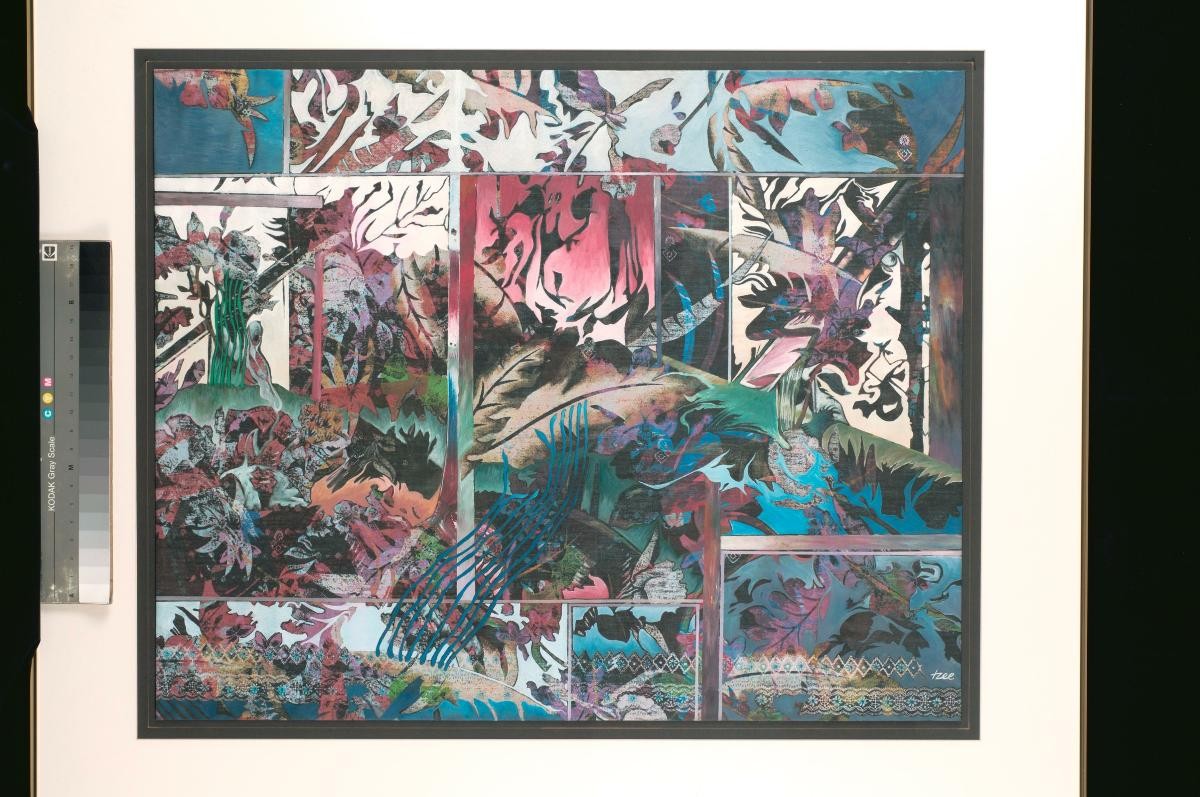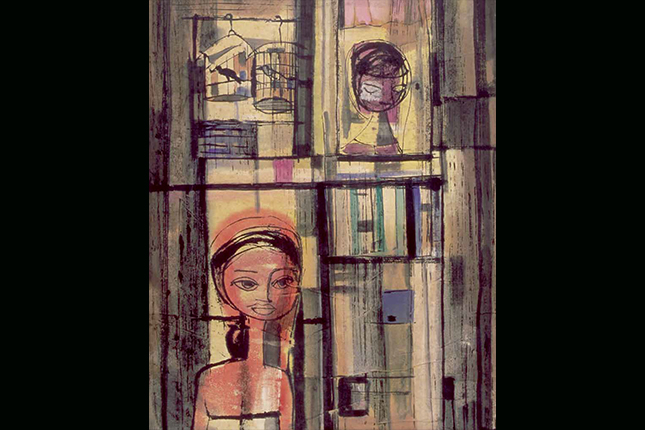

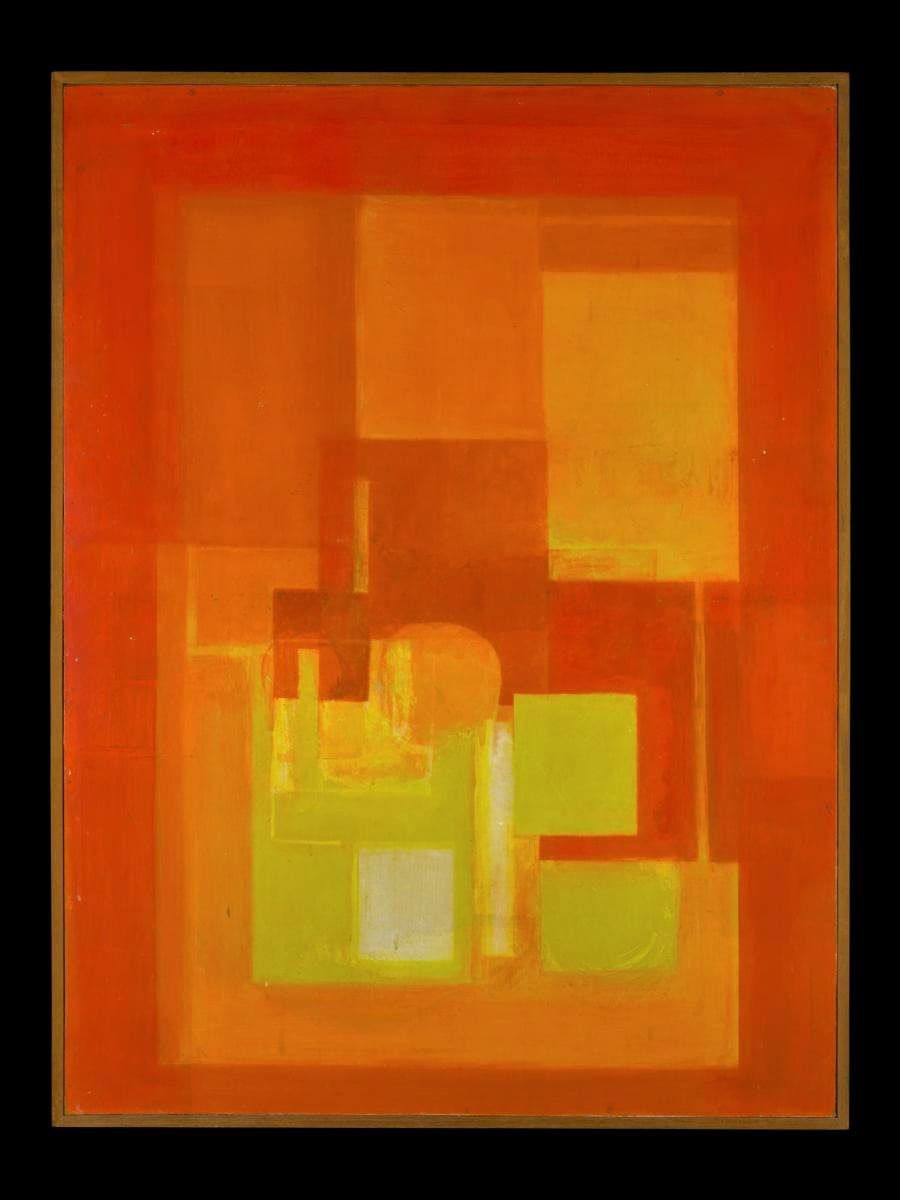
Frame size: 124.6 x 94.2 x 3.8 cm
Nirmala Dutt (b. 1941, Malaysia) was one of the most prominent artists to have emerged in Malaysian art scene in the 1970s. After her relocation from Penang to Kuala Lumpur in the early 1960s, Dutt attended painting classes with artists of Angkatan Pelukis Semenanjung (APS) founded by Hoessein Enas. In a lifelong pursuit of education spanning across decades, Dutt studied art, art history, psychology and printmaking in various art schools in the U.S. and UK. Eschewing the dominant abstract expressionist and minimalist tendencies amongst her peers in post-independent Malaysia, Dutt cultivated a practice that included painting, photography, silkscreen, and collage. The mid-to-late 1960s marked Dutt’s abstraction period. She enrolled in the Corcoran School of Art in Washington D.C in late 1966, spending about six months there and making works that incorporated collage and gestural abstraction. From 1970 to 1971, Dutt returned to the US for a year as a part-time student at the Boston College of Art while enrolling in art history courses at the Fogg Museum of Art in the Harvard campus. Upon her return to Malaysia, she took painting lessons from Slade-trained artist Ismail Zain. During this period, Dutt’s development was marked by a series of accomplished but stylistically explorative abstract works, including Chempaka III, a result of a structured, formalistic approach to painting through colour, composition, and brushstrokes. Nonetheless, Dutt was frustrated with the lack of emotional and spiritual self-realisation in this endeavour. Subsequently, and throughout her practice, Dutt became committed to making works that stir the viewer’s conscience to sociopolitical struggles locally and globally—war and conflict, domestic violence, environmental destructions, urban poverty—often spotlighting the plight of women, children and indigenous groups.