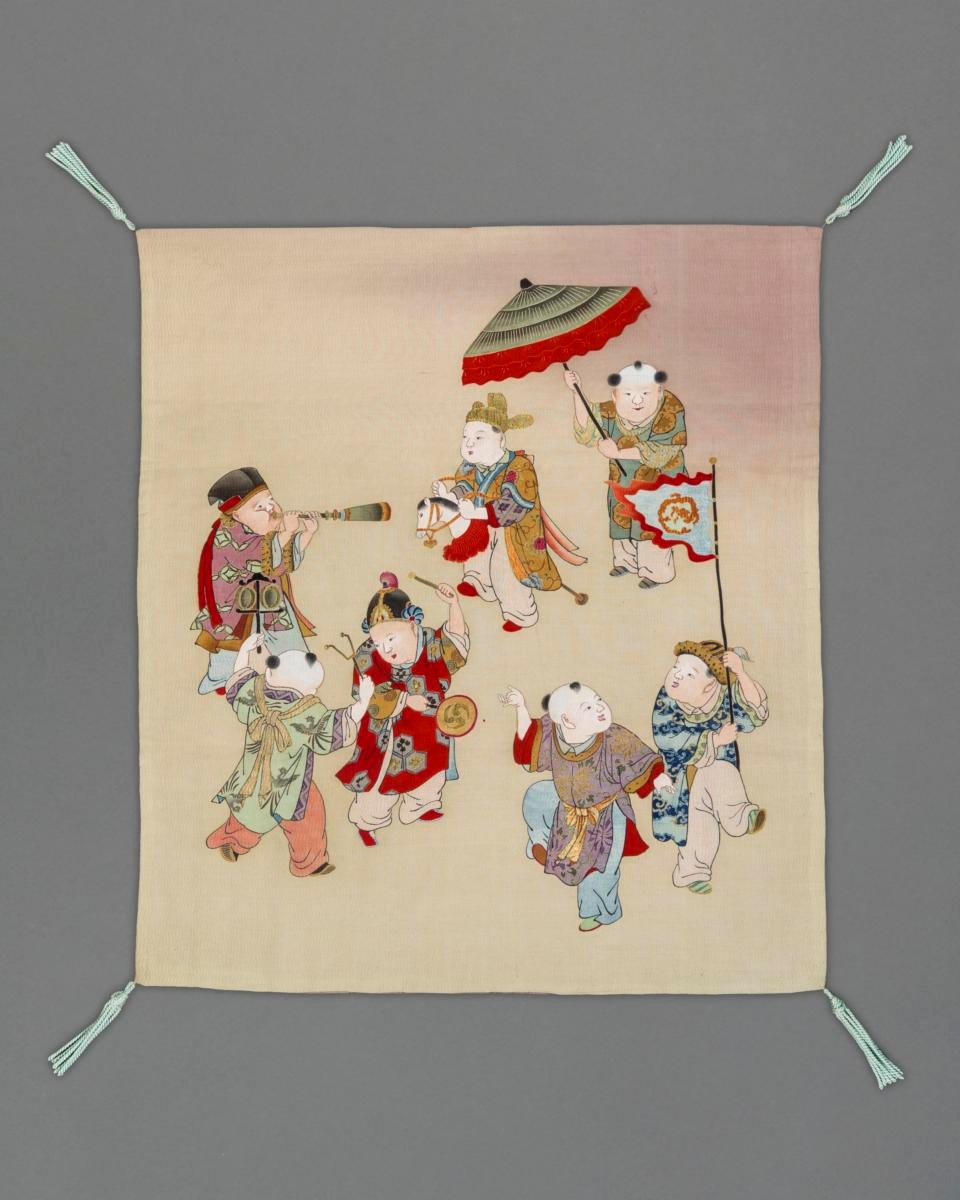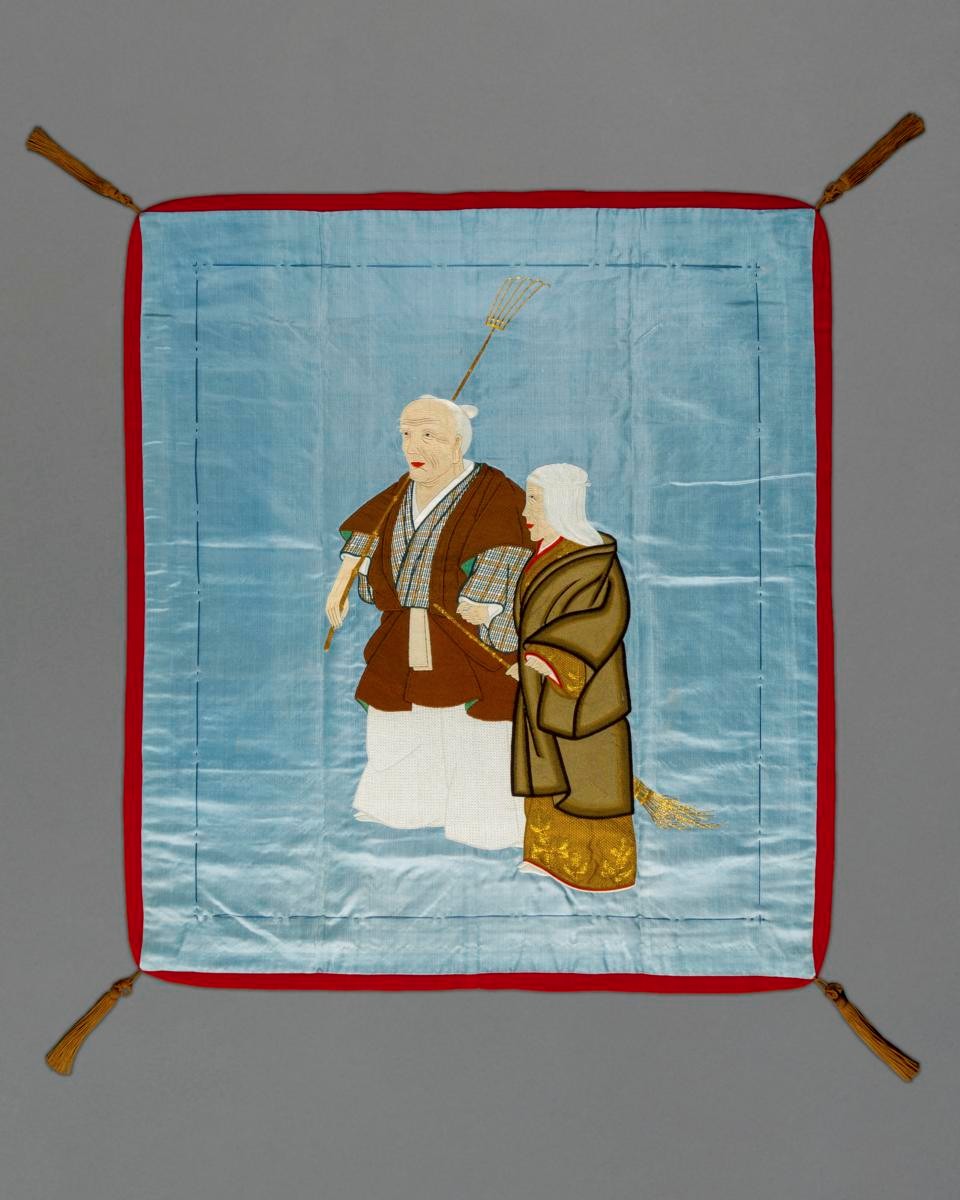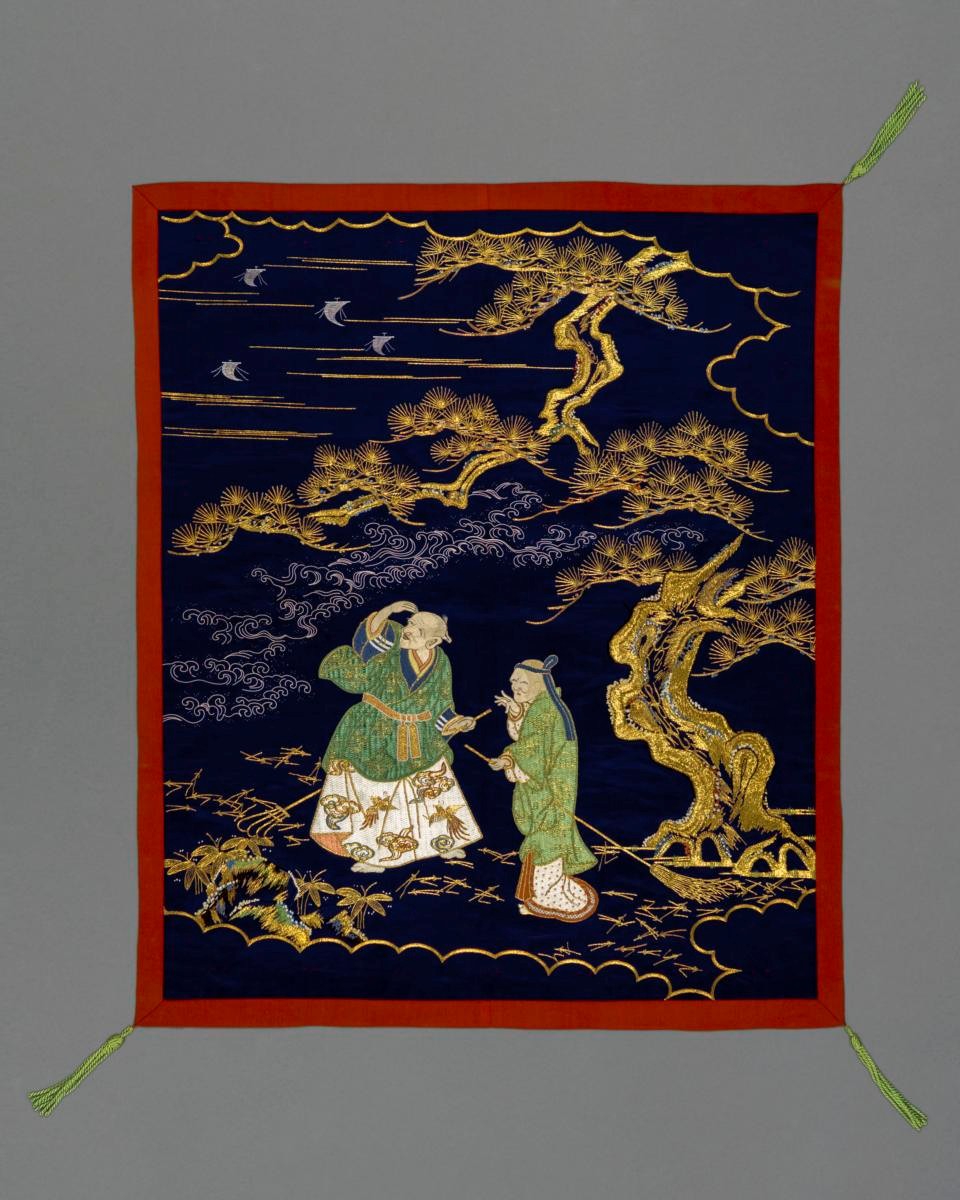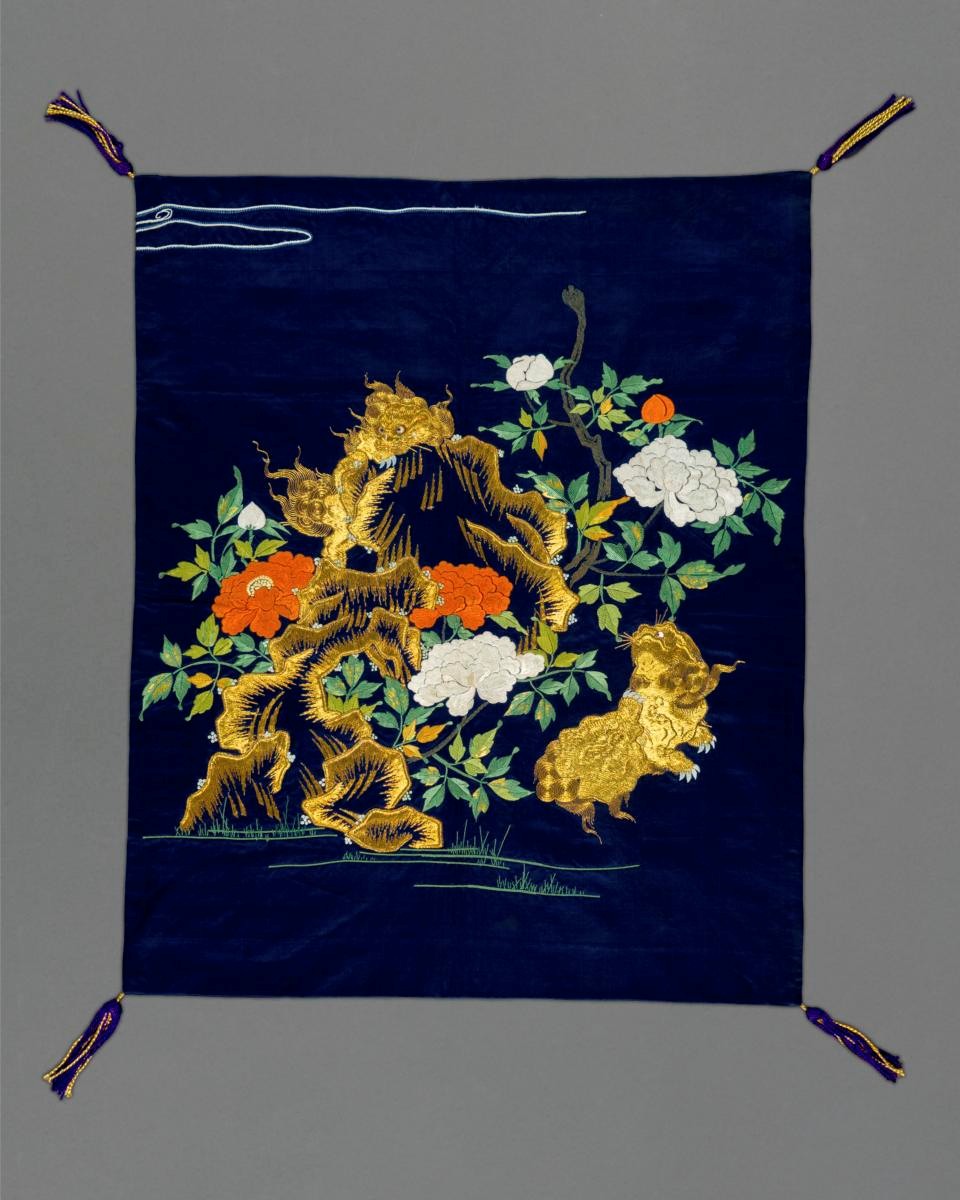

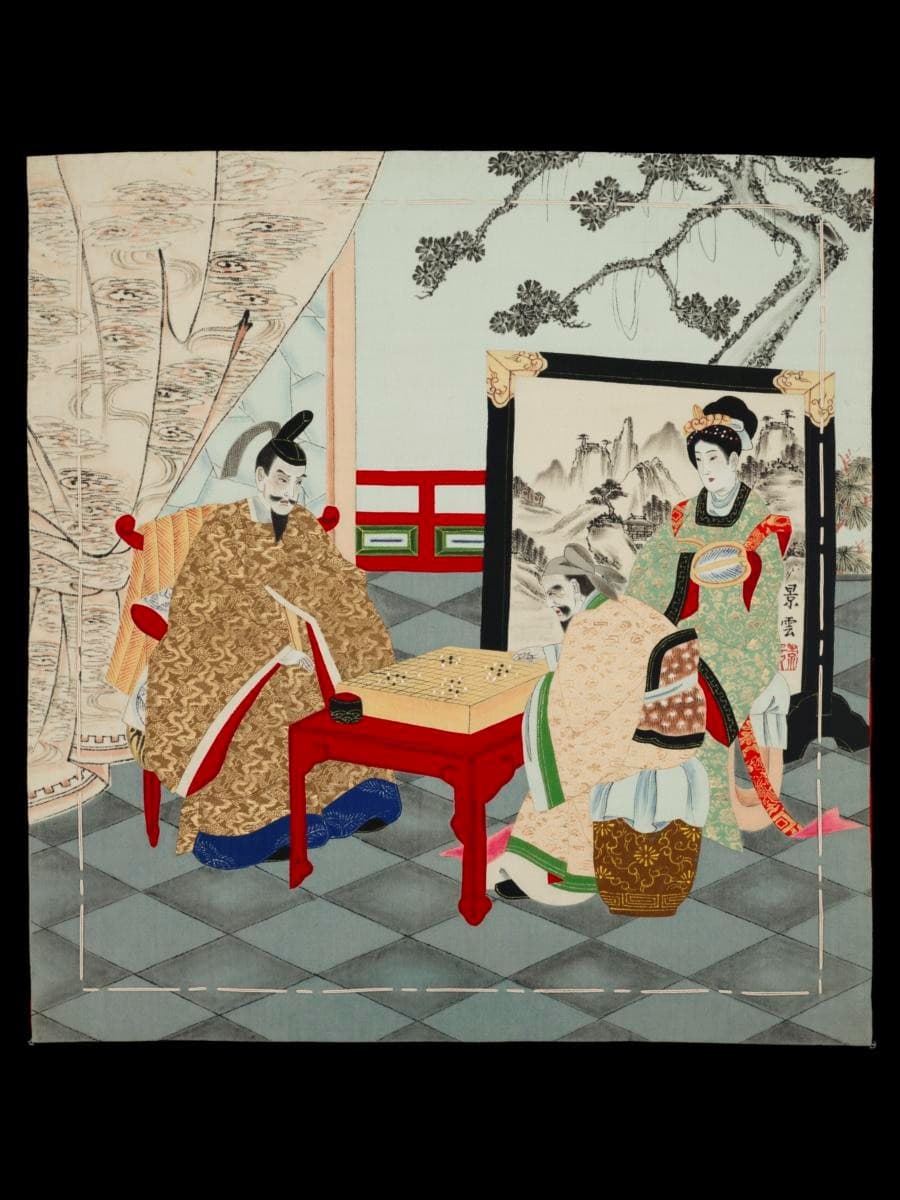
In Japan, the practice of formally presenting gifts with silk covers called fukusa began in the Edo period (1603–1868), around the late 17th or early 18th century. These covers were draped or folded over gifts for a variety of occasions, from seasonal festivities to important personal events. Each fukusa was carefully chosen to evoke the circumstance of the gift and to convey a message to the recipient through its design. Fukusa designs often feature symbolic objects or allusions to Japanese and Chinese stories. The choice of fukusa also reflected the giver’s wealth, taste, erudition, and cultural sensitivity. The use of fukusa continued into the early 20th century. Today, they are used in parts of Japan for weddings and corporate events. This scene is inspired by prints of the kabuki play Tale of Minister Kibi’s Travels in China (Kibi Daijin Shina monogatari), which is based on the legendary chronicles of Kibi no Makibi’s (693–775) diplomatic mission to China in 717. Here, Minister Kibi plays a game of go against the Tang dynasty Emperor Xuanzong. Kibi is said to have brought the game of go and the art of embroidery back to Japan. This play premiered in 1875 and starred Danjurō IX (1838–1903), one of the most successful kabuki actors of the Meiji period. This fukusa was skilfully made by individually cutting and stitching together pieces of brocade and crepe to form the basic shapes. Details like the facial features, shading, landscape, and patterning were then added in ink and colour. The name of the artist, Ishikawa Keiun (1882–1947), is inscribed on the screen behind the court lady, and it is very likely he painted the fukusa.