
Object size: (please refer to parts)
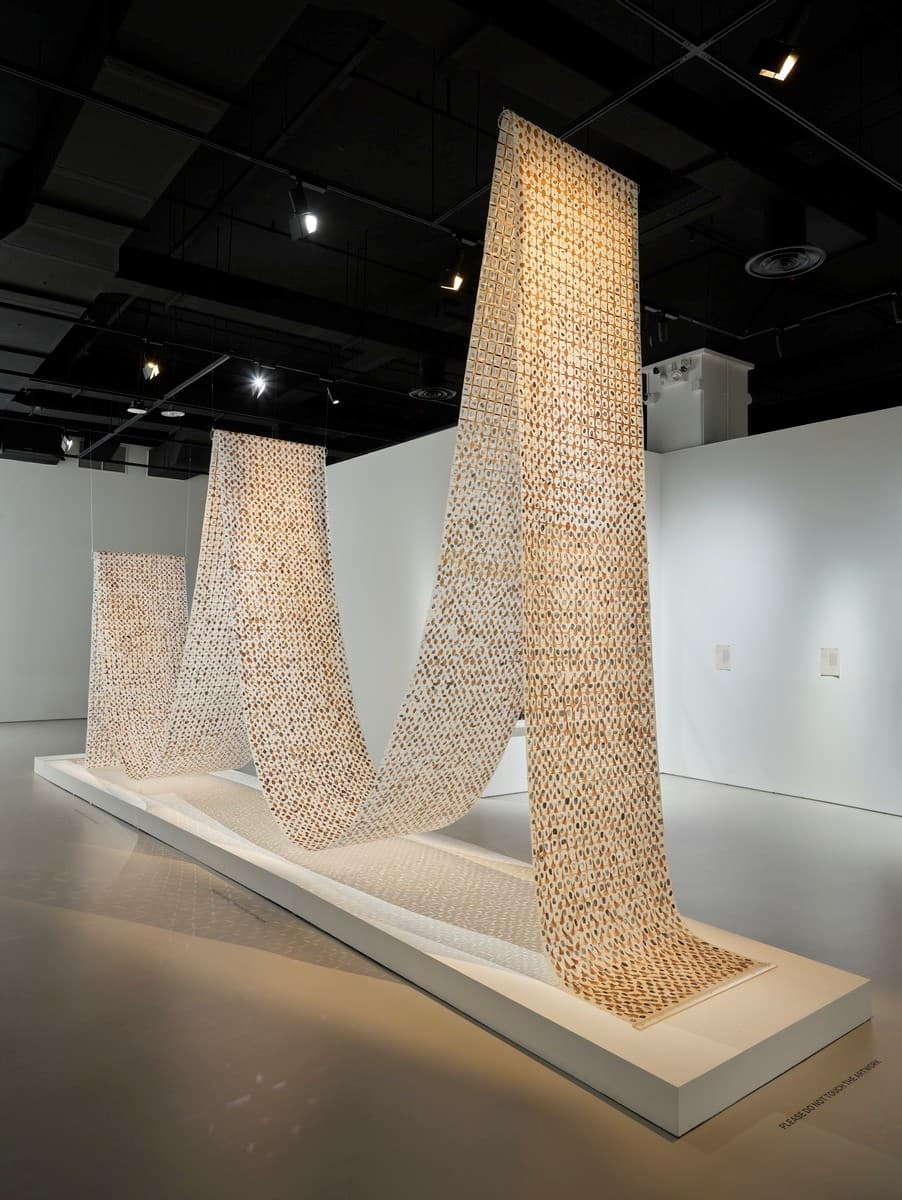
Wong Hoy Cheong is one of Malaysia’s foremost contemporary artists, and is both deeply engaged with socio- political activism, in recent years, and with issues and concerns that reflect the historical and social trajectories of his country’s post-war development. His career as an artist began as a schoolboy in 1970s Penang, at the Penang Free School, and took flight during his years as a college and graduate student in the U.S. It was upon his return to his native country in 1986 that, while teaching at the Malaysia Institute of Art (he was to influence generations of artists who passed through his classroom), his work turned from what has been dubbed “the historical-mythical aspects of Malay culture”, as evidenced by paintings such as Kuda Kepang (1986) and Tasik Cini (1987), to more contemporary themes, seen in works like Detention Oct. 1987 (1989), which dealt with the controversial Operation Lalang of 1987, an event that was to characterise for many the heavy-handed authoritarianism of the Mahathir years. The latter belongs to a crucial lineage in Wong’s practice, one that, according to Krishen Jit, revolves around “a contemporary condition as experienced by the artist: social oppression.” Socio-political repression and marginalization was, in fact, to prove the abiding concern of Wong’s creative trajectory – along with an interest in the hybrid, multi-cultural histories of Malaysia – and the 1990s was to see the efflorescence of these themes in his work. An early instance was the multi-medial Sook Ching (1991), encompassing painting, performance and video; other seminal moments include the exhibition, “Of Migrants and Rubber Trees” in 1996, one that “presented a grand diorama of the immigrant experience against a backdrop of empire/nation-building from the colonial era to today” (as described by Beverly Yong), and the installation-and-performance piece, Lalang (1994). The latter was a further response to the aforementioned Operation Lalang, which witnessed the arrest of some 106 individuals – ranging from NGO activists, opposition politicians, intellectuals, students, artists, scientists and others – who were detained without trial under the Internal Security Act (ISA). It was the second largest ISA swoop in Malaysian history since the 13 May riots, and was popularly believed to be an offensive against then PM Mahathir’s political opponents. Lalang also anticipates the overtly political bent of Wong’s output from the late ‘90s to early 2000s, itself inspired by the Reformasi movement of the period. The movement arose from very visible fallout that occurred in the wake of Anwar Ibrahim’s deposition by then-PM Mahathir: an active citizenry mobilized to call for deep, structural reforms in the nation’s notoriously corruption-laden political landscape. It was a seminal moment, and Wong found himself caught up in the fervour. Works like Tapestry of Justice (1998) and Vitrine of Contemporary Events (1999) was his response to the energy, dynamism and ideals of late ‘90s reformasi; the former, for one, was a collection of thumbprints of numerous individuals, stitched together into a hanging installation resembling a tapestry, to support the abolishment of the ISA, a petition assuming the guise of contemporary art. Wong also continued exploring ideas of history and cultural identity during this phase of his career, albeit, again, with an explicitly political dimension to his investigations. Text Tiles (2000), for one, a floor-bound installation comprised of tiles covered with the pulped remains of various publications of history and politics, interrogated the fashionable stance of so-called Asian “values” as espoused by many leaders of Asian nations. Into the new millennium, Wong’s practice further evinced his concern with the phenomena of oppression, marginalization, historical essentialism and colonialism that had come to characterize his work. Re:Looking (2002) reverses and reimagines the colonial imperative by fabricating a Malaysian empire that had colonized Austria; Maid in Malaysia (2008) takes on the underclass of foreign domestic labour in the country; Doghole (2010) represents a continuation of Wong’s interest in the Japanese Occupation of Malaya. Tapestry of Justice was developed and exhibited alongside the Vitrine of Contemporary Events (also in SAM’s collection). Photocopies of the thousands of thumbprints collected during the Reformasi movement are connected by leaves and petals of plants like hibiscus, roses and beech; thus far, the tapestry is made up of over 10,0000 thumbprints, stuck together using small pieces of acetate and glue and covered at intersections with different petals and leaves. The contribution of thumbprints constitutes symbolic actions for the repeal of the Internal Security Act (ISA) in Malaysia. The tapestry is to look delicate and beautiful - an ironic comment on how important and fragile basic civil rights are. As Wong relates it, he began the work after the sacking of Anwar, sometime in Sept or Oct 1998. He was interested in producing a piece involving mass participation: how criminals are thumbprinted, and a thumbprint becomes the most reliable form of identity (before DNA sequencing). For instance, when one signs a petition a signature can be forged but not a thumbprint, so thumbprinting becomes the ultimate form of commitment here. TOJ began life simultaneously as a petition – against the ISA – and a work of art, with Wong approaching strangers in public areas to solicit support. The petition and work began in Kuala Lumpur. Wong went around to bus-stops, pubs, NGO meetings, churches, Reformasi demonstrations etc to seek support and thumbprints, explaining what he was doing to total strangers, and whether they were for or against the ISA. October 1998 also marked the anniversary of Operasi Lalang, and hence the timing also served as a commemoration of sorts. There were 4 different stages of the project, and therefore 3 dates and 3 types of flowers and leaves are included in the scroll (hibiscus, beech, red rose). The first stage in happened in KL, the second in Denmark (Wong was showing the work in the Louisiana Museum of Modern Art) and UK (he was exhibiting at the Hayward, as part of the Cities on the Move exhibition), and then in KL again. The tapestry was assembled at the four abovementioned points. Wong continued adding to the original portions at those 4 stages, along with the appropriate plants. The tapestry in its present form was last added to in KL in 2004, so the work dates as 1998 to 2004. The original idea was to keep petitioning, and once the ISA was repealed Wong intended to donate the work to the state, but unfortunately the ISA was repealed under Najib Razak’s tenure, and Wong was reluctant to donate it under the Najib administration. (From an interview with Wong in Kuala Lumpur, on 22 May 2019. SAM conservator Nahid M. Pour and project manager Liza Ho were also present.) TOJ has been shown in in the Hayward and Bluecoat galleries in the U.K., in the Louisiana Museum of Modern Art in Denmark, in KHIASMA in Finland, in Bluecoat gallery in UK, Eslite gallery in Taiwan and in the NVAG in Malaysia. The thumbprinting of audiences happened at the bigger venues – e.g. museums – where the work was shown.