
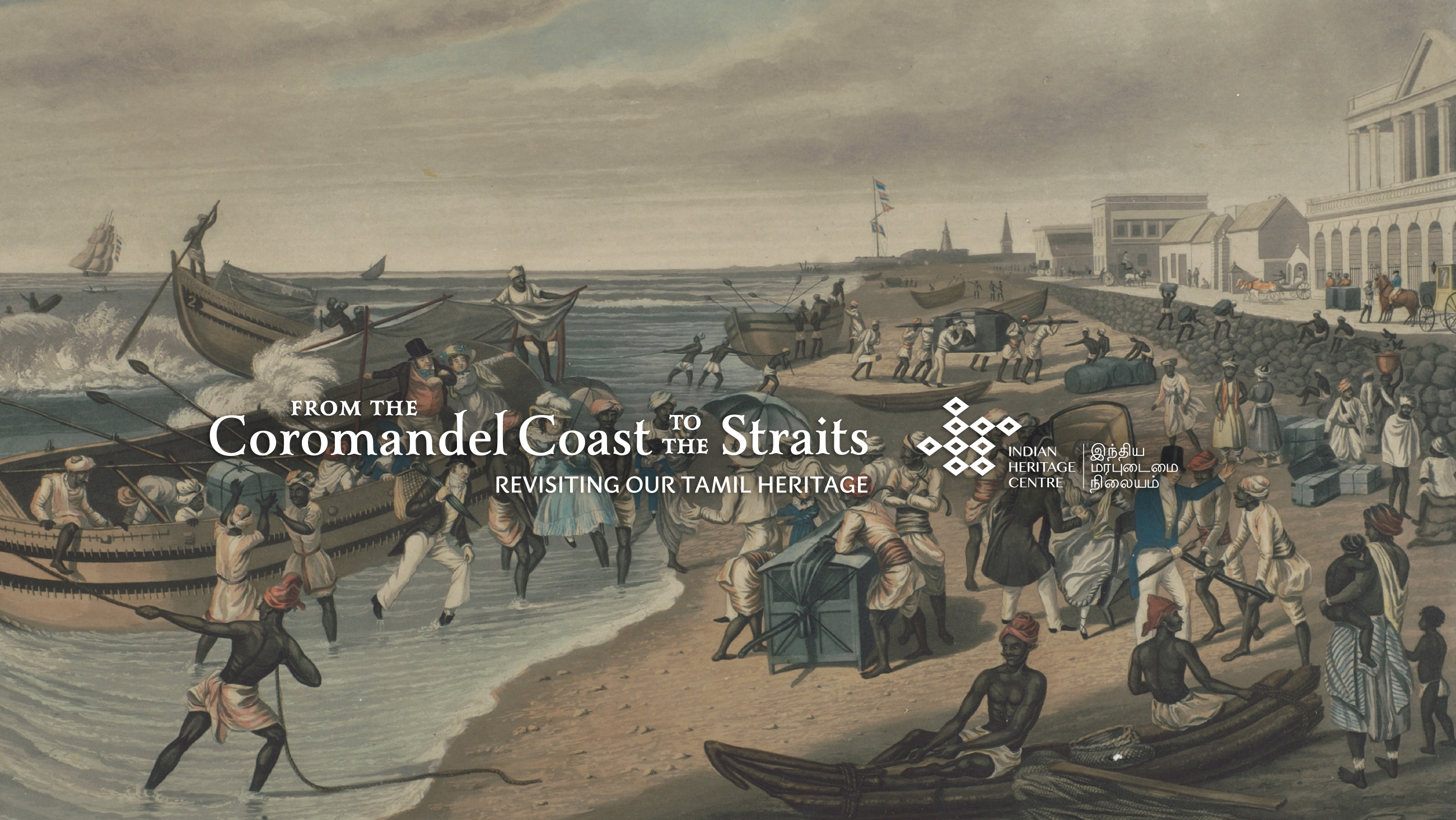
This year marks 200 years of the Tamils in Singapore. However, Tamil connections with Singapore can be traced as far back as the 11th–13th centuries CE based on recent interpretations of the Singapore Stone. From the Coromandel Coast to the Straits: Revisiting Our Tamil Heritage presents a compendium of narratives that recount the experiences of Tamil diasporas in Southeast Asia and Singapore from pre-modern to contemporary times.
Among the South Asian languages, Tamil is perhaps the only example of a very ancient language that still survives as the mother tongue of millions of speakers in south India, Sri Lanka, and of diasporas in many parts of the world. Singapore’s Tamil community is distinct as they have adapted and integrated with local cultures. Primarily born out of the colonial enterprise, the Tamil community is today a vibrant part of Singapore’s multi-ethnic fabric.
This exhibition is presented in two parts: part one enumerates the odyssey of pre-modern Tamil diasporas in Southeast Asia while part two offers glimpses of lesser known 19th century pioneers and some of the oldest Tamil families in Singapore. Bringing together collections from around the world and treasured possessions from the community, this exhibition seeks to present an uninterrupted history of Tamils in Singapore. It also includes digital showcases featuring holograms of artefacts in the collections of other museums and institutions.
Cholamandalam to Coromandel
Coromandel was a region known around the world for its trade textiles and goods from ancient times. The term “Coromandel” is the European derivative of Cholamandalam (“the realm of the Cholas” or “the land successfully conquered by the Cholas”). Also known as Chola Nadu or “land of the Cholas”, Coromandel referred to territories under the Chola dynasty in south-eastern India which included parts of present day Tamil Nadu, Kerala and Andhra Pradesh.
The earliest reference to Cholamandalam can be found in an inscription located at the Brihadishvara Temple in Thanjavur dating to the 12th century CE. The oldest European mention of Coromandel appears in Roteiro de Vasco da Gama (Journal of the First Voyage of Vasco Da Gama) as Chomandarla. As a toponym, Coromandel first appears in Portuguese maps at the start of the 16th century.
The Coromandel coastline was a significant trading region in the Indian Subcontinent. It was home to a network of ports such as Pazhaverkadu, Nagapattinam, Parangipettai, Arumugam etc. which were unified by their participation in the Indian Ocean trade. By the 17th century, established mercantile communities were concentrated around ports along the Coromandel Coast.
For instance, in Southeast Asia Tamil Muslim trading communities from the Coromandel Coast such as Lebbai, Rawther, Marakayyar and Kayalar achieved fame as the Chulia merchants. These traders were engaged in commerce primarily with Ceylon (Sri Lanka), the Melaka Straits and other parts of Southeast Asia, although this trade gradually declined by the 19th century.
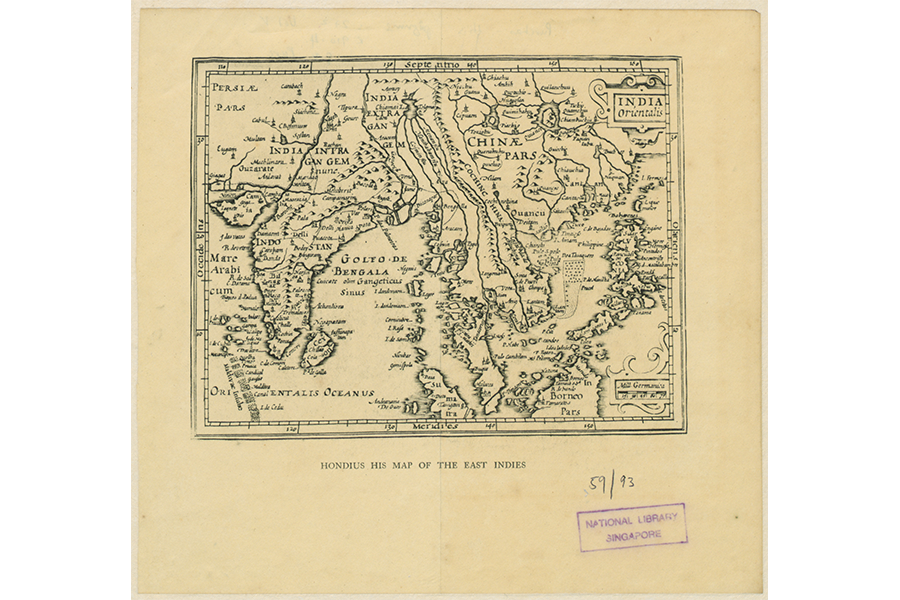
1557, Published in 1707 | Courtesy of National Library of Singapore
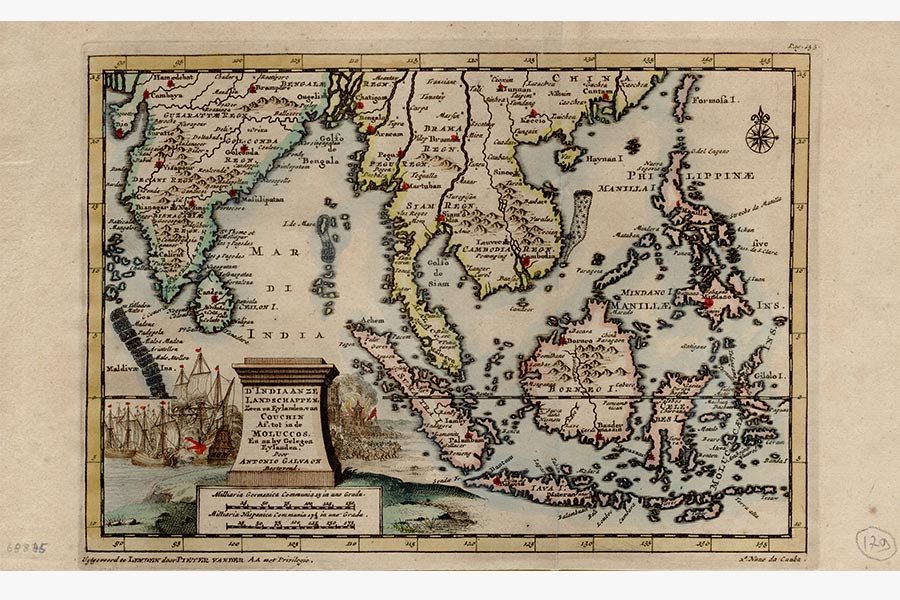
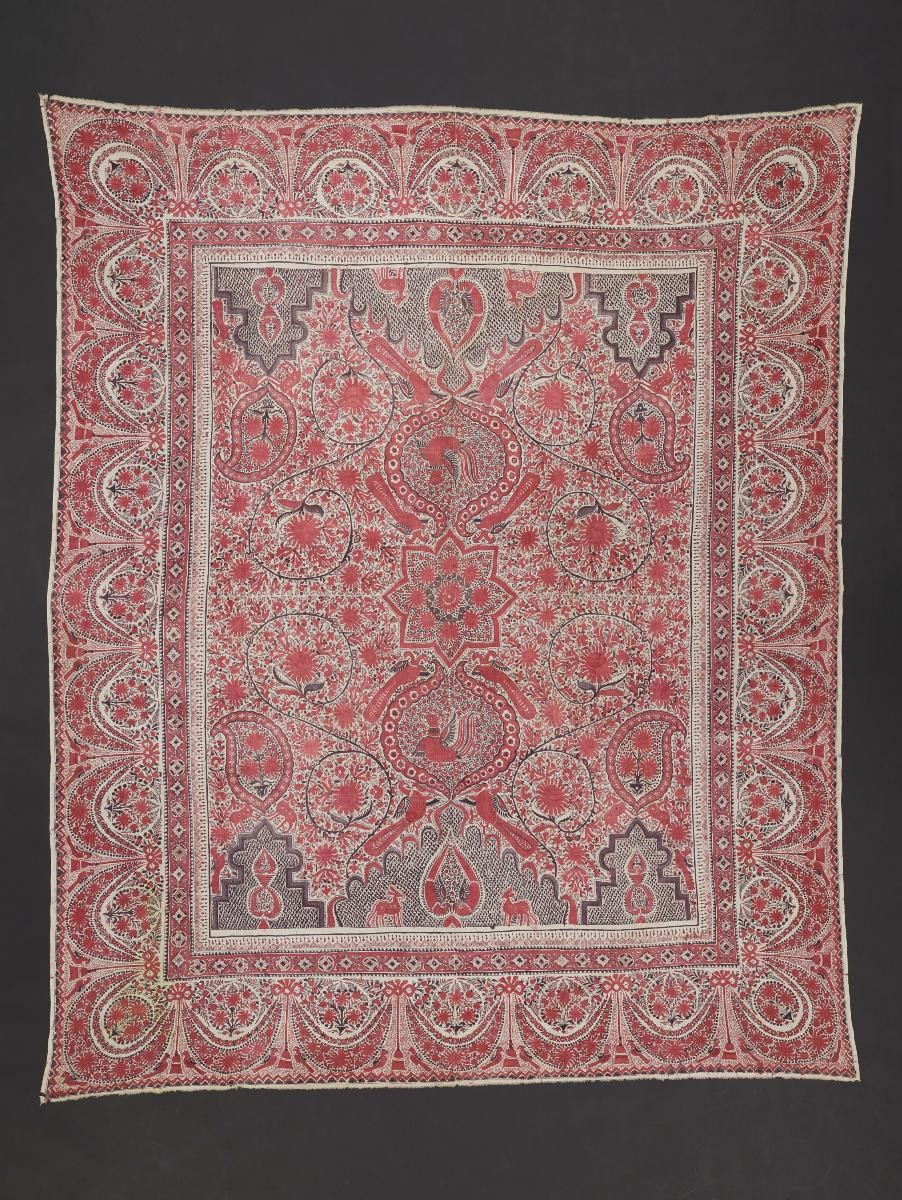
17th century | Courtesy of National Library of Singapore
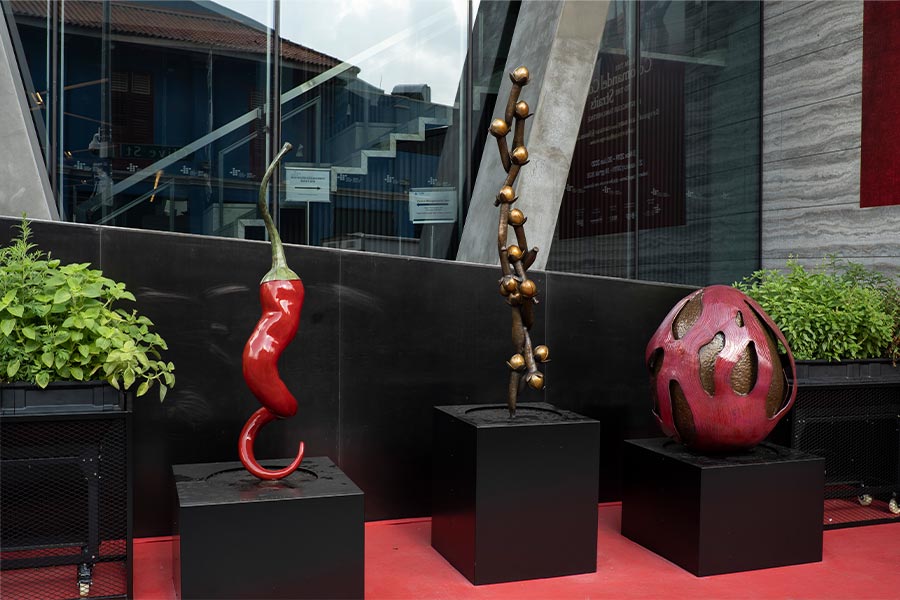
Singaporean artist Kumari Nahappan is well known for drawing inspiration from and making spices the focus of her artistic works. In Masala, she recreates a spice garden to celebrate the historical importance of spice in the trade networks between the Tamil coast and Southeast Asia, as well as the centrality of spice in Tamil cuisine.
The word masala, used widely among Indian communities, refers to a blend of spices. Uniquely composed, be it for use in traditional or modern cuisine, they represent an endless possibilities of flavours.
In Masala, Kumari features three key spices in Tamil cuisine: milagai (chilli), krambu (clove) and jadikai (nutmeg). She further juxtaposes her bronzes of spices, made of edible and dried parts of plants, with fresh green patches of herbs to concoct a “masala” of the natural and artistic elements which continue to inspire and inform her practice.
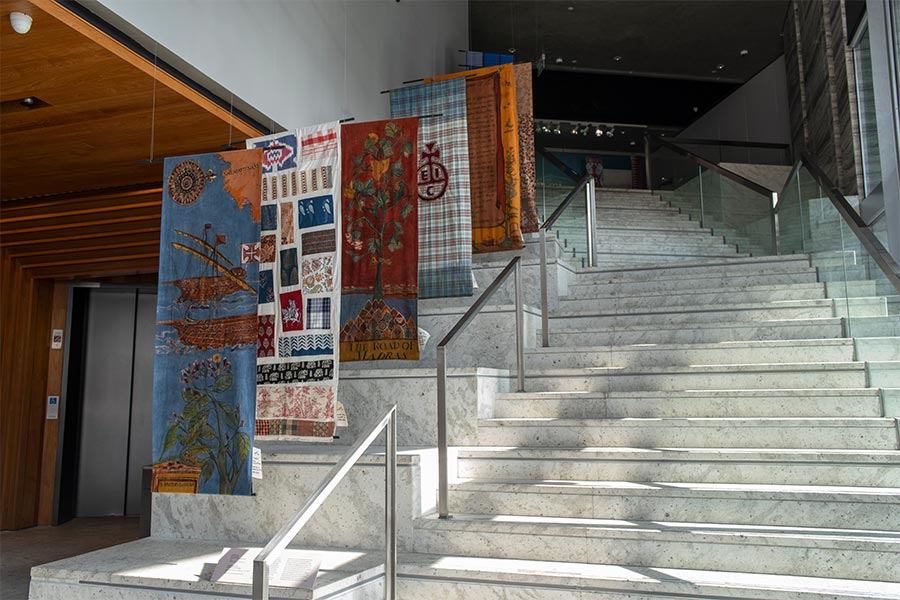
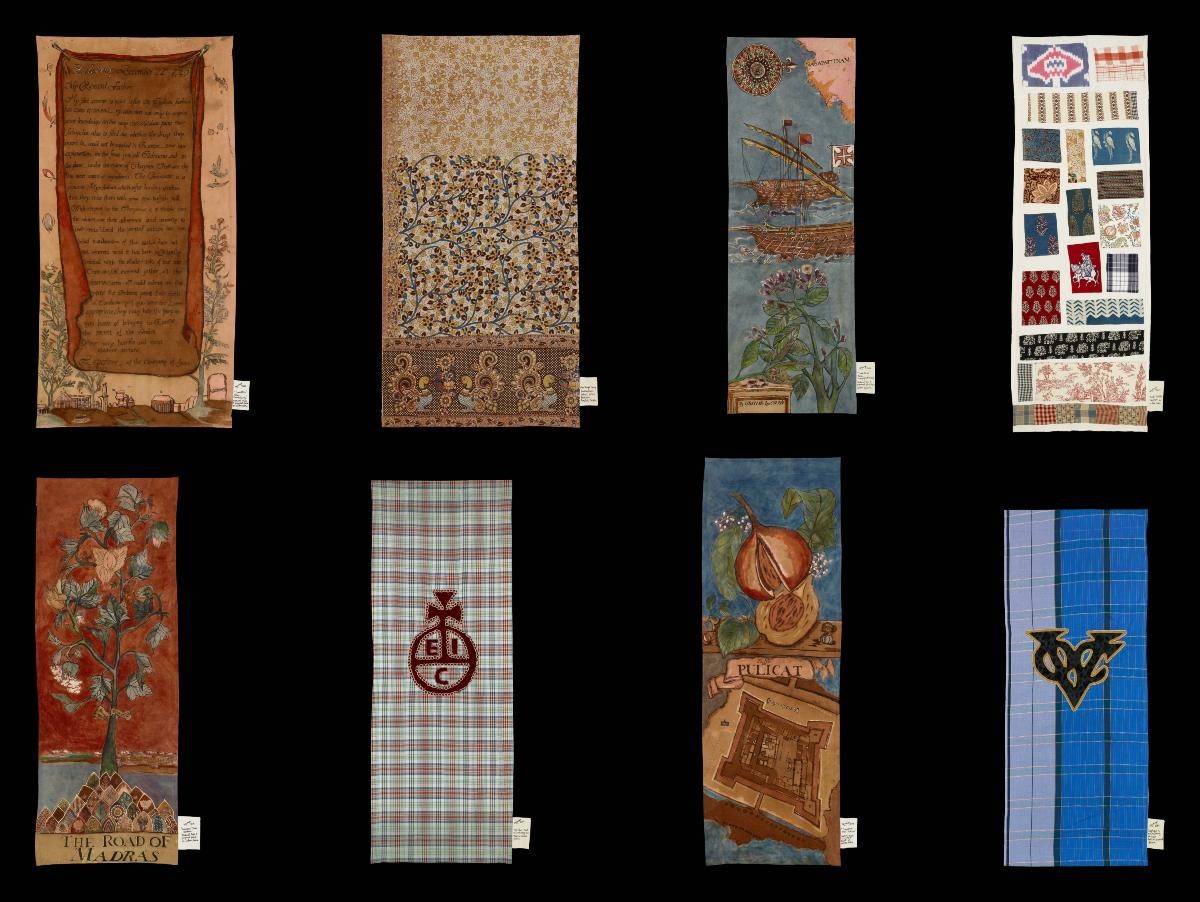
When the Portuguese captured Malacca in 1511, Tome Pires, the Portuguese chronicler, estimated that the annual value of Malacca’s textile trade was worth around 20 tonnes of silver. These Indian trade textiles comprised primarily of painted and block printed textiles from the Coromandel Coast, and woven cloths or Ikats from Gujarat. Known collectively as Chintz, these Coromandel textiles were embellished with ancient drawing and printing techniques like kalamkari and block printing.
In Traveller’s Tales, Lavanya Mani recreates the magic of the coveted Indian trade textiles and “fabricates” her own visual narrative of the colonial interest and acquisition of trade commodities and trading ports along the Coromandel Coast. Through her installation, she suggests that early travellers to the East were crucial in the dissemination of information about new and unknown lands. In this work, Lavanya tells the story of four port towns along the Tamil coast—Pazhaverkadu or Pulicat, Chennai or Madras, Puducherry or Pondicherry, and Nagapattinam. Their famed merchandise are presented in this installation to represent Portuguese, Dutch, French, and British interventions in these trade networks.