
 (1).jpg)
TL;DR
Historical fragments in museum collections — incomplete yet powerful — offer curators and visitors entry points into micro-histories of ordinary lives, revealing the agency of individuals within Singapore's broader colonial and immigrant history.
Museums in general derived their origins and significance from the existence of comprehensive collections in their holdings. These collections may have been the legacy of benefactors in the past or of acquisitions undertaken by the curatorial staff in the present. The symbiotic relationship between museums and their collections has been taken for granted ever since the museum as an institution came into existence.
This article does not take issue with this relationship. Neither does it seek to question the normative function of a comprehensive collection when displayed in the exhibition gallery as a showcase of the museum's role or identity. Instead, what it hopes to do is to draw attention to another type of artefact which exists as only a fragment in the museum's holdings. This is a piece that has survived out of an individual's life history, and in many cases being the only one as such. It can be considered as a parallel artefact to that of the comprehensive collection waiting to be explored further. When displayed in a temporary exhibition or in a permanent gallery, it can serve as an entry point to larger narratives which then add nuance to and contribute to an understanding of its place in the museum.
Imprints, vignettes, and snippets
It can be argued that Singapore's immigrant roots and the rapid urbanisation of its living landscape particularly over the last several decades has impacted what is available for museums to collect. This is evident in the fragments of daily life that have been donated or acquired over periods of time in the National Museum of Singapore (NMS). In the NMS, for example, there are diverse forms of everyday artefacts and paraphernalia reflecting to some extent what immigrants brought with them onto the island and of their livelihoods and cultural practices. These include personal and other types of documents, photographs, and aspects of material culture which in themselves do not constitute a comprehensive collection of their life histories. As a result, there are many gaps for the National Collection to fill. Nevertheless, these serve as imprints of ordinary individual lives, often forgotten and overlooked. When displayed in the gallery or in a special exhibition, they function more as vignettes of a curatorial narrative rather than as a collection since they are incomplete in scale or scope.
In this context, although such vignettes have a role in disclosing snippets of ordinary lives, they can also evoke questions about these lives in the mind of the curator who is developing the narrative and the visitor who is viewing them in the gallery. For example, why do so many fragments exist instead of their being a comprehensive collection? This question is outside the scope of the museum as it is tied to the memory-keeping behaviour of families such as the handover of personal artefacts from one generation to another which determines what should be retained in the family's possession as a memento or heirloom and what should be parted with to be donated to the museum following the death of a family member, or the family's relocation and other factors.
Agency
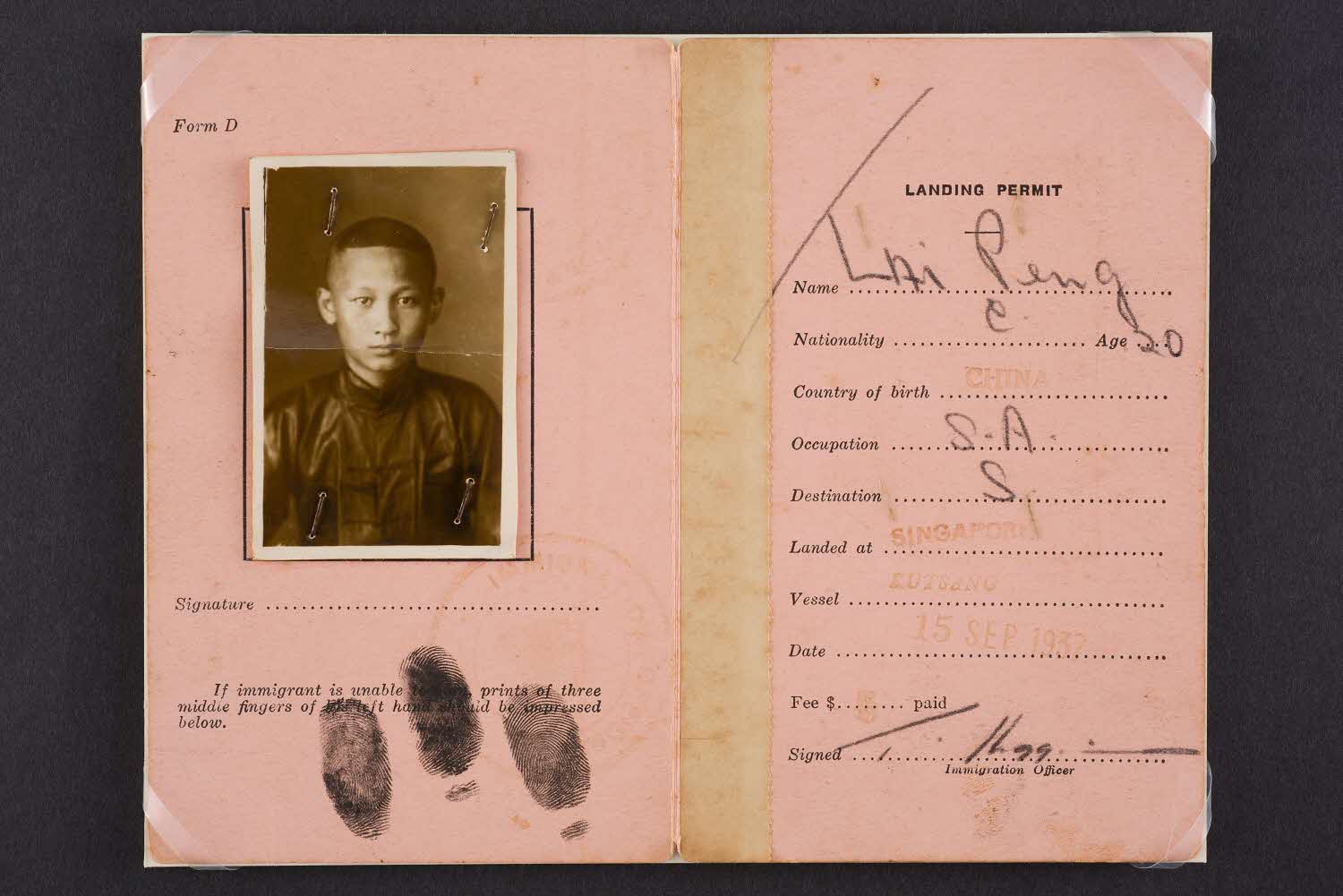
Whatever the case, the fragment that is left behind in the museum does have an agency of its own. In the photographs of the two individuals whose documents are featured below, not only are they looking back at us when we look at them at first glimpse but going close into their documents, their connections with a larger history of migration and livelihood are revealed. For example, the landing permit of 20-year-old Lai Peng is tied to coastal networks run by brokers of recruitment and of shipping lines which connected Republican-era China and colonial Singapore. It brought Lai Peng whose photo was probably the first taken of him in the photo studio from China to Singapore. Similarly, the Harbour Board identity card is tied to Singapore's maritime connectivity to global shipping and the transhipment of commodities as well as the opportunities which it provided to aspiring youths like Sam Siew Hoong in the aftermath of the Japanese Occupation.
.jpg?width=1000&height=666)
The photograph of an unidentified Malay boatman posed by the photographer against a background of local small boats and sailing vessels from the archipelago conveys an earlier and longer history of indigenous shipping and carrying trade which brought in native produce for barter and brought out manufactured goods to reach other ports in the archipelago.
.jpg?width=720&height=549)
These linkages show that we cannot separate such fragments from their inherent position in the overall narrative of Singapore's history especially when they are not usually sought-out topics for macro-level histories. Such histories are arguably inclined towards studying historical developments from the top rather than from the agency of the obscure individual on the ground. Examples include topics like colonial institutions, economy, and political evolution. The "structure versus agency" debate in the social sciences which regards social structures as determining individual actions versus individual actions themselves in shaping their lives is relevant here in considering the role of the fragment which is to reveal the capacity of human lives on the ground contributing to the functioning of the everyday world.
Everyday World
It is in the everyday world that we can situate these fragments to develop the micro-histories which are necessary to restore the imbalance between structural and individual accounts. Some images illustrate aspects of this everyday world with its interactions and transactions that sustain its dynamism.
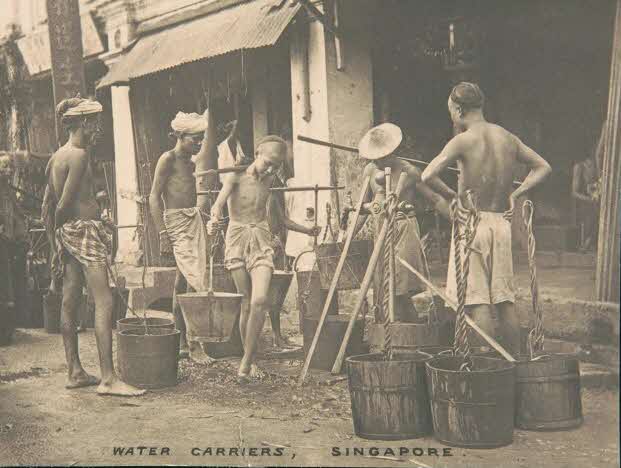
This photograph labelled "water carriers" in late 19th century Singapore shows barefoot Chinese and Indian labourers collecting water from a standpipe in late 19th century Singapore at a time when wells were common and long before drinkable piped water became widely available in homes. What is interesting to note is that the label conveys the impression that both ethnic groups are involved in this common task which crosses boundaries of ethnic occupational niches in colonial Singapore such as that of Chinese dialect groups plying rickshaws and Tamil labourers on road-building projects.
.png?width=1000&height=667)
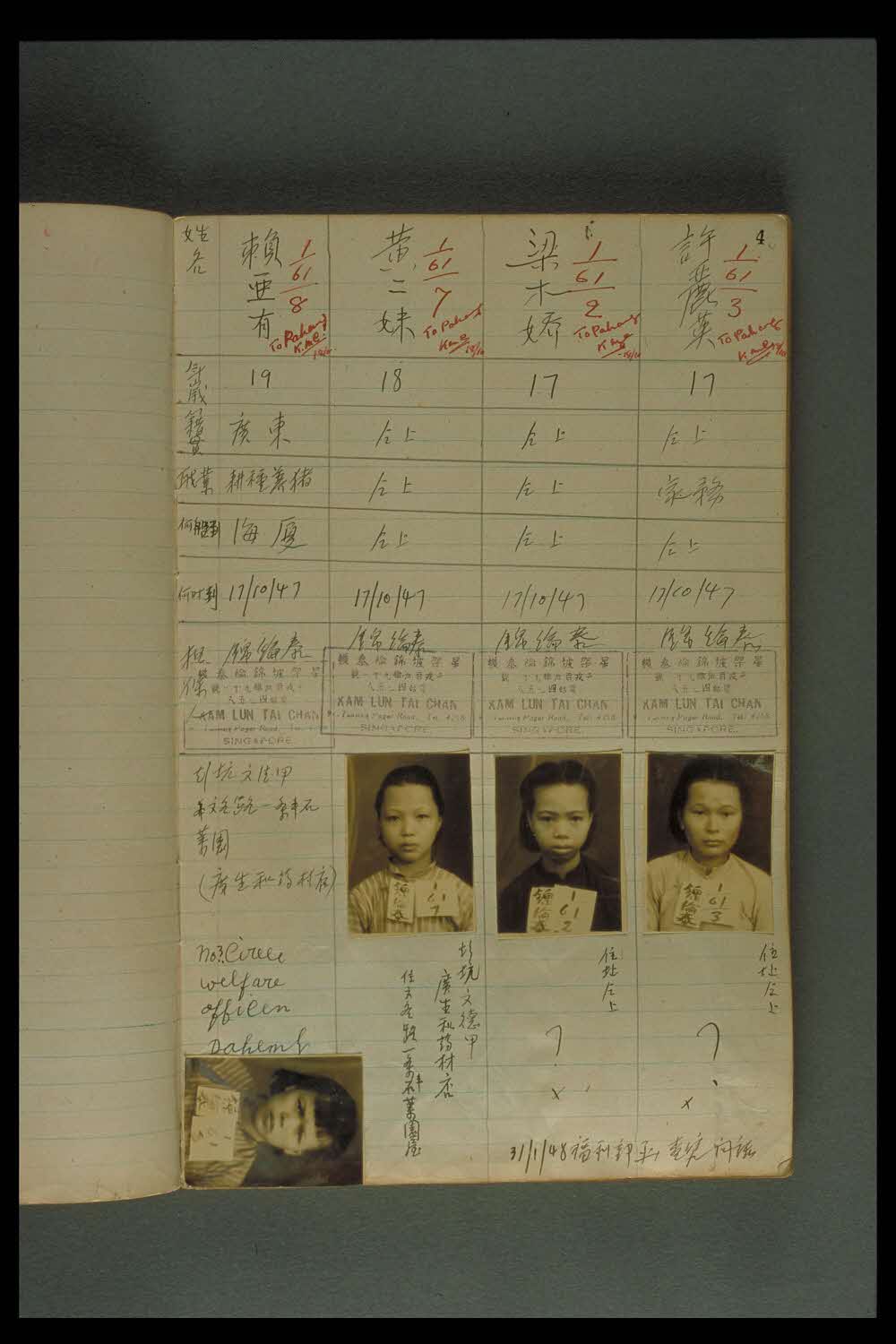
The presence of street hawker food was another crucial aspect of the everyday world as it offered cheap meals and was a source of ready employment for the low-skilled immigrant as seen in the photograph on the left. The street was also the location of the lodging house which provided accommodation for the immigrant after arrival. The image of a lodging house record book on the right which is a rare fragment features photographs of four females whose subsequent fate is unknown.
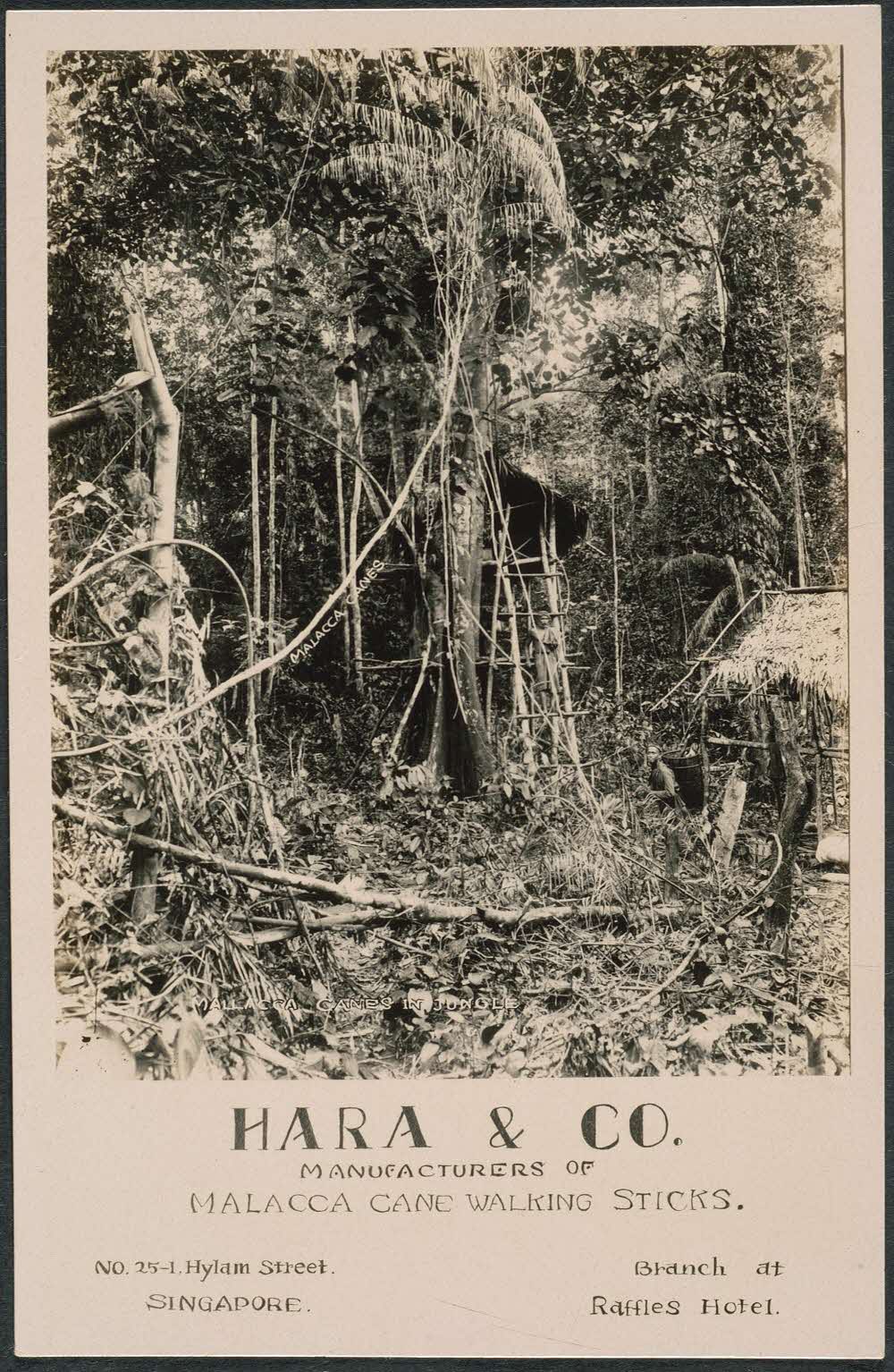
Another fragment is a pre-war shop advertisement as seen in the photograph of Hara & Co. It is a reminder of the world of small businesses which thrived in the urban streets of colonial Singapore, giving the street its character or what can be termed today as its "place-making" identity. In this case, the walking stick sold by the Japanese-owned shop was also a fashionable symbol of the dandy, another forgotten figure in the Singapore street of the early 20th century.
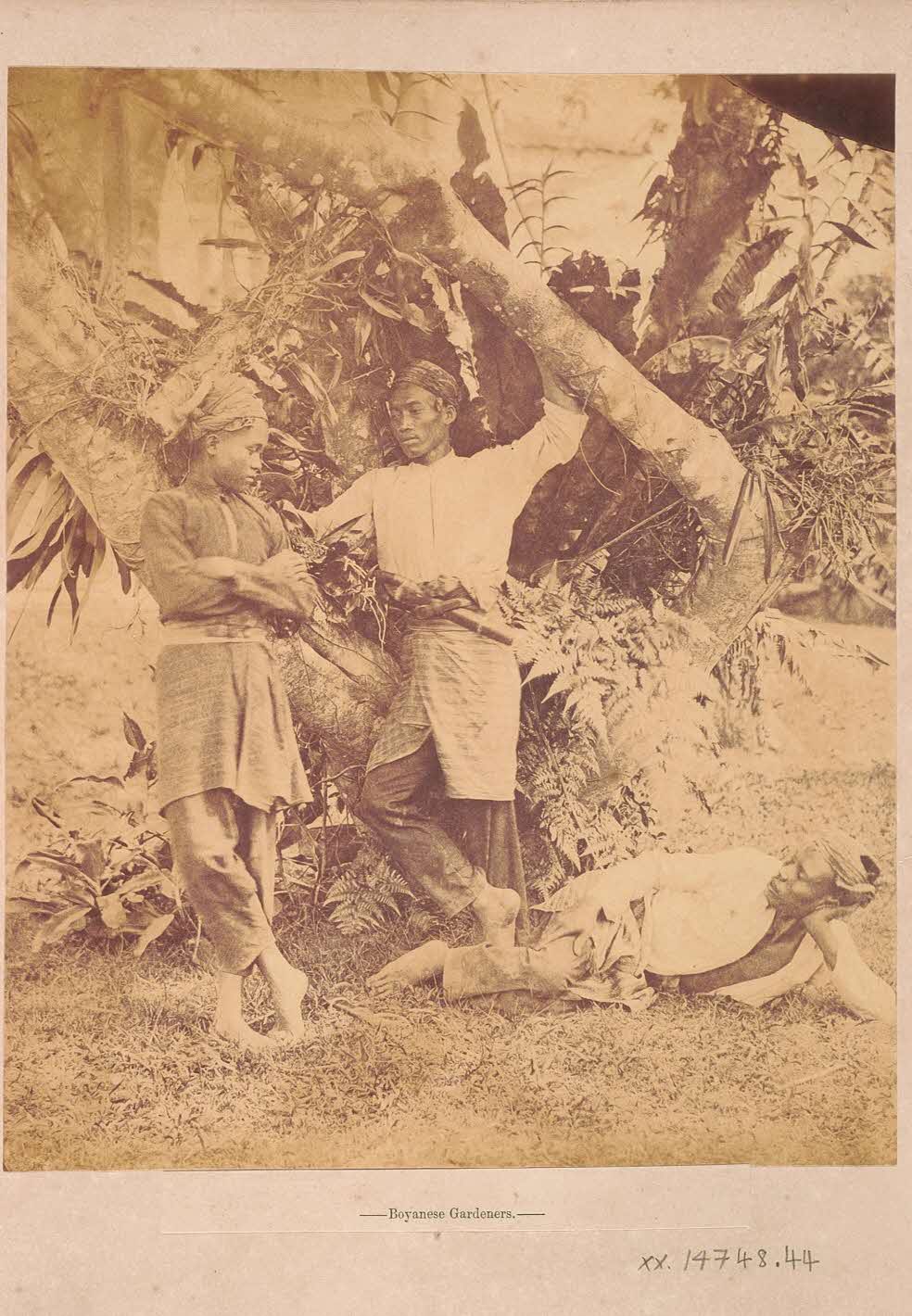
Besides its functional aspect, the everyday world had its "performative" side as well. The mid-19th century photo of Baweanese gardeners shows them posing amidst a large tree in the Botanic Gardens in what is probably the earliest such photograph of the Baweanese in Singapore. The European photographer has intentionally posed them as being "natural", but the photograph can also be viewed by us as the subject agreeing to perform for the camera. This "performative" fragment also constitutes another reality of the everyday world like other similar fragments in the museum's holdings.
Connecting the dots, weaving a narrative
Faced with these fragments, the curator who is inclined towards a grounded view of history or a "people's history" where ordinary people and their life histories matter most should then attempt to link the fragments together whether in the form of documents, photographs or three-dimensional personal artefacts and work towards assembling a "people's" narrative. At this juncture, the German cultural critic Walter Benjamin's work comes to mind. His 1928 book, One-Way Street, is an exploration of European city streetscapes though a paraphernalia of fragments like posters, street signs, etc, in a non-linear manner reminiscent of a flaneur's walks though the city. The challenge then for the aspiring curator bent on a similar journey in the museum is to utilize the fragment to reveal the underlying "messy flows and rhythms" of the everyday world of colonial modernity in Singapore. Hopefully, it can create in the mind of the visitor, a perception that fragments do have afterlives in inviting questions and critiques about their place in the museum.