
.jpg)
TL;DR
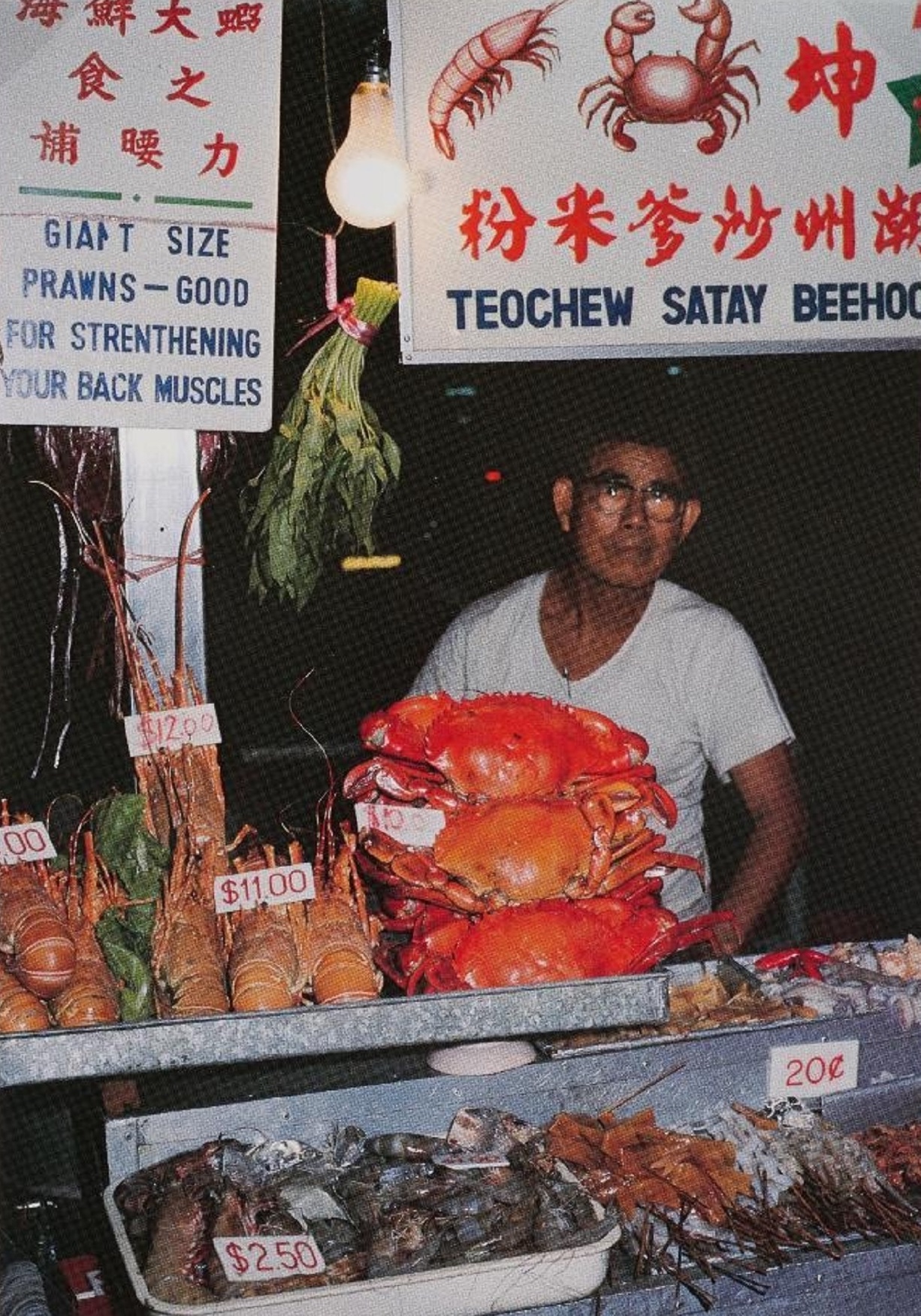
Singapore’s food culture evolved through two key processes—localisation, where traditional dishes adapt to local tastes and conditions, and hybridisation, where entirely new cuisines emerge through cultural blending. Using examples like bak chor mee, Teochew porridge, and Peranakan cuisine, the article shows how cultural exchange, ingredient availability, and government policies collectively shaped the distinctively Singaporean food landscape.A stall selling “Teochew Satay Beehoon”, an example of localised Southern Chinese food. c.1980s, image courtesy of the National Museum of Singapore.
The article presents a framework for understanding how Singaporean dishes have evolved over time through two main processes: localisation (minor adaptations of traditional dishes) and hybridisation (creation of entirely new dishes). These changes are driven by cultural exchanges (both within and between ethnic groups), environmental factors (like available ingredients), and political decisions (like food regulations). The framework helps explain how distinctly Singaporean versions of traditional dishes emerged and how new fusion cuisines like Peranakan food developed.
A Framework for Culinary Evolution
This article introduces a framework to understand the process of culinary evolution, organised around four key elements: subjects, drivers, processes, and outcomes.
-
Subjects are the traditional or ancestral dishes from immigrant cultures, or new dishes created through blending influences.
-
Drivers are the catalytic forces—cultural, ecological, or political pressures that push dishes to evolve or take new forms.
-
Processes describe how evolution happens: through localisation (minor adaptations) or hybridisation (major innovations or the creation of entirely new dishes).
-
Outcomes are the final forms these dishes take—whether they are unchanged from the ancestral recipes, localised dishes with minor adaptations, or hybridised dishes that are almost or sometimes unique to the culture.
Allow me to explain these elements a little further. Drivers act as key influences or catalysts that prompt culinary evolution and can be broadly grouped into three types:
-
Cultural drivers can be borne out of both intra-cultural and inter-cultural exchanges. Intra-cultural drivers arise within a single cultural group, such as the blending of regional or dialect-specific traditions (e.g., Cantonese influences on Teochew food). Inter-cultural drivers occur across cultural or ethnic lines, often resulting in new dishes or cuisines (e.g., the fusion of Chinese and Malay culinary elements in Peranakan food).
-
Ecological drivers refer to environmental conditions that necessitate substitutions or adaptations—for example, the availability (or lack) of specific local produce, game, or seafood that alters how a dish is traditionally prepared.
-
Political drivers stem from laws, regulations, or governance that impact the availability or legality of ingredients and preparation methods (e.g., Singapore ban on pig blood collection in 1999 or import restrictions on geese).
Drivers lead to the two broad processes for culinary evolution:
-
Localisation: The process by which existing subjects (dishes) are adapted through minor modifications, such as substituting ingredients or adjusting techniques, to suit local palates or ingredients.
-
Hybridisation: The process through which entirely new dishes emerge by blending techniques, ingredients and/or cultural influences.
The remainder of this article will explore both processes in greater detail. It is worth noting that in most cases, many of these drivers and processes do not work in isolation. Two centuries of cross-cultural interaction and adaptation have profoundly shaped the way immigrant communities in Singapore evolved their culinary traditions, with these evolutions diverse and innumerable. As such, this framework is not meant to be exhaustive. Instead, it offers a starting point on how one can understand the evolution of food culture—whether they have stayed faithful to their roots, adapted to new surroundings, or transformed entirely through the creative collision of cultures.
Here is a table mapping some characteristic processes:
|
Subject |
Drivers |
Process |
Outcomes (Examples of dishes) |
|
Traditional/ ancestral dishes from immigrant cultures |
None |
None |
Unchanged*: Kway teow soup, png kueh, prata (Paratha), ayam goreng |
|
Traditional/ ancestral dishes from immigrant cultures |
1. Cultural |
Localisation |
Localised: soon kueh, lor ah (braised duck). |
|
None (New dishes being created) |
Hybridisation |
Hybridised: Indian mee goreng, Tauhu goreng, Curry fish head, Peranakan food |
*Dishes that are largely faithful to their historical origins.
Localisation
We begin with localisation, referring to the process by which ancestral or traditional subjects (dishes) are adapted through minor modifications. The resulting dishes often become the primary mode of reproduction in their new environment. To illustrate the interplay of drivers and the process of localisation, we trace three examples that demonstrate the different drivers and their evolutionary processes.
Intra-Cultural Localisation
Intra-cultural localisation refers to adaptations and innovations that occur within a single cultural group (e.g., Chinese). One example is Teochew mue (糜; porridge). Unlike Cantonese congee, mue is prepared by cooking rice until soft but intact, yielding a watery porridge with minimal starch release.[1]
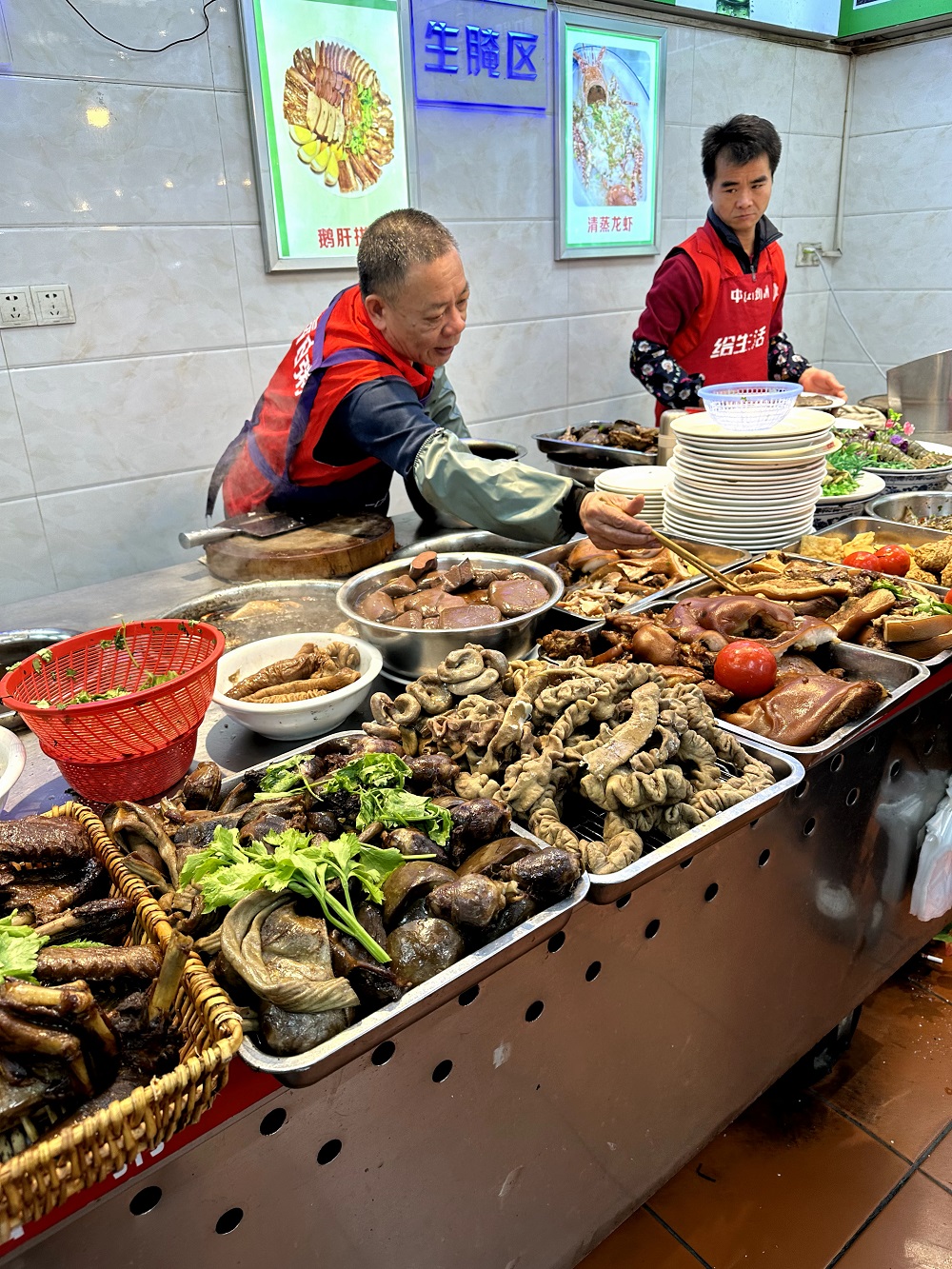
In the Chaoshan region, the ancestral homeland of many Singaporean Teochews, mue is traditionally accompanied with a diverse spread of cooked, preserved, and cured dishes. These include lor gor (卤鹅; braised goose), steamed fish, preserved vegetables like cai poh (菜脯; cured radish) and giam cai (咸菜; pickled mustard greens), as well as soy-, vinegar-, or liquor-cured seafood.
.jpg)
.jpg) Teochew Mue in Chaoshan, China (2024) with different cured seafood, curdled pigs’ blood and other Teochew ingredients that are not common in Singapore. Images courtesy of the author.
Teochew Mue in Chaoshan, China (2024) with different cured seafood, curdled pigs’ blood and other Teochew ingredients that are not common in Singapore. Images courtesy of the author.
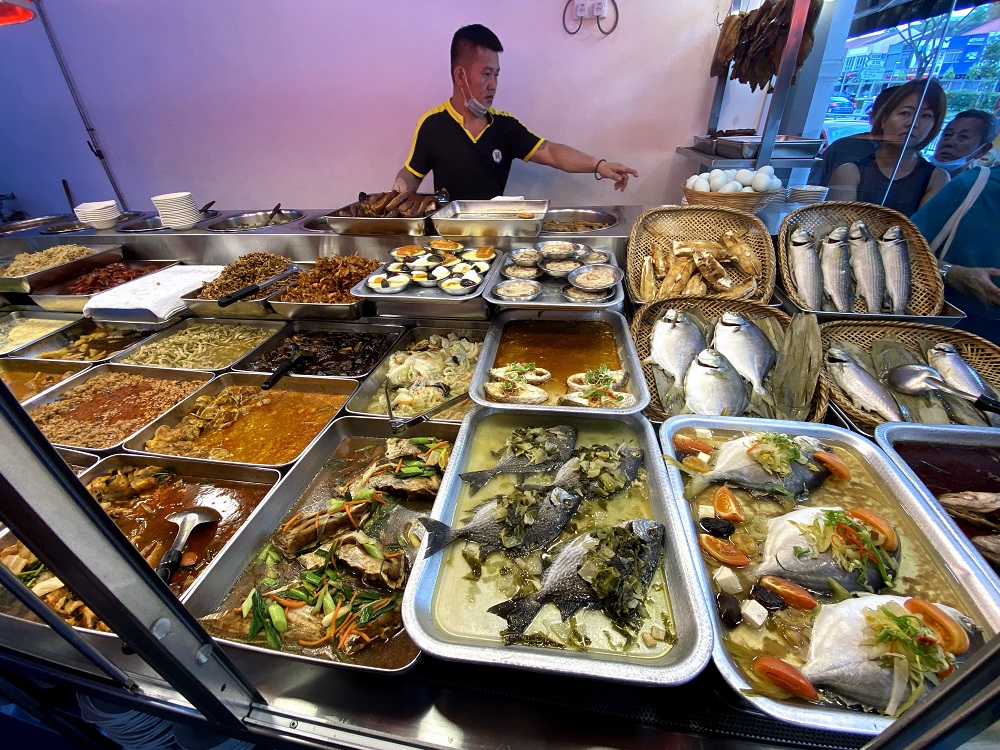
In Singapore, however, Teochew porridge can be said to have been “simplified”. Stalls often present a pared-down selection of Teochew-specific dishes, offering instead a broader spread of home-style offerings from other Chinese dialect traditions. Common accompaniments now include Cantonese gu lou yok (咕嚕肉; sweet and sour pork), Hakka mei cai kou rou (梅菜扣肉; braised pork belly with pickled mustard, Hakka), and “dialect-fluid” dishes such as hae bee hiam (蝦米香; spicy dried shrimp) and kong bak (卤肉; braised pork belly). As such, the label “Teochew porridge” has evolved into something of a misnomer—more accurately described as “Teochew-style porridge with Southern Chinese dishes.”
This transformation reflects broader demographic and occupational shifts resulting from Chinese migration to Singapore. Early-arriving Hokkiens, Teochews, and Cantonese settled into distinct niches—such as plantations, dock work, and trade—supported by strong clan associations.[2] Later-arriving groups like the Hainanese and Hakkas often found alternative forms of employment, with the Hainanese known to work as domestic workers and chefs for British households. Following independence and the departure of the British, many of these chefs went on to establish their own eateries or to work in other Chinese restaurants.
As a result, many “Teochew porridge” stalls came to be operated by non-Teochews. Further, to appeal to a wider, multi-dialect Chinese clientele, stall owners began incorporating dishes from various regional dialect cuisines. Over time, “Teochew porridge” in Singapore evolved into a syncretic offering—less a faithful representation of Teochew cuisine but arguably a more accurate reflection of the diversity of Chinese dialect groups and their culinary traditions in Singapore.
.jpg)
.jpg) Singapore Teochew porridge, served with dishes from other dialect groups. Images courtesy of the author.
Singapore Teochew porridge, served with dishes from other dialect groups. Images courtesy of the author.
Inter-Cultural Localisation
Inter-cultural localisation refers to the adaptation of traditional dishes through interactions across ethnic boundaries (e.g., Chinese and Malay). A notable example is bak chor mee (肉碎面; minced meat noodles), a Teochew dish traditionally served in soup with minced pork, offal, and dumplings. In Singapore, however, dry versions are more common,[3] dressed in a sauce made from lard, black vinegar, fish sauce, and most distinctively, sambal—a spicy Malay chilli paste made with belacan (fermented shrimp paste), garlic, shallots, and lime juice.
.jpg) Dry Bak Chor Mee with Sambal Chilli. Image courtesy of the author.
Dry Bak Chor Mee with Sambal Chilli. Image courtesy of the author.
This dry version of bak chor mee is especially interesting due to its use of non-native ingredients (e.g. chili), resulting in a bold, spicy profile not typical of Teochew or Southern Chinese cuisine. Within Southern China, as anthropologist Tan Chee Beng notes, the consumption of chilli and spicy food only gained popularity after waves of internal migration post-1978.[4] In contrast, the integration of sambal into bak chor mee in Singapore likely reflects a much earlier and organic process of inter-cultural exchange—emerging from the daily contact and social integration between Chinese and Malay communities over the 19-20th century. The resulting dish is a localised adaptation of a traditional Teochew noodle, enriched by Malay influences and exemplifying culinary evolution through intercultural learning.
Ecological and Political Localisation
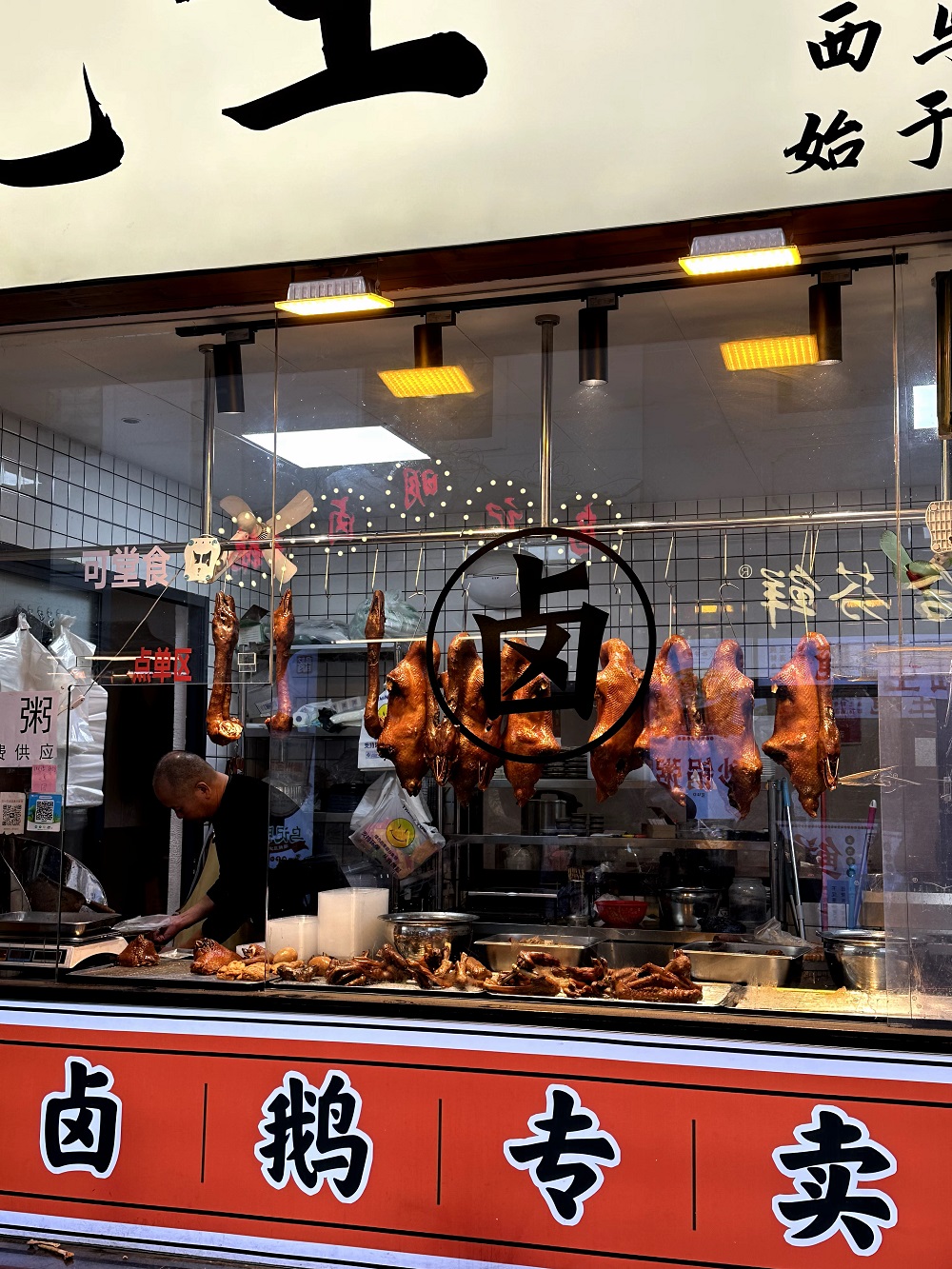
Finally, localisation may also result from ecological and political drivers, as seen in the adaptation of classic Chinese goose dishes such as the Teochew lor gor (卤鹅; braised goose) or Cantonese siu ngo (烧鹅, roasted goose), into lor ah (卤鸭; braised duck) and siu aa (烧鸭, roasted duck) respectively.
.jpg)
.jpg) Braised goose in Shantou (Top) and braised duck in Singapore (Bottom). Images courtesy of the author.
Braised goose in Shantou (Top) and braised duck in Singapore (Bottom). Images courtesy of the author.
Southeast Asia does not share the same biodiversity as ancestral regions such as Guangdong. While the Taiwan Strait supports over 1,600 fish species, the nearby Malacca Strait sustains fewer than half that number, with only around 65% considered commercially viable.[5][6]
Politically, the availability of geese in Singapore is further limited by stringent import regulations. Following the H5N1 outbreaks in 2003, Singapore tightened its list of approved sources for geese. As a result, most geese available locally are frozen—posing challenges to chefs seeking the texture and flavour profile required for authentic preparation. In response, many turned to duck as a more accessible and affordable substitute. Over time, duck has become the default replacement for goose in local versions of these dishes—a clear example of culinary adaptation shaped by environmental conditions and state regulation.
Hybridisation
Hybridisation refers to the process through which entirely new dishes emerge by blending techniques, ingredients and/or cultural influences. These dishes often arise in plural societies like Singapore, where communities live in close proximity, intermingling and influencing one another.
A prominent example is Peranakan cuisine, developed by the Peranakans—a mixed community descended from 17th-century Chinese (Hokkien or Teochew) immigrants who intermarried with local Malay women in the Straits Settlements.[7][8]
Linguistically, Peranakans speak Baba Malay, a creole incorporating elements of Malay, Hokkien or Teochew, and loanwords from colonial languages like English, Portuguese, and Dutch. Culinary-wise, Peranakans demonstrate fluency in both Chinese and Malay cooking. Dishes such as sambal udang (prawns in chilli paste) or beef rendang (slow-cooked spiced beef) reflect strong Malay influences Malay, while hae zhor (prawn rolls) and hu pio (fish maw soup) maintain clear Chinese roots.
This cultural hybridity has also given rise to a distinctive cuisine that seamlessly blends Chinese and Malay techniques and ingredients. Known for its rich interplay of sweet, spicy, and sour flavours, Peranakan food includes unique dishes such as bakwan kepiting (crab meatballs), ayam buah keluak (chicken stewed with black nuts), and ikan asam pedas (fish cooked with tamarind and spices). These dishes rely on a deep mastery of local ingredients—including but not limited to daun kari (curry leaves), pandan, lemongrass, asam jawa (tamarind), buah keluak (black fruit), and buah keras (candlenut)—married with Chinese and Malay culinary sensibilities.
Ultimately, the localisation and hybridisation of Chinese into their new communities illustrate how cultural hybridity can give rise to new culinary traditions.[9] Peranakan cuisine exemplifies how hybridity not a static phenomenon, but an organic and selective process—where some foodstuffs are novel, others reconstituted in part, and some reproduced in whole.
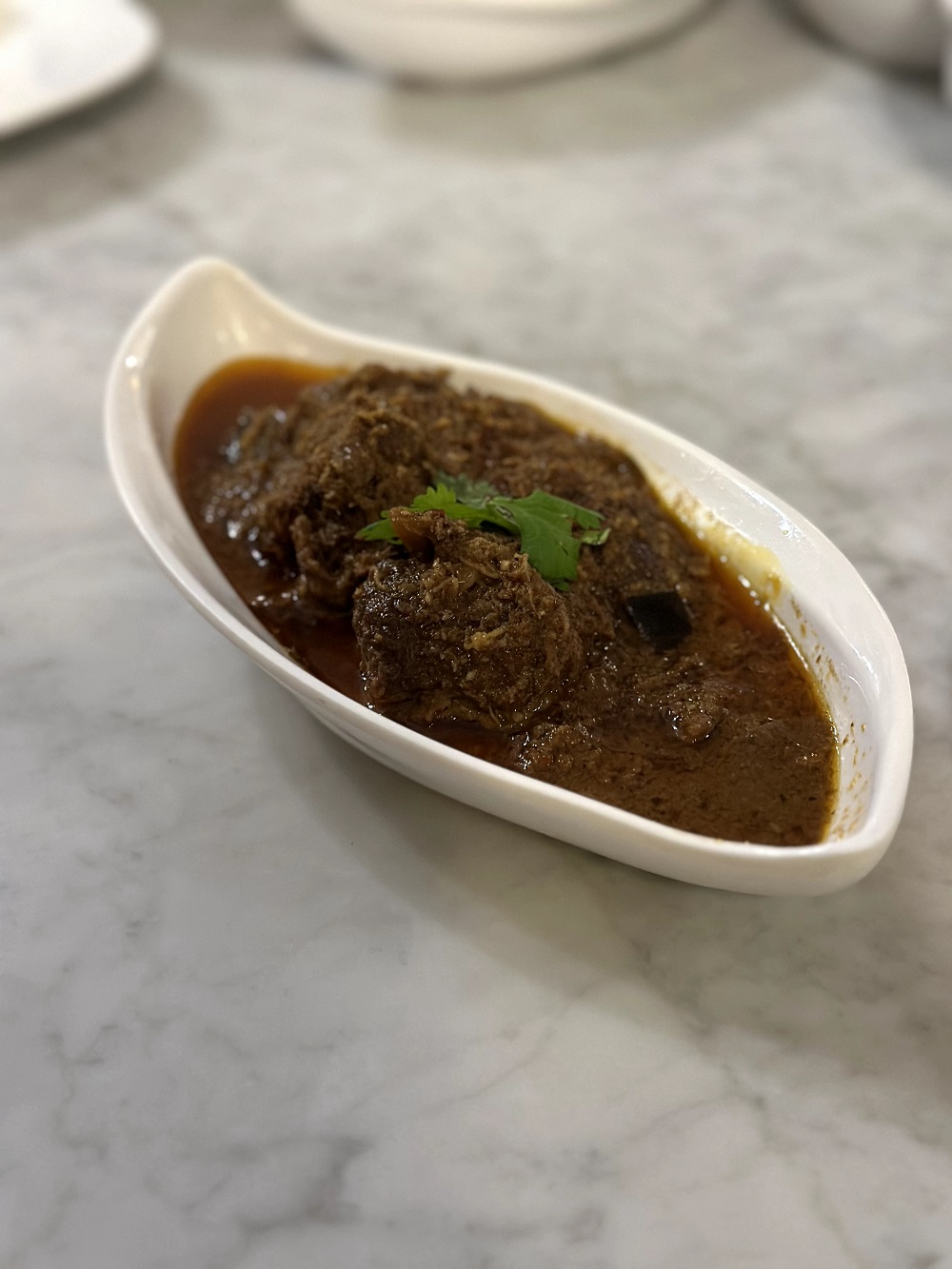.jpg)
.jpg) Beef Rendang (top) and Bakwan Kepiting soup (bottom). Images courtesy of the author.
Beef Rendang (top) and Bakwan Kepiting soup (bottom). Images courtesy of the author.
Hybridisation - Sharing of vegetarian ingredients
Hybridisation also occurs at a more granular level, through the cross-cultural adoption and recontextualisation of ingredients, particularly when these adoptions give rise to new or modified dishes.[10] In Singapore, this exchange is evident in the widespread use of traditionally Chinese vegetarian ingredients, such as noodles and tofu, by Malay and Indian-Muslim communities.[11]
The adoption of noodles, whether egg or rice-based, is especially significant, as they were not traditionally part of Malay or Indian culinary repertoires.[12] Mee goreng (fried noodles), for instance, is a creation of the Indian-Muslim community, combining stir-fried noodles with ketchup, chilli paste, and vegetables. Similarly, mee soto (turmeric chicken noodle soup) and mee siam (vermicelli in tamarind gravy) have become mainstays of Malay cuisine, illustrating how foreign staples can be localised and hybridised through local taste sensibilities and religious dietary norms.
.jpg) Indian-Muslim Mee Goreng. Image courtesy of the author.
Indian-Muslim Mee Goreng. Image courtesy of the author.
Tofu (豆腐), a soy-based, halal-friendly protein, has also been widely adopted. In Malay kitchens, it features in dishes such as sambal goreng (tofu stir-fried in chilli paste) and tauhu sumbat (stuffed tofu), while in Indian-Muslim cuisine, tofu appears in dishes like mee goreng and Indian rojak—a salad of fried items served with a spicy peanut sauce.
These examples show how ingredient-based hybridisation may not produce entirely new food cultures, as seen with Peranakan cuisine, but nonetheless generates novel dish forms and new cultural associations with once-unfamiliar ingredients.
Conclusion
Food is a microcosm of a society, a tangible expression of lived experiences, cultural exchanges, and ongoing adaptations. In this article, we have examined the processes of localisation and hybridisation, alongside the cultural, ecological, and political drivers that shape the evolution of cuisine. From the adoption of Chinese staples by Indian and Malay communities to the Peranakan mastery of local ingredients, Singapore’s foodscape is dynamic and continually evolving. As Singapore itself changes, so too will its cuisine—remaining not only a source of sustenance, but also a living archive of the nation’s rich and ever-shifting cultural identity.
Notes
[2] Ah Eng Lai, ‘The Kopitiam in Singapore: An Evolving Story about Migration and Cultural Diversity’, Asia Research Institute, no. Working Paper No. 132 (15 January 2010): 7–8.
[3] Chiang Yin Wong, How to Eat (Focus Publishing, 2021), 18, 62.
[4] Chee-Beng Tan, ‘Cultural Reproduction, Local Invention and Globalization of Southeast Asian Chinese Food’, in Chinese Food and Foodways in Southeast Asia and Beyond, ed. Chee-Beng Tan (Singapore: NUS Press, 2011), 23–41.
[5] Yong-Jun Chen et al., ‘Research Review of Fish Species Diversity in Taiwan Strait’, Acta Hydrobiologica Sinica 40, no. 1 (25 January 2016): 157–64, https://doi.org/10.7541/2016.22; A. G. Mazlan et al., ‘On the Current Status of Coastal Marine Biodiversity in Malaysia’, IJMS Vol.34(1) [March 2005], March 2005, 79, http://nopr.niscpr.res.in/handle/123456789/1545.
[6] Allan Octavian Hume and Charles Henry Tilson Marshall, The Game Birds of India, Burmah, and Ceylon, vol. 3 (Calcutta, A.O. Hume and Marshall, 1879), 103–8, https://archive.org/details/gamebirdsofindia03hume/mode/2up.
[7] John Teo, ‘6B. The Peranakan’s Interconnected World: Hybridity, Diversity and Challenges’, in A General History of The Chinese in Singapore, ed. Chong Guan Kwa and Bak Lim Kua (WORLD SCIENTIFIC, 2019), 246–47; Fooi Beng Ng, ‘6C. Peranakan Community and Culture’, in A General History of The Chinese in Singapore, ed. Chong Guan Kwa and Bak Lim Kua (WORLD SCIENTIFIC, 2019), 258.
[8] Beng Huat Chua, Life Is Not Complete Without Shopping: Consumption Culture In Singapore (Singapore: Singapore University Press, 2003), 100; Ng, ‘6C. Peranakan Community and Culture’, 274.
[9] Chua, Life Is Not Complete Without Shopping, 102.
[10] Chee Beng Tan, ‘Food and Ethnicity with Reference to the Chinese in Malaysia’, in Changing Chinese Foodways in Asia, ed. Chee-beng Tan and David Wu (Hong Kong, 2001), 134.
[11] Chua, Life Is Not Complete Without Shopping, 106–10.
[12] Chua, 106–10.